James Prosek, Come to Chan Chich Lodge!

ProsekSweden.jpg

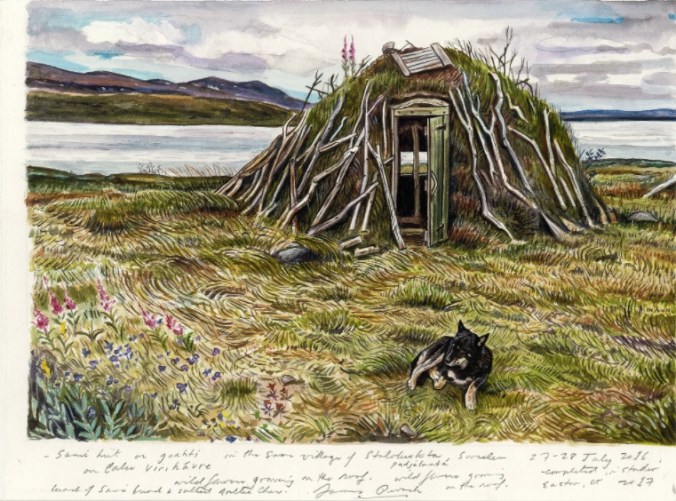
A Sami reindeer herders’ hut on Lake Virihaure in Padjelanta National Park. Credit Paintings by James Prosek, courtesy of the artist and Schwartz-Wajahat, New York

We had a tradition from the moment we arrived in Kerala, inviting some of our favorite people to come see what we were doing there. This one’s work at Cornell was a lovely coincidence because of Seth’s work at the Lab of Ornithology. But mainly, a conservation-oriented naturalist illustrator seemed a perfect fit for what we do. So, seeing what he has contributed to the Travel section of the New York Times today I realize we are due to extend another invitation, this time for him to join us at Chan Chich Lodge in Belize:

A Botanist in Swedish Lapland

By

The plan was to retrace part of a journey that Carl Linnaeus made in 1732 when he was 25, from Uppsala, just north of Stockholm, to the northernmost region of Sweden, known as Swedish Lapland. Linnaeus kept a detailed journal of his travels, often called his “Lapland Journal,” with maps of the mountains, rivers and lakes, drawings and his squiggly handwriting. Continue reading
Model Mad, Mechanism

gettyimages-671595622_wide-3b228004a6ccebbd2b6b9901d8a92f181b3643b1-s1400-c85

In this era, when saying no in creative manner has been raised to an art form, we remain on the lookout for model mad; but it does not have to be creative or novel. If there is an established machinery to utilize, utilize it! Here is an example. We are not surprised that, when asked, people say they want their environment protected, nonetheless we are pleasantly surprised that the “system” such as it is continues to even ask:

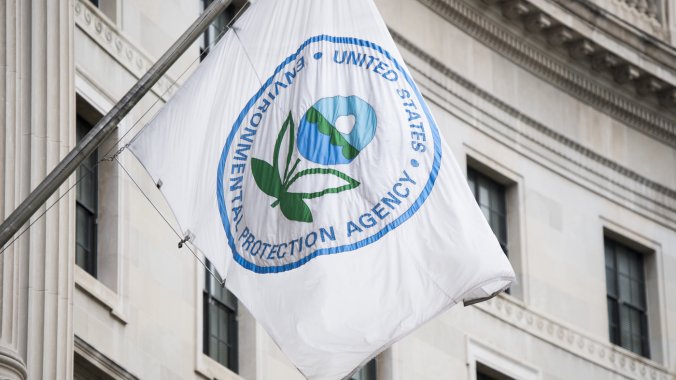
Public To EPA On Cutting Regulations: ‘No!’

As part of President Trump’s executive order to review “job-killing regulations,” the Environmental Protection Agency last month asked for the public’s input on what to streamline or cut. It held a series of open-mic meetings and set up a website that has received more than 28,000 comments, many of which urge the agency not to roll back environmental protections. Continue reading

Reanimating Coffee

fuel-gauge-coffee-mugConsidering the coffee farming and roasting operation, not to mention all the coffee served at Chan Chich Lodge; also considering the constant search for new options relevant to ecologically sensitive operations, this catches our attention. Thanks to Anthropocene and Prachi Patel:

A simpler route to biodiesel from used coffee grounds

The world produces almost 10 million tons of waste coffee grounds every year. Researchers have now discovered an efficient way to turn that waste into a green fuel. Their simple one-step process, outlined in the Journal of Environmental Chemical Engineering, would save time and the cost of producing biodiesels from coffee. Continue reading

Chan Chich Archeology Season, When Skygazing Is Also At A Premium

Death-Valley-2-Skyglow-Desktop-Wallpapers-e1492808806156.jpg

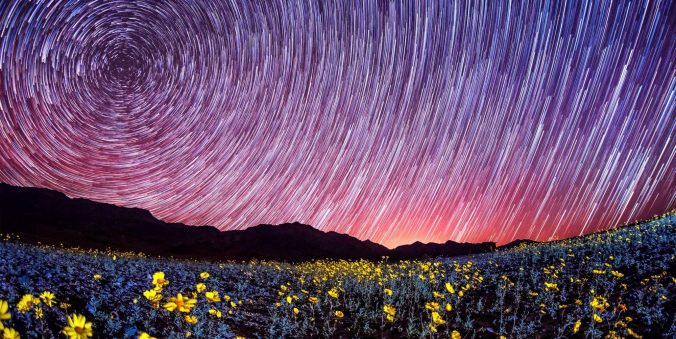
Today and tomorrow we are finalizing preparation for receiving a nearly full house of archeologists, who will be at Chan Chich Lodge for the next couple months. I came across the photo above at the same time I was looking at the to-do list related to their arrival, and am remembering that in May 2016 I was struck by the quality of night sky at Chan Chich for stargazing.

So this is a shout out to all those people who are intrigued by Mayan archeology, are stargazers, and have not yet made vacation plans for the next couple months. We have a few rooms available, so come on over!  The photo above is paid content from Intel, and while usually we avoid passing along commercials, this is on a topic we care about. It is worthy of a read. Also, after the text the Skyglow short on Vimeo is worth a look:

Timelapse photographers zigzagged 150,000 miles across the U.S. to capture the wonders of the dark skies and raise awareness about the growing threat of light pollution.

Their family and friends think they’re crazy for devoting so many nights to create Skyglow, a book and video born from Gavin Heffernan and Harun Mehmedinovic’s passion for nature and photography. Just how Carl Sagan and Stephen Hawking brought deeper understanding of the cosmos, Heffernan and Mehmedinovic are raising awareness about the damage caused by ever increasing light pollution. Their magical timelapse photography just might do the trick. Continue reading

Thank You Nebraska!

Nebraska

We have refused to give up hope because there continue to be a trickle of stories like this, thanks to the Guardian. Bruce Springsteen dedicated a whole album to Nebraska, and this short news via video reminds us of that state’s great people:

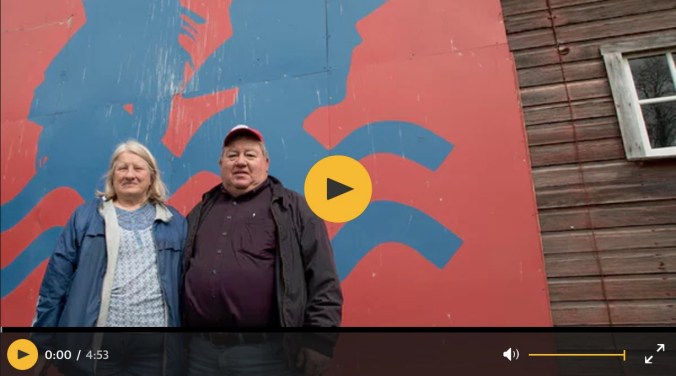
After Trump’s revival of the Keystone XL pipeline project, some communities along its route are getting ready to fight back. Others see the US president keeping his promise to ‘make America great again’. The Guardian drove along the proposed route of the pipeline, through three red states – Montana, South Dakota and Nebraska – to hear what those who will be affected have to say about it

Strengthening Our Birding With Citizen Science

team-belize-720x405.jpg

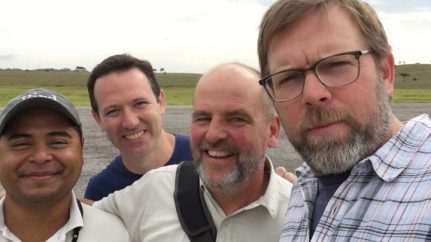
Team Belize finished with 242 species. From left: Roni Martinez, Andrew Farnsworth, Steve Kelling, Brian Sullivan.

Seth, since his time working for the Cornell Lab of Ornithology, and even after his time in Ithaca, has helped me to see how important the Lab’s work is to what our company has been doing since he was an infant. Citizen science is an essential component, and at Chan Chich Lodge guests have responded to the passion the guides have for eBird, which is why we put so much attention into this year’s Global Big Day. And it is why we are already planning the next collaboration with the Lab, a collaboration Seth will lead on our side. For now, a final roundup of stories from last weekend, starting with our favorite team:

…After pooling their lists, the teams ended the day with a whopping 327 species combined—reflecting not just great birding but the region’s importance to an immense diversity of birds. Team Belize topped the friendly group competition with 242 species (including 40 species the other teams didn’t find); Team Mexico found 224 species (with 43 unique to their list); and Team Guatemala tallied 213 (with 23 unique)…

58126301-520x611

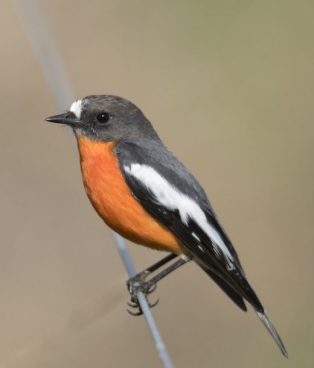
Flame Robin by John Cantwell/Macaulay Library, taken on Global Big Day

Also, the final numbers are in and news published late yesterday confirmed what I suspected as day was breaking in Belize, titled Global Big Day 2017: birding’s biggest day ever:

…On 13 May 2017, almost 20,000 birders from 150 countries around the world joined together as a global team, contributing more than 50,000 checklists containing 6,564 species—more than 60% of the world’s birds. This is a new record for the number of bird species reported in a single day, Continue reading

Food, Labels & Useful Information

16-whole-foods-produce.w710.h473.2x.jpg

Photo: Robert Nickelsberg/Getty Images

We link to the occasional food trend article when it matches something we are working on, whether it is the Chan Chich Lodge culinary program or the food production at Gallon Jug Farm. This article, Whole Foods Would Look a Lot Different If It Were Science-Based, almost lost me with the first sentence, an annoying cliche within a sappy first couple paragraphs, but there is a useful case made starting soon after. We are dealing with these very questions so I can suggest the majority of the article starting after the jump:

Whole Foods used to be my idea of grocery heaven. Once upon a time, I shopped at the California Street location in San Francisco — it was light and airy with produce for miles. I knew the cheesemonger. I had philosophical conversations with the butcher. I stared longingly at the Le Creuset bakeware. The soap aisle smelled like lavender. Heaven.

But eventually, I fell out of love. Or, to be more specific, I changed my mind about organic food after reading the research: It turns out organic isn’t more nutritious or even necessarily better for the planet. So I pretty much stopped shopping at Whole Foods altogether. Continue reading

The Bells & Whistles Of The Forest At Daybreak

GBD2017ResultsWed.jpg

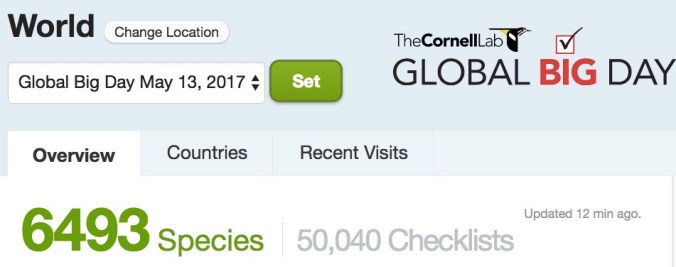
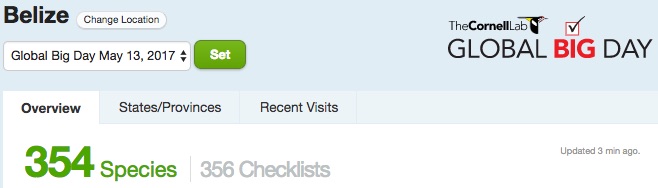
We post a few times a day, sharing information about initiatives in our own realm of work and frequently observations on news links that we find interesting. For the record, here is a bit of news worth celebrating. As I type this at 5:30a.m. Belize time, the Global Big Day page on eBird shows the latest tally of the species count as seen above. At the same time, on the eBird Facebook page I am looking now at the last post, dated May 15 midday, that says:

The #GlobalBigDay total is now 6,255, less than 100 away from a new record for a single day of birding!

Looks to me like a new record has been set. Where are all the bells and whistles? They are outside my door right now, where the wildlife is whirring, cling-clanging, whooping and shrieking as the forest lights up…

Cry Sadness Into The Coming Rain

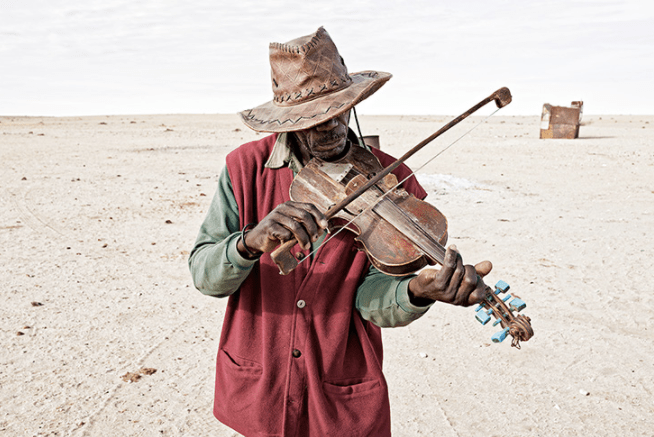
Gottlieb ǂKhatanab ǁGaseb aka Die vioolman (The Violinist) plays traditional Damara music at the funeral of Ouma Juliana ≠Û-khui ǁAreses on the family farm beneath the Dâures. Uis District, Erongo Region. December 2014

As an international company, our team tends to be spread out across the world, so more often than not many of our posts is a surprise to the rest. It was with that sense of synchronicity that I read Crist’s piece on Gerhard Steidl’s conservation work yesterday while I was in the midst of writing about this upcoming publication.

Born in Namibia, photographer Margaret Courtney-Clarke spent decades capturing life in remote places in Italy, the USA and numerous parts of Africa. Returning to Namibia after years away, she found the once familiar landscape drastically changed.

Cry Sadness Into the Coming Rain is a forthcoming publication by Steidl, Germany, 2017.

With strong memories of my formative years growing up on the edge of the Namib Desert in what was then known as South West Africa, I have returned to explore my obsession with this place and my lifelong curiosity for the notion of shelter. I have covered thousands of dusty kilometres across remote plains, through dry river beds, over sand dunes and salt pans, through conservancies and communal lands to photograph families in desperate, forgotten outposts. I try to capture the ‘transhumance’ – the search for work, forage and water – and the remnants of former habitats alongside once productive land.

In coastal towns I move with women and children across stretches of desert from one garbage dump to another – often with the loot they carry in their quest to create shelter and eke out a living. I focus on human enterprise and failure, on the bare circumstances of ordinary women and men forced to negotiate life, and of an environment in crisis. Continue reading

Technology, Wilderness & Balance

4240

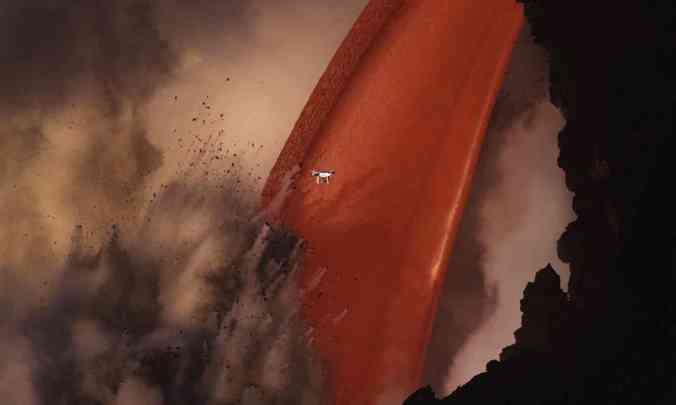
An illegally flown drone gives scale to next to a lava tube in Hawaii Volcanoes national park. Photograph: Andrew Studer

Some in the hospitality business will likely embrace technologies that I cannot picture using in our hospitality operations, ever, but that is fine. Good for them, I say. Recent events at Chan Chich Lodge have reinforced my wonder at, and love for, technology as a tool to support conservation. There is no doubt that guest photos of big (or small) cats and monkeys, shared via social media, help our conservation mission. There is no doubt that tech tools such as eBird and Merlin (Belize edition recently released, just in time for Global Big Day for those of us who need it) also move our conservation mission forward.

That said, I still have a preference for digital detox among our guests, as much as possible. Artificial noises, visuals, aromas and structures are best minimized in order to maximize the many benefits of nature. Distractions, which may be normal things and habits quite common at home, are the spoilers of visits to great places. The problem first came to my attention nearly two decades ago while visiting Mont Saint Michel, where helicopter tours were just becoming a thing, which clearly annoyed every individual who was making the wondrous visit on foot.

I hope, but doubt, that such tours have been limited in the time since then. The evidence seems to point to more distractions in monumental places, whether natural or cultural, that had previously been visually and sonically protected (thanks to Sam Levin at the Guardian for this):

‘Turn it off’: how technology is killing the joy of national parks

As drones, smartphones other gadgets invade America’s most tranquil trails, many lament the loss of peace and quiet Continue reading

Entrepreneurial Conservation, Book

tny_steidl01 009

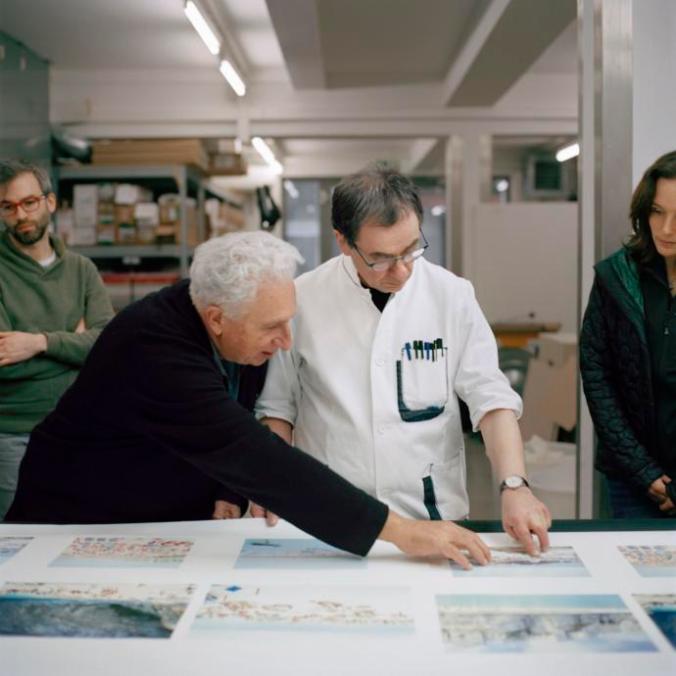
Steidl (pictured here with the Italian photographer Massimo Vitali) is engaged in an effort to print and catalogue work that might otherwise not be available, and to use advanced industrial means to distribute it widely. It is a Gutenberg-like goal, with the history of photography substituting for the word of God. Photograph by Mark Peckmezian for The New Yorker

We have frequently sampled the publications of Phaidon when we see relevance to themes we care about. There are plenty of books they produce that are about frill or fashion, and we are less than not interested in those. But we assume those books we like least are likely the ones that sell well enough to pay for the ones we like most. It is a principle we can live with. In our own work we commercialize experiences in nature in order to fund the conservation of that nature, and we live with all the paradoxes inherent in that.

In this week’s New Yorker there is a profile of one man whose life’s work is more or less displaying the same principle, again in the realm of books with photographs, paid for by work in fashion. It caught my attention at first in the same way the Phaidon books generally do, with regard to craft, beautiful display, etc., but there is more here. This man does not just produce lovely coffee table books.  He is clearly on a mission we can relate to, recognizable for an entrepreneurial approach to conservation. Read the one paragraph sampled below for a taste:

GERHARD STEIDL IS MAKING BOOKS AN ART FORM

He is the printer the world’s best photographers trust most. Continue reading

Sticking To Mission & Unintended Consequences

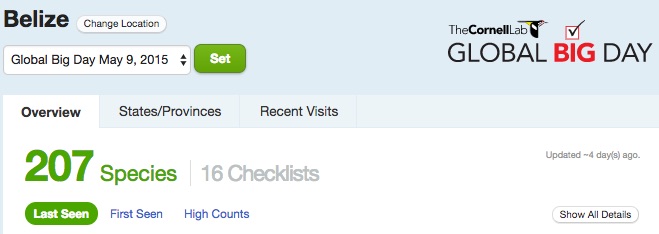
GBD2017Result1

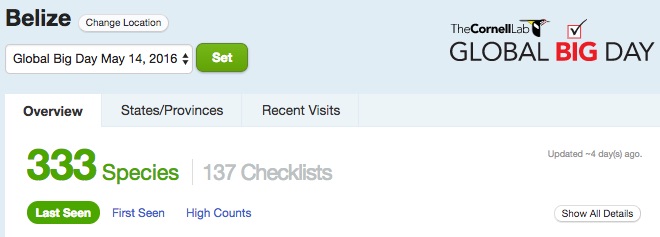
In recent months, as we prepared to host Team Sapsucker Belize at Chan Chich Lodge, our goals were focused on the citizen science mission. Using a couple simple metrics, the event was a clear success, comparing the number of species counted in Belize this year versus last year, and especially looking at the number of checklists submitted.

GBDResult16.jpg

If you look at this as the third iteration of an event that we hope to grow in future years, the progress from beginning to present is promising. As I type this there are still more than 40 hours of data entry remaining for this year’s event, so the increase in this year’s participation and species identification will likely grow larger by this time Wednesday.

GBDResult15.jpg Continue reading

Funky Nests 2017

a mother Costa’s Hummingbird on her nest at Villa del Faro in Baja California Sur. The rim of the nest is covered in her and/or her offspring’s droppings!

In the citizen science department of the Cornell Lab of Ornithology, the Celebrate Urban Birds program (CUBs) holds several competitions a year revolving around a certain idea of bird celebration. We have covered the Funky Nests in Funky Places competition several times,  and back when I worked for CUBs as a Cornell undergraduate student I wrote worked behind the scenes on the competition.

Now the contest is back, and ends on June 30th!

Continue reading