Climate Change, Economic Growth, Santa Claus & Sanity Clause

MacKinnon-CanWeSlowGlobalWarmingandStillGrow-1200.jpg

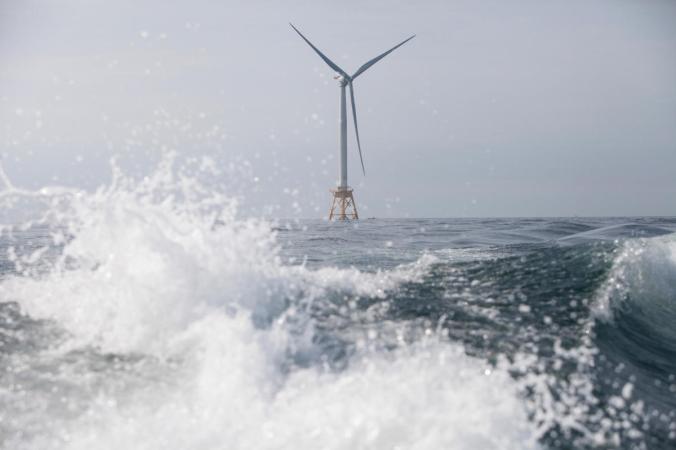
America led the world in reducing carbon pollution in 2016, with a decline of three per cent. But the Trump Administration’s plans suggest that current trends are about to shift. PHOTOGRAPH BY KAYANA SZYMCZAK / THE NEW YORK TIMES / REDUX

Thanks to J. B. MacKinnon for this post on the New Yorker website about the relationship between things we know to be true, things we want to be true, and things which may seem like wishful thinking (for which Santa Claus might be the only hope if we cannot adhere to the sanity clause of our compact with the planet):

CAN WE SLOW GLOBAL WARMING AND STILL GROW?

On March 17th, the International Energy Agency announced that 2016 marked the third year in a row that global carbon emissions had stayed at the same level while the world’s economy grew. This three-time repeat has put to rest any lingering suspicions of gremlins in the data. Something new is happening. The global economy has now grown nearly ten per cent without any increase in the annual CO2 emissions that are the principal human contribution to climate change. In the parlance of sustainability, growth and emissions appear to have “decoupled.” Continue reading
Seeing Sequoias Surprises

26mag-26sequoias-t_CA0-jumbo.jpg

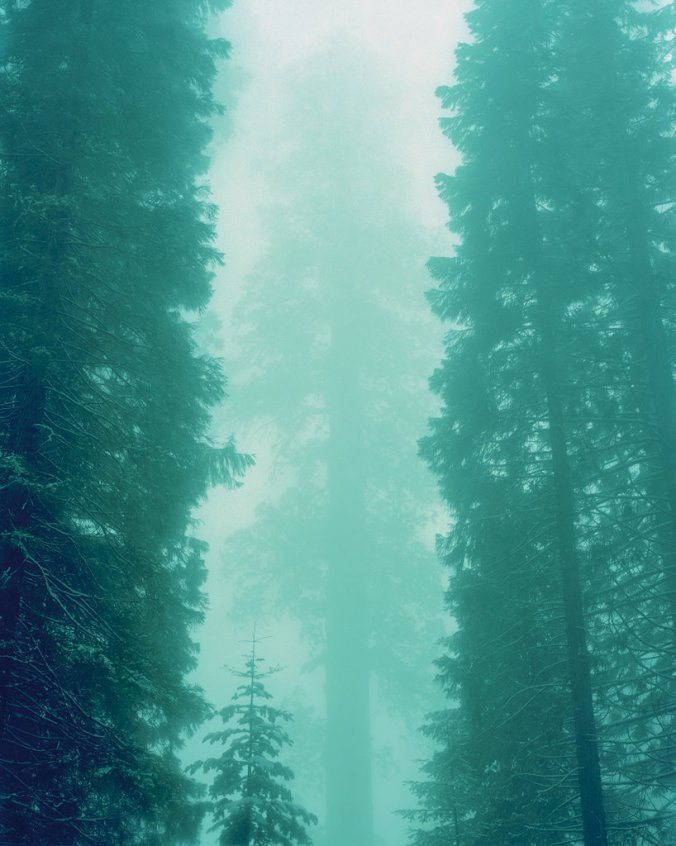
Titans in the fog in Sequoia National Park, California. CreditDavid Benjamin Sherry for The New York Times

Yuval Noah Harari Speaks His Mind; What A Mind It Is

cover.jpg.rendition.460.707.jpgWe linked recently to a review of this book, and that makes a compelling case. His publisher’s blurb says:

Yuval Noah Harari, author of the bestselling Sapiens: A Brief History of Humankind, envisions a not-too-distant world in which we face a new set of challenges. Where do we go from here? And how will we protect this fragile world from our own destructive powers? In Homo Deus, he examines our future with his trademark blend of science, history, philosophy and every discipline in between.

But if you have 90 minutes to let the author compel you through discussion, the intelligence squared recording below will not let you down

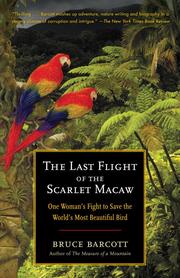
A Decade Since The Last Flight Of The Scarlet Macaw

The+Last+Flight+of+the+Scarlet+Macaw.jpgWhen a book like this comes recommended, book reviews from a decade earlier are as fresh and relevant as ever:

…When McPhee wrote “Encounters With the Archdruid,” the American conservation movement was a religious and mystical force. It may still be so today, but the movement now employs nearly as many big-city lawyers and consultants as any corporation hoping to develop a mine, oil field or… dam. They’re out in force in Bruce Barcott’s new book, “The Last Flight of the Scarlet Macaw: One Woman’s Fight to Save the World’s Most Beautiful Bird,” the story of a bitter fight against a dam in western Belize. No, it doesn’t sound thrilling (which is doubtless why the publisher kept the word “dam” out of the title), but Barcott, a contributing editor at Outside magazine and the author of “The Measure of a Mountain: Beauty and Terror on Mount Rainier,” makes it so, mashing up adventure travel, biography and nature writing in a steamy climate of corruption and intrigue…

It is not the first time this book has been recommended to me, but yesterday a fellow hotelier in Belize mentioned it when describing his getting to know someone central to the book’s story, and this  reminded me that I still had not touched the book. It is, I am told, a must read.  Bruce Barcott provided an excerpt of his book back when it first came out, so I have just started.

Let Sleeping Bears Lie

25tb-hibernation-top-superJumbo.jpg

A black bear, which has been sedated, and her cub in a den in Massachusetts. Credit Mark Wilson/The Boston Globe, via Getty Images

Thanks to the science writer Steph Yin for this one:

Waking From Hibernation, the Hard Work of Spring Begins

For animals that hibernate, making it to spring is no small feat. Torpor — the state of reduced bodily activity that occurs during hibernation — is not restful. By the time they emerge, hibernating animals are often sleep-deprived: Continue reading

Bird, Data, Love

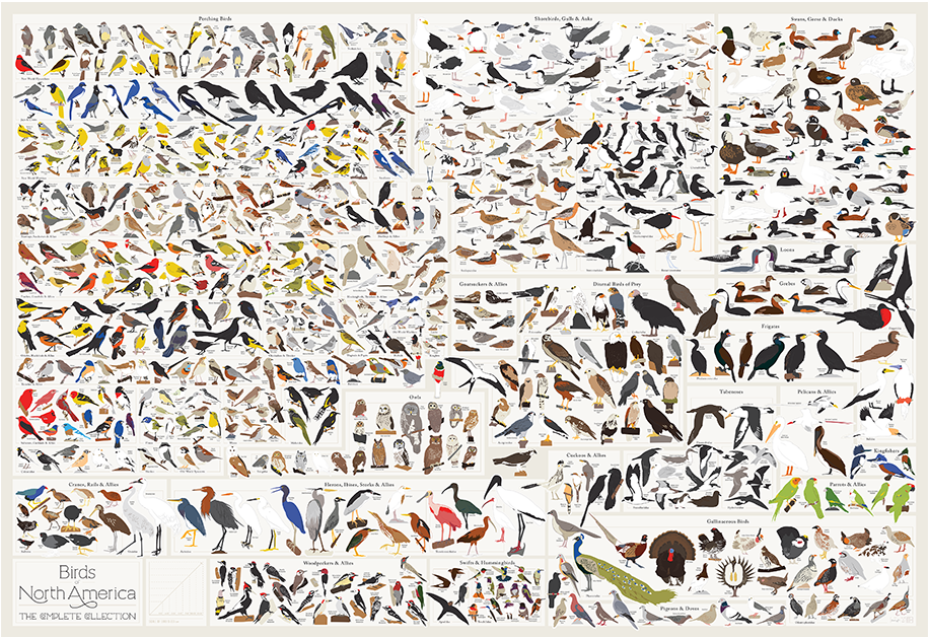
We love this amazing poster from Pop Chart Lab as much as the link to find it.  The site’s zoom function gets you closer to the fantastic detail.

Take a look!

Perhaps our most ambitious taxonomical undertaking yet, this is your field guide to the birds of North America! The product of over 400 hours of intricate illustration work by our talented team of artists, this unabridged aviary features over 740 fair-feathered friends drawn to scale and sorted by species, covering the continent’s avifauna (both native and introduced, as designated by the National Audubon Society and the Cornell Lab of Ornithology) from common sparrows, jays, and owls to rarer birds such as the Greater Sage-Grouse, the California Condor, and the Whooping Crane. An ornithological opus like no other, this classificatory treasure is perfect for amateur and eagle-eyed birdwatchers alike. Continue reading

Why We Use eBird, A How-To Primer Explaining Our Motivations

Chan-Chich-Lodge-logoThis article published by Audubon (click their banner below to go there) continues to provide fresh illumination on the basics of eBird; also on why we have made eBird central to our birding activities for guests in recent years, and why Chan Chich Lodge is collaborating with the Lab of Ornithology this Global Big Day event .

AudubonLogo

Since its launch in 2002, eBird has revolutionized the way birders worldwide report and share their observations. A joint project by the Cornell Lab of Ornithology and Audubon, eBird is a free online program that allows birders to track their sightings, while other birders watch and search in real-time. Articles have been written about eBird with mind-bending titles like, “eBird Changed My Life” and “The Agony and Ecstasy of Surrendering to eBird.” In a front-page science headline in 2013, The New York Times called it “Crowdsourcing, for the Birds,” and concluded that eBird is “a revelation for scientists” and gives birders “a new sense of purpose.” Continue reading

Cattle, Climate & Cataloguing


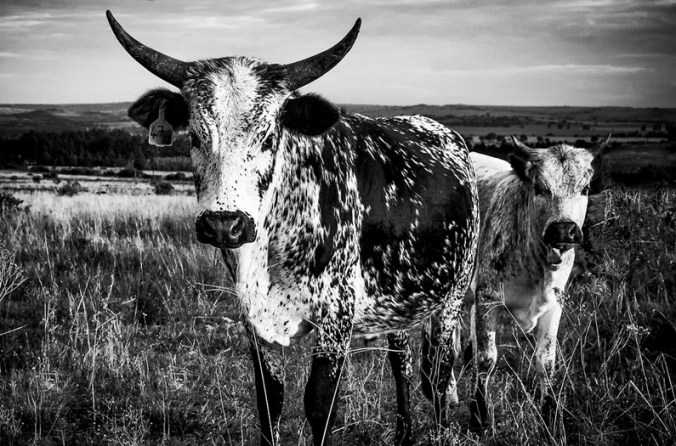
nguni-cattle.jpg

South Africa’s indigenous Nguni cattle via Flickr

Thanks to Emma Bryce at Anthropocene for this summary on how preserving climate-resilient cattle breeds can boost Africa’s food security:

Yarn Bombing, Indian-style

Elephants, many of whom have suffered serious abuse in the past, photographed wearing the knitted multi-coloured, pyjama-like garments knitted by local villagers Roger Allen

While the concept of yarn bombing (also called guerrilla knitting) is usually a playful way to bring color to an urban setting, this isn’t our first story about altruist knitting in the realm of animal protection.

This story seems particularly poignant considering it weaves together the matriarchal nature of elephants and the communal work of the village women…

Villagers knit jumpers for Indian elephants to protect the large mammals from near-freezing temperatures

Elephants in India are sporting colourful woollen jumpers after villagers knitted the super-size garments to protect the animals from near-freezing temperatures.

Women in a village near the Wildlife SOS Elephant Conservation and Care Centre in the northern city of Mathura reportedly began producing the colourful, pyjama-like garments after staff at the centre warned temperatures were approaching sub-zero at night. Continue reading

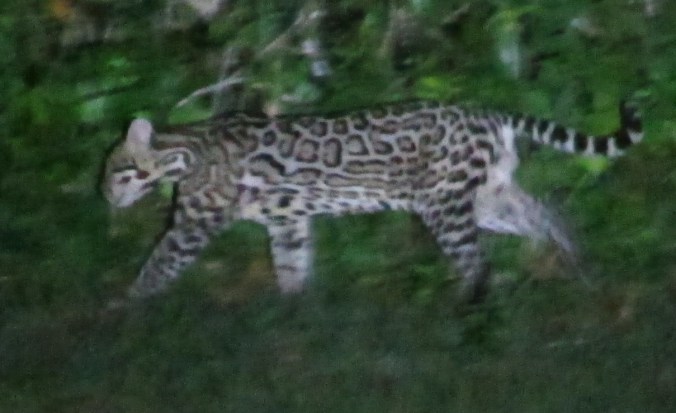
Ocelot Dreaming At Chan Chich Lodge

MargayDream.jpg

Thanks to our guests, Yvonne & Martin Ryves of Cork, Ireland for these snapshots taken on the night safari Wednesday after dinner. The one above looks like an ocelot in a dreamscape. Below, as crisp a couple of shots as you are likely to get on the go in the dark in this part of the world. Continue reading

HEC 92 Call To Action On Sustainable Hospitality

HEC92CallAction

I already mentioned this session earlier, but I just got this snapshot in my inbox, which we took at the end of that discussion, so another quick comment. After an excellent Q&A (there is more than one CEO of a global brand visible in the audience if you know who to look for, among lots of other top industry talent and future leaders) we decided to turn the camera on everyone present, ourselves included, and our ask was simple: stand if this session has given you an idea what you will do differently starting Monday morning. Everyone stood, of course. So this snapshot, this call to action, was a way to do a reality check when the time comes…

Old School Shepherd Knowhow Saves The Day


Project2016-92-1260x708

Natalie holding point as the herd disperses over Bear Basin. Photo © Melanie Elzinga

Thanks to Matt Miller over at Cool Green Science for this one:

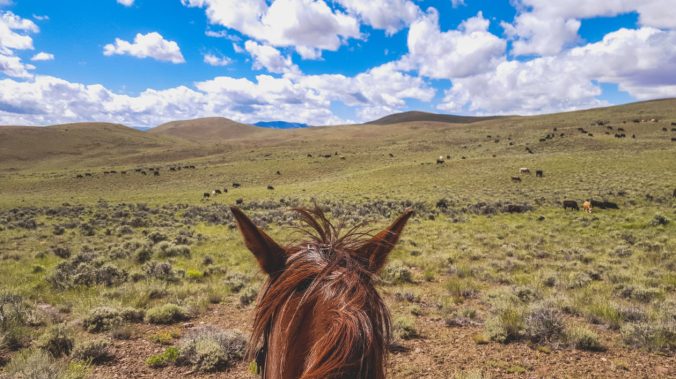
Can Ancient Herding Traditions Help Cattle Coexist with Wolves and Sage Grouse?

Gigging Gets Gruesome

Tolentino-TheGigEconomyCelebratesWorkingYourselftoDeath-800.jpg

Fiverr, an online freelance marketplace that promotes itself as being for “the lean entrepreneur,” recently attracted ire for an ad campaign called “In Doers We Trust.” COURTESY FIVERR

We know from experience in the realm of sustainability, which has had its soup du jour moments in the last two decades, that whether you are leading or following, a fad or a trend can be a slippery slope. It can lead to innocuous inattention to unintended consequences, or worse. Various new forms of technology, which we tend to celebrate in recent years for their disruptive service to the economy and society through innovation and blah blah blah…Don’t just do it. That might be the counter-message as we explore the gig economy’s downside, as this post by Jia Tolentino points out:

Last September, a very twenty-first-century type of story appeared on the company blog of the ride-sharing app Lyft. “Long-time Lyft driver and mentor, Mary, was nine months pregnant when she picked up a passenger the night of July 21st,” the post began. “About a week away from her due date, Mary decided to drive for a few hours after a day of mentoring.” You can guess what happened next. Continue reading

Buffalo, Back Big

14tb-bison-superJumbo.jpg

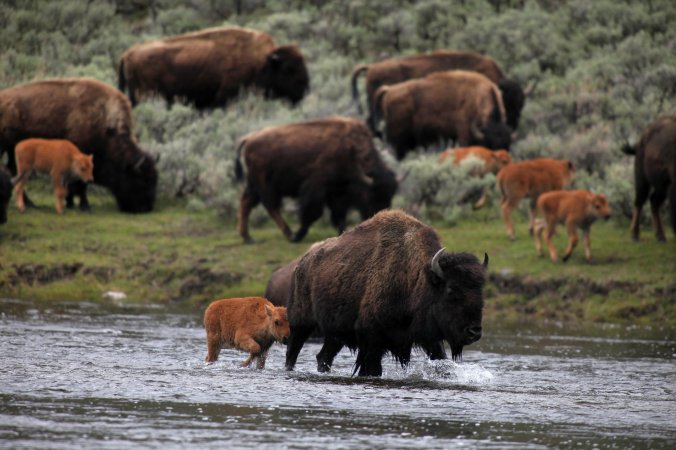
Bison and their calves in Yellowstone National Park. A fossil found in Canada provides the oldest evidence of bison ever discovered in North America. Credit Nicole Bengiveno/The New York Times

We love watching the return of this beast, so this story in today’s Science section is our kind of story:

When did North America become a home where the ancestors of buffalo roamed? Between 195,000 and 135,000 years ago, according to a study published Monday that reports on the oldest fossil and genomic evidence of bison on the continent. Continue reading

Ethiopian Options

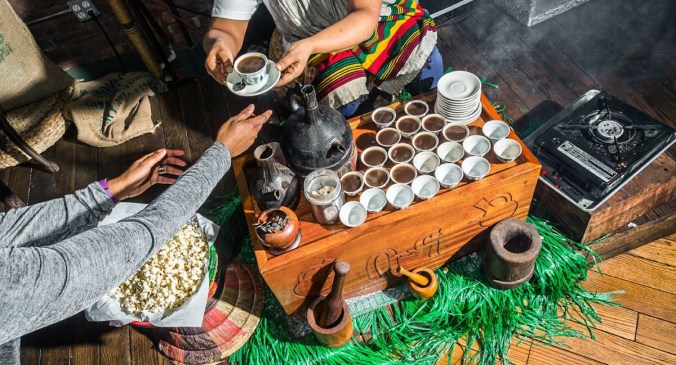
170327_r29603-1200x649-1489682838 (1).jpg

I have stated my own preferences for certain pros critiquing and explaining food and the places where you can explore it anew. I have recently been appreciating those like this one–not least because I love Ethiopia, and its contributions to humanity, and in general I am an Ethiopian diaspora fanboy–by the newer reviewer, Nicholas Niarchos and look forward to his providing many more. I am happy to see in the image accompanying his review what appears at first to be popcorn on the lower left, but is more likely a lightly toasted version of a superfood we came to favor when in Ethiopia, (speaking of superfoods):

A Vegan Ethiopian Feast at Bunna Café

The absence of meat and dairy isn’t obvious while you’re there, but when you leave your step will have a new spring in it.

Continue reading