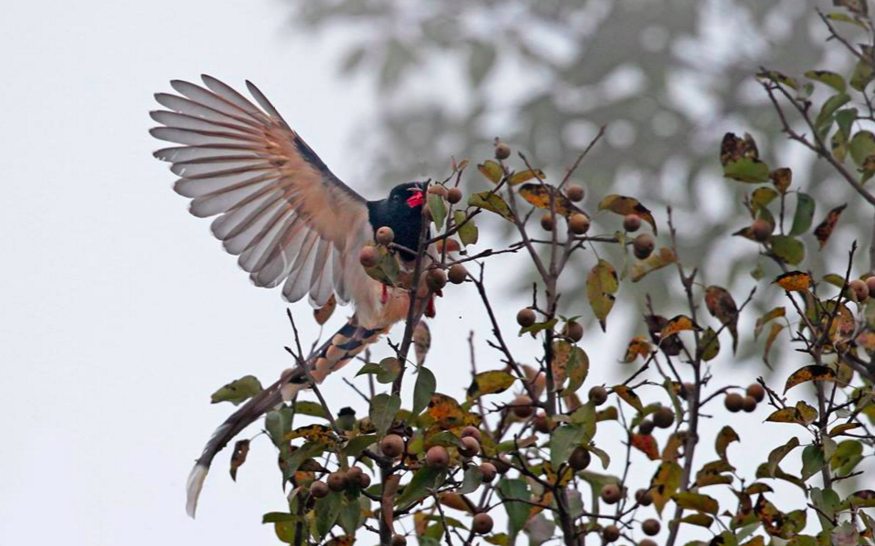
Pangot, Uttarakhand
Pangot, Uttarakhand
Not to overgeneralize or stereotype, but what is it with Scandinavians? We have barely noted, certainly not enough in these pages, how remarkably adept they are at navigating in the right direction. They seem to know something about how to live life, with very happy outcomes, that the rest of us might well learn from. And with all the unhappy news, from time to time we must ponder happiness itself.  Click the image of the report to the right to get a copy of the report, summarized on the website of the Sustainable Development Solutions Network (SDSN) as follows:
The first World Happiness Report was published in April, 2012, in support of the UN High Level Meeting on happiness and well-being. Since then the world has come a long way. Increasingly, happiness is considered to be the proper measure of social progress and the goal of public policy. In June 2016 the OECD committed itself “to redefine the growth narrative to put people’s well-being at the center of governments’ efforts”. Continue reading

The Good Sort. Photo: Bobby Doherty/New York Magazine
Our preferred blank canvas, at least in the morning, has been oats when we have developed new restaurants recently. And we have tended to look at superfoods when we do our scouting and conceptualization for new menu ideas, and that is about food that (we try to ensure) provides health for both humans and the planet. We have not put congee on any menus, nor has it even been on our radar, but perhaps it should be:
Congee Is the Original Grain Bowl
Congee, also known as jook, or rice gruel, has long been the breakfast of billions in China — filling, cheap, energizing, and easily digestible, fit for infants and nonagenarians alike. Some swear by it as a post-exercise pick-me-up; others as a superb hangover cure. Its soothing properties are considered so powerful that congee is even served at funerals. Continue reading
We link so often to contents of this magazine, occasionally for in-depth profiles and often for items posted only on their website; but their covers tend to be particularly poignant visual cues. Those of us who post here think of and refer to our WordPress platform as our cabinet of curiosities so this week’s cover captures our attention more than most:
“I drew a bookshelf, and the lines made me think of the streets of a map,” Luci Gutiérrez says, about her cover for this week’s issue. Another inspiration for her image: Wunderkammern, the cabinets of curiosities created in the Renaissance to display collections of extraordinary objects. “I don’t have this particular piece of furniture, but I wish I did. I keep strange and pretty objects,” Gutiérrez says. “It can be a chocolate paper wrapper or a Japanese mask. . . . they provide me with a way to remember the place they come from.”

Athoor, Dindigul, Tamil Nadu
You have plenty of options of where to spend the day, but we are hoping to share the entire week leading up to May 13 with lots of old friends of Chan Chich Lodge–not only dedicated birders, but especially them. And not only old friends–we welcome the opportunity to introduce new folks to birding. So think about joining us that week in particular.
In our work around the world in recent years we have tried to support the Cornell Lab of Ornithology’s mission, focused through ebird in this worthy call to action, in as many ways as possible. If you do not know about the Lab, start with what they say about themselves and if it strikes you as relevant click on the banner above to make a pledge on one key initiative:
The Cornell Lab of Ornithology is a world leader in the study, appreciation, and conservation of birds. Our hallmarks are scientific excellence and technological innovation to advance the understanding of nature and to engage people of all ages in learning about birds and protecting the planet. Continue reading
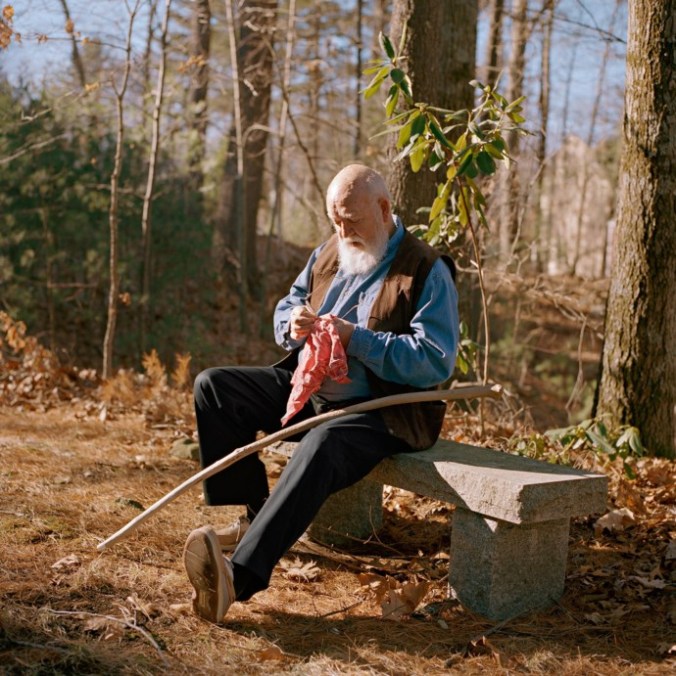
Daniel Dennett’s naturalistic account of consciousness draws some people in and puts others off. “There ain’t no magic here,” he says. “Just stage magic.” PHOTOGRAPH BY IRINA ROZOVSKY FOR THE NEW YORKER
Joining colleagues for a conversation about how to make sense of the post-2016 world provided me strong motivation in recent weeks to return to philosophy, something I had not done since graduate school 2+ decades back. With all the hyperventilation, there is a clear need for calm reflection. I recently listened to this man on one of the best podcasts out there; and by virtue of his voice, his ideas, his science of the soul (thanks to Joshua Rothman and the New Yorker for illumination on this science), he offers the perfect antidote to the current crescendoing chaos:
Four billion years ago, Earth was a lifeless place. Nothing struggled, thought, or wanted. Slowly, that changed. Seawater leached chemicals from rocks; near thermal vents, those chemicals jostled and combined. Some hit upon the trick of making copies of themselves that, in turn, made more copies. The replicating chains were caught in oily bubbles, which protected them and made replication easier; eventually, they began to venture out into the open sea. A new level of order had been achieved on Earth. Life had begun. Continue reading
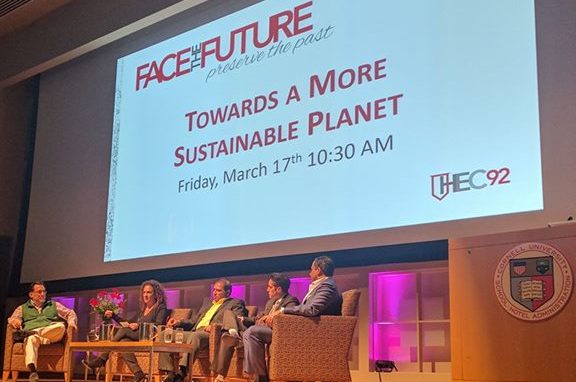
This is a shout out to friends at Cornell University’s School of Hotel Administration, particularly the team leading this year’s Hotel Ezra Cornell, and especially Carmel Bendit-Shtull (she invited me to moderate this panel and for several months helped us plan it all out). The panel included Diana Dobin, President & Chief Sustainability Officer, Valley Forge Fabrics, Inc.; Bennett Thomas, SVP – Corporate Finance & Sustainability, Hersha Hospitality Trust; Eric Ricaurte, Founder, Greenview; Uttam Muthappa, Founder, Ithica Hospitality Consulting; & me (Panel Moderator). I will share a video of this if and when it is made available. Continue reading
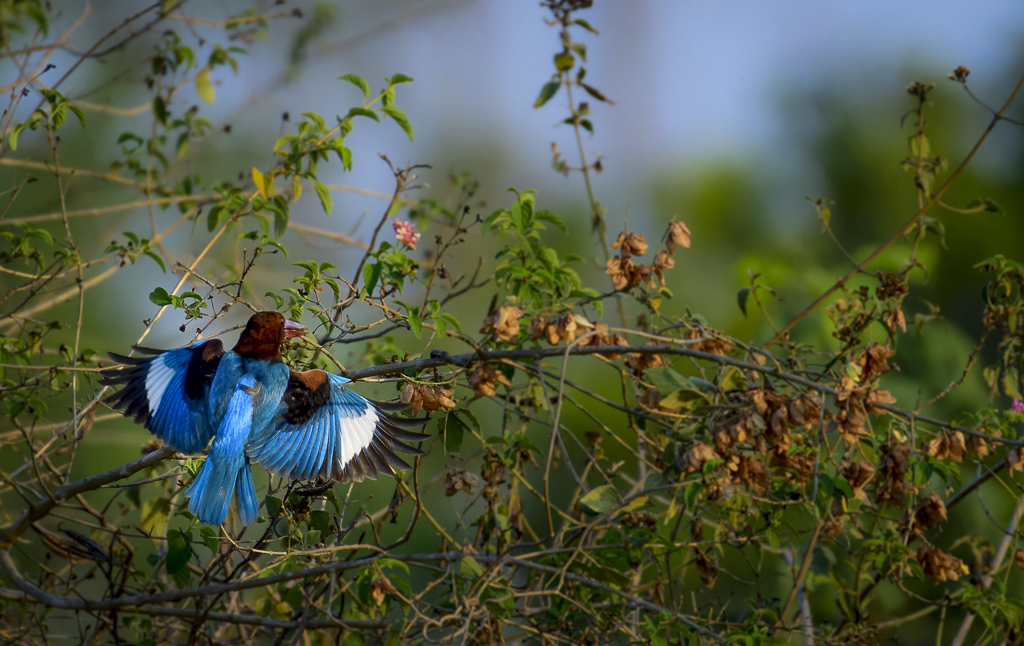
Hassan, Karnataka

We had the good fortune some weeks ago to host one of Europe’s finest birder-guide-photographers at Chan Chich Lodge. His bird photos are wow quality (see below for an example) but my favorite of all his photos is the one above of an ocelot. We are gearing up for Global Big Day at Chan Chich Lodge. Our primary goal is simple. Follow the leader, and lead by example. Our secondary goal is kind of competitive, related to the program’s own details:
Details
For the past two years, the second Saturday in May has been the biggest day of the year for birds: Global Big Day. More than 6,000 species of bird. Tens of thousands of people. 153 countries. Immeasurable fun. Continue reading
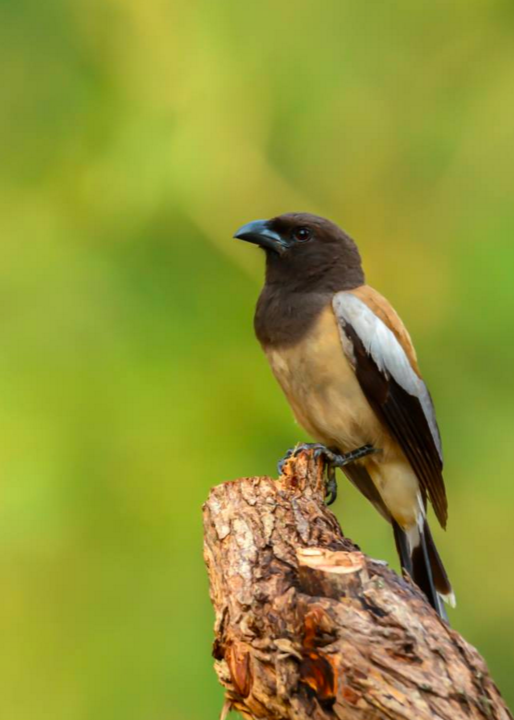
Masinagudi, Tamil Nadu
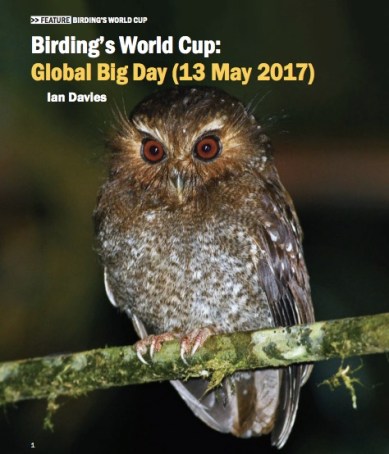
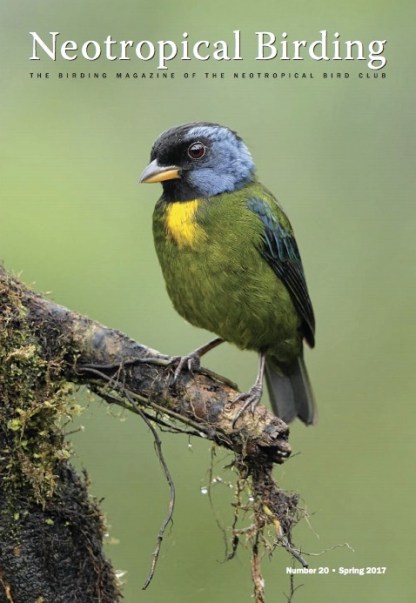 Neotropical Birding’s magazine feature on Global Big Day 2017, which we are looking forward to at Chan Chich Lodge, provides a good primer on the what, how and why of this event; we hope to convince you on the where:
Walking the thin line between madness and brilliance, ‘big days’ (also known as ‘bird races’) are the essence of birding’s competitive spirit distilled into 24 intense, frantic and thrilling hours. Months of planning, poring over spreadsheets and pen-marked maps; days spent scouting out the perfect stops, driving practice routes while ingesting egregious amounts of caffeine; and years of birding experience used to find the right habitat for each target species, the game is to see or hear as many bird species as possible in a single, incredibly efficient, BIG day.
Why do this? Why care? These friendly competitions are an incredibly powerful way to engage people around the world, both within the birding community and beyond. Across fields of study and walks of life, there is always an innate human interest in setting records or being a part of something that has never happened before. In addition to the inherent fun, record-setting events provide an outlet to talk to non-birders about conservation issues, ecological concerns, and all the things that make birds so interesting. Continue reading

Thanks to Anthropocene for this summary of news explaining why We don’t really need to double food production by 2050, provided by
It sounds daunting: by 2050 we’ll have to double our food production in order to satisfy the appetite of the planet’s rapidly expanding population. This statistic has become so deeply-ingrained, in fact, that it’s being used to shape future agricultural policy. But a group of researchers, publishing in the journal BioScience, have challenged that influential estimate, arguing that it’s due for a significant upgrade to bring it in line with recent data. Continue reading

Gazaldoba, West Bengal
Good chocolate was impossible to come by in our early years in Kerala. So when we see this video we think wistfully about the progress on that front. The same film maker who worked with Amie on the series of shorts we wanted for the various Xandari properties–who we adored working with and whose final product was as good or better than what we had expected–has shared a link with us. It is a client in Kerala who, in a few minutes, has the chance to tell their story visually as well as verbally. We look forward to meeting the folks at Liso next time we are in Kochi.

American shad in fishlift in Holyoke Dam on Connecticut River in Holyoke, MA. Courtesy of Connecticut Department of Energy and Environmental Protection
Of all North America’s Atlantic salmon rivers none compared in size or productivity with the 407-mile-long Connecticut River that drains Vermont, New Hampshire, Massachusetts and Connecticut. But early in the 19th century all strains of salmon uniquely adapted to this sprawling system (at least 25) had been rendered extinct by dams. Continue reading

Gretchen Daily. COURTESY OF STANFORD UNIVERSITY
We have shared stories from time to time about the challenges and about related opportunities for protected areas in countries around the world. Thanks to Yale360’s Diane Toomey for this interview in which an ecologist describes her work with the Chinese government as they re-conceive their national park system and their other protected areas in a country where little land remains undisturbed:
For Stanford University ecologist Gretchen Daily, nature isn’t only to be preserved for its own sake, but also for the value of the ecological services it provides, such as water filtration, carbon sequestration, and soil retention. Daily helped pioneer the concept of “ecosystem services,” and these days she applies those principles as she works with countries to develop land management strategies and determine which natural areas to prioritize for protection. Continue reading
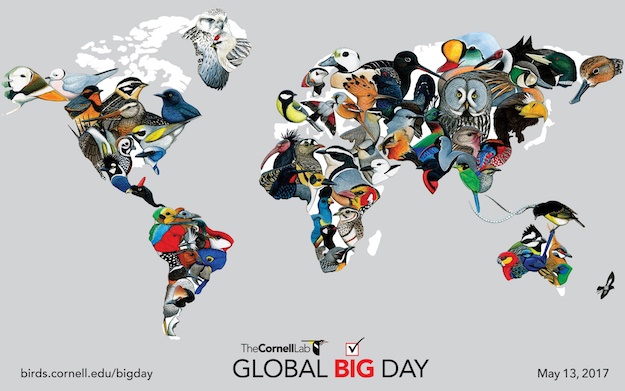
Global Big Day map painted by Luke Seitz, a Bartels Science Illustration intern and member of the Redheads student birding team.
We have about two months to prepare, and this third year of Global Big Day could be epic. When we started participating in this annual event in 2015 our work still mostly focused on the Western Ghats region of southwest India, but we were migrating back to the Mesoamerica region so our attention has been shifting. Now we are all in at Chan Chich Lodge and we want to help ensure that this year Belize is as strong a contributor as possible to the goals of this program:
In our ongoing effort to push the boundaries of a Big Day, we’re inviting everybody around the world to join together and participate in our Global Big Day to support global conservation.
How to Participate
Submit Your Data to eBird on May 13
It’s that simple. If you submit your birds to eBird they count. Learn how to take part. Don’t worry — you don’t need to be a bird expert, or to go out all day long. Even a half hour checklist from your backyard will help. Of course, you are welcome to spend the entire day in the field, but know that it is not required! Please enter your data as soon as you can, preferably by Tuesday, May 16. Continue reading

Photo credit: B. Bartel/USFWS
We know that most of our readers on this platform, and most guests we serve at the various properties we have developed and managed over the years, care deeply about primary forests and the ecosystems they support. Here is a chance to vocalize together with one of the influential organizers of vocalization:
Help Protect Tongass National Forest: Stop the Clearcutting
They’re about to start their chainsaws. Timber companies are trying to clearcut one of the most primeval wild places — and this is our last chance to stop them.
Alaska’s Tongass National Forest is nothing short of magical: it contains centuries-old trees and one-of-a-kind wilderness, home to animals like Alexander Archipelago wolves and bald eagles. Your voice is needed to pressure Congress to bring an end to old growth logging and save the Tongass for our children and grandchildren.
Take action today to save the Tongass National Forest.
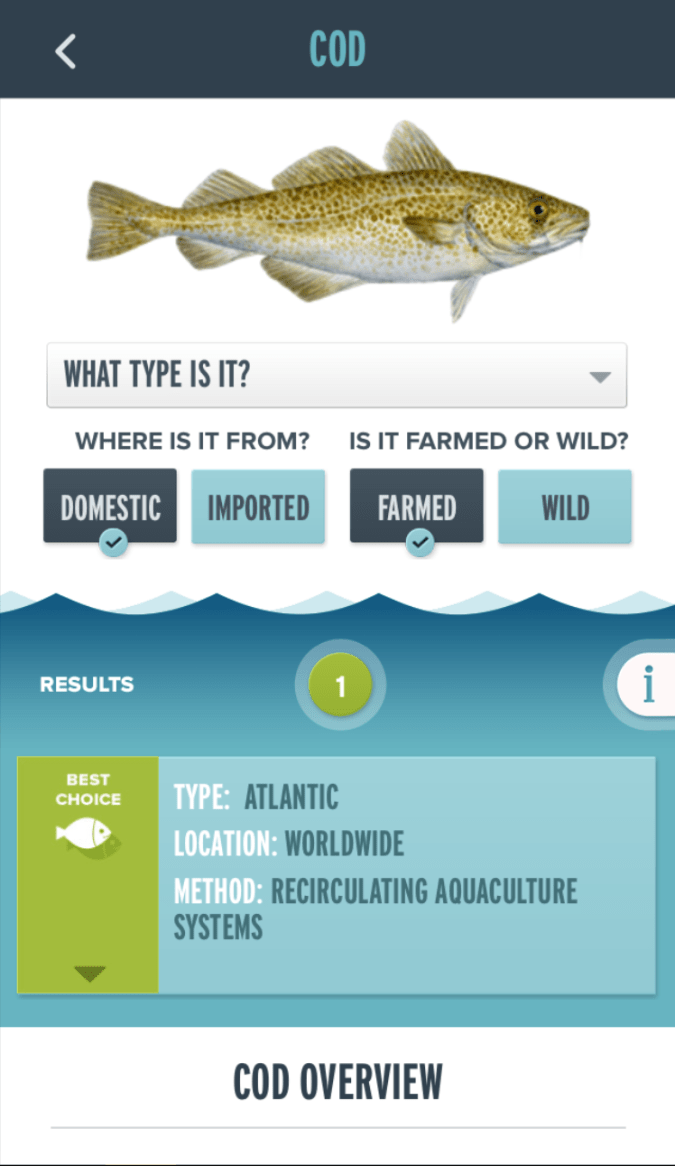
Monterey Bay Aquarium Seafood Watch App best choice recommendations for cod. Screenshot by NPR
Rules change. Guides get updated. Staying on top of this topic requires effort. But it is worth it. Thanks to the folks at the salt for an acknowledgement that choosing fish in a responsible manner is no easy task, even for those regularly paying attention:
This month, I ventured to ask the man behind the counter at a Whole Foods Market what kind of shrimp he was selling. “I don’t know,” he replied. “I think they’re just normal shrimp.” I glanced at the sustainable seafood guide on my phone. There were 80 entries for shrimp, none of them listed “normal.”
What about the cod? Was it Atlantic or Pacific? Atlantic. How was it caught? I asked. “I’m not sure,” he said, looking doubtfully at a creamy fish slab. “With nets, I think. Not with harpoons.” Continue reading

 Organikos