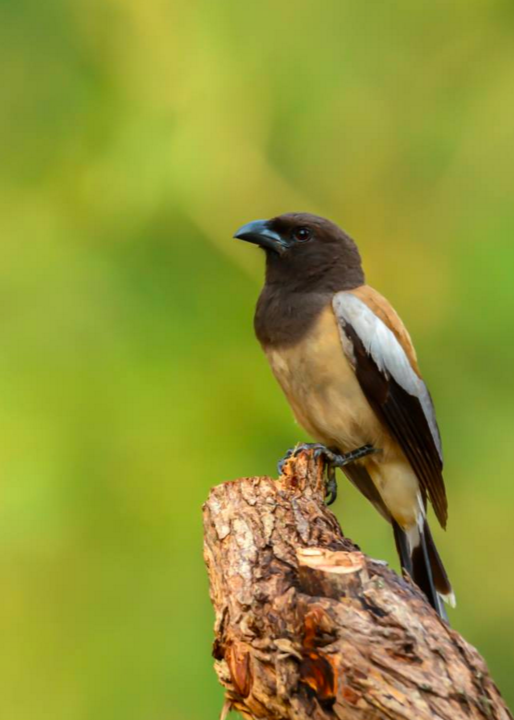
Masinagudi, Tamil Nadu
Masinagudi, Tamil Nadu
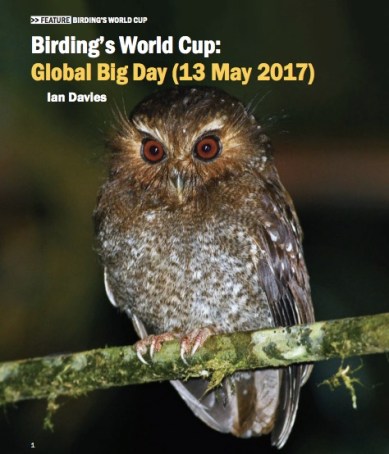
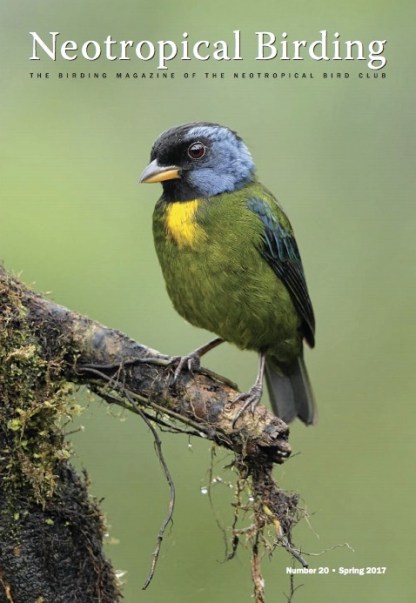 Neotropical Birding’s magazine feature on Global Big Day 2017, which we are looking forward to at Chan Chich Lodge, provides a good primer on the what, how and why of this event; we hope to convince you on the where:
Walking the thin line between madness and brilliance, ‘big days’ (also known as ‘bird races’) are the essence of birding’s competitive spirit distilled into 24 intense, frantic and thrilling hours. Months of planning, poring over spreadsheets and pen-marked maps; days spent scouting out the perfect stops, driving practice routes while ingesting egregious amounts of caffeine; and years of birding experience used to find the right habitat for each target species, the game is to see or hear as many bird species as possible in a single, incredibly efficient, BIG day.
Why do this? Why care? These friendly competitions are an incredibly powerful way to engage people around the world, both within the birding community and beyond. Across fields of study and walks of life, there is always an innate human interest in setting records or being a part of something that has never happened before. In addition to the inherent fun, record-setting events provide an outlet to talk to non-birders about conservation issues, ecological concerns, and all the things that make birds so interesting. Continue reading

Thanks to Anthropocene for this summary of news explaining why We don’t really need to double food production by 2050, provided by
It sounds daunting: by 2050 we’ll have to double our food production in order to satisfy the appetite of the planet’s rapidly expanding population. This statistic has become so deeply-ingrained, in fact, that it’s being used to shape future agricultural policy. But a group of researchers, publishing in the journal BioScience, have challenged that influential estimate, arguing that it’s due for a significant upgrade to bring it in line with recent data. Continue reading

Gazaldoba, West Bengal
Good chocolate was impossible to come by in our early years in Kerala. So when we see this video we think wistfully about the progress on that front. The same film maker who worked with Amie on the series of shorts we wanted for the various Xandari properties–who we adored working with and whose final product was as good or better than what we had expected–has shared a link with us. It is a client in Kerala who, in a few minutes, has the chance to tell their story visually as well as verbally. We look forward to meeting the folks at Liso next time we are in Kochi.

American shad in fishlift in Holyoke Dam on Connecticut River in Holyoke, MA. Courtesy of Connecticut Department of Energy and Environmental Protection
Of all North America’s Atlantic salmon rivers none compared in size or productivity with the 407-mile-long Connecticut River that drains Vermont, New Hampshire, Massachusetts and Connecticut. But early in the 19th century all strains of salmon uniquely adapted to this sprawling system (at least 25) had been rendered extinct by dams. Continue reading

Gretchen Daily. COURTESY OF STANFORD UNIVERSITY
We have shared stories from time to time about the challenges and about related opportunities for protected areas in countries around the world. Thanks to Yale360’s Diane Toomey for this interview in which an ecologist describes her work with the Chinese government as they re-conceive their national park system and their other protected areas in a country where little land remains undisturbed:
For Stanford University ecologist Gretchen Daily, nature isn’t only to be preserved for its own sake, but also for the value of the ecological services it provides, such as water filtration, carbon sequestration, and soil retention. Daily helped pioneer the concept of “ecosystem services,” and these days she applies those principles as she works with countries to develop land management strategies and determine which natural areas to prioritize for protection. Continue reading
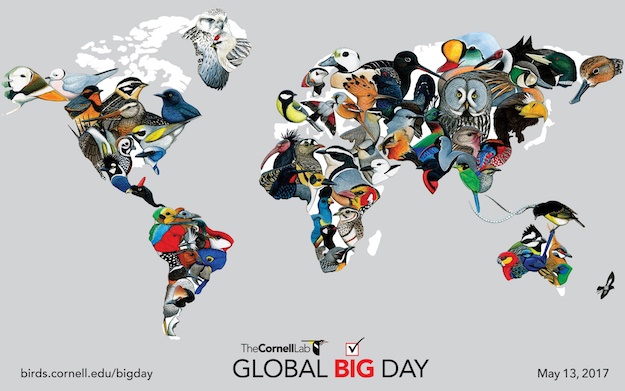
Global Big Day map painted by Luke Seitz, a Bartels Science Illustration intern and member of the Redheads student birding team.
We have about two months to prepare, and this third year of Global Big Day could be epic. When we started participating in this annual event in 2015 our work still mostly focused on the Western Ghats region of southwest India, but we were migrating back to the Mesoamerica region so our attention has been shifting. Now we are all in at Chan Chich Lodge and we want to help ensure that this year Belize is as strong a contributor as possible to the goals of this program:
In our ongoing effort to push the boundaries of a Big Day, we’re inviting everybody around the world to join together and participate in our Global Big Day to support global conservation.
How to Participate
Submit Your Data to eBird on May 13
It’s that simple. If you submit your birds to eBird they count. Learn how to take part. Don’t worry — you don’t need to be a bird expert, or to go out all day long. Even a half hour checklist from your backyard will help. Of course, you are welcome to spend the entire day in the field, but know that it is not required! Please enter your data as soon as you can, preferably by Tuesday, May 16. Continue reading

Photo credit: B. Bartel/USFWS
We know that most of our readers on this platform, and most guests we serve at the various properties we have developed and managed over the years, care deeply about primary forests and the ecosystems they support. Here is a chance to vocalize together with one of the influential organizers of vocalization:
Help Protect Tongass National Forest: Stop the Clearcutting
They’re about to start their chainsaws. Timber companies are trying to clearcut one of the most primeval wild places — and this is our last chance to stop them.
Alaska’s Tongass National Forest is nothing short of magical: it contains centuries-old trees and one-of-a-kind wilderness, home to animals like Alexander Archipelago wolves and bald eagles. Your voice is needed to pressure Congress to bring an end to old growth logging and save the Tongass for our children and grandchildren.
Take action today to save the Tongass National Forest.
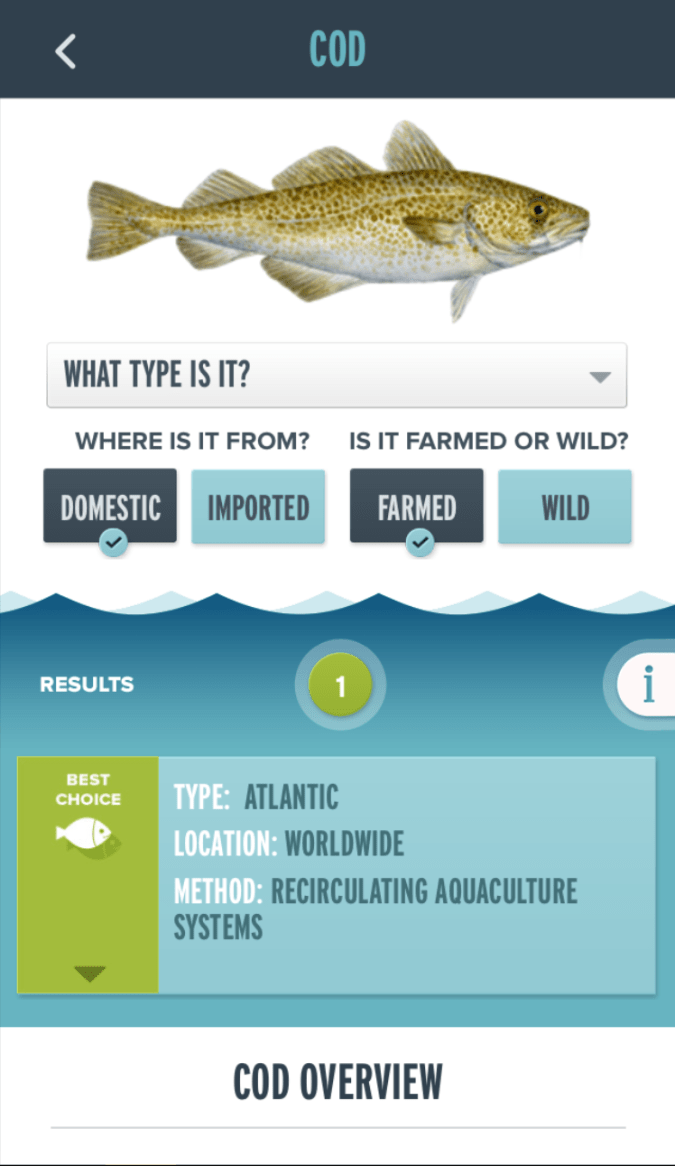
Monterey Bay Aquarium Seafood Watch App best choice recommendations for cod. Screenshot by NPR
Rules change. Guides get updated. Staying on top of this topic requires effort. But it is worth it. Thanks to the folks at the salt for an acknowledgement that choosing fish in a responsible manner is no easy task, even for those regularly paying attention:
This month, I ventured to ask the man behind the counter at a Whole Foods Market what kind of shrimp he was selling. “I don’t know,” he replied. “I think they’re just normal shrimp.” I glanced at the sustainable seafood guide on my phone. There were 80 entries for shrimp, none of them listed “normal.”
What about the cod? Was it Atlantic or Pacific? Atlantic. How was it caught? I asked. “I’m not sure,” he said, looking doubtfully at a creamy fish slab. “With nets, I think. Not with harpoons.” Continue reading

Vijayapura, Karnataka

Braun Hughes, a cook, center, stokes a fire while another cook, Andy Risner, keeps watch. Drew Anthony Smith for The New York Times
Last week at Chan Chich Lodge we had guests from Vermont who were on their 6th visit, the first having been back in 1998. This couple started at dawn each day and while primarily birding they witnessed plenty of the other wildlife. Each sunset they enjoyed a classic dry martini with olives, and some conversation with Migde (yes, that is the spelling, pronounced mig-day) the bartender.
By the end of the week watching their sunset ritual, I had the image of a martini we might create in their honor. Instead of their favored olives we would put a few small cubes of chilled Harrington’s of Vermont smoked ham. Perhaps just to humor me, they said they would like to try that during their next visit. In the last few days I have been looking into the matter and I can find no evidence that this is a good idea.
I can also find no evidence that it is a bad idea. So I am continuing the investigation. And today I am happy to see a review related to another form of smoked meat, quite different from that of Harrington’s, in this case at a restaurant in Texas. Pete Wells now holds my attention better than any reviewer, on any topic. Anthony Lane, for a long time, held it on the residual strength of the laughter produced by one film review in 2005; his predecessor Pauline Kael also held it a long time before that. In the era of crowd-sourced reviews, the professional is still relevant for a reason. Today’s restaurant review is a case in point:
AUSTIN, Tex. — “How much brisket are you having?” Continue reading

The C.B.P. considers rosaries to be potentially lethal, non-essential personal property, and agents dispose of them during intake. THOMAS KIEFER / INSTITUTE
Tom Kiefer was a Customs and Border Protection janitor for almost four years before he took a good look inside the trash. Every day at work—at the C.B.P. processing center in Ajo, Arizona, less than fifty miles from the border with Mexico—he would throw away bags full of items confiscated from undocumented migrants apprehended in the desert.
In addition to backpacks, shopping bags are used to transport food and belongings. Many are durable though non-biodegradable and adverse to the desert environment. THOMAS KIEFER / INSTITUTE
One day in 2007, he was rummaging through these bags looking for packaged food, which he’d received permission to donate to a local pantry. In the process, he also noticed toothbrushes, rosaries, pocket Bibles, water bottles, keys, shoelaces, razors, mix CDs, condoms, contraceptive pills, sunglasses, keys: a vibrant, startling testament to the lives of those who had been detained or deported. Without telling anyone, Kiefer began collecting the items, stashing them in sorted piles in the garages of friends. “I didn’t know what I was going to do,” he told me recently. “But I knew there was something to be done.”
Personal hygiene items such as toilet paper is disposed of during intake.When migrants are apprehended, Customs and Border Protection agents dispose of personal-hygiene items such as toilet paper during intake. THOMAS KIEFER / INSTITUTE
Kiefer, who is now fifty-eight, had moved to Ajo from Los Angeles, in 2001, hoping to simplify his life, purchase a home, and focus on his passion: taking pictures. (Previously, he’d been a collector and dealer of antique cast-iron bed frames, and, before that, a graphic designer.) He took the C.B.P. job, in 2003, for purely practical reasons: it paid ten dollars and forty-two cents an hour, and it seemed unlikely to steal mental space away from his photography projects. Now he began photographing his C.B.P. collection in his studio, arranging and rearranging items, sometimes putting Continue reading
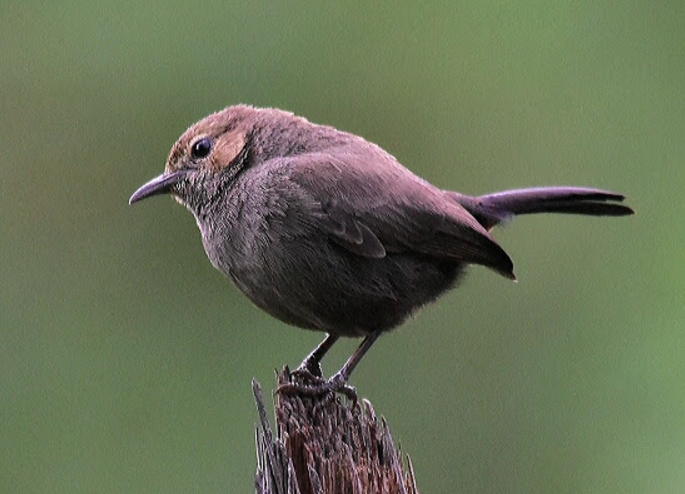
female – Athoor, Dindigul, Tamil Nadu
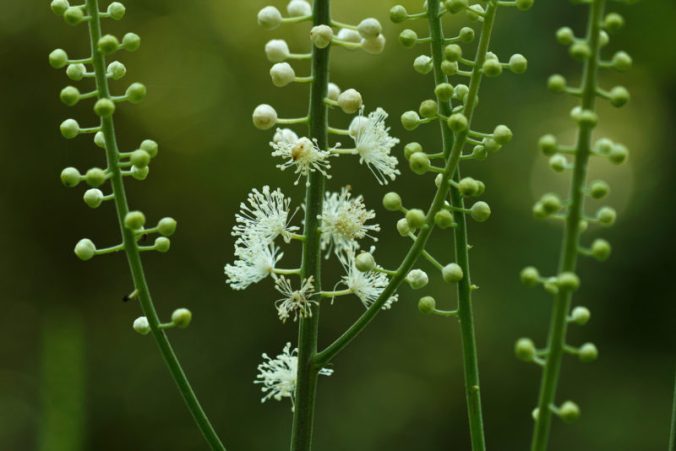
Black cohosh is a valuable commercial medicinal plant, used to treat symptoms of menopause. TOM POTTERFIELD/FLICKR
Thanks to Nancy Averett at Yale360 for this:
Seeds of Commerce: Saving Native Plants in the Heart of Appalachia
In southern Appalachia, botanist Joe-Ann McCoy is collecting the seeds of thousands of native plant species threatened by climate change. But in this job-scarce region, she also hopes to attract an herbal products company to cultivate the area’s medicinal plants. Continue reading

The true élite of modern societies is composed of engineers, mechanics, and artisans—masters of reality, not big thinkers. Illustration by Leigh Guldig
One of our favorite essayists (for exemplary reasons, see here, and here, and here) makes a compelling case for our taking a good look at the foundation of our assumptions, in this age of model mad.
His several essays in the months preceding and following the 2016 Brexit referendum and the USA election were impassioned, but this one in the form of a triple-book-review hits the mark the best, reminding us of the basic premises of the Enlightenment and how that matters now more than ever:
Of all the prejudices of pundits, presentism is the strongest. It is the assumption that what is happening now is going to keep on happening, without anything happening to stop it. If the West has broken down the Berlin Wall and McDonald’s opens in St. Petersburg, then history is over and Thomas Friedman is content. If, by a margin so small that in a voice vote you would have no idea who won, Brexit happens; or if, by a trick of an antique electoral system designed to give country people more power than city people, a Donald Trump is elected, then pluralist constitutional democracy is finished. The liberal millennium was upon us as the year 2000 dawned; fifteen years later, the autocratic apocalypse is at hand. Thomas Friedman is concerned. Continue reading
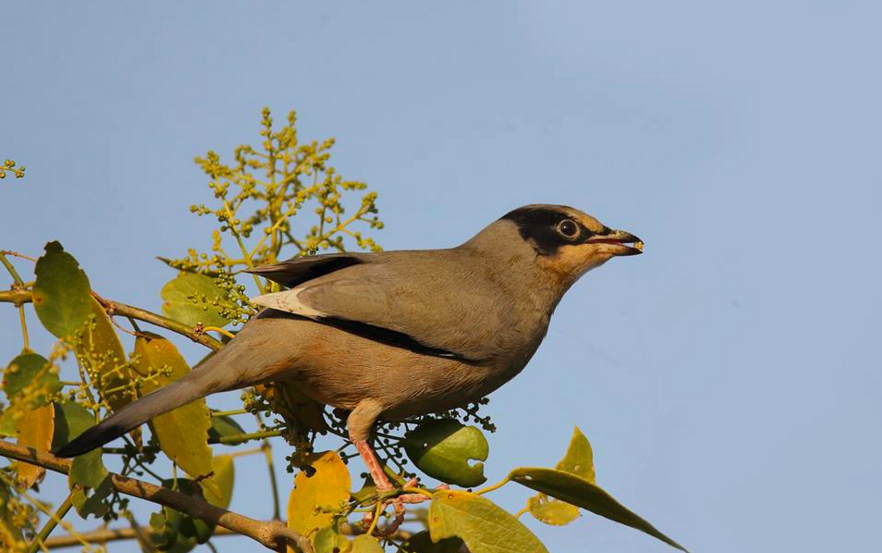
Great Rann of Kutch, Gujarat

Timbers specializes in offbeat revisionist fantasies about historical figures.Photograph by Pari Dukovic for The New Yorker
Our goal, linking out to stories like this, is not to politicize this platform; it is to showcase creative problem-solving, akin to our fascination with and commitment to entrepreneurial conservation. That is what we mean by model mad. We are wary, and weary of the name of the polarizing figure, but resolutely curious to read about how others are dealing with it. Even with a title like A PROTEST MUSICAL FOR THE TRUMP ERA we know it will deliver on the creative side rather than the political. Thanks to Rebecca Mead for a well-focused message:
Five actors gathered in a room on Lafayette Street, in downtown Manhattan, to start rehearsing a new work for the Public Theatre, “Joan of Arc: Into the Fire.” Written by David Byrne, formerly of the Talking Heads, the show recast the enduring, improbable story of Joan—a teen-age girl in medieval France who experienced divine visions, led an army to defeat an occupying power, and was burned at the stake for heresy—as a rock musical that spoke to the current political moment. Continue reading

When I see a face like this I can only smile. I am not sure why, and I do not like to anthropomorphize animals, but this creature looks friendly, even a bit happy. Maybe because I am partial to the color green? Continue reading
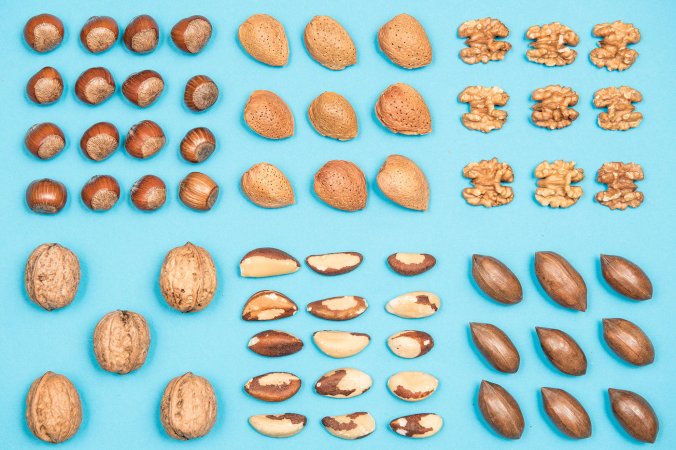
On the flip side, the study found that diets containing low amounts of nuts and seeds were linked to about 9 percent of deaths from heart disease and Type 2 diabetes. John Lawson/Belhaven/Getty Images
All things in moderation. If you follow that general rule, this article may not be of interest to you. But for most of us, the salt’s (thank you National Public Radio, USA) item for us today is worth a glance. After you collect some stardust, sprinkle it on a handful of nuts:
…We know, it may be tough to cut back on foods you love. Bacon is so alluring to many that it has even been called the ‘gateway’ to meat for vegetarians!
But, here’s the flip side: The researchers also found there’s a significant risk in eating too little of certain healthy foods. So, think of it this way: You can start consuming more of the foods that are protective… Continue reading

 Organikos