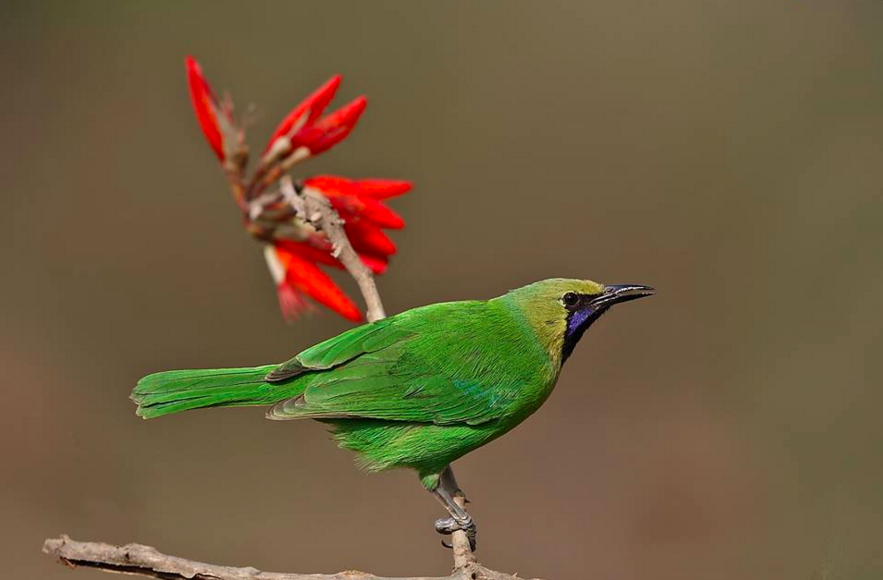
Bengaluru, Karnataka
Bengaluru, Karnataka

We have on occasion linked to video shorts offered over at the Atlantic website; this one is worth the seven minutes:
When Pro Surfers Learn to Farm
Video by The Perennial Plate
What happens when a group of professional surfers get tired of the global surfing circuit?
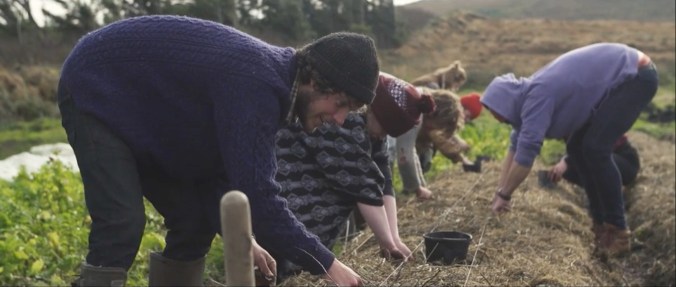
This charming short documentary tells the story of how three friends abandoned their sports careers for the whimsical calling of growing organic vegetables on Ireland’s Wild Atlantic Way. Continue reading

Japanese Chemist Dr. Kikunae Ikeda is credited with discovering MSG — one of the eight ingredients Lohman explores in her book. Peter Van Hyning

Thanks to the salt, at National Public Radio (USA) for this story, How Just 8 Flavors Have Defined American Cuisine, by Alan Yu, which also serves as a review for this book about the history of food in a country not thought to have its own cuisine:
Sarah Lohman has made everything from colonial-era cocktails to cakes with black pepper to stewed moose face. She is a historical gastronomist, which means she re-creates historical recipes to connect with the past.
That moose-face recipe dates back to the 19th century, and it wasn’t easy. She recalls spending hours trying to butcher the moose from Alaska in her kitchen in Queens, New York. She tried scalding the face in hot water to remove the fur, but it didn’t quite work and her apartment stunk of wet moose.
But “at the end of the day, people showed up and ate it, someone actually liked it, and then we ordered a pizza,” she says. Continue reading
 We are happy to see that the book mentioned last month is now available and has been reviewed in the New York Times, among other places, in addition to author interviews that are worth a look:
In the fall of 1969, behind the closed door of an otherwise empty seminar room at Hebrew University, two psychologists began a collaboration that would upend the understanding of human behavior. Those first conversations were filled with uproarious laughter and occasional shouting, in a jumble of Hebrew and English, which could sometimes be heard from the hallway. Continue reading

Dinokeng Game Reserve, Pretoria, SA
Thanks to Anthropocene’s Brandon Keim for this story about a health care revolution for wildlife:
…Researchers led by University of Florida biologist David Duffy raise that possibility in a new Global Change Biology article about “precision wildlife medicine,” an approach that would draw upon innovations in human disease treatment. Continue reading
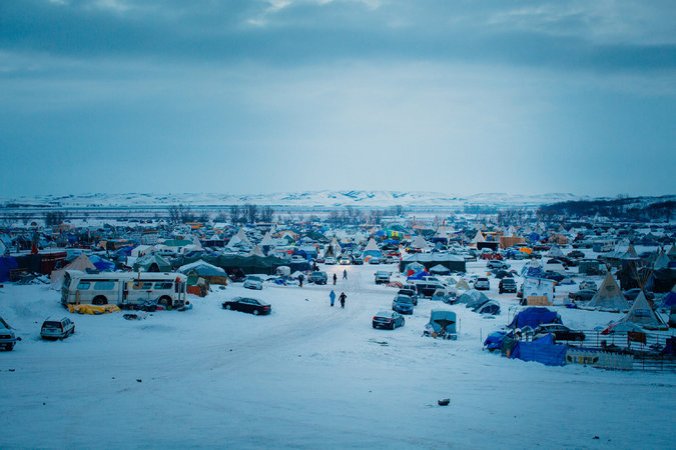
A camp in Cannon Ball, N.D., where cold weather has set in. Credit Alyssa Schukar for The New York Times
Protesters for a cause we could understand and side with, namely the keeping of commitments made long ago to the pre-Columbian inhabitants of the North American continent, have apparently won. Not so common, so we celebrate. And we like the twist in this story below, with unexpected allies. We did not quite believe the news when we first saw it, but now it seems certain enough to post it for posterity:
As North Dakota Pipeline Is Blocked, Veterans at Standing Rock Cheer
FORT YATES, N.D. — After four deployments to Iraq and Afghanistan, after being hit by a roadside bomb and losing two friends to explosions, Jason Brocar floated from job to job, earning enough to pay for long solo hikes where his only worries were what he would eat and where he would sleep. He was deep into a rainy trek through Scotland when he noticed friends back home talking about a place called Standing Rock. Continue reading
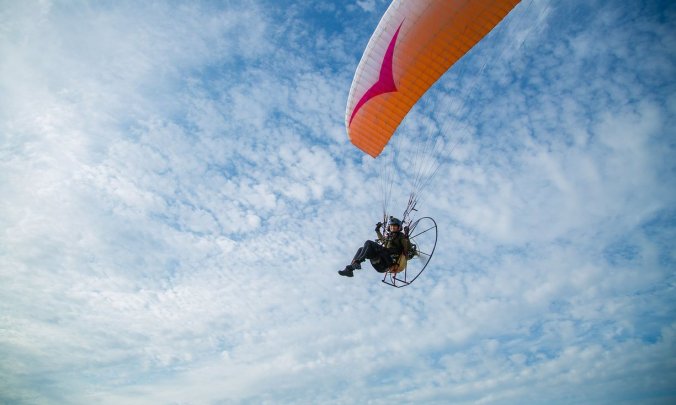
Sacha Dench, the ‘human swan’, in her paramotor as she follows migrating birds from the Russian tundra to the UK. Photograph: WWT/PA
We wish Sacha Dench all the best on this one:
Sacha Dench is first woman to cross the Channel in a motorised paraglider, as part of her journey following migrating birds from Russia to Britain
Patrick Barkham
The conservationist and “human swan” Sacha Dench has become the first woman to cross the English Channel in a motorised paraglider during her epic 4,500-mile journey following migrating birds from the Russian tundra to Britain.
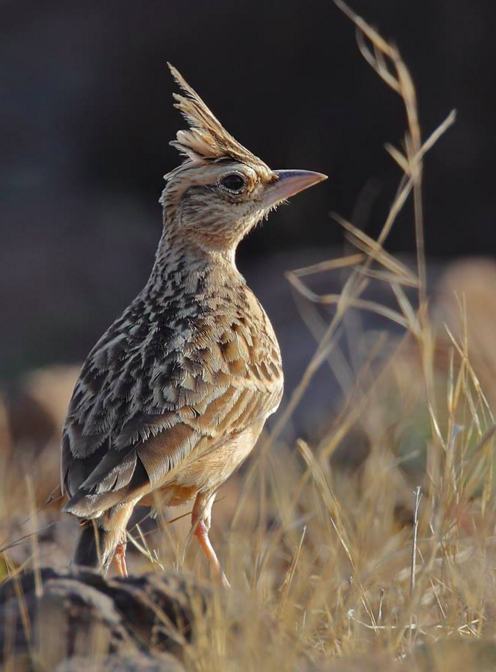
Great Rann of Kutch, Gujurat

The researchers’ neural network was fed video from 26 terabytes of video data downloaded from the photo-sharing site Flickr. Researchers found the network can interpret natural sounds in terms of image categories. For instance, the network might determine that the sound of birdsong tends to be associated with forest scenes and pictures of trees, birds, birdhouses, and bird feeders. Image: Jose-Luis Olivares/MIT
From Larry Hardesty at the news office of the Massachusetts Institute of Technology an interesting article on machine-learning, which we thought was going to be about a new app for birders but it is a much broader finding:
Computer learns to recognize sounds by watching video
Machine-learning system doesn’t require costly hand-annotated data.
Watch Video
In recent years, computers have gotten remarkably good at recognizing speech and images: Think of the dictation software on most cellphones, or the algorithms that automatically identify people in photos posted to Facebook. Continue reading
 This note on How to Keep Bees by
…You’ll need a suit with gloves and a hood, as well as two boxes to house the hive. Flottum says bees aren’t fussy about their habitat — they could live on the side of your house or on your grill. “But you have to be able to inspect them,” he says. “I have to be able to take the cover off and lift up a comb of honey and have it inspected for disease by a government official.” The boxes can be made of plastic or wood; each kind has advantages and disadvantages, including cost and durability. Continue reading

In a photo from 1945, Broadway and 42nd Street in Manhattan in front of the Horn & Hardart Automat. Credit Andreas Feininger/The LIFE Picture Collection/Getty Images
This Travel section interview–Best Eating in New York? A Food Historian Has Some Advice By JOHN L. DORMAN–in the New York Times catches our attention:
When the food writer Andrew F. Smith had an idea for a new book on New York City, he went for an intriguing angle. “We preserve the homes of people who were born here and later became famous, and we preserve all sorts of artwork,” he said, “but people don’t think about preserving a city’s food heritage, which was something that was missing in New York.”
His idea resulted in the book “Savoring Gotham: A Food Lover’s Companion to New York City,” which he edited. The topics range from the culinary history of the Lower East Side to the emergence of Automats, Continue reading
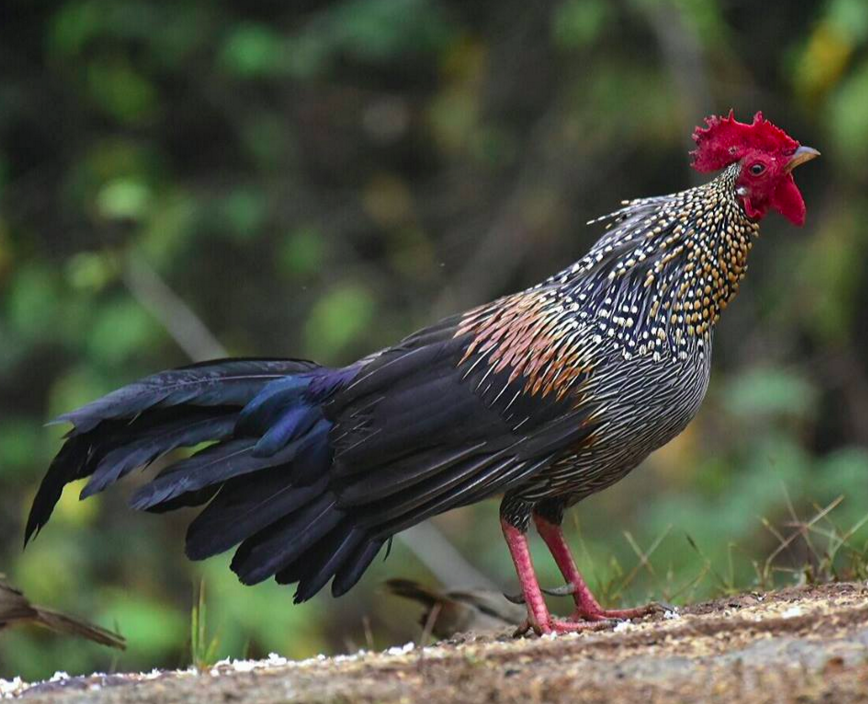
Kothamangalam, Kerala
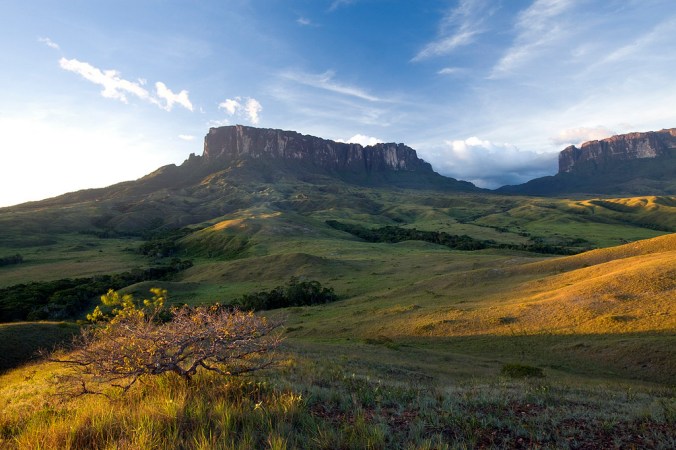
Photo by Brad Wilson
Best known for its characteristic flat-topped mountain formations known as “tepuis,” Canaima National Park is a geologic marvel that astounds the most experienced geologists and intrepid travelers alike. Between the table-top mountains, grassy savannah blankets the valleys and the perimeters of the tepuis, which cover about 65% of the park. The park is the sixth largest park in the world, measuring three million (yes, million) hectares, and is located in Venezuela close to the border between Brazil and Guyana.
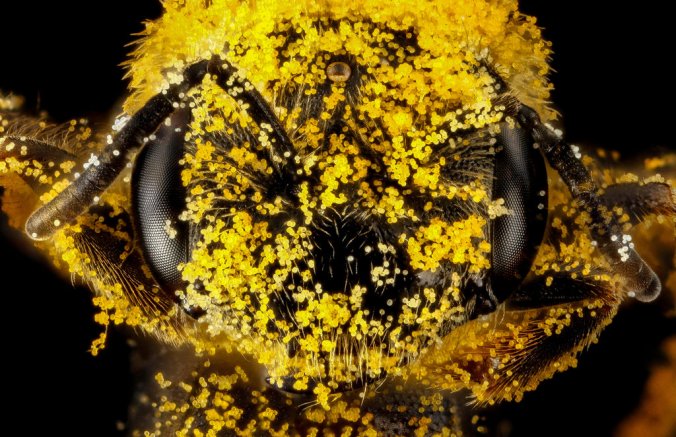
SAM DROEGE/UNITED STATES GEOLOGICAL SURVEY
Science, as a section of the daily newspaper of old, was geek-out territory. In the modernizing news organization, it has every bit of that old intensity, magnified by the wonders of technology. This little item demonstrates the point:
You’re a Bee. This Is What It Feels Like.
We’re taking you on a journey to help you understand how bees, while hunting for pollen, use all of their senses — taste, touch, smell and more — to decide what to pick up and bring home.
Set your meetings, phone calls and emails aside, at least for the next several minutes. That’s because today you’re a bee.
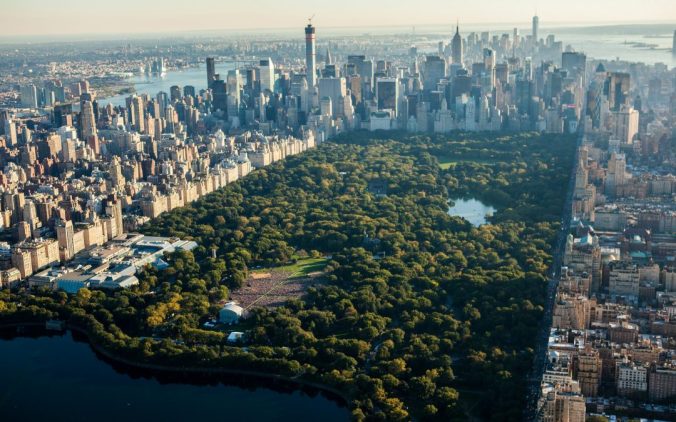
Central Park, New York City. Credit: Anthony Quintano via Flickr.
Thanks to Anthropocene:
Looking for the next miracle drug? Try searching city soils
Many drugs are based on molecules produced by bacteria. Previously, the search for such drugs has mostly focused on “pristine” environments in far-flung locales. But a new study shows that many useful molecules could already be, quite literally, at our feet. Continue reading

Baja California Sur, Mexico

Young orphaned orangutans on a climbing expedition with their keeper at International Animal Rescue’s orangutan school in West Kalimantan, Indonesia. Credit Kemal Jufri for The New York Times
We first started paying close attention to the plight of the ecosystem in the image above when we saw the talk given by Willie Smits, who has taken action, to say the least, in the interest of protecting that rainforest and its inhabitants. It is not because of the orangutans (though see the photo below and try to resist reading on) that we find this article compelling; it is because there is a clear and compelling call to action on holding our institutions accountable:
How Big Banks Are Putting Rain Forests in Peril
By
In early 2015, scientists monitoring satellite images at Global Forest Watch raised the alarm about the destruction of rain forests in Indonesia.
Environmental groups raced to the scene in West Kalimantan province, on the island of Borneo, to find a charred wasteland: smoldering fires, orangutans driven from their nests, and signs of an extensive release of carbon dioxide into the atmosphere. Continue reading

Copenhagen has recorded 13,100 more bikes than cars in the city centre over the past year. Photograph: Michal Krakowiak/Getty Images
Scandinavia in general (and Denmark in particular) is famous for forward thinking initiates, both socially and environmentally. Thanks to the Guardian for sharing this milestone.
Two-wheel takeover: bikes outnumber cars for the first time in Copenhagen
Denmark’s capital has reached a milestone in its journey to become a cycling city – there are now more bikes than cars on the streets. Can other cities follow? Continue reading
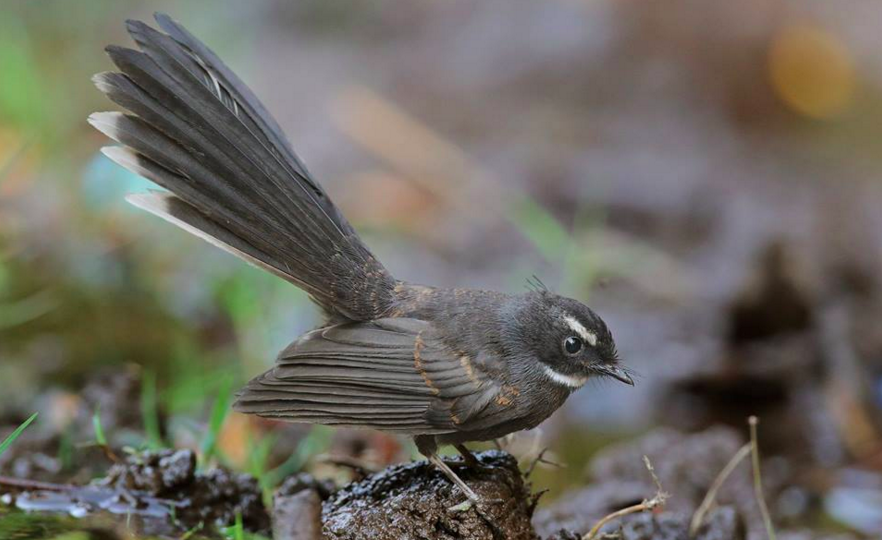
Pangot, Uttarakhand
 Organikos