Fish, Nutrition & Progress

gettyimages-511530458-80_custom-e1514ae78fade488fe3c4e443cd01db56c5f43da-s1100-c85.jpg

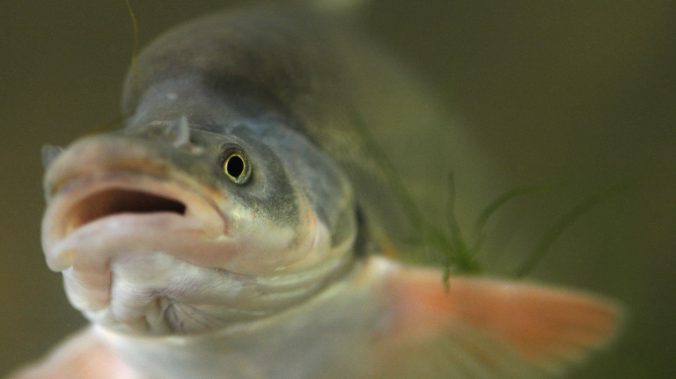
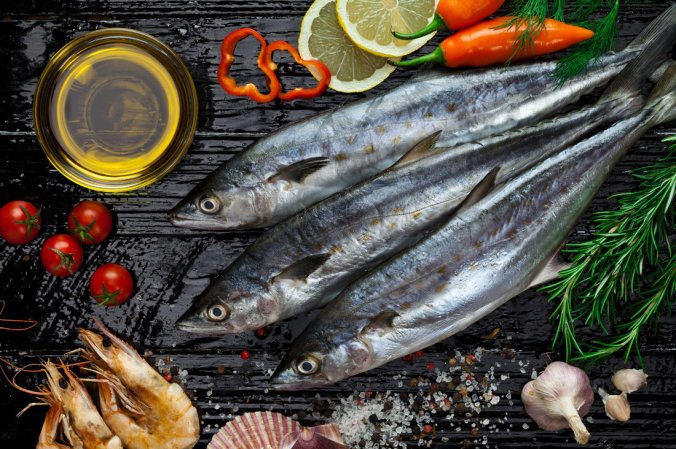
Americans are often chastised for what we eat. Now we’re getting a pat on the back. A new report finds seafood consumption is up by nearly a pound from the previous year, the biggest leap in 20 years. fcafotodigital/Getty Images

Thank to the salt, at National Public Radio (USA) for this news:

Hey, Looks Like Americans Are Finally Eating More Fish

CLARE LESCHIN-HOAR

…According to the annual Fisheries of the United States Report released by NOAA last week, Americans increased their seafood consumption to 15.5 pounds of fish and shellfish per person in 2015, up nearly a pound from the previous year, making it the biggest leap in seafood consumption in 20 years.

“It’s terrific news,” says Tom Brenna, professor of human nutrition at Cornell University and a member of the 2015 Dietary Guideline Committee. “We’re moving in the right direction.”

It’s a rare nutritional pat-on-the-back for Americans, who routinely get chastised over their diets, but the good news comes with some caveats. Continue reading

Northeastern USA Will Remain Greener, Longer, Thanks To New Protection In Maine’s Backwoods

06maineexplorer4-master1050

Thank you Maine and thank you federal government of the USA:

Touring Maine’s Newest — and Largest — Parcel of Federal Land

By

On an early fall day, with just a hint of red tinting the maples, the view from the summit of Deasey Mountain is spectacular.

To the west stand the rugged, treeless basins and knife-edge spine of Mount Katahdin. Off to the south, you see Wassataquoik Valley in the near distance, the peaks of the 100 Mile Wilderness beyond. To the east and north, more wild Maine woods and hills rolling for miles, to the Canadian border. Continue reading

Changing Values For Anglers

AZGFD-GeorgeAndrejko-Humpback8-e1476823079410-1260x708.jpg

Humpback chub. Photo © George Andrejko, Arizona Game and Fish Department

We appreciate the perspective Mr. Williams brings to the story:

Recovery: Humpback Chubs, New Values and New Hope for Endangered Native Fish

BY TED WILLIAMS

There are “undesirable fish,” “rough fish,” and “trash fish.” Humpback chubs, native to the turbulent, turbid water of the Colorado River system, are all three. They compete with nonnative gamefish like brown trout from Europe and rainbow trout for the Pacific Northwest. If you catch a humpback chub, you should squeeze it and toss it into the bushesSuch was the counsel I and my fellow anglers received from our elders and the fisheries management establishment until the 1970s. Continue reading

Dakota Access & Fairness

4500

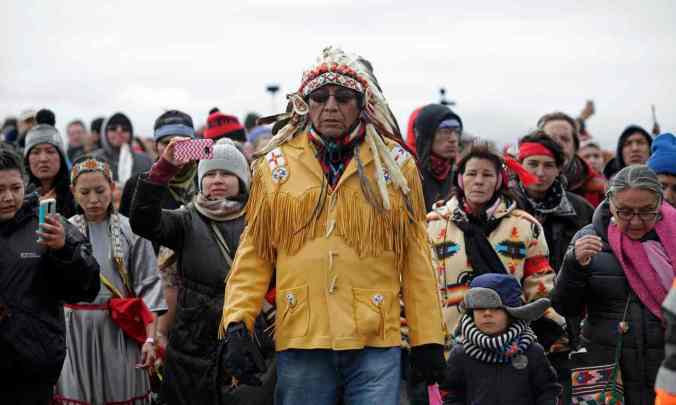
Chief Arvol Looking Horse, spiritual leader of the Sioux nation, leads his people to peacefully pray near a law enforcement barricade just outside of a Dakota Access pipeline construction site. Photograph: Stringer/Reuters

It looks hypocritical from our vantage point:

Dakota Access pipeline protesters see bias after Oregon militia verdict

Activists at the Malheur wildlife refuge were carrying guns – but ‘if native people were armed, we would be killed,’ says an activist at Standing Rock

in Cannon Ball, North Dakota

Johanna Holy Elk Face couldn’t help but chuckle. The 63-year-old Native American was one of hundreds of activists gathered to block construction of the Dakota Access pipeline on Thursday, when police with tanks and riot gear surrounded them and began making mass arrests. Continue reading

Chan Chich Lodge, According To Fodor’s

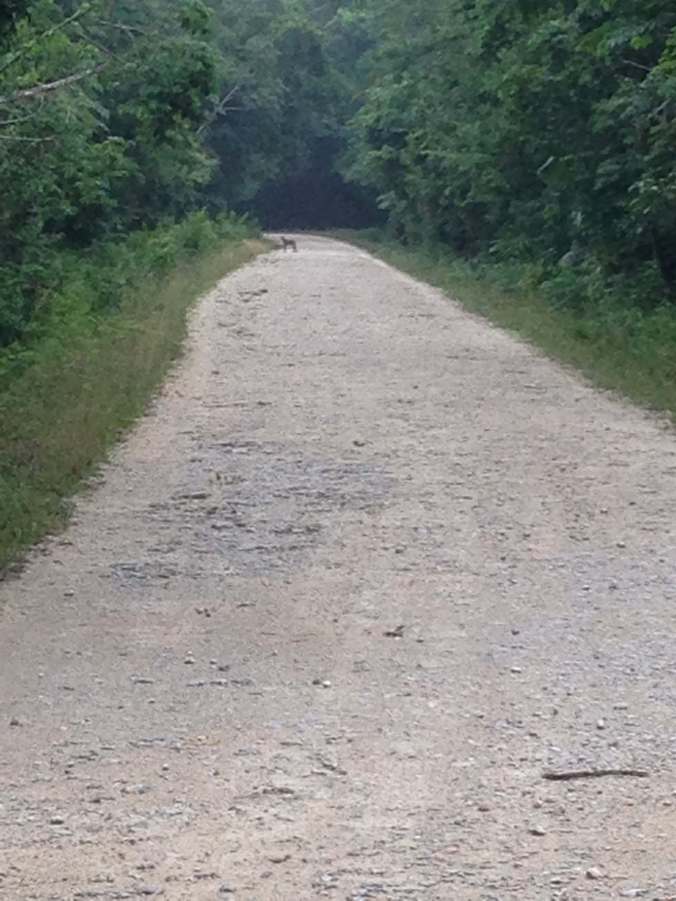
fodors-belizeA guest recently left a copy of this guidebook and I just picked it up. After my puma sitings yesterday and today, I am not surprised to read what one of the most respected travel guides has to say about Chan Chich Lodge:
Arguably the best lodge in Belize and one of the top lodges in all of Central America, Chan Chich is set in a remote, beautiful area … with 12 rustic yet comfortable cabañas. Just outside your door you’re likely to encounter legions of tropical birds and wild animals, even jaguars Continue reading

National Park of the Week: Isalo National Park, Madagascar

banner20

Photo via jenmansafaris.com

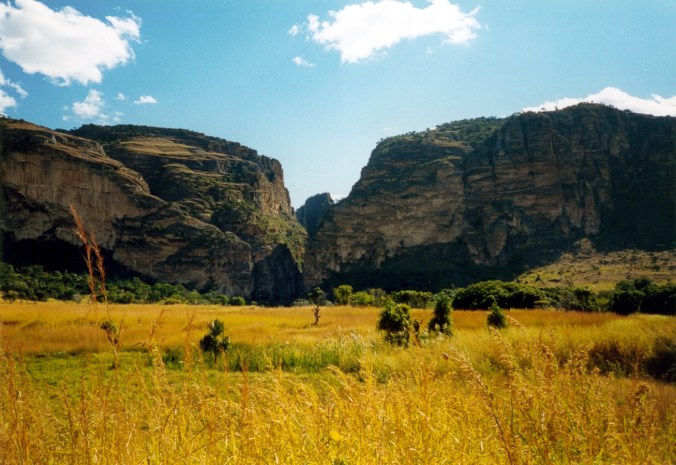
With its multitude of intersecting rivers within deep canyons, yellow savannah grasses carpeting the bottoms of vertical gorges, and domineering sculpted buttes, Isalo National Park is an artist’s canvas of a desert canyon. Jocularly called “Madagascar’s Colorado,” Isalo was founded in 1962 and is located in the southern highlands of the island. The park covers an area of 800 sq km and offers prime hiking opportunities among natural pools and uniquely carved landscapes. Continue reading

Puma, Chan Chich Lodge, & Me (Or You)

puma

Trekking in a protected area, my hopes and expectations balance each other to create a happy medium: if I can see evidence of the ecosystem’s health, and can believe that it supports the entire food chain, I get that biophilia sensation. I do not need to see the top of the food chain, which frequently is a big cat (tigers and leopards in India, jaguars and pumas in Latin America, lions and cheetahs throughout Africa) as much as I would want to. Or as much as I am elated, on days like today and yesterday, when I do see a healthy mature cat. Continue reading

Bolivia & Chinese Oil Exploration

5040

Thanks as always to the Guardian for its coverage of important environmental issues:

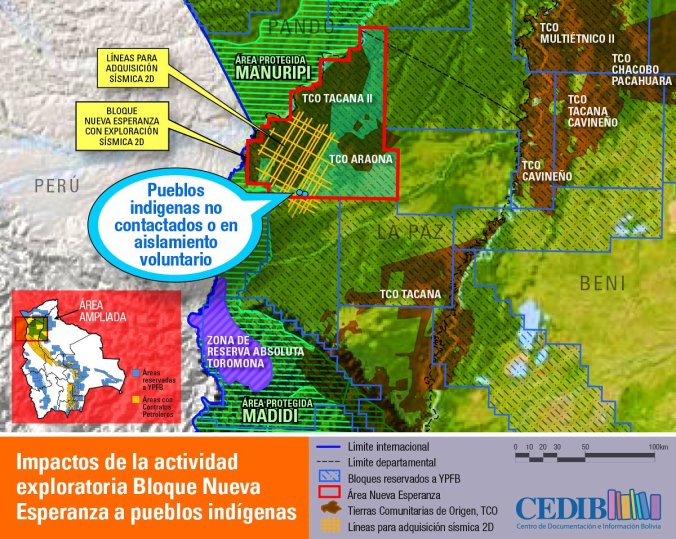
Fears for isolated Bolivian tribe met by Chinese oil firm in Amazon

Company operating near the border with Peru has reportedly had near encounters with indigenous people living in “isolation

David Hill

Teams from a Chinese oil and gas company exploring in the remote Bolivian Amazon have reportedly had near encounters with a group of indigenous people living in what the United Nations calls “isolation”, raising major concern for the group’s welfare. Continue reading

Perfectly Good Imperfect Food

24UGLYFOOD-web01-master768.jpg

A customer shopped at Fruta Feia, a Portuguese cooperative created to sell imperfect food. The food industry has begun looking for ways to reduce waste. Bargain-hunting consumers seem to be going for the deals.CreditPatricia De Melo Moreira for The New York Times

Increasing attention to the inherent waste in judgements about imperfection is a welcome topic in our pages:

Food Industry Goes Beyond Looks to Fight Waste

Continue reading

World’s Largest Marine Reserve, Another Accomplishment Of 2016

ap_16302025591684_custom-392a50abd26d8fdc885b7c2a23b34b542c8d806c-s1100-c85

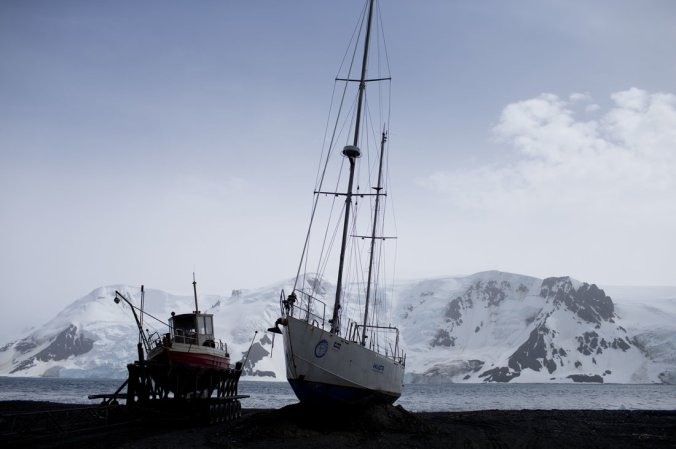
Boats sit on the beach at Bahia Almirantazgo in Antarctica. An agreement was reached on Friday to create the world’s largest marine protected area in the ocean next to the frozen continent. Natacha Pisarenko/AP

In an otherwise dismal year for the environment, we have tried to keep track of the few actions taken that are noteworthy for their scale and ambition. This week, and this month, are ending on a high note in that regard:

Nations Agree To Establish World’s Largest Marine Reserve In Antarctica

MERRIT KENNEDY

After years of negotiations, nations have reached an agreement to establish the world’s largest marine sanctuary in Antarctica’s Ross Sea.

Twenty-four countries and the European Union reached the unanimous deal at an international meeting of the Commission for the Conservation of Antarctic Marine Living Resources in Hobart, Australia on Friday. Continue reading

Dakota, Keystone & Resistance

29mckibbenWeb-master768.jpg

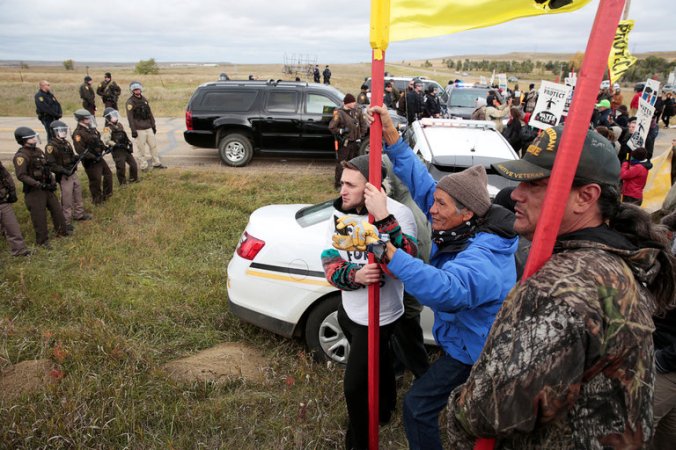
Dakota Access Pipeline protesters facing police officers in North Dakota this month. Credit Terray Sylvester/Reuters

As usual, Mr. McKibben is on the correct side of the debate and urges the rest of us to join that side and resist in solidarity:

Why Dakota Is the New Keystone

By

MIDDLEBURY, Vt. — The Native Americans who have spent the last months in peaceful protest against an oil pipeline along the banks of the Missouri are standing up for tribal rights. They’re also standing up for clean water, environmental justice and a working climate. And it’s time that everyone else joined in.

The shocking images of the National Guard destroying tepees and sweat lodges and arresting elders this week remind us that the battle over the Dakota Access Pipeline is part of the longest-running drama in American history — the United States Army versus Native Americans. In the past, it’s almost always ended horribly, and nothing we can do now will erase a history of massacres, stolen land and broken treaties. But this time, it can end differently. Continue reading

Divest, Nobel

980x-10

Thanks to 350.org for this one, via EcoWatch:

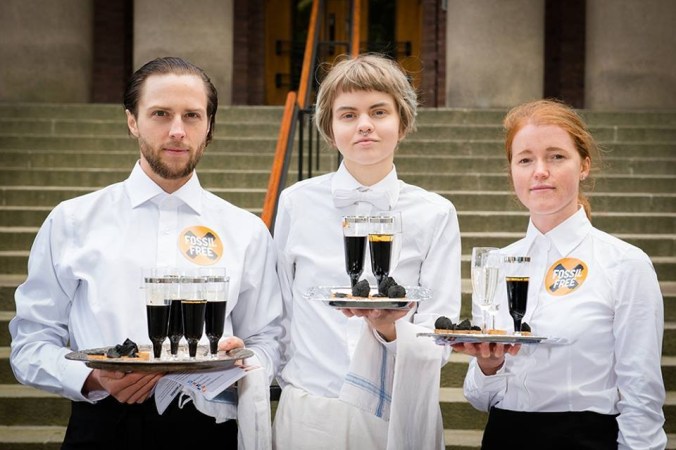
Nobel Prize, It’s Time to Divest From Fossil Fuels

350.org

Last Tuesday, Fossil Free Sweden finally received confirmation from the Nobel Foundation that it does not intend to adopt rigid sustainable investment guidelines which entirely exclude investments in the least sustainable companies on the planet—those driving climate change through the exploitation of fossil fuels.. Continue reading

Tree Elders & Drought

sequoias-1_custom-9d831bf09949d38d3d16746b895b30fc2bfa786a-s1100-c85.jpg

Giant sequoias in the Sierra Nevada range can grow to be 250 feet tall — or more. John Buie/Flickr

Thanks to National Public Radio (USA):

How Is A 1,600-Year-Old Tree Weathering California’s Drought?

It’s been a brutal forest fire season in California. But there’s actually a greater threat to California’s trees — the state’s record-setting drought. The lack of water has killed at least 60 million trees in the past four years.

Scientists are struggling to understand which trees are most vulnerable to drought and how to keep the survivors alive. To that end, they’re sending human climbers and flying drones into the treetops, in a novel biological experiment. Continue reading

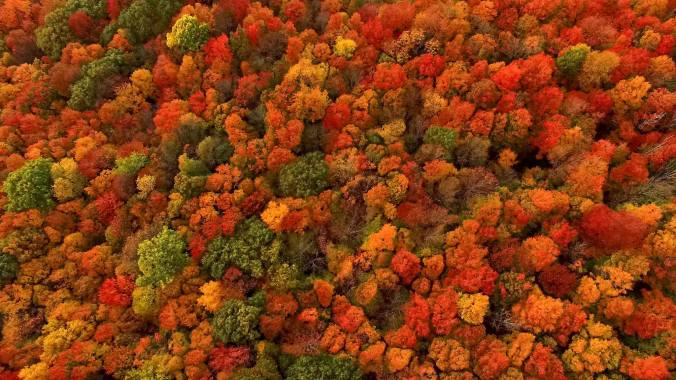
Late October’s Flame Red Trees

26tb-foliage-superjumbo

Treetops near Song Mountain in Tully, N.Y., last week.CreditLauren Long/The Syracuse Newspapers, via Associated Press

We do not need to understand it to appreciate the beauty, but the science behind it is another wonder of its own:

Why Does Fall Foliage Turn So Red and Fiery? It Depends.

By

Leaves scream their final cries in color before dropping to the ground. Their shouts — in golden, crimson or scarlet — eventually fade to brown bellows, and their lifeless bodies dry up on the forest floor. It absorbs their crinkly corpses and that’s it — worm food. The fall of a leaf in autumn is an orchestrated death. A complex, brilliant, beautiful death.

Right now across the United States, fall foliage season is peaking, and everyone’s out to get a peep at the fiery show. Hiking trails are crowded. Mountain roads are packed, and leaf cams are getting lots of love. When you think of it as watching the death of leaves, it sounds morbid, but it’s captivating nonetheless. Does the way some turn red in the process serve any purpose? Continue reading

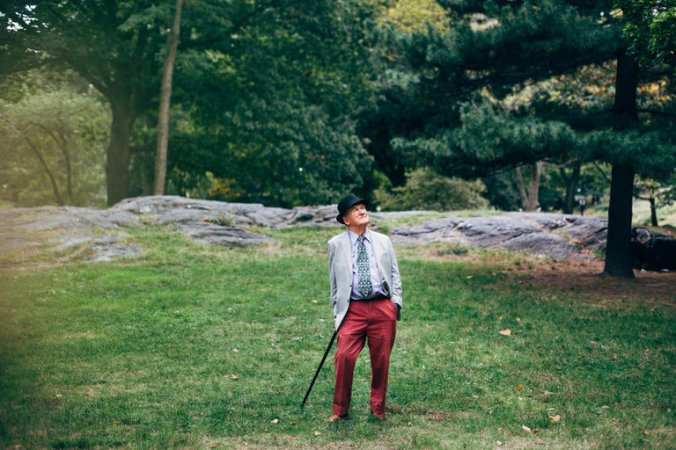
Trees & Wine

02pour1-master768

The wine writer Hugh Johnson in Central Park, where he admired one of the last stands of American elms in North America. Credit Andrew White for The New York Times

The New York Times keeps us looking at the trees…

Hugh Johnson’s Lifelong Journey Among the Trees

By

Hugh Johnson, the venerable English wine writer, had just arrived in New York City on a trip he tries to make every year, especially in the fall when “the elms start to fire up.”

As is his custom, he visited old friends, took in a few restaurants — Le Coucou, the new Rouge Tomate Chelsea and an old favorite, Jean-Georges Vongerichten’s JoJo. He stopped at a few museums and strolled through Central Park, where he indulged another passion that is as dear to his heart as wine — trees. Continue reading

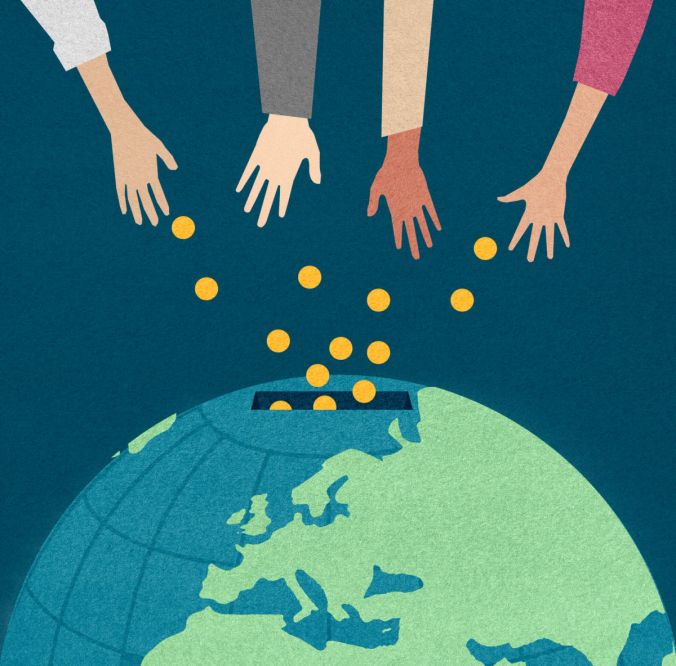
Generosity’s Change Agents

Vara-Charity-1200.jpg

The rise of a new, fast-growing class of charities known as donor-advised funds represents a momentous shakeup in charitable giving in the U.S. ILLUSTRATION BY MARCUS BUTT / GETTY

Thanks to the contributors to the New Yorker’s website, we get frequent updates on topics we are interested in that might not make it into the long form reportage of the print magazine; case in point:

THE WEALTH GAP IN PHILANTHROPY

By Vauhini Vara

Each year, Stacy Palmer, the editor of the Chronicle of Philanthropy, compiles a list of the U.S. charities that have raised the most money from private sources. In the twenty-six years that the Philanthropy 400 ranking has been published, one thing has stayed constant: United Way Worldwide is at the top. (The one exception was in 1996, when the Salvation Army briefly displaced it.) But when the results started coming in for this year’s list, which was published on Thursday morning, it became clear that a new No. 1 had emerged—an organization affiliated with Fidelity Investments, called Fidelity Charitable, which has grown to become one of the most influential charities in the world. “I was stunned,” Palmer recalled. The details were especially striking. Fidelity Charitable collected 4.6 billion dollars, a twenty-per-cent increase from the previous year. United Way ranked a distant second, with donations dropping by four per cent, to 3.7 billion dollars. “Not only were they”—Fidelity—“going to be No. 1, but they were going to be No. 1 by a lot,” Palmer remembered realizing. Continue reading