Congrats On Fellowship, Shannon

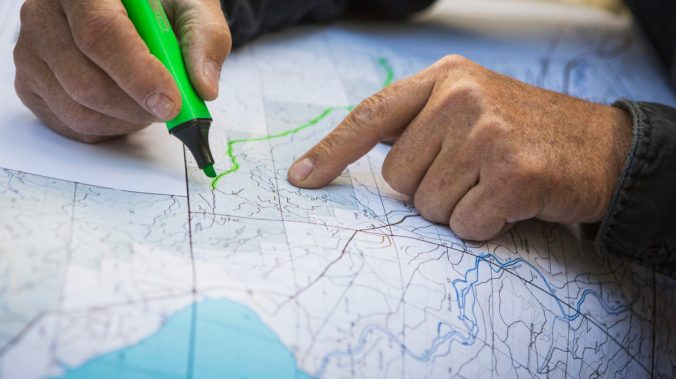
Plum Creek forester Steve Griswold examines a map of the Checkerboard forest.

Good maps and models show us how things are shifting – and are likely to shift in the future — under climate change © Benjamin Drummond

I am happy to meet Shannan this way:

Meet the NatureNet Science Fellows: Shannan Sweet (Cornell)

Conservancy NatureNet Science Fellow Shannan Sweet spends most of her time these days thinking about climate change, agriculture and, well, maps. But the maps that interest her most are not about road trips, or hiking adventures. They’re not even as much about a place as they are about a destination.

Her destination of choice? A world that can feed 10 billion people without exhausting its resources or exacerbating climate change. Continue reading

Navajo Foodways In Time Of Protest

navajo-chef-2_wide-9ed5518ac8f6bac84dca24f36fabe574d853eed5-s1100-c85

Thank you Maria and National Public Radio (USA):

A Navajo Chef Gives A Glimpse Inside The Makeshift Kitchens At Standing Rock

At the Standing Rock Indian Reservation, as a Sioux tribe fights the construction of the Dakota Access Pipeline, the months-long standoff has raised a question: How do you feed the encamped masses? Continue reading

From Guests At Chan Chich Lodge

cclmonkey

A family from Spain shared with me some photos they took during their first four days in Belize, spent at Chan Chich Lodge. I asked what was their favorite “thing” about Chan Chich and I appreciated the simplicity of their reply: they most enjoyed the simple fact of being in nature. Waking up to the spectacular racket of monkeys claiming territory in the nearby trees Continue reading

The Attention Merchants, Reviewed & Author Interviews

9780385352017Everyone seems to be in agreement that this year has been exceptional in terms of attention overloading from all directions–political, commercial, “friends,” and so on. Unfortunately, the forecast is for more, and increasingly effective, attention-getting from technology-aided corporations. We have two words for you: Digital. Detox. And in the New York Times review of Tim Wu’s new book, a compelling set of evidence why those two words matter more and more:

…The history of the slow, steady annexation and exploitation of our consciousness — whether by television commercials, war propaganda or tweets — is the subject of Tim Wu’s new book, “The Attention Merchants: The Epic Scramble to Get Inside Our Heads.” He starts with the penny press newspapers of New York City, moves on to the heyday of radio and television, and concludes with the chaotic online bazaar of the present, surely better suited to bugs with eyes all over their heads than to ordinary human beings. En route, he covers snake oil, commercial psychology, Timothy Leary, AOL chat room Gomorrahs. His bandwidth is broad. Continue reading

Deforestation & Big Food

gettyimages-452167592_wide-221276b6658805805386b947e8af444bdba8424e-s1100-c85.jpg

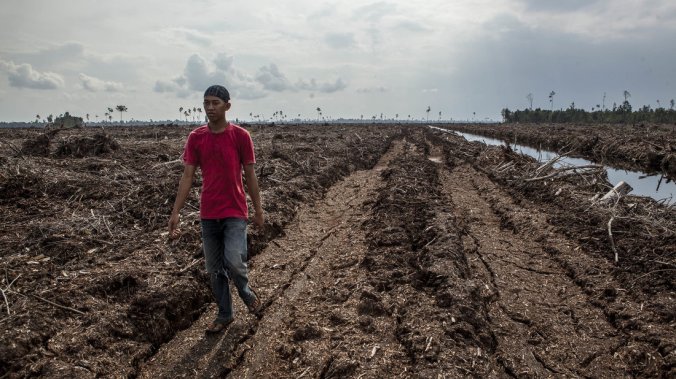
This peat soil in Sumatra, Indonesia, was formerly a forest. Clearing and draining such land releases huge amounts of greenhouse gases. Ulet Ifansasti/Getty Images

The solutions are never easy with regard to climate change; for every bit of good news there is a dose of bad news in the form of realism:

Climate Revolution

31stoneweb-master768

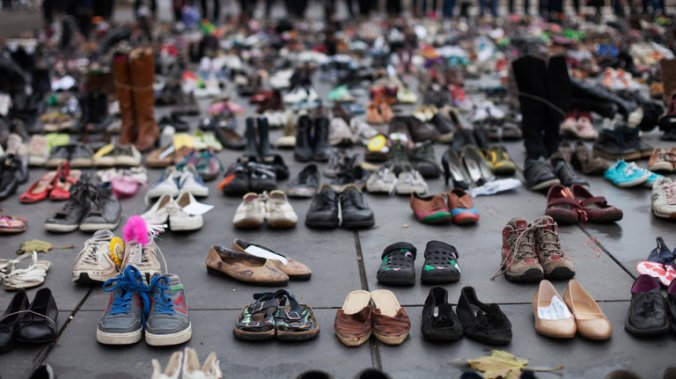
Shoes representing protesters at the climate talks summit in Paris last year. Credit Andre Larsson/NurPhoto, via Getty Images

Thanks to Mr. Godoy and Mr. Jaffe for this strong, clear and compelling statement:

We Don’t Need a ‘War’ on Climate Change, We Need a Revolution

Eric S. Godoy and

This year is on track to become the hottest ever recorded, and a growing number of environmentalists are using a particular type of language in response. Some are calling for a huge “mobilization” to “combat” climate change. In an article in the New Republic in August, Bill McKibben, the unofficial spokesperson of the climate movement in the United States, insisted in very literal terms that, we are at war with climate change. Continue reading
Quail Eggs & Food Culture

Frazier-QuailTheQuieterBackyardEggOption-1200.jpg

Quail eggs have fewer calories than chicken eggs, and with their higher protein ratio two or three can make for a surprisingly hearty breakfast. PHOTOGRAPH BY WOLFGANG KAEHLER / LIGHTROCKET VIA GETTY

This post on the New Yorker’s website is a good sample of what has changed about the writing style, among other things, in the changing food culture of North America. We have left out the first half of the post, which is not for the squeamish in general and certainly not for animal rights activists. Yet, it is realistic, honest, transparent and alot of other things that our global food systems have not been in the last century:

QUAIL, THE QUIETER BACK-YARD EGG OPTION

By

…In her book, “The Coturnix Revolution,” Alexandra Douglas makes a convincing case for quail’s superiority over chickens: they are less expensive, take up less space, and convert feed into edible protein more efficiently. Not only is a quail cage quieter than a coop of squawking chickens, it can be small; a square foot is plenty of room for a single quail. Continue reading

Crowdrise

Norton.jpg

Today’s New York Times has an article that brings Ed Norton’s Crowdrise to our attention, both article (click headline below) and website (click image above) worth a look:

Charity That Begins With Spaghetti Sauce

By

06celebritygiv-norton-blog427Edward Norton recognized Paul Newman the philanthropist before discovering Paul Newman the actor. As a teenager, he watched his mother buy Newman’s Own products at the grocery store and was impressed that all profits went to charity.

“I thought — why would you buy any other spaghetti sauce if you can buy one where all of the net profits go to a kid’s cancer camp?” said Mr. Norton, who starred Continue reading

Nestle, No Thanks

980x-11

“The issue is the privatization of a critical resource. How much is too much?” said Jeff Ostahowski, vice president of the Michigan Citizens for Water Conservation.Steven Depolo / Flickr

If the company’s history was full of better examples of environmental stewardship and social responsibility, maybe this news would not disturb us so much:

Nestlé Plans Dramatic Expansion of Water Privatization in Michigan, Just 120 Miles From Flint

By Lauren McCauley

The state of Michigan has reportedly issued preliminary approval for bottled water behemoth Nestlé to nearly triple the amount of groundwater it will pump, to be bottled and sold at its Ice Mountain plant, which lies roughly 120 miles northwest of the beleaguered community of Flint.

“Nestlé Waters North America is asking the Michigan Department of Environmental Quality (DEQ) for permission to increase allowed pumping from 150 to 400 gallons-per-minute at one of its production wells north of Evart,” MLive reported on Monday. Continue reading

Dutch Methane Capture

2711

Agriculture produces about 10% of the Netherlands’ greenhouse gas emissions. A new project will help capture methane emissions from Dutch dairy farming. Photograph: Julian Stratenschulte/EPA

Thanks to the Guardian for this:

Poo power: Dutch dairy industry launches €150m biogas project

Will a scheme to turn cow manure into biogas help the Netherlands lose its reputation as the ‘bad guy’ of Europe when it comes to agricultural emissions?

The air smells fruity, slightly alcoholic. Against the strong hum of machinery, 175 cows are eating hay. As their dung drops to the slatted floor, a machine sweeps it through and it runs underneath the barn to a futuristic dome outside. Continue reading

Guess Who’s Coming To Dinner?

screen-shot-2016-11-02-at-11.57.52-am_custom-3c65e15eba64733f55b1d77a7fd573e64c2125ec-s1100-c85.png

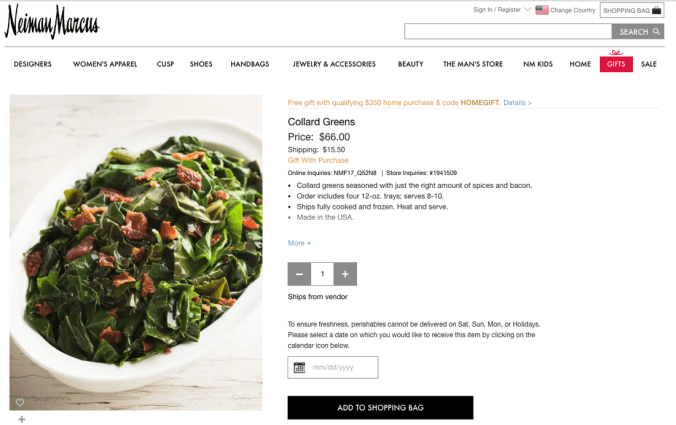
Neiman Marcus is selling collard greens for over $60, this holiday season. Neiman Marcus/Screenshot by NPR

As an election season in the USA, full of existential questions with no good answers, comes to a close we are presented with the puzzling offer of this retailer, which is not exactly existential but kind of akin to it:

Neiman Marcus Is Selling Frozen Collard Greens For $66 Plus Shipping

MERRIT KENNEDY

Luxury department store Neiman Marcus is well-known for its opulent holiday offerings.

For example, its “Christmas Book” holiday gift guide is offering his-and-hers “Island cars” for $65,000 each. And a trip to castles in the U.K. for eight will set you back a cool $700,000. Continue reading

Chauvet & Chevalier

OLYMPUS DIGITAL CAMERA

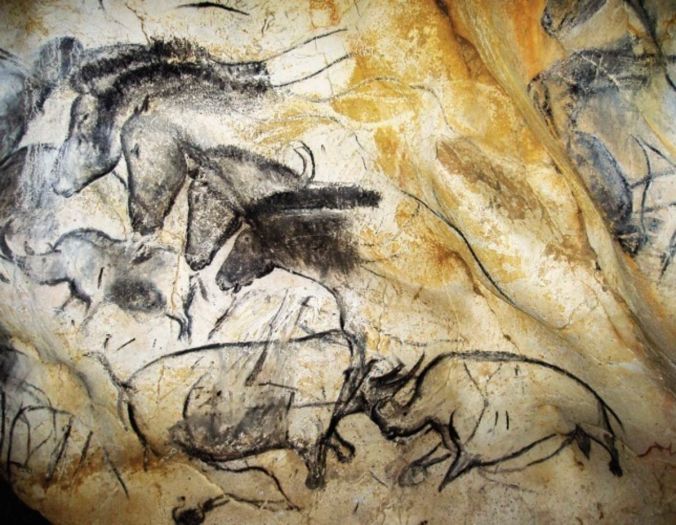
The World’s Oldest Art

BY  On Tuesday, Thurman received the Medal of Chevalier of the Order of Arts and Letters. Revisit her 2003 story on the Chauvet cave.

The New Yorker’s website invites you to celebrate news also cited by Art Forum about a writer who we have not cited here frequently, but whose most famous article (click the link above) is one of our favorites, and the film treatment of the same topic also had our attention; plus her francophilia is strongly shared among us:

Judith Thurman Receives the Medal of Chevalier of the Order of Arts and Letters

Yesterday, Judith Thurman—author, French literature scholar, and staff writer at the New Yorker—was conferred the insignia of chevalier of the Order of Arts and Letters by Bénédicte de Montlaur, the French Embassy cultural counselor. The ceremony took place at New York’s Payne Whitney Mansion. Continue reading

Better Coverage Of Standing Rock

gettyimages-600956964_wide-d6580ce32963e1f82fcc9439c89f9a578584c963-s1100-c85.jpg

Robyn Beck /AFP/Getty Images

An important story deserves full coverage, for as long as it requires:

More Than 1 Million ‘Check In’ On Facebook To Support The Standing Rock Sioux

It’s a show of support for the tribe that has been rallying against construction of the Dakota Access Pipeline, which the tribe says could contaminate drinking water and harm sacred lands

By Merrit Kennedy

More than 1 million people have “checked in” on Facebook to the Standing Rock Indian Reservation page, in a show of support for the tribe that has been rallying against construction of the Dakota Access Pipeline. Continue reading

Preparing For Cleaner Air

tnc_86027894-1260x708.jpg

Photo © Kevin Arnold

Thanks to Cool Green Science for this:

Planting Healthy Air: Can Urban Trees Help Clean Up Pollution?

BY ROB MCDONALD

Every report has a genesis, an initial conversation that sprouts an idea that grows into a research study. For me, one of those moments was a phone interview I had with a professor at King’s College in London, about the somewhat goofy idea of gluing pollution to roads. Continue reading

Lessons In Urban Water Conservation From Down Under

01fixes1web-master768.jpg

Residents of Melbourne, Australia, reduced their water consumption during the long drought and effectively saved the city from running dry. Credit Carla Gottgens/Bloomberg

Thanks to the New York Times for this tutorial, provided at city scale, on more sensible management of natural resources:

Australia’s Lesson for a Thirsty California

Sylvia Rowley

MELBOURNE, Australia — On his first visit to Melbourne in 2009, Stanley Grant, a drought expert and professor of civil and environmental engineering at the University of California, Irvine, had a question for his taxi driver.

“How’s the drought?” he asked.

“It’s about 28 percent,” came the reply.

Grant was puzzled. But shortly afterward, they drove past an electronic road sign announcing that the city’s reservoirs were indeed at just 28 percent of capacity. Continue reading

False Equivalence, Exhibit A?

02dakota1-master675We are concerned about false equivalence journalism, especially on environmental topics, so we have read this story twice before highlighting it. The human interest attraction is meant to be heightened by including the law enforcement perspective.

02dakota2-master675One of the most respected journalists of our time, however, seems to have committed the error right on the heels of an obviously awkward parallel story that serves as a perfect cautionary tale for false equivalence. We still recommend reading it, so you can decide for yourself:

The View From Two Sides of the Standing Rock Front Lines