Generosity’s Change Agents

Vara-Charity-1200.jpg

The rise of a new, fast-growing class of charities known as donor-advised funds represents a momentous shakeup in charitable giving in the U.S. ILLUSTRATION BY MARCUS BUTT / GETTY

Thanks to the contributors to the New Yorker’s website, we get frequent updates on topics we are interested in that might not make it into the long form reportage of the print magazine; case in point:

THE WEALTH GAP IN PHILANTHROPY

By Vauhini Vara

Each year, Stacy Palmer, the editor of the Chronicle of Philanthropy, compiles a list of the U.S. charities that have raised the most money from private sources. In the twenty-six years that the Philanthropy 400 ranking has been published, one thing has stayed constant: United Way Worldwide is at the top. (The one exception was in 1996, when the Salvation Army briefly displaced it.) But when the results started coming in for this year’s list, which was published on Thursday morning, it became clear that a new No. 1 had emerged—an organization affiliated with Fidelity Investments, called Fidelity Charitable, which has grown to become one of the most influential charities in the world. “I was stunned,” Palmer recalled. The details were especially striking. Fidelity Charitable collected 4.6 billion dollars, a twenty-per-cent increase from the previous year. United Way ranked a distant second, with donations dropping by four per cent, to 3.7 billion dollars. “Not only were they”—Fidelity—“going to be No. 1, but they were going to be No. 1 by a lot,” Palmer remembered realizing. Continue reading
Iridescence & Pretty, Shiny Natural Things

lead_960-5

Matthew Jacobs

The Atlantic’s science writers are back in the saddle, leading the way with the best stories recently:

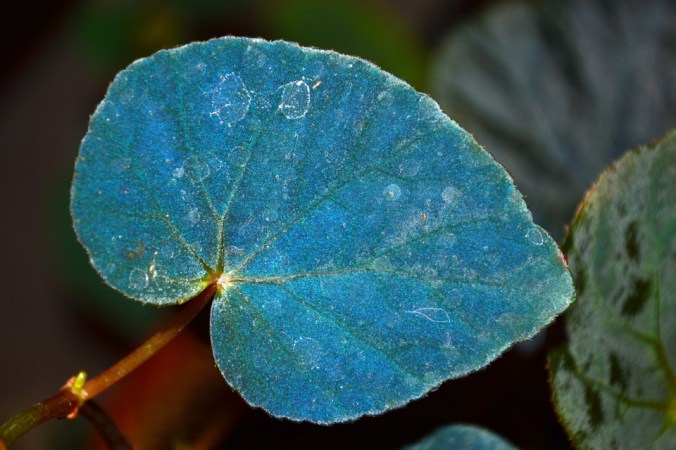
Why Do These Plants Have Metallic Blue Leaves?

Ooh, shiny

ED YONG

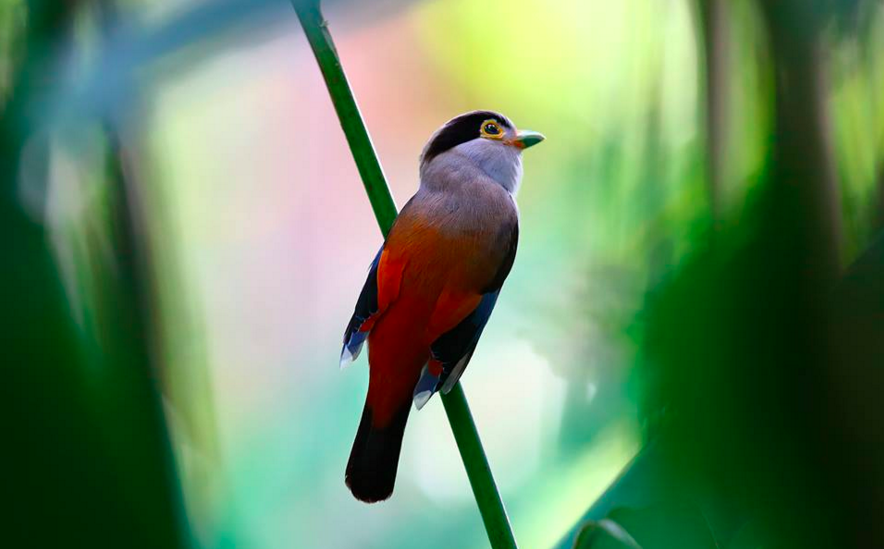
Roses are red but violets aren’t blue. They’re mostly violet. The peacock begonia, however, is blue—and not just a boring matte shade, but a shiny metallic one. Its leaves are typically dark green in color, but if you look at them from the right angle, they take on a metallic blue sheen. “It’s like green silk, shot through with a deep royal blue,” says Heather Whitney from the University of Bristol.

And she thinks she knows why. Continue reading

Traditions Taken Beyond The Limit Of Logic

wine

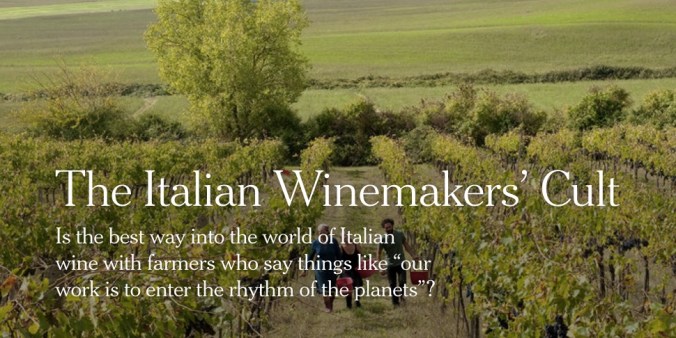
The annual harvest of the sangiovese grapes at the tiny Colombaia winery outside Siena. Credit Susan Wright for The New York Times

This story touches on many of our favorite themes, so thanks to Mr. Pergament for telling it well (click the image above to go to the original, at the New York Times website):

By DANIELLE PERGAMENT

It was a hot, late summer evening in Tuscan wine country — and, unexpectedly, I was getting a lesson in astrology.

Inside a grid of cool, lush green vines, amid hills and valleys rippling toward the horizon, a cherubic woman in a wide straw hat named Helena Variara was pointing toward the sky.

“You have days of fire, air and days of earth — the 12 constellations are our helpers,” she said matter-of-factly. “Our work is to enter the rhythm of the planets.” Continue reading

Rewilding, North America Edition

636129948116675648-elk-in-pickens-county-by-caleb-cassell

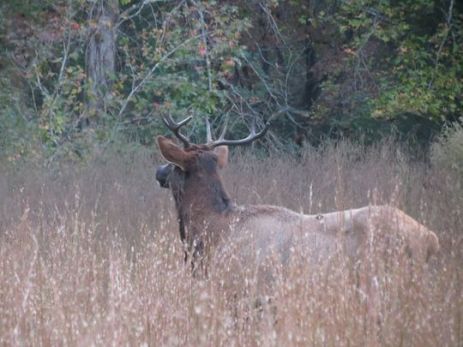
An elk, the first seen in South Carolina in centuries, gazes across a field in northern Pickens County. (Photo: provided/Caleb Cassell)

We would much rather that original nature was protected in its original state, but that does not keep us from celebrating the various efforts we see to reintroduce species, especially when they show signs of success as in this case from South Carolina, USA:

In Pickens County, first elk sighting in state for centuries

Ron Barnett

For the first time since the Upstate was Cherokee territory, a wild elk has been seen roaming the woodlands of South Carolina. Continue reading

Centennial Portraiture

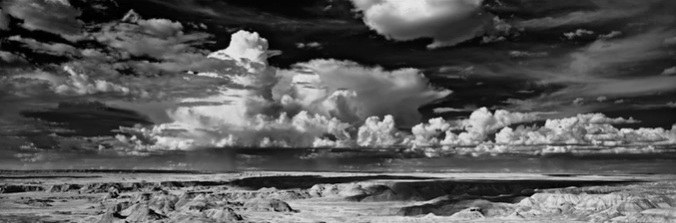
Painted Desert by Cody Brothers

Since August this year a multitude of events have occurred to honor the 100th birthday of the U.S. National Park Service. Aside from the obviously wonderful wilderness experiences available in the country’s 58 parks, as well as our own National Park of the Week series on this site, there are cultural events that highlight the beauty and history of the amazing achievement that is the preservation of our national patrimony for future generations.

Photographers have documented the landscapes of our national parks from the moment the technology made it possible, and the haunting beauty of the panoramas draw artists, explorers and dreamers still.

National Endowment for the Arts grant recipient Cody Brothers is all three. Continue reading

The Best Use We Have Ever Heard Of For A Taco Bell

30dealers1-master768-1

From left, Emma Fernberger, associate director of the Bortolami Gallery; the dealer Stefania Bortolami; and the artist Tom Burr in the former Pirelli Tire Company building in New Haven, where Mr. Burr plans an installation as part of the gallery’s “Artist/City” initiative. Credit Christopher Gregory for The New York Times

We do not bother complaining about fast food on this platform, but we are happy to pass along this story about re-purposing a fast food site:

Art Dealers Move Out of the Gallery and Into a Taco Bell

By

Stefania Bortolami still recalls, with cathartic exultation, the moment she decided to display her art in a slower, smaller way. It was May 2015, and Ms. Bortolami, the owner of the Bortolami Gallery in Manhattan, was at the art fair Frieze New York — her sixth such gathering of the year. Continue reading

More Before The Flood

Flood.jpg

We have been there, we have seen it, we have breathed it, we have witnessed enough. We are grateful to the film makers for bearing witness to a wider audience. Click above to go to the preview of the film:

Exclusive Clip: DiCaprio’s Climate Doc Exposes Destruction of Rainforest for Palm Oil as Huge Driver of Global Carbon Emissions

Rainforest Action Network

A new documentary produced and starring actor and activist Leonardo DiCaprio premieres in Los Angeles today and will be broadcast globally in 45 languages in 171 countries on the National Geographic Channel starting Oct. 30, timed to air in advance of the November elections. Continue reading

Returning Rivers To Their Natural State

25dam2-superjumbo

A view of the Milford Dam. After the removal of two large dams downriver, the Milford Dam is now the first barrier fish face when ascending the Penobscot River. Credit Murray Carpenter

We are thrilled to read about the rivers getting their groove back:

Taking Down Dams and Letting the Fish Flow

By

BANGOR, Me. — Joseph Zydlewski, a research biologist with the Maine Cooperative Fish and Wildlife Research Unit of the United States Geological Survey, drifted in a boat on the Penobscot River, listening to a crackling radio receiver. The staccato clicks told him that one of the shad that his team had outfitted with a transmitter was swimming somewhere below.

Shad, alewives, blueback herring and other migratory fish once were plentiful on the Penobscot. “Seven thousand shad and one hundred barrels of alewives were taken at one haul of the seine,” in May 1827, according to one historian. Continue reading

Genetic Engineering Versus GMO

14236210688_a488be4c46_k

E-maxx/Flickr.com

Thanks to Anthropocene for this summary of promising new findings for the GMO-concerned:

A novel approach to pesticide-free, non-GMO food?

Sani Choice, Yasuni Future

5760

Wildlife watch … the author’s guide, Victor, explores an area of flooded forest in the Yasuni national park, Ecuador. Photograph: The Guardian

The Guardian keeps attention on this difficult balancing act, requiring Solomonic wisdom, that we have linked to on more than one occasion:

Ecuador’s Yasuni park: where oil vies with tourism for the rainforest

The Sani people face a choice between encouraging ecotourism to their rainforest – one of the world’s most biodiverse – and allowing in the oil companies

Kevin Rushby

Fernando was sitting on his veranda listening to the whoops and whistles of the jungle. Our visit was a surprise, but the old man was soon answering my questions, keen to talk.

“I arrived here in about 1960,” he told me. “A group of us came to start a new life. Hunting was easy. The animals were almost tame. We just used a blowpipe, no guns.” Continue reading

Farms, Interns, Valuable Life Experience

farmintern

We have a long, productive and gratifying history with internships, and so we take note when the Thanks to the Atlantic’s website for this:

The Benefits of Interning on a Farm

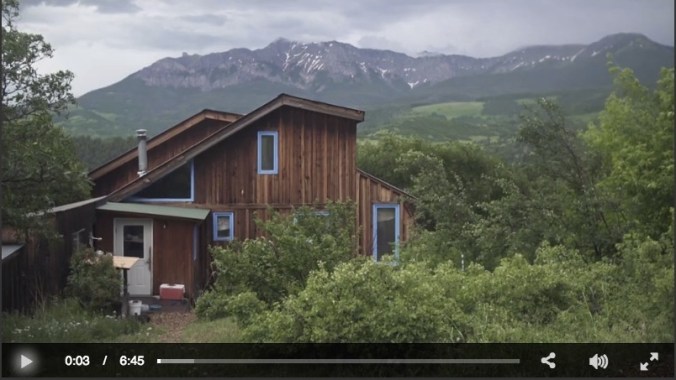
Video by The Perennial Plate

High in the mountains of Telluride, Colorado, Tomten Farms offers the opportunity to learn agriculture through an internship program. Continue reading

Carbon Capture’s Unintended Consequences

smokestack.jpg

Photo: Ryan T. Flickr Creative Commons.

Be careful what you wish for as this summary of a new scientific study reminds us:

Could carbon capture fuel our carbon addiction?

Monkeys & Tools

lead_960-4

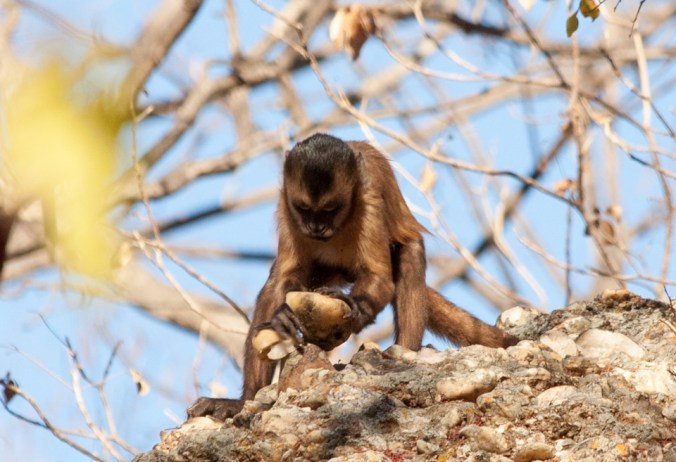
Monkey see, monkey smash. T. Falótico

Ed Yong’s recent story about this cleverest of creatures:

Rock-Smashing Monkeys Unintentionally Make Sharp Stone Tools

What this says—and doesn’t say—about the evolution of human technology

In 2014, Michael Haslam wedged between two boulders in northeast Brazil and filmed some monkeys. Oblivious to the voyeur, the monkeys—bearded capuchins—began smashing stones together. They lifted small cobbles into the air and brought these down upon a rock face, like a hammer upon an anvil. In the process, the hammer stones would often shatter.

After the monkeys had gone, Haslam picked up some of these broken fragments—and was amazed. Many had sharp edges, and looked remarkably like human tools. Continue reading

FishFace

tnc_17243496_preview_cropped-1260x708.jpg

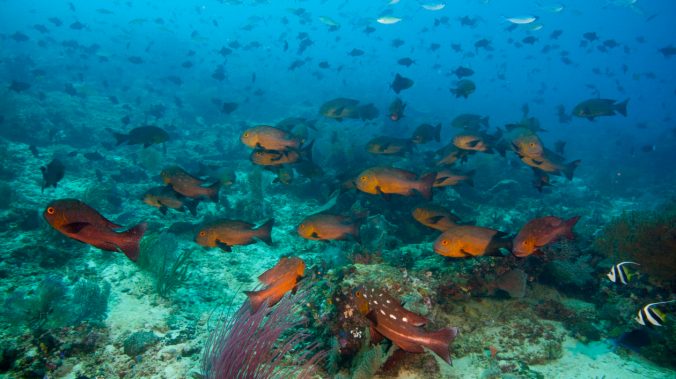
Midnight Snappers, Fusiliers, and Triggers school in deep water, photographed in the waters off Kofiau. Photo © Jeff Yonover

Nature Conservancy’s blog,

We Can Have Oceans Teeming with Fish with FishFace Technology

By Lisa Feldkamp

Traditional methods of gathering fisheries data can take as long as one or two years, costing time and money that many imperiled global fisheries don’t have.Enter FishFace, a new application under development by The Nature Conservancy in partnership with Refind Technologies. Similar to facial recognition software used to identify people, FishFace uses artificial intelligence to learn to recognize fish species in photographs. Continue reading

National Park of the Week: Ras Mohammad National Park, Egypt

6e8b00541d43a27ec2ef395accfbe3e6

Pinterest.com

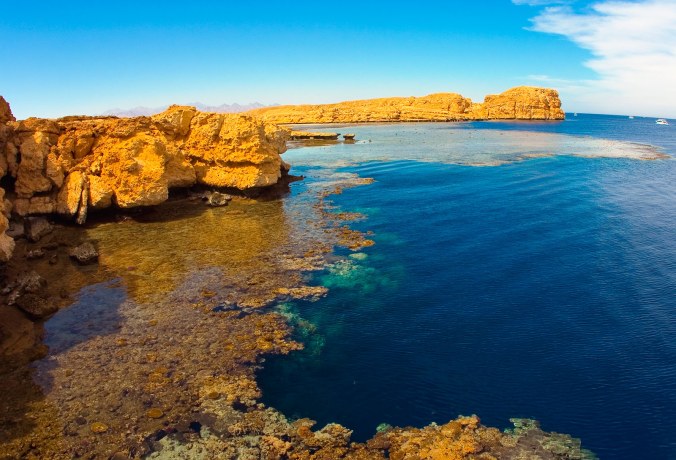
Overlooking the Gulf of Suez on the west and the Gulf of Aqaba to the east, Ras Mohammad National Park  in Egypt lies at the southern extreme of the Sinai Peninsula and offers waters that are considered to be the jewel in the crown of the Red Sea. The coastline, characterized by vertical overhangs at least 100m deep,  is surrounded by fringing coral reefs that emerged after a change in the coastline 70,000 years ago. Due to its location at the juncture of the two gulfs, the combining waters of varying salinity has lead to a magnificent array of reef and pelagic fish, diverse coral reef and luxuriant sea walls.

Continue reading