Health Via Happiness

hires_pdf_page_06_image_0003

Illustration by Jeanine Murch

Thanks to Harvard Magazine for this one:

RIGHT NOW | BENEFITS OF BLISS

Can Happiness Make You Healthier?

THE QUEST to study human happiness, including its causes and effects, even agreeing on a definition is a formidable undertaking. Joy, euphoria, contentment, satisfaction—each of these, at times, has been used as a proxy or emphasized in research studies. Continue reading

Remote Living, Well Done

980x (8).jpg

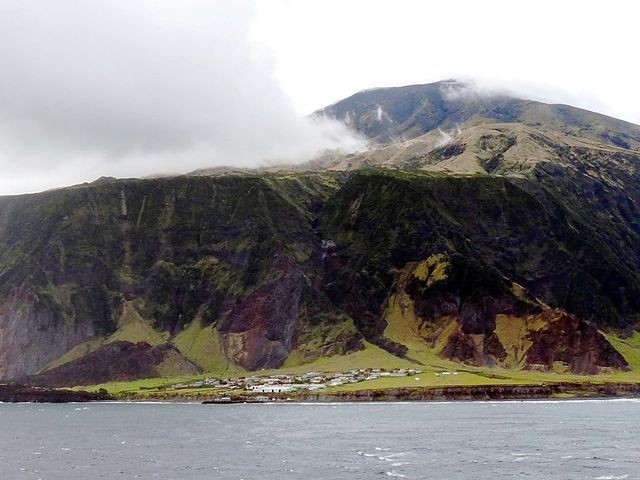
Edinburgh of the Seven Seas, Tristan da Cunha, South Atlantic Ocean michael clarke stuff / Wikipedia

Thanks to EcoWatch for keeping us posted on the greenish news from the bottom edge of the planet:

World’s Most Remote Village Is About to Become Self-Sufficient World’s Most Remote Village Is About to Become Self-Sufficient 

The most remote village on Earth, located on Tristan da Cunha in the South Atlantic Ocean, is about to get a 21st century upgrade thanks to an international design competition aimed at creating a more sustainable future for the farming and fishing community. Continue reading

New Study on How Boobies Dive Safely

Replicas of gannet skulls from the collection at the Smithsonian Institution allowed researchers to measure the forces a bird’s skill experiences during a dive. (Photo by Sunny Jung/Virginia Tech via Smithsonian)

Replicas of gannet skulls from the collection at the Smithsonian Institution allowed researchers to measure the forces a bird’s skill experiences during a dive. (Photo by Sunny Jung/Virginia Tech)

The title may seem silly, but I can’t help that a whole family of birds are alternatingly called boobies or gannets – most of us have heard of the Blue-footed Booby, but there are several other species, all of which hunt for fish by diving, head first, at extremely high speeds from many meters above the water. For a human entering water at fifty miles an hour, a neck injury would be a certainty, and even organ damage could occur, but boobies/gannets accomplish the dives plenty of times during a day’s hunting, with no apparent problem. It seems that their physiology, as well as the way they contract their muscles during the plunge, save them from harm. From the Smithsonian Insider:

New research from Virginia Tech, the Smithsonian’s National Museum of Natural History, the National Museum of Rio de Janeiro and the North Carolina Museum of Natural Sciences helps explain how the birds manage these high-speed dives.

“We were interested in what happens when objects plunge into water, so we looked for examples in nature; the gannets are incredible,” said Sunny Jung, an associate professor of biomedical engineering and mechanics in the College of Engineering and an expert in fluid biomechanics; he has also studied dogs’ unusual drinking technique and how shrimp use microscopic bubbles to hunt.

Continue reading

Public Art Pulling More Than Its Own Weight

Screen Shot 2016-10-22 at 12.00.43 PM.jpg

Thanks to Anthropocene:

Art That Delivers Clean Water & Power

An international competition challenges designers to show that clean energy production and dazzling public art can be one and the same

Since 2010, the Land Art Generator Initiative (LAGI) has sponsored site-specific design competitions, soliciting ideas for public art that generates clean power. Its 2016 contest was the most ambitious yet. It called on designers to conceive of art installations that generate both clean power and water for the city of Santa Monica, California. Continue reading

Before the Flood

21BEFOREFLOOD-master768-v2.jpg

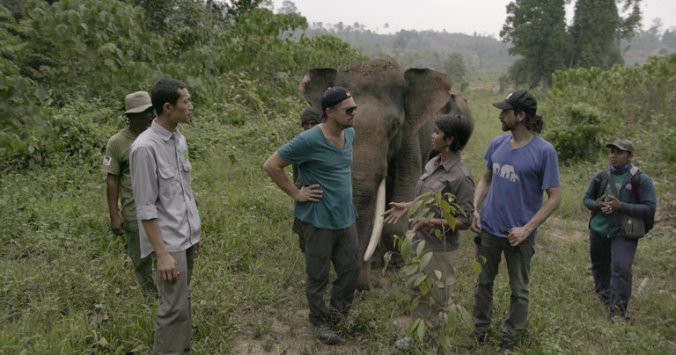
Leonardo DiCaprio in a scene from the global-warming documentary “Before the Flood.” Credit National Geographic

Have you seen it? Let us know if the reviewer got it right:

Review: In ‘Before the Flood,’ Leonardo DiCaprio Sounds the Climate-Change Alarm

Even if you subscribe to the view that a problem isn’t a problem until a Hollywood celebrity tells you it is, “Before the Flood” feels out of phase. It’s a documentary in which Leonardo DiCaprio sounds the alarm about global warming, something that could not possibly have escaped anyone’s attention in recent years and is at this point probably beyond discussion: Either you think climate change is real or you don’t, and the battle lines aren’t likely to be shifted by an earnest movie star. Continue reading

Birding from VdF: Todos Santos

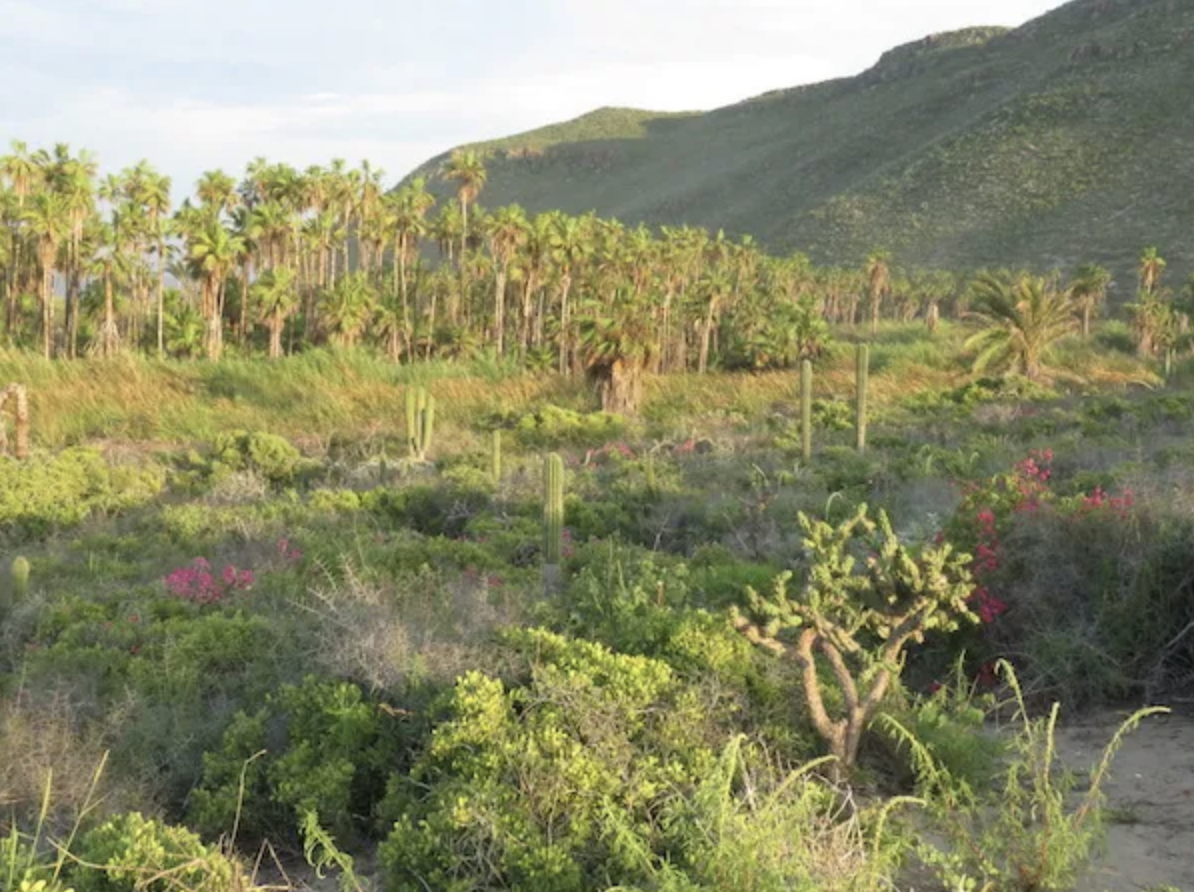
Oasis Playa Las Palmas de San Pedro, near Todos Santos

Check out my last post for an introduction to this series and to read about the Sierra de la Laguna.

At three hours away from Villa del Faro, the town of Todos Santos is a bit of a stretch for a day trip, but could be accomplished by a determined driver or could be an addition to a stay here on the East Cape. Todos Santos is a very pleasant town on the Pacific coast of the southern Baja Peninsula, and two spots in particular are relatively well-visited by birders in the region: a little wetland area right by the beach at the southern edge of town called La Poza de Todos Santos (poza meaning “pool” or “puddle”) and a hotel associated with the spot called Hotel Posada la Poza (posada meaning “inn” or “lodge”).

Continue reading

Fiber Fashion

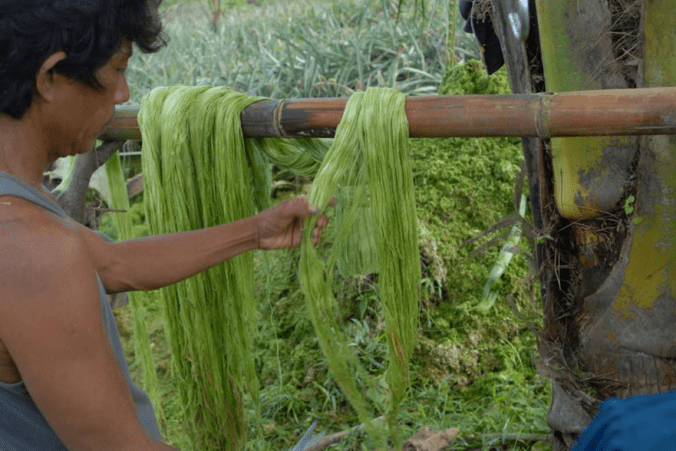
PiñatexTM production will bring new income opportunities for pineapple harvest farmers in developing countries, with the initial development stage taking place in the Philippines

We’re not insensitive to the frequent commentary on both news and social media by animal rights activists against viewing animals as commodities. With those feelings in mind, this discovery of Ananas Anam, a not for profit organization that is developing leather-like textiles using natural fibers that are the by-product of the pineapple harvest, is an exciting one.

I’ll definitely be on the look out for Pinatex products and hope our readers will as well!

ananas- anam – new materials for a new world

OUR SOCIAL IMPACT

Ananas Anam supports pineapple-farming communities in the Philippines. We are developing a new industry that will enhance the social network in rural areas as farmers will be able to sell fibres as a commercial and viable proposition.

Furthermore, the farming communities will benefit from the potential output of natural fertilizer/biogas which is the by-product of fibre extraction.

Other pineapple-growing developing countries will join the Philippines in the production of Piñatex, which will support local economies and strengthen their exports. Continue reading

Coffee Grounds To The Rescue

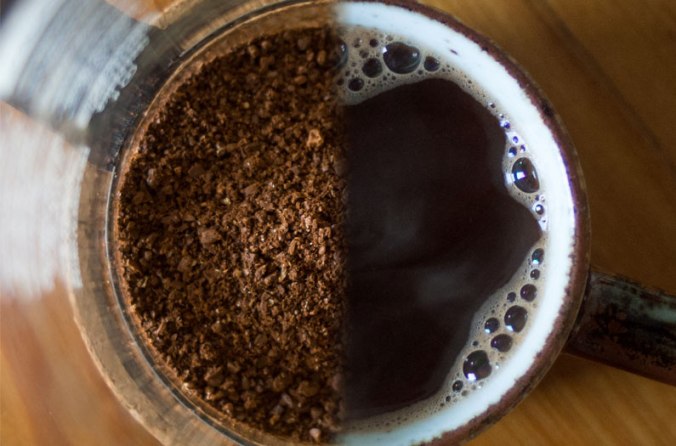
coffee-grounds-2.jpg

Kevin O’Mara/Flickr.com

Thanks again, after a series of earlier excellent items, Anthropocene:

A caffeine fix for heavy metal cleanup

Each year, coffee drinkers across the globe create six million pounds of waste in the form of spent coffee grounds. Some of us chuck it in our compost pile, but most of it becomes just another garbage disposal challenge. Continue reading

The Journey We Are All Responsible For

28_millimetres_-_women_are_heroes_action_in_phnom_penh_open_eyes_cambodge_2009

28 Millimeters, Women Are Heroes. Action in Phnom Penh, Open Eyes, Cambodge, 2009

A big part of what we do when we are not adding to these pages involves helping people all over the world plan journeys. We want them to stay in places that we have developed and/or that we manage because we have worked to reduce our contribution to negative anthropocentric travel impacts. There are positive impacts also, of course, including resources flowing to places where they are needed for human development, which in turn increases the likelihood of conservation efforts succeeding.

I was happy to see this newly revamped online publication back in these pages recently, and today as I went to their website I am even more happy to see this amazing article by a writer who was liberally linked to in our first couple of years on this platform. We have enormous respect for Mr. Revkin’s commitment to many of the same things we work on day in and day out. This is a long article, but worth the time and attention:

An Anthropocene Journey

The word “anthropocene” has become the closest thing there is to common shorthand for this turbulent, momentous, unpredictable, hopeless, hopeful time—duration and scope still unknown

By Andrew C. Revkin
October 2016

My reporting career has taken me from smoldering, fresh-cut roadsides in the Amazon rain forest to the thinning sea ice around the North Pole, from the White House and Vatican to Nairobi’s vast, still-unlit slums. Throughout most of it, I thought I was writing about environmental and social problems and solutions.

Lately I’ve come to realize that my lifelong beat, in essence, has been one species’ growing pains. After tens of thousands of years of scrabbling by, spreading around the planet, and developing tools of increasing sophistication, humans are in surge mode and have only just started to become aware that something profound is going on. The upside has been astounding. Child and maternal mortality rates have plunged. Access to education has soared. Deep poverty is in sharp retreat. Despite the 24/7 distilled drama online and on TV, violence on scales from war to homicide has been in a long decline.

Library Luxury of a Different Sort

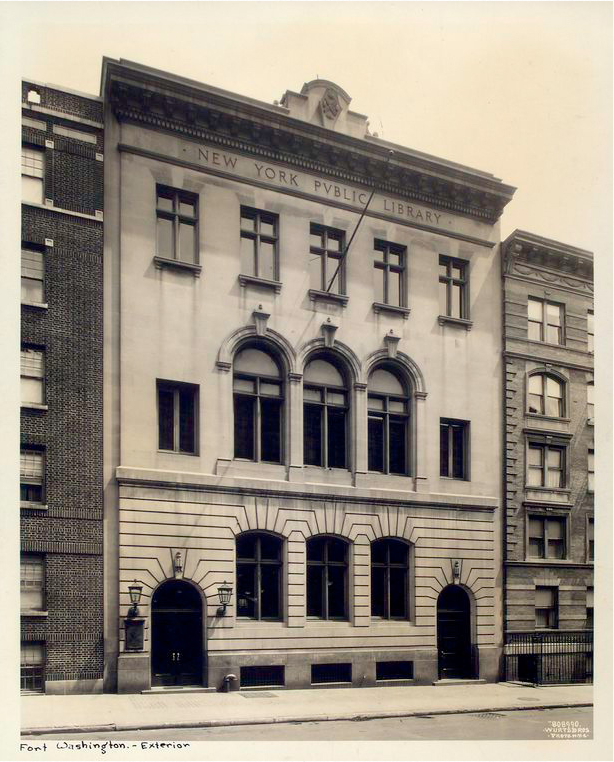
The exterior of the Fort Washington library the year it opened, 1914. The top floor windows are for the apartment. (Photo: New York Public Library/Public Domain)

The beautiful Beaux-Arts design of many of the buildings in the New York Public Library system represent only one definition of luxury. The idea of children growing up playing and reading in the stacks at night produces the colorful imaginings of literature where children spend nights in museums, or ramble about in the “tippy-top floor of the Plaza Hotel”.

I’m sure most of us haven’t heard of the custodian apartments that used to grace New York City’s branch libraries, and I for one, am grateful to Atlas Obscura for sharing this curious history.

Inside the New York Public Library’s Last, Secret Apartments

There are just 13 left.

There used to be parties in the apartments on the top floors of New York City’s branch libraries. On other nights, when the libraries were closed, the kids who lived there might sit reading alone among the books or roll around on the wooden library carts—if they weren’t dusting the shelves or shoveling coal. Their hopscotch courts were on the roof. A cat might sneak down the stairs to investigate the library patrons.

When these libraries were built, about a century ago, they needed people to take care of them. Andrew Carnegie had given New York $5.2 million, worth well over $100 million today, to create a city-wide system of library branches, and these buildings, the Carnegie libraries, were heated by coal. Each had a custodian, who was tasked with keeping those fires burning and who lived in the library, often with his family. “The family mantra was: Don’t let that furnace go out,” one woman who grew up in a library told the New York Times. Continue reading

Adorable, Luminous, and Rare

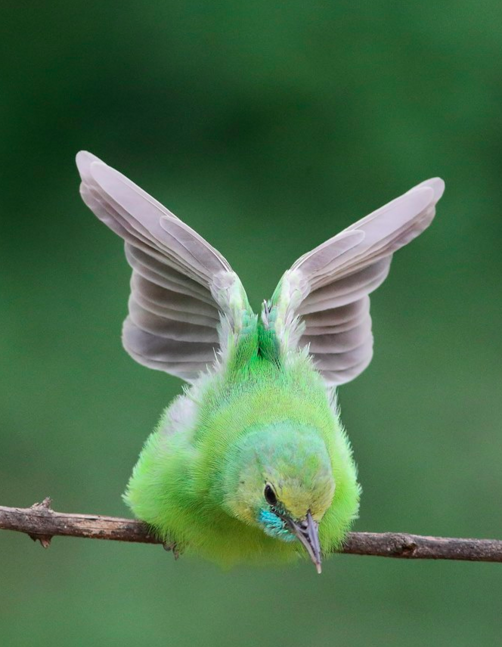
The rare patch of black feathers is evidence that the bird is leucistic, not albino. Photo: Brad R. Lewis

Hummingbirds are frequent visitors to this site, including the Anna’s hummingbird. All hummingbirds are known as tiny winged gems flitting from flower to flower or feeder to feeder, so the individual pictured above is especially startling. The term “leucistic” is new to us, and we thank Audubon.org for bringing this to our attention.

Rare White Hummingbird Steals the Spotlight at California Garden

In the Australian Gardens at the University of California, Santa Cruz Arboretum, a dozen Anna’s Hummingbirds dart between golden banksia flowers and various pink and white blooming shrubs. Their feathers are bright, iridescent shades of emerald, pink and gray. The grove is awash with color.

Except for one strange bird that’s sitting in a cypress tree, watching the flurry of feeding and fluttering. It’s an Anna’s Hummingbird—and it’s almost entirely white. Continue reading

Rights, Entities & Conservation

5616-1

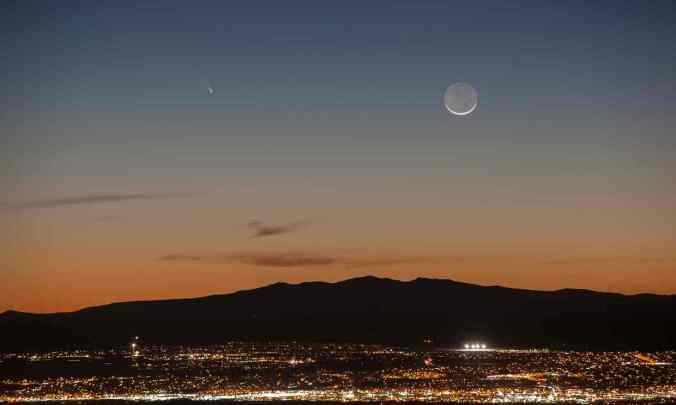
Mount Taylor, from Albuquerque, New Mexico. The Zuni believe Mount Taylor is a living being. Photograph: Morgan Petroski/AP

Thanks to the Guardian for this editorial opinion in their Environment section:

What if nature, like corporations, had the rights of a person?

For some people, like the Zuni in New Mexico, wild places are considered living beings. In western society, it’s companies that assume that privileged position

Chip Colwell

In recent years, the US supreme court has solidified the concept of corporate personhood. Following rulings in such cases as Hobby Lobby and Citizens United, US law has established that companies are, like people, entitled to certain rights and protections. Continue reading

Hydroelectric & Its Discontents

reservoir

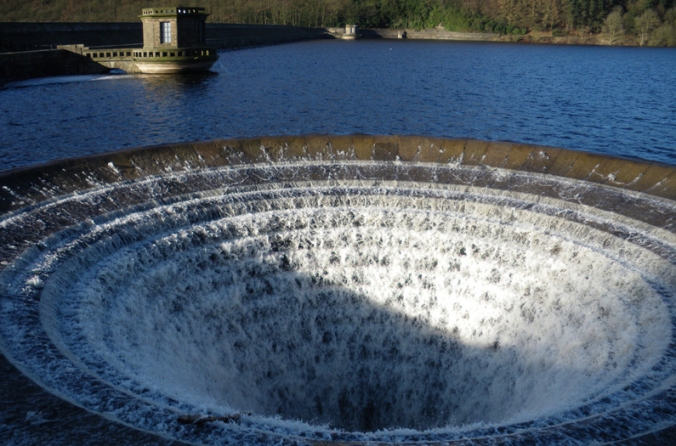
Ladybower Reservoir in Derbyshire. Credit: justfluff via Flickr.

We only said a brief note of thanks for the arrival of the new version of what used to be Conservation magazine, one of our most-cited sites. Now, after some days of observing Anthropocene, we are even more grateful for their effort at overhaul:

Dam greenhouse gas emissions really add up

For all their ecological faults, hydropower dams are usually thought of as a source of green, carbon-neutral energy. But it turns out that the reservoirs behind dams release a significant amount of greenhouse gases that, until now, have gone unaccounted for in global carbon budgets. Continue reading

Salmon Cam, Daylight Hours Only

tnc_69193956_preview_cropped-e1470747691984

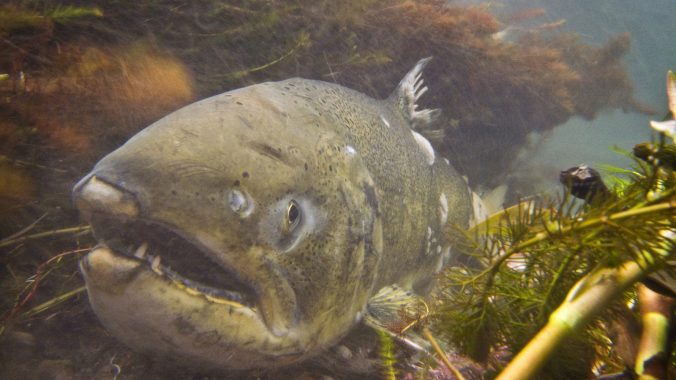
Salmon returning to spawn in the Shasta River. Photo © Bridget Besaw.

We missed this when it was first published a couple months back, so a belated thanks to The Nature Conservancy for pointing us to the site where we can see underwater, in real time, and hopefully observe fish in their natural habitat. Salmon Cam is only visible during daylight hours so click on the website during California daylight hours:

Salmon Cam: Watch Migratory Fish Live

BY MATT MILLER, CHRIS BABCOCK

If you’re a fan of Salmon Cam, you may have noticed a change of scenery when you’re viewing. Continue reading