Perspective On Life, Micro View

y648From the macro to the micro, some detailed reporting on a topic we need to be more informed about; in this book review of the recent book by Ed Yong (science reporter, another of our frequent fliers; see his recently filmed lecture on the topic below):

Reader, as you read these words, trillions of microbes and quadrillions of viruses are multiplying on your face, your hands and down there in the darkness of your gut. With every breath you take, with every move you make, you are sending bacteria into the air at the
rate of about 37 million per hour — your invisible aura, your personal microbial cloud. With every gram of food you eat, you swallow about a million microbes more.

According to the latest estimates, about half of your cells are not human — enough to 21weiner-master315make you wonder what you mean by “you.” Your human cells come from a single fertilized egg with DNA from your mother and father. Microbes began mingling with those human cells even before your first breath, the first kiss from your mother, your first taste of milk. And your human cells could not have built a healthy body without intimate help from all those trillions of immigrant microbes — your other half. Continue reading

Big Data & Environmental Activism

3702

Kate Brandt speaking at the 2016 SXSW Eco conference in Austin, Texas. Photograph: Diego Donamaria

We do not see enough of this type of story:

How Google is using big data to protect the environment

Google’s sustainability officer Kate Brandt outlines the company’s wide-range interest in sustainable fishing, green buildings and renewable energy

by Ucilia Wang

For many people, Google is simply the gateway to a vast archive of facts and memories. For those who pay closer attention to its business dealings, the company also invests billions to find new ways to use the power of computers: it’s developing robots, virtual reality gear and self-driving cars. Remember all the hubbub about Google Glass?

Google has been using the same approach in sustainability – spreading its wealth in a variety of projects to cut its waste and carbon footprint, initiatives which may one day generate profits. During the SXSW Eco conference this week, I caught up with Google’s sustainability officer, Kate Brandt, to find out more. Brandt joined the company in July last year after serving as the nation’s chief sustainability officer in the Obama administration. Continue reading

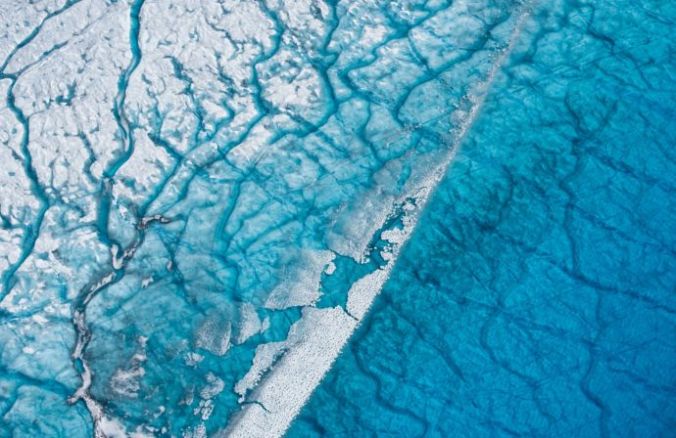
Ice Melt, Harbinger Of Accelerated Melting

161024_r28885-690x448-1476393905

When water accumulates on the surface of an ice sheet, more sunlight gets absorbed, which results in more melt, in a cycle that builds on itself. This year’s melt season began so early that many scientists couldn’t believe the data they were seeing. PHOTOGRAPH BY DANIEL BELTRÁ

Elizabeth Kolbert has appeared in these pages about as frequently as any other individual we admire (McKibben, an activist and a writer, wins the race with a few more posts pointing his way), or any other topic (take your pick between libraries, entrepreneurial conservation or a few others that nudge past EK in the same race) we care deeply about. She is an activist through her writing, advocating on behalf of our better understanding of the challenges facing the next generations. Epochal challenges that we have some ability to influence the outcome of. So, when she delivers biblical proportions of reporting, we read every word and pass it on:

GREENLAND IS MELTING

The shrinking of the country’s ice sheet is triggering feedback loops that accelerate the global crisis. The floodgates may already be open.

Not long ago, I attended a memorial service on top of the Greenland ice sheet for a man I did not know. The service was an intimate affair, with only four people present. I worried that I might be regarded as an interloper and thought about stepping away. But I was clipped onto a rope, and, in any case, I wanted to be there. Continue reading

Bass, Harbinger Of Hope

16nature-master768

Its numbers fluctuate, but the striped bass is far more common than it was just a few decades ago. Credit Getty Images

Thanks to Mr. Taft and the New York Times for this note of reversed fortunes for the fish, and for the anglers who champion them most vocally:

Striped Bass of the Hudson

By

With the jutting jaw of a mob kingpin and the pinstripes of a Wall Street executive, striped bass swim through the brackish waters of New York Harbor like old-school New Yorkers — as if they own the place. Continue reading

National Park of the Week: Tongariro National Park, New Zealand

tongariro-nationalpark

Source: nz-autraliatours.com

New Zealand’s oldest national park and the fourth national park to be created in the world, Tongariro National Park is internationally recognized for its outstanding volcanic features and is historically venerated by the Maori people. The park encircles three volcanoes, Tongariro, Ngauruhoe, and Raupahu and covers almost 80,000 hectares of contrasting terrain. The three volcanoes are active, Raupehu being one of the most active volcanoes in the world, but that does not deter visitors from hiking up to the top and gazing out into the exotic conic formations.

Continue reading

Air Conditioning In The Tropics

refridge

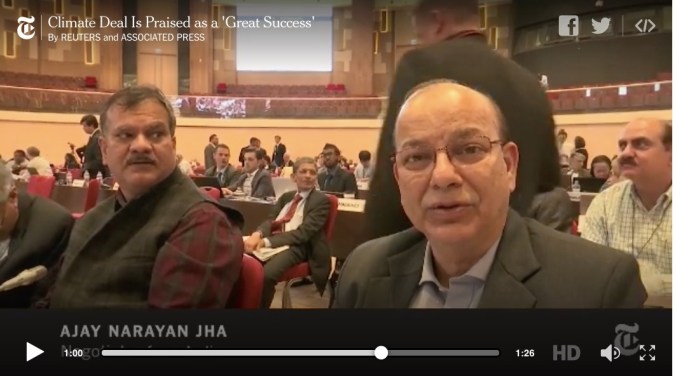
Negotiators from more than 170 countries celebrated in Rwanda on Saturday after reaching a legally binding accord to cut the worldwide use of a powerful planet-warming chemical used in air-conditioners. By REUTERS and ASSOCIATED PRESS on Publish DateOctober 15, 2016. Photo by Cyril Ndegeya/Agence France-Presse — Getty Images. Watch in Times Video »

Just to be extra clear on how problematic, and precarious our position is (jets and sharks are not the least of it) doing what we do for a living, today’s excellent news–complicated and full of ifs and buts–is excellent, full stop. But most of us contributing on this site live in the tropics, with air conditioning. Can we live under the new rules? (Accord Could Push A/C Out of Sweltering India’s Reach makes us wonder.) We will. Do we know what that means? Not yet. But we are paying attention:

Nations, Fighting Powerful Refrigerant That Warms Planet, Reach Landmark Deal

By

Negotiators from more than 170 countries on Saturday reached a legally binding accord to counter climate change by cutting the worldwide use of a powerful planet-warming chemical used in air-conditioners and refrigerators.

The talks in Kigali, the capital of Rwanda, did not draw the same spotlight as the climate change accord forged in Paris last year. But the outcome could have an equal or even greater impact on efforts to slow the heating of the planet.

President Obama called the deal “an ambitious and far-reaching solution to this looming crisis.” Continue reading

Sharks & Jets

shark

Thursday morning someone among us posted this. I read it and cheered. Getting on a jet plane to escape to nature, which is problematic to begin with, is made ultra-problematic by landing in the vicinity of a biodiversity hotspot and swimming with trapped animals. We are opposed to it, putting it mildly. Get on a jet, immerse in nature, but let sharks be sharks.

Thursday evening Amie and I were dining with friends who we met in Costa Rica when they were on vacation. They have not been to Baja California Sur, and we were encouraging them to go to Villa del Faro with their kids, who love nature. The mom in the family said, half jokingly, that she had been thinking about going to get into one of those shark cages. We all said, polite-laughingly, that we would be there to support her from the shore. We did not feel the need to get serious and educate about why we would not really support her doing this. 12 hours later this video showed up in the Guardian, and I sent the clip to them, adding to the viral status it now has, to point out the coincidental extra humor. Two days later, not so funny:

Shark conservationists fear backlash after viral cage-smashing video

Experts emphasize that the incident, in which a great white broke through a cage holding a diver, was a ‘one in a million occurrence’

in New York

Shark enthusiasts are concerned about the impact of a viral video that showed a great white shark breaking into a cage occupied by a diver in Mexico.

The diver survived, but the harrowing video shed light on a decades-old tourism industry that allows people to be within an arm’s length of great white sharks, separated only by the sea and some metal bars. Continue reading

Hello Anthropocene

screen-shot-2016-10-15-at-10-47-32-am

We have been looking forward to seeing you:

We are a digital, print, and live magazine in which the world’s most creative writers, designers, scientists, and entrepreneurs explore how we can create a sustainable human age we actually want to live in.

Make A Difference When You Can

980x-7

“What can we do to make a difference?”The Thinker

Thanks to EcoWatch for passing this along:

The Question I Get Asked the Most

Bill McKibben

The questions come after talks, on twitter, in the days’ incoming tide of email—sometimes even in old-fashioned letters that arrive in envelopes. The most common one by far is also the simplest: What can I do? I bet I’ve been asked it 10,000 times by now and—like a climate scientist predicting the temperature—I’m pretty sure I’m erring on the low side. Continue reading

Beware & Resist The Frack

4896

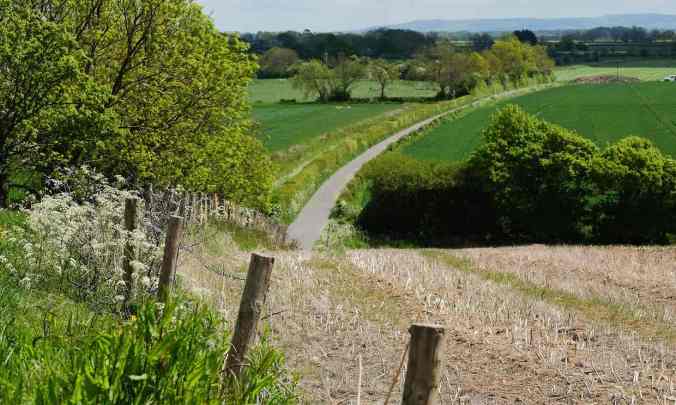
Countryside near the village of Kirby Misperton in North Yorkshire where a planning application by Third Energy to frack was recently approved. Photograph: Ian Forsyth/Getty Images

Many claim to tire of hearing about climate change, species extinction, threats from fracking and other environmental issues of great importance. Thanks to the Guardian for continuing to pay attention:

Majority of potential UK fracking sites are rich in important wildlife

Almost two-thirds of proposed areas have higher biodiversity, valuable for functions such as pollination and pest control, analysis shows

Many of the areas that have been recently marked as potential sites for fracking are rich in wildlife that perform crucial functions from pollination to decomposition, researchers have found.

Scientists say that almost two-thirds of the areas that have been labelled as suitable for shale gas extraction have levels of biodiversity equal to or above the national average, according to a new analysis of records collected from across the country. Continue reading

Bravo, Trip Advisor!

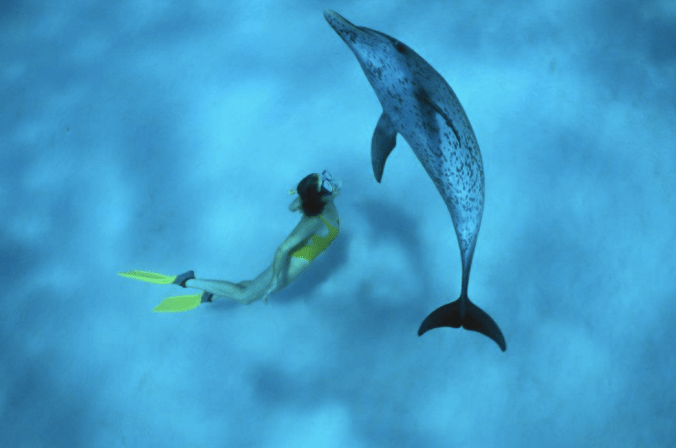
PHOTOGRAPH BY NORBERT WU, MINDEN PICTURES

In a world where economics often focus on the concept that “the customer is always right” it’s heartening to see even large companies re-evaluate policy, and make make changes in the face of facts.

Our work in India has often placed us face to face with the common practices of human-animal interaction written about below, and we don’t promote the  “elephant rides” that are often on travelers’ agenda. Change occurs along  with a shift in understanding, and our goal has always been to craft travel experiences that are both authentic and educational.

So “Bravo!” and a hearty welcome to any company willing to join us in achieving that goal!

TripAdvisor Halts Ticket Sales to Cruel Wildlife Attractions

By

TripAdvisor, the popular travel review website, and its ticket sales company, Viator, said Tuesday they no longer will sell tickets to hundreds of tourist attractions that are widely accepted as cruel to wild animals, reversing a policy under which the companies had resisted considering the welfare of animals when promoting trips.

The move to stop selling tickets to elephant rides, swim-with-dolphin experiences, and attractions that allow visitors to pet tigers and other exotic animals comes after a one-and-a-half-year protest campaign by the London-based animal welfare group World Animal Protection and reporting by National Geographic’s Wildlife Watch, which drew attention to TripAdvisor’s continued promotion of such attractions at a time when dozens of other tour and travel companies were moving away from them.

Such attractions have been shown to cause animals psychological and physical trauma that can shorten their lives. They also result in more animals being taken from the wild for tourism.

Continue reading

Nudging In The UK

3500

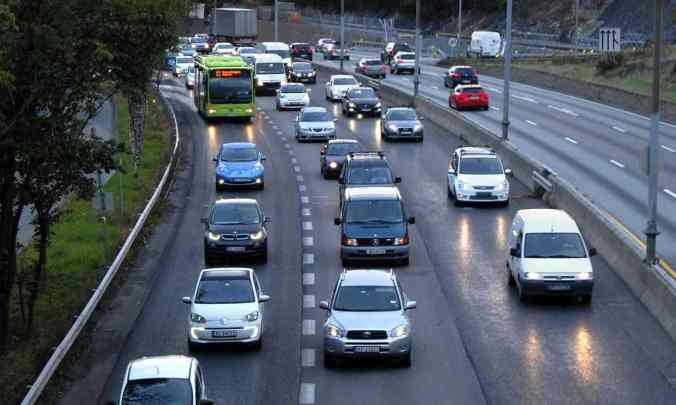
Electric cars using the bus lane (left) during morning rush hour in Oslo, Norway. Photograph: Pierre-Henry Deshayes/AFP/Getty Images

Like the little victories in wilderness conservation, which may be too little to late or maybe a bright spot on a bleak horizon, the small moves in the right direction on other environmental fronts seem promising, and therefore worthy of note. We salute Mayor Khan for his efforts to get Londoners to do their part, according to this story below. It reminds me of Richard Thaler‘s explanation of the power of nudging things along in the right direction, and wishing these nudge stories were more commonplace in the eight years since we started hearing about them:

Electric vehicles could go first at traffic lights under UK clean air zone plans

Government proposals to tackle air pollution in five UK cities could see electric vehicle drivers using bus lanes and getting priority at traffic lights

Drivers of electric vehicles could be allowed to use bus lanes in five UK cities and even go first at traffic lights, to tackle illegal levels of air pollution, the government has suggested. Continue reading

Elephants & The Buzzer

canby-elephants-2-2-1200

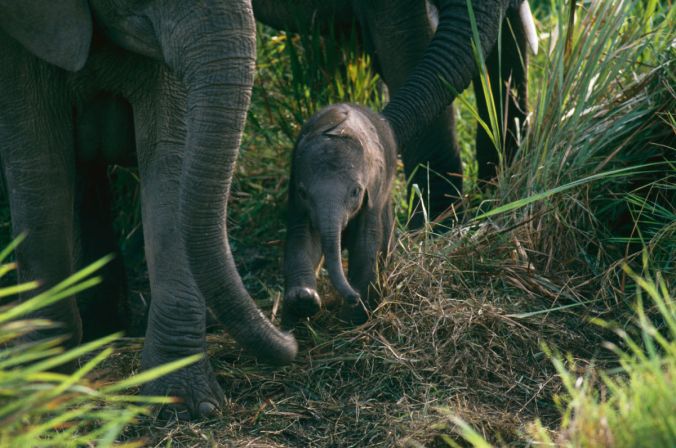
The arrest of a key member of an ivory-trafficking group is a bright spot in an otherwise complicated season for African elephants. PHOTOGRAPH BY PATRICK ROBERT / SYGMA / GETTY

We wish conservation was always all about warm and fuzzy topics, but it is not. We are mostly confronted with habitat loss, climate change and other human-initiated causes of threat to species’ survival. The worst of all, from a jolting immediacy perspective, but probably the simplest to counter, is the poaching. Men take animal lives only for body parts that have a mystique–medicinal, ornamental, or whatever–to people in faraway lands willing to pay a price that poachers cannot say no to. That is the problem.

Stories like this one below are too seldom to allow us to have confidence in the underdog winning. The underdog in this game is many points behind, and the clock in this game is ticking down very quickly. We vigilantly watch for stories like this in hope that the elephants beat the buzzer:

A WIN IN THE GROUND WAR AGAINST ELEPHANT POACHERS IN AFRICA

By

Nouabalé-Ndoki National Park, in northern Republic of Congo, consists of sixteen hundred square miles of Central African rain forest and is jointly administered by the Congolese ministry of forests and the Wildlife Conservation Society, of the Bronx.

Lying just east of the Sangha River, the park is home to significant populations of western lowland gorillas, chimpanzees, giant forest hogs, and, above all, to some five thousand forest elephants. Like elephants everywhere in Africa, those in the park are, increasingly, under siege. Two years ago, when I visited,  the park’s technical adviser, Tomo Nishihara, told me that the numbers of elephants in the park and its surrounding buffer zones had fallen from ten thousand to five thousand in just five years. “That gives us five more years before they’re gone,” he said. Continue reading

Solar’s Silicon Future

p04bw5z3

Thanks to the BBC for this story:

Why Apple And Google Are Moving Into Solar Energy

Silicon Valley’s biggest companies are investing in renewable energy in a serious way – a sign, perhaps, of rapid changes in the energy market.

By Chris Baraniuk 14 October 2016

Most people think of Apple as a company that makes phones, computers and smart watches – not an energy provider. But in August all of that changed when the firm was given permission to sell energy from a Californian solar farm that it acquired last year. Continue reading

Birds, Family, Bonds

1500-1

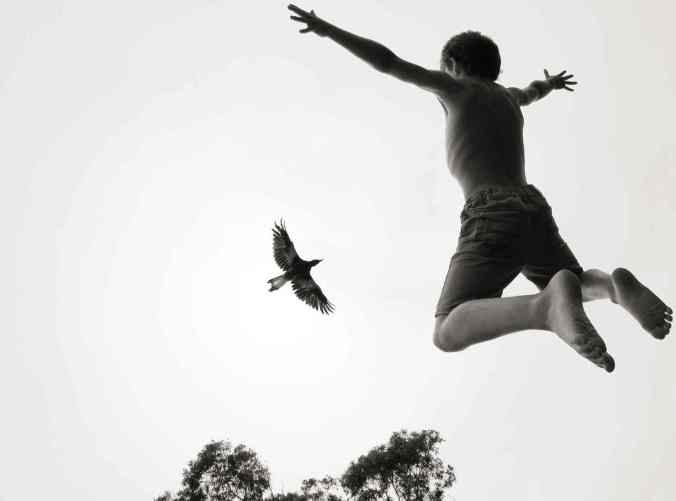
Australia has a uniquely down under way of delivering powerful stories about man’s relationship with nature:

Penguin Bloom: how a scruffy magpie saved a family

Brazil, Climate & Coffee

gettyimages-480677832_wide-1b83ea26628e08d9cd240003d21c9c8653357d0c-s1100-c85

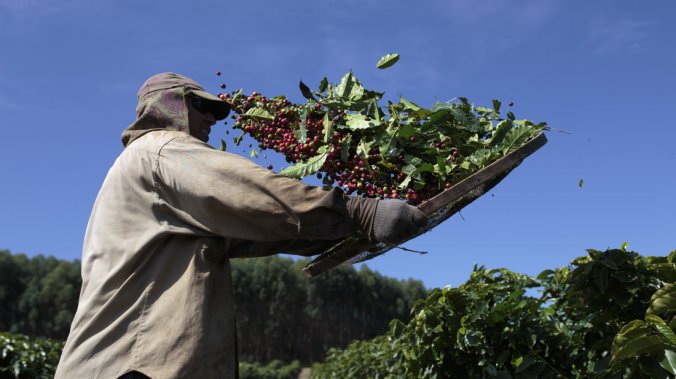
A worker separates coffee cherries during harvest at a plantation in Brazil’s Minas Gerais state. Brazil’s coffee exports fell to 2.6 million bags in June, a 12 percent drop from a year ago, according to a report last week by Cecafe, the country’s coffee export council. Patricia Monteiro/Bloomberg via Getty Images

Brazil is not a frequent focus of posts on this platform, primarily because we have not had a project there since before this platform began. But we almost certainly will before too long. And the country’s history in leadership, and in retreat, with regard to the environmental vanguard, are always of interest to us. Coffee and climate change are constant topics here, so this item at National Public Radio (USA) has our attention, with Brazil’s approach to saving its coffee from the ravages of climate change as a hook we are intrigued by:

Coffee And Climate Change: In Brazil, A Disaster Is Brewing

Coffee lovers, alert! A new report says that the world’s coffee supply may be in danger owing to climate change. In the world’s biggest coffee-producing nation, Brazil, the effects of warming temperatures are already being felt in some communities. Continue reading