Bees, Status, Survival Of The Fitted

1004542_1_0922-bumble-bee_standard

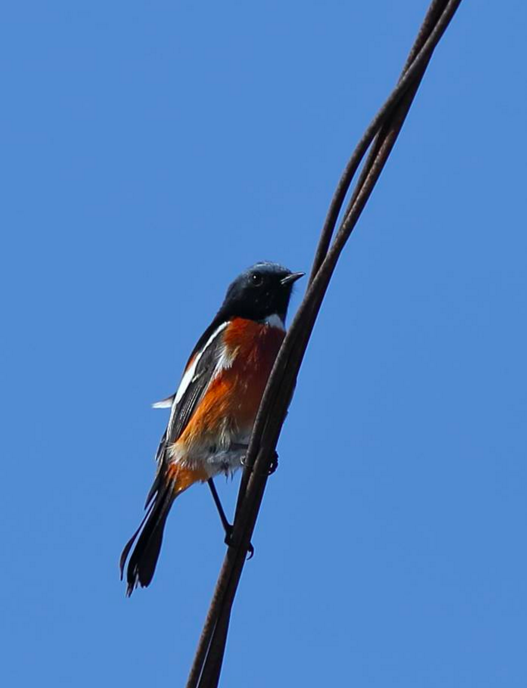
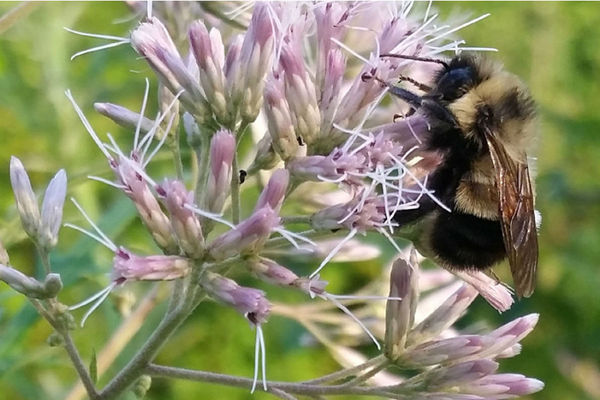
A rusty patched bumble bee, under consideration for listing as an endangered species by the US Fish and Wildlife Service, pollinates a flower in Madison, Wis. Rich Hatfield/Reuters/File

The CS Monitor has an article today that raises an interesting question, whether the same rules that have worked well for eagles, owls, fish, wolves and bears (among other animal species) would be effective for the humble bumble bee and other similar creatures. We see a very good fit between the problem, which we have noted here frequently, and the solution, whose track record is not perfect but it is clearly the best mechanism we’ve got:

Could putting a bumble bee on the endangered list save it?

By Weston Williams

The past several years have not been kind to the humble bee.

But perhaps none suffer more than the rusty patched bumble bee, orBombus affinis, a fuzzy insect with a rust-colored patch on its abdomen. The bee used to be a common sight across the Midwestern United States, but now, the bee struggles to survive in a habitat broken apart by increased farming and commercial development.

The US Fish and Wildlife Service (FWS) is proposing to list the bee as endangered, which would grant it significant protections and hopefully save the bee from extinction. Continue reading

Food Memories & History, Coastal Mesoamerican Edition

18mag-18eat-t_ca0-master768

Hudutu Credit Davide Luciano for The New York Times. Food stylist: Maggie Ruggiero. Prop stylist: Gozde Eker.

Belize is a close neighbor to the culture described here, so this story, and especially the colors on the tables in the photos, have an air of familiarity:

A History Lesson, Served as Coconut-Seafood Soup

By

When Sulma Arzu-Brown’s father traveled from his village in Honduras into the city, people pointed at him, at his black skin. When he spoke his language, people laughed. “They said, ‘Look at that monkey, goo goo gaga,’ ” Arzu-Brown told me. Continue reading

Forest Protection By Any Other Name, For Any Other Purpose, Through Any Other Means, Is Just As Sweet

2000

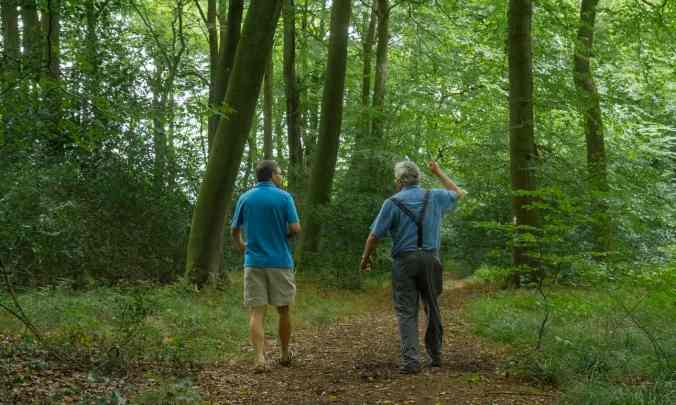
Richard Fortey and Derek Niemann among the beeches in Grim’s Dyke Wood. Photograph: Sarah Niemann

We do not favor private sector conservation efforts over all other options; we favor them over the option of no conservation at all. Governments around the world have rightly done the heaviest lifting on preserving nature, considering their resources, eminent domain, and other factors including the most salient; public lands effectively belong to an entire nation’s citizens. Philanthropies have also done enormous good. We have written plenty on both public and philanthropic conservation schemes. Today, a more modest story, but no less lovely:

A walk in the woods with Richard Fortey

Henley, Oxfordshire The palaeontologist and author offers a tour of Grim’s Dyke Wood, which he bought in 2011

Derek Niemann

Five years after the palaeontologist Richard Fortey bought Grim’s Dyke Wood, a small Chiltern beech wood, he shows no diminution in enthusiasm for his “nature reserve”. He gives me a tour, though in truth we delight in each other’s discoveries. I find him a ring of bright feathers on a pile of rotting pine logs, a raptor’s kill, the buffs and browns speaking of a song thrush forever silenced. He finds bracket fungi that have insinuated themselves into the thin, horizontal lesions on a cherry tree’s trunk. Continue reading

Save Your Screen Time, Kochi!

The Kochi-Muziris Biennale 2016 “main stage” doesn’t start until December, but Kochi is already throbbing with activity – from the Piramal Art Residency at Pepper House to introductions to this year’s participating artists on the KMB Facebook page.

Interested in film and video? The Signs Festival 2016 begins in less than a week at the Kochi Town Hall on September 28th.

SiGNS, the pioneering festival in India for digital videos featuring national level competition for documentaries and short fiction for the prestigious John Abraham National Awards. John Abraham Awards was instituted in 1999 by the Kerala Region of Federation of Film Societies of India  Continue reading

Antikythera, Belize & Wondrous Discoveries

21tb-shipwreck-master768

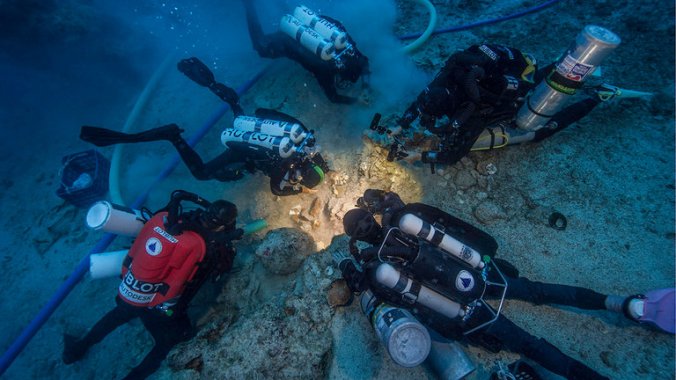
Divers and archaeologists excavating the 2,000 year old Antikythera shipwreck. Credit Brett Seymour/EUA-WHOI, via Argo

This story, about remains recently found under water in a region of the Greek islands where several of us at La Paz Group have very fond memories of, gives me pause. At the time the ship in this story wrecked, the Mayans in Belize were flourishing. The archeologists working at Chan Chich Lodge are still dating the structures there, but the sailor from the ship lost in Antikytheran waters would likely have found the Mayans quite advanced relative to his own culture.

Greece’s classical period was long over by the time this sailor lost his life, and Rome’s empire was still expanding, impressively. Lots of progress, civilization-wise, philosophy-wise, math-wise, geometry-wise in that Mediterranean zone; but also in what is now called Belize, and the wider Mesoamerican corridor. Reading this article, I appreciate the work of archeologists who advance our understanding of those who came before us:

Human Remains Found at Ancient Roman-Era Shipwreck

By

Underwater archaeologists have found a 2,000-year-old skeleton belonging to a victim of the famed Antikythera shipwreck from ancient Roman times. Continue reading

Being Human, Sharing Relevant Information, Building Community

16-distraction-lede-w512-h600-2x

In the first few years of our building this wordpress platform to communicate about things that concern us and especially about things that inspire us, we occasionally found something that Andrew Sullivan had posted that was relevant here (only rarely since his site was mainly dedicated to politics and other topics that do not belong on our platform).

So we know a bit about him and always admired his relentless pursuit of what he believed in. We also know he is an excellent writer, so almost always worth a read. The same relentlessness we admire is also one we vigilantly guard against in these pages, where we have tried to limit our daily contribution to just a few essentials. We want only to have some shared space with a community of readers who care about some of the issues that interest us the most. This article Mr. Sullivan just published is definitely worth a read:

I Used to Be a Human Being

An endless bombardment of news and gossip and images has rendered us manic information addicts. It broke me. It might break you, too.

By

I was sitting in a large meditation hall in a converted novitiate in central Massachusetts when I reached into my pocket for my iPhone. A woman in the front of the room gamely held a basket in front of her, beaming beneficently, like a priest with a collection plate. I duly surrendered my little device, only to feel a sudden pang of panic on my way back to my seat. If it hadn’t been for everyone staring at me, I might have turned around immediately and asked for it back. But I didn’t. I knew why I’d come here. Continue reading

Lionfish Tales

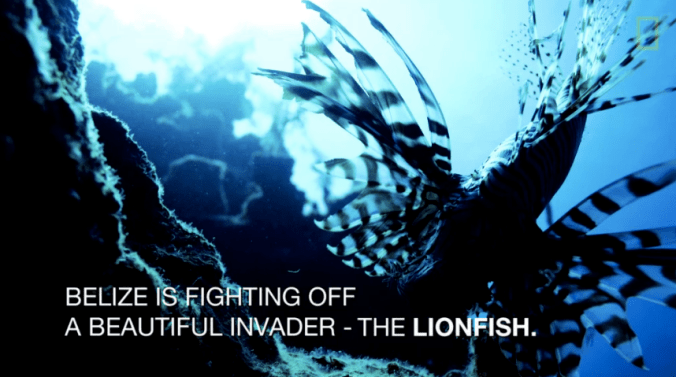
This is issue has been on our radar for some time, in most part due to contributor Phil Karp‘s posts on his work with groups in Belize and other parts of the Caribbean focused on this goal. The concept of “If You Can’t Beat ’em, Wear ’em” carries a powerful message of innovative practices to manage the invasive species that’s causing havoc in the southern Atlantic and Caribbean waters. Continue reading

No Kitten Videos Here, But Plenty Of Cats

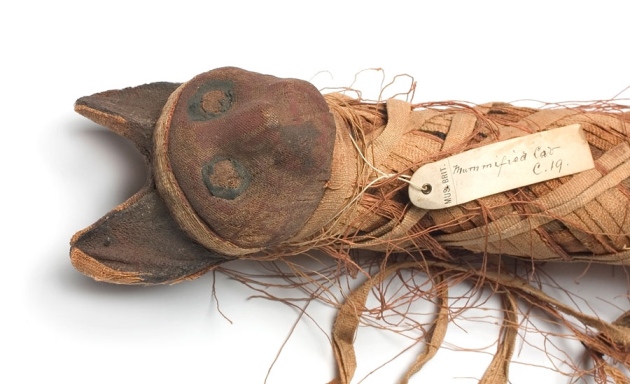
c0101823-egyptian_mummified_cat-spl_web

We are human, therefore we love cute kitten videos just like the next person. We just do not need to share them here. That is not our purpose. Ditto for puppy dog videos, though we have a soft spot for scientific explanation for how dog became man’s best friend. Especially when creatively oriented to non-scientists. Back to cats. We have been featuring them as often as possible here, when considered relevant. And then some links for good measure. Our thanks now to Nature, which brings scientific studies within reach of a motivated lay audience, for this story on one path by which cats came to their current prominent state of domestication in our lives:

How cats conquered the world (and a few Viking ships)

First large-scale study of ancient feline DNA charts domestication in Near East and Egypt and the global spread of house cats. Continue reading

If You Happen To Be In The Boston Area

so16_image_page_036_image_0001

Saint Barbara, attributed to the “Ghent Associates” of the Master of Mary of Burgundy, from a book of hours-missal, c. 1485-1490. Courtesy of Houghton Library/Harvard University

We check in from time to time at magazines published by universities where we have recruited. This article, which we appreciate topically because of the conservation of cultural heritage described, makes us wish we could visit the venues described in “Illuminations.”  Lily Scherlis provides a good example of why we keep coming back to this magazine–crisp, clear writing and a compelling argument in favor of looking back into history for an enriching perspective on crowdsourcing versus individual authorship (read to the end of the quoted section):

…These works were born into a world where literacy was scarce and almost universally affiliated with religion: the exhibition description refers to monasticism as, at its heart, a “cult of the book.” I imagine how compelling written religious text would have been to early readers: the words echo off the page, as if read by an invisible voice heard only by you, but are available to other readers as well. Continue reading

Carbon-Calculated Menu Planning

co2emmissionsmeal

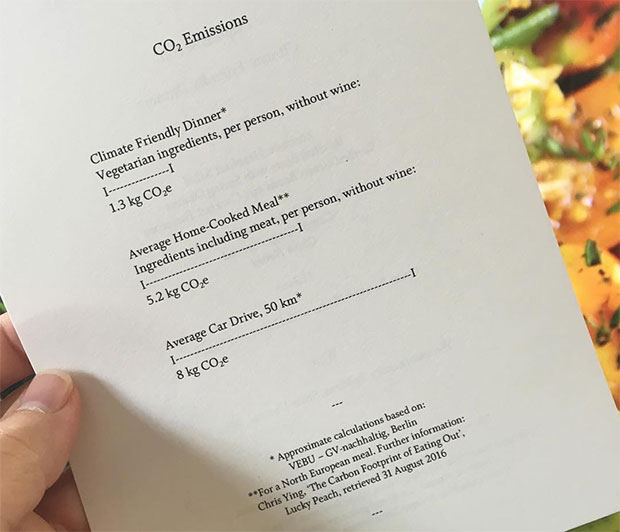
The menu from Studio Olafur Eliasson’s dinner for the Climate Museum’s Miranda Massie. Image courtesy of the artist’s Instagram

From the folks at Phaidon, news of a top artist’s contribution to the climate change conversation, in a manner we can kind of relate to:

Olafur Eliasson puts carbon on the menu

When Eliasson’s studio cooked a meal for NYC’s Climate Museum director it listed one additional ingredient.

The artist Olafur Eliasson is on the board of the Climate Museum, a US institution which endeavours to use the sciences, art, and design to inspire dialogue and innovation that address the challenges of climate change. The museum hasn’t been built, yet Eliasson has submitted a few concept sketches, picturing a globular structure that should, someday soon hopefully stand in New York City. Continue reading

Plastic Bottles for Homes

pbv_bluff_2

Source: plasticbottlevillage.com

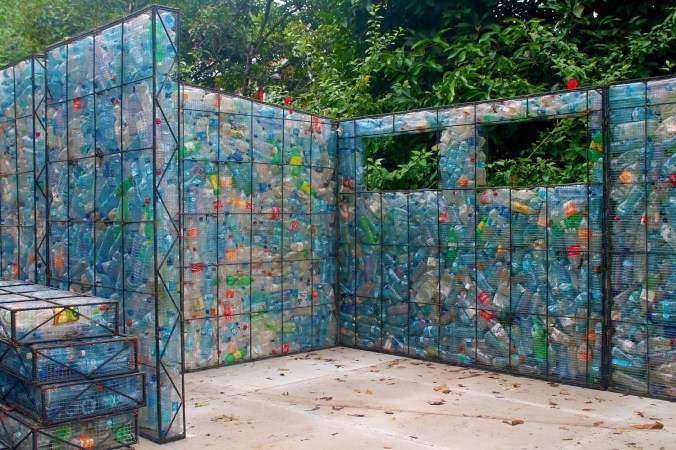
A Canadian man, Robert Bezeau, who lives in Bocas del Toro, Panama, woke up from a dream one night that transformed the future of a village – and our perception of plastic bottles. Bezeau dreamed of a village where everything was made of bottles and instead of leaving the idea dormant in his mind, he decided to act on his vision and turn it into a reality.

One hundred and fifty million tones of plastic waste are estimated to be floating in our oceans, and at the current pace it is predicted that by 2050 there will be more plastic than fish in the sea. Assuaging this brutal prediction, Bezeau’s company, Plastic Bottle Village, builds houses, roads, and more from plastic bottles that are collected from the surrounding communities. Continue reading

National Park of the Week: Torres del Paine National Park, Chile

b45e8ef1

Source: parquetorresdelpaine.cl

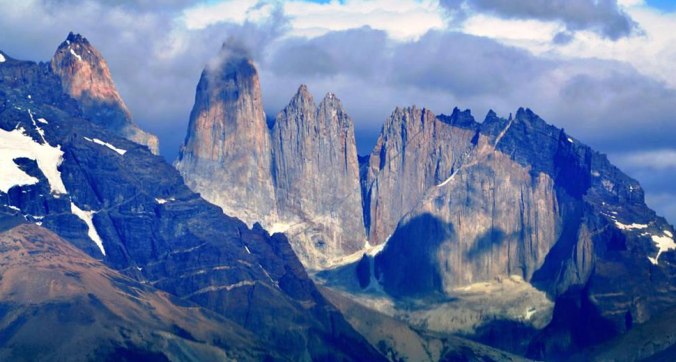
For the type of jaw-dropping  sights that Torres del Paine National Park in Chile has to offer, it is only fair to know a bit of geological history that formed these towering, sheer ridges and deep, mirrored lakes. Located in the southern tip of the Andes of South America, the landscape of the park is owed to earth movements which occurred 12 million years ago and the gradual glacial erosion thereafter, which formed the “torres” (towers) measuring more than 2,200 meters in altitude. The 2,422 square kilometer area was established as a park in 1959; since 1978 it has been part of UNESCO’s Biosphere Reserve system. Continue reading

How Cities Can Adapt to New High Temperatures

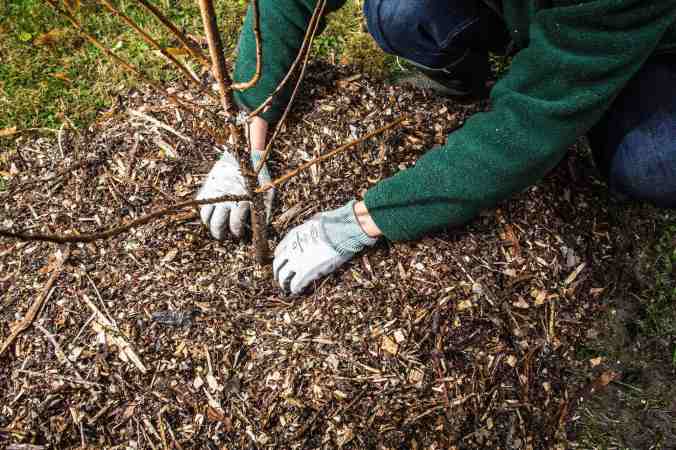
A community-gardening and forestry organization called Louisville Grows has planted city-hardy tree species on private land, churchyards, roadways, and curb strips to help the city cool its heat island. Photograph by Mark Peterson / Redux

We already know that climate change is no longer something to be concerned about for the future, but rather a very present danger. There are ways they can adapt, and part of that involves becoming more sustainable, as some are already doing. But one thing we hadn’t learned much about until now is the impact of increasing heat on the urban environment. Madeline Ostrander writes:

Katy Schneider, the former deputy mayor of Louisville, Kentucky, lives near Eastern Parkway, which forms one strand of her city’s necklace of green. Spending time on the leafy boulevard can make Louisville seem deceptively lush and shady, even when midsummer heat bakes the downtown. But about five years ago, Schneider was surprised to learn that the city had a shortage of trees. In the spring of 2011, students at the University of Louisville surveyed the local canopy and found that it had about thirteen per cent fewer trees than the average for metropolitan areas in the region.

Continue reading
Get Jolted By Understanding Fish Better

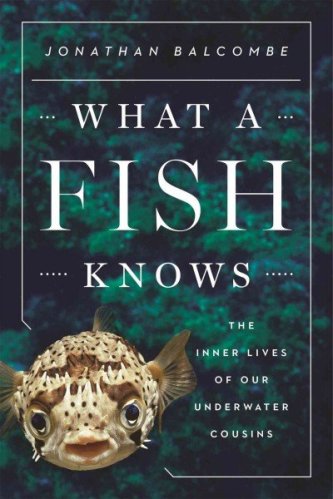
9780374288211_custom-a8005fb568cedbbcdfa556084e27717de66bba19-s400-c85The morning walk’s provided a different sensation from the learning component of the morning walk a few days back, giving me a jolt of new appreciation for all that I have no clue about related to life underwater; the jolter was an ethologist, of all things:

…The knifefishes of South America and the elephant-nose fishes … [are] both electric-producing, so they have EODs, which are electric organ discharges, and they use those as communication signals, and they communicate in some pretty cool ways. They will change their own frequency if they’re swimming by another fish with a similar frequency, so they don’t jam and confuse each other. They also show deference by shutting off their EODs when they’re passing by a territory holder…

Continue reading

Biles On Belize

18qa1-master675

Benedict Kim for The New York Times

As newly self-appointed Belizophiles, we love what this superstar of gymnastics says about the country:

Why Simone Biles Loves Belize

By

…The world may beckon, but the athlete said that her favorite destination would always be Belize, a Central American nation, where she holds dual citizenship through her mother, Nellie Cayetano Biles.

The younger Ms. Biles spoke about her love for Belize while she was on her way to the airport in Los Angeles (she was in town to film the season premiere of “Ellen”) to head home to Houston for a few days before beginning her tour… Continue reading