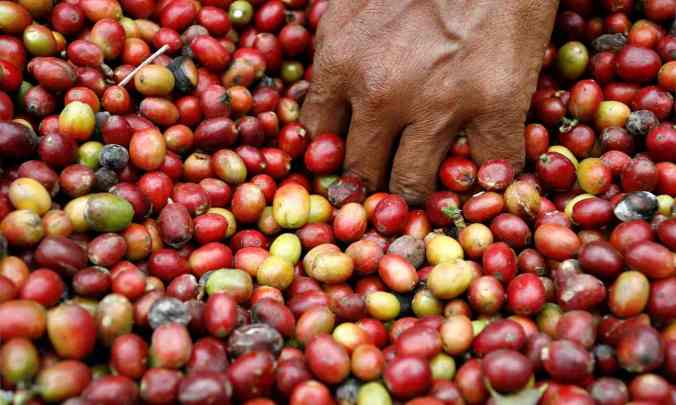
The Future Of Coffee Matters To Us For More Than One Reason

3000

A farmer with coffee cherries from his latest crop, the seeds of which are roasted, ground and brewed to make coffee. Photograph: YT Haryono/Reuters

We work in several countries where coffee production is important to the national economy. We serve coffee in every property we have ever managed. Many of us working in La Paz Group are coffee junkies.

But more than that, as I have mentioned at least once in these pages, we care extra deeply about the future of coffee because on one of the properties we manage, some excellent arabica estate coffee is growing in the shade of a rainforest canopy. I owe you more on that topic. For now, what has my attention is ensuring the long run sustainability of this organic coffee production.

So you can be sure of where some of our team members will be next Tuesday. Join us if you can:

Climate change is threatening the world’s coffee supplies: what can we do? – live chat

Join us on this page on Tuesday 20 September, 2-3pm (BST), to debate the future of coffee, and the millions who depend on it, in the face of climate change

What we’ll be discussing Continue reading

Seagrass In The Food Chain

090616_Daru_0005.jpg

Harvard University Post-Doctoral Fellow in Organismic and Evolutionary Biology, Barnabas Daru, researches seagrasses of the world. He is at Carson Beach in South Boston, where he found no seagrasses. Rose Lincoln/Harvard Staff Photographer

Postdoctoral researchers contribute to scientific knowledge akin, perhaps, to the way seagrass contributes to the robustness of a marine ecosystem’s biodiversity:

Strong case for seagrass

Researcher behind biodiversity analysis cites key role in food chain

By Alvin Powell, Harvard Staff Writer

new analysis of a key contributor to the marine food web has turned up a surprising twist: more unique species in cooler waters than in the tropics, a reversal of the situation on land.

The findings highlight the need to direct limited conservation dollars according to science, with a focus on places where biodiversity is most at risk, said Barnabas Daru, Harvard Herbaria Postdoctoral Fellow in Organismic and Evolutionary Biology, who performed the analysis on the world’s 70 species of seagrass.

Daru acknowledged that seagrass isn’t as exciting as sharks or tuna, or as marine mammals such as seals, dolphins, and manatees. But for anyone who cares about the health of marine animals, he said, the role of humble seagrass at the beginning of the marine food chain is key. Continue reading

Light Dance

Light, Darkness. Movement, Stillness. Sound, Silence.  The contrast and flow of these opposites make the heart race.

White Canvas is only one of the innovative projects created by the interdisciplinary artistic team that makes up COCOLAB. Continue reading

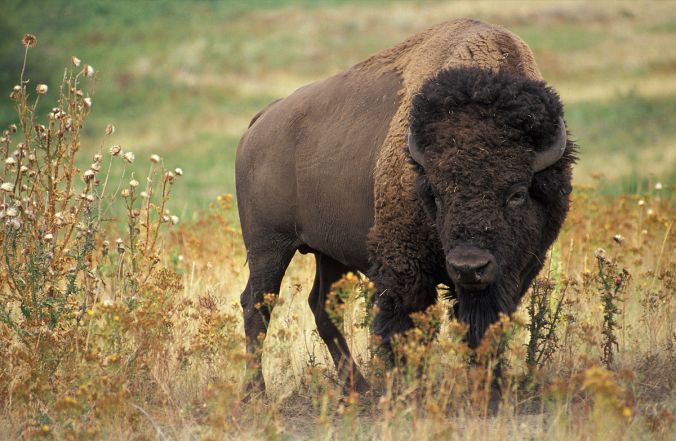
Thoughts on Bison Farming

1200px-american_bison_k5680-1

Source: Modern Farmer

Bison meat is not the typical protein one finds on the dinner plate every night (especially not in my vegetarian household), but it is a meat product that is known for being healthier than beef and – possibly – more environmentally friendly. “How so?” you might wonder. According to Modern Farmer there are several components to bison farming that give it a “greener edge.”

It’s believed that bison cause less trampling and erosion damage to the plains than cattle, that their diet is higher in grasses and thus less damaging to the long-term chances of the plains environment, and that bison poop functions as a natural fertilizer to their habitats.

This all mostly stems from a general idea that bison, being not domesticated and technically, even when ranched, a wild animal, are more in tune with nature, more balanced in their impact than cattle. They are also native to North America, unlike cattle, which were domesticated from Old World animals. “Because bison are a natural part of the North American ecosystem, bison ranching can be a beneficial to the natural environment,” writes the National Bison Association, a promotional group, on its site.

Continue reading

Cost of Wind Energy to Decrease

Photo via Pinterest

With Deepwater Wind’s Block Island energy farm in Rhode Island completed – all five turbines of it – it’s not surprising to learn that the cost of wind power, just like that of solar, is going to decline in coming years, according to industry experts. Prachi Patel reports for Conservation Magazine:

Wind energy is soaring around the world thanks to technology advances and energy policies that have reduced its cost. And things are only going to get better with prices dropping substantially by mid-century, according to a survey of 163 of the world’s leading wind energy experts. The results, published in the journal Nature Energysuggest that the cost of electricity from wind could drop by 24–30 percent by 2030 relative to 2014 prices, and by 35–41 percent by 2050.

The key driver of this price drop? Bigger, more efficient turbines, according to the experts. Taller turbines with larger rotors make it possible for turbines to better harness stronger winds, generating more power.

Continue reading

A Different Type of Hero

The Veerni Institute now makes it possible for 75 girls to continue their education. But the group has to turn away nearly 300 applicants each year for lack of funding. Poulomi Basu for NPR

The Veerni Institute now makes it possible for 75 girls to continue their education. But the group has to turn away nearly 300 applicants each year for lack of funding.
Poulomi Basu for NPR

“It all began with a shawl…” seems like the stuff of fairy tales, but the combined attraction to a handmade textile and the desire to help the woman weaving it proved a pathway to Jacqueline de Chollet’s life work. Over 20 years ago while traveling in a dusty village of India she saw a woman weaving the shawl in her home.

“She had three or four children including a baby she was nursing in her arms,” de Chollet recalls. “And she looked way older than her age.”

Hoping to provide a little help, de Chollet offered to buy the shawl. “And as soon as I gave her the money a man walked in and took the money away from her.”

De Chollet was outraged. “I felt, this woman — nobody cares about her. She’s off the map. She has no rights.”

Although de Chollet came from far different circumstances as this woman, growing up in the 1950s she felt that society dictated her position as a wife and mother. She wanted to make a difference in the world, and felt that addressing the issue of the rights of women and girls in India was an important first step. Continue reading

Using Those Final Months Well

midwayatoll_wide-1f160673ec1ed0fd74e6f9d1873a19f4ecc530f8-s1100-c85

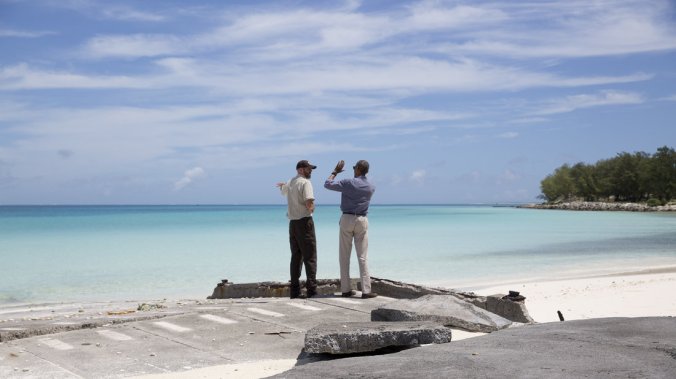
President Barack Obama on Midway Atoll in the Papahānaumokuākea Marine National Monument, Northwestern Hawaiian Islands, earlier this month with Marine National Monuments Superintendent Matt Brown. Obama expanded the monument using his authority under the 1906 Antiquities Act. Carolyn Kaster/AP

We are happy to see the Antiquities Act again proving so useful, so soon (the clock is ticking):

Obama To Designate First Marine National Monument In The Atlantic Ocean

During the Our Ocean conference later this morning in Washington, D.C., President Obama will establish the first national marine monument in the Atlantic Ocean.

The area of the Northeast Canyons and Seamounts Marine National Monument is the size of Connecticut and has been called an “underwater Yellowstone” and “a deep sea Serengeti.” Continue reading

2016 Cornell Council for the Arts Biennial: Abject/Object Empathies

With fewer than 90 days to go until the 3rd edition of the Kochi-Muziris Biennale we admittedly have biennales on our mind. We thank one of our 2012 design interns, Chi-Chi Lin, for bringing this one to our attention.

The Cornell Council for the Arts (CCA) is a campus wide organization that promotes collaboration and artistic experimentation to inspire innovative and challenging projects by students, faculty, departments and programs from all disciplines. The focus of the 2016 CCA Biennial 

is on the cultural production of empathyThe upcoming biennial will address the ways in which feeling is form and explore how the objects, buildings, clothing, machines, languages, and images we construct are shaped by our intentional or implicit emotional, interdependent relationship to others. Whether by framing a connection that already exists or by providing the condition for new connections, what we create can either merely extend our own personal desires, goals, and directives, or can alternatively function as a bridge between who I am and who you are so that aesthetic experiences are interdependent, collaboratively generated and inherently reciprocal. Continue reading

Beware The Compost

veggiegarden_cropped-680x450

Image credit: US Department of Agriculture via Flickr

Thanks to Conservation for their tireless effort to review important science and summarize it for we, the less scientifically-trained folk:

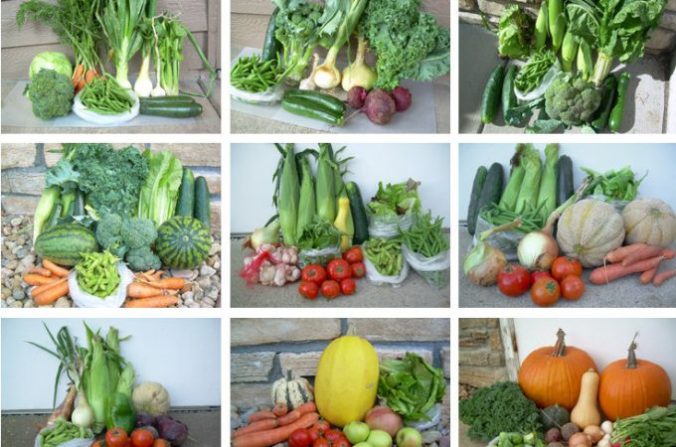
HOME-GROWN VEGGIES CAN FIGHT CLIMATE CHANGE—BUT BEWARE THE COMPOST PILE

Vegetables grown in home gardens are associated with lower greenhouse gas emissions than vegetables bought at the store, according to a study by researchers at the University of California, Santa Barbara. Home gardening reduces emissions by about 2 kilograms for every kilogram of produce, they report in the journal Landscape and Urban Planning.

The study is the first to show that gardening could make a meaningful contribution to helping cities and states meet their emissions reductions targets. Continue reading

If You Happen To Be In Oxford (MS, USA)

9780871406804Paul Freedman in conversation with John T. Edge

If we could, we would be there to hear this conversation; no less a part of the attraction is to do so at an institution worthy of everyone’s book orders:

Monday, September 26, 2016 – 5:00pm
Square Books
129 Courthouse Sq
Oxford, MS 38655

Whether charting the rise of our love affair with Chinese food through San Francisco’s fabled The Mandarin, evoking the richness of Italian food through Mamma Leone’s, or chronicling the rise and fall of French haute cuisine through Henri Soule’s Le Pavillon, food historian Paul Freedman uses each restaurant to tell a wider story of race and class, immigration and assimilation. Freedman also treats us to a scintillating history of the then-revolutionary Schrafft’s, a chain of convivial lunch spots that catered to women, and that bygone favorite, Howard Johnson’s, which pioneered midcentury, on-the-road dining, only to be swept aside by McDonald’s. Lavishly designed with more than 100 photographs and images, including original menus, Ten Restaurants That Changed America is a significant and highly entertaining social history.

In case you missed it, a review of this book is finally available from one of the great food writers of our time:

Continue reading

Renaissance & Other Possible Interpretations Of Our Times

florence

During my morning walk today, while taking in the Onam visuals, I was at the same time absorbing sound, in the form of conversation, from the same phone that was snapping pictures. I use the time of my walks to listen to podcasts, one of the easiest ways for me to stay attuned to happenings and ideas from the USA, my onetime home, and home to many of the people who visit properties we manage.

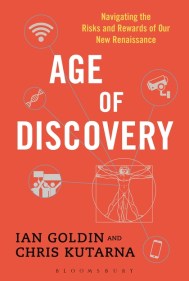
The central idea of today’s podcast, at once frank about the perils of the “Age” we are in now but also optimistic about how to harness modern tools to navigate these times, took me by surprise:

New Maps, New Media and a New Human Condition

AgeofDiscovery-copy.jpgscreen-shot-2016-09-14-at-2-14-06-pm

Some 500 years ago, Johannes Gutenberg, Nicolaus Copernicus, Michelangelo and others were part of the Renaissance, a time of significant cultural change. Now, authors Ian Goldin and Chris Kutarna say we are in the midst of a second Renaissance.

Continue reading

Onam, Kerala, 2016

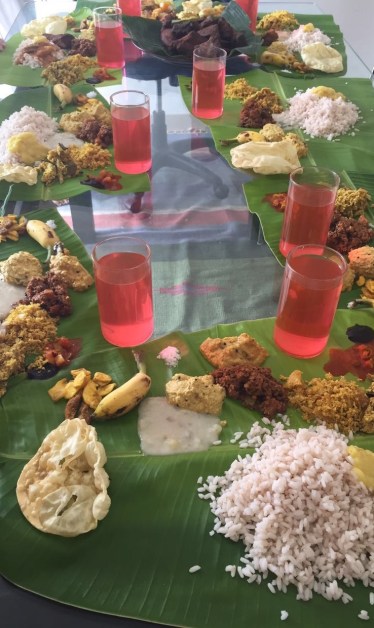
img_5224-1Yesterday, the midday meal was a traditional one for this time of year. We have written about Onam festivities each of the years that we have been based in Kerala, since 2010. Now, during our seventh such celebration, we finally hosted an Onam feast in our own home. In order to be sure that the guests at our table would have the best of the traditional foods of the season we made the only sensible decision: we ordered the feast from a local kitchen we favor.
These dishes, which we have written about in previous years, tasted as if they were the best we have yet had. Maybe because it was all so easy and pleasant. Our guests, anyway, we knew to be not high maintenance. It was a cross section, functionally speaking, of La Paz Group’s Kerala team, including (from left going around the table in the picture below) engineering, finance, revenue management, reservations, sales, design, me, and front right is the man in charge of it all, who was also the photographer. Continue reading

One Step Forward, Slip Sliding Away

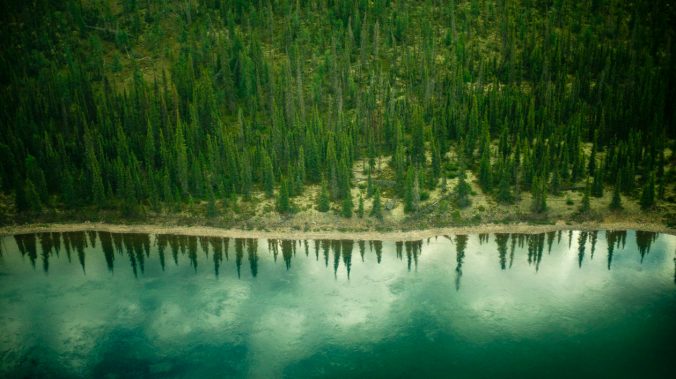
Aerial view of the Thelon River and forest landscape of Canada's far northern Thelon Game Sanctuary. The refuge is the largest and most remote game sanctuary in North America. For the Akaitcho Dene people, the Upper Thelon River is "the place where God

Aerial view of the Thelon River and forest landscape of Canada’s far northern Thelon Game Sanctuary. The refuge is the largest and most remote game sanctuary in North America. For the Akaitcho Dene people, the Upper Thelon River is “the place where God began.” In 2011 The Nature Conservancy’s lead scientist Sanjayan and Canada program director Dr. Richard Jeo went on an expedition through through this pristine area with young members of the Dene First Nation. They traveled by canoe along the Thelon River ending in North America’s largest and most remote wildlife refuge, the Thelon Game Sanctuary. This photograph is from that trip. PHOTO CREDIT: © Ami Vitale

Thanks to Cool Green Science, the conservation science blog of The Nature Conservancy, for this sobering update on the state of affairs of meeting conservation targets (um, those related to whether or not this planet will be one our future generations will be able to live on):

Global Wilderness Areas in Decline Despite Conservation Targets

BY JUSTINE E. HAUSHEER

Conservation today operates in a world of targets: Protect 17 percent of terrestrial systems and 10 percent of marine systems by 2020; keep global climate change below 1.5 degrees Celsius by 2100; halve the rate of natural habitat loss.

But despite widespread adoption of protected area targets, wilderness areas are still declining rapidly across the globe. Now, new research shows that 9.6 percent of all global wilderness has disappeared in the last 20 years. Continue reading

The Kindness Of Strangers

sanchez-cart_wide-29683f2f2abfb52b42bdcdab6c6787e5bbef67b4-s1100-c85

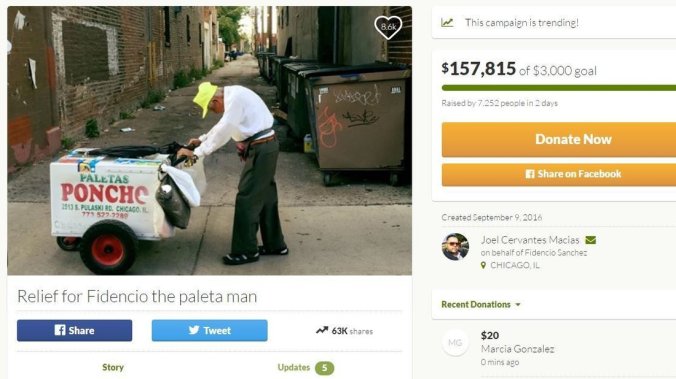
A fundraising campaign for Fidencio Sanchez has raised more than 50 times the original $3,000 that was sought. Go Fund Me

We can say, with no ideological intent whatsoever, that it is not good news that an elderly man in a prosperous nation must depend on the kindness of strangers; but if we add one iota of oomph to the momentum of a story like this going viral, we are more than happy to share occasions when that kindness is demonstrated with drama:

Strangers Raise $165,000 In 3 Days To Help Chicago Popsicle Vendor, 89

It was just a glimpse, but the scene spoke volumes — and started a push for help. Joel Cervantes Macias was struck by the sight of an elderly man pushing his cart of frozen treats on Chicago’s 26th Street, so he took a photo. That was last week; as of Monday afternoon, Macias had raised more than $165,000 to help a stranger. Continue reading

The Man Behind The Hidden Life of Trees

3648

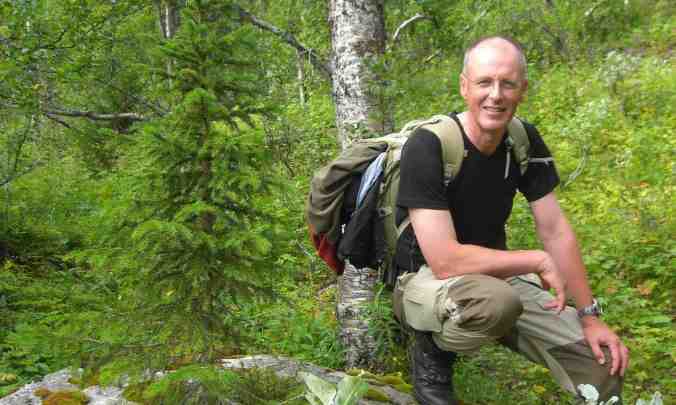
Trees a crowd … Peter Wohlleben and friends. Photograph: Peter Wohlleben

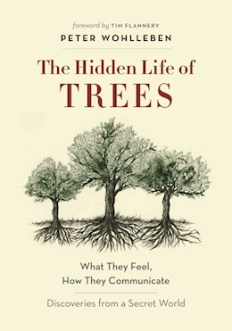
9781771642484The man who thinks trees talk to each other

Beech trees are bullies and willows are loners, says forester Peter Wohlleben, author of a new book claiming that trees have personalities and communicate via a below-ground ‘woodwide web’

Early this year I linked out to a profile of Peter Wohlleben, and that post was remarkably well received. The post about the woodwide web concept more recently, clearly connected conceptually, was also well received, while pointing to the findings of other researchers (if you did not listen to the Radio Lab piece, do yourself a favor and do so). I am happy to link to more about the ideas in this book, and to learn more about the man himself:

Trees have friends, feel loneliness, scream with pain and communicate underground via the “woodwide web”. Some act as parents and good neighbours. Others do more than just throw shade – they’re brutal bullies to rival species. The young ones take risks with their drinking and leaf-dropping then remember the hard lessons from their mistakes. It’s a hard-knock life.

Continue reading

A Business Model To Fish For

patagonia

Heroes are, by definition, not easy to come by. When they get profiled, read it (this one is thankfully not merely fluff):

…The ordeal, and the perspective of middle age, snapped him to attention and caused him to refine the company’s mission. In the eighties, he’d been feeling increasingly uneasy about being a businessman and about the transformations and compromises that seemed inevitably to accompany corporate success. The company, he worried, was straying from its hard-core origins. “I was faced with the prospect of owning a billion-dollar company, with thousands of employees making ‘outdoorlike’ clothing for posers,” he said early in 1991, in a speech to the employees, in which he outlined his misgivings and his new resolutions. These subsequently appeared in the Patagonia catalogue, as a manifesto, under the heading “The Next Hundred Years.” Continue reading

Momentum In Tribal Territory


12tribes-listy9-jumbo.jpg

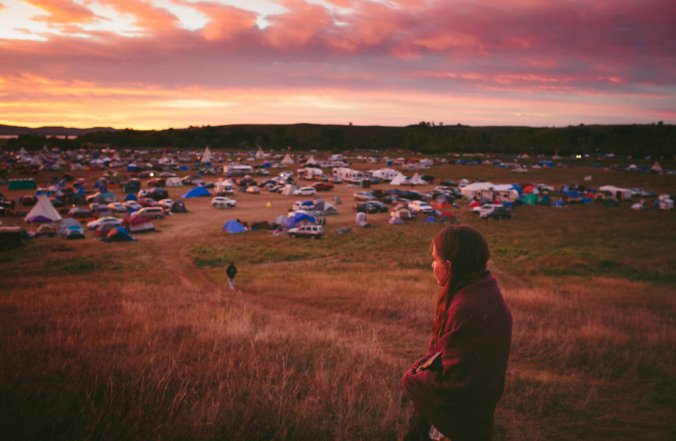
Susan Leopold, a member of the Patawomeck tribe of Virginia, watching the sun rise over an encampment where thousands have come to protest an oil pipeline near Cannon Ball, N.D.   Credit Alyssa Schukar for The New York Times

This is a great follow up to the earlier stories we read on this topic. We appreciate that the New York Times is now giving this as much attention as it deserves, and doing so with the dignity and respect that the protesters deserve:

From 280 Tribes, a Protest on the Plains

NEAR CANNON BALL, N.D. — When visitors turn off a narrow North Dakota highway and drive into the Sacred Stone Camp, where thousands have come to protest an oil pipeline, they thread through an arcade of flags whipping in the wind. Each represents one of the 280 Native American tribes that have flocked here in what activists are calling the largest, most diverse tribal action in at least a century, perhaps since Little Bighorn. Continue reading