
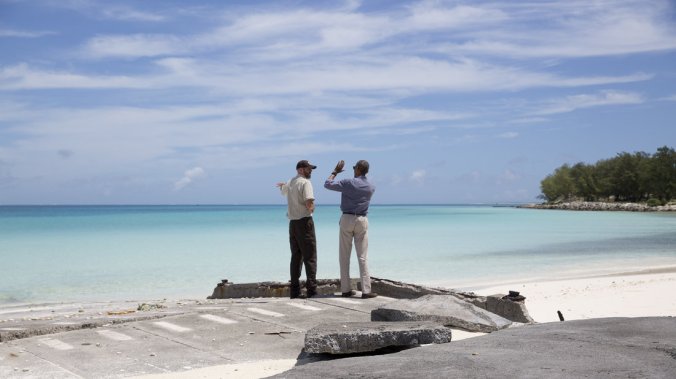
Harvard University Post-Doctoral Fellow in Organismic and Evolutionary Biology, Barnabas Daru, researches seagrasses of the world. He is at Carson Beach in South Boston, where he found no seagrasses. Rose Lincoln/Harvard Staff Photographer
Postdoctoral researchers contribute to scientific knowledge akin, perhaps, to the way seagrass contributes to the robustness of a marine ecosystem’s biodiversity:
Strong case for seagrass
Researcher behind biodiversity analysis cites key role in food chain
By Alvin Powell, Harvard Staff Writer
A new analysis of a key contributor to the marine food web has turned up a surprising twist: more unique species in cooler waters than in the tropics, a reversal of the situation on land.
The findings highlight the need to direct limited conservation dollars according to science, with a focus on places where biodiversity is most at risk, said Barnabas Daru, Harvard Herbaria Postdoctoral Fellow in Organismic and Evolutionary Biology, who performed the analysis on the world’s 70 species of seagrass.
Daru acknowledged that seagrass isn’t as exciting as sharks or tuna, or as marine mammals such as seals, dolphins, and manatees. But for anyone who cares about the health of marine animals, he said, the role of humble seagrass at the beginning of the marine food chain is key. Continue reading




 Paul Freedman in conversation with John T. Edge


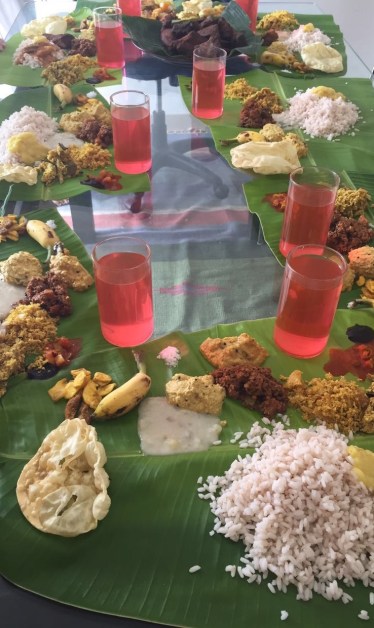 Yesterday, the midday meal was a traditional one for this time of year. We have written about Onam festivities each of the years that we have been based in Kerala, since 2010. Now, during our seventh such celebration, we finally hosted an Onam feast in our own home. In order to be sure that the guests at our table would have the best of the traditional foods of the season we made the only sensible decision: we ordered the feast from a local kitchen we favor.


 Organikos