Wood Wide Web

7650980706_652e5ab178_k.jpg

Forests and fungi–words that make me think of Milo circa 2010-2012 in the south of India, especially in the Periyar Tiger Reserve (but also later, writing about fungi in relation to food waste). When I first heard this a week ago, it seemed typical of Radiolab’s attention to quirky outlier science stories:

From Tree to Shining Tree

Saturday, July 30, 2016

A forest can feel like a place of great stillness and quiet. But if you dig a little deeper, there’s a hidden world beneath your feet as busy and complicated as a city at rush hour.

In this story, a dog introduces us to a strange creature that burrows beneath forests, building an underground network where deals are made and lives are saved (and lost) in a complex web of friendships, rivalries, and business relations. It’s a network that scientists are only just beginning to untangle and map, and it’s not only turning our understanding of forests upside down, it’s leading some researchers to rethink what it means to be intelligent.

And it was typical, in that sense. But Milo’s attention to the underworld of fungi, which at the time seemed to me as quirky as this Radiolab story does today, got me to start paying attention to anything in our news network with certain keywords (mushroom, fungi, etc.) and just now I came across a short journalistic account that taps into the same science as the Radiolab piece above, and I am realizing it may not be merely quirky: Continue reading

Must-see Aerial Insectivores in the Greater Antilles: Part 5/5

Northern Potoo perched on a fence post near the Windsor Research Station, Trelawny Parish, Jamaica. (photo by Justin Proctor)

This post is part of a series; visit Part 4 here.

Let’s move now from the diurnal species to a nocturnal favorite, the Northern Potoo (Nyctibius jamaicensis), which has been featured here before a couple times. These birds actively hunt for insects at night by sallying out from low-lying perches where they remain camouflaged and motionless until prey is spotted. If you’ve got a little bit of energy left in you after the sun goes down, and you also remembered to pack a decent headlamp or flashlight, I can’t encourage you enough to just go for a little walk down a quiet road nearby.

Continue reading

Grubby Animal Feed

4980

Source: The Guardian

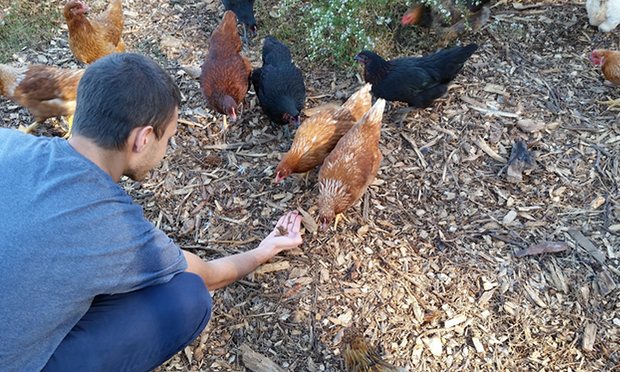
Two Georgia Tech graduates (who also happen to be cousins), Sean Warner and Patrick Pittaluga, are breeding and selling an insect many people consider revolting in order to provide a more sustainable substitute for animal feed (if you are about to eat a meal, I recommend postponing this article for a later, food-free, time). The insect they are growing is larvae, specifically black soldier fly larvae. Grubbly Farms, the name of their company, dries the larvae and sells them whole as chicken treats. This is a more sustainable protein and fat source for chickens, pigs and farmed seafood compared to the more popular animal feed that is based on fish, called fish meal.

Around 75% of the fish used in [conventional fish meal] are wild-caught species of small fish such as anchovies, herring and sardines. Demand for these species will likely increase as the world relies more on fish farming – and less on depleting wild fish stocks – to feed the growing appetite for seafood.

Grubbly Farms’ business plan isn’t just about creating more nutritious and sustainable animal feed, Warner said. It’s also looking to tackle America’s billion-dollar problem with food waste – produce and leftover foods being tossed away by businesses and homes and clogging up landfills at the rate of 52m tons per year. Warner is feeding the larvae fruit and vegetable pulp from a local juicery, and the company has also recently started working with a bakery to add days-old bread to the mix. Warner estimates that once production is up-and-running, they will use around two tons of food waste a day.

Continue reading

Tropical Kingbirds Make Good Parents, Part Two

Yesterday I wrote and shared a video about this particular flycatcher’s protective nature, but it’s important to note that this behavior isn’t limited solely to the Tropical Kingbird. Neither is the rigorous feeding displayed in the video below. Most birds take good care of their young, whether by bringing meals every couple minutes or by picking up their poop and depositing it away from the nest – which you can see the parent kingbird do at 00:30 and 2:31. I apologize for publishing this in low resolution and pixelating the cuteness, but it’s the best one can do when off-grid in the middle of the Belizean jungle!

Continue reading

The Jaguar in the Night

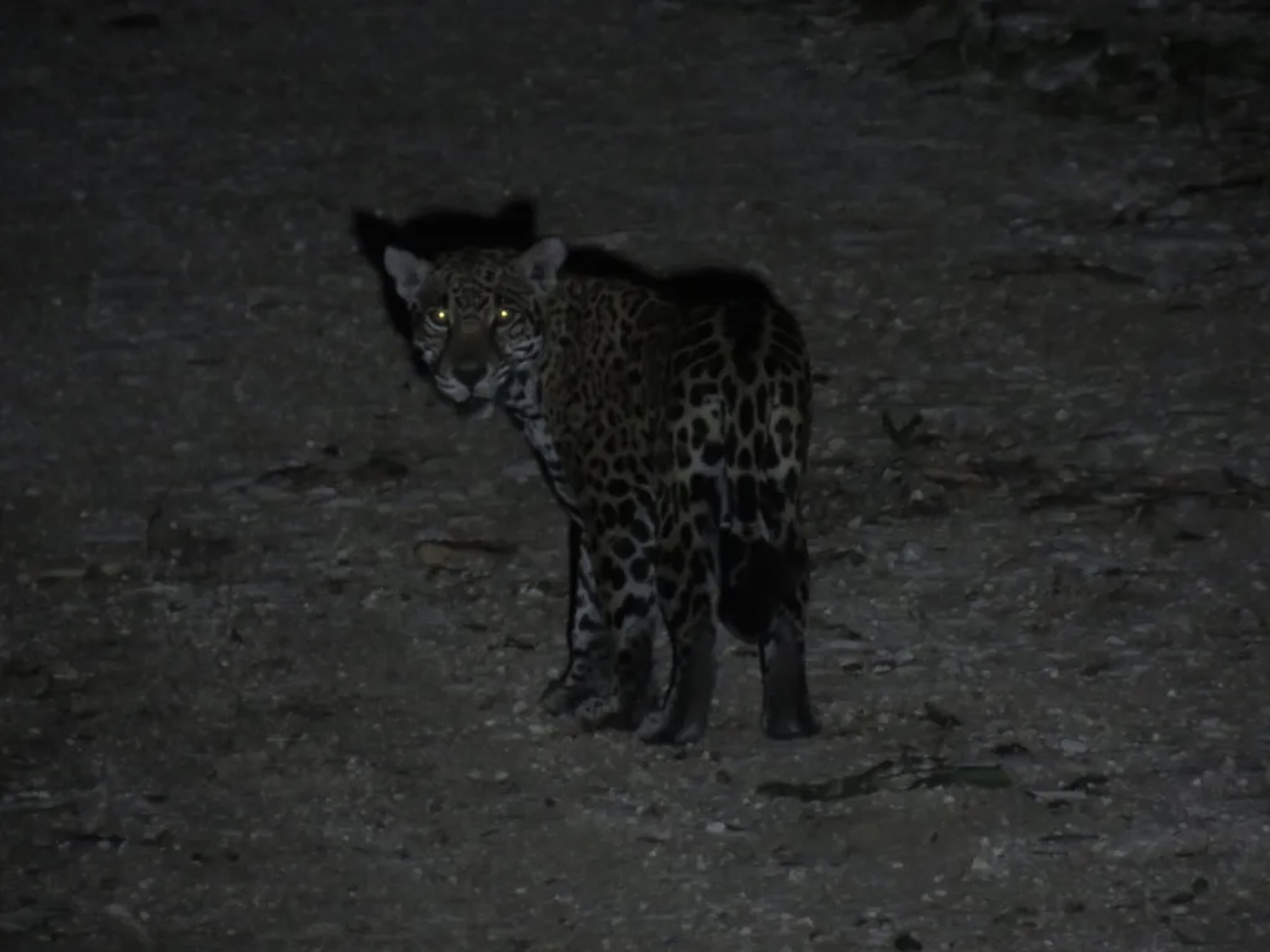
Jaguar by Seth Inman

The night drive is one of the most popular tours at Chan Chich Lodge because it is arguably the best opportunity for spotting a jaguar, ocelot, margay, or puma. Of the four forest cats, last night our tour group was fortunate to see the beloved jaguar.

The drive started at 7:30pm. Eight of us climbed up the back of the truck and took our seats along the cushioned benches facing out to the road. We were instructed by Luis, our tour guide, to look for “eyes,” and thereafter, the truck rumbled to a start and Luis began to point his flashlight in all directions, up at the tree branches and down at the forest undergrowth. The aftermath from Hurricane Earl was evident as the truck drove between broken tree stumps and overhanging branches, but this also allowed wildlife to appear in places that it had not been seen before.

Continue reading

Bill McKibben Deserves Better

07mckibbenSUB-master768.jpg

We frequently have linked to articles about, and to messages by, this man whenever we see them. It is not surprising to read this, but it is important that we are all aware of this additional price he pays for the actions he takes on behalf of the environment:

MIDDLEBURY, Vt. — THERE are shameful photos of me on the internet.

In one series, my groceries are being packed into plastic bags, as I’d forgotten to bring cloth ones. In other shots, I am getting in and out of … cars. There are video snippets of me giving talks, or standing on the street. Sometimes I see the cameraman, sometimes I don’t. The images are often posted to Twitter, reminders that I’m being watched.

In April, Politico and The Hill reported that America Rising Squared, an arm of the Republican opposition research group America Rising, had decided to go after me and Tom Steyer, another prominent environmentalist, with a campaign on a scale previously reserved for presidential candidates. Using what The Hill called “an unprecedented amount of effort and money,” the group, its executive director said, was seeking to demonstrate our “epic hypocrisy and extreme positions.” Continue reading

Tropical Kingbirds Make Good Parents, Part One

Just a few days ago, I was working from my laptop in one of the Chan Chich Lodge common areas when I saw an Ocellated Turkey on the road – not a peculiar sight at all – that walked a few steps before suddenly doing a swift yet panicked pirouette  – a slightly less usual occurrence, in my brief experience with the scintillant species. I grabbed my camera, which doesn’t leave my side here at the Lodge, and recorded the following video, in which the turkey gave a new meaning to the chicken-dance, albeit as an unwilling partner:

Continue reading

Biolighting: A New Alternative for Light

icone_v7qrqw

Glowee.com

In the developed world, light and electricity go hand in hand. But what if there was a way to produce light without electricity? That is the question Glowee, a biolighting living system, is striving to resolve. Glowee is a biological source of light that relies on the natural properties of marine microorganisms, specifically, the genetic coding for bioluminescence. The benefit to this alternative lighting is that it emits very low light pollution and CO₂.

To understand this new development, Continue reading

An Architect Shines Brilliantly On

terraza0

© Fundación de Arquitectura Tapatía Luis Barragán A. C.

Intense weather woke me up just after 1:00 a.m. a couple nights ago. Gale force winds, which I had not experienced before, provided such exhilaration that returning to sleep was not an option. I made coffee and sipped it in the dark, out of reach of the horizontal rains. We were prepared for the arrival of Hurricane Earl, expected to reach where I was sitting at 2:00 a.m. I was committed to witnessing the force of nature. After realizing that I was still just hearing the warm up to the real thing, I decided to read until the main act arrived. I finished reading this story just in time to be ready for Earl. Continue reading

The Shed, New York City

Shed.jpg

When we first learned about the High Line it was at a moment in time when we were designing a hotel in a historic section of a south Indian harbor town, with pedestrian zones intersecting with vibrant merchant and other urban realities; the High Line served as an inspirational benchmark for thinking about public spaces creatively.

Just now, for a new project, a colleague referred us to the Rockwell Group’s hospitality practice to see an example of another relevant benchmark, and while exploring their website we came across the project they are engaging in with the designers of the High Line, giving us a new objective for the next visit to New York City:

Currently under construction on the far west side of Manhattan where the High Line meets Hudson Yards, The Shed will be housed in a 200,000-square-foot, six-level structure designed by Diller Scofidio + Renfro in collaboration with Rockwell Group. The radically flexible design of the performative structure can physically and operationally accommodate the broadest range of performance, visual art, music, and multi-disciplinary work. Continue reading

Going Bananas for a Good Cause

5591717_orig

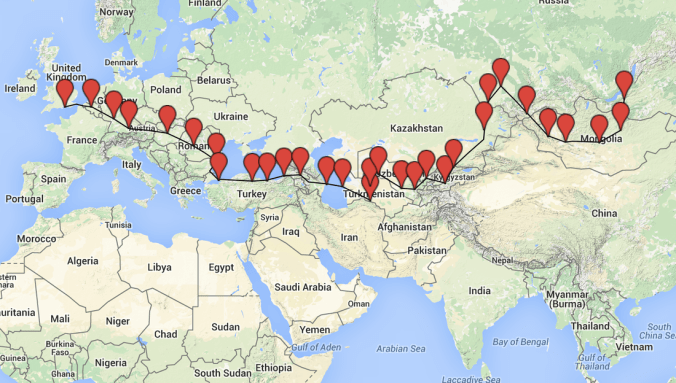
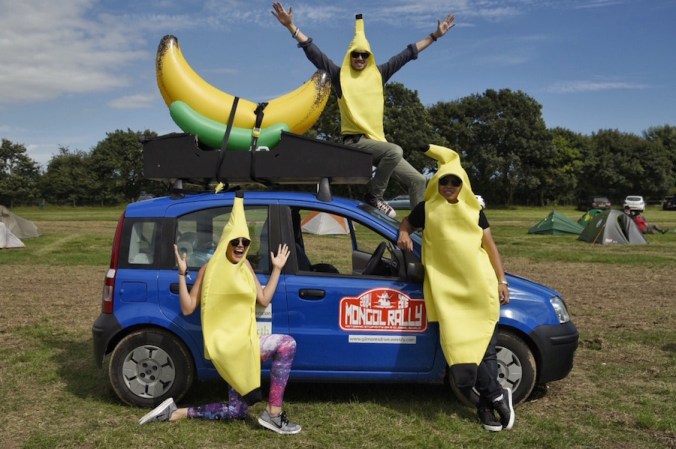
Driving 10,000 miles in a miniature, beat-up car from London to Mongolia might not be everyone’s ideal method to travel around the world (or at least, about 1/3 of the world’s surface). However, this challenge, known as the Mongol Rally, is more than just an unconventional thrill for adventurers. The challenge also requires participants to raise a minimum £1000 for charity, the first half going to Cool Earth, an organization dedicated to protecting endangered rainforest in order to combat global warming, and the rest to the charity of the team’s choosing.

2016-07-16-145637420-eabf5-ios_1_orig

Team Bananavan from gilmoresdrive.weebly.com

Continue reading

Big Numbers for eBird this Summer

Starting in May, eBird hit a big milestone: 11.8 million bird sightings in that month alone – the same amount of sightings the citizen science database collected in the first five years it existed. Participation in recent years had shot up enough to make that sort of number, and these sorts of maps, possible. Then, on June 17th, the 333,333,333th checklist was submitted to eBird from a participant in Illinois. A third of a billion records submitted by just over three-hundred thousand different people around the world since the Cornell Lab of Ornithology and Audubon partnered to make it possible for people to easily digitize their bird sighting checklists – that amounts to an average of a thousand-and-fifty checklists per eBirder!

At the end of last month, eBird saw another big number, with a million bird photos archived in the Cornell Lab’s Macaulay Library through the new tool allowing users to attach images to their checklists. And this week, the app Merlin got downloaded by its millionth user since it was launched for iPhones in January 2014 (and a bit later on Android phones). But eBird, Merlin, and the Macaulay Library aren’t the only ones reaching milestones this summer. Continue reading

Blue Ventures, Belize

Screen Shot 2016-08-04 at 6.41.54 PM.jpg

We have been introduced to Blue Ventures by Phil Karp, and want to share their website far and wide:

We rebuild tropical fisheries with coastal communities

Blue Ventures develops transformative approaches for catalysing and sustaining locally led marine conservation. We work in places where the ocean is vital to local cultures and economies, and are committed to protecting marine biodiversity in ways that benefit coastal people. Continue reading

Plus-Energy Homes


roxbury-e-townhouses-by-interface-studio-architects-889x626

Roxbury E+ Townhouses. All photos: Inhabitat.com

We love finding new and innovative solutions to live more sustainably. In this case, imagine living in a home that not only produces enough energy (from renewable sources of course) to sustain its own energy consumption but also produces surplus energy.  These are known as plus-energy homes and they are not only energy efficient, but also eye appealing and becoming more affordable. Here is a list of eight homes that pioneer in sustainability (the three I have listed are my top favorites):

1. ZEB pilot House by Snøhetta in Norway

Dramatically tilted toward the southeast, Snøhetta’s ZEB Pilot House is a plus-energy family house that produces enough surplus energy to power an electric car year-round. Located in Larvik, Norway, the 200-square-meter home serves as a demonstration project to facilitate learning and is powered by rooftop solar energy and geothermal energy.

Continue reading

Must-see Aerial Insectivores in the Greater Antilles: Part 4/5

White-collared Swifts in flight, Jamaica; top photo is a good depiction of the species viewed head-on from a mountain top. (with the observer positioned at the same elevation that the swifts are flying) as they come together to flock in the evening. (photos by Justin Proctor)

This post is part of a series; visit Part 3 here.

In Part 3 I introduced you to the smallest swift you’ll find in the Greater Antilles, so it seems appropriate to bring the largest swift of the region into the equation. An all-around phenomenal bird, the White-collared Swift (aerial insectivore 4) doesn’t get the attention it deserves, and I think I know why. Wetmore and Swales summarize the problem perfectly:

…through its great speed in flight so annihilates distance that flocks may appear temporarily almost anywhere.” (1931)

Continue reading

Keep Up Your Sustainable Efforts

5611

Source: The Guardian

Some positive news for all sustainable development worldwide (so yes, please continue your individual efforts to reduce your energy consumption and mitigate your carbon footprint, because they are paying off):

The amount of coal, oil, gas and renewable energy used by the global economy is falling quickly, a clear sign that economic growth is having less of an impact on climate change than in the past, according to new data from the U.S. Department of Energy.

The measure of the amount of energy that is used per unit of gross domestic product is known as energy intensity, and it’s an important indicator in the progress countries are making in tackling climate change. Globally, energy intensity has fallen 30 percent since 1990 and about 2 percent between 2014 and 2015.

Continue reading