All About Horns

05waqanimalhorns-adapt-590-1

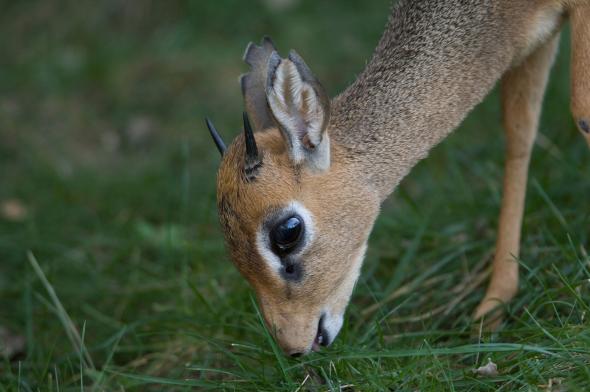
A dik-dik, a type of dwarf antelope with tiny horns. All photos by National Geographic

Horns are a curious biological development that come in all shapes and sizes and serve different purposes. There are plenty of white-tailed deer around the Gallon Jug Estate, some of which are young bucks with anywhere from one- to five-point antlers, and last night two guests actually watched a pair of these males butting heads within Chan Chich Lodge. An article by National Geographic enlightens us to the horny way of life:

Horns evolved independently in many animals to meet similar needs—first as weapons, and then as defenses against rivals, says Don Moore, director of the Oregon Zoo in Portland.

Horns likely initially inflicted body blows, but became larger and more elaborate as they absorbed blows to the head. This strategy led some animals, like pronghorns, to essentially wrestle (watch a video), whereas others, like sheep, ram their opponents.

Continue reading

Panthera onca

video taken by author on August 5th

Chan Chich is known for being pretty much the best place in Belize to spot a jaguar (scientific name, Panthera onca) in the wild, given the Lodge’s huge amount of protected land (30,000 acres) adjacent to hundreds of thousands of acres similarly preserved, or under government conservation that together form the international Jaguar Corridor Initiative.

The word Panthera comes from the ancient Greek pánthēr (πάνθηρ), which essentially means “predator of everything,” and is a scientific genus comprised of the five big cat species in the world: snow leopards, tigers, lions, jaguars, and leopards. The latter four of these are the only cats that can roar, given morphological differences in their bones and throat.

Continue reading

Watch the Perseids this Week

Photographer Ruslan Merzlyakov captured this spectacular photograph of the Perseid meteor shower filling the Danish sky in the early morning of Aug. 13, 2015. Photo via space.com

Sometimes you should just sit back, relax, and enjoy the show, especially when it’s broadcast by nature itself. This week, between August 11th and 12th, try to find time to stay awake once the moon has set, and a place you can be as far from light pollution as possible, and watch the sky for what promises to be a particularly active meteor shower from the Swift-Tuttle Comet, near the Perseus constellation:

According to NASA meteor expert Bill Cooke, the Perseids are perhaps the most popular meteor shower of the year. They will be in “outburst” in 2016, which means they’ll appear at double the usual rates. Learn more about the 2016 Perseid meteor shower in this video.

“This year, instead of seeing about 80 Perseids per hour, the rate could top 150 and even approach 200 meteors per hour,” Cooke said. It’s the first such outburst since 2009.

Continue reading

National Parks Valorizing Flora & Fauna

5616.jpg

Glad to see chefs in South America leading this innovative form of entrepreneurial conservation, and crossing country borders to do so:

Bolivian national park serving up sustainable ingredients for fine dining

Chefs among travellers proving there is demand for produce from Madidi – and helping communities understand commercial potential of their flora and fauna

Deep in Bolivia’s Madidi national park, Kamilla Seidler – the head chef of the Gustu restaurant in La Paz – was looking at a basket of cusí, the fruit of the babassu palm. An oil processed from the seeds is already marketed as a hair and skin product, but Seidler suspected it could have culinary potential, too.

“Bring me three kilos of it and in a month I can tell you all kinds of things you can do with it,” she told Agustina Aponte, who was representing a group of women from Yaguarú, one of 31 campesino and indigenous communities living within Madidi’s 1.89m hectares.

Continue reading

The “Wildman” in You


Whether you live in an urban or rural setting, the abundance of edible plants that surround us typically remains unconsumed unless we are referring to the plants that are growing in our own gardens. “Wildman” Steve, NYC’s famed foraging expert, is an avid naturalist who learns about the properties of common plants growing in neighborhoods in order to identify their utility for human consumption, including their medicinal attributes in some cases. He shares his findings through various forums and even has a phone application to offer a practical and user-friendly tool for those who want to get “in the field” and learn.

All of his videos, like the one below, remind us of the plethora of flavorful plant species right in our own backyard or neighborhood park and the following one highlights the joy it can be to do it with someone you love.

Continue reading

Restorative Justice, Environmental Case Study

1500.jpg

I am linking to this with a long series of links to rewilding stories in mind. Thanks to the Guardian for occasional environmental rags to riches stories:

How millions of trees brought a broken landscape back to life

After 25 years, the decision to site the National Forest amid derelict coal and quarry workings has borne spectacular fruit

by John Vidal

Twenty-five years ago, the Midlands villages of Moira, Donisthorpe and Overseal overlooked a gruesome landscape. The communities were surrounded by opencast mines, old clay quarries, spoil heaps, derelict coal workings, polluted waterways and all the other ecological wreckage of heavy industry.

The air smelt and tasted unpleasant and the land was poisoned. There were next to no trees, not many jobs and little wildlife. Following the closure of the pits, people were deserting the area for Midlands cities such as Birmingham, Derby and Leicester. The future looked bleak.

Today, a pastoral renaissance is taking place. Around dozens of former mining and industrial communities, in what was the broken heart of the old Midlands coalfield, a vast, splendid forest of native oak, ash and birch trees is emerging, attracting cyclists, walkers, birdwatchers, canoeists, campers and horse-riders.

Continue reading

Wood Wide Web

7650980706_652e5ab178_k.jpg

Forests and fungi–words that make me think of Milo circa 2010-2012 in the south of India, especially in the Periyar Tiger Reserve (but also later, writing about fungi in relation to food waste). When I first heard this a week ago, it seemed typical of Radiolab’s attention to quirky outlier science stories:

From Tree to Shining Tree

Saturday, July 30, 2016

A forest can feel like a place of great stillness and quiet. But if you dig a little deeper, there’s a hidden world beneath your feet as busy and complicated as a city at rush hour.

In this story, a dog introduces us to a strange creature that burrows beneath forests, building an underground network where deals are made and lives are saved (and lost) in a complex web of friendships, rivalries, and business relations. It’s a network that scientists are only just beginning to untangle and map, and it’s not only turning our understanding of forests upside down, it’s leading some researchers to rethink what it means to be intelligent.

And it was typical, in that sense. But Milo’s attention to the underworld of fungi, which at the time seemed to me as quirky as this Radiolab story does today, got me to start paying attention to anything in our news network with certain keywords (mushroom, fungi, etc.) and just now I came across a short journalistic account that taps into the same science as the Radiolab piece above, and I am realizing it may not be merely quirky: Continue reading

Must-see Aerial Insectivores in the Greater Antilles: Part 5/5

Northern Potoo perched on a fence post near the Windsor Research Station, Trelawny Parish, Jamaica. (photo by Justin Proctor)

This post is part of a series; visit Part 4 here.

Let’s move now from the diurnal species to a nocturnal favorite, the Northern Potoo (Nyctibius jamaicensis), which has been featured here before a couple times. These birds actively hunt for insects at night by sallying out from low-lying perches where they remain camouflaged and motionless until prey is spotted. If you’ve got a little bit of energy left in you after the sun goes down, and you also remembered to pack a decent headlamp or flashlight, I can’t encourage you enough to just go for a little walk down a quiet road nearby.

Continue reading

Grubby Animal Feed

4980

Source: The Guardian

Two Georgia Tech graduates (who also happen to be cousins), Sean Warner and Patrick Pittaluga, are breeding and selling an insect many people consider revolting in order to provide a more sustainable substitute for animal feed (if you are about to eat a meal, I recommend postponing this article for a later, food-free, time). The insect they are growing is larvae, specifically black soldier fly larvae. Grubbly Farms, the name of their company, dries the larvae and sells them whole as chicken treats. This is a more sustainable protein and fat source for chickens, pigs and farmed seafood compared to the more popular animal feed that is based on fish, called fish meal.

Around 75% of the fish used in [conventional fish meal] are wild-caught species of small fish such as anchovies, herring and sardines. Demand for these species will likely increase as the world relies more on fish farming – and less on depleting wild fish stocks – to feed the growing appetite for seafood.

Grubbly Farms’ business plan isn’t just about creating more nutritious and sustainable animal feed, Warner said. It’s also looking to tackle America’s billion-dollar problem with food waste – produce and leftover foods being tossed away by businesses and homes and clogging up landfills at the rate of 52m tons per year. Warner is feeding the larvae fruit and vegetable pulp from a local juicery, and the company has also recently started working with a bakery to add days-old bread to the mix. Warner estimates that once production is up-and-running, they will use around two tons of food waste a day.

Continue reading

Tropical Kingbirds Make Good Parents, Part Two

Yesterday I wrote and shared a video about this particular flycatcher’s protective nature, but it’s important to note that this behavior isn’t limited solely to the Tropical Kingbird. Neither is the rigorous feeding displayed in the video below. Most birds take good care of their young, whether by bringing meals every couple minutes or by picking up their poop and depositing it away from the nest – which you can see the parent kingbird do at 00:30 and 2:31. I apologize for publishing this in low resolution and pixelating the cuteness, but it’s the best one can do when off-grid in the middle of the Belizean jungle!

Continue reading

The Jaguar in the Night

Jaguar by Seth Inman

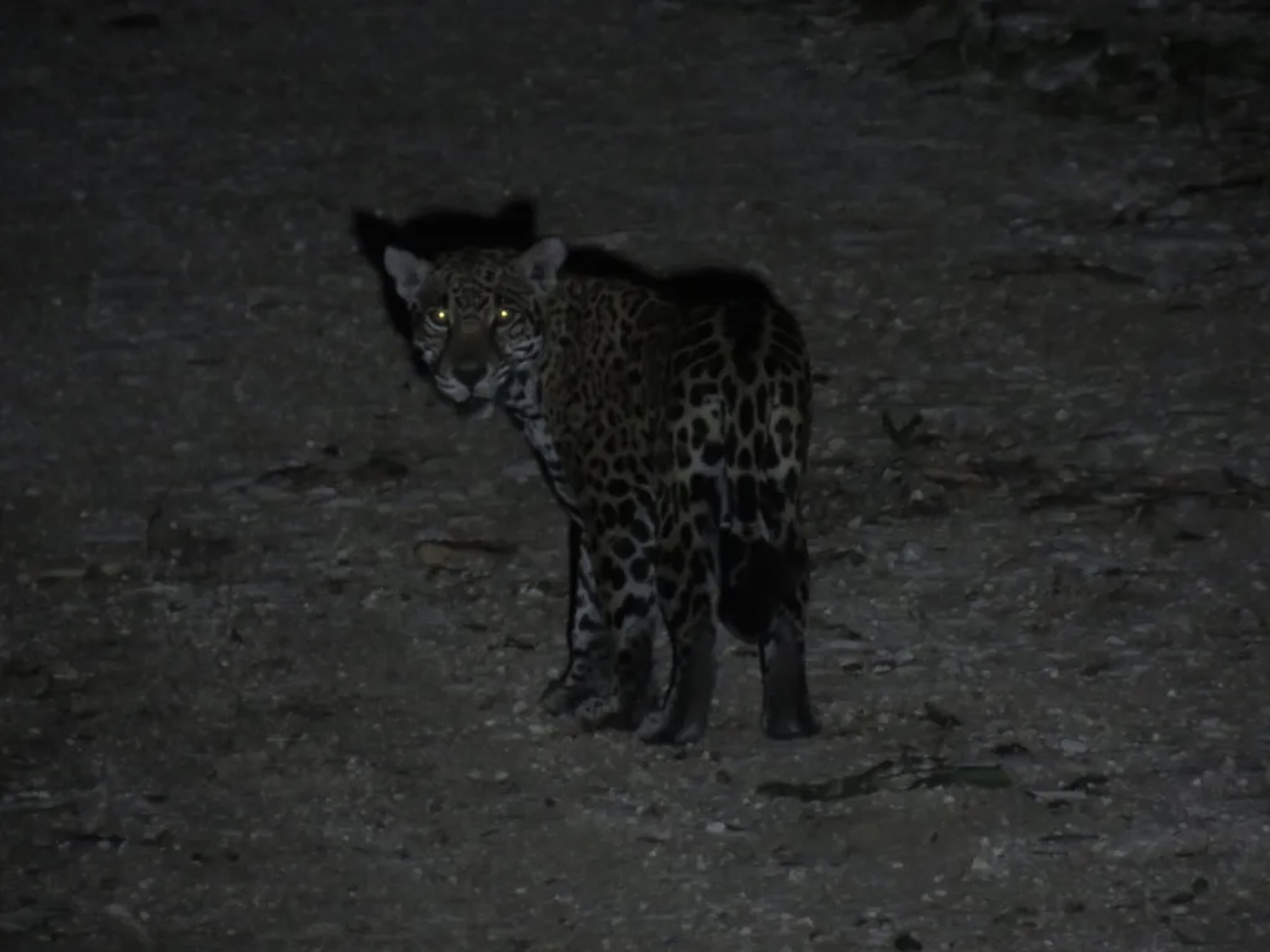
The night drive is one of the most popular tours at Chan Chich Lodge because it is arguably the best opportunity for spotting a jaguar, ocelot, margay, or puma. Of the four forest cats, last night our tour group was fortunate to see the beloved jaguar.

The drive started at 7:30pm. Eight of us climbed up the back of the truck and took our seats along the cushioned benches facing out to the road. We were instructed by Luis, our tour guide, to look for “eyes,” and thereafter, the truck rumbled to a start and Luis began to point his flashlight in all directions, up at the tree branches and down at the forest undergrowth. The aftermath from Hurricane Earl was evident as the truck drove between broken tree stumps and overhanging branches, but this also allowed wildlife to appear in places that it had not been seen before.

Continue reading

Bill McKibben Deserves Better

07mckibbenSUB-master768.jpg

We frequently have linked to articles about, and to messages by, this man whenever we see them. It is not surprising to read this, but it is important that we are all aware of this additional price he pays for the actions he takes on behalf of the environment:

MIDDLEBURY, Vt. — THERE are shameful photos of me on the internet.

In one series, my groceries are being packed into plastic bags, as I’d forgotten to bring cloth ones. In other shots, I am getting in and out of … cars. There are video snippets of me giving talks, or standing on the street. Sometimes I see the cameraman, sometimes I don’t. The images are often posted to Twitter, reminders that I’m being watched.

In April, Politico and The Hill reported that America Rising Squared, an arm of the Republican opposition research group America Rising, had decided to go after me and Tom Steyer, another prominent environmentalist, with a campaign on a scale previously reserved for presidential candidates. Using what The Hill called “an unprecedented amount of effort and money,” the group, its executive director said, was seeking to demonstrate our “epic hypocrisy and extreme positions.” Continue reading

Tropical Kingbirds Make Good Parents, Part One

Just a few days ago, I was working from my laptop in one of the Chan Chich Lodge common areas when I saw an Ocellated Turkey on the road – not a peculiar sight at all – that walked a few steps before suddenly doing a swift yet panicked pirouette  – a slightly less usual occurrence, in my brief experience with the scintillant species. I grabbed my camera, which doesn’t leave my side here at the Lodge, and recorded the following video, in which the turkey gave a new meaning to the chicken-dance, albeit as an unwilling partner:

Continue reading

Biolighting: A New Alternative for Light

icone_v7qrqw

Glowee.com

In the developed world, light and electricity go hand in hand. But what if there was a way to produce light without electricity? That is the question Glowee, a biolighting living system, is striving to resolve. Glowee is a biological source of light that relies on the natural properties of marine microorganisms, specifically, the genetic coding for bioluminescence. The benefit to this alternative lighting is that it emits very low light pollution and CO₂.

To understand this new development, Continue reading

An Architect Shines Brilliantly On

terraza0

© Fundación de Arquitectura Tapatía Luis Barragán A. C.

Intense weather woke me up just after 1:00 a.m. a couple nights ago. Gale force winds, which I had not experienced before, provided such exhilaration that returning to sleep was not an option. I made coffee and sipped it in the dark, out of reach of the horizontal rains. We were prepared for the arrival of Hurricane Earl, expected to reach where I was sitting at 2:00 a.m. I was committed to witnessing the force of nature. After realizing that I was still just hearing the warm up to the real thing, I decided to read until the main act arrived. I finished reading this story just in time to be ready for Earl. Continue reading

The Shed, New York City

Shed.jpg

When we first learned about the High Line it was at a moment in time when we were designing a hotel in a historic section of a south Indian harbor town, with pedestrian zones intersecting with vibrant merchant and other urban realities; the High Line served as an inspirational benchmark for thinking about public spaces creatively.

Just now, for a new project, a colleague referred us to the Rockwell Group’s hospitality practice to see an example of another relevant benchmark, and while exploring their website we came across the project they are engaging in with the designers of the High Line, giving us a new objective for the next visit to New York City:

Currently under construction on the far west side of Manhattan where the High Line meets Hudson Yards, The Shed will be housed in a 200,000-square-foot, six-level structure designed by Diller Scofidio + Renfro in collaboration with Rockwell Group. The radically flexible design of the performative structure can physically and operationally accommodate the broadest range of performance, visual art, music, and multi-disciplinary work. Continue reading