Going Bananas for a Good Cause

5591717_orig

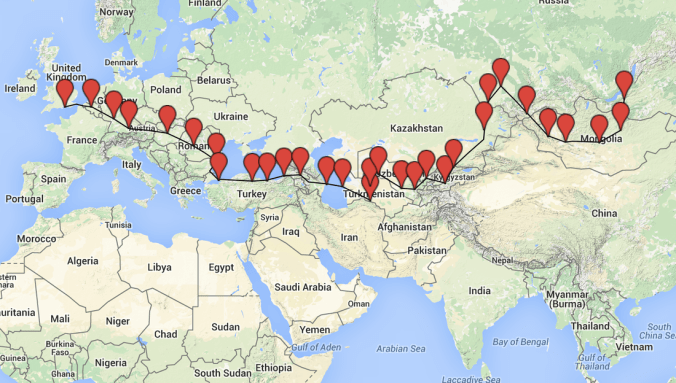
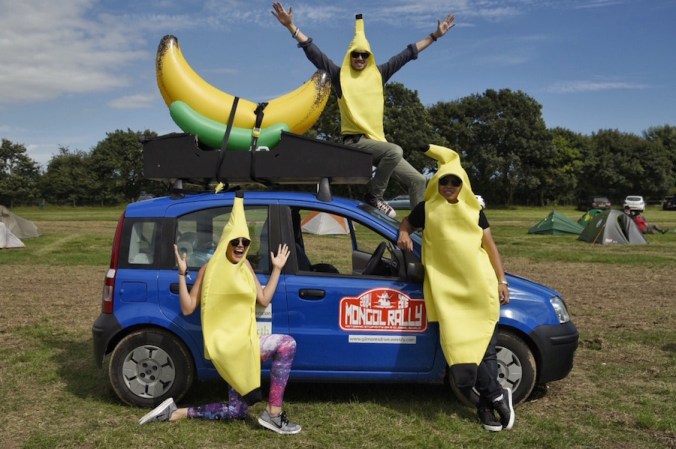
Driving 10,000 miles in a miniature, beat-up car from London to Mongolia might not be everyone’s ideal method to travel around the world (or at least, about 1/3 of the world’s surface). However, this challenge, known as the Mongol Rally, is more than just an unconventional thrill for adventurers. The challenge also requires participants to raise a minimum £1000 for charity, the first half going to Cool Earth, an organization dedicated to protecting endangered rainforest in order to combat global warming, and the rest to the charity of the team’s choosing.

2016-07-16-145637420-eabf5-ios_1_orig

Team Bananavan from gilmoresdrive.weebly.com

Continue reading

Big Numbers for eBird this Summer

Starting in May, eBird hit a big milestone: 11.8 million bird sightings in that month alone – the same amount of sightings the citizen science database collected in the first five years it existed. Participation in recent years had shot up enough to make that sort of number, and these sorts of maps, possible. Then, on June 17th, the 333,333,333th checklist was submitted to eBird from a participant in Illinois. A third of a billion records submitted by just over three-hundred thousand different people around the world since the Cornell Lab of Ornithology and Audubon partnered to make it possible for people to easily digitize their bird sighting checklists – that amounts to an average of a thousand-and-fifty checklists per eBirder!

At the end of last month, eBird saw another big number, with a million bird photos archived in the Cornell Lab’s Macaulay Library through the new tool allowing users to attach images to their checklists. And this week, the app Merlin got downloaded by its millionth user since it was launched for iPhones in January 2014 (and a bit later on Android phones). But eBird, Merlin, and the Macaulay Library aren’t the only ones reaching milestones this summer. Continue reading

Blue Ventures, Belize

Screen Shot 2016-08-04 at 6.41.54 PM.jpg

We have been introduced to Blue Ventures by Phil Karp, and want to share their website far and wide:

We rebuild tropical fisheries with coastal communities

Blue Ventures develops transformative approaches for catalysing and sustaining locally led marine conservation. We work in places where the ocean is vital to local cultures and economies, and are committed to protecting marine biodiversity in ways that benefit coastal people. Continue reading

Plus-Energy Homes


roxbury-e-townhouses-by-interface-studio-architects-889x626

Roxbury E+ Townhouses. All photos: Inhabitat.com

We love finding new and innovative solutions to live more sustainably. In this case, imagine living in a home that not only produces enough energy (from renewable sources of course) to sustain its own energy consumption but also produces surplus energy.  These are known as plus-energy homes and they are not only energy efficient, but also eye appealing and becoming more affordable. Here is a list of eight homes that pioneer in sustainability (the three I have listed are my top favorites):

1. ZEB pilot House by Snøhetta in Norway

Dramatically tilted toward the southeast, Snøhetta’s ZEB Pilot House is a plus-energy family house that produces enough surplus energy to power an electric car year-round. Located in Larvik, Norway, the 200-square-meter home serves as a demonstration project to facilitate learning and is powered by rooftop solar energy and geothermal energy.

Continue reading

Must-see Aerial Insectivores in the Greater Antilles: Part 4/5

White-collared Swifts in flight, Jamaica; top photo is a good depiction of the species viewed head-on from a mountain top. (with the observer positioned at the same elevation that the swifts are flying) as they come together to flock in the evening. (photos by Justin Proctor)

This post is part of a series; visit Part 3 here.

In Part 3 I introduced you to the smallest swift you’ll find in the Greater Antilles, so it seems appropriate to bring the largest swift of the region into the equation. An all-around phenomenal bird, the White-collared Swift (aerial insectivore 4) doesn’t get the attention it deserves, and I think I know why. Wetmore and Swales summarize the problem perfectly:

…through its great speed in flight so annihilates distance that flocks may appear temporarily almost anywhere.” (1931)

Continue reading

Keep Up Your Sustainable Efforts

5611

Source: The Guardian

Some positive news for all sustainable development worldwide (so yes, please continue your individual efforts to reduce your energy consumption and mitigate your carbon footprint, because they are paying off):

The amount of coal, oil, gas and renewable energy used by the global economy is falling quickly, a clear sign that economic growth is having less of an impact on climate change than in the past, according to new data from the U.S. Department of Energy.

The measure of the amount of energy that is used per unit of gross domestic product is known as energy intensity, and it’s an important indicator in the progress countries are making in tackling climate change. Globally, energy intensity has fallen 30 percent since 1990 and about 2 percent between 2014 and 2015.

Continue reading

A Fluttery Meal Companion

img_9901_zps957eyelg

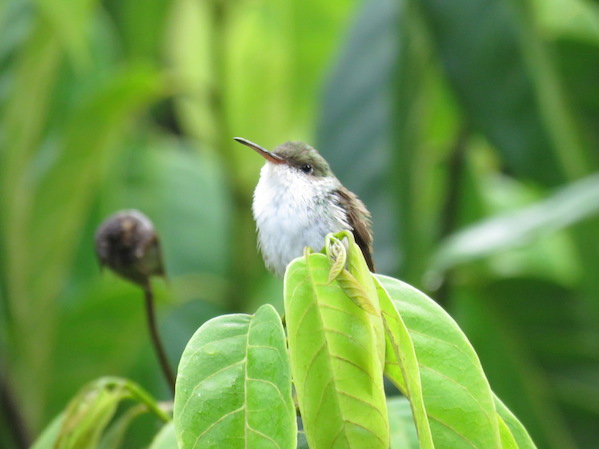
White-bellied Emerald by Seth Inman

You are always guaranteed to have a fluttery companion at every meal at Chan Chich Lodge. Whether you are sipping on an early morning cup of Gallon Jug coffee or munching on a hearty black bean burger for lunch, a variety of hummingbird species will perch on nearby branches, whiz by your ears, and fight one another for a precious sip of sugary liquid from the hummingbird feeder and nearby flowers. It is an entertaining and lively spectacle full of reproachful tweeting and muffled buzzing as the hummingbirds dive and zig-zag through the different obstacles (sedentary, observant humans included) that surround the dangling feeder.

Continue reading

Living with Jaguars

Note: Mr. Flota was born in the village of San Lazaro in the Orange Walk District of northern Belize. He works at Chan Chich Lodge in Gallon Jug, which is situated in a protected private forest that has one of the highest densities of jaguars in the world. He is the bartender and horse wrangler for the Lodge. Mr. Flota related this story to Jacalyn Willis, a biologist working in the tropics and at the Lodge. She wrote down his story as he told it.

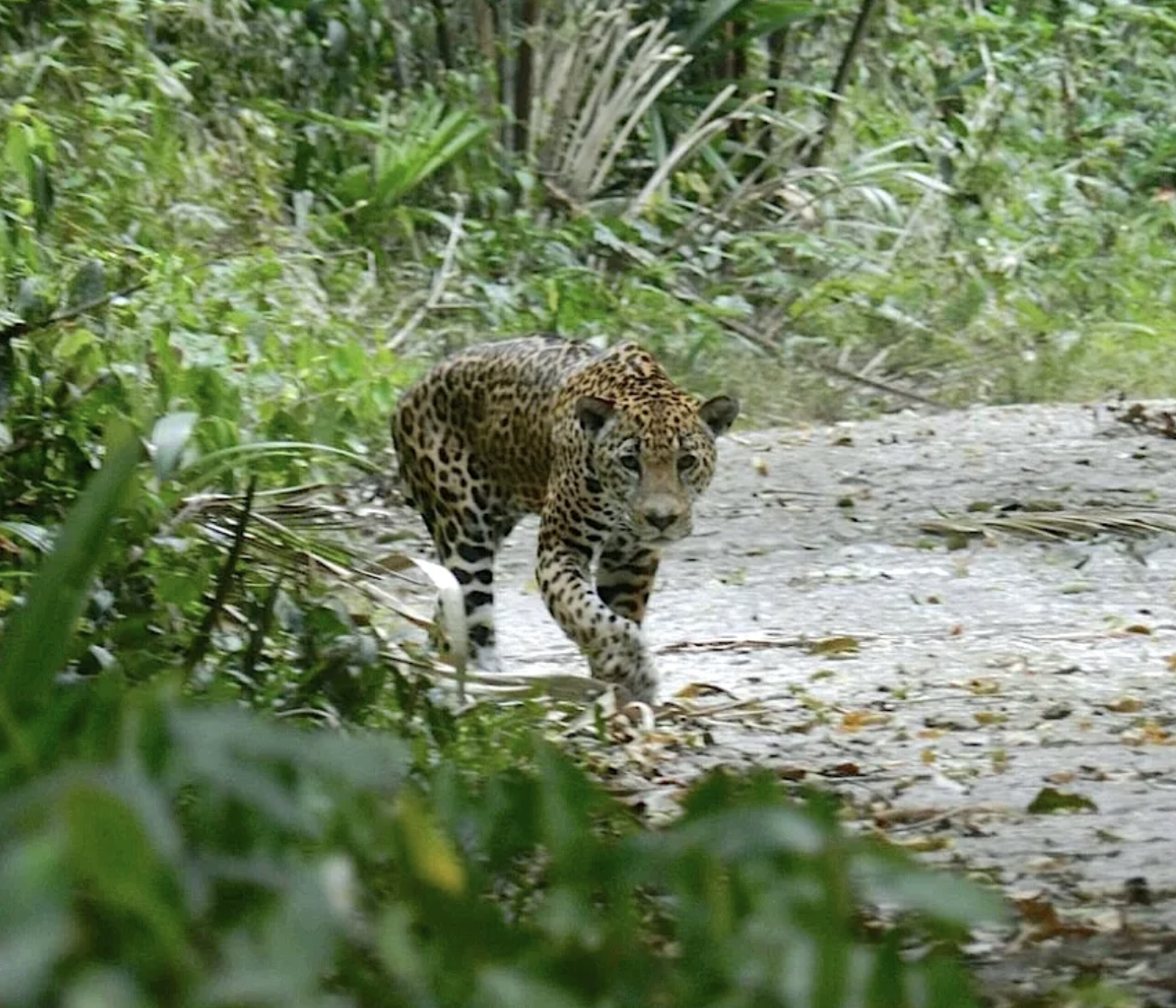
One sunny morning in July I decided to take a walk on the old limestone road here called Sylvester Village Road. It cuts through forest that has been selectively logged, leaving a mixed habitat good for birds. I took my binoculars and camera. As I came out of the little housing area where I live at Chan Chich Lodge, and swung around a bend in the path to get onto the road, I saw a jaguar walking ahead of me in the same direction. Now, we live in jaguar territory in a private preserve in northern Belize, so it happens fairly often that someone will see a jaguar, which usually disappears quickly. But this jaguar had not yet noticed me and was about 30 yards ahead.

Continue reading

Dirty Rio

wireap_206705173401436b8c64a3b0e628ca89_16x9_1600

Source: ABC News

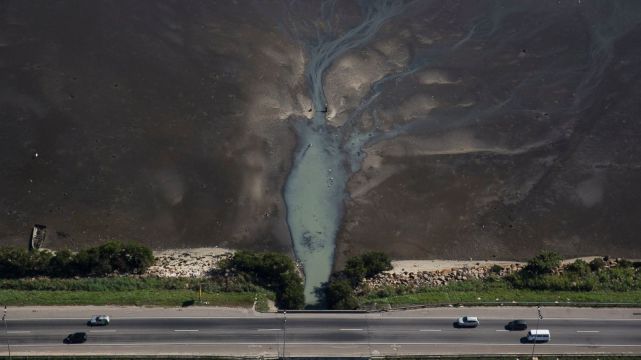
The 2016 Rio Olympics start in two days and in three days athletes will have to face the uncontrolled pollution debris and hazardous water contamination levels. The 1,400 athletes participating in water competitions and 300,000 to 500,000 foreigners expected to visit Rio de Janeiro and the beaches at Copacabana and Ipanema are at risk of becoming ill. This unfortunate predicament comes even after the city’s 2009 Olympic bid when authorities pledged that they would invest in a billion-dollar cleanup program to “regenerate Rio’s magnificent waterways.” Continue reading

Growing Hops & Crafting Beer

hops_custom-06d73795999a6d93f111680ade5849c244609f3f-s1400-c85.jpg

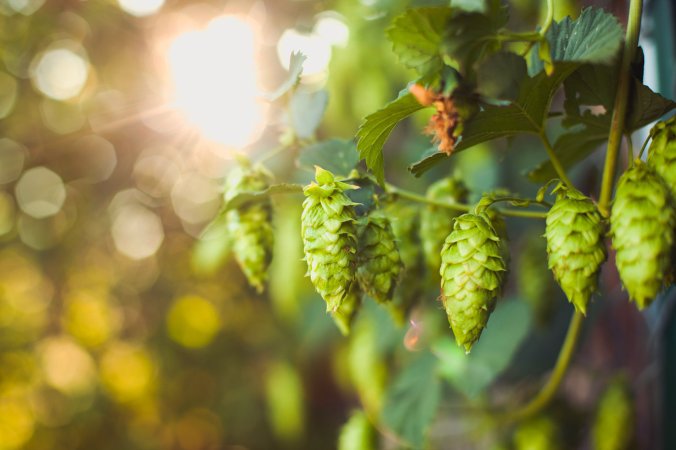
Ripe summer hops good for making beer. Tim Newman/Getty Images

We are anticipating another post by one of our authors, on a topic related to this news story below (thanks to NPR’s great special section, the salt), so let this serve as a reminder and a harbinger:

Hop Growers are raising a glass to craft brewers. The demand for small-batch brews has helped growers boost their revenues, expand their operations, and, in some cases, save their farms.

“Without the advent of craft brewing, a few large, corporate growers would be supplying all of the hops and local, family owned farms like ours would have gone bankrupt,” says Diane Gooding, vice president of operations at Gooding Farms, a hop grower in Wilder, Idaho. “It’s saved the industry.” Continue reading

Jumping Mobula Rays at Villa del Faro

A few weeks ago I wrote about the dawn rays at Villa del Faro, when I saw the jumping fish coming out of the water and slap down in almost-graceful belly flops. I finally got a little footage of the interesting behavior in the video above, and I found an article from BBC Earth that covers the topic – in the Gulf of California, no less – while still not providing an explanation for why the rays jump like they do:

Soaring high above the waves as easily as a bird, mobula rays appear perfectly designed for this astonishing aerobatic display.

Continue reading

Corpse Flower Diaries

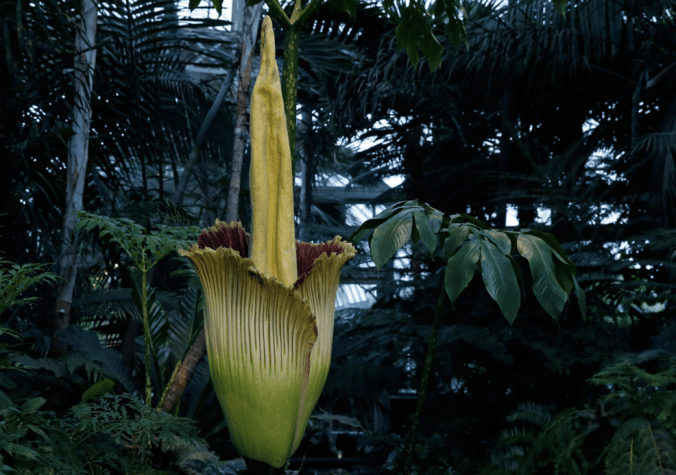
Photograph by Kathy Willens/AP

I first became aware of the amazing Amorphophallus titanum 4 years ago during a “bloom watch” of a Kenneth Post Lab Greenhouses specimen at Cornell University.  At the time the concept of a “Greenhouse Cam” was completely new to me, and I followed it, and the science behind the study of the plant, with fascination. Despite the rarity of the flower, a handful have bloomed within the past several years, the most recent being at the New York Botanical Garden.

All that said, the Corpse Flower by nature is the botanical version of a “comedic straight man” in the set up of story-based jokes. (For example, the scientific name means “giant misshapen phallus”.) Continue reading

My First Encounter with Chan Chich Lodge

img_9736_zpscnhylmqj

Chan Chich Lodge is camouflaged deep within the Belizean forest and within the ancient ruins of a Mayan structure. When you are driving along a rocky one-way limestone road through a variation of open cattle pastures and the dense forests for several hours, you don’t realize you have reached the lodge until you have driven past the welcome sign and are passing by one of the twelve wooden cabañas. Disclaimer: perhaps this first impression is singular to me because I first arrived to the hotel via ground transportation, at dusk, and in a drowsy state. Continue reading

Turns Out the Red Wolf is Part Gray, Part Coyote

John Woodhouse Audubon – Red Texas Wolf – Google Art Project via WikiMedia Commons

Last time I recall linking to a story with gray wolves, it was in the context of rewilding. And though I haven’t written about the red wolf before, it’s another North American species that is protected under US federal law in the Endangered Species Act. But new genetic research published last week on the DNA of North American wolf genomes is showing that the red wolf is in fact a hybrid species; a mix of gray wolf and coyote. The same goes for the Eastern gray wolf, another protected species. Carl Zimmer reports for the New York Times:

The finding, announced Wednesday, highlights the shortcomings of laws intended to protect endangered species, as such laws lag far behind scientific research into the evolution of species. Continue reading

USA National Park, Feisty Leadership Outlier

Lake Superior Presque Isle Royale National Park Michigan in USA Great Lakes no not people nobody isolated low angle horizon

Lake Superior Presque Isle Royale National Park Michigan, USA, Great Lakes

We like the idea of a leader of a national park with a “feisty nature,” since sometimes that is exactly what it takes for conservation to succeed, either in the public or the private sector; so this profile from the BBC, in its ongoing appreciation of the National Parks Service’s 100th anniversary, is the kind of story we are especially happy to share:

…Isolated and iconoclastic, Isle Royale National Park is something of an anomaly among US National Parks, with its territory spread over 200 islands and outcroppings emerging from the frigid waters of Lake Superior, part-way between the US state of Michigan and Canada.

Isle Royale’s former Superintendent, Bill Fink (no relation to me), is an iconoclast himself, almost as if the qualities of the archipelago rubbed off on him during his four years running operations there from 1990 to 1993. Continue reading

A Defining Moment In Papua New Guinea

Screen Shot 2016-08-01 at 9.05.37 AM.jpg

Interesting to see, in one publication we depend on for interesting news and commentary related to community and conservation around the world, a bookend to the item just published in another publication we turn to frequently:

Defining Moment: a photographer’s snap decision in the face of danger

Wylda Bayron traveled solo around Papua New Guinea for 18 months. What she found was a nation fraught with violence but also filled with striking beauty Continue reading