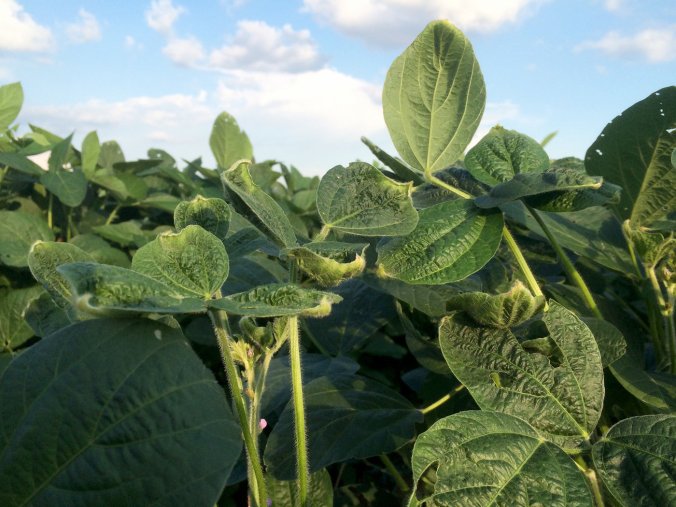
These soybean leaves show evidence of damage from dicamba. It could cut the the harvest by 10 to 30 percent. Courtesy of the University of Arkansas
We live at a time when figuring out how to feed an already-oversized global population (relative to the earth’s natural resources and known agricultural methods) is a monumental task. But Monsanto seems determined to take shortcuts that do as much harm as good. And that is probably putting it too politely, considering the number of times their misdeeds come to our attention (thanks to National Public Radio, USA):
Crime In The Fields: How Monsanto And Scofflaw Farmers Hurt Soybeans In Arkansas
by Dan Charles, August 1, 2016
When agricultural extension agent Tom Barber drives the country roads of eastern Arkansas this summer, his trained eye can spot the damage: soybean leaves contorted into cup-like shapes.
He’s seeing it in field after field. Similar damage is turning up in Tennessee and in the “boot-heel” region of Missouri. Tens of thousands of acres are affected. Continue reading









 Organikos