Must-see Aerial Insectivores in the Greater Antilles: Part 2/5

Cave Swallows in flight from multiple angles under different lighting conditions, Jamaica.

This post is part of a series; visit Part 1 here.

Cave Swallows (Petrochelidon fulva)

These little guys are a great species to start with because they are known to all of the Greater Antilles islands. One of the best contexts to find Cave Swallows in would be nearby to one of their communal roosts / nesting sites. Terrestrially, look around cave entrances or pocket-like formations in the sides of rocky cliffs. Coastally, look for limestone formations along the beach or just offshore. If they are there, you won’t miss them. Their nests are primarily made up of a mix of mud and plant fibers that have been attached to a vertical wall. If you can manage to get close, you might be lucky enough to see a pair of Cave Swallows sitting still in a nest giving you that famous 1000-yard stare.
Continue reading

Boca del Tule, Kayak & Surf

img_9395_zpsmfqybqon

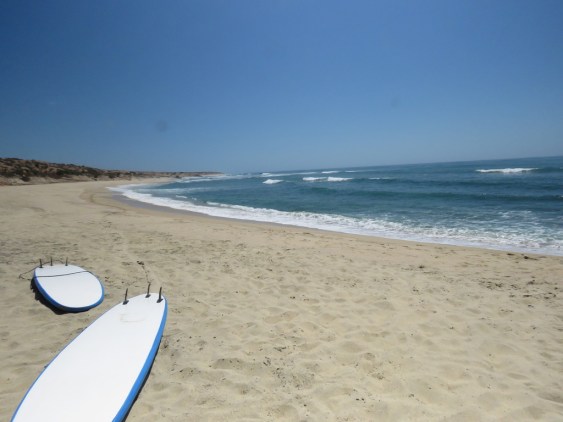
The shore down below Villa del Faro is known as Boca del Tule, since the Tule arroyo –– a seasonal river in the desert –– runs into the ocean at that point (boca means mouth in Spanish). The beach is public but very few people are ever on it, partly because we’re an hour away from the closest city, San José del Cabo, via dirt road. Now and then you’ll see a couple fishermen, or if the waves are good, some surfers. Last week, Jocelyn and I tried surfing both here at Boca del Tule and also at a better-known surfing beach just twenty minutes south called Nine Palms.

Both spots offered fair surfing for either experienced or newbie surfers, since Continue reading

A Leap into the Sun


20160717_085340_zpsehmrqyi6

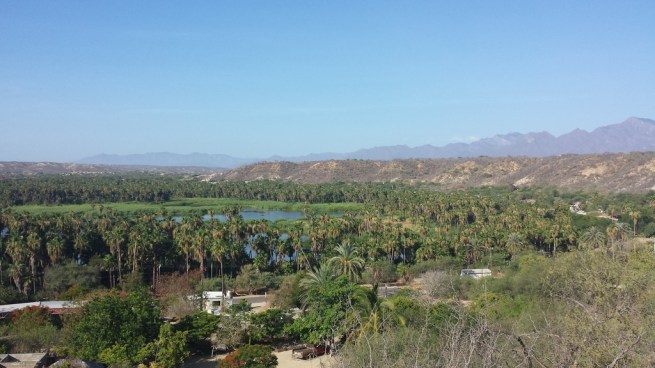
Among the foothills of the Sierra de la Laguna mountain range in Baja California Sur lies a geological marvel of isolated natural hot springs, fresh lakes, and rocky canyons, so we dedicated a whole day to discover a few of these natural wonders, protected within the Biosphere Reserve of Sierra de la Laguna. After almost two weeks of gazing upon a landscape of brown shrubs and dusty arroyos (not counting the great gardens here at Villa del Faro), the sight of a freshwater pond surrounded by palm trees and green undergrowth near the town of Santiago at the base of the sierra was like seeing a dear friend from childhood once again. I could not stop smiling and felt revitalized at the sight. Continue reading

“Watermelon Snow” = “Black and Bloom” = Melting Ice

Photo via blackandbloom.org

The last time we mentioned Greenland and melting ice sheets it wasn’t good news either; it rarely is. But any new research that can analyze how ice is melting faster than it could be is also helping figure out how we might reduce that rate of ice loss and ocean level rise. Alexandra Witze reports on algae and Arctic ice sheets:

Researchers are fanning out across the Greenland ice sheet this month to explore a crucial, but overlooked, influence on its future: red, green and brown-coloured algal blooms. These darken the snow and ice, causing it to absorb more sunlight and melt faster.

The £3-million (US$4-million) Black and Bloom project aims to measure how algae are changing how much sunlight Greenland’s ice sheet bounces back into space. “We want to get a handle on just how much of the darkness is due to microbes and how much to other physical factors”, such as soot or mineral dust, says Martyn Tranter, a biogeochemist at the University of Bristol, UK, and the project’s principal investigator.

Continue reading

Kerala Beef Fry

_89839519_89839518

The Kerala beef fry is the stuff of legend

Last week, sitting with a new colleague for lunch–I had ordered a classic north Indian version of the ubiquitous biryani served across the country; she had ordered a very Kerala dish, one with beef–I wondered why I had not ordered what she ordered, since it is the more local dish, and I am still not vegetarian. The BBC makes me wonder again:

The Indian state that is obsessed with beef fry

Not many people would associate India with beef. Spirituality yes, perhaps even vegetarianism, but certainly not beef.

But then they have probably never been to Kerala, the south Indian state that loves its beef – preferably fried.

The Kerala beef fry is the stuff of legend. Continue reading

A Birdy Kinda Film

compressed20wild20parrot20flock

Image from Evergreen.edu

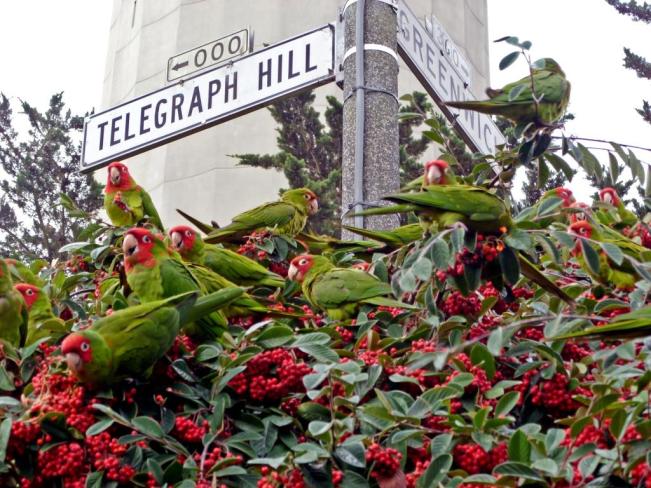
Given the large amount of bird lovers on this blog, if you have not seen the documentary The Parrots of Telegraph Hill I recommend you watch it (list-keeping birders, on the other hand, might not like it as much). As any of our followers would know, every day on our blog we feature a bird, usually exotic to westerners, on our Bird of the Day post, and frequently have a bird-related post (as you can see below) regarding their habits, migration, population change, and more (I guess I’ll add another one to that list right now!). Continue reading

Must-see Aerial Insectivores in the Greater Antilles: Part 1/5

Illustration by Justin Proctor

Are you tired of really crisp, up-close views of beautiful Caribbean birds? Are you repulsed at the idea of having an extended period of time to view a bird, jot down detailed notes about its breath-taking plumage, and really connect with the moment? Well, I knew it; and I’m happy to say that here at Proctor & Proctor Inc., we can offer you something much more challenging! Let’s start by having a long, long look at the following Rorschach test (pictured left). And if at any time it becomes painful to keep your eyes on the image, just keep looking…

Alright, let’s reflect. Did you see a hamster? If you did, I’m gonna ask you to just kindly walk away now. If rather you saw some intriguing silhouettes of our feathered friends in front of our beloved Yellow Star, you’re sitting pretty. And if you took one quick glance and were able to immediately identify all the different species present, I think we can probably get you a movie deal.

Continue reading

Bad News for a Few European World Heritage Sites

Protections have been weakened for Russian natural areas like the Western Caucasus. © WWF-Russia / Sergey Trepet

Last time we mentioned UNESCO World Heritage Sites, it wasn’t good news either, when many Sites were listed as “in danger.” The places newly at risk, according to the World Wildlife Fund (WWF), are often in the way of logging enterprises, often by the very governments who should be protecting the internationally recognized areas.  From the WWF:

The UNESCO World Heritage Committee today expressed concern over three sites facing severe pressures from harmful industrial activities, but failed to take bold action to protect them.

At the meeting, WWF objected to a sharp logging increase in the Polish portion of Bialowieza Forest World Heritage site, which also spans part of Belarus. The forest is one of Europe’s oldest, and is home to the most wild European bison, as well as lynxes and wolves. The government of Poland has argued that logging is necessary in order to combat a bark beetle infestation, a claim Polish scientists reject.

Continue reading

Corn, Heritage & Conservation

980x

Masienda / Facebook

Thanks to EcoWatch for this:

Heirloom Non-GMO Corn Is Helping Sustain Mexico’s Heritage and Farmers

It’s not often that a conversation inspires an idea leading to a project that improves people’s lives and potentially transforms an industry. But that’s what happened to Jorge Gaviria, founder of Masienda.

While serving as a host and translator at the G9 Chefs Summit at Blue Hill at Stone Barns in Pocantico Hills, New York in 2013, Gaviria heard chefs discuss responsibly sourced ingredients. Continue reading

The Downside Of Roads

EuropeRoadMap_Crop-680x450

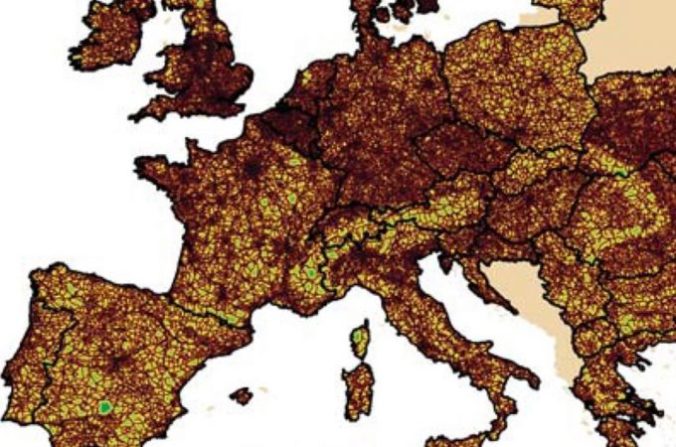
The density of transportation infrastructure in Europe. Credit: Marina Pinilla.

We enjoy a good drive as much as anyone, but we also have seen the impact they have over time in wilderness areas, and here is some unsurprising science from already developed regions to back up the concern:

IN EUROPE YOU CAN’T GET VERY FAR FROM ROADS—AND NEITHER CAN WILDLIFE

Roads and railway lines are so ubiquitous across the European continent that it is becoming impossible to measure their ecological effects, according to a study published yesterday in the Proceedings of the National Academy of Sciences.

In the study, researchers calculated the distances to the nearest paved road or railway line throughout 36 European countries, the first time that such calculations have been made comprehensively across the entire continent.

Nearly one-quarter of the land in Europe is within 500 meters of transportation infrastructure, half is within 1.5 kilometers, and virtually all is within 10 kilometers, they found. Continue reading

Out of Sight, Out of Water

acquifer_zpsl4jzg8aa

Source: National Geographic

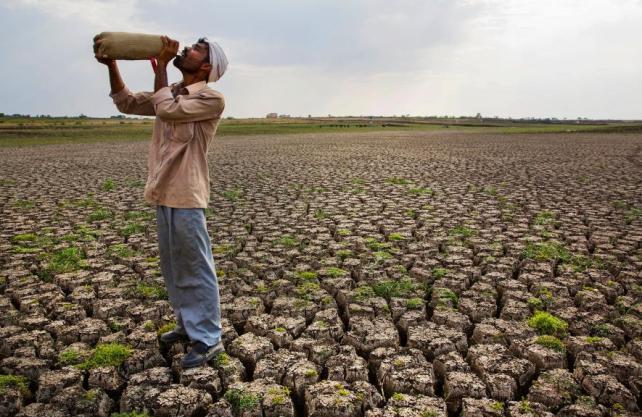
As a person who’s had the privilege to live her entire life in areas that have access to potable municipal water, I view water as an environmental commodity that only involves the twist of a faucet knob to obtain it (as I think most people who have enjoyed the same privilege do). Even when the water supply was cut off for some unknown reason, getting usable water was as simple as going to the closest convenience store and purchasing a five gallon jug or waiting for the daily Costa Rican downpour in the rainy season to collect some rainwater in large bins.

I have read, studied, and heard of the diminishing freshwater reserves on our planet and it is always on the back of my mind whenever I turn on a faucet to wash dishes, take a shower, brush my teeth, etc. I am frugal with my water consumption, but that is not enough. The fact that it is so easily accessible leads to the classic conundrum of  ‘out of sight, out of mind.’   Continue reading

Jackfruit: Potential Meat Substitute?

A vegetarian restaurant in Kansas City, Missouri, offers the Jack BBQ: jackfruit, onions, and kosher dill pickles served on sourdough bread. PHOTOGRAPH BY STEVE HEBERT, THE NEW YORK TIMES/REDUX

This question has actually already been answered here before. Last year, Rosanna wrote about the fruit, revolving around an article from The Guardian that featured a recipe for pulled pork but with jackfruit replacing the meat. Earlier that month, we had linked to an NPR segment that called them a “nutritional bonanza” that may help with the food crisis in developing countries. And the year before that, we had written another post calling the fruit a “mega food.” So when will that happen for good? Hopefully, soon! Stacie Stukin writes for NatGeo on the would-be fad-food:

When Annie Ryu first encountered a large, spiky orb called jackfruit, she was perplexed. “I thought it was a porcupine,” she says.

But when she ate it prepared in a curry, she was amazed at how meat-like it was in taste and texture. That was in 2011, when she was traveling in southern India as a premed student helping community health workers improve prenatal care. By 2014, she had waylaid her medical career to start The Jackfruit Company.

Continue reading

Smithsonian Features Recycled Trash Sculptures

Image courtesy National Zoological Park

The plastics used in these colorful and eye-catching sculptures being shown at the Smithsonian’s National Zoo weren’t recycled in the way outlined yesterday, but rather were found by artist Angela Pozzi and her volunteers along the West Coast beaches that they traveled, picking up waste to raise awareness at a later date through their traveling art exhibit, “Washed Ashore: Art to Save the Sea.” The seventeen sculptures of marine wildlife are bombastic and full of character. Sabrina Greene reports for the Smithsonian Insider:

“The exhibit at the Zoo appears to be a wonderful success,” Pozzi says. “I have seen dozens of visitors stopping and looking closely, then entering into discussions and then really thinking about the marine debris issue. Besides raising awareness, one of our goals is for the public to start taking ownership of the problem and reevaluating their own plastic usage. We hope to spark positive changes in consumer habits. Every piece of plastic in our exhibit that we have picked up off the beaches, every single bit of it, was once purchased by somebody.”

Continue reading

Concentrating Solar with Mirrors and Molten Salt

A tower of salt, surrounded by sunlight-sensing and -reflecting mirrors. Photo © SolarReserve

Two months ago we posted about non-photovoltaic solar power via a story from Scientific American, and this week they’re exploring the subject again, this time in the desert of Nevada with the first utility-scale “concentrating solar” plant that can provide electricity even at night. Concentrating solar involves storing heat from the sun rather than converting light into electricity, and apparently molten sodium and potassium nitrates can do this very effectively. Knvul Sheikh reports:

Deep in the Nevada desert, halfway between Las Vegas and Reno, a lone white tower stands 195 meters tall, gleaming like a beacon. It is surrounded by more than 10,000 billboard-size mirrors focusing the sun’s rays on its tip. The Crescent Dunes “concentrating solar power” plant looks like some advanced communication device for aliens. But the facility’s innovation lies in the fact that it can store electricity and make it available on demand any time—day or night.

Continue reading

Video Tour of a Recycling Plant in Brooklyn

My junior year, I founded and sat as president of my high school’s recycling club, which was a fairly simple operation of setting up cardboard boxes in classrooms and asking people to put their plastic or glass bottles and aluminum cans inside – paper recycling was already managed by the school district, but the rest wasn’t. Every Monday I’d go around collecting all that material into the big blue plastic bags sold by the county for residential recycling, normally filling one to two of them a week, and then take them to some neighbor of the school’s gracious enough to loan us their curb space for recycling pickup the next morning. From those big trucks that would load up the blue bags for the county, all the glass, plastic, metal (and garbage people thought was recyclable or didn’t care enough to remove) probably went to a recycling plant a bit like the one in the video below:

Continue reading

Old School Fromage

Cheesemaker David Clarke separates the curds and whey to make Red Leicester cheese at Sparkenhoe Farm in Upton

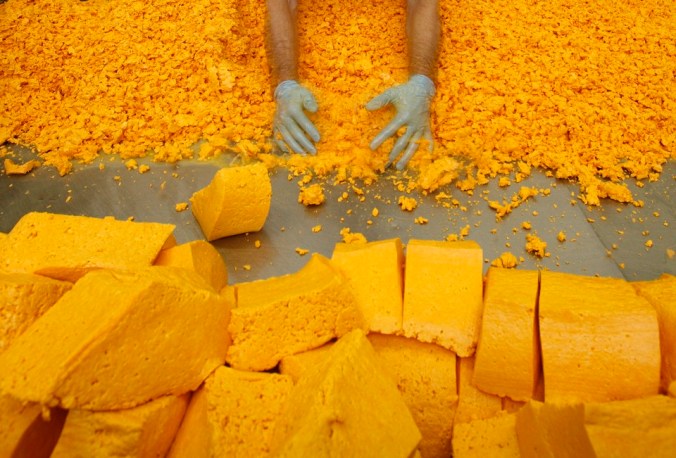
Cheesemaker David Clarke separates the curds and whey to make Red Leicester cheese at Sparkenhoe Farm in Upton, central England October 8, 2007. Red Leicester cheese had not been made in Leicestershire since 1956 until Clarke started producing his traditional, unpasteurised cloth-bound cheese using milk from his 150 pedigree Holstein Fresian cows. REUTERS/Darren Staples (BRITAIN)

Thanks to the Atlantic’s concern for our culinary well-being:

How Real Cheese Made Its Comeback

After decades of Kraft Singles, more Americans than ever are hungry for artisanal varieties of the past. An Object Lesson.

by LAURA KIESEL

As a child, I was a picky eater. Except when it came to cheese. Continue reading