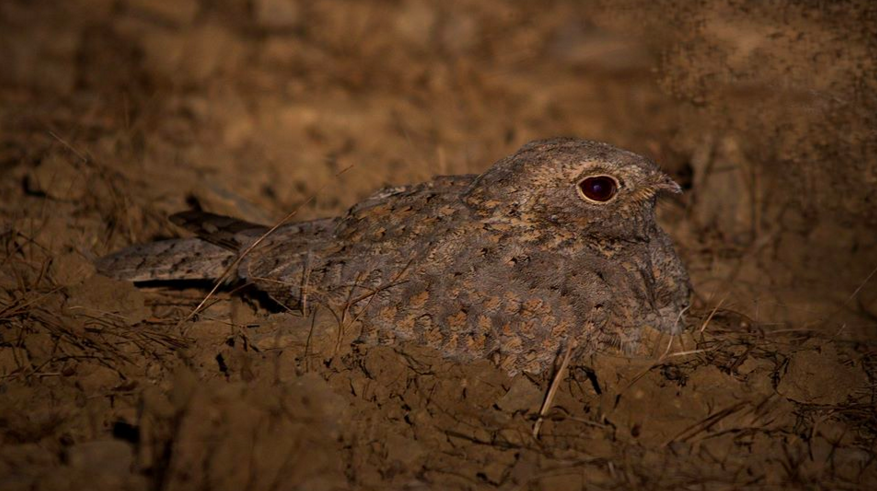
Camouflage by Debris

Specimens preserved in amber. © Wang et al. in Science Advances, 2016.

We’ve featured posts here concerning camouflage plenty of times, whether in birds and their eggs, in beach-dwelling crabs, plant-mimicking insects, or strange caterpillars. That last example is the closest to the subject matter of Ed Yong’s latest post on Nat Geo’s Phenomenon blog, where he writes about insects that cover themselves in debris to hide from predators or prey alike:

Every year, in northern Myanmar, thousands of farmers pull tonnes of Cretaceous amber out of the ground, and send the glistening nuggets to local markets. For six years, Bo Wang from the Chinese Academy of Sciences and his colleagues have visited the markets and sifted through 300,000 of the glistening nuggets. It was a lot of work. Then again, it takes a lot of work to find animals that spent their whole lives trying not to be found.

Continue reading

Risky Business, Catchy Name For Catchy Idea

RiskyB

Catchy name means, perhaps, we first think of teenaged Tom Cruise playing the air guitar, until we realize it (the organization whose name is Risky Business) is about something serious. Catchy idea means serious (respected) businessmen funding research on a serious (not respected enough, if you consider the volume of deniers out there) looming crisis:

The U.S. economy faces significant risks from unabated climate change. Every year of inaction serves to broaden and deepen those risks. Founded by co-chairs Michael R. Bloomberg, Henry Paulson, and Tom Steyer, the Risky Business Project examines the economic risks presented by climate change and opportunities to reduce them.

Continue reading

An Introduction to Villa del Faro, via Birds

Screen Shot 2020-08-14 at 10.48.43 AM

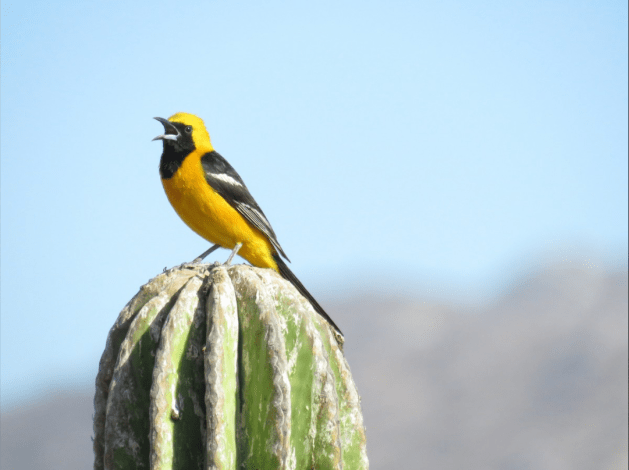
male Hooded Oriole at Villa del Faro

Jocelyn and I are visiting a property on the southern tip of the state Baja California Sur in Mexico, on the long peninsula running from the mainland into the Pacific Ocean, creating the Sea of Cortez. Grey and Humpback Whales use the sheltered and warm waters in the Bay of California to give birth and raise their calfs, but unfortunately for us, we aren’t here at a time during which these marine mammals can be seen from the many patios and balconies at Villa del Faro.

Continue reading

Drink Maple? Sure

squam-swamp-run-maple--3781_wide-e793fcc0e7e7afb2f5f94466ffbbc47899d9fbae-s1400-c85

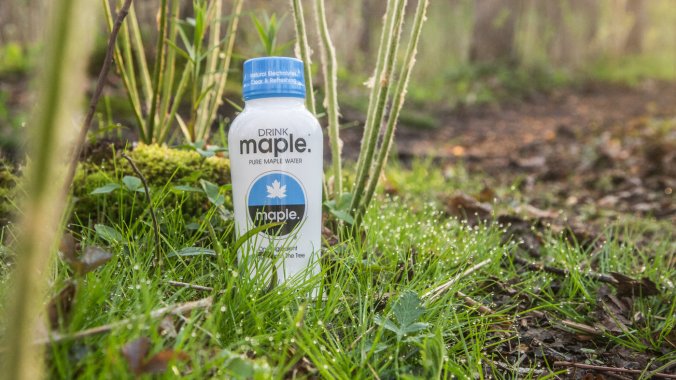
Courtesy of Drinkmaple

 Those of us who grew up in maple territory can easily relate to this, and even place palm on forehead and ask–why didn’t I think of that?–so thanks to the Salt over at National Public Radio (USA) for this:

From Tree To Tap: Maple Water Makes A Splash

Unlike syrup, which is boiled down into a thick, sticky liquid, maple water is made from unprocessed sap that is 98 percent water. Its growing popularity is a boon for local farmers. Continue reading

Libraries, Phaidon Style

ssanantonio-ricardo

Ricardo Legorreta’s San Antonio library, Texas, as illustrated by André Chiote

Phaidon has produced a book to meet our library fancy:

The world’s best libraries look even better as posters

See how architect André Chiote has illustrated buildings by Norman Foster, Oscar Niemeyer, Rem Koolhaas and co

When successful architects are tasked with designing important city or national libraries, they rise to the challenge. These practices, which often spend much of their time on overtly commercial work, seem to come to life when they put their civic-minded hats on. Continue reading

Connecting the Dots

In our business we often use words like synchronicity and synergy to illustrate the amazing frequency of “right time-right place” meetings and connections. In the summer of 2011 one of the original interns (and creators of this site) came to work with us in Kerala. In search of a project, we introduced him to Diwia Thomas to brainstorm a social entrepreneurship collaboration. That process led to an amazing joint venture paperbag making workshop with the Kerala Forestry Department.

The very first post I wrote on this site was about Diwia Thomas and her company Papertrails. It just so happens it was published exactly 5 years ago. It also just so happened that this morning my Facebook feed included the news that Diwia had been honored with the Unique Times’ Young Women Business Excellence Award 2016. Continue reading

If Only I Could Have Learned So Quickly

Small Talk

The current issue of the New Yorker is a gold mine, but of particular note from my own experience and perspective is this gem of cross-cultural observation:

MY STRUGGLE WITH AMERICAN SMALL TALK

By

“How’s it going?” I ask the barista. “How’s your day been?”

“Ah, not too busy. What are you up to?”

“Not much. Just reading.”

This, I have learned, is one of the key rituals of American life. It has taken me only a decade to master. Continue reading

2016 Audubon Photography Awards Winners

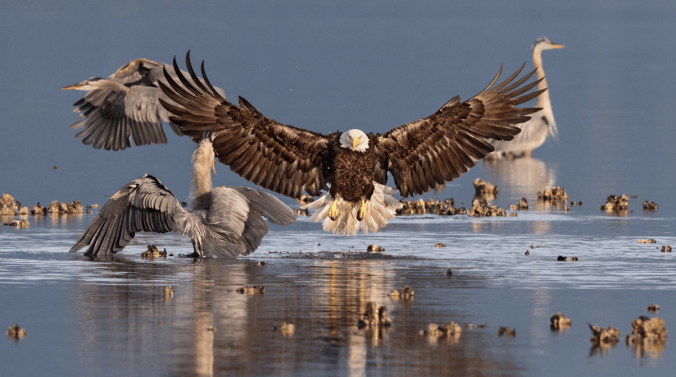
Bald Eagle and Great Blue Herons. Photo: Bonnie Block/Audubon Photography Awards

Bald Eagle and Great Blue Herons. Photo: Bonnie Block/Audubon Photography Awards

Readers of this site have come to expect an avian presence – daily in the form of our Bird of the Day posts, as well as frequently in our applause of many citizen science programs.

We send out a hearty applause to the 2016 Audubon Photography Award winners – especially the youth and amateur contributors. We’ve posted a few of the fabulous shots here, but be sure to follow this link for the entire set and the details and story behind each shot.

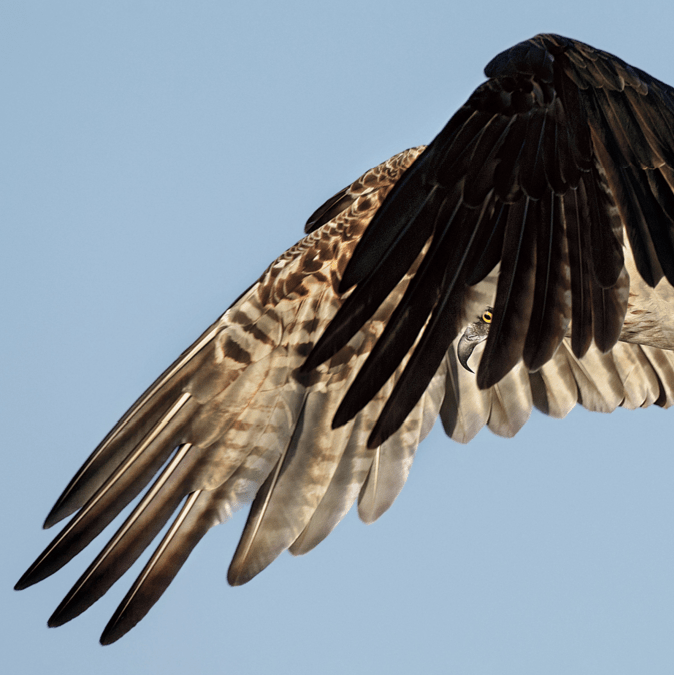
Osprey. Photo: Dick Dickinson/Audubon Photography Awards

Osprey. Photo: Dick Dickinson/Audubon Photography Awards

Quick Stats:

Participants: More than 1,700

Images entered: Nearly 7,000

Categories: Amateur, Professional, Fine Art, Youth

Entrants from: 50 states, 6 provinces, District of Columbia Continue reading

Iceland, History, Moving Forward

Screen Shot 2016-07-04 at 11.33.11 AM

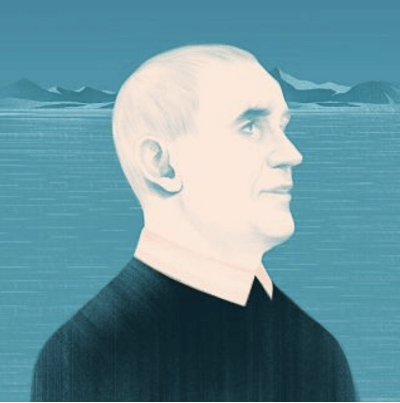
 A scholar of the Icelandic Presidency swiftly became a Presidential front-runner. ILLUSTRATION BY JASU HU

This article had me in the first sentence, naming Iceland and mentioning historian together. Seth educated himself, with the help of a great university and its incredible historical archives on Iceland, to be a historian of the bachelor variety.  What he learned from those archives and some well structured thinking have served him well since then in Costa Rica.

In his next posting, in Baja California Sur (Mexico), I expect the foundation in history, combined with these last two years of applied practice, will be even more valuable. You will hopefully start hearing about that this week, but meanwhile have a read about current events in Iceland:

ICELAND’S HISTORIC CANDIDATE

How a scholar of the nation’s Presidency swiftly became its Presidential front-runner.

By

When I heard that the historian Guðni Jóhannesson was running for President of Iceland—not only running but entering the final weeks of the campaign as the clear favorite—I was intently curious to be present when and if he won. Continue reading

The Chumbawamba Principle Illuminated

jps_1_custom-46f5ed44c65bca033c8c555328e154e8183d6de3-s1400-c85

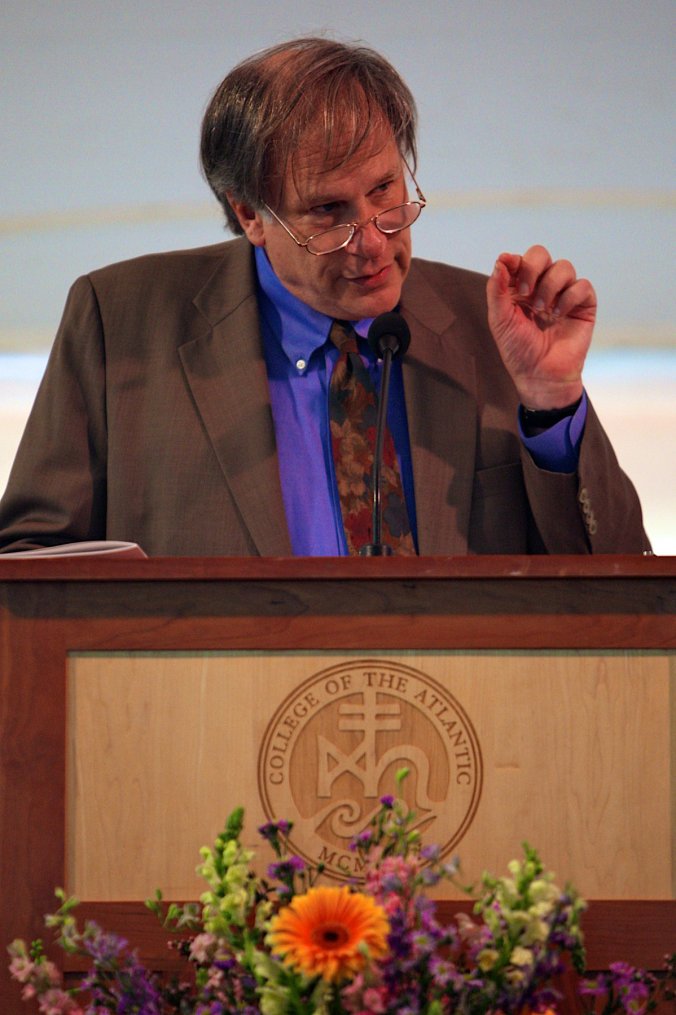
Nearly four years ago we posted about this commencement address that we still love for The Chumbawamba Principle it espoused. Until today I could not have recognized any piece of music belonging to Chumbawamba, but now, surprisingly, that has not only changed but I feel richer for it.   Continue reading

Bioluminescent Fungi

4608

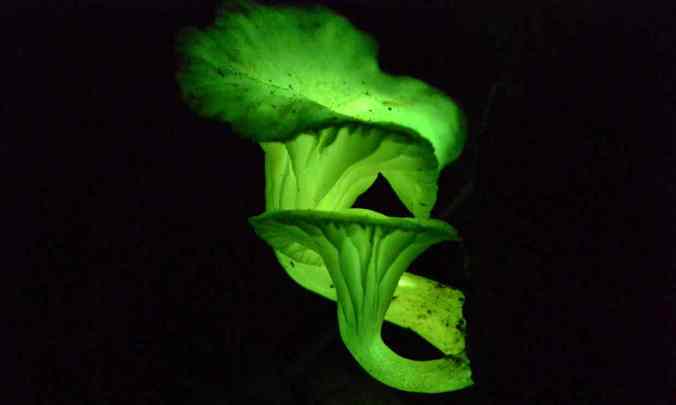
Fungal luciferin could eventually allow the creation of an autonomously luminescent plant. Photograph: Cassius Stevani at the San Paulo University in Brazil

Bioluminescence has appeared in these pages so many times that people probably wonder why. The answer would be because we have contributors who see its wonder of the world quality as directly relevant to our communications mission.

And there was a time when stories about fungi, mushrooms, etc. were the domain of one key contributor. We used to leave stories like this one to our resident mycoenthusiast  Milo, but he is no longer in residence with us; instead, busy now setting up a permaculture organic farm in the rolling hills to the west of Ithaca, NY (USA). So, for lack of a better post-person, this recommendation is from the team:

How research into glowing fungi could lead to trees lighting our streets

Bioluminescence, the peculiar ability of some organisms to behave like living night-lights, could be the key to some remarkable advances

On a moonless night deep in a Brazilian rainforest the only thing you are likely to see are the tiny smears of light from flitting fireflies or the ghostly glow of mushrooms scattered around the forest floor. Both effects are the result of bioluminescence, the peculiar ability of some organisms to behave like living night-lights. Continue reading

I’ll Just Take The Banjo

RStanley

We have not mentioned the banjo much around here. Shame on that! I am fond of the instrument for some of the same reasons I am fond of, say, an arboretum. The banjo is an instrument akin to other instruments of entrepreneurial conservation: the more it gets played well, the more it keeps alive a tradition, and even can improve on the tradition. An arboretum, well conceived, well kept, helps species survive in isolation that might otherwise have been lost from the planet entirely.

I see a reference here and there, for example mention of the Seeger family, who I have loved for many reasons my whole life. And Bela Fleck is Exhibit A in the case to be made for the banjo entrepreneurship; Steve Martin and Edie Brickell could be said to support that case as well. They all would acknowledge Dr. Ralph Stanley as essential to their craft’s survival and thriving, so it is with that in mind that I highly recommend you listen to or read this brief interview with him:

…GROSS: How did you get your first banjo?

STANLEY: My first banjo? My mother’s sister, my aunt, lived about a mile from where we did, and she raised some hogs. And she had – her – the hog – the mother – they called the mother a sow – of a hog. And she had some pigs. Well, the pigs were real pretty, and I was going to high school and I was taking agriculture in school. And I sort of got a notion that I’d like to do that, raise some hogs. And so my aunt had this old banjo, and my mother told me, said, which do you want, the pig or a banjo? And each one of them’s $5 each. I said, I’ll just take the banjo…

Continue reading

Bernie Krause In Paris

Screen Shot 2016-07-03 at 5.09.00 AM

Several members of our circle have enjoyed reading about as well as listening to Mr. Krause since first learning about him. Whether or not you happen to be in Paris, this exhibit is worth a visit (click the image above for the low carbon footprint route)

The New York Times has this to say in a review:

PARIS — The bioacoustician and musician Bernie Krause has been recording soundscapes of the natural world since 1968, from coral reefs to elephant stamping grounds to the Amazonian rain forest.

Now, Mr. Krause’s recordings have become part of an immersive new exhibition at the Cartier Foundation here called “The Great Animal Orchestra.” Named after Mr. Krause’s 2012 book of the same title, the show opens on Saturday and runs through Jan. 8. Continue reading