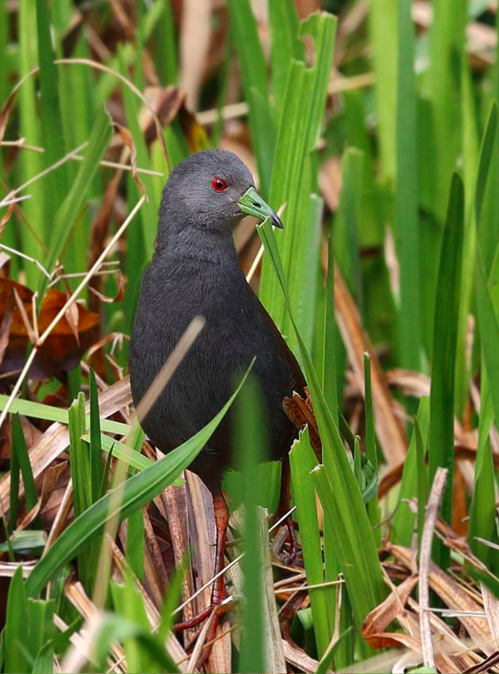
Mandala, Arunachal Pradesh
Mandala, Arunachal Pradesh
 When we started this exercise, aka blogging, we wanted to keep a running tab of “things” we care about as they showed up in various news sources, and to comment on those topics as often as we could share relevant examples from our own daily activities. Community, collaboration and conservation have been the catch-all topical themes.
Depending on the news for this exercise, not surprisingly we care about the state of the news in all its business/profession dimensions. We have a particular fondness for long form written journalism, and a particular loathing for its polar opposite, whatever that might be called. Gossip-mongering, ugh. So when I first saw headlines announcing that a gossip-mongerer had suffered a legal defeat last week, I smiled at the headline but could not otherwise be bothered to read the details. That changed dramatically when I read the short item below:
How Peter Thiel’s Gawker Battle Could Open a War Against the Press
BY NICHOLAS LEMANN
Probably the most important case in American press law is New York Times Co. v. Sullivan (1964), in which the Supreme Court, in a unanimous decision, made it just about impossible for a “public figure” to win a lawsuit against a news organization. Justice William Brennan, in the majority opinion, wrote, “The constitutional guarantees require, we think, a Federal rule that prohibits a public official from recovering damages for a defamatory falsehood relating to his official conduct unless he proves that the statement was made with ‘actual malice’—that is, with knowledge that it was false or with reckless disregard of whether it was false or not.” This standard, built on in succeeding cases, made this the country with the most pro-free expression, and specifically pro-press, laws in the developed world; post-Sullivan protections extend from publications to individuals, and from libel to invasion of privacy. “Libel tourism” means looking for a pretext to sue an American publication in England or some other friendlier venue, especially if you’re a celebrity. Conversely, the purveyors of recent monster revelations, like Wikileaks, have taken pains to find American publishing partners, because the right to publish is far more substantial here than elsewhere. Continue reading
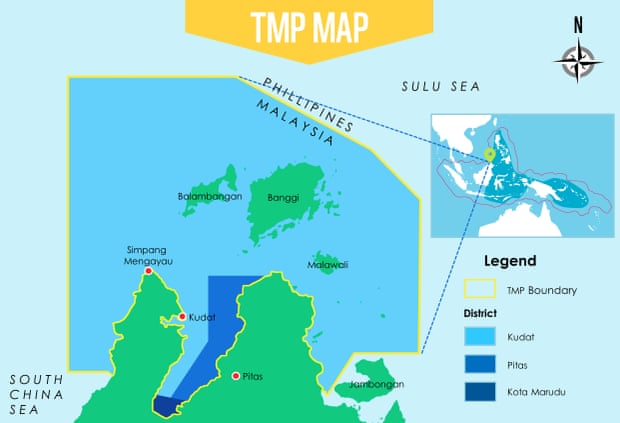
A map of the new Tun Mustapha marine protected area, which occupies just under one million hectares of seascape, including more than 50 islands. Illustration: WWF Malaysia
The more protected areas for wildlife in the world the better, in our book. So we’re happy to hear that Malaysia has created a new marine park, the largest of its kind in the country, that covers a million hectares, or around two million football fields. With so many coral and fish species in the region, it’s a great step forward for conservation in an area at risk for over-fishing or poor practices like blast or cyanide fishing. Johnny Langenheim reports:
Malaysia has just established the biggest marine protected area (MPA) in the country. The Tun Mustapha park (TMP) occupies 1m hectares (2.47m acres) of seascape off the northern tip of Sabah province in Borneo, a region containing the second largest concentration of coral reefs in Malaysia as well as other important habitats like mangroves, sea grass beds and productive fishing grounds.
It is also home to scores of thousands of people who depend on its resources – from artisanal fishing communities to the commercial fisheries sector – making it in many ways a microcosm of the entire Coral Triangle bioregion, where environmental protection must be balanced with the needs of growing coastal populations.

Dr. Grant holds a red-spotted newt from Beebe Pond in Sunderland, Vt., this month. Credit Jim Cole/Associated Press
Salamanders and newts have shown up on the blog before as an important environmental health indicator, an animal family that is fun to look at and look for, and a group of species at risk due to imported/exported diseases made possible by the pet trade. From the New York Times Science section this week, we’re learning even more about these slippery amphibians:
Warren Pond in southern Connecticut, bordered by shady oaks and maples, is a lovely place to fish for bass or sunfish. Or, if the mood strikes you, to hunt the Eastern red-spotted newt.
Why one would want to hunt newts is a valid question. But for Evan Grant, who was stalking the banks of Warren Pond this month, scanning the water through polarized sunglasses, the answer is that many species of salamander in the United States, including the newts he was seeking, may be on the brink of a deadly fungal assault, much like one that has devastated some frog and toad populations worldwide.

Tacacori, Costa Rica
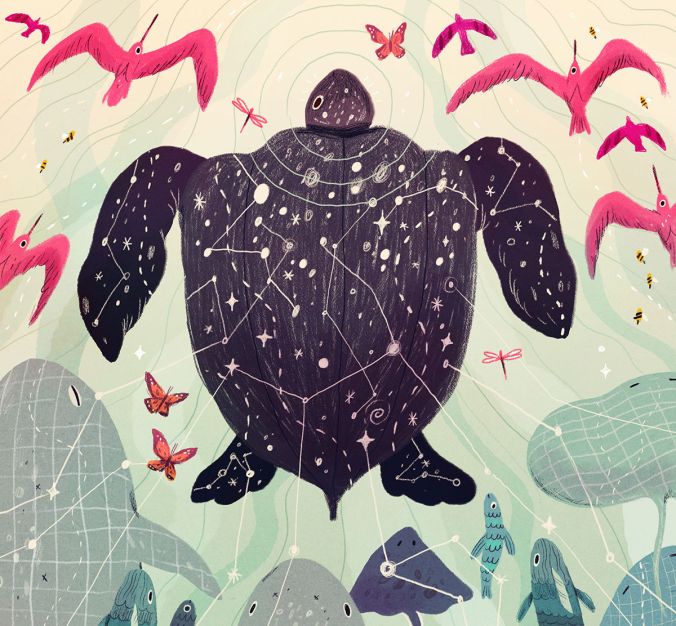
A huge variety of animals seem capable of reading Earth’s geomagnetic field. The question is how they do it. ILLUSTRATION BY NATALIE ANDREWSON
From the New Yorker website, the beginning of an answer to a question we ponder every so often:
HOW DO ANIMALS KEEP FROM GETTING LOST?
By M. R. O’Connor
Every three years, the Royal Institute of Navigation organizes a conference focussed solely on animals. This April, the event was held southwest of London, at Royal Holloway College, whose ornate Victorian-era campus has appeared in “Downton Abbey.” For several days, the world’s foremost animal-navigation researchers presented their data and findings in a small amphitheatre. Most of the talks dealt with magnetoreception—the ability to sense Earth’s weak but ever-present magnetic field—in organisms as varied as mice, salmon, pigeons, frogs, and cockroaches. This marked a change from previous years, Continue reading

Click the image above to go to the video on this new company’s page at Kickstarter, and then scroll down if you want to pre-order items to support the mission:
Eat your utensil and prevent waste at its source!
Bakeys is launching the world’s first edible cutlery line made of three flours: rice, wheat, and sorghum. Help us change the way we eat and think about waste!
And we understand how important it is to be able to provide delicious cutlery that can be eaten by anyone. We are already fully vegan, preservative free, trans fat free, dairy free and operate on principals of fair trade. We have put a focus on bringing up the following certifications within the following year: Continue reading
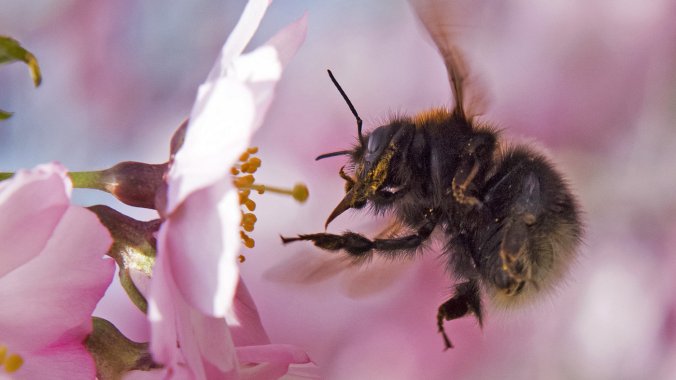
Scientists say bumblebees can sense flowers’ electric fields through the bees’ fuzzy hairs. Jens Meyer/AP
Thanks to National Public Radio (USA) for this small scale science lesson:
Bumblebees’ Little Hairs Can Sense Flowers’ Electric Fields
The fields bend the hairs and that generates a nerve signal, scientists say.
Flowers generate weak electric fields, and a new study shows that bumblebees can actually sense those electric fields using the tiny hairs on their fuzzy little bodies.
“The bumblebees can feel that hair bend and use that feeling to tell the difference between flowers,” says Gregory Sutton, a Royal Society University Research Fellow at the University of Bristol in the United Kingdom. Continue reading

Pudukkottai, Tamil Nadu
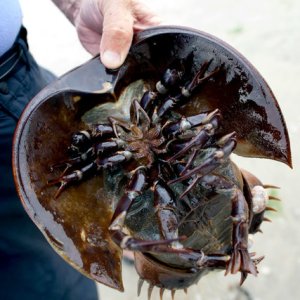
A horseshoe crab. Credit Brian Harkin for The New York Times
Thanks to a Nature essay in the New York Times, timed to be read over the Memorial Day weekend typically associated with the beginning of summer in the USA, a reminder of one of the joys of the season (at least on the Atlantic coast of the USA) just beginning:
 Logic, even if it seems to be missing much of the time, provides a set of rules by which the world can at least make more sense. It may not always help one rule the world, but it helps understand some of the rules of the world. Mr du Sautoy’s idea here is akin to the one we make, and link out to from time to time, about the value of liberal arts education for the sake of learning how to think and communicate clearly:
If I ruled the world: Marcus du Sautoy
Understand Euclid’s proof and ban people from saying “I’m bad at maths”
by Marcus du Sautoy
If I ruled the world, the first thing I would do is to make sure that everyone understood Euclid’s proof that there is an infinity of prime numbers. To some people that might seem like a strange suggestion, so let me explain. In itself, Euclid’s proof is not particularly useful for anything. But what it shows is the power of analytical thinking and the magic of mathematics. Continue reading
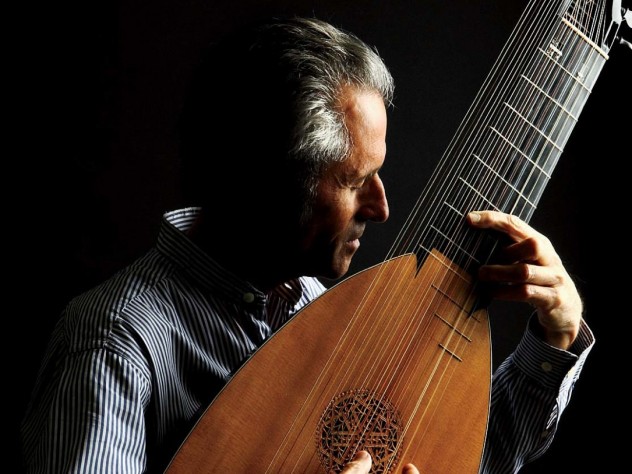
Hopkinson Smith playing the German theorbo built for him by Joel van Lennep. Photograph by Philippe Gontier/Courtesy of Hopkinson Smith
When a musician of this talent dedicates his life to mastery of instruments that keep an old tradition alive, we take notice. When he describes J.S. Bach as a recycler, we understand in a fresh context the value of this concept that we tend on these pages to relegate to the reduction of waste. Recycling is also about adaptation, evolution, improvement (thanks to Harvard Magazine):
HOPKINSON SMITH ’70 describes J.S. Bach as a musical ecologist. “He recycled so many of his own works,” Smith explains. “He never stopped trying to adapt what he’d written.” It was an accepted musical practice at the time, but one imagines the composer was driven at least in part by pragmatism: his posts in a number of German cities required him to produce new compositions at a fierce pace. Refashioning musical materials helped him keep up with those demands. “Even so,” Smith adds, “writing a cantata a week would not have been a manageable task for the rest of us mortals.” Continue reading

The Glen Canyon Dam, on the Arizona-Utah border, as seen in the documentary “DamNation.” The efficiency of the dam has dwindled. Credit Ben Knight/Patagonia via NYTimes
Dams are a recurring theme on this blog, probably due to their strong effect on their environment and on the people around them. Last week, Abraham Lustgarten, a writer on climate change, energy, and water, among other issues, wrote an op-ed in the New York Times considering the possibility of “Unplugging the Colorado River”:
WEDGED between Arizona and Utah, less than 20 miles upriver from the Grand Canyon, a soaring concrete wall nearly the height of two football fields blocks the flow of the Colorado River. There, at Glen Canyon Dam, the river is turned back on itself, drowning more than 200 miles of plasma-red gorges and replacing the Colorado’s free-spirited rapids with an immense lake of flat, still water called Lake Powell, the nation’s second-largest reserve.
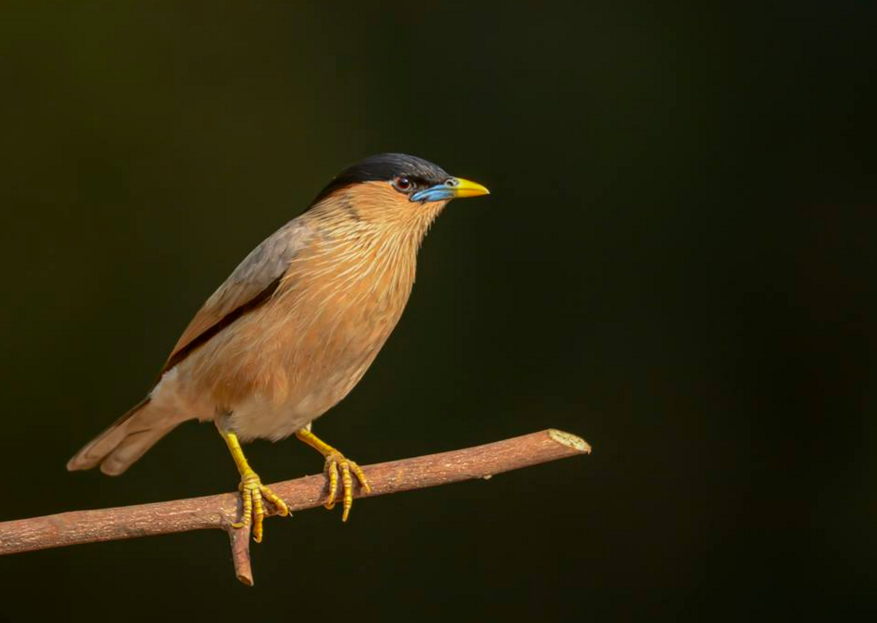
Masinagudi, Tamil Nadu
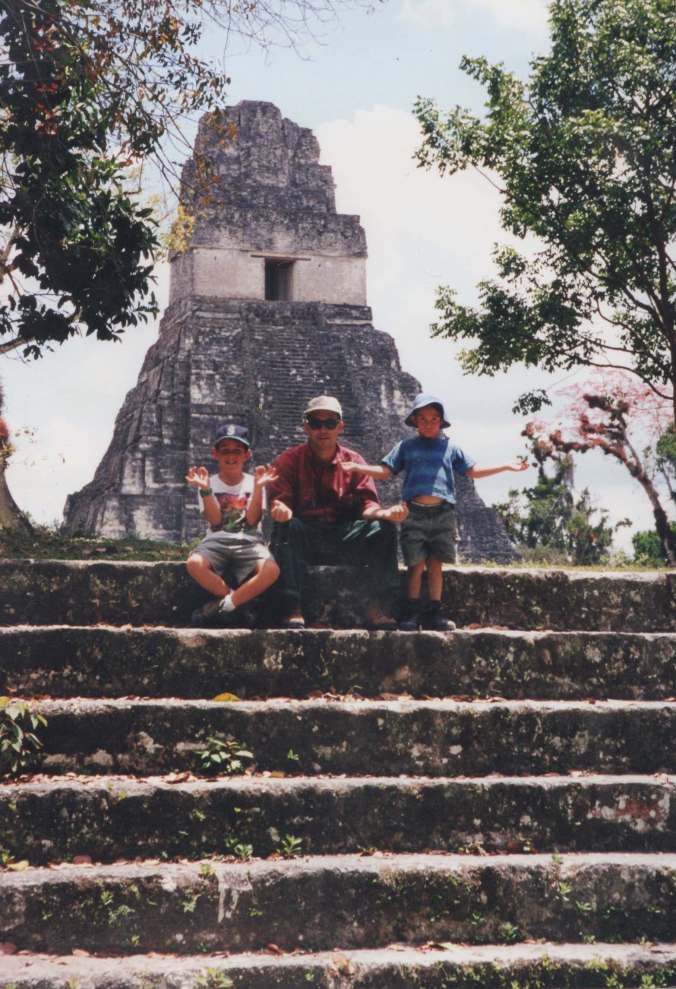
A few days ago I mentioned, in reference to my recent visit to Belize, an earlier visit to Tikal in Guatemala. In the photo above, taken in 1999, three future La Paz Group contributors (Seth Inman, me, and Milo Inman from left to right) were getting our “om” on in preparation to climb the stairs in the background.
Amie Inman, who took that photo, reminds me that she and I had been to Tikal earlier, without our two sons. On both occasions we had the kind of mystical experiences for which this location is known. We had climbed the temple in advance of sunrise, as recommended (no photos from that with us currently, so credit for the photo below goes to a fellow wordpress blogger; click the photo for attribution).

What we all remember about our visits to Tikal, and on a separate journey to Copan in Honduras we had the same sense, was how the archeologists and the relevant authorities in these particular national parks had done just the right amount of excavation. Some things were left to the imagination. Seth and Milo, in a conversation we overheard, said that Tikal was much better than Disney World, because it was real – it was like being Indian Jones. Our understanding of “real” was “unspoiled” in the sense that one could see plenty of uncovered evidence of Mayan culture, and also see that these artifacts of that culture eventually were swallowed by the jungle. Continue reading

The artist Terence Koh recently installed a single-occupancy “bee chapel” upstate, left; at right, the chapel has been reconstructed in a modified form at Andrew Edlin Gallery on the Bowery.Credit From left: Stewart Shining; Olya Vysotskaya
The New York Times has a story currently that would interest anyone aware of the crisis related to bees and other pollinators; it helps if you also see art as a worthy tool of engagement for addressing complex major challenges facing the planet, and humanity; have a read either way:
An Art World Provocateur Returns to New York With an Unexpected Subject: Bees
By
“Good afternoon,” the elusive artist Terence Koh said over the phone earlier this week. He’d called to discuss his new show, which opened at Andrew Edlin Gallery over the weekend. “I’m inside the bee chapel. I’m lying down and looking straight up at the ceiling. They’re really busy today because it’s sunny.”
The Beijing-born, Canadian-raised enfant terrible was once the poster boy of aughts excess — a decade ago, he gold-plated his own feces and sold them at Art Basel for about a half-million dollars; he also once, rather infamously, told T, “I am the Naomi Campbell of the art world.” But the past few years have brought a different turn: He discontinued his gallery representations and, in 2014, moved to a mountaintop in the Catskills. The relocation was widely construed as a ceremonial retirement of sorts, but Koh insists the opposite: “I never had any intention of quitting the art world, I just moved to a different part of the world,” he says. “It was something that happened naturally.” He has since lived peacefully in what he describes as a personal Eden dusted with goldenrod and apple trees. In the branches of one, he built a hut and called it a “bee chapel,” which would become the titular heart of his new exhibition. Continue reading
We’ve reviewed ecosystem services several times over the years, including payment for them, the potential for ecotourism as a service, and we’re glad to read that the idea is becoming popular again with the new Paris Agreement. Kelly Barnett reports for GreenBiz, starting with coverage on the Adaptation Futures conference in Rotterdam:
In just three days here, roughly 40 presentations focused on the subject of “ecosystems and ecosystem based-adaptation,” and they focused on everything from the restoration of salt marshes that protect coastal communities from rising tides to the protection of Brazil’s Atlantic Forest, which supports a massive agricultural economy.
The event comes just two weeks after Earth Day, when 175 countries signed the Paris Agreement to combat climate change — in part by “ensuring the integrity of all ecosystems, including oceans, and the protection of biodiversity, recognized by some cultures as Mother Earth.”

Tiruchirappalli, Tamil Nadu

Bleached coral in the Great Barrier Reef. Credit Agence France-Presse/XL Catlin Seaview Survey
Today’s editorial, from his current perch in Australia, is typical of the most reasoned editorialist currently writing for an English language major daily that we know of; so, worth a read:
Coral vs. Coal
Roger Cohen
MELBOURNE, Australia — Tim Flannery, a scientist and environmentalist who was named Australian of the Year in 2007, lost his job in 2013. The right-wing government of then-Prime Minister Tony Abbott shut down the Climate Commission that Flannery headed in a peremptory move designed to demonstrate its contempt for climate change. The commission had been established two years earlier to provide “authoritative information” to the Australian public. Continue reading
 Organikos