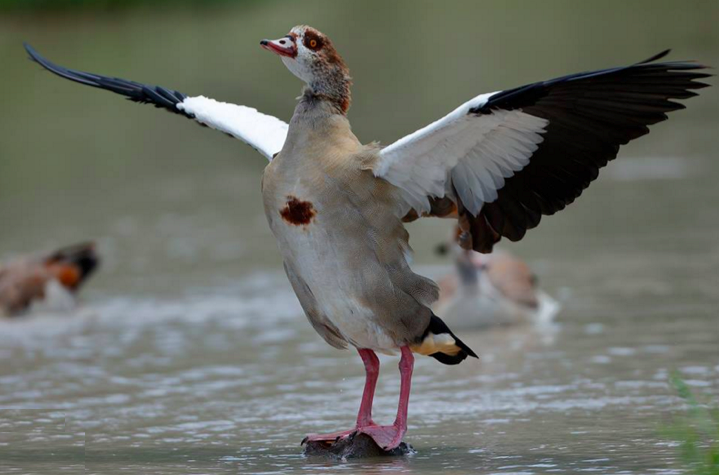
Ngorongoro Crater, Tanzania
Ngorongoro Crater, Tanzania

Climbers, including a master instructor, made their way up Grandfather, an 800-year-old, 200-foot-tall redwood near Los Gatos, Calif., last month. Credit Steve Lillegren
A topic we have been coming back to on a regular basis for years–the value of biodiversity in general (we are not averse to stating the obvious in these funny times we live in) and in particular the as-yet still to be explored forest treetops–appears in the Science section of this week’s New York Times. Apart from reminding us of a tree-inclined scientific friend (Meg, of treetop science fame, we have just recently learned you are now out in the vicinity of these redwoods, and so we shout this one out to you!), and reminding us of one of the great long-form pieces of journalism on the same topic, it is worth a read:
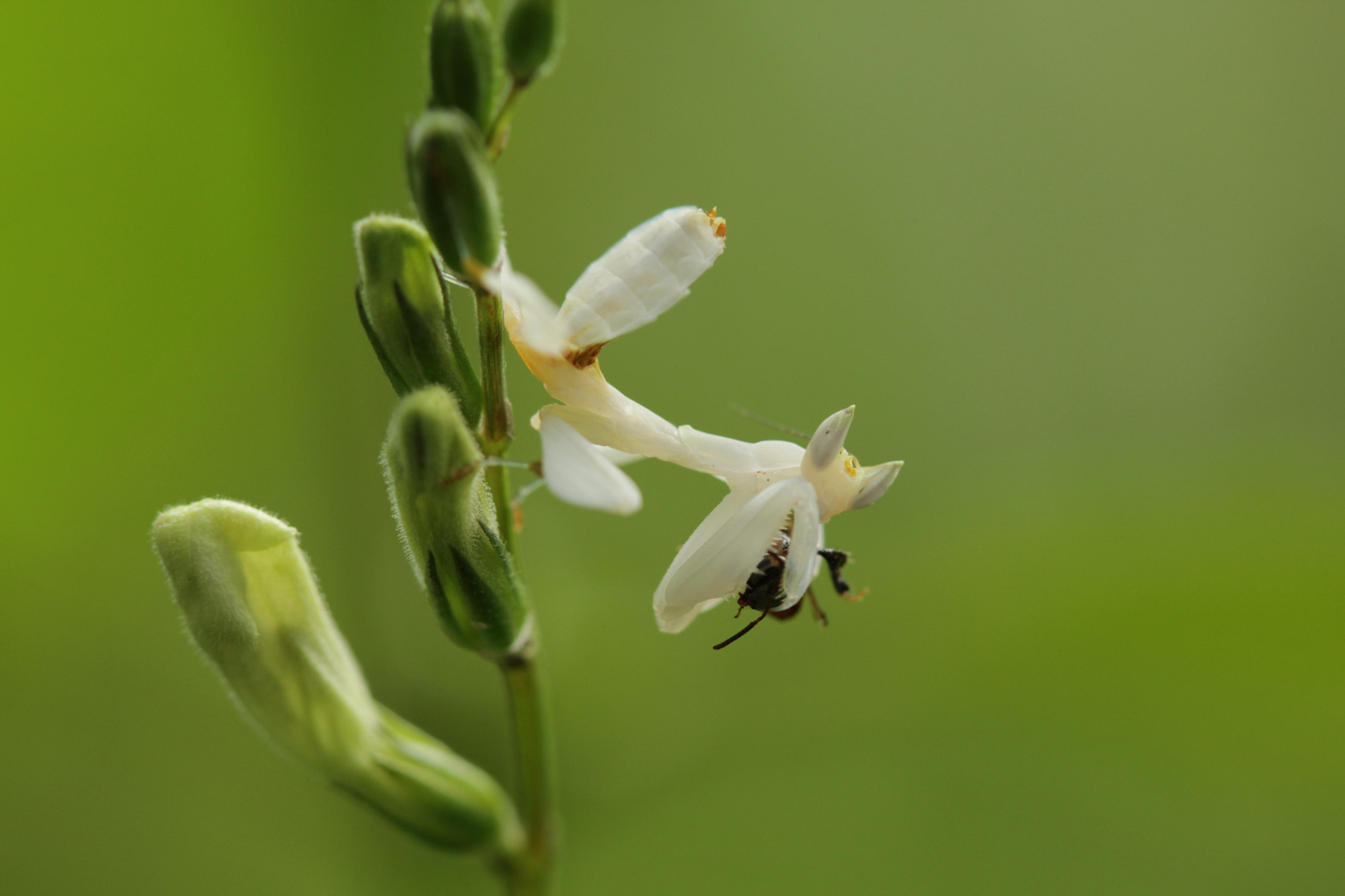
A female juvenile orchid mantis chows down. Photo courtesy of James O’Hanlon via Science Friday
A few days ago we shared about the clade of flowers known as orchids, and how people in the UK can become citizen scientists regarding them. Now, Science Friday writer Julie Liebach (who also edits the site’s content online) explores the research of an entomologist studying a type of “praying” mantis that, as a juvenile, mimics the general feeling of the average orchid – but not a particular species or genus of the flowers, interestingly enough:
They’re predominantly white with pink or yellow accents, similar to some orchids and other flowers, and their four hind legs are lobed, like petals. But if you search for an exact floral counterpart, as behavioral ecologist James O’Hanlon did, you probably won’t find one. “I spent forever looking for a flower that they look just like,” he says, to no avail.
As it turns out, rather than mimicking one floral species, the insect instead may embody a “generic or an average type of flower” in order to attract bees and other pollinating insects as prey.

Chopta, Uttarakhand

After a long day of fishing, the lionfish are fried and served up with rice and beans. Lindsay Fendt/The Tico Times
We’re always keeping our eye out for updates on the lionfish situation, and that’s why we’re happy to see that some more efforts are being made in Costa Rica to control a problem that is pretty out of control. More from Lindsay Fendt from the Tico Times:
Local efforts to curb the encroachment of invasive species in Costa Rica’s Caribbean got a big boost this week with the formation of a National Commission for the Management and Control of Lionfish. The new commission will provide government support for Caribbean fishing associations that are already actively combatting the proliferation of lionfish (Pterois).
Introduced to the Atlantic Ocean from the Indo-Pacific sometime in the 1980s, the lionfish has been wreaking havoc on Caribbean fish populations. The fish can gobble up two smaller fish every minute and lay up to 30,000 eggs each year, depleting catches for fishermen and damaging the ecosystem. Though not the hardest hit country in the region, Costa Rica has approximately 90 lionfish per hectare and fishermen have reported an 80-87 percent decline in their catches since 2009 when the fish began to appear off the country’s coast.

An engineer measuring a K-Cup prototype at a Keurig Green Mountain lab in Burlington, Mass. Tony Luong for The New York Times
Way back when, early last year, I thought for sure this company was going to respond seriously to the challenge posed by the fun-yet-serious viral campaign highlighting its environmental atrocities. Many people I know and love use these machines or machines like them. These friends are generally serious devotees of the capsule machines due to their convenience.
Every person every time, once they learn about how environmentally irresponsible the capsule machines are (more specifically, the capsules themselves are the problem), seems genuinely horrified (or expresses some emotion akin to the one generated by the viral video). But, how many have given up the K-convenience? Hmmm. The notable quote in the following story implies that because demand for this convenience is growing, there is not much likelihood of abandoning the technology–expect continued tinkering for the time being (sounds like fiddling while Rome burned):

Screenshot of the first hour of survival mode in Minecraft
In this past week’s edition, the New York Times Magazine published a very interesting story by Clive Thompson about the popular video game Minecraft, which he argues is becoming an educational tool in a way, particularly in the arena of coding and problem-solving. I’ve played the game myself for a number of hours (probably somewhere between 50-150, which among the “Minecraft generation” would be considered pennies). I can affirm that this Swedish blockbuster–the game is built on cubes of different materials that you can break down and build up–is addictive, a creative outlet, and a fun way to spend time with friends.
As Thompson states, the STEM educational movement, where science, technology, engineering, and math are especially encouraged in the US system to increase competitiveness in students, can benefit from some of the habits and skills that Minecraft helps develop for those interested enough. The article is worth reading if you have kids who might play, enjoy playing yourself, or are interested in checking the game out:
Jordan wanted to build an unpredictable trap.
An 11-year-old in dark horn-rimmed glasses, Jordan is a devotee of Minecraft, the computer game in which you make things out of virtual blocks, from dizzying towers to entire cities.
Pudukkottai, Tamil Nadu
On August 25th this year, the United States National Park Service will turn 100 years old, and this week, from April 16th to the 24th, it’s National Park Week, when the US celebrates its natural and cultural heritage with special events and free admission to any national park.

Musician and naturalist Bernie Krause has spent 40 years recording over 15,000 species in many of the world’s pristine habitats. Photograph: Courtesy of Hachette Book Group
For many of us, part of the joy of a walk in the woods is the range of senses engaged. The wind rustling through the trees is enhanced by the diversity of the creatures that call that ecosystem home. But with habitat loss due to either changing climate or other human impact. many of the sounds heard for millennia are falling silent.
Bernie Krause has spent his life archiving these sounds. They’re worth more than just a listen. They’re a call to action.
When musician and naturalist Bernie Krause drops his microphones into the pristine coral reef waters of Fiji, he picks up a raucous mix of sighs, beats, glissandos, cries, groans, tones, grunts, beats and clicks.
The water pulsates with the sound of creatures vying for acoustic bandwidth. He hears crustaceans, parrot fish, anemones, wrasses, sharks, shrimps, puffers and surgeonfish. Some gnash their teeth, others use their bladders or tails to make sound. Sea anemones grunt and belch. Every creature on the reef makes its own sound.
But half a mile away, where the same reef is badly damaged, he can only pick up the sound of waves and a few snapping shrimp. It is, he says, the desolate sound of extinction. Continue reading

Tortuguero National Park, Costa Rica

Click above to watch the video an click here for the written story:
The wild, romantic side of Britain
The Lake District is now considered a beautiful part of the country – but it was once an unloved wilderness. Alastair Sooke describes the moment this changed. Continue reading
We’ve written about dung before, when it came to beetles rolling it for the poop’s role (ha) in their life cycle, and when it’s been used for recycled paper, and even household cooking gas derived from biodigested manure. Now, we’re learning via Audubon Magazine about another use for the dried doo, and we figured that would be a good time to share about another interesting excremental story from the natural world, which happens to be the fastest moving organism, in a sense.
Both the Black Lark, a bird species found in Europe and western Asia, and the genus of fungi called Pilobolus, more widely distributed around the world, have to deal with something called the Zone of Repugnance when it comes to dung. Although the ornithologists in the Audubon article aren’t quoted using this phrase, it is accepted in mycologist parlance for those who study livestock excrement or something related to it: animals will avoid eating grass or greens in an area where fecal matter is present. Around every pile of poop is a perimeter that the grazers try to not chew on. Black Larks take advantage of that fact to build their nests in no-step zones, and Pilobolus need to shoot their spores behind enemy lines. Matt Soniak, for Audubon:

Plastic bottle cutter by Pavel & Ian, via Kickstarter
We’d never thought of bottles being used in this fashion, but from the video on this Kickstarter project by two French guys, it looks like a pretty cool idea: turn bottles into plastic rope! Any way to reuse or recycle is a great thing in our book. From Pavel & Ian:
The absolutely astonishing amount of plastic bottles that everyone uses and throws into the garbage can every day is truly impressive. This represents an economic waste, since the plastic of bottles is a commodity that is worth money and can be reused. Also, from an ecological perspective, this poses several problems. Even when sent for recycling, the volume of plastic bottles makes it challenging to transport and accommodate them efficiently.
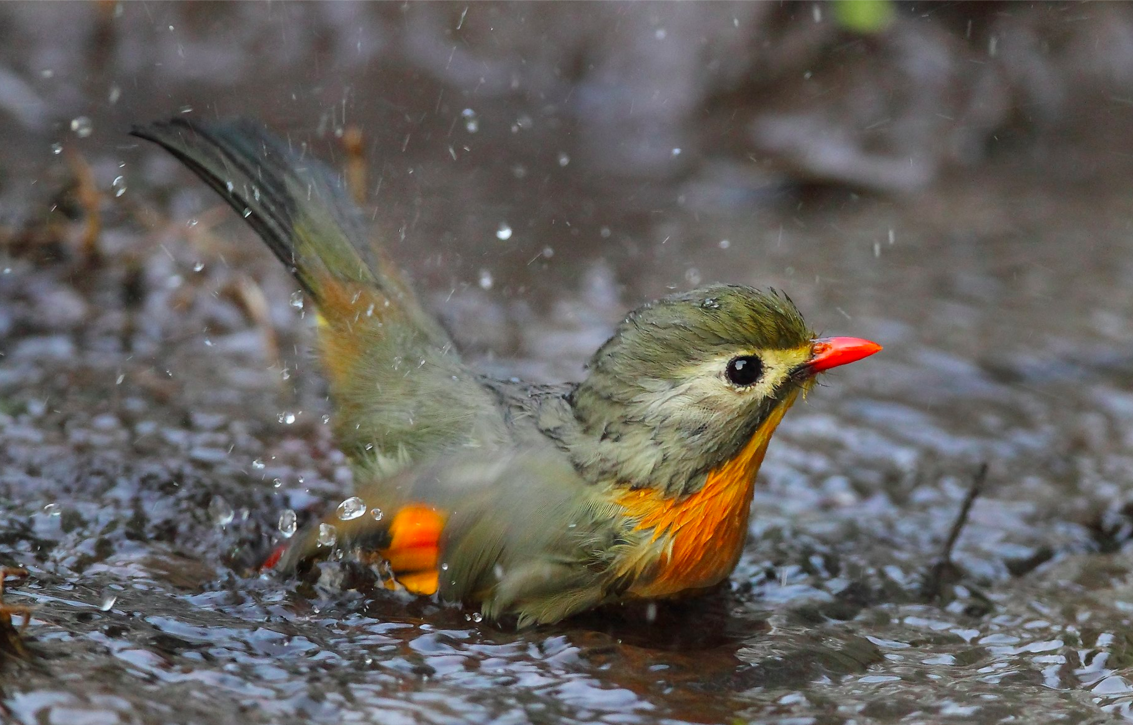
Sattal, Uttarakhand
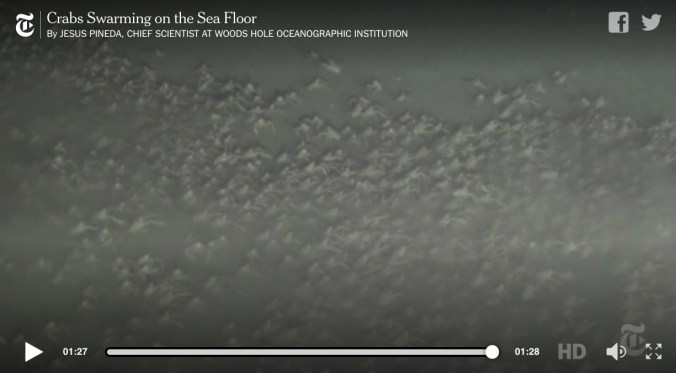
Thousands of red crabs swarmed the ocean floor off the coast of Panama. By JESUS PINEDA, CHIEF SCIENTIST AT WOODS HOLE OCEANOGRAPHIC INSTITUTION on Publish Date April 14, 2016. Photo by Jesus G. Pineda/Woods Hole Oceanographic Institution.
Watch the video above as an introduction to a fascinating story from the Science section of the New York Times:
Uncovering a Deep-Sea Swarm of Zombie Crabs
The team stumbled upon the horror movie moment last April while exploring the aptly named Hannibal Bank Seamount, an underwater mountain home to a plethora of sea life. Continue reading

Burnt orchid (Neotinea ustulata) at Mount Caburn. Photo © Keith Wilson / Flickr through a Creative Commons license, via Cool Green Science for TNC
We’re always learning about new groups of organisms or cultural/scientific projects that are receiving more attention from groups welcoming citizen-provided data to promote increased study and focused conservation efforts: lichens, birds, trees, reptiles and amphibians, pollinators, birds, fish, and a number of Internet-based projects on stars and literature, including birds. In the United Kingdom (why not Costa Rica?), there’s a movement to document the strange flowers that make up the orchid family. Read our post about the same project last year, or check out what Lisa Feldkamp writes about Orchid Observer for the TNC citizen science blog this week:
Frail, exotic, delicate, alluring; orchids call to mind stories of romance, intrigue and obsession. Indeed from the time when “orchid fever” first swept Victorian England people have been driven to steal and even risk their lives in the quest for these gorgeous plants.
Orchids are also notoriously difficult to grow. Though modern technology and growing techniques have made it easier to have an orchid in your home, wild orchids are often adapted to specific climactic requirements and depend on symbiotic relationships to survive.

White rhinos in South Africa. Photo © Michael Jansen / Flickr via Cool Green Science
From our counterparts at TNC’s blog Cool Green Science comes a second post on the wacky strategies sometimes implemented to save endangered wildlife species. Poisoning rhino horns so people can’t use them for so-called medicine, treating bats for fungus with banana bacteria, killing invasive snakes with acetominophen-filled dead mice thrown from helicopters, the list goes on. Justine Hausheer writes:
Consumers of illegal rhino horn products might be in for a bit of a nasty gastrointestinal shock. In an effort to protect their population of rhinos from poachers, the South Africa’s Sabi Sand Game Reserve is injecting parasiticides and pink dye into their rhinos’ horns. The chemical cocktail isn’t lethal (to humans or the rhinos) but it will send anyone that ingests powdered horn racing for the nearest restroom. Reserve staff have already treated more than 100 rhinos and put up sign warning poachers of the treatment.

Little Rann of Kutch, Gujurat

Aerial night photograph by Reuben Wu, via ThisIsColossal
Photographer Reuben Wu has been practicing a new form of his trade using drones–which many people are, nowadays, but none that we know of so far have used this recent technology to create dramatic scenes at night with lighting from above. On his website, Wu writes of this project, titled Lux Noxtis, that it is:
a series of photographs depicting landscapes of North America within the framework of traditional landscape photography but influenced by ideas of planetary exploration,19th century sublime romantic painting, and science fiction.
We are overwhelmed everyday by beautiful images of the familiar. I imagine these scenes transformed into undiscovered landscapes which renew our perceptions of our world.
 Organikos