
Jaipur, Rajasthan
Jaipur, Rajasthan

NEW VENTURE: Deniston Mariano Dutra and his son Matheus Correia Dutra harvest cacao seeds. After giving up on cattle, the family replanted their farm with these indigenous trees. © Kevin Arnold via TNC
We care deeply about Amazonia, and Brazil is the country with the most deforestation in the river region, specifically from cattle ranching. But good news is coming from The Nature Conservancy in the April/May issue, where, as the article’s subtitle reads, “After decades of turning forests into pastures and fields, Brazilian landowners have begun reversing the trend.” Julian Smith reports for the TNC Magazine:
Lazir Soares de Castro stands amid white and gray Nelore cattle on his ranch in São Félix do Xingu, a remote and sprawling county on Brazil’s northeastern Amazon frontier. Beyond a wooden fence, high grass and scrub brush fade into sporadic trees in the distance.
Still vital at 70, Soares describes how different this area looked when he arrived in 1984, when it was all virgin rainforest. “It was the poorest area. There was no electricity, no telephone, no TV, no roads, nothing.” The military dictatorship then running the country was encouraging settlers to occupy the Amazon in the name of national security. “There was no organized environmental policy,” Soares says.

The sand hills of Alberta © Ken Ilgunas via NYTimes
We’d never given this issue much thought, but the idea of private property remaining accessible to others who will act responsibly as passersby is an interesting one. If nothing is damaged and the goal is simply to get from one place to the other, or enjoy nature without borders, then why not? Ken Ilgunas writes an opinion editorial for the Sunday edition of the New York Times:
A COUPLE of years ago, I trespassed across America. I’d set out to hike the proposed route of the Keystone XL pipeline, which had been planned to stretch over a thousand miles over the Great Plains, from Alberta, Canada, to the Gulf Coast. To walk the pipe’s route, roads wouldn’t do. I’d have to cross fields, hop barbed-wire fences and camp in cow pastures — much of it on private property.
I’d figured that walking across the heartland would probably be unlawful, unprecedented and a little bit crazy. We Americans, after all, are forbidden from entering most of our private lands. But in some European countries, walking almost wherever you want is not only ordinary but perfectly acceptable.
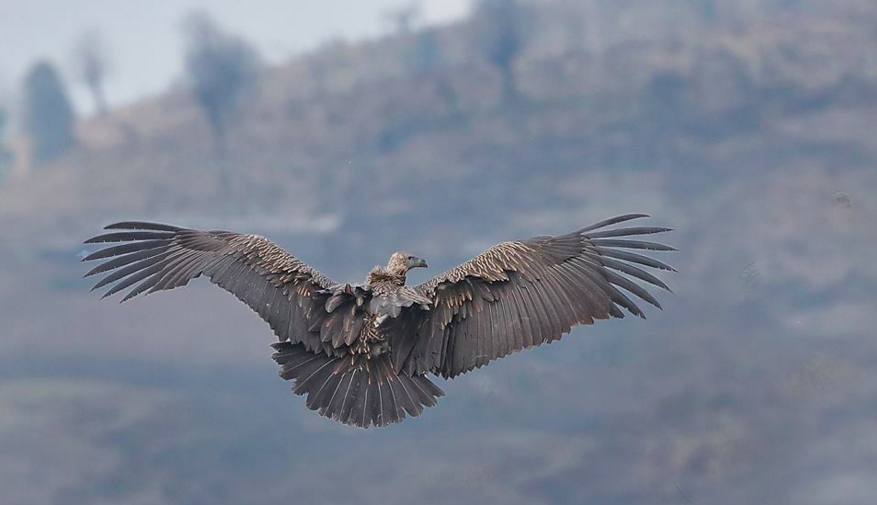
Tumling, Nepal

Vincent Lai with the Treo he rescued. “A phone can last for a very, very long time,” he said. CreditNicole Bengiveno/The New York Times
No one on our team is exempt from the temptation to have the latest, greatest whatever. But we have gotten into the habit of reminding each other it is not always necessary. Frequently not. Almost never, actually. We never tire of sharing, and hope you never tire of reading, new stories about re-use, recycle and up-cycle options in our every day lives:
Choosing to Skip the Upgrade and Care for the Gadget You’ve Got
By
Vincent Lai was working at a recycling facility in New York and sorting through a bin of used cellphones a few years ago when he dug up a Palm Treo, a smartphone that was discontinued last decade.
Mr. Lai, 49, tested the Treo and found it still worked. So he took the device home and made it his everyday mobile companion, much as one would adopt an abandoned animal on its way to being euthanized. Continue reading
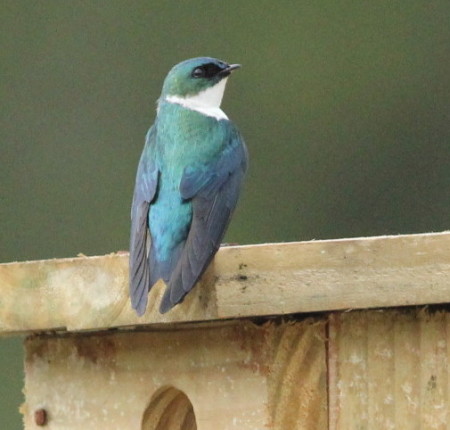
Male Hispaniolan Golden Swallow perched over-top an artificial nest-box in Parque Valle Nuevo, Dominican Republic; July 2014.
With a title like that, I’m hoping that many of you instinctively hucked your laptops across the room, sprinted out to the barn and started hitching your pride-and-joy appaloosa to the covered wagon your grandpappy gave to you as a belated wedding gift back in the summer of ‘69. Just don’t forget the “caulk the wagon and float” option if you’re coming from the mainland.
If you decide to make the journey, I suggest making landfall on the beautiful island of Hispaniola (gold deposits have all but dried up in Jamaica – but more on that later). Trade in your bikini and flip-flops for some long pants and hiking boots, because what you came for can only be reliably found high up in the mountains. Not that I like to give away too much insider advice, but if I were you, I’d keep heading up until you’ve reached the Hispaniolan pine forests – the highest altitude forest type you’ll find on the island. Find a grassy clearing, sit down, and wait, because at this point, the gold is going to come to you! With mighty wings (~11cm long each), fearsome talons (actually you’d have to strain to even notice the legs on this bird), and a relentless hunger for meat (prey doesn’t get much bigger than an 8mm march fly), watch out as the infamous Golden Swallow comes tearing over the nearest hillside radiating its majestic golden sheen across the lands…wait…wait…I can’t do this anymore. It’s a tiny bird that can’t peck to save its life, and unless the light of a passing-by solar flare manages to reflect off the swallow’s dorsal plumage at a perfect 47.86o angle, the bird is green!

Preuss’s Red Colobus, one of the 25 most endangered primates in the world
We hate poaching, so any novel method of preventing it is good news in our opinion. From Claire Salisbury for Mongabay’s Great Apes series, on a new project to particularly protect the Preuss’s Red Colobus, a severely endangered primate in Africa:
Cameroon’s Korup National Park is home to elephants, chimpanzees, red colobus monkeys, drill, and a myriad of noisy species, whose squawks, squeals and howls fill the forest air. For more than two years, twelve acoustic monitors were deployed there and recorded every sound covering a 54 square kilometer (21 square mile) area of protected tropical forest.
They were tuned to listen around the clock for just one sound: gunshots.
“Our ultimate goal is to improve the effectiveness of anti-poaching patrols in African tropical forest protected areas,” Joshua Linder, one of the lead scientists working on the acoustic monitoring project, told Mongabay.
Bushmeat is a major source of protein in Central Africa, with 4.5 million tons extracted from the Congo Basin each year. Taking bushmeat itself is not always illegal, and it can be a vital source of protein for the poor and a valued commodity for the rich. But hunting endangered species, especially within protected areas, is against the law. It can pose a real threat to the survival of animal populations, and particularly to rare species.

Yala National Park, Sri Lanka

Microcebus ganzhorni is named in honor of the Hamburg ecologist Prof. Jörg Ganzhorn who has worked on ecology and conservation in Madagascar for more than thirty years. Photo by G. Donati via Mongabay.
Madagascar is a place of wonder and near-fantastical wildlife, though sadly many of their ecosystems are at risk, as referenced in this UNESCO World Heritage Site post. So it’s no surprise to read that new species are being found there. Mike Garowecki reports for Mongabay:
There are now 24 known species of mouse lemur, all of them found in Madagascar.
Scientists with the German Primate Center (DPZ), the University of Kentucky, the American Duke Lemur Center, and Madagascar’s Université d’Antananarivo have found three new species of mouse lemurs that live in the South and East of Madagascar. They described the new species — Microcebus boraha, Microcebus ganzhorni, and Microcebus manitatra — in the journal Molecular Ecology.
Though their name and appearance might suggest that they are rodents, mouse lemurs are in fact primates. What’s more, all mouse lemur species look extremely similar: they are small, nocturnal animals with brown fur and large eyes. It was only through the use of advanced methods that allow for more precise measurements of genetic differences that the team of researchers was able to establish the three new species.
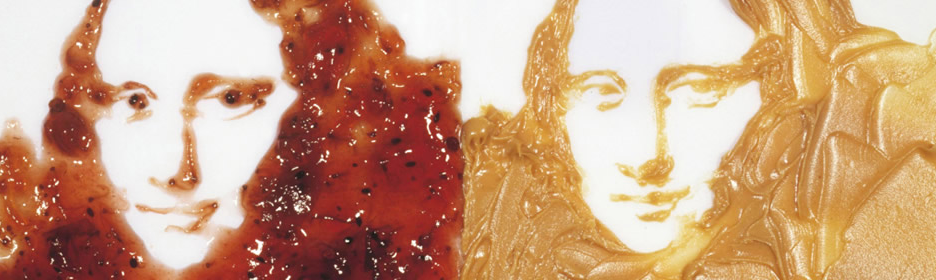
Vik Muniz Double Mona Lisa (Peanut Butter and Jelly), from the After Warhol series, 1999 Chromogenic print Galerie Xippas, Paris Art © Vik Muniz/Licensed by VAGA, New York, NY
It’s easy to be a fan of Vik Muniz’s work on so many levels: his visual wit redefining materials as medium for art; his entrepreneurial use of art to bring attention to disenfranchised communities; the collaborative spirit clearly evident in so many of his works… I, personally, love his cheeky reproductions of the world’s iconic artworks, rendered in the most banal of mediums.
A mid-career retrospective, currently mounted at the High Museum of Art Atlanta covers the full range of his work from grand to microscopic scale, using diverse media—including food, dust, string, sugar, magazine clippings, and literal junk.
On view through August 21, 2016.
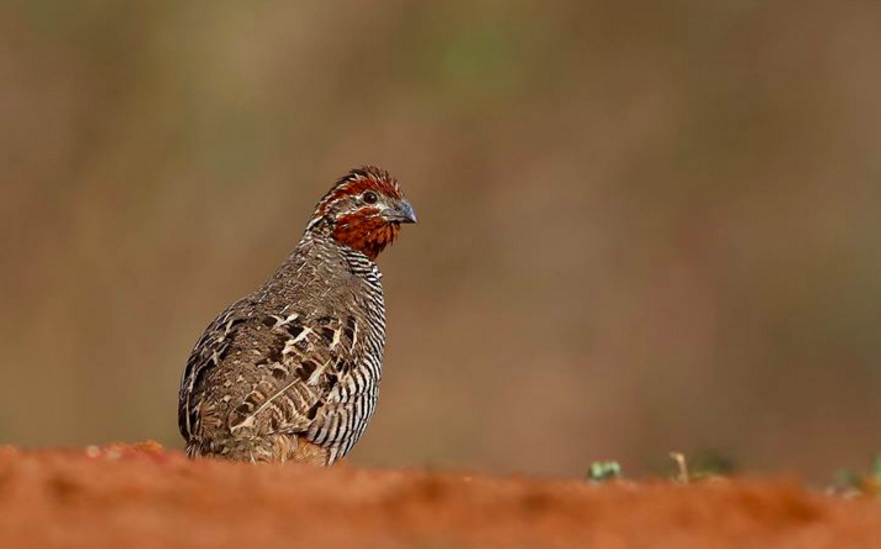
Bangalore, Karnataka

Bird of the Day 9/19/15: Swallow-tailed Kite (Reserva El Copal, Costa Rica)
I’ve had the fortune of seeing this long-rumped raptor outside of the United States, where they are now considered rare despite their wide range throughout the Caribbean and Central and South America. And although the population did decrease in the last several decades, the IUCN does now list the species as having an “increasing” population trend. This interesting article in The Nature Conservancy, however, does raise concern over habitat loss and the species’ vulnerability. Ginger Strand reports:
Maria Whitehead yanks her feet out of the water as something crashes into Bull Creek next to the boat. Seconds later, a 10-foot-long alligator surfaces a few yards away. As the prehistoric reptile glides off, leaving a sinuous wake in the tannin-brown river, Whitehead casually retrieves her binoculars and goes back to watching a nest of swallow-tailed kites near the top of a soaring pine.
A project director for The Nature Conservancy in the South Carolina Lowcountry, Whitehead seems unfazed by nearly losing a toe on the job. So does Craig Sasser, manager of the Waccamaw National Wildlife Refuge. Wading into primeval cypress swamps, scaling 100-foot pine trees, paddling up tidal rivers through clouds of insects in triple digit heat: These are all part of researching swallow-tailed kites, a spectacular but poorly understood raptor.

Update: Check out The Guardian‘s coverage of a new San Francisco law requiring solar panels on new buildings for 2017.
We’re always happy to see photovoltaics in the news, whether they’re installed in old golf courses, floating on rafts, powering an airport in Kerala, or remotely charging your phone via adaptor. So we’re not surprised to see that since 2008, US rooftop solar potential has doubled. From Conservation Magazine:
To take advantage of the sun’s energy to satisfy our ever-increasing need for electricity, Americans will have to take a fresh look at their roofs. A report by the National Renewable Energy Laboratory shows that if all suitable roof areas in the United States were plastered with solar panels, they would generate about 1,118 gigawatts of solar power. That is 40% of the power that Americans consume every year.
And that isn’t the half of it. The study only estimates the solar power potential of existing, suitable rooftops, and does not look at the immense potential of ground-mounted photovoltaics, said NREL senior energy analyst Robert Margolis in a press release. “Actual generation from PV in urban areas could exceed these estimates by installing systems on less suitable roof space, by mounting PV on canopies over open spaces such as parking lots, or by integrating PV into building facades. Further, the results are sensitive to assumptions about module performance, which are expected to continue improving over time.”

Carara National Park, Costa Rica

A Google self-driving car. Photo © Grendelkhan / Wikimedia through a Creative Commons license
From Cool Green Science:
Why Driverless Cars May Make Cities Sprawl Even More

@kellydelay captures a tornado-warmed supercell outside of Courtney, Oklahoma. Photograph: Kelly Delay
This story in the Guardian’s Environment section is told mostly with pictures, and is worth a minute’s review to consider how much more value we might extract from social media:
Sometimes, the best way to understand what’s happening on the other side of the world is to see it for yourself. Here are some of our favorite Instagrammers who focus on capturing our changing planet
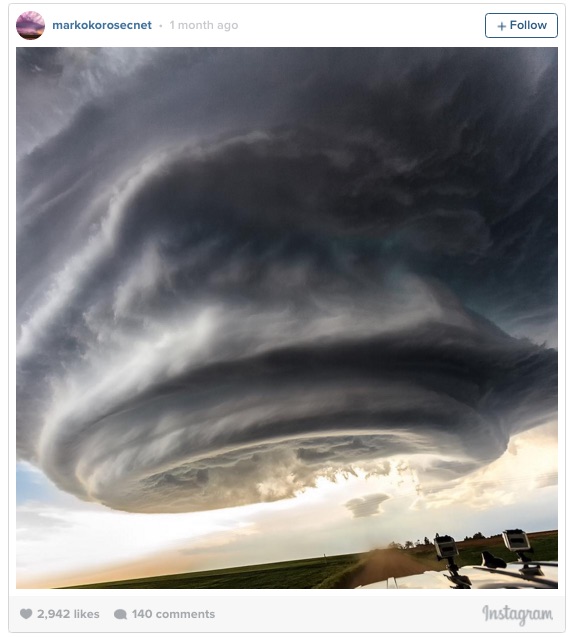
A storm chaser from Slovenia, Marko Korosec (@markokorosecnet) has been researching severe weather events through forecasting, chasing and analysis since 2000. He counts the above capture of a “spaceship” supercell storm in Colorado among his most memorable chases. It was like “an UFO landing on Earth”, he writes.
Read/view the whole article here.

We’ve reported on the positive alterations of currency before, when it was the British five-pound note that was becoming plastic instead of plant fiber. That was good news in terms of ecological footprint, because the plastic notes should live longer and thereby save materials in the long run. In the case of the US change with the five-, ten-, and twenty-dollar bills, the impact is less on the environment and more in the social arena: women would feature on paper currency for the first time in modern history. From the New York Times:
WASHINGTON — Treasury Secretary Jacob J. Lew on Wednesday announced the most sweeping and historically symbolic makeover of American currency in a century, proposing to replace the slaveholding Andrew Jackson on the $20 bill with Harriet Tubman, the former slave and abolitionist, and to add women and civil rights leaders to the $5 and $10 notes.
Mr. Lew may have reneged on a commitment he made last year to make a woman the face of the $10 bill, opting instead to keep Alexander Hamilton, to the delight of a fan base swollen with enthusiasm over a Broadway rap musical named after and based on the life of the first Treasury secretary.
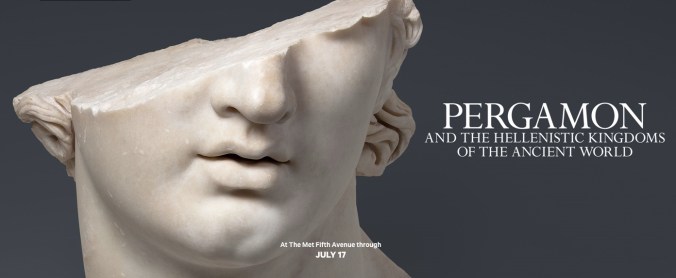
History can be dry, except when in the hands of masterful story-tellers. Which reminds us of James, and other scholars who have graced these pages in recent years with practical stories of the past linked to our present day lives. The value of this Pergamon exhibition (click the image above to go to the museum’s description of the exhibition) catches our attention because this review, which exemplifies the sort of interpretation that allows history to jump into our present tense:
…This tidal wave of wealth sloshed all around the eastern Mediterranean during the three centuries that followed, the era known today as the Hellenistic Age. It soaked the shores of the half-dozen new kingdoms carved out of Alexander’s conquests…
Read the description of this exhibition below, in the words of the Met’s curators, to get a renewed sense of the important role museums play in our civic lives.
The conquests of Alexander the Great transformed the ancient world, making trade and cultural exchange possible across great distances. Alexander’s retinue of court artists and extensive artistic patronage provided a model for his successors, the Hellenistic kings, who came to rule over much of his empire. For the first time in the United States, a major international loan exhibition will focus on the astonishing wealth, outstanding artistry, and technical achievements of the Hellenistic period—the three centuries between Alexander’s death, in 323 B.C., and the establishment of the Roman Empire, in the first century B.C. Continue reading
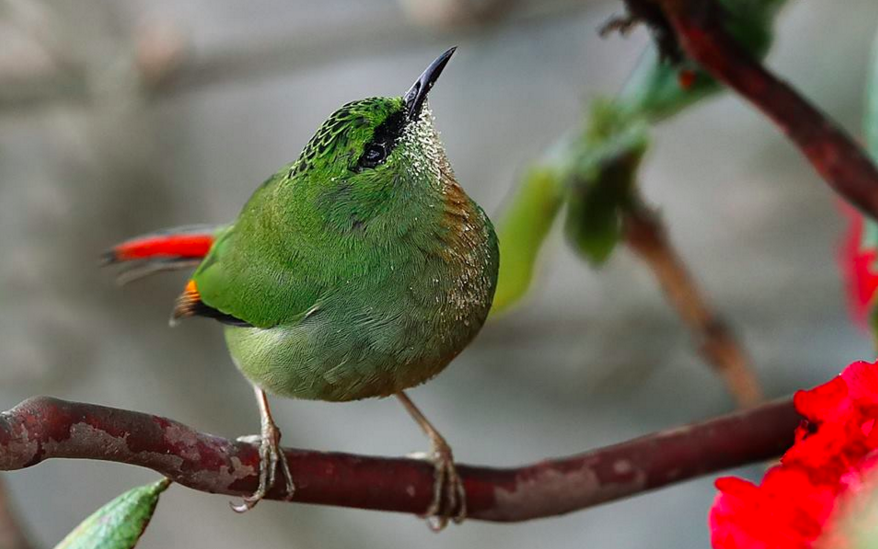
Tumling, Nepal
Tradition is like a collective memory, where craft and cultivation intermingle, inspired with stories of the land, its history and its culture.
Anoodha from Curiouser says “A stay at Xandari Pearl, is experiencing a slice of life, of the beautiful coastal town of Marari.”
Yes indeed.
 Organikos