Enzyme Superheros

It sounds like the stuff of science fiction – but imagine the impact of a plastic eating bacterium! Thanks to Scientific American for posting this story.

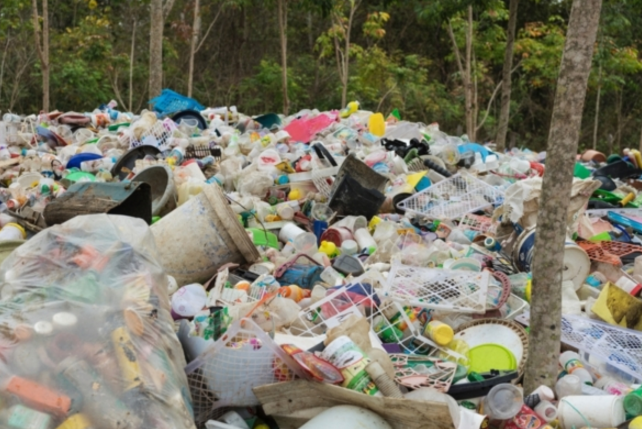
A tiny microbe one day could devour the millions of metric tons of polyethylene terephthalate, or PET, that pile up in landfills each year. Researchers in Japan have discovered the world’s first PET-eating bacterium, a critter that uses PET as its major carbon and energy source.

Each year, plastic manufacturers pump out more than 45 million metric tons of PET to make water bottles, salad domes, peanut butter jars, and other products—all of which sport a stamp with the number one inside a recycle symbol.

PET is the most recycled plastic in the U.S., according to PETRA, the PET Resin Association. Continue reading

Breathe Deep

Photograph by Robert Dash

Regular visitors to this site already know we love hearing what Robert Krulwich has to say: always fascinating, informative and funny.

Kudos to NatGeo for giving Curiously Krulwich a platform!

We have 3.1 trillion trees on our planet—that’s 422 trees per person. If we count all the leaves on all those trees and take a look at what they do collectively to the air around us, the effect—and I do not exaggerate—is stunning. I’ve got a video from NASA. When you see it, I think your jaw is going to drop—just a little. Continue reading

Volcán Barva

IMG_8066_zpsuftku7jl

The lagoon in the crater of Barva Volcano

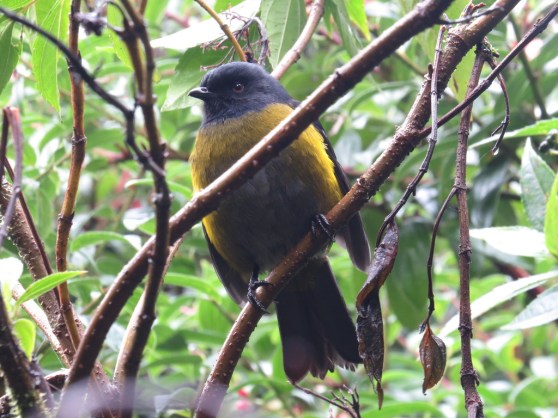
This weekend, I visited Braulio Carrillo National Park for the second time, but at a different sector: Barva Volcano. I’d been to the Quebrada González area further east in July of last year, where the ecosystem is more tropical rainforest than the high-altitude cloud forest of a volcano. The Quebrada González eBird hotspot has 382 species reported in 288 checklists at the time of writing this post; in stark contrast, the Volcán Barva hotspot on eBird has 82 species in only 8 checklists, including my own contribution despite arriving at the national park at around 11am, nowhere near ideal circumstances for birdwatching.

This discrepancy is likely explained both by the fact that Barva is at a higher elevation and therefore less diverse in terms of species count, but also a pretty small chunk of this massive national park. The lower diversity, however, is compensated by a higher rate of endemism, which is what occurs along high mountain gradients where habitat needs are specialized. For example, I spotted a Spangle-cheeked Tanager that’s endemic to the highlands of Costa Rica and western Panama, and there were lots of special bromeliads and mossy, licheny trees to admire. Continue reading

Roots and Anchors

Anybody can welcome you to a destination. Tell you about the must-do and the must-see. Weave you through its facts and fables, seat you through its culinary journey. At Xandari, we welcome you to our people. And the living stories they are. From what’s cooking to an effective cure for colds, good ol’ ways of growing with the land to dreams by the beach, we hear them loud. And, are part of them.

Here’s to our pride. Here’s to our people. Here’s to our family.

Rosanna Abrachan

Community, Collaboration and Conservation are the “3 Cs” that we stand by, and crafting these videos felt like a large family gathering with a smorgasbord of experiences to choose from. Thank you Anoodha and the RAXA Collective –Xandari Pearl teams!

Stay tuned for more!

Agripreneurship

A wonderful aspect of both young people and entrepreneurs is their ability to find creative solutions to apparently insoluble problems. The two overlap beautifully within the Global Forum on Agricultural Research (GFAR) and the Youth Agripreneurs Project (YAP), where the goal is to pilot innovation to help rural communities world wide.

Kulisha, which is the verb ‘to feed’ in Swahili, the national language of Kenya, is a proposed project that addresses both the problem of creating a sustainable food source in Kenya and the extractive fishing methods of coastal trawlers. Aquaculture is an important food industry in East Africa, but the method of using fish meal from wild caught anchovies is destructive on all levels. Kulisha’s goal is to produce sustainable fish feed in Kenya made from black soldier fly larva.

Our idea, Kulisha, will provide a low-cost, high-quality sustainable fish feed made from black soldier fly larvae. We will sell dried insects to these rural fish farmers to replace the anchovies they are using to mix their own. In addition, we’ll produce a nutrient-rich fertilizer as a by-product from raising the insects which will be sold at a low cost to local crop farmers. It is our long term goal to formulate and sell our own feed. Continue reading

El Mayoreo

img_20160227_101941064_zpsyaa0yc5z

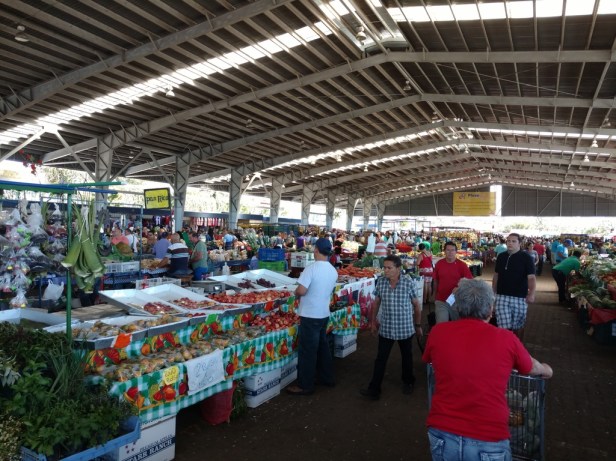
The Mayoreo is the largest farmer’s market in Alajuela and my weekly or bimonthly visits have become one of my favorite routine outings. I can’t claim that it has been so since the beginning, but I have progressively deciphered the persuasive “charm” of the sellers and come to appreciate the fidelity of buyer-seller kinships.

My first visit to the Mayoreo was overwhelming. There are rows upon rows of vibrantly colored produce and fruit, people swaying with the rhythm of the crowds, and farmers howling prices in the noisy air. I felt lost. I had no idea where to start, so I committed to the first row I came upon and looked for the items that were written on my grocery list. My tactic consisted of timidly shuffling towards a stand until the vendor took notice of the potential “business” opportunity and in a boisterous yet coaxing manner lured me closer to his stand. I tried my hardest to blend in with the crowd and give the impression of being an experienced buyer, but the buyer/seller dynamic was a whole different dimension that I would not be able to comprehend and employ until several more visits.

Continue reading

Methane Is Madness, Central New York

25559408356_2c9efc84c5_b

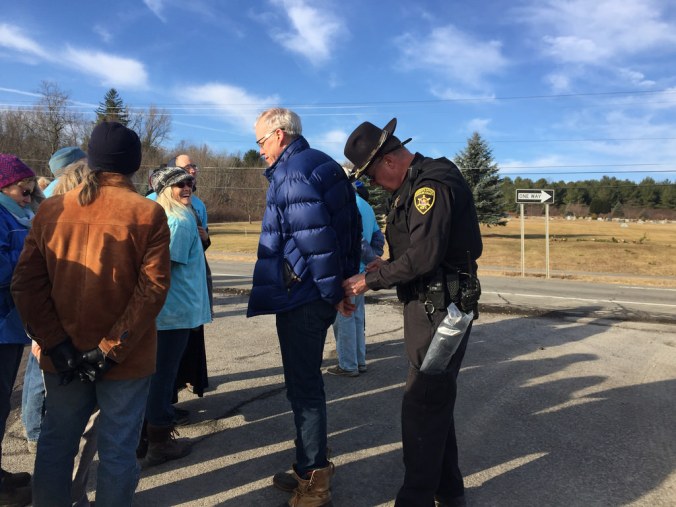
No one contributing to these pages has (yet) taken protest quite this far. We are not surprised to see the man in the blue jacket getting arrested, on principle, but the others listed below–none with as famous a name but all living in a famously protest-inclined part of New York State–make us wonder whether we have what it takes:

Bill McKibben Arrested at Civil Disobedience Action Against Gas Storage at Seneca Lake

Famed author and climate activist joins 56 people from 20 NYS counties to form human blockade at the gates of Crestwood Midstream, demands halt to climate-damaging fracked gas infrastructure, as total number of arrests in sustained campaign hits 537

Watkins Glen, NY – The fight over the fate of the Finger Lakes became national today when best-selling author, environmentalist, and founder of the international climate campaign, 350.org, Bill McKibben joined the opposition. McKibben, 55, was arrested this morning with 56 area residents as part of an ongoing civil disobedience campaign against proposed gas storage in Seneca Lake’s abandoned salt caverns. Continue reading

Colorful Scientific News From Kerala

06mpm-Four-exti_07_2765284g.jpg

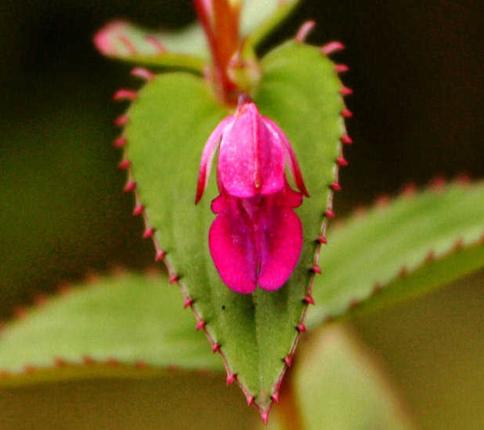
The rediscovered plants, Impatiens concinna, Impatiens sasidharanii, Impatiens sasidharanii var hirsute and Impatiens neo-modesta, are found to have great medicinal value.

Even without the medicinal value component of this discovery, we would consider this good news:

Four ‘extinct’ plant species rediscovered

Four species of Impatiens (Kasi Thumba) plants believed to have gone extinct were rediscovered from the Western Ghats recently. Continue reading

Buffalo Is Back, But…

2074

The Guardian story below captures vividly the meaning of the law of unintended consequences that sometimes governs in cases of conservation:

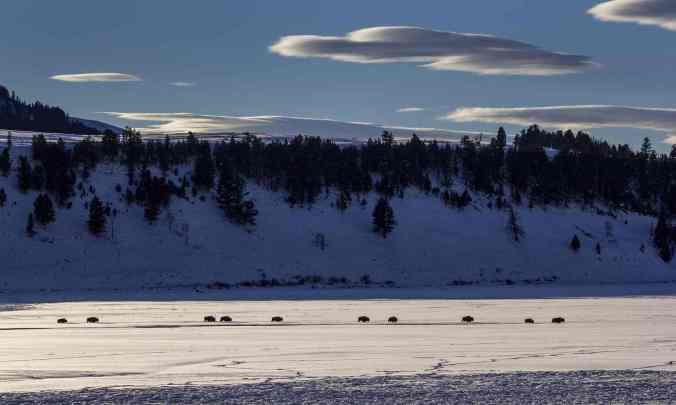
The American bison once faced extinction – now they’re being culled. Native American photographer Joe Whittle attends a hunt held by tribal members

by Joe Whittle at Yellowstone National Park

Every winter the small town of Gardiner, Montana, welcomes Native American tribal members from around the Inland Northwest. Hospitality businesses are happy to see them arrive during the off-season, but they’re not the only ones – ranchers are thrilled.

The tribal members are there to hunt American bison (or buffalo) that wander out of Yellowstone national park to find forage during winter. Bison are naturally migrating animals, and as the frozen snows of winter make finding sustenance difficult and competitive, herds start to head to lower elevations to seek sufficient feed.

The north entrance of Yellowstone is at the edge of Gardiner, and the wild roaming bison that leave the park often walk right into town or on to private property. That’s when the interests of the bison and private landowners begin to conflict. Continue reading

If You Happen To Be In New York City

160314_r27801-690

PHOTOGRAPH BY DINA LITOVSKY FOR THE NEW YORKER

We took a respite from thinking about Ethiopian food for some months, following our brief exploration of Ethiopia but this item in the current issue of the New Yorker reminds us of why that all held our attention so firmly. It gets us thinking about a return trip to Ethiopia. It has us wondering where have the last 363 days gone? Whet the appetite here:

Abyssinia

For lovers of Ethiopian food, recent years were marked by two seismic events in Harlem. First, Tsion Café and Bakery opened on Sugar Hill, serving steaming piles of stew atop injera.

Continue reading

If You Happen To Be in Dubai

http://www.artdubai.ae/

Collaborative relationships are beautiful things. Most of human endeavors lend themselves to collaboration, and art is no exception. The stereotype of solo artist in studio is an old one, but in truth inspiration rarely occurs in isolation, and art doesn’t develop in a vacuum. Collaboration and community between artists, artists and patrons, or artists and those who appreciate art has existed in some form ever since the first charcoal marks on cave walls. Continue reading

When Collaboration Is Everything, It Can Be Awesome

06MIT1-master1050-v3

“Sandcastle No. 3,” drawn on a single grain of sand, part of a Vik Muniz series from 2013.CreditVik Muniz, via Sikkema, Jenkins & Co.

We like it, for what should be obvious reasons:

At M.I.T., Science Embraces a New Chaos Theory: Art

Continue reading