The Nechisar Nightjar

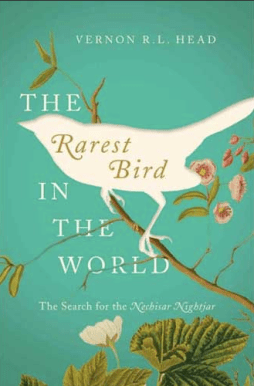
Cover Art © Pegasus Books

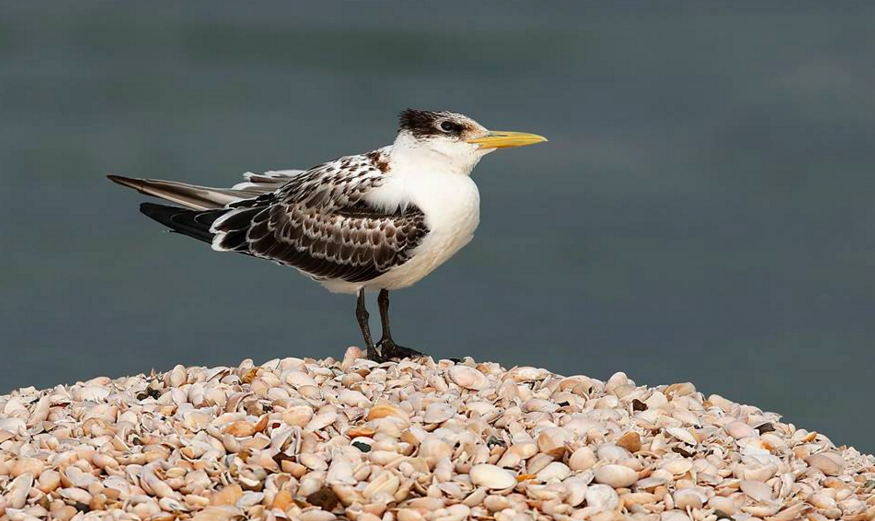
Although I haven’t read this book yet, I do know what it’s like to be on an expedition to find a bird that hasn’t been seen in several decades, which is the subject of Vernon Head’s book, freshly published in the US this month. “The Rarest Bird in the World” tells the story of the search for a bird related to potoos called the Nechisar Nightjar, which had been identified as a new species in the 1990s by Cambridge scientists who found a single wing of the bird in a remote area of Ethiopia.

The publisher blurb makes it sound pretty engaging:

Part detective story, part love affair, and pure adventure storytelling at its best, a celebration of the thrill of exploration and the lure of wild places during the search for the elusive Nechisar Nightjar. In 1990 an expedition of Cambridge scientists arrived at the Plains of Nechisar, tucked between the hills of the Great Rift Valley in the Gamo Gofa province in the country of Ethiopia. On that expedition they found three hundred and fifteen species of birds; sixty one species of mammal and sixty nine species of butterfly were identified; twenty species of dragonflies and damselflies; seventeen reptile species were recorded; three frog species were filed; plants were listed. And the wing of a road-killed bird was packed into a brown paper bag. It was to become the most famous wing in the world.

Continue reading

How to Prevent Extinction

Illustration by Jon Han for the New York Times

In last Sunday’s edition of the New York Times, the eminent ecologist E. O. Wilson–who we’ve posted about several times in the past for his inspiring and erudite thoughts on nature and biophilia–wrote an opinion editorial on “The Global Solution to Extinction,” in which he partly reminisced about his studies in biology, and also offered his suggestion on how to prevent further extinctions: increase the area of nature refuges, or in other words, boost habitat conservation. Here’s an excerpt of the first half of his piece:

DURING the summer of 1940, I was an 11-year-old living with my family in a low-income apartment in Washington, D.C. We were within easy walking distance of the National Zoo and an adjacent strip of woodland in Rock Creek Park. I lived most of my days there, visiting exotic animals and collecting butterflies and other insects with a net that I had fashioned from a broom handle, coat hanger and cheesecloth. I read nature books, field guides and past volumes of National Geographic. I had already conceived then of a world of life awaiting me, bottomless in variety.

Seventy-six years later, I have kept that dream. As a teacher and scientist I have tried to share it. The metaphor I offer for biological diversity is the magic well: The more you draw, the more there is to draw.

Continue reading

Bird of the Day: Fiery-throated Hummingbird

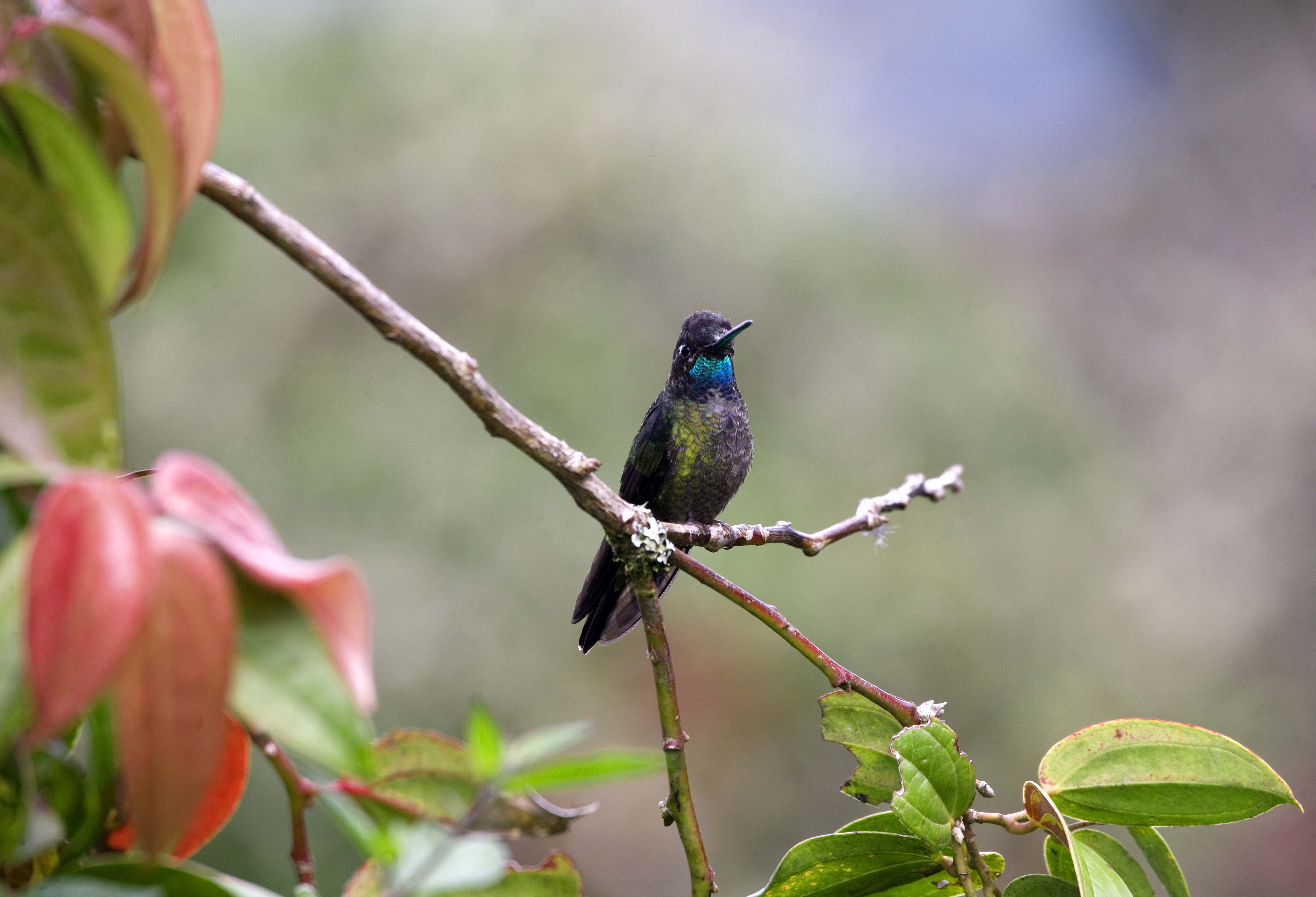
Fiery-throated Hummingbird by Juan Gamboa - La Paz Group

The fiery-throated hummingbird (Panterpe insignis) is a medium-sized hummingbird that breeds only in the mountains of Costa Rica and western Panama. It is the only member of the genus Panterpe.

male – Poás Volcano National Park, Costa Rica

Celebrating the Oldest National Park in Costa Rica

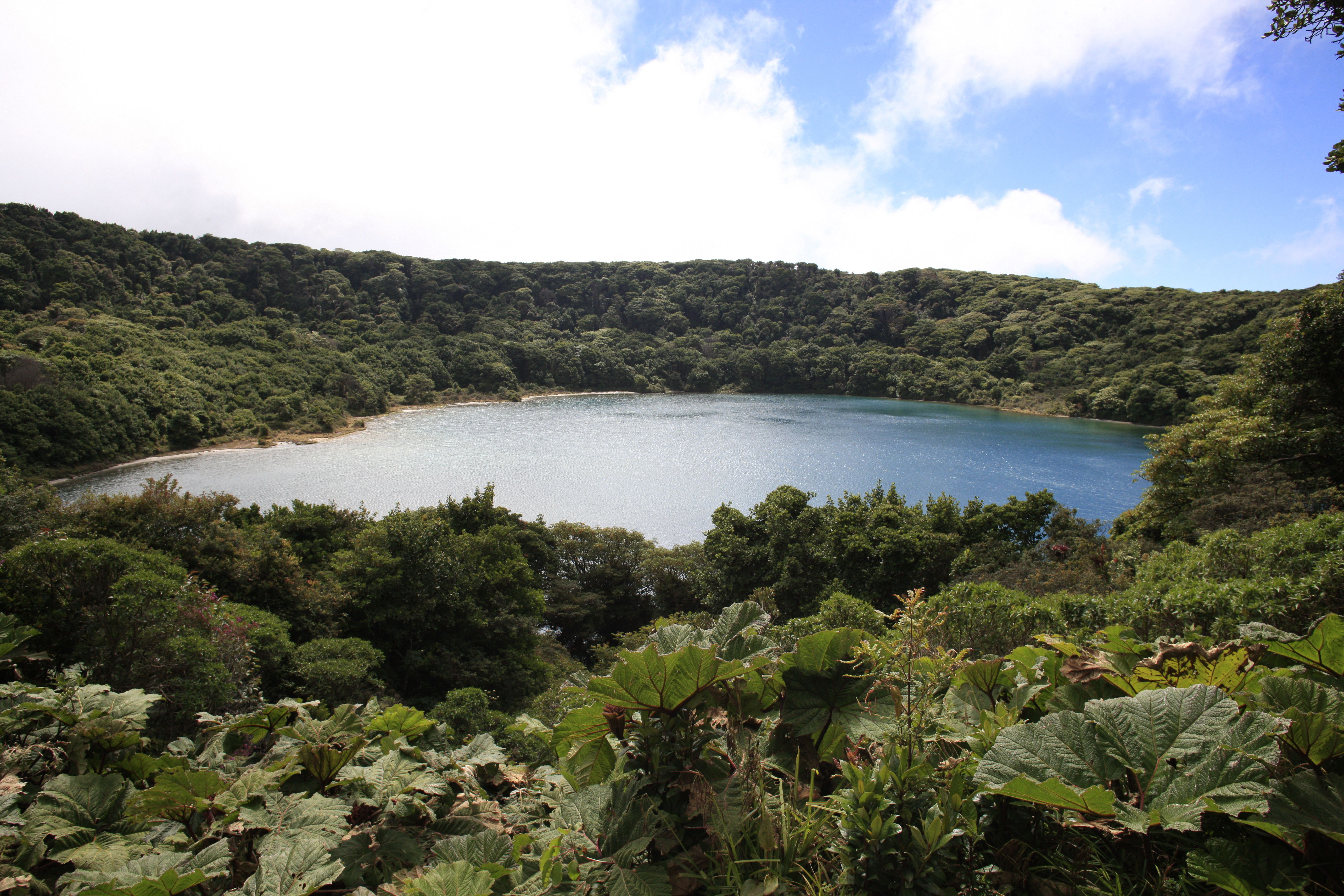
Poas Volcano crater on a clear day. Photo credit: Juan K Gamboa

Poas Volcano crater on a clear day. Photo credit: Juan K Gamboa

Today in Costa Rica we celebrate Poás Volcano National Park, which is the oldest national park in the country. It was founded on January 25th, 1971 and is the most visited national park by locals and foreigners alike. The volcano remains active to this day, with clouds of smoke frequently emitting from the main crater. Since 1989 the size of the lake crater has been shrinking and the amount of acid rain increasing, damaging some of the flora in the surrounding areas of the park and farming lands nearby.

Poas Volcano National Park, Lake Botos fills an extinct crater at the end of one trail, and is home to many cloud forest birds including hummingbirds, tanagers, flycatchers, toucanets, Costa Rica’s national bird the clay-colored robin. Photo credit: Juan K. Gamboa

The story behind the name Poás is a curious one. Continue reading

Putting All That Gee Whiz Technology And Creative Knowhow To Much Better Use

dotlonelyvr2-blog480

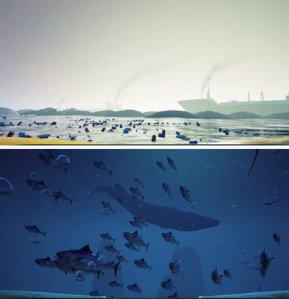
Two scenes from a virtual-reality “ride” that takes viewers into the realm of whales, fish and sonic and plastic pollution. Credit Dell

One of our favorite sources of “green news” in the early days of this blog five years ago, Mr. Revkin reappears every now and then with something really cool:

To Cut Ocean Trash, Adrian Grenier and Dell Enlist Filmmakers and Virtual Reality

Continue reading

Disruptive Urban Energy-Generation

brooklynmicrogrid

Brooklyn Microgrid wants to increase the amount of renewable energy generated in the community by members of the community. Photo credit: Brooklyn Microgrid

Thanks to Ecowatch for this story:

Many U.S. cities have taken the lead on sustainability efforts, particularly when it comes to adopting renewable energy. Already, at least 13 U.S. cities—including San DiegoSan FranciscoBurlington, Vermont; and Aspen, Colorado—have committed to 100 percent clean energy.

Other American cities, though not generating all their electricity from renewables, have innovative projects that could soon become widely adopted and transform our energy system.

Here are three cities leading the way: Continue reading

This Earth Hour Could Be Epic

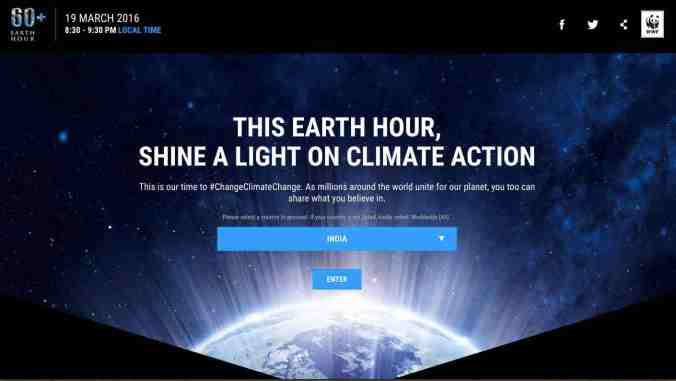
Screen Shot 2016-03-18 at 4.01.10 PM

This Earth Hour, join the biggest solar revolution ever – go solar!

This Earth Hour, switch off your lights and switch on the power of the sun. Find out how you can join the biggest solar revolution ever, right here in India, and be a part of the global climate action!

We clicked on the India option first (since so many of our own initiatives are there), which led us to India’s activities related to Earth Hour. Next, Costa Rica. If you visit the website WWF set up to explain and promote Earth Hour, you will get the simple explanation:

As the world stands at a climate crossroads, it is powerful yet humbling to think that our actions today will decide what tomorrow will look like for generations to come. This Earth Hour, ​switch on your social power​ to shine a light on climate action. This is our time to #ChangeClimateChange…our future starts today.

Earth Hour is on Saturday, 19 March 2016 8:30 p.m. local time. Continue reading

Warming Climate & Shrinking Bison

12938647293_8441c5bf5f_k-1260x708

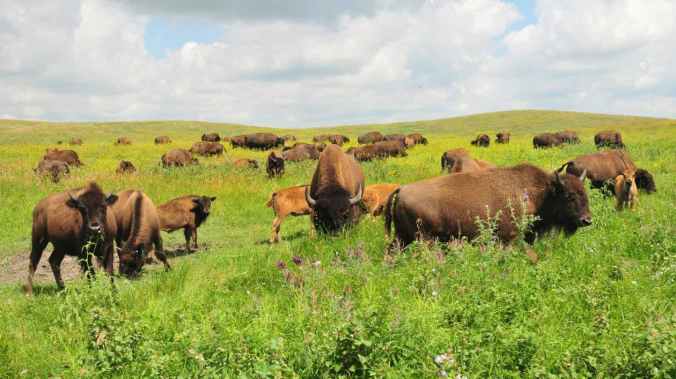
Bison graze on Ordway Prairie, owned and managed by the Nature Conservancy. The site has a USFWS grassland easement protecting it in perpetuity. Photo © USFWS Mountain-Prairie/Flickr

Thanks to science writer Matt Miller, and the Cool Green Science website, we get these stories daily that increase our understanding of the lesser known details of our environment. Are they important? It is a matter of perspective:

Here’s a climate change impact you probably never considered: bison diets.

As the climate warms, bison in North America are likely to shrink, as documented in research published by Joseph Craine and colleagues.

The reason they shrink is because as grasslands warm, grasses and other plants accumulate less protein. Bison are then forced to eat plants that are less nutritious.

This raises a related question: what plants do bison actually eat?

The answer to this question could help conservationists manage for plant species that are higher in protein and preferred by bison – ensuring healthy herds on warming grasslands. Continue reading

Conservation, Technology & Ethics

13duaneWEB-jumbo

Adam Ferriss

We have had the good fortune, and could not agree more with the questions raised and the puzzles presented in this opinion editorial published two days ago in the New York Times:

The Unnatural Kingdom

If technology helps us save the wilderness,
will the wilderness still be wild?

By

IF you ever have the good fortune to see a Sierra Nevada bighorn sheep, the experience might go like this: On a sunny morning in Yosemite National Park, you walk through alpine meadows and then up a ridge to the summit of Mount Gibbs at 12,764 feet above sea level. You unwrap a chocolate bar amid breathtaking views of mountain and desert and then you notice movement below. Continue reading

The Back Stories

IMG_20151111_180059

Beach time with little Adoniya and her mother Sini, member of the Xandari family.

Ask me the most meaningful part of my job around here in recent time and I’d hold up the Xandari films without a doubt. To call them films or videos is an acknowledgement of their formats and the creative process that goes into them. But to embrace all of them together with the words labour of love is simply the truth. (Watch them here).That we loved making them, loved dissecting the resorts to take a closer look at their DNA, their dreams. Above all, loved the Xandari family a little bit more. I’ll tell you why.

Continue reading

Urban Forest


Urban forests play an important role. Not only continuing to act as the Earth’s lungs, but they perform other valuable services – least of all providing the sense of peace and refuge for both humans and wildlife.

Our urban trees in the James River Park System and City of Richmond perform valuable services for us. They anchor the soil on hills and along river and stream edges, which reduces runoff into the river. They provide habitat and food for animals, and moderate the temperatures and rainfall with their canopies. Continue reading

Ornithological Epicenter

There is grandeur in this view of life, with its several powers, having been originally breathed into a few forms or into one; and that, whilst this planet has gone cycling on according to the fixed law of gravity, from so simple a beginning endless forms most beautiful and most wonderful have been, and are being, evolved.

– Charles Darwin, Origin of Species, 1859

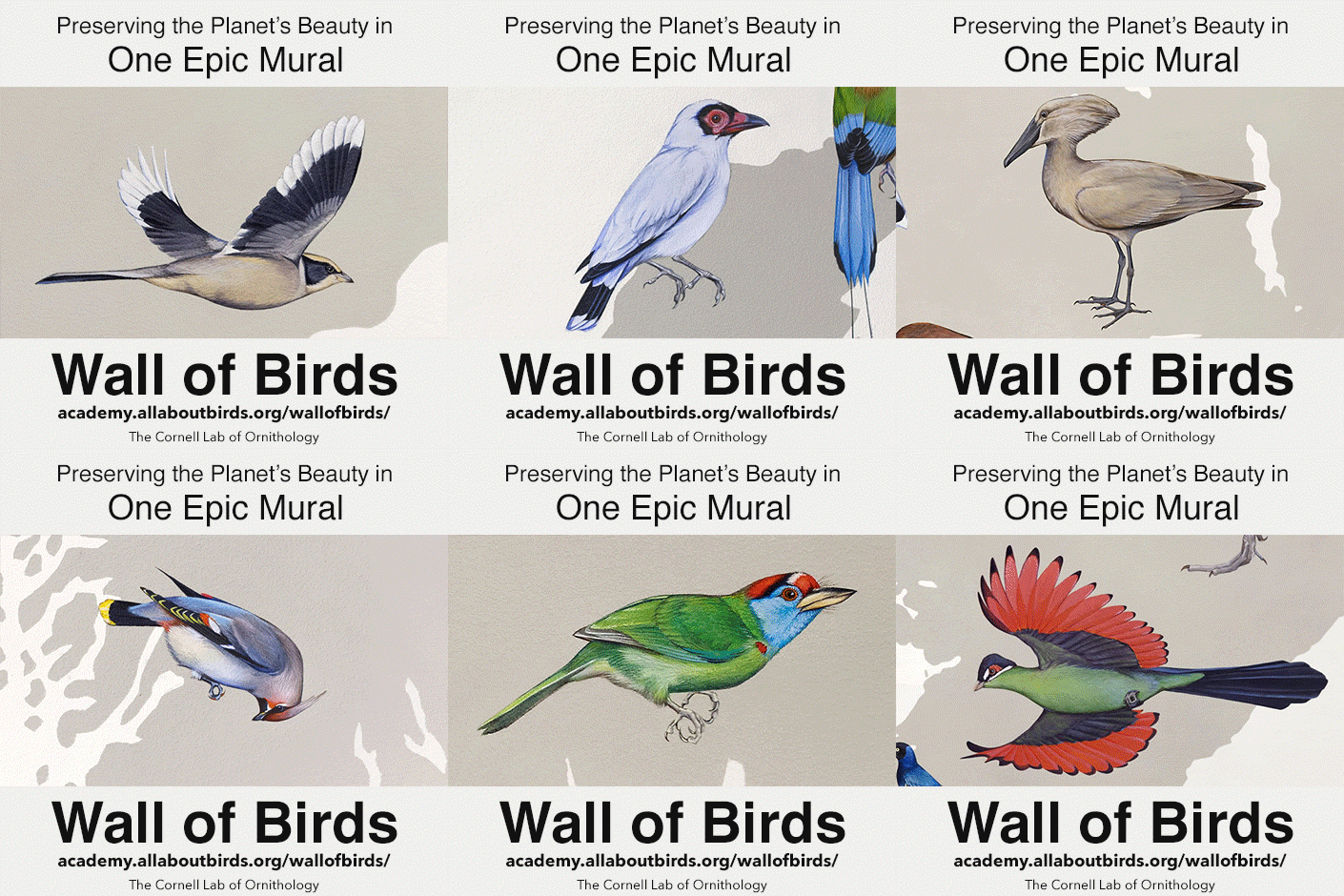
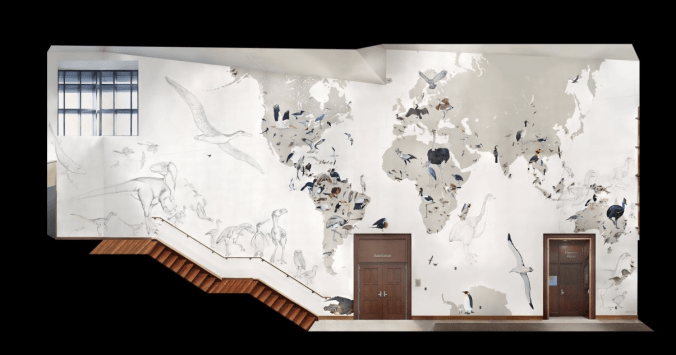
The Cornell Lab of Ornithology has long been a leading presence in the study, appreciation and conservation of birds. From citizen science programs, to eBird, to research collaboration with the the National Geographic Society, the Lab has helped to educate the public about the environmental importance of birds. The Wall of Birds, titled “From So Simple a Beginning,” from the Darwin quote above, celebrates the world of birds, showcasing biodiversity and evolutionary change, by featuring species from all surviving bird families alongside several extinct ancestors.

The scale of the mural is mind-blowing! The world map covers the largest wall of the Lab’s visitor center, with life-sized birds from each of the 243 taxonomic families of the world, placed in their geographical endemic locations. Check out the scale of the flying albatross in the lower left of the mural! The pale, gray scale depictions of the extinctions and ancestors adds to the complexity of the mural.

Continue reading

For The Pleasure Of It

fenn002_wide-60ad3787c2cdba4c577f1a4ed6f5d0622d31862d-s700-c85

We have plenty of readers on these pages who have the time, the energy and smarts to crack the code on this, so must pass this along to them:

Seeking Adventure And Gold? Crack This Poem And Head Outdoors

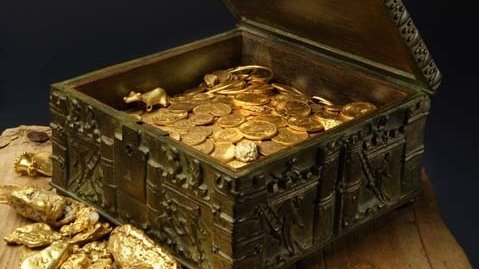
An eccentric millionaire from Santa Fe hid a chest full of gold and precious gems in the Rocky Mountains six years ago. Today, thousands of treasure hunters are obsessed with finding it.


Visualize Pi (and Happy Birthday Albert!)

Both a transcendental and an irrational number, Pi (π) is the ratio of a circle’s circumference to its diameter. And both in definition and actuality it epitomizes coolness, inspiring musical homages, from rap to fugue. Albert Einstein, master of the time-space continuum, was born on this day. Makes sense, right?

But what about visual inspiration?

Artist Ellie Balk collaborates with students from The Green School in East Williamsburg, Brooklyn to combine mathematics and art to VISUALIZE Pi as murals in their community. 

Starting in 2011 the artist/student/educator teams graphed Pi in colorful, creative and innovative ways: a histogram of emotions; a weather mural, a reflective line graph that resembles a sound wave and the relationship between the golden ratio and Pi.

For example:

In 2012, students constructed an image of the golden spiral based on the Fibonacci Sequence and began to explore the relationship between the golden ratio and Pi. The number Pi was represented in a color-coded graph within the golden spiral. In this, the numbers are seen as color blocks that vary in size proportionately within the shrinking space of the spiral, allowing us to visualize the shape of Pi and its negative space to look for “patterns”.  The students soon realized that the irrational number of Pi created no patterns at all, resulting in a space that resembles “noise”. 

In response to that, in 2013 students worked to visualize the number Pi as a reflective line graph that resembles a sound wave. The colors of the mural change at each prime number in Pi so that the viewer can visualize a pattern of prime numbers within Pi. Located on a busy corner in East Williamsburg, Brooklyn, the sounds of the bustling traffic and rhythmic commuter passing creates the perfect backdrop for our visualization.   Continue reading

If You Happen To Be In New York City

141-690

When the exhibition space re-opens, under new management, this is one of the empty spaces that will be filled, and this post on the New Yorker website makes us think it would have been interesting to see the spaces empty, before:

On Friday, March 18th, the Metropolitan Museum of Art invites the public into the Met Breuer, better known for the past fifty years as the Whitney. (The Met is leasing the building for eight years, while its modern and contemporary wing undergoes a radical transformation.) Fun fact: the Whitney might not have existed at all if the Met had accepted Gertrude Vanderbilt Whitney’s offer, Continue reading