Urban Heroic Recycling

29RECYCLE1-master675

Workers inspecting a bale of refuse at the Recology recycling plant in San Francisco. Foreign officials and others often visit the facility for ideas on how to handle their own mushrooming piles of garbage. Josh Haner/The New York Times

From the New York Times:

San Francisco, ‘the Silicon Valley of Recycling’

By

Robert Reed, who is enjoying a surprising career turn as a busy tour guide at the latest hot spot here, stood smiling one recent sunny morning before 10 foreign dignitaries and journalists. They included the mayor of Genoa, Italy, and the general consuls from Italy, Canada and Switzerland.

Each visitor wore a sport coat and tie, and a yellow safety vest to ensure they wouldn’t be run down by garbage trucks. Continue reading

Winds Across the Plains

High winds have played a significant role in the history of Texas, Oklahoma and the Great Plains. At worst they accentuated the destructive “dust bowl” period, at best they’ve helped to power small homestead farms for several centuries.

As the struggle to step back from carbon based energy continues, it’s happy news that the measures are meeting with more success and fewer obstacles:

The decision also signals that the Obama administration remains committed to encouraging the spread of renewable energy, seen as a major component of reaching national goals on stemming climate change.Multiple companies are hoping to build high-voltage transmission lines to transport renewable energy produced by wind farms and hydroelectric plants to more populous regions of the country. Continue reading

Good Spirited

Although we don’t particularly endorse consumption of alcohol or hold loyalty to any single brand or type of liquor, we’re always on the lookout for positive environmental news in any corporate setting, and we’ve recently learned that Bacardi Limited, perhaps the best-known makers of rum in the world (and owners of other alcohol brands Martini, Grey Goose, Bombay Sapphire, and Dewar’s Scotch), has been attempting to do better for the environment.

Called “Good Spirited,” (who doesn’t like a nice pun), Bacardi’s campaign involves recycling, waste reduction, energy efficiency, and other mechanisms to reduce the company’s environmental impact in the world and become more sustainable. For example, they’ve removed plastic straws and stirrers from their North American headquarter events in Florida and their Bombay Sapphire distillery in the UK, which they estimate will save more than 12,000 of the small plastic tubes from landfills annually.

In their original distillery in Puerto Rico, the company reuses water from rinsing Continue reading

New Egg Art

In the past I’ve shared some of my egg-based artwork, known in Ukrainian as pysanky, that’s for sale at the Xandari Resort gift shop in Costa Rica, including a sped-up video of the process. But my painstaking handiwork, with wax and dye, can now be replicated to some extent by a machine called the Eggbot, which is an open-source robotic machine that can draw on eggs or other spheroids. Most often it uses pens but it can also even work with an electric-heated “kitska” or wax stylus similar to the flame-heated ones that I use.

The video above displays the various works of an Eggbot used by Jiri Zemanek at Continue reading

Map the Herps You Spot

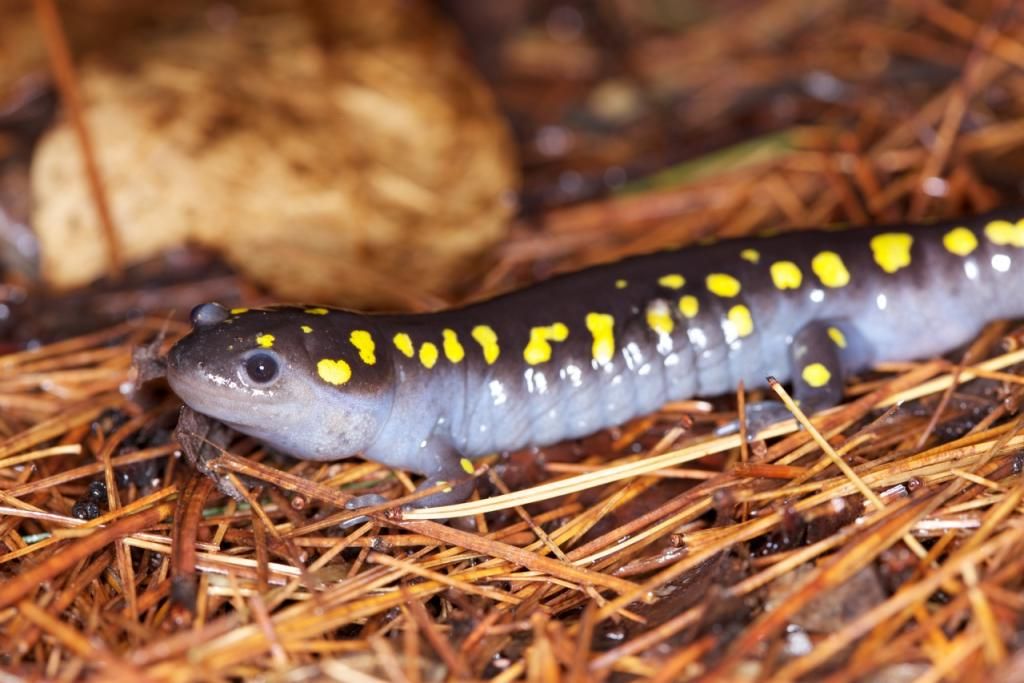
Spotted Salamander by Brian Magnier

In the spring of my penultimate year at Cornell, I took a Herpetology class that introduced me to the world of reptiles and amphibians, or “herps,” as they’re affectionately known. Thanks to that exposure, I was able to enjoy the spring migration of certain salamander species and learn the basics of the main families of frogs, lizards, snakes, and other herps like alligators, crocodiles, and all the other slimy or scaly animals in the classes Amphibia and Reptilia. If I had known of the existence of the citizen science project HerpMapper at the time (it wasn’t released until September of the same year as that salamander migration) I’d have certainly submitted some observations and photos to the organization! From their About page:

HerpMapper is a cooperative project, designed to gather and share information about reptile and amphibian observations across the planet. Using HerpMapper, you can create records of your herp observations and keep them all in one place. In turn, your data is made available to HerpMapper Partners – groups who use your recorded observations for research, conservation, and preservation purposes. Your observations can make valuable contributions on the behalf of amphibians and reptiles.

Continue reading

Good News in Plastics

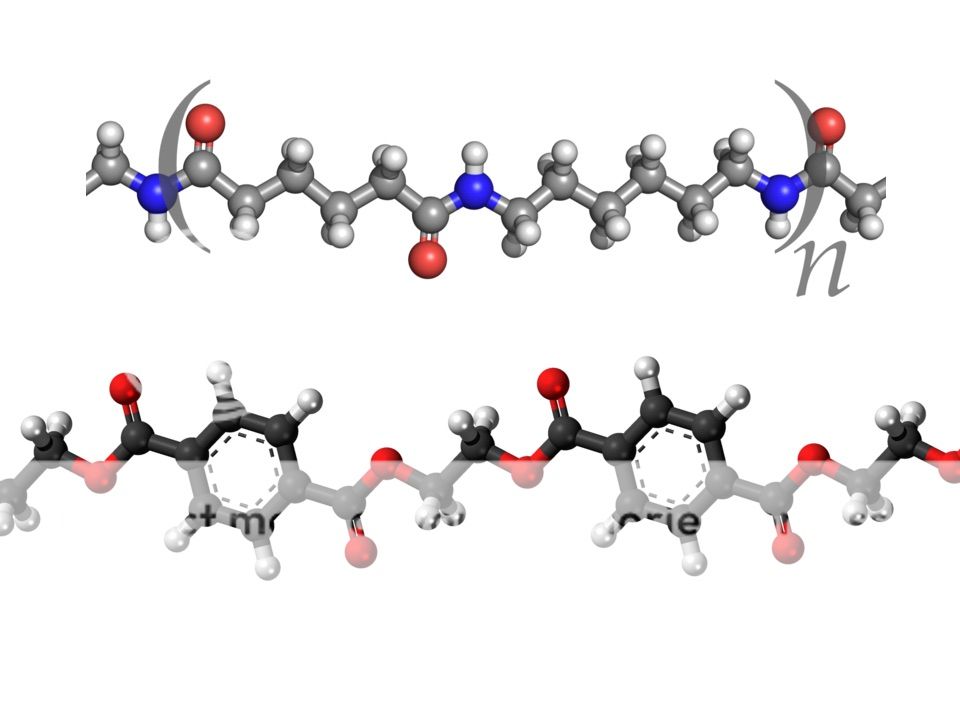
Compiled illustrations of a nylon chain above and PET chain below, both thermoplastic polymers, or simply put, types of plastic. Via WikiMedia, created by users YassineMrabet and Jynto, respectively.

There’s some cause to celebrate from a couple findings published recently in two journals, Nature and Animal Conservation, related to plastics, though of very different sorts. The first paper deals with a new method of plastic production using carbon dioxide and agricultural waste rather than petroleum as the raw input for PET plastic, and the second article studies the feasibility of introducing biodegradable fishing nets to replace nylon ones.

Continue reading

Worldwide Vegetarian Lifestyle Calculated to Reduce Global Food Emissions by 44%

Probably fewer than half the contributors and readers of this blog are vegetarian, with a tiny percentage perhaps being vegan. A new study from Oxford University published in the Proceedings of the National Academy of Sciences of the United States might set some of us thinking about changing that, however.

With food in general creating over 25% of all global greenhouse gas emissions (including the need for transportation and all the rest), to think that about 80% of those emissions are linked to livestock makes one realize (once again, if we didn’t already know) the massive impact of eating red meat. Sarah DeWeerdt reports for Conservation magazine’s online section:

If every person on Earth adopted a vegan diet – without milk, meat, honey, or any other animal-sourced foods – the greenhouse gas emissions associated with the food system in 2050 would fall by more than half compared to 2005/2007 levels. That’s one of several striking findings from an analysis of food and climate published yesterday in the Proceedings of the National Academy of Sciences.

Continue reading

Birding Apps Re-reviewed by Boucher

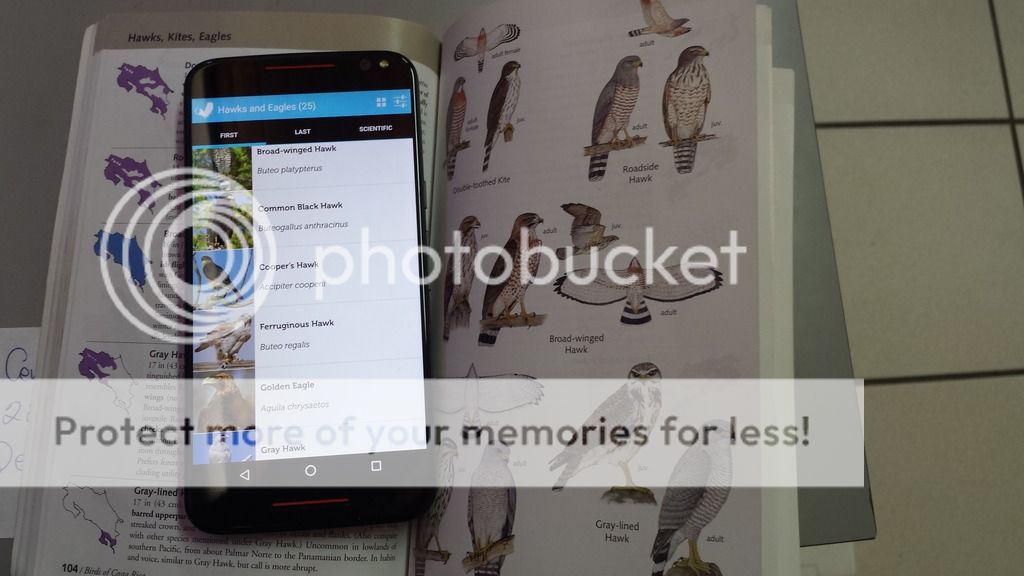
I visit Tim Boucher’s blog on The Nature Conservancy’s website every week or so to see what’s new, and this last check-up I noticed an old post from 2013 that’s been edited to include observations on fresh updates for phone apps that help identify birds, like Merlin, which I’ve covered in the past.

So far I haven’t purchased any bird identification application for my phone, mostly because there are good ones like Merlin and Audubon available for free in the US, but I’ve been considering a $9.99 app for the birds of Costa Rica, made by bird-watching guides both in CR and Panama.

Boucher doesn’t rank the apps in his order of preference, but it looks like from his reviews that he prefers the Audubon and Merlin apps for the fact that they’re free and utilitarian, though Merlin is geared more towards beginners. He’s also pretty positive about the Sibley and Peterson apps, both of which started with physical book versions of their guides.  Continue reading

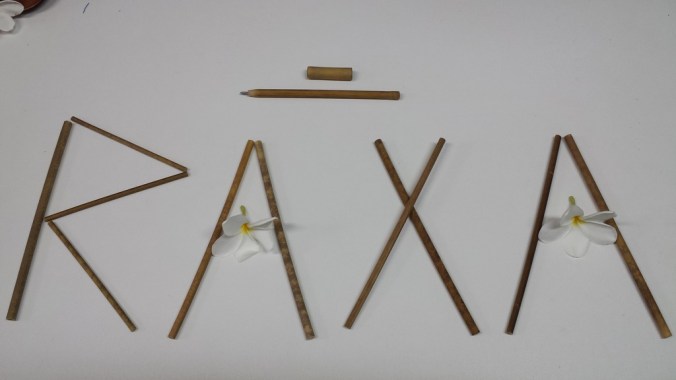
Handy Bamboo

bamboo20sticks_zpsoqedjljxBamboo is a highly malleable, fibrous plant that has many impressive capabilities that often serve a variety of utilitarian needs. At Xandari, we’ve used this resilient, rapid-growing grass (yes, it’s part of the grass family and some species are known to grow up to 90cm in a single day!) to create wind chimes for birds and now, we’ve been inspired once again to create a different, yet handy tool.
Continue reading

An Unusual Library With A Conservation Mission

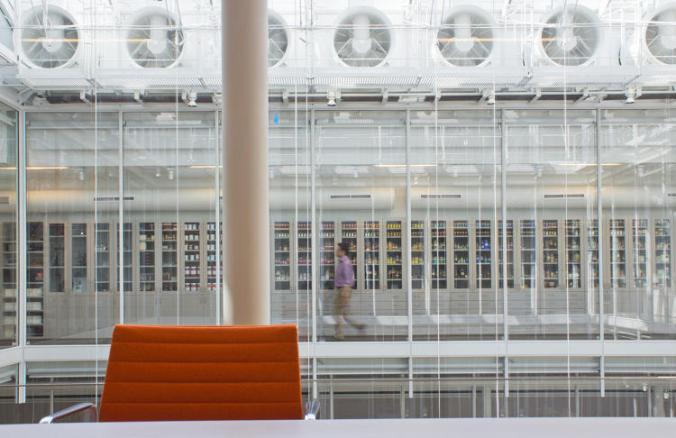
3058058-slide-3-the-rarest-colors-in-the-harvard-pigment-library.jpg

A short note here to link out to a story of interest because of its intersection of conservation, commerce and education. Thanks to this new (to us) source of interesting (to us) news:

The Harvard Library That Protects The World’s Rarest Colors

The most unusual colors from Harvard’s storied pigment library include beetle extracts, poisonous metals, and human mummies.

Today, every color imaginable is at your fingertips. You can peruse paint swatches at hardware stores, flip through Pantone books, and fuss with the color finder that comes with most computer programs, until achieving the hue of your heart’s desire. But rewind to a few centuries ago and finding that one specific color might have meant trekking to a single mineral deposit in remote Afghanistan—as was the case with lapis lazuli, a rock prized for its brilliant blue hue, which made it more valuable than gold in medieval times. Continue reading

Finding The Silver Lining

winegrapes_custom-24abb0a710e60f262997757c40bf35da573ab4f9-s1400-c85.jpg

A worker cuts a cluster of grapes in the Burgundy region of France during the harvest period. Global warming has made conditions historically associated with great wines more frequent in Bordeaux and Burgundy, a study finds. But things look less bright for California vineyards. Jeff Pachoud/AFP/Getty Images

We admit that we stretch, as frequently as we can, to find alternatives to doom and gloom environmental news.  We submit the following as Exhibit A if a case is to made to prove the point that there is always a silver lining to be found (thanks to National Public Radio, USA):

An Upside To Climate Change? Better French Wine

While climate change threatens coastal cities and generates extreme weather, the effects of global warming could bring good news to some of France’s most esteemed vineyards. Continue reading

Trees Are More Remarkable Than We Thought

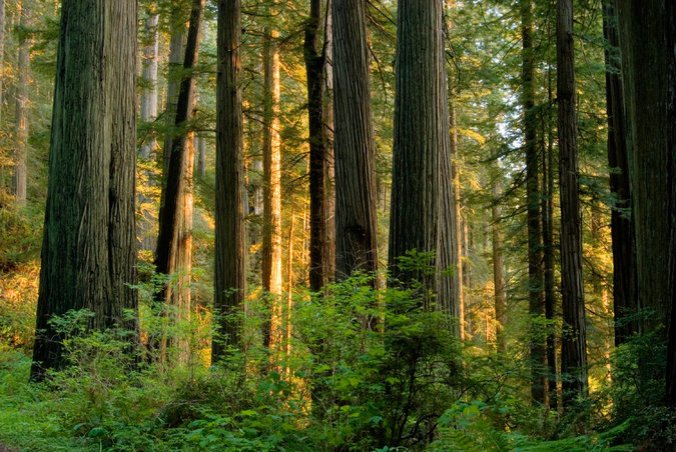
17TB-PLANTS-master675

Trees in temperate forests, like these redwoods in Northern California, may adapt to climate change by releasing less carbon dioxide than previously predicted by scientists. Getty Images

And in other “kind of good news”:

Trees Deal With Climate Change Better Than Expected

The bend-don’t-break adaptability of trees extends to handling climate change, according to a new study that says forests may be able to deal with hotter temperatures and contribute less carbon dioxide to the atmosphere than scientists previously thought. Continue reading

Spiral Jetty: Art that Informs

Photo by George Steinmetz, September 2002

In 1970, artist Robert Smithson built a massive sculpture as a piece of land art, or an “earthwork,” that is normally found just below the surface of the water of Great Salt Lake at Rozel Point. In drought conditions, the art piece, titled Spiral Jetty, becomes visible, often with salt encrustations that decorate the basalt spiral formation. Great Salt Lake, in addition to being salty, is also home to microorganisms that live or even thrive in extremely salty conditions and produce pigments that give them a red to orange color, which becomes visible in the water at times. Chau Tu reports for this week’s Science Friday written piece:

Great Salt Lake is known as a terminal basin, meaning its water has no outlet. “Water escapes through evaporation, and everything else stays there,” says Jaimi Butler, coordinator of the Great Salt Lake Institute. At the time the sculpture was built, the water level of the lake was particularly low. But by 1972, the water rose again to near-average levels, submerging the artwork.

“Smithson anticipated that the lake would rise and fall, the residue of salt crystals causing the black rocks to glisten white whenever the water level dropped,” the New York Times Magazine wrote in 2002. And indeed, that very year, regional droughts caused the jetty to reappear “for the first prolonged period in its history,” according to the Dia Foundation, which now owns the sculpture. (The Great Salt Lake Institute partners with the Dia Foundation and the Utah Museum of Fine Arts to oversee the Spiral Jetty.)

Continue reading

Is It This Simple?

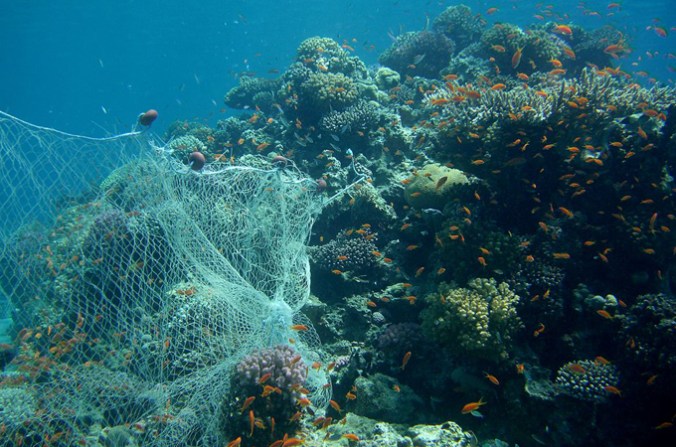
ghost-fishing

A serious problem with a relatively simple solution (thanks to Conservation magazine’s website):

BIODEGRADABLE GILLNETS COULD HELP RID THE OCEAN OF GHOST FISHING

Researchers have found that biodegradable gillnets catch fish as well as conventional nylon nets—and more quickly lose their ability to entangle animals when discarded at sea. Even more, the degradable nets tend to trap fewer young fish and bycatch. Continue reading