California Condors, Better Births, Incredible Intervention

California Condor chick being fed by a puppet as part of the captive breeding program. Photo by Ron Garrison at the San Diego Zoo for the US Fish and Wildlife Service, via WikiMedia Commons.

Back in 1973 when the Endangered Species Act put the California Condor under protection, the species’ numbers were still dwindling at an alarming rate. In the following decade the remaining population was captured and bred in captivity, so as to protect chicks and release them into the wild. And last year, more condors were born and raised in the wild (14) than the number of adult wild condors that died (12), which represents success in the breeding program. There are now over 250 California Condors in the wild, a vast improvement over the 22 surviving birds that were captured for the start of the breeding program.

Officials also counted 27 wild condor nests last year. Nineteen were in California, three in the Arizona-Utah border area and five in Mexico’s Baja Peninsula. Grand Canyon National Park in Arizona has a condor nest, officials said, as do Zion National Park in Utah and Pinnacles National Park in central California.

The captive breeding program continues with the Peregrine Fund‘s World Center for Birds of Prey near Boise being the top egg producer, with six eggs laid this spring and nine more expected.

“So far it’s going fantastic,” said Marti Jenkins, condor propagation manager at the facility.

She said two eggs laid at the facility last year were placed in wild nests in California where eggs were either infertile or damaged. The replacement eggs produced fledglings that officials count in the wild population.

Continue reading

If You Happen To Be In London

Serpentine pavilion ‘unzipped’: first look at Bjarke Ingels’ design

The Danish architect offers a sculptural space ‘like a mountain of ice cubes’ stretching across the London gallery’s lawn, to be complemented by four radical summer houses

2826.jpg

‘Cartoonish gyrations’ … Bjarke Ingels Group (BIG) architectural impressions of the 2016 Serpentine pavilion.

The humble brick wall, that most London of architectural elements, is the inspiration for this year’s Serpentine Gallery pavilion, according to designs unveiled today. But in the hands of the Danish architectural conjuror Bjarke Ingels and his firm BIG, it won’t be any old brick wall. It’s a wall that will be stretched open and hollowed out, its oversized fibreglass bricks stacked up to form a paraboloid enclosure that will taper high above the park, transforming from a bulging cave to a slender screen as it undulates across the lawn.

Continue reading

Desert Gold in Death Valley

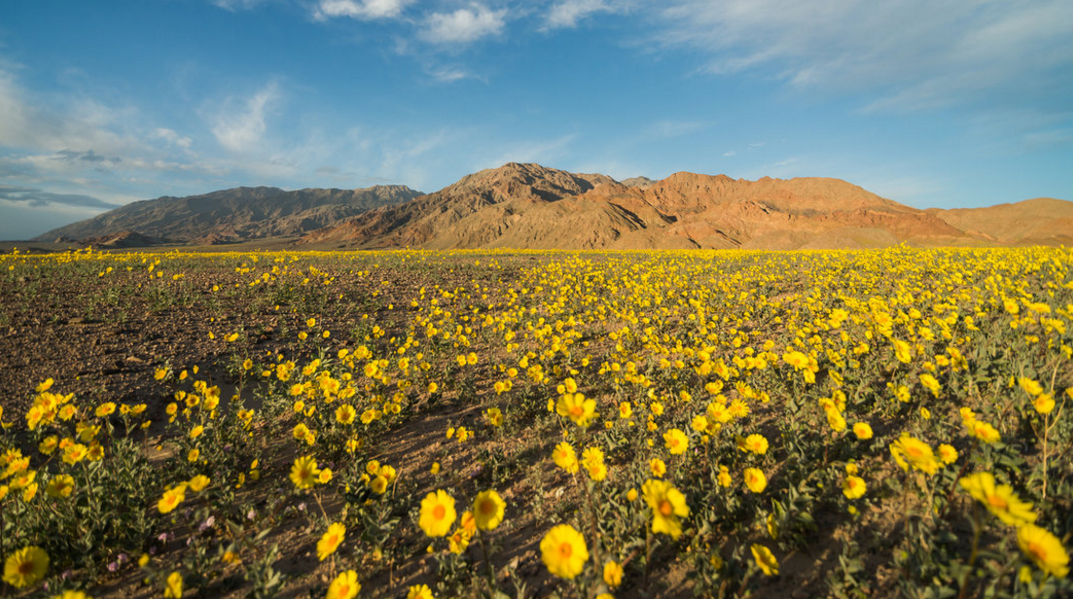
The primary threads in the floral carpet are yellow — the most common flower is called Desert Gold, which looks like a yellow daisy. Credit National Park Service

The primary threads in the floral carpet are yellow — the most common flower is called Desert Gold, which looks like a yellow daisy. Credit National Park Service

One of the most evocatively named US National Parks, Death Valley is currently awash in color due to record-breaking autumn rains. The impact of water on one of the driest places on earth is stunning, with carpets of flowers blooming from the latent seeds that remain dormant for years in the dry, crusty soil.


Find more images in the NYTimes Science feature, and via the National Park Service.

What Is It With Tangier?

Petrusich-TheShelteringSoundPaul-Bowles-690

We have not heard any of these recordings, but the last two paragraphs of this post have our attention fully focused and we look forward to the sound:

…I think Bowles would be deeply pleased by what Schuyler and Dust-to-Digital have done with his recordings, the way they’ve now been lovingly, responsibly repackaged. The music itself is frequently staggering: an eleven-minute recording Bowles made in Goulimine, a city in the southern lowlands, is one of the more beautiful examples I’ve heard of guedra, in which one male vocalist and a women’s chorus bang together on a twenty-eight-inch drum. Continue reading

The Whole Picture

Did you take these for just some stunning water colors? Well, these are hard data on climate change. An artistic expression of an ugly, oft overlooked truth. Jill Pelto, the artist, who graduated in December from the University of Maine with a degree in earth science and studio art, created these paintings based on graphs of data on the environmental effects of climate change.

Continue reading

Avant Guard

The guards at The Broad Museum in Los Angeles aren't just here to protect the art — they're also expected to engage and educate. They're called visitor services associates, and they've gone through hours and hours of training to become ambassadors for contemporary art. Ryan Miller/Capture Imaging/The Broad Art Foundation

The guards at The Broad Museum in Los Angeles aren’t just here to protect the art — they’re also expected to engage and educate. They’re called visitor services associates, and they’ve gone through hours and hours of training to become ambassadors for contemporary art.
Ryan Miller/Capture Imaging/The Broad Art Foundation

I can easily spend hours wandering museum galleries – viewing Art, artifacts and people – it’s all fascinating. More likely than not every other room I’ll pass an ever present museum guards, usually efficient, sometimes friendly. Always in uniform. The directors of The Broad Museum in L.A. are viewing this important role in a new light. Dressed eclectically in black with red lanyard IDs, the VSAs (Visitor Service Associates) are well-trained crosses between guard and guide. Their knowledge and friendly delivery creates a concierge museum experience, which seems especially appropriate for a private collection museum.

Guard Sabrina Gizzo might easily be mistaken for a docent. She’s talking with some visitors about Thomas Struth’s huge color photograph of a crowd at a museum in Florence Italy. In the photo, tourists are dressed in summer clothes — shorts, T-shirts, caps, sneakers. Struth photographs the crowd facing us, looking up at something we can’t see. As Los Angeles visitors to The Broad study Struth’s photograph — a museum crowd looking at another museum crowd — one Broad visitor notices that a man in the photograph is wearing sunglasses clipped to the front of his shirt. Gizzo suggests that her guest take a very close look at the sunglasses.

Why? Turns out, if you look closely, a famous statue can be seen in the reflection of the man’s glasses: Michelangelo’s sculpture of David.

Continue reading

Traveling by Water

Many are the memories created on the banks of rivers, in the middle of the sea, and along ocean tides. PHOTO: Abrachan Pudussery

Many are the memories created on the banks of rivers, in the middle of the sea, and along ocean tides. PHOTO: Abrachan Pudussery

At Xandari Riverscapes, water is everything. Sharing the Kerala backwaters with all those who choose to travel with us has always been about sharing stories of the waters. Of the paddy fields that hug the river banks, canoes that transport groceries and construction material to the hinterlands, women and children fishing and splashing around near their waterfront homes, fishing boats, and more. And so this soulful piece on water’s incredible power to flow by memories resonates with us all through:

Water is great. We tune ourselves to it, to its murmured song of ebb and flow, of wave and ripple, in seas, rivers, streams, lakes, wetlands, ponds, snows. We drink it, we bathe in it, we stare at dark clouds praying for their sudden moment of release of it. “Take me somewhere magical,” my favorite cousin once said. So I did, to sail the sea. By the third day our ship was completely out of sight of land, nothing but water curving with the horizon.

“Oh,” she said. “Oh. That’s exactly what I needed.”

Below us, the swells rolled, allowing us to dance with them until our very steps were full of the lift of waves. In our own small way, our steps lifting with the waves, we were tuning the ocean as we sailed—and it, in turn, was tuning us.

Continue reading

Capturing The Sense Of A Place

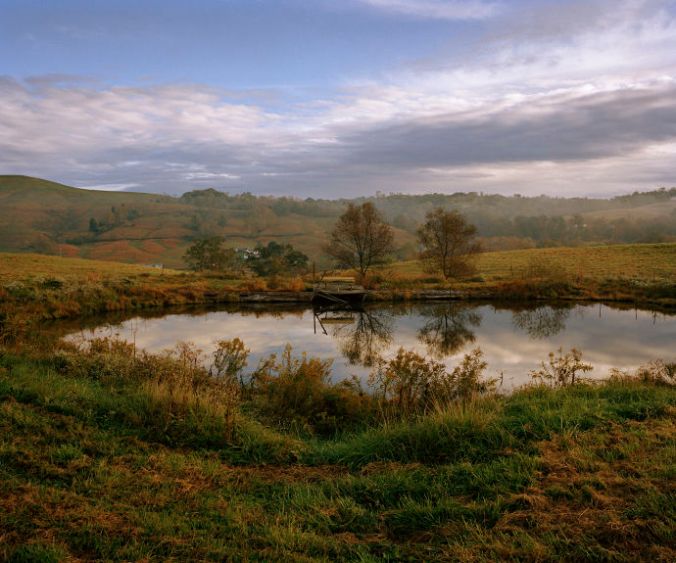
pond 001

“The Fishing Hole,” 2015. PHOTOGRAPH © AARON BLUM

The Photo Booth feature on the New Yorker‘s ever expanding online offering is a reminder to us of Milo’s camera, in hibernation while he settles into the homestead in the rolling hills of Central New York. We hope that hibernation ends soon, but meanwhile:

Another Side of Appalachia

BY

Appalachia is not a corner of the United States that cameras come to fresh. Artist-visitors have been making visual shorthand of the rural region for decades, and they have tended to seek the place’s more derisive scenes: the folded flesh of the obese, the writhing snakes of the Pentecostals, the scabbed injections of addicts. These subjects are there for the finding, but the photographer who focusses only on the sordid or the sensational has an outsider’s narrowness of vision. Harder to capture, and far more revealing, are the mysteries of Appalachia as they appear to Appalachians. Continue reading

If You Happen To Be In Boston

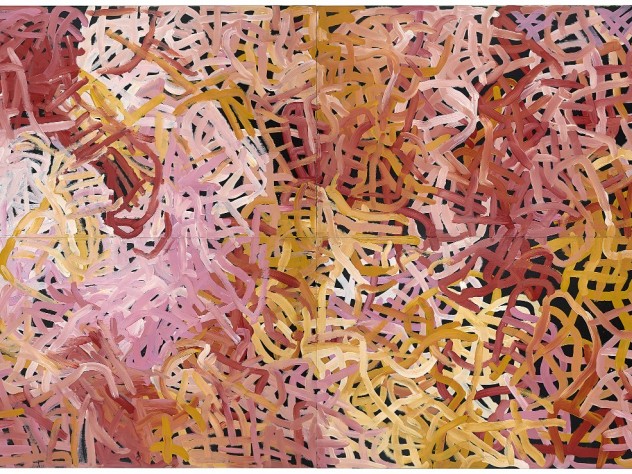
Kngwarray-Anwerlarr angerr_TL41481.3_seasonality_PR-2

Emily Kam Kngwarray’s Anwerlarr angerr (Big yam) (1996), on display in the “Seasonality” portion of the exhibition Everywhen © Emily Kam Kngwarray / © 2015 Artists Rights Society (ARS), New York / VISCOPY, Australia.

Cambridge, more precisely, is the location where this exhibition can be experienced:

At the Harvard Art Museums, Indigenous Australian Art and Thought on Display

THOUGH SNOW MAY FALL OUTSIDE, inside their special exhibition galleries the Harvard Art Museums host some heat from desert Australia. Composed of 70 artworks—many of which had never left their native land before now—the exhibition Everywhen: The Eternal Present in Indigenous Art from Australia opened on February 5.

The project was some five years in the making for visiting curator Stephen Gilchrist, an associate lecturer at the University of Sydney, and its planning required many late-night conference calls. “I felt,” he jokes, “like I was calling from the future.” Continue reading

NatureNet Science Fellows

WOPA050824_D120

Giant clam in Pacific, Asia Pacific. (ALL RIGHTS GRANTED TNC)

The Nature Conservancy is, among the philanthropic conservation organizations we are aware of, uniquely entrepreneurial beyond their core competency in land conservation. Their communications outreach is among these excellent extensions of their mission.  This article, about one of the NatureNet Science Fellows, is a good case in point:

Adventures in Alternative Energy: Giant Clam Edition

When most people think about alternative energy sources, Pacific giant clams probably do not spring readily to mind. Within their iridescent tissues, however, the world’s largest clams may well hold the missing link to finally enable the efficient (read: commercially viable) large-scale production of clean biofuels from algae.

Giant clams as alternative energy powerhouses. Who knew? Continue reading

Double Major

tigerweb_750

Endangered tiger and rainforest habitat decline. Image credit: Jill Pelto

In the years since Raxa Collective has been operational in India, we have welcomed several dozen interns to Kerala from a dozen or more countries around the world, most but not all from university programs that have some attention to sustainable development. The majority of those interns have been graduate students preparing for a career in international business. Most of our interns will not work full time in sustainable development after graduating. But they want this experience to ensure that their work has a kind of “double major” effect so their exposure to sustainability programming is embedded in their more mainstream functional business activities.

Those interns not from university programs are typically taking a sabbatical from their regular work life. They also are typically looking to add the equivalent of a second major to their regular professional life.  Thanks to Clara Chaisson at EcoWatch for this pointer over to an scientist/artist who is doing the same, in her own way:

Scientists are notorious for struggling to communicate the importance of their work in compelling ways. Continue reading

Wild Tomatoes Reduce Need for Pesticides

Cherry tomatoes growing at Xandari Resort © J.L. Zainaldin

We’re always on the lookout for non-chemical ways to deter pests from agricultural areas, and researchers in the UK are finding yet another method that doesn’t involve spraying plants with poisons that can adversely affect local wildlife (i.e., bees) or the people eating them. It may seem like a no-brainer, but here it is: breed commercial tomatoes with wild ones to increase pest resistance! Sindya Bhanoo summarizes the research for the New York Times:

Whiteflies are the scourge of many farms, damaging tomatoes, peppers, eggplants and other crops. Now, researchers in Britain report that a species of wild tomato is more resistant to the pest than its commercial counterparts.

The wild type, the currant tomato, is closely related to domestic varieties, “so we could crossbreed to introduce the resistance,” said Thomas McDaniel, a biologist and doctoral student at Newcastle University in England and a co-author of the study, published in the journal Agronomy for Sustainable Development. “Another method would be genetic engineering, if we identified the genes.”

The researchers studied Trialeurodes vaporariorum, a species of whitefly that often attacks tomatoes grown in greenhouses. Whiteflies damage tomato plants by extracting the plant’s sap, which contains vital nutrients; by leaving a sticky substance on the plant’s surface that attracts mold; and by transmitting viruses through their saliva.

Continue reading

We All Like a Good Lek

There’s a couple places where we’ve mentioned leks on this blog before–primarily where grouse have been involved–but the first happens to be from 2012, when I was sharing about another bird from the same family as the species shown in the video below. That was the Club-winged Manakin, which I caught on video with a small point-and-shoot camera looking through a guide’s spotting scope. As I explained back then, lek is a Swedish word that has come to mean competitive displays between males of a species to become the breeding choice of one or more females of the same species, most often in the avian world. This time, I got some video from my hand-held (and a tad shaky) Canon Powershot SX50:

In the video above, you can watch one, and then two, male Long-tailed Manakins call and flutter together in the woods just off-trail at Xandari Resort, perhaps as a display Continue reading

You Are Here

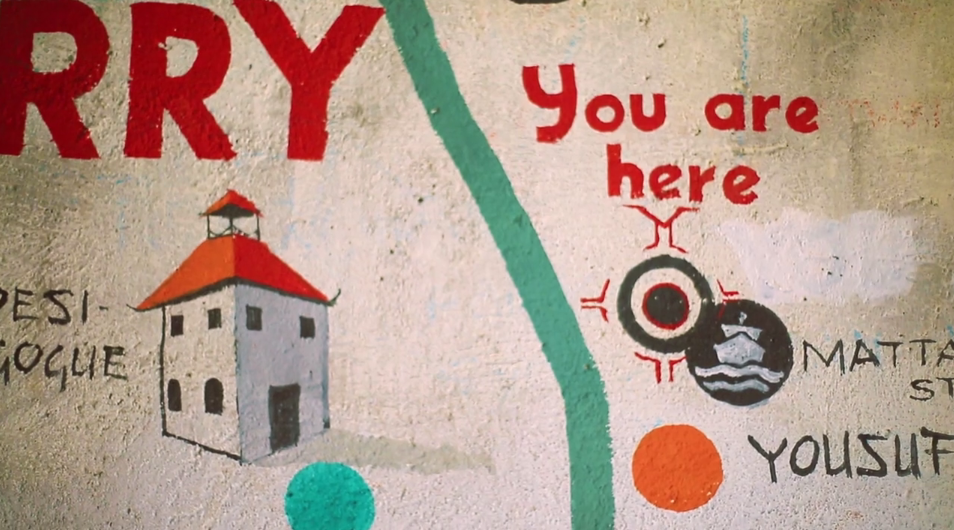
You Are Here.

Three small words found on map boards from metros to malls around the world, usually accompanied by a red dot. Existential words to be sure. Words whose underlying message begs us to live with intention.

The RAXA Collective team crafted the Xandari Harbour walking map with the same deliberateness.

Come explore with us!

Step out from Xandari Harbour’s red door. Go right. Go left. You can’t go wrong!


click below to view the map!

Continue reading