The Earliest Artists

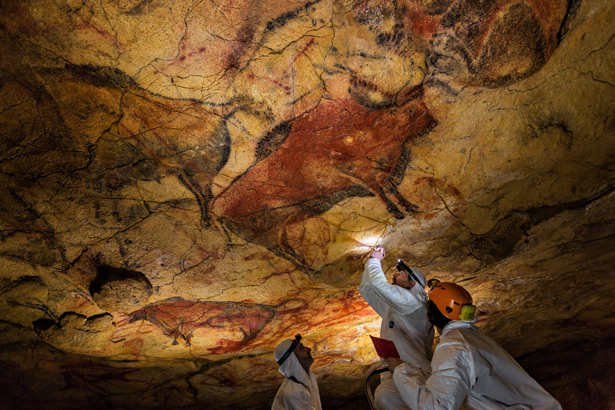
Located in southern France, the Cave of Pont d’Arc holds the earliest-known and best-preserved figurative drawings, dating back to the Aurignacian period (30,000–32,000 BP). PHOTO: Nat Geo

Located in southern France, the Cave of Pont d’Arc holds the earliest-known and best-preserved figurative drawings, dating back to the Aurignacian period (30,000–32,000 BP). PHOTO: Nat Geo

The Cave of Chauvet-Pont-d’Arc has been ferociously protected by the French Ministry of Culture. An exceptional testimony of prehistoric art, the cave was closed off by a rock fall and remained sealed until its discovery in 1994. The images demonstrate techniques of shading, combinations of paint and engraving, three-dimensionality and movement.

Around 36,000 years ago, someone living in a time incomprehensibly different from ours began to draw on its bare walls: profiles of cave lions, herds of rhinos and mammoths, a magnificent bison off to the right, and a chimeric creature—part bison, part woman—conjured from an enormous cone of overhanging rock. Other chambers harbor horses, ibex, and aurochs; an owl shaped out of mud by a single finger on a rock wall; an immense bison formed from ocher-soaked handprints; and cave bears walking casually, as if in search of a spot for a long winter’s nap. The works are often drawn with nothing more than a single and perfect continuous line. In all, the artists depicted 442 animals over perhaps thousands of years, using nearly 400,000 square feet of cave surface as their canvas.
Continue reading

Palau Power!

21mag-21palau-t_CA4-jumbo

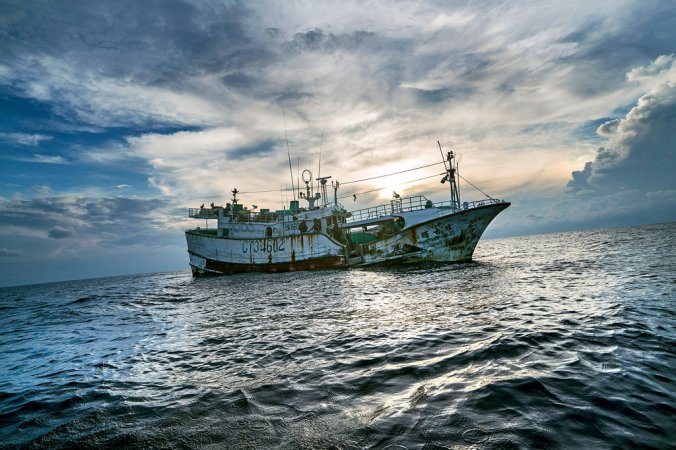
The Sheng Chi Huei 12, a Taiwanese fishing vessel. BENJAMIN LOWY/REPORTAGE, FOR THE NEW YORK TIMES

Where are the heroes on the high waters? Sea Shepherd, one of our favorites, is out there and Paul Watson continues to lead the charge; but not only them. Little places also do big things. Thanks to Palau for the inspiration, and the reporter/publication for the investigation:

Palau vs. the Poachers

The island nation has mounted an aggressive response to illegal fishing in their waters. How they protect themselves may help the rest of the world save all of the oceans.

Late on a January 2015 evening in Shepherdstown, W.Va., a data analyst named Bjorn Bergman, surrounded by whiteboards scribbled with computer code, was orchestrating a high-stakes marine police chase halfway around the world. Staring at his laptop in a cramped ground-floor office, he drank from his sixth cup of coffee and typed another in a long series of emails: ‘‘Try and cut them off rather than making for the last known position.’’ Nearly 9,000 miles away, the Remeliik, a police patrol ship from the tiny island nation Palau, was pursuing a 10-man Taiwanese pirate ship, the Shin Jyi Chyuu 33, through Palauan waters. Bergman, working for a nonprofit research organization called SkyTruth, had mastered the use of satellite data to chart a ship’s most likely course. Instead of pointing the police to where the pirate ship was, he would tell them where it was about to be. He took another sip of coffee, studied his screen, then typed again: ‘‘It may be advisable for the Remeliik to turn southeast.’’ Continue reading

Lay Folk Lessons

Konnikova-Resilience-690

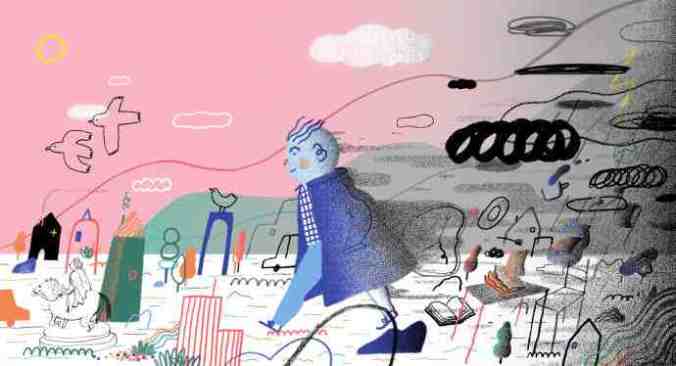
Perception is key to resilience: Do you conceptualize an event as traumatic, or as a chance to learn and grow? ILLUSTRATION BY GIZEM VURAL

As science writers get better and better at reaching lay audiences–starting with Daniel Goleman’s work three decades ago for the New York Times that led to his eventual blockbuster success with Emotional Intelligence (and its many spinoffs) and expanding to much more than the several superstars we have been highlighting in these pages since 2011–it gets more and more tempting for we lay readers to think we “get it.” Hopefully we do some, if not all of the time, get the science enough not only to understand it but perhaps even act on it.

This science writer has become one of my favorites, and this particular online posting (two samples are drawn from the middle section) is a perfect example of why, in terms of the valuable actionable knowledge it imparts:

How People Learn to Become Resilient

BY MARIA KONNIKOVA

…Whether you can be said to have it or not largely depends not on any particular psychological test but on the way your life unfolds. If you are lucky enough to never experience any sort of adversity, we won’t know how resilient you are. It’s only when you’re faced with obstacles, stress, and other environmental threats that resilience, or the lack of it, emerges: Do you succumb or do you surmount?… Continue reading

Unintentional Conservation

Twilley-Ancient-Flower-Amber3-690

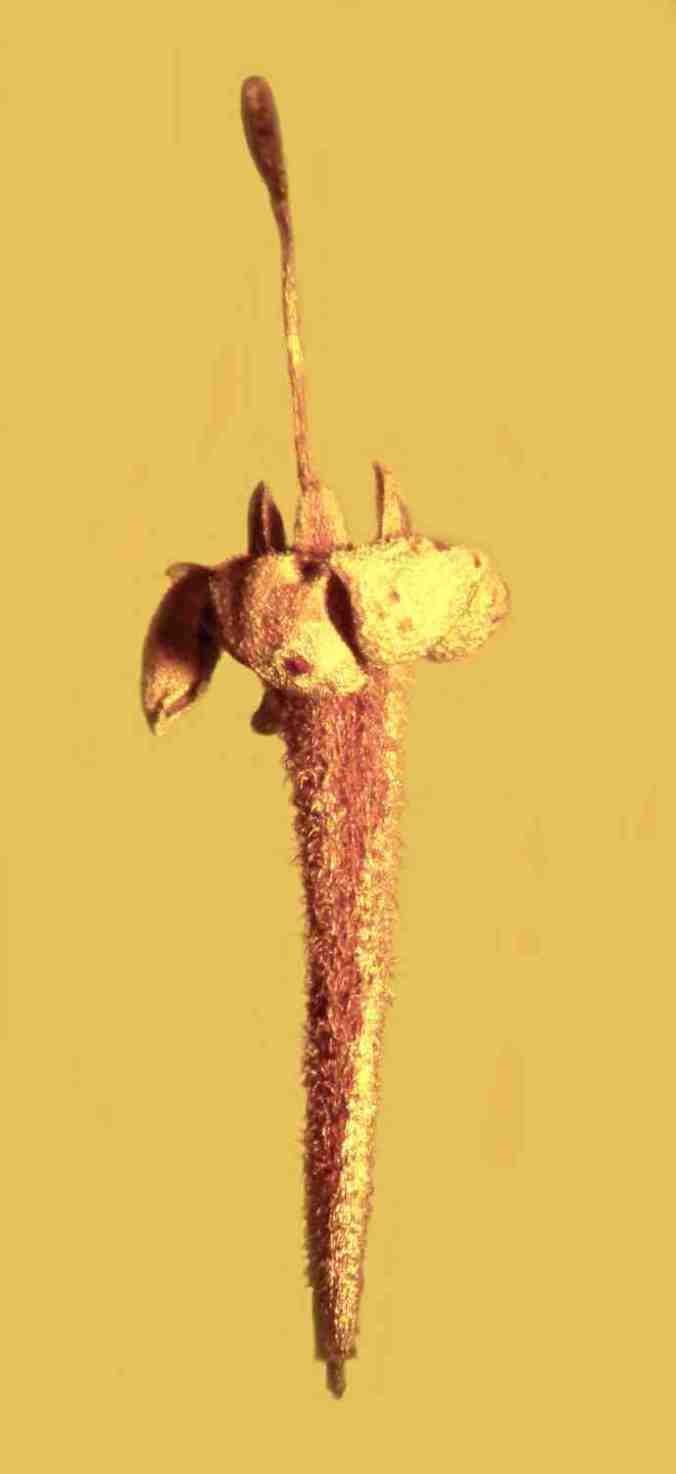
S. electri. COURTESY GEORGE POINAR / OREGON STATE UNIVERSITY

Amber is awesome. In so many ways, it is the definition of a natural wonder. One of those definitions might be its role as unintentional conservator of ancient natural history. This collection of images, from an amber-trapped flower to an prehistoric stingless bee, make the case for this definition:

The flowers of Strychnos electri are slim and small and trumpet-shaped. Their petals flare out at the tip to form a star, out of which a single spindly pollen tube protrudes. They look as if they might have fallen from the stalk yesterday, but they are ancient. At least fifteen million years ago, and possibly as many as forty-five million, they landed in the sticky sap of a tree that is now extinct, in a kind of forest that no longer exists on Earth. The sap hardened into amber, the tree died, and eventually geology took over. The fossilized flowers were submerged in water, buried under layers of gravel and limestone, and finally thrust upward into the foggy hills of the modern-day Dominican Republic. There, in 1986, an American entomologist named George Poinar, Jr., unearthed them. Continue reading

Bringing Nature-Oriented Science To An Urban Audience

Screen Shot 2016-02-16 at 10.04.40 AM

Wild monkeys can learn from a demonstration video set up in the forest. Video by David Frank and James Gorman on September 29, 2014

Several of the videos in this series have been featured on our pages over the last few years, but not all of them (for an example of one we neglected to link to previously, check out this one above). Today the series is crossing round number landmark, so we join in their celebration in hope that the series continues:

Fire Ants, Goshawks and Dog Tongues, Oh My: The Best of Science Take

Continue reading

Bringing Nature To An Urban Audience

AMNH-03-320

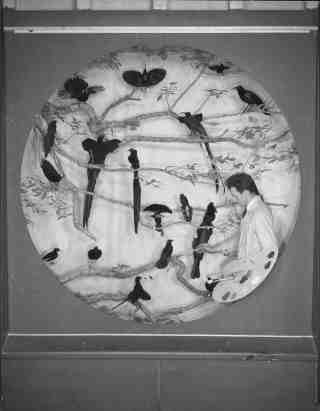
Installing the Birds of Paradise group, 1945. COURTESY AMERICAN MUSEUM OF NATURAL HISTORY

Our interest in the display of natural history makes this is a must-read:

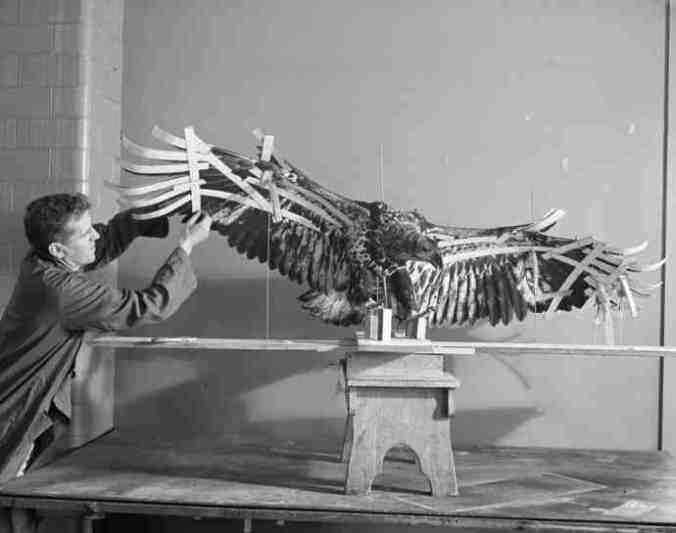
The dioramas at New York City’s American Museum of Natural History—those vivid and lifelike re-creations of the natural world, in which the taxidermied specimens almost seem to breathe and the painted horizons seem to stretch for miles—are very much products of the late-nineteenth and early-twentieth-century milieu in which many of them were created. Temporally and aesthetically sandwiched between the cabinet of curiosities and “Planet Earth,” the dioramas grew out of the intersection between a nascent conservation movement and an age of swashbuckling adventurism…

Of course, we prefer natural history in natural places, preferably intact and living and resplendent as hinted at in this video which we have featured previously. But museums have their place, and the mural at the Cornell Lab of Ornithology is just the most recent of a long line of efforts to get the inanimate to animate our interest. But for those of us who grew up making dioramas, this feature brings to mind the power of three dimensions, even when inanimate, to animate.

AMNH-07-690

An eagle for the bird-group exhibit, 1961. COURTESY AMERICAN MUSEUM OF NATURAL HISTORY

…The word “diorama,” which comes from the Greek for “to see through,” Continue reading

Roses, Places, Faces

ap_400695452747_custom-284970db782859cf8d2ca4b402b12d5fe5210747-s1400-c85

On Feb. 1, Phanice Cherop works at the AAA Growers’ farm in Nyahururu, four hours’ drive north of the capital Nairobi, in Kenya. Last year Kenya exported more than 6.8 million cut flowers to the United States. Ilya Gridneff/AP

We have less than zero interest in Valentine’s Day, but in the stretch journalists make to find a story that we want to read, there is reason at least to review the photos in this story brought to you by National Public Radio (USA):

…Unless you made a point of finding American flowers, odds are any bouquets you bought or received today traveled far indeed. Continue reading

If You Happen To Be in Berlin…

The Berlin International Film Festival 2016 is underway and the submission of the documentary film Olympic Pride, American Prejudice dovetails beautifully with the tradition of Black History Month in the United States.

Olympic Pride, American Prejudice is a feature length documentary exploring the trials and triumphs of 18 African American Olympians in 1936. Set against the strained and turbulent atmosphere of a racially divided America, which was torn between boycotting Hitler’s Olympics or participating in the Third Reich’s grandest affair, the film follows 16 men and two women before, during and after their heroic turn at the Summer Olympic Games in Berlin. Continue reading

A Great Race

As I type this post the 20 4 person co-ed teams participating in the 2016 Patagonia Expedition Race are hopefully getting a good night’s sleep before tomorrow’s Kayak and Rope evaluations. From our collaboration with the organizers, both behind the scenes and in the field, we know the teams are going to need it!

Statistically, fewer than half the teams that start the grueling combination of trekking, mountain biking, kayaking and rope traverses complete the race. The teams receive minimal assistance – basic maps that require extreme orienteering and problem solving – to make the best time from checkpoint to checkpoint in often inhospitable environments.

Imitating the journeys of our Indian forefathers, competitors advance over plains, mountains, glaciers, native forests, swampland, rivers, lakes and channels; guided only by mind and spirit but driven on by physical stamina and experience.

Every edition features a unique route. Past racers have found themselves in the Southern Continental Ice Field, the Strait of Magellan, Torres del Paine, Tierra del Fuego, the Beagle Channel and Cape Horn. The land is diverse, the challenge real, the adventure untamed. Continue reading

Great Backyard Bird Count at Xandari

Patricia works at Reception, with the Great Backyard Bird Count sign behind her

Xandari Resort & Spa’s Great Backyard Bird Count started off with the piercing whistle of a Common Pauraque, followed by some wren vocalizations and a Great Kiskadee‘s eponymous (“great kis-ka-dee!”) call. While drinking my morning coffee before the scheduled birdwatching tour I listened to the sounds from the forest and recorded my first GBBC checklist of the day at 5:30.

Then, some guests and I watched birds from the restaurant terrace for almost half an hour before walking through the gardens as well, leading to two more checklists. The most exciting sightings this time were a small group of White-crowned Parrots and a Zone-tailed Hawk soaring alongside a Short-tailed Hawk.

Continue reading

Let Yourself In


It’s been scientifically proven that people respond emotionally to color and light. The artist Vincent van Gogh was a master of both, and the vibrant, intimate paintings of his bedroom in Arles are evocative examples.

Not only have the curators at the Art Institute of Chicago brought together the artist’s three versions of the room, they’ve created an installation that invites the viewer into a 3-dimensional experience of the iconic painting.

This exhibition is the first to truly delve into the fascinating history of these three paintings and explore the motif of home and its significance to Van Gogh—as haven, creative chamber, and physical reality. The show features approximately 36 works by the artist, including paintings, drawings, and illustrated letters, as well as a selection of books and other ephemera known to have been in Van Gogh’s possession. Continue reading

For Whom the Bell Tolls

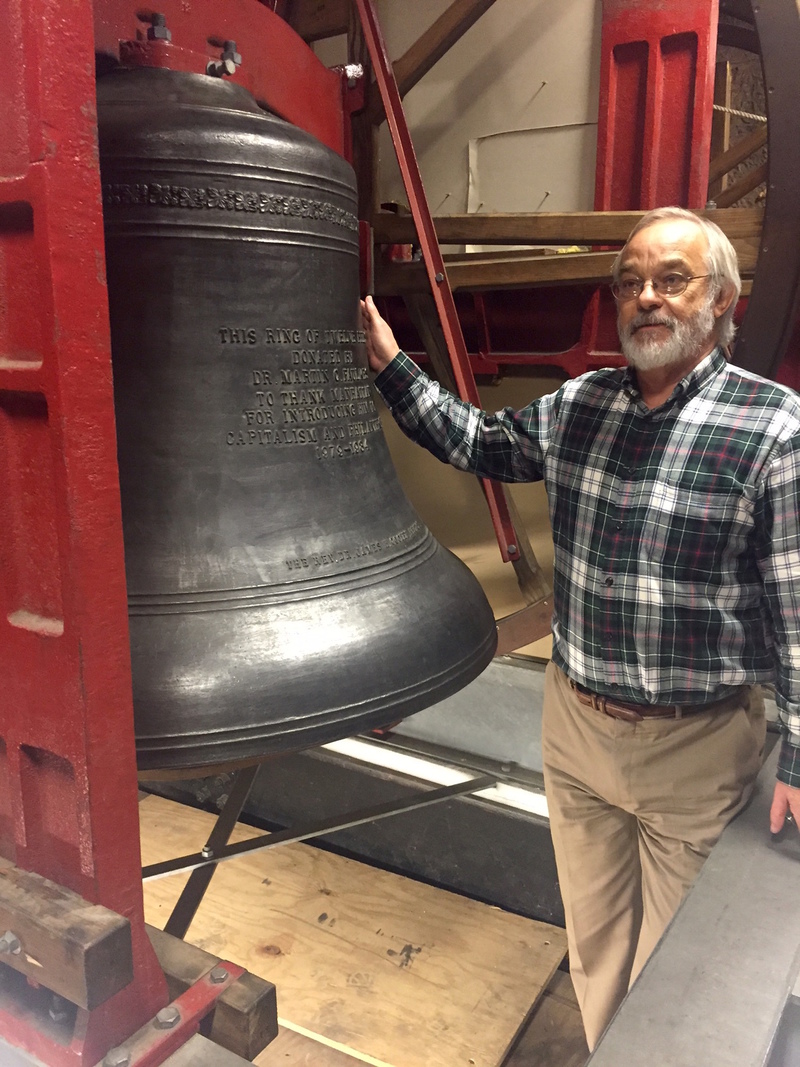
Tony Furnivall beside one of the dozen bells in Trinity Church's clocktower. (Photo: Ella Morton)

Tony Furnivall beside one of the dozen bells in Trinity Church’s clocktower. (Photo: Ella Morton)

If you’ve still not knocked off “do the new” on the year’s bucket-list, we have a suggestion. Join the Wednesday Night rites of New York’s church bell ringers.

Bell ringing, also known as change ringing, is what Furnivall calls “an ultra-niche interest.” Originating in medieval England, it is practiced by an estimated 40,000 people around the world today, mostly in the United Kingdom and among countries of the former British Empire. In the U.S., there is a small but enthusiastic bell-ringing scene, spread across 42 towers. The North American Guild of Change Ringers, established in the 1970s, calls ringing “a team sport, a highly coordinated musical performance, an antique art, and a demanding exercise.” “We ring bells to celebrate,” Furnivall says, and if you’re spry enough to clamber up a clock tower, you can grab a rope and join in the fun.

Continue reading

To Dam or Not to Dam

In southern Laos, near where the Don Sahong dam will soon rise, a fisherman’s son snoozes above his father’s weir, waiting for fish migrating upstream to tire and wash back into the trap. PHOTO: David Guttenfelder

In southern Laos, near where the Don Sahong dam will soon rise, a fisherman’s son snoozes above his father’s weir, waiting for fish migrating upstream to tire and wash back into the trap. PHOTO: David Guttenfelder

Dams are barriers built across rivers and streams to confine and regulate water flow for irrigation and hydroelectricity. However, in recent years, the social, economic, and environmental impacts of these constructions have become a pressing concern. While dams are integral to agricultural irrigation, and can help control floods, the construction causes mass displacement, increases risks of earthquakes and landslides. Along the Mekong in China, the people need clean electricity but also the fish and rice that and undammed river provides.

Ban Pak Ing may be a vision of the future for many Mekong villages. Five more dams are under construction in China. Downstream, in Laos and Cambodia, 11 major dams—the first on the main stem of the lower Mekong—are either proposed or already being built. By disrupting fish migration and spawning, the new dams are expected to threaten the food supply of an estimated 60 million people—most of whom live in villages much like Ban Pak Ing. The electric power generated by the lower Mekong dams is destined largely for booming urban centers in Thailand and Vietnam. Kraisak Choonhavan, a Thai activist and former senator, calls the lower Mekong dams “a disaster of epic proportions.”

Continue reading