
Tacacori, Costa Rica
Tacacori, Costa Rica

Giant clam in Pacific, Asia Pacific. (ALL RIGHTS GRANTED TNC)
The Nature Conservancy is, among the philanthropic conservation organizations we are aware of, uniquely entrepreneurial beyond their core competency in land conservation. Their communications outreach is among these excellent extensions of their mission. This article, about one of the NatureNet Science Fellows, is a good case in point:
Adventures in Alternative Energy: Giant Clam Edition
When most people think about alternative energy sources, Pacific giant clams probably do not spring readily to mind. Within their iridescent tissues, however, the world’s largest clams may well hold the missing link to finally enable the efficient (read: commercially viable) large-scale production of clean biofuels from algae.
Giant clams as alternative energy powerhouses. Who knew? Continue reading
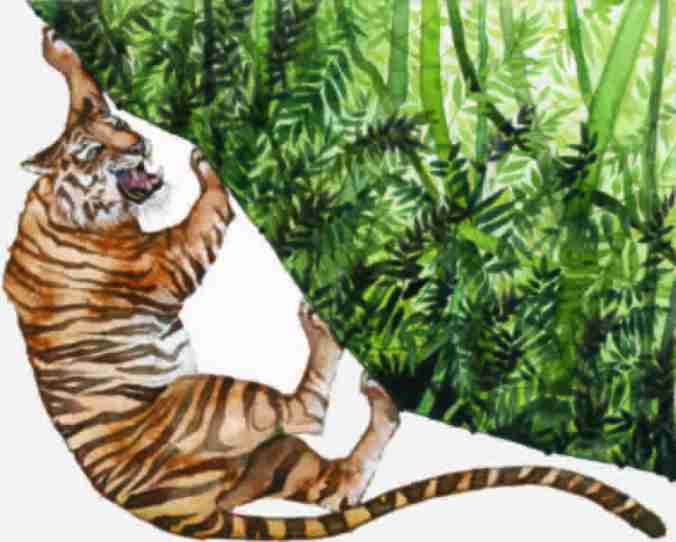
Endangered tiger and rainforest habitat decline. Image credit: Jill Pelto
In the years since Raxa Collective has been operational in India, we have welcomed several dozen interns to Kerala from a dozen or more countries around the world, most but not all from university programs that have some attention to sustainable development. The majority of those interns have been graduate students preparing for a career in international business. Most of our interns will not work full time in sustainable development after graduating. But they want this experience to ensure that their work has a kind of “double major” effect so their exposure to sustainability programming is embedded in their more mainstream functional business activities.
Those interns not from university programs are typically taking a sabbatical from their regular work life. They also are typically looking to add the equivalent of a second major to their regular professional life. Thanks to Clara Chaisson at EcoWatch for this pointer over to an scientist/artist who is doing the same, in her own way:
Scientists are notorious for struggling to communicate the importance of their work in compelling ways. Continue reading
Mysore, Karnataka

Cherry tomatoes growing at Xandari Resort © J.L. Zainaldin
We’re always on the lookout for non-chemical ways to deter pests from agricultural areas, and researchers in the UK are finding yet another method that doesn’t involve spraying plants with poisons that can adversely affect local wildlife (i.e., bees) or the people eating them. It may seem like a no-brainer, but here it is: breed commercial tomatoes with wild ones to increase pest resistance! Sindya Bhanoo summarizes the research for the New York Times:
Whiteflies are the scourge of many farms, damaging tomatoes, peppers, eggplants and other crops. Now, researchers in Britain report that a species of wild tomato is more resistant to the pest than its commercial counterparts.
The wild type, the currant tomato, is closely related to domestic varieties, “so we could crossbreed to introduce the resistance,” said Thomas McDaniel, a biologist and doctoral student at Newcastle University in England and a co-author of the study, published in the journal Agronomy for Sustainable Development. “Another method would be genetic engineering, if we identified the genes.”
The researchers studied Trialeurodes vaporariorum, a species of whitefly that often attacks tomatoes grown in greenhouses. Whiteflies damage tomato plants by extracting the plant’s sap, which contains vital nutrients; by leaving a sticky substance on the plant’s surface that attracts mold; and by transmitting viruses through their saliva.
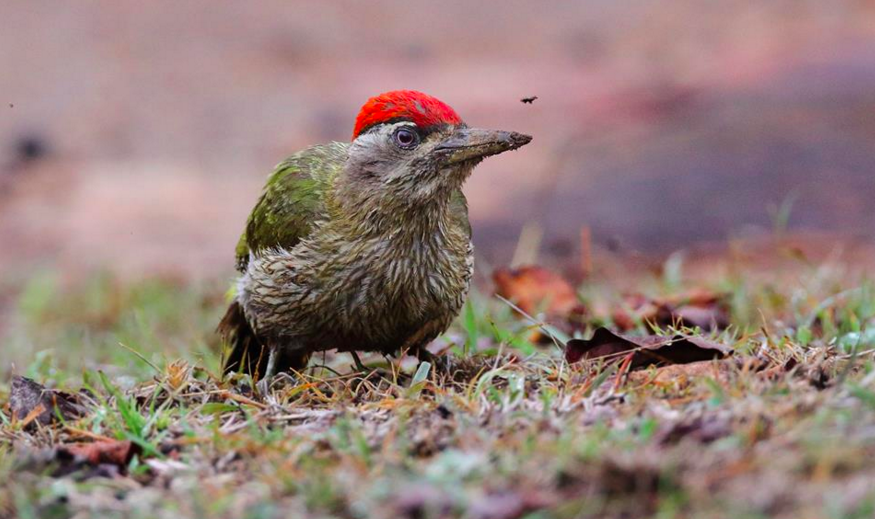
There’s a couple places where we’ve mentioned leks on this blog before–primarily where grouse have been involved–but the first happens to be from 2012, when I was sharing about another bird from the same family as the species shown in the video below. That was the Club-winged Manakin, which I caught on video with a small point-and-shoot camera looking through a guide’s spotting scope. As I explained back then, lek is a Swedish word that has come to mean competitive displays between males of a species to become the breeding choice of one or more females of the same species, most often in the avian world. This time, I got some video from my hand-held (and a tad shaky) Canon Powershot SX50:
In the video above, you can watch one, and then two, male Long-tailed Manakins call and flutter together in the woods just off-trail at Xandari Resort, perhaps as a display Continue reading
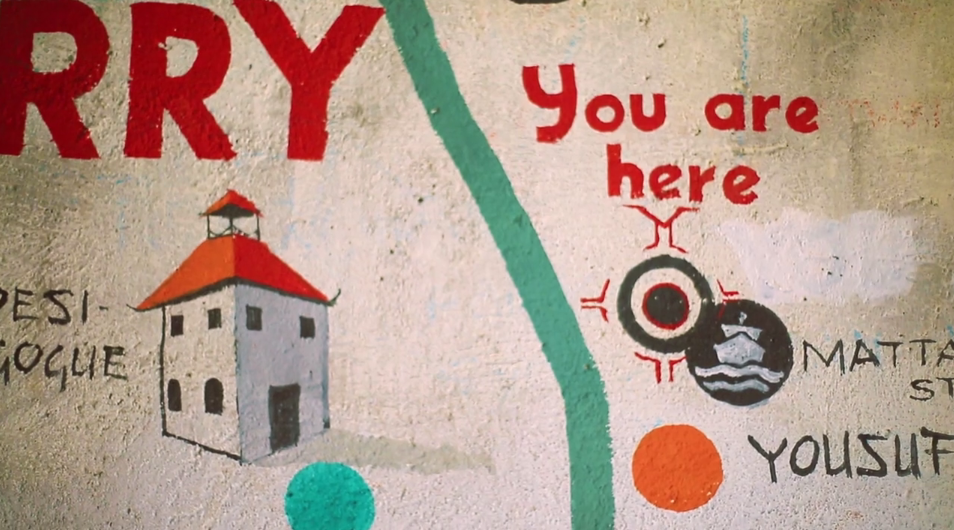
You Are Here.
Three small words found on map boards from metros to malls around the world, usually accompanied by a red dot. Existential words to be sure. Words whose underlying message begs us to live with intention.
The RAXA Collective team crafted the Xandari Harbour walking map with the same deliberateness.
Come explore with us!
Step out from Xandari Harbour’s red door. Go right. Go left. You can’t go wrong!
click below to view the map!
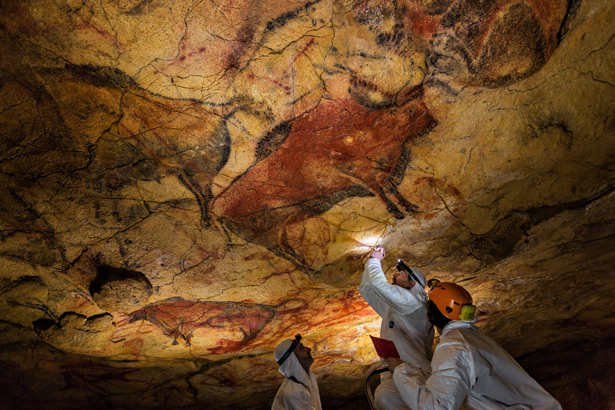
Located in southern France, the Cave of Pont d’Arc holds the earliest-known and best-preserved figurative drawings, dating back to the Aurignacian period (30,000–32,000 BP). PHOTO: Nat Geo
The Cave of Chauvet-Pont-d’Arc has been ferociously protected by the French Ministry of Culture. An exceptional testimony of prehistoric art, the cave was closed off by a rock fall and remained sealed until its discovery in 1994. The images demonstrate techniques of shading, combinations of paint and engraving, three-dimensionality and movement.
Around 36,000 years ago, someone living in a time incomprehensibly different from ours began to draw on its bare walls: profiles of cave lions, herds of rhinos and mammoths, a magnificent bison off to the right, and a chimeric creature—part bison, part woman—conjured from an enormous cone of overhanging rock. Other chambers harbor horses, ibex, and aurochs; an owl shaped out of mud by a single finger on a rock wall; an immense bison formed from ocher-soaked handprints; and cave bears walking casually, as if in search of a spot for a long winter’s nap. The works are often drawn with nothing more than a single and perfect continuous line. In all, the artists depicted 442 animals over perhaps thousands of years, using nearly 400,000 square feet of cave surface as their canvas.
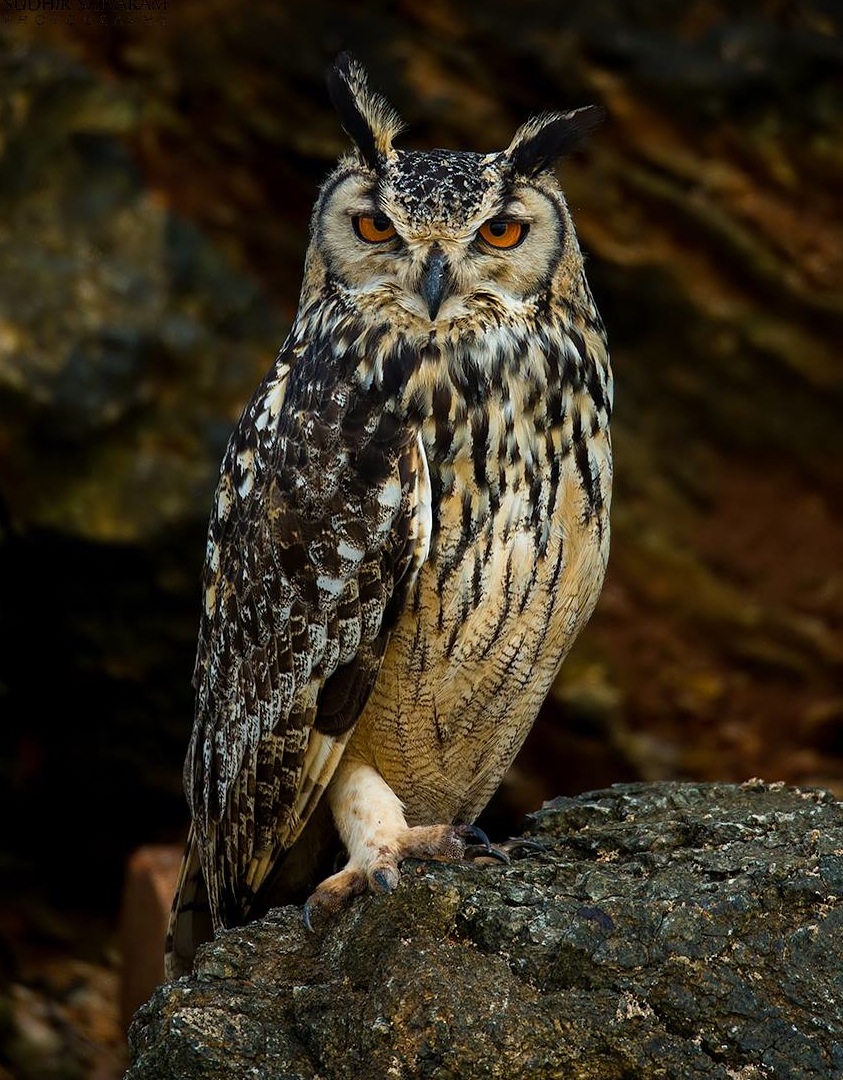
Daroji Sloth Bear Sanctuary, Karnataka

The Sheng Chi Huei 12, a Taiwanese fishing vessel. BENJAMIN LOWY/REPORTAGE, FOR THE NEW YORK TIMES
Where are the heroes on the high waters? Sea Shepherd, one of our favorites, is out there and Paul Watson continues to lead the charge; but not only them. Little places also do big things. Thanks to Palau for the inspiration, and the reporter/publication for the investigation:
Palau vs. the Poachers
The island nation has mounted an aggressive response to illegal fishing in their waters. How they protect themselves may help the rest of the world save all of the oceans.
Late on a January 2015 evening in Shepherdstown, W.Va., a data analyst named Bjorn Bergman, surrounded by whiteboards scribbled with computer code, was orchestrating a high-stakes marine police chase halfway around the world. Staring at his laptop in a cramped ground-floor office, he drank from his sixth cup of coffee and typed another in a long series of emails: ‘‘Try and cut them off rather than making for the last known position.’’ Nearly 9,000 miles away, the Remeliik, a police patrol ship from the tiny island nation Palau, was pursuing a 10-man Taiwanese pirate ship, the Shin Jyi Chyuu 33, through Palauan waters. Bergman, working for a nonprofit research organization called SkyTruth, had mastered the use of satellite data to chart a ship’s most likely course. Instead of pointing the police to where the pirate ship was, he would tell them where it was about to be. He took another sip of coffee, studied his screen, then typed again: ‘‘It may be advisable for the Remeliik to turn southeast.’’ Continue reading
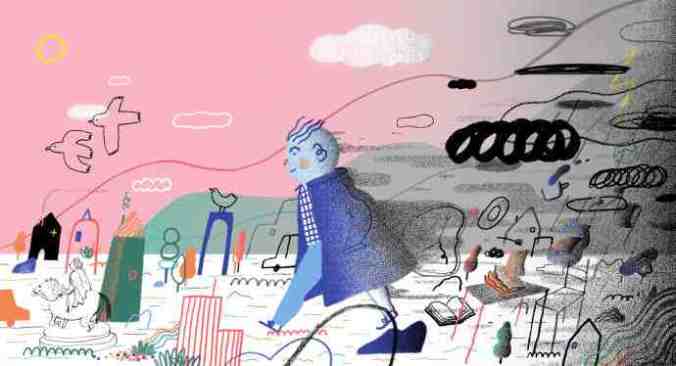
Perception is key to resilience: Do you conceptualize an event as traumatic, or as a chance to learn and grow? ILLUSTRATION BY GIZEM VURAL
As science writers get better and better at reaching lay audiences–starting with Daniel Goleman’s work three decades ago for the New York Times that led to his eventual blockbuster success with Emotional Intelligence (and its many spinoffs) and expanding to much more than the several superstars we have been highlighting in these pages since 2011–it gets more and more tempting for we lay readers to think we “get it.” Hopefully we do some, if not all of the time, get the science enough not only to understand it but perhaps even act on it.
This science writer has become one of my favorites, and this particular online posting (two samples are drawn from the middle section) is a perfect example of why, in terms of the valuable actionable knowledge it imparts:
How People Learn to Become Resilient
BY MARIA KONNIKOVA
…Whether you can be said to have it or not largely depends not on any particular psychological test but on the way your life unfolds. If you are lucky enough to never experience any sort of adversity, we won’t know how resilient you are. It’s only when you’re faced with obstacles, stress, and other environmental threats that resilience, or the lack of it, emerges: Do you succumb or do you surmount?… Continue reading
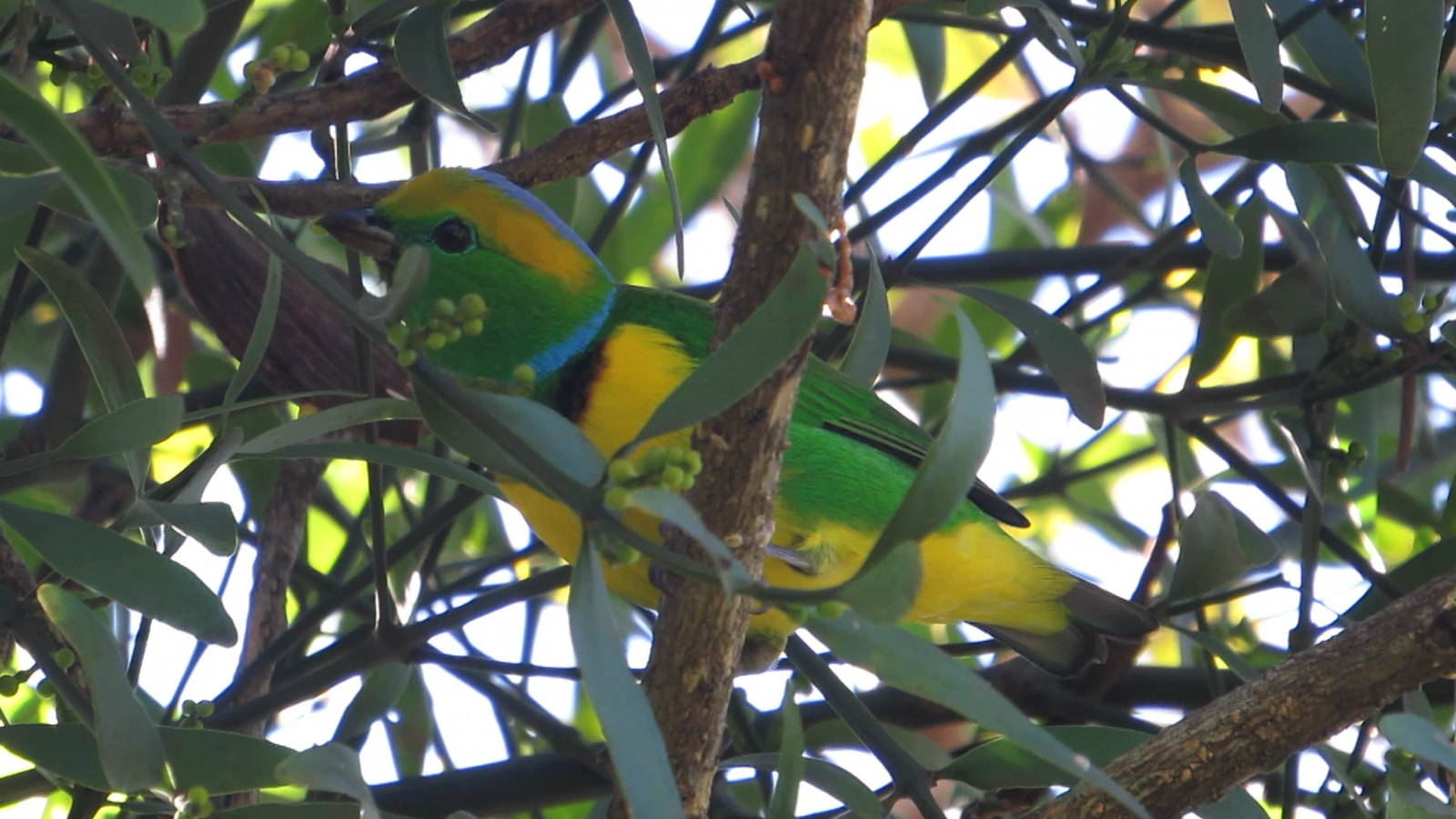
male – Tacacori, Costa Rica
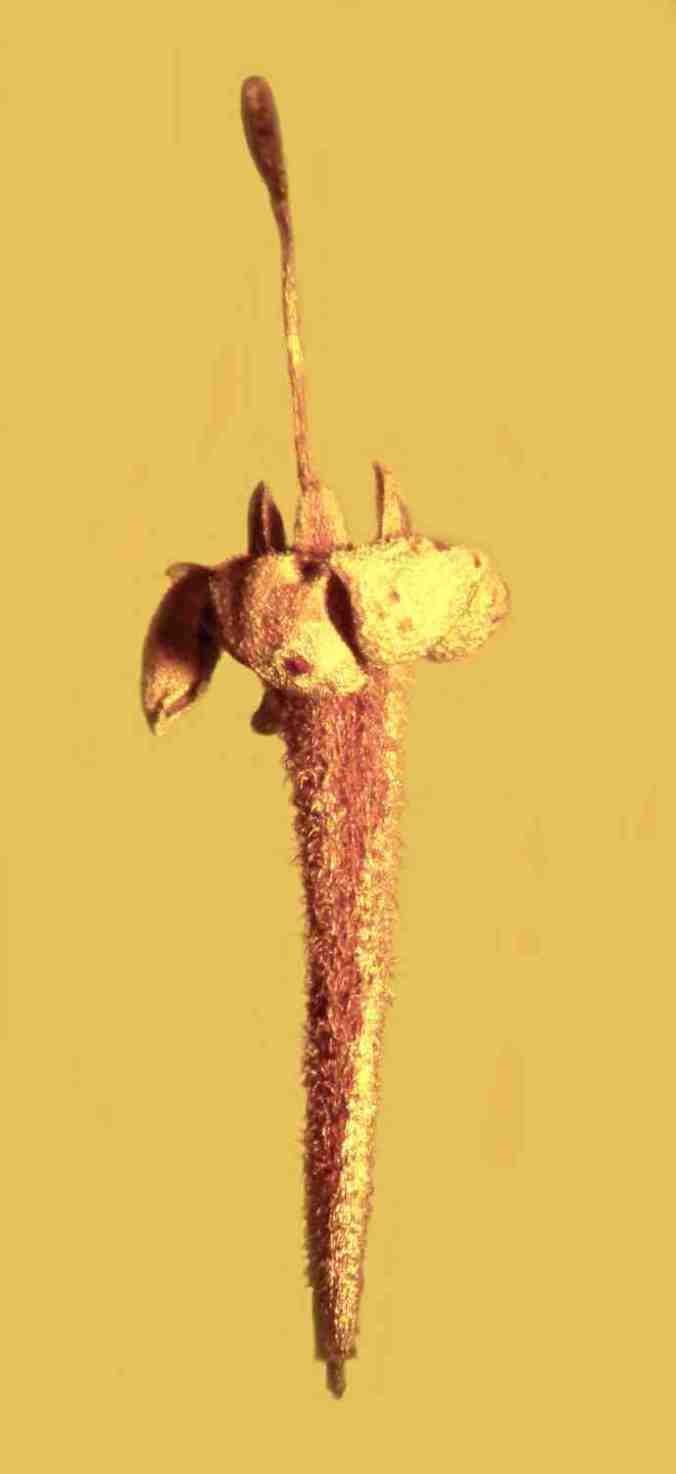
S. electri. COURTESY GEORGE POINAR / OREGON STATE UNIVERSITY
Amber is awesome. In so many ways, it is the definition of a natural wonder. One of those definitions might be its role as unintentional conservator of ancient natural history. This collection of images, from an amber-trapped flower to an prehistoric stingless bee, make the case for this definition:
The flowers of Strychnos electri are slim and small and trumpet-shaped. Their petals flare out at the tip to form a star, out of which a single spindly pollen tube protrudes. They look as if they might have fallen from the stalk yesterday, but they are ancient. At least fifteen million years ago, and possibly as many as forty-five million, they landed in the sticky sap of a tree that is now extinct, in a kind of forest that no longer exists on Earth. The sap hardened into amber, the tree died, and eventually geology took over. The fossilized flowers were submerged in water, buried under layers of gravel and limestone, and finally thrust upward into the foggy hills of the modern-day Dominican Republic. There, in 1986, an American entomologist named George Poinar, Jr., unearthed them. Continue reading
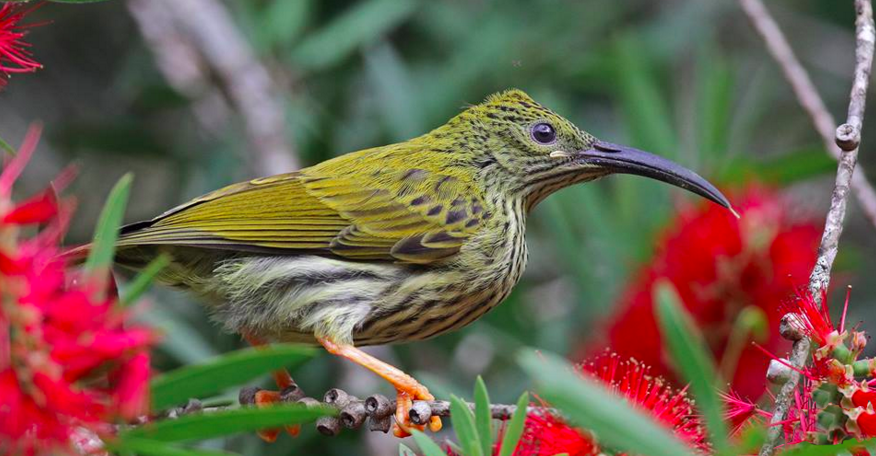
West Bengal, India

Wild monkeys can learn from a demonstration video set up in the forest. Video by David Frank and James Gorman on September 29, 2014
Several of the videos in this series have been featured on our pages over the last few years, but not all of them (for an example of one we neglected to link to previously, check out this one above). Today the series is crossing round number landmark, so we join in their celebration in hope that the series continues:
Fire Ants, Goshawks and Dog Tongues, Oh My: The Best of Science Take
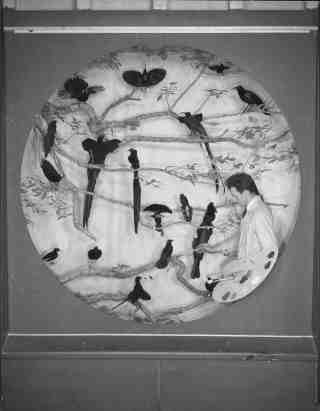
Installing the Birds of Paradise group, 1945. COURTESY AMERICAN MUSEUM OF NATURAL HISTORY
Our interest in the display of natural history makes this is a must-read:
The dioramas at New York City’s American Museum of Natural History—those vivid and lifelike re-creations of the natural world, in which the taxidermied specimens almost seem to breathe and the painted horizons seem to stretch for miles—are very much products of the late-nineteenth and early-twentieth-century milieu in which many of them were created. Temporally and aesthetically sandwiched between the cabinet of curiosities and “Planet Earth,” the dioramas grew out of the intersection between a nascent conservation movement and an age of swashbuckling adventurism…
Of course, we prefer natural history in natural places, preferably intact and living and resplendent as hinted at in this video which we have featured previously. But museums have their place, and the mural at the Cornell Lab of Ornithology is just the most recent of a long line of efforts to get the inanimate to animate our interest. But for those of us who grew up making dioramas, this feature brings to mind the power of three dimensions, even when inanimate, to animate.
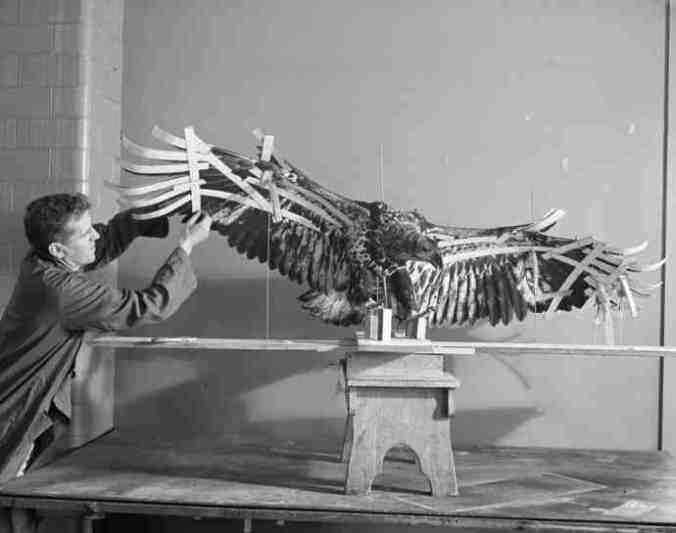
An eagle for the bird-group exhibit, 1961. COURTESY AMERICAN MUSEUM OF NATURAL HISTORY
…The word “diorama,” which comes from the Greek for “to see through,” Continue reading

Tacacori, Costa Rica

On Feb. 1, Phanice Cherop works at the AAA Growers’ farm in Nyahururu, four hours’ drive north of the capital Nairobi, in Kenya. Last year Kenya exported more than 6.8 million cut flowers to the United States. Ilya Gridneff/AP
We have less than zero interest in Valentine’s Day, but in the stretch journalists make to find a story that we want to read, there is reason at least to review the photos in this story brought to you by National Public Radio (USA):
…Unless you made a point of finding American flowers, odds are any bouquets you bought or received today traveled far indeed. Continue reading

The Berlin International Film Festival 2016 is underway and the submission of the documentary film Olympic Pride, American Prejudice dovetails beautifully with the tradition of Black History Month in the United States.
Olympic Pride, American Prejudice is a feature length documentary exploring the trials and triumphs of 18 African American Olympians in 1936. Set against the strained and turbulent atmosphere of a racially divided America, which was torn between boycotting Hitler’s Olympics or participating in the Third Reich’s grandest affair, the film follows 16 men and two women before, during and after their heroic turn at the Summer Olympic Games in Berlin. Continue reading
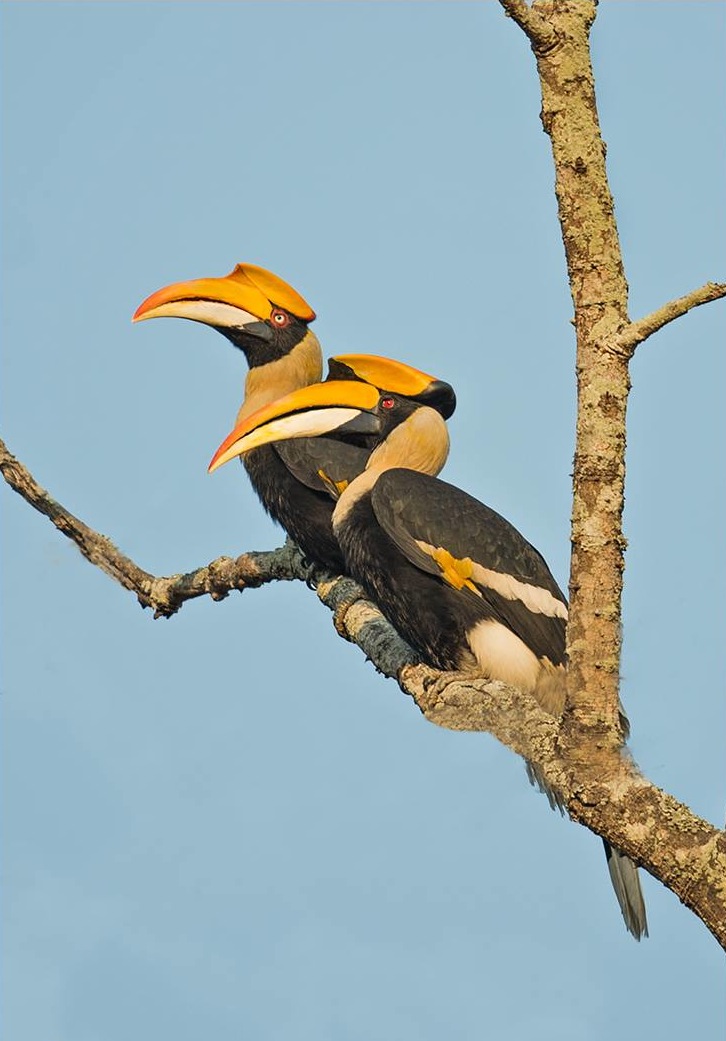
Kaziranga National Park, Assam
 Organikos