Entrepreneurship, Ghana and Bamboo Bikes

In the early days of this site I wrote with enthusiasm about High Design bamboo bikes. We can’t overstate the importance of bicycles in both rural and urban environments.

Ghanian Entrepreneur Bernice Dapaah’s work is not only empowering the women who she employs in making bamboo bicycles, but the product should serve as an inspiration to people worldwide,  Continue reading

Passive Homes in Washington, DC

Photo © Passivhaus Institute, Germany

Energy-efficient and eco-friendly homes have been the subject of posts here in the past. Virginia Carabelli shared her first-hand experience with straw bale construction, and we’ve seen stories about earthships made from recycled material and houses covered in solar panels. Now we’re learning about a whole category of houses that can be certified as “passive” to a standard popularized in Germany. These buildings are like a thermos: extremely well insulated so that heating and cooling costs can be minimized to the point where the house is projected to use up to 90% less energy than the average house. Habitat for Humanity, in collaboration with other organizations for funding and discounts on domestic electronics, is building several houses in the DC area for a low-income neighborhood: Wendy Koch reports for National Geographic:

Built partly by volunteers, these low-budget Habitat for Humanity homes—now nearing completion—don’t look like anything special. They have basic brick facades like others in their gentrifying Ivy City neighborhood.

They stand out in other ways: 12-inch-thick exterior walls and triple-pane, imported-from-Ireland windows offer more than double the insulation required of new homes. In lieu of a furnace, tiny, wall-mounted Mitsubishi units provide heating and cooling. (See related blog post: “Laying the Foundation for Sustainable Housing in D.C.“)

Continue reading

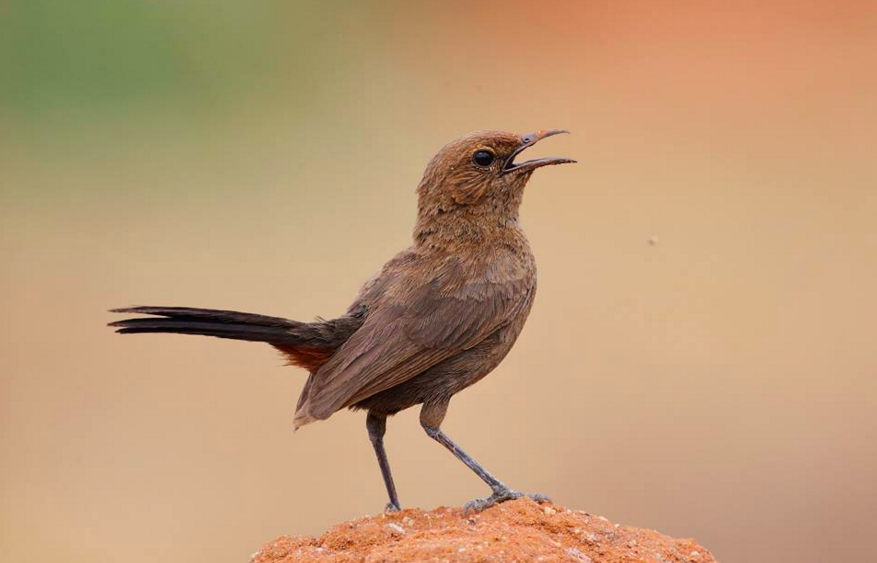
Concurrent and Coinciding Thoughts on 5000+ Birds

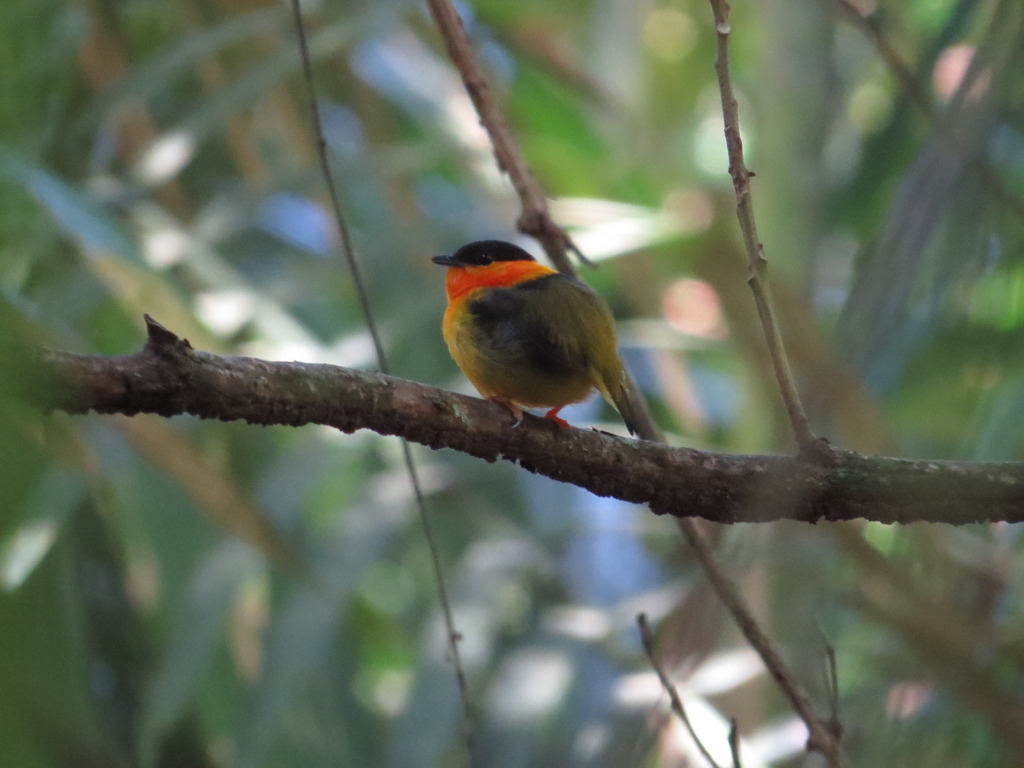
img_7608_zpsgfofu0lt

male Orange-collared Manakin seen at Carara National Park, Costa Rica

This week, two birders (one of whom we’ve featured on the blog before, and the other who we should have), Noah Strycker and Tim Boucher, wrote some thoughts on birding and life lists that had much in common, partially because I suspect Boucher’s post on The Nature Conservancy’s blog was inspired by Strycker’s summary of his 2015 Big Year, even though he made no explicit mention of the new world record (6,042 species of bird seen or heard in a calendar year).

Boucher, who saw his 5000th bird at the very end of 2015 (and those 5000 birds are ones he’s actually seen, not only heard), reflects on thirty-four years of birding to achieve his goal. Strycker, on the other hand, summarizes 365 days of straight birding to end up with the biggest big year ever recorded.

Continue reading

Clap Hands for Kerala Birders!

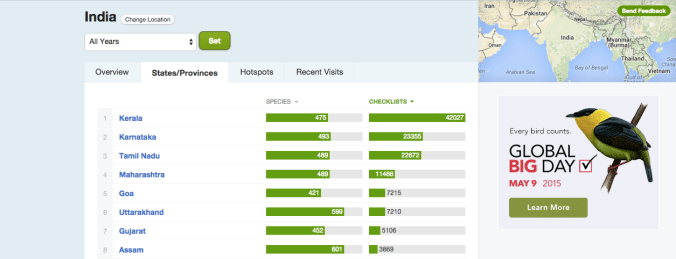
Between the on-going Bird of the Day series and many ornithologically focused posts, our interest in birds can’t be breaking news to any La Paz Group reader. We’re constantly hearing more about the importance of citizen science in all sorts of ecosystems, but with both birding and Kerala so close to our hearts we’re thrilled to applaud the enthusiasm of the Bird Count India community. Continue reading

Ocean Farms & Better Burgers

Shout outs here. First, as a Connecticut boy myself, I say with some homestate pride that this is the coolest thing to come out of the state in my lifetime. Mr. Smith, our hats are tipped to you. Click the image above to see what he is doing.  Great stuff.

Screen Shot 2016-01-29 at 10.17.53 AMNext, take a look at Mr. Headley’s creation by clicking the image to the right, a place which we first read about here; and then again more recently here. The reason both of these came to my attention today, and why I am compelled to share these links, is worthy of 20 minutes of your time if you care about food-related sustainability issues. For that, in the form of a podcast, click here. A summary of the podcast: Continue reading

The Mountain Spirit

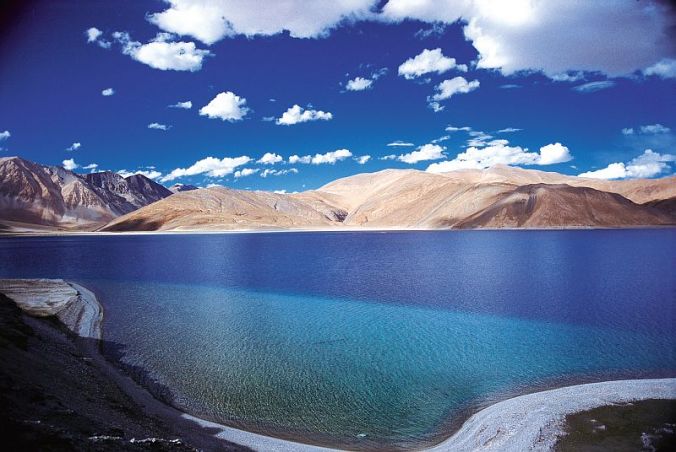
ladakh

The Ladakhi Women’s Travel Company, the first to be completely owned and operated by women in the area, is all about empowering women and promotes ecotourism. PHOTO: Thrillophilia 

A trip to India is incomplete without visiting the hallowed Taj Mahal and the many palaces up north. And the world-famous backwaters of Kerala and the hill stations across Southern India. What should figure on travel itineraries without a doubt: Leh-Ladakh. A  favorite getaway among domestic travelers, this mountainous region – with its bounty of snow-kissed peaks and crystal blue waters – is every color dream come true. Here’s visual proof. And if you do make it there, look up the Ladakhi Women’s Travel Company.

How many women does it take to start an all-women travel company, set up a women’s welfare network for women in distress, write tirelessly on social and environmental issues, win a bronze at the National Ice Hockey Championship, and keep training an ever-growing number of women to be professional trekking guides in the harsh terrain of Ladakh? Just one, if that woman happens to be Thinlas Chorol. 

Continue reading

The History of Organic Design

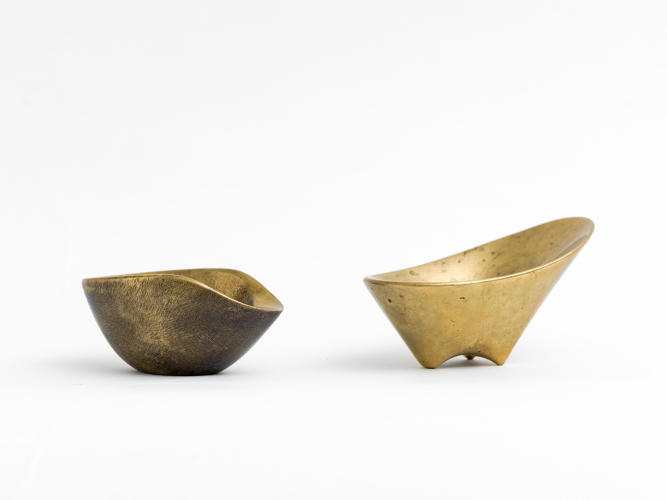
organic design

Carl Aubock II [Austrian, 1900-1957] Ashtray, Model No. 3597, 1948. Ashtray Model No. 4736, 1947. PHOTO: CoExist 

What about the world of design is organic? Literally, yes it involves environmental concerns, also the premise of using Nature as the basis for design. Design that grows – inside out – as the elements of Nature. CoExist delves into the history of organic design:

In the 1930s, the central belief of the organic movement was that furniture and architecture should reflect a harmony between people and nature. In furniture design, this meant natural materials like wood, and smooth, rounded forms. The bent plywood furniture of legendary French designer Jean Prouve came out of this period, as did Marcel Breuer and his laminated birch plywood armchair with a calfskin cushion. These designers prided themselves on being dedicated to their craft, and their pieces were painstakingly made and not easily reproduced. “They saw it as a unique work that refers to nature,” says Olshin. “These pieces tend to be unique one-of-a-kind studio work that’s not easily produced in mass quantities.”

Continue reading

Who Dreamed This City into Being?

paris

In the 19th century, George-Eugene Haussmann completely redesigned and rebuilt the French capital. PHOTO: Matt Robinson

“Paris was a universe whole and entire unto herself, hollowed and fashioned by history; so she seemed in this age of Napoleon III with her towering buildings, her massive cathedrals, her grand boulevards and ancient winding medieval streets–as vast and indestructible as nature itself. All was embraced by her, by her volatile and enchanted populace thronging the galleries, the theaters, the cafes, giving birth over and over to genius and sanctity, philosophy and war, frivolity and the finest art; so it seemed that if all the world outside her were to sink into darkness, what was fine, what was beautiful, what was essential might there still come to its finest flower. Even the majestic trees that graced and sheltered her streets were attuned to her–and the waters of the Seine, contained and beautiful as they wound through her heart; so that the earth on that spot, so shaped by blood and consciousness, had ceased to be the earth and had become Paris.”
Anne Rice, Interview with the Vampire

Literature, history, art, everyday news, talk at a neighborhood cafe – the exquisite and the commonplace are rife with paeans to this city. But how did she come into being?

Continue reading

The Republic Stands

Republic Day

After 26 years, man’s or rather a soldier’s best friend returned to the annual Republic Day parade in India. PHOTO: Getty

5 months and 11 days – that was the last time I felt a surge of patriotism, took a good look at what my country was and is. And what it will be. As the clock hands inched towards midnight and yet another Indian anniversary of independence, I wrote these lines. That day drew to a close. Sadly, the all-consuming, overwhelming love I felt for this land, too. Don’t get me wrong: I love my country. Every single day. All its idiosyncracies with all my heart and soul. But it takes the designated Independence Day or the more recent Republic Day (January 26) for this love to reign over my work-weary being. To remind of this freedom I am bestowed with. Yesterday, it did. And this love left paw prints all over my heart and I sorely missed a friend of mine in the uniform. Made me love my country more. Be thankful, too.

Continue reading

The Alphabets of Assimilation

The Salt

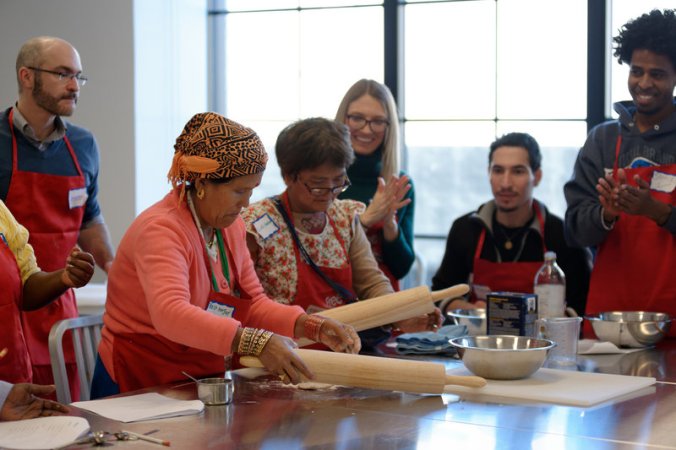
Teela Magar and Cing Neam prepare roti dough as part of Edible Alphabet, a program in Philadelphia that folds English lessons for immigrants to the U.S into a cooking class. PHOTO: Bastiaan Slabbers, The Salt

Roti is a staple in Indian homes. This unleavened flat bread made of stoneground wholemeal flour links tables in Asia and Africa. With its humble origins, simple spirit, and its versatility in being an economical yet nutritious accompaniment, the roti is a mainstay of an English-as-a-Second-Language class in Philapdelphia. So, how does breaking bread help immigrants pick up basics of English – a skill vital to their rehabilitation, assimilation, and survival in a foreign land? The Salt tells us:

“Food is warmth, it’s comfort, it breaks down those barriers.” Galeb Salman left his native Iraq 25 years ago and most recently lived in Thailand. He says he savors the choices and freedom he feels since arriving here in September with his wife and five kids. “When I think I want to learn, I want to study, I can. When I want to work, I can,” he says. “I feel we have good life now. …This is my new life.”

Continue reading

Understanding Coal

20160123_STP501_3.jpg

From the current issue of Economist, a bit of readable geological science to help make sense of the splashier headlines:

The origin of coal

The rock that rocked the world

More than any other substance, coal created modern society. But what created coal?

FOR 60m years of Earth’s history, a period known to geologists as the Carboniferous, dead plants seemed unwilling to rot. When trees expired and fell to the ground, much of which was swampy in those days, instead of being consumed by agents of decay they remained more or less intact. In due course, more trees fell on them. And more, and yet more. The buried wood, pressed by layers of overburden and heated from below by the Earth’s interior, gradually lost its volatile components and was transformed into a substance closer and closer to pure carbon. Continue reading

Fish Fraud Falling

fish-marketThanks to Conservation Magazine for pointing us to this bit of scientific evidence that, while fisheries are on the whole in a dismal state, steps are being taken in Europe to address one of the symptoms:

Over the past few years, dozens of studies have documented a global fish fraud epidemic, in which fish are mislabeled as species they are not. It’s a problem with detrimental environmental, economic, and even potential health effects. Continue reading

Constant Signs In Favor Of Vegetarianism

22cow-web-popup

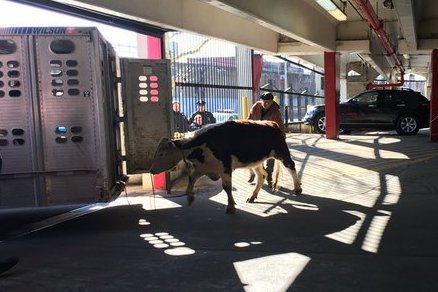
Officers corralled a cow that had escaped a slaughterhouse in Jamaica, Queens, on Thursday. Credit, New York Police Department 103rd Precinct

We are not clear on the meaning of the name given to this cow, but we are sure the story is a sign from the forces of vegetarianism. Anyway, go Freddie, go! As if you needed more reasons, we propose a quick read to get you thinking about giving up meat, from an unexpected angle:

A cow that was captured by the police after escaping a New York City slaughterhouse has been taken in by an animal sanctuary and named for the rock legend Freddie Mercury. Continue reading

Can A University Course Change Your Life?

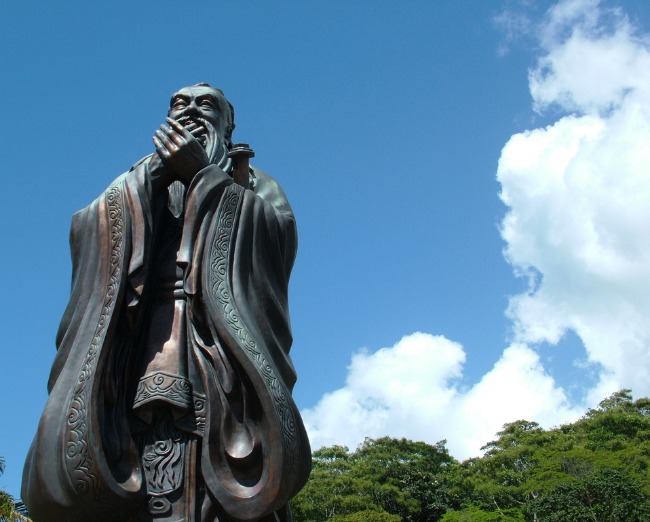
Grossloh_ChinesePhilosophy_Post

It took graduate school for me to have a life-changing experience with a course. As a literature-focused liberal arts undergraduate I had an entire curriculum of life-forming courses, but not one course that stood out as life-changing. Ironically, the Philosophy of Science course I took in graduate school, the one that set me off in a new direction, was also the one that convinced me to reconsider my commitment to an academic life. And so, while I completed my Ph.D. in part thanks to that course, my life veered toward an applied, practical use of my dissertation, which I comment on from time to time in these pages.

The Atlantic has a story about a course that reminded me of the possibility, and the value, of a life-changing course, and this is worth a few minutes’ read in the interest of continuous learning:

…Puett’s course Classical Chinese Ethical and Political Theory has become the third most popular course at the university. The only classes with higher enrollment are Intro to Economics and Intro to Computer Science. The second time Puett offered it, in 2007, so many students crowded into the assigned room that they were sitting on the stairs and stage and spilling out into the hallway. Harvard moved the class to Sanders Theater, the biggest venue on campus.

Why are so many undergraduates spending a semester poring over abstruse Chinese philosophy by scholars who lived thousands of years ago? For one thing, the class fulfills one of Harvard’s more challenging core requirements, Ethical Reasoning. It’s clear, though, that students are also lured in by Puett’s bold promise: “This course will change your life.” Continue reading

The Power of Parks

yosemite

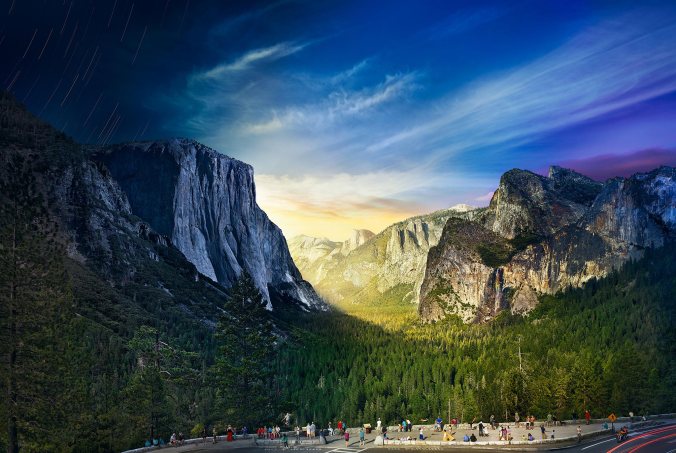
Photographs of Yosemite National Parks composed by Stephen Wilkes. Courtesy: National Geographic

Which side are you on – the one that believes national parks are the past or to the side that sees the future in these stretches? As long as national parks figure on your maps and feature in your scheme of things, you must know that the National Park Service is celebrating its centennial this year.  In commemoration, National Geographic looks at how to preserve these wild spaces:

“In March 1868 a 29-year-old John Muir stopped a passerby in San Francisco to ask for directions out of town. “Where do you wish to go?” the startled man inquired. “Anywhere that is wild,” said Muir. His journey took him to the Yosemite Valley in California’s Sierra Nevada, which became the spiritual home of Muir’s conservation movement and, under his guidance, the country’s third national park. “John the Baptist,” he wrote, “was not more eager to get all his fellow sinners into the Jordan than I to baptize all of mine in the beauty of God’s mountains.” Today around four million people a year follow their own thirst for the wild to Yosemite.”

Continue reading