Venice’s First and Only Gondoliera

Venice

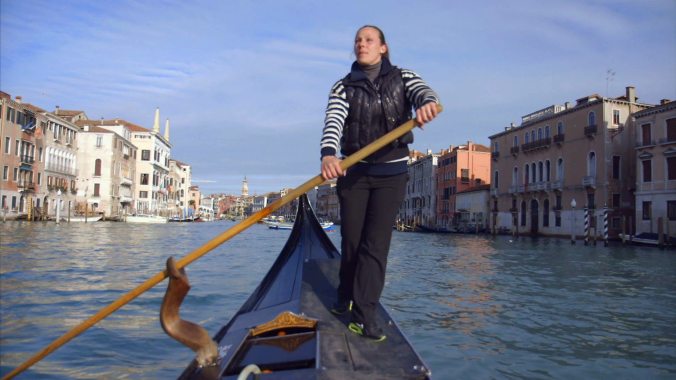
In 2009, 23-year-old Giorgia Boscolo overcame one of Italy’s last all-male bastions (for 900 years) to become a certified gondolier. PHOTO: BBC

Travel empowers. Not just the map-toting, lens-faced tourists but also the people who make travel possible. Often, mere faces. Rarely remembered by their names for their service. Giorgia Boscolo is an exception. She’s a rare breed, in a league of her own on Venice’s canals. Should your travel plans point towards this city, do catch a glimpse of this spirit who sails right through 900 years of taboo.

As a little girl in Venice, Giorgia Boscolo was forever bugging her father to let her ride with him in his gondola. While her three sisters played with their dolls, she would beg him for a turn with the remo, or oar. Dante Boscolo, an indulgent Italian father, humored his pint-sized shadow — to a point.

“My father only let me row when it was bad weather,” Giorgia recalled with a laugh.

His retort was swift: “That’s how you learn.”

Continue reading

Where We Stand


There’s something beautifully timeless about Bazar Road in Mattanchery. The classic counting methods and long-standing relationships between the stevadores and shop keepers. The ebb and flow of commerce as merchandise moves through the streets. The noble patterns of fishermen setting their nets or going out to sea.

Experience a portal into those journeys here…

Reimagining Trees

TREES-master675

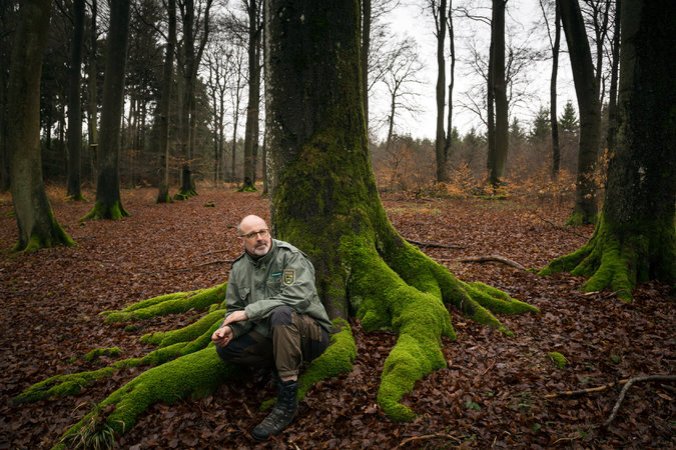
“When I say, ‘Trees suckle their children,’ everyone knows immediately what I mean.” PETER WOHLLEBEN Credit Gordon Welters for The New York Times

There is an article in the Saturday Profile section of the New York Times this weekend that catches my attention for reasons made obvious in these pages since 2011. Thousands of posts about community, collaboration and conservation, many of which have dealt with the importance of forests. But it most importantly reminded me of a conversation I had with a couple who visited Xandari Costa Rica last year. We had trekked together in the forest reserve, all the while discussing our mutual interest in the concept of biophilia, which has been covered plenty in these pages.

Among other things I recall from that strolling conversation was each of us sharing experiences from years earlier that had caused us to rethink the simple pleasure of a walk in the woods, to consider “what a walk in the woods does for us.” Of course, the simple pleasure is still there, but understanding biophilia can intensify the pleasure of a walk in the woods. And then, if we take it a step further, or deeper, it then causes us to consider the importance of forest conservation, and our prospective roles with regard to conservation.

Those conversations with guests are essential components of our work, so (shout out to Andrew and Holly included) I recommend this article for reminding me…:

…After the publication in May of Mr. Wohlleben’s book, a surprise hit titled “The Hidden Life of Trees: What They Feel, How They Communicate — Discoveries From a Secret World,” the German forest is back in the spotlight. Since it first topped best-seller lists last year, Mr. Wohlleben has been spending more time on the media trail and less on the forest variety, making the case for a popular reimagination of trees, which, he says, contemporary society tends to look at as “organic robots” designed to produce oxygen and wood. Continue reading

Wildlife at Carara and Manuel Antonio National Parks

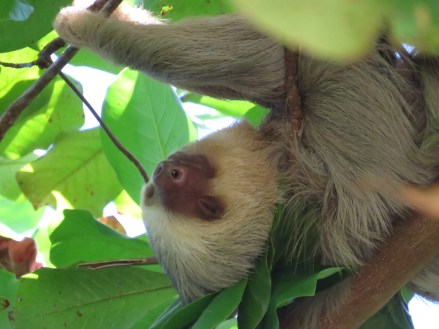
napping Two-toed Sloth

napping Two-toed Sloth at Manuel Antonio National Park

In 2014, I went to Carara National Park with James, and we saw lots of birds and also a bunch of reptiles and mammals. Some of these I got photos of, and others I was able to catch on video. This last weekend I went to Carara again for a morning of birding, and the next day went out to Manuel Antonio National Park for the first time in over a decade. Carara was as fruitful as ever, although there were many birds that I only heard and couldn’t identify since I don’t know my Pacific coastal bird calls very well. Manuel Antonio proved extremely crowded with tourists, and with a couple mammals so accustomed to human interactions that they brazenly robbed unsuspecting visitors, like the raccoons with a pack of chips (which aren’t allowed in the park due to their crackling package that attracts raccoons, coatis, and monkeys) in the video below. I saw a White-faced Capuchin Monkey bare its teeth and snarl at a tourist for trying to take back an empty plastic grocery bag that the monkey had snatched from his backpack webbing, and, in a more peaceful scene, a Two-toed Sloth napping calmly while a horde of tourists snapped photos a meter or two below (pictured left).

In the following video, you can watch Continue reading

Hydropower by Design

Itaipu Dam, a binational hydroelectric dam on the Paraná River located on the border between Brazil and Paraguay. The dam is the largest operating hydroelectric facility in terms of annual energy generation. Photo/caption © Erika Nortemann/The Nature Conservancy

Dams, although greener in some senses than coal factories in terms of their electric output, almost always have other serious environmental repercussions in the form of habitat destruction and river flow interruptions that adversely affect fish species. Hydropower from giant dams on rivers has been described as a brute force technology, and the construction of new dams can create public outcry as well as political issues in water distribution. The publication of new research, in part by The Nature Conservancy, shows how hydroelectric projects, often so destructive, can be less harmful if planned thoroughly beforehand to take the whole river basin and water system into account, rather than just a small tract of river. Jeff Opperman reports for TNC in a blog article that describes the elements of concentration, confrontation, and collaboration involved in pairing new hydropower with river conservation:

Concentration.

That’s what makes rivers so valuable — both for fish and for energy.

A river is the concentrated water of a whole region as rain and snow across an entire basin becomes runoff, is funneled into cataracts, creeks and canyons, and collected into the narrow ribbon of a river channel (narrow in a relative sense — even a river channel several kilometers wide is incredibly narrow compared to its basin which may be hundreds of thousands of square kilometers in area).

Continue reading

Entrepreneurship, Ghana and Bamboo Bikes

In the early days of this site I wrote with enthusiasm about High Design bamboo bikes. We can’t overstate the importance of bicycles in both rural and urban environments.

Ghanian Entrepreneur Bernice Dapaah’s work is not only empowering the women who she employs in making bamboo bicycles, but the product should serve as an inspiration to people worldwide,  Continue reading

Passive Homes in Washington, DC

Photo © Passivhaus Institute, Germany

Energy-efficient and eco-friendly homes have been the subject of posts here in the past. Virginia Carabelli shared her first-hand experience with straw bale construction, and we’ve seen stories about earthships made from recycled material and houses covered in solar panels. Now we’re learning about a whole category of houses that can be certified as “passive” to a standard popularized in Germany. These buildings are like a thermos: extremely well insulated so that heating and cooling costs can be minimized to the point where the house is projected to use up to 90% less energy than the average house. Habitat for Humanity, in collaboration with other organizations for funding and discounts on domestic electronics, is building several houses in the DC area for a low-income neighborhood: Wendy Koch reports for National Geographic:

Built partly by volunteers, these low-budget Habitat for Humanity homes—now nearing completion—don’t look like anything special. They have basic brick facades like others in their gentrifying Ivy City neighborhood.

They stand out in other ways: 12-inch-thick exterior walls and triple-pane, imported-from-Ireland windows offer more than double the insulation required of new homes. In lieu of a furnace, tiny, wall-mounted Mitsubishi units provide heating and cooling. (See related blog post: “Laying the Foundation for Sustainable Housing in D.C.“)

Continue reading

Concurrent and Coinciding Thoughts on 5000+ Birds

img_7608_zpsgfofu0lt

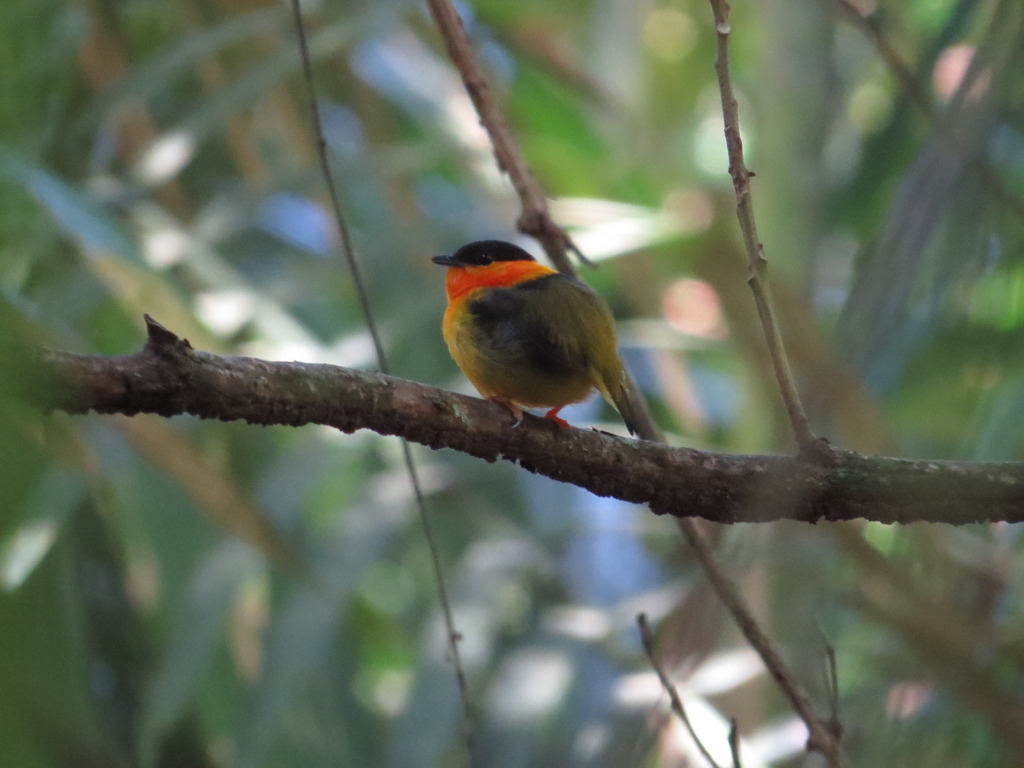
male Orange-collared Manakin seen at Carara National Park, Costa Rica

This week, two birders (one of whom we’ve featured on the blog before, and the other who we should have), Noah Strycker and Tim Boucher, wrote some thoughts on birding and life lists that had much in common, partially because I suspect Boucher’s post on The Nature Conservancy’s blog was inspired by Strycker’s summary of his 2015 Big Year, even though he made no explicit mention of the new world record (6,042 species of bird seen or heard in a calendar year).

Boucher, who saw his 5000th bird at the very end of 2015 (and those 5000 birds are ones he’s actually seen, not only heard), reflects on thirty-four years of birding to achieve his goal. Strycker, on the other hand, summarizes 365 days of straight birding to end up with the biggest big year ever recorded.

Continue reading

Clap Hands for Kerala Birders!

Between the on-going Bird of the Day series and many ornithologically focused posts, our interest in birds can’t be breaking news to any La Paz Group reader. We’re constantly hearing more about the importance of citizen science in all sorts of ecosystems, but with both birding and Kerala so close to our hearts we’re thrilled to applaud the enthusiasm of the Bird Count India community. Continue reading

Ocean Farms & Better Burgers

Shout outs here. First, as a Connecticut boy myself, I say with some homestate pride that this is the coolest thing to come out of the state in my lifetime. Mr. Smith, our hats are tipped to you. Click the image above to see what he is doing.  Great stuff.

Screen Shot 2016-01-29 at 10.17.53 AMNext, take a look at Mr. Headley’s creation by clicking the image to the right, a place which we first read about here; and then again more recently here. The reason both of these came to my attention today, and why I am compelled to share these links, is worthy of 20 minutes of your time if you care about food-related sustainability issues. For that, in the form of a podcast, click here. A summary of the podcast: Continue reading

The Mountain Spirit

ladakh

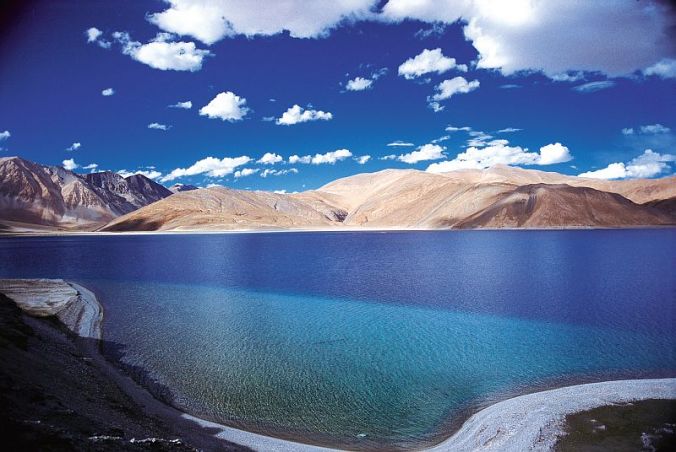
The Ladakhi Women’s Travel Company, the first to be completely owned and operated by women in the area, is all about empowering women and promotes ecotourism. PHOTO: Thrillophilia 

A trip to India is incomplete without visiting the hallowed Taj Mahal and the many palaces up north. And the world-famous backwaters of Kerala and the hill stations across Southern India. What should figure on travel itineraries without a doubt: Leh-Ladakh. A  favorite getaway among domestic travelers, this mountainous region – with its bounty of snow-kissed peaks and crystal blue waters – is every color dream come true. Here’s visual proof. And if you do make it there, look up the Ladakhi Women’s Travel Company.

How many women does it take to start an all-women travel company, set up a women’s welfare network for women in distress, write tirelessly on social and environmental issues, win a bronze at the National Ice Hockey Championship, and keep training an ever-growing number of women to be professional trekking guides in the harsh terrain of Ladakh? Just one, if that woman happens to be Thinlas Chorol. 

Continue reading

The History of Organic Design

organic design

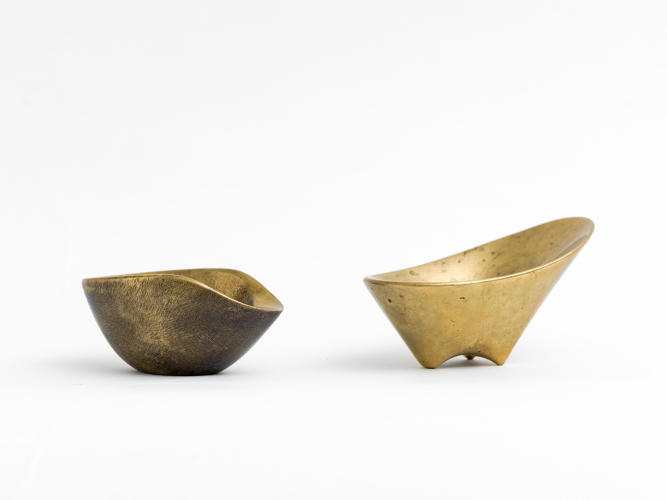
Carl Aubock II [Austrian, 1900-1957] Ashtray, Model No. 3597, 1948. Ashtray Model No. 4736, 1947. PHOTO: CoExist 

What about the world of design is organic? Literally, yes it involves environmental concerns, also the premise of using Nature as the basis for design. Design that grows – inside out – as the elements of Nature. CoExist delves into the history of organic design:

In the 1930s, the central belief of the organic movement was that furniture and architecture should reflect a harmony between people and nature. In furniture design, this meant natural materials like wood, and smooth, rounded forms. The bent plywood furniture of legendary French designer Jean Prouve came out of this period, as did Marcel Breuer and his laminated birch plywood armchair with a calfskin cushion. These designers prided themselves on being dedicated to their craft, and their pieces were painstakingly made and not easily reproduced. “They saw it as a unique work that refers to nature,” says Olshin. “These pieces tend to be unique one-of-a-kind studio work that’s not easily produced in mass quantities.”

Continue reading

Who Dreamed This City into Being?

paris

In the 19th century, George-Eugene Haussmann completely redesigned and rebuilt the French capital. PHOTO: Matt Robinson

“Paris was a universe whole and entire unto herself, hollowed and fashioned by history; so she seemed in this age of Napoleon III with her towering buildings, her massive cathedrals, her grand boulevards and ancient winding medieval streets–as vast and indestructible as nature itself. All was embraced by her, by her volatile and enchanted populace thronging the galleries, the theaters, the cafes, giving birth over and over to genius and sanctity, philosophy and war, frivolity and the finest art; so it seemed that if all the world outside her were to sink into darkness, what was fine, what was beautiful, what was essential might there still come to its finest flower. Even the majestic trees that graced and sheltered her streets were attuned to her–and the waters of the Seine, contained and beautiful as they wound through her heart; so that the earth on that spot, so shaped by blood and consciousness, had ceased to be the earth and had become Paris.”
Anne Rice, Interview with the Vampire

Literature, history, art, everyday news, talk at a neighborhood cafe – the exquisite and the commonplace are rife with paeans to this city. But how did she come into being?

Continue reading

The Republic Stands

Republic Day

After 26 years, man’s or rather a soldier’s best friend returned to the annual Republic Day parade in India. PHOTO: Getty

5 months and 11 days – that was the last time I felt a surge of patriotism, took a good look at what my country was and is. And what it will be. As the clock hands inched towards midnight and yet another Indian anniversary of independence, I wrote these lines. That day drew to a close. Sadly, the all-consuming, overwhelming love I felt for this land, too. Don’t get me wrong: I love my country. Every single day. All its idiosyncracies with all my heart and soul. But it takes the designated Independence Day or the more recent Republic Day (January 26) for this love to reign over my work-weary being. To remind of this freedom I am bestowed with. Yesterday, it did. And this love left paw prints all over my heart and I sorely missed a friend of mine in the uniform. Made me love my country more. Be thankful, too.

Continue reading

The Alphabets of Assimilation

The Salt

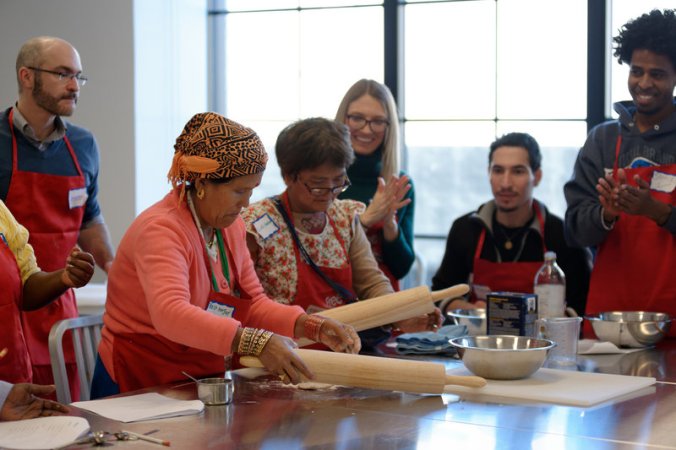
Teela Magar and Cing Neam prepare roti dough as part of Edible Alphabet, a program in Philadelphia that folds English lessons for immigrants to the U.S into a cooking class. PHOTO: Bastiaan Slabbers, The Salt

Roti is a staple in Indian homes. This unleavened flat bread made of stoneground wholemeal flour links tables in Asia and Africa. With its humble origins, simple spirit, and its versatility in being an economical yet nutritious accompaniment, the roti is a mainstay of an English-as-a-Second-Language class in Philapdelphia. So, how does breaking bread help immigrants pick up basics of English – a skill vital to their rehabilitation, assimilation, and survival in a foreign land? The Salt tells us:

“Food is warmth, it’s comfort, it breaks down those barriers.” Galeb Salman left his native Iraq 25 years ago and most recently lived in Thailand. He says he savors the choices and freedom he feels since arriving here in September with his wife and five kids. “When I think I want to learn, I want to study, I can. When I want to work, I can,” he says. “I feel we have good life now. …This is my new life.”

Continue reading