Understanding Coal

20160123_STP501_3.jpg

From the current issue of Economist, a bit of readable geological science to help make sense of the splashier headlines:

The origin of coal

The rock that rocked the world

More than any other substance, coal created modern society. But what created coal?

FOR 60m years of Earth’s history, a period known to geologists as the Carboniferous, dead plants seemed unwilling to rot. When trees expired and fell to the ground, much of which was swampy in those days, instead of being consumed by agents of decay they remained more or less intact. In due course, more trees fell on them. And more, and yet more. The buried wood, pressed by layers of overburden and heated from below by the Earth’s interior, gradually lost its volatile components and was transformed into a substance closer and closer to pure carbon. Continue reading

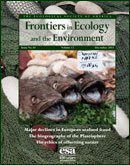
Fish Fraud Falling

fish-marketThanks to Conservation Magazine for pointing us to this bit of scientific evidence that, while fisheries are on the whole in a dismal state, steps are being taken in Europe to address one of the symptoms:

Over the past few years, dozens of studies have documented a global fish fraud epidemic, in which fish are mislabeled as species they are not. It’s a problem with detrimental environmental, economic, and even potential health effects. Continue reading

Constant Signs In Favor Of Vegetarianism

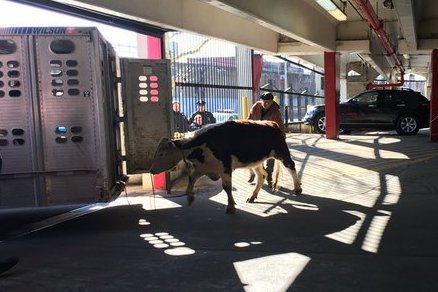
22cow-web-popup

Officers corralled a cow that had escaped a slaughterhouse in Jamaica, Queens, on Thursday. Credit, New York Police Department 103rd Precinct

We are not clear on the meaning of the name given to this cow, but we are sure the story is a sign from the forces of vegetarianism. Anyway, go Freddie, go! As if you needed more reasons, we propose a quick read to get you thinking about giving up meat, from an unexpected angle:

A cow that was captured by the police after escaping a New York City slaughterhouse has been taken in by an animal sanctuary and named for the rock legend Freddie Mercury. Continue reading

Can A University Course Change Your Life?

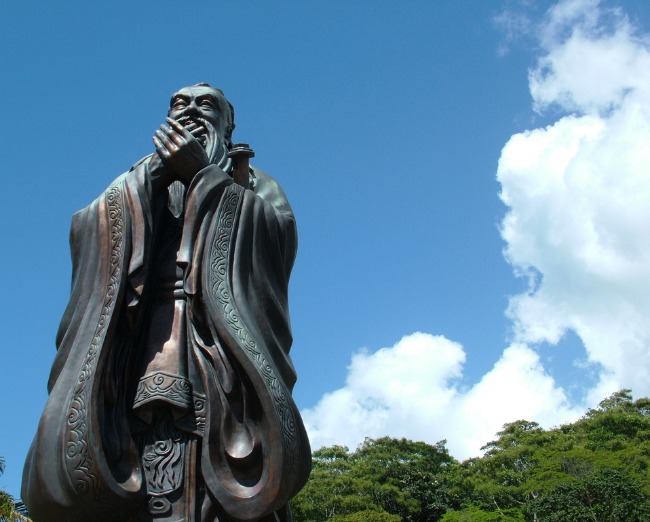
Grossloh_ChinesePhilosophy_Post

It took graduate school for me to have a life-changing experience with a course. As a literature-focused liberal arts undergraduate I had an entire curriculum of life-forming courses, but not one course that stood out as life-changing. Ironically, the Philosophy of Science course I took in graduate school, the one that set me off in a new direction, was also the one that convinced me to reconsider my commitment to an academic life. And so, while I completed my Ph.D. in part thanks to that course, my life veered toward an applied, practical use of my dissertation, which I comment on from time to time in these pages.

The Atlantic has a story about a course that reminded me of the possibility, and the value, of a life-changing course, and this is worth a few minutes’ read in the interest of continuous learning:

…Puett’s course Classical Chinese Ethical and Political Theory has become the third most popular course at the university. The only classes with higher enrollment are Intro to Economics and Intro to Computer Science. The second time Puett offered it, in 2007, so many students crowded into the assigned room that they were sitting on the stairs and stage and spilling out into the hallway. Harvard moved the class to Sanders Theater, the biggest venue on campus.

Why are so many undergraduates spending a semester poring over abstruse Chinese philosophy by scholars who lived thousands of years ago? For one thing, the class fulfills one of Harvard’s more challenging core requirements, Ethical Reasoning. It’s clear, though, that students are also lured in by Puett’s bold promise: “This course will change your life.” Continue reading

The Power of Parks

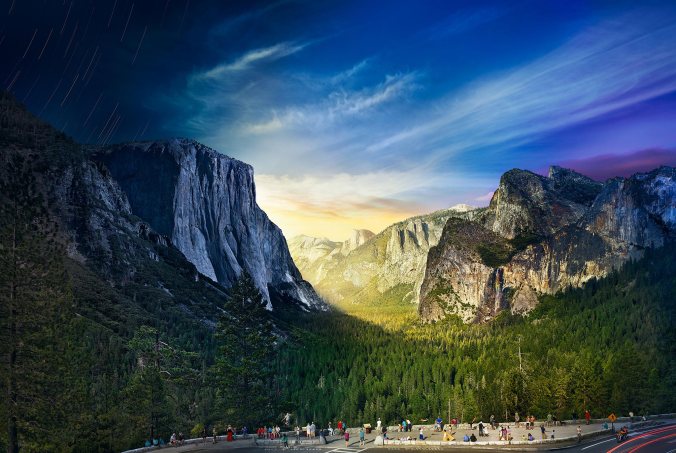
yosemite

Photographs of Yosemite National Parks composed by Stephen Wilkes. Courtesy: National Geographic

Which side are you on – the one that believes national parks are the past or to the side that sees the future in these stretches? As long as national parks figure on your maps and feature in your scheme of things, you must know that the National Park Service is celebrating its centennial this year.  In commemoration, National Geographic looks at how to preserve these wild spaces:

“In March 1868 a 29-year-old John Muir stopped a passerby in San Francisco to ask for directions out of town. “Where do you wish to go?” the startled man inquired. “Anywhere that is wild,” said Muir. His journey took him to the Yosemite Valley in California’s Sierra Nevada, which became the spiritual home of Muir’s conservation movement and, under his guidance, the country’s third national park. “John the Baptist,” he wrote, “was not more eager to get all his fellow sinners into the Jordan than I to baptize all of mine in the beauty of God’s mountains.” Today around four million people a year follow their own thirst for the wild to Yosemite.”

Continue reading

Inside the Eye

eyes_zpstq8hccww

Photo credit: David Liittschwager for National Geographic

Congratulations to science writer Ed Yong, who we know from his blogging in National Geographic‘s “Phenomena” Science Salon (which we’ve been sharing for a while now), for his first full feature story in the magazine he writes for on the web! It’s a fascinating piece on the eye, “nature’s most exquisite creation,” as his subtitle affirms. And indeed, we learned a lot about vision in the animal world thanks to Yong’s story:

Some see only in black and white; others perceive the full rainbow and beyond, to forms of light invisible to our eyes. Some can’t even gauge the direction of incoming light; others can spot running prey miles away. The smallest animal eyes, adorning the heads of fairy wasps, are barely bigger than an amoeba; the biggest are the size of dinner plates, and belong to gigantic squid species. The squid’s eye, like ours, works as a camera does, with a single lens focusing light onto a single retina, full of photoreceptors—cells that absorb photons and convert their energy into an electrical signal. By contrast, a fly’s compound eye divides incoming light among thousands of separate units, each with its own lens and photoreceptors. Human, fly, and squid eyes are mounted in pairs on their owners’ heads. But scallops have rows of eyes along their mantles, sea stars have eyes on the tips of their arms, and the purple sea urchin’s entire body acts as one big eye. There are eyes with bifocal lenses, eyes with mirrors, and eyes that look up, down, and sideways all at the same time.

Continue reading

On Food Waste

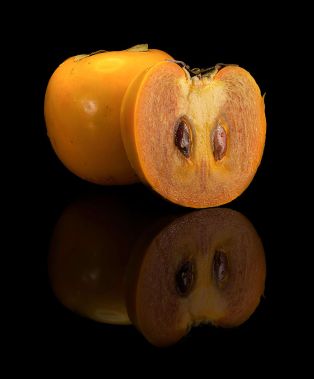
800px-caqui_chocolate_em_fundo_preto_03

Oriental Persimmon by Rodrigo Argenton. Licensed under CC BY-SA 4.0 via Wikimedia Commons.

We’ve featured food waste here many times before, since it’s such a global and upsetting problem–an issue that one could call a “wicked problem” for its difficulty in solving, its myriad causes, and its changing nature. Several of our shared stories in just the last year, however, have offered some hope: a food truck chef in Denmark showed that expired or just-expiring products can still be consumed;  another foodtrucker in the US helped develop a software to create a more sustainable kitchen by modeling what products are being over- or under-ordered; and two startups worked on different ways of drying food that would otherwise spoil, one because the fruit would go bad but could be dried and powdered, and the other because developing countries don’t always have appropriate storage or energy to refrigerate food, so they came up with a solar food-drier.

The common theme in these posts is the reiterated phrase: approximately one-third of all food produced around the world is wasted, representing about $1 trillion in losses every year. This week, two of our favorite magazines, Conservation (by University of Washington) and GreenBiz repeated these statistics and shared pieces of their own.

Continue reading

Sorry, Bolivia!

bolivia

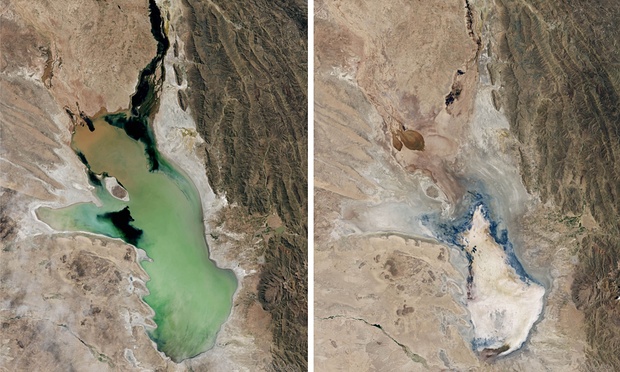
NASA satellite images show Bolivia’s Lake Poopo filled with water in April 2013 (left), and almost dry in January 2016. PHOTO: NASA/AP

Drying rivers, lakes, and reservoirs. Fancy a list? Here and here, you go. The world’s waters are rapidly running dry, threatening wild habitats and human civilization, exacerbating climate change. In turn, livelihoods, ecosystems, energy generation are all affected. Like in Bolivia, which just lost its second largest lake.

Continue reading

An American Soldier, World War, and India

photo

28 years ago, a Chicago-based couple found a shoebox of photographs of the Indian countryside and they traveled halfway across the world to find their origin. PHOTO: Scroll

Here’s the plot: In 1988, a couple visited an estate sale of a deceased friend and stumbled upon a shoebox of old photographs tucked under a couch. It contained more than a hundred envelopes filled with negatives and contact sheets for photographs depicting India in 1945. The identity of the photographer: unknown.

But only until they set out to discover the man behind the lens. The answer (and the photographs) hang at Delhi’s Indira Gandhi National Centre for the Arts till January 31.

Continue reading

Love For, Of the Planet

claude-and-norma

Claude and Norma Alvares are the pillars of conservation in India’s extreme tourist city of Goa. PHOTO: Rahul Alvares, Scroll

There’s a small but wonderful tribe of people who keep the dignity of life on the planet. Call them eco warriors, guardians of tomorrow, nature’s advocates. No tag can do justice to their lives spent preserving, restoring, and protecting life. Goa, the tourist mecca of India, has sundowners, music, beaches and a welcoming culture going for it. It is also the base of Claude and Norma Alvares’ environmental movement of over 40 years.

Continue reading

Oceans Of Plastic

Feature-NPEC

You may have seen headlines in recent days with predictions about plastic overtaking fish as the primary mass of our planet’s oceans. Go straight to the source to get the facts (below is the press release from the foundation that funded the research; see the chart after the page break below to really get a punch of reality from the scale of this problem):

Applying circular economy principles to global plastic packaging flows could transform the plastics economy and drastically reduce negative externalities such as leakage into oceans, according to the latest report by the World Economic Forum and Ellen MacArthur Foundation, with analytical support from McKinsey & Company.

The New Plastics Economy: Rethinking the future of plastics provides for the first time a vision of a global economy in which plastics never become waste, and outlines concrete steps towards achieving the systemic shift needed. The report, financially supported by the MAVA Foundation, was produced as part of Project MainStream, a global, multi-industry initiative that aims to accelerate business-driven innovations to help scale the circular economy. Continue reading

The Lost Frog Of India

_87821587_92b1068a-e193-4352-b00f-ddafaf388815

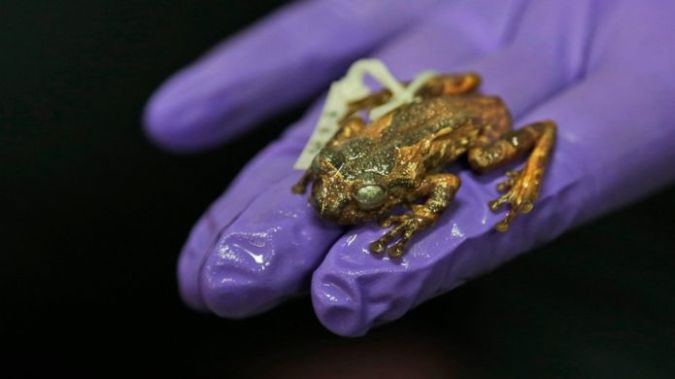
AP Image. Unusually, the frogs feed mostly on vegetation, rather than insects or larvae

Thanks to the BBC’s website for this note of encouragement:

An extraordinary tree frog thought to have died out more than a century ago has been rediscovered in India

The discovery was made by renowned Indian biologist Sathyabhama Das Biju and a team of scientists, in the jungles of north-eastern India.

It is hoped the frogs might now be found across a wide area, from China to Thailand.

Studies of the frog have also led scientists to reclassify it as an entirely new genus. Continue reading

Hiking for E-mail

mahabir pun

For six years, Mahabir Pun trekked long distances to check emails in Nepal. Until he brought the Internet home to his remote village. PHOTO: Hiking for Emails, Vimeo

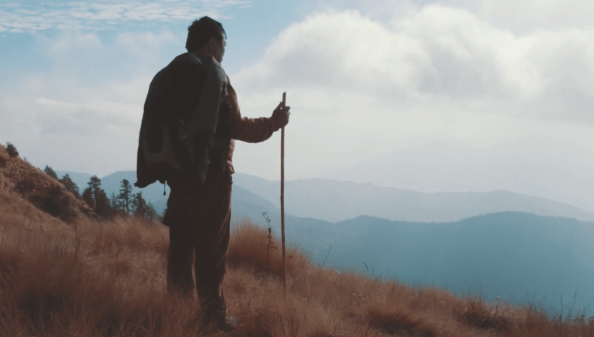
In India, there exists this dwindling practice of writing letters to the Editor. Of publications. Most people write on current affairs, some write to highlight issues that range from a lack of streetlights to dissent. Some write in to commend actions, public campaigns. A handpicked bunch of these are published in a column titled Letters to the Editor. Mahabir Pun of a remote village in the mountainous country of Nepal wrote to BBC, asking for help to bring the Internet home.

Continue reading

If You Happen To Be Outside Early Morning

19PLANET-superJumbo-v2

All five planets will arrange on an arc across the sky. Mercury will appear the closest to the horizon, followed by Venus, Saturn, Mars and Jupiter. The stars Antares and Spica will make cameos as well, twinkling between Saturn and Mars, and Mars and Jupiter, respectively. Credit Sky & Telescope

For the next six weeks, the sky is calling:

Prepare for a Celestial Spectacle as Five Planets Align

Five planets will parade across the dawn sky early Wednesday in a rare celestial spectacle set to repeat every morning until late next month. Continue reading