More Reasons For A Plant-Dominated Diet

4368

Global fish catches rose from the 1950s to 1996 as fishing fleets expanded and discovered new fish stocks to exploit. Photograph: Eyal Warshavsky/Corbis

We serve fish. We love fish. We love fish too much, all of us. Every day we get more evidence of the logic for shifting more of our diet to be plant-based, and this article in today’s Guardian adds one more powerful data point:

Overfishing causing global catches to fall three times faster than estimated

Landmark new study that includes small-scale, subsistence and illegal fishing shows a strong decline in catches as more fisheries are exhausted

Global fish catches are falling three times faster than official UN figures suggest, according to a landmark new study, with overfishing to blame. Continue reading


TNC: Prairie Restoration with Wild Seeds

closeup_of_baldwin27s_ironweed2c_a_common_tallgrass_prairie_plant_seen_on_the_konza_prairie2c_12c000_acres_of_virgin-_-_nara_-_557190

Closeup of Baldwin’s Ironweed, a common tallgrass prairie plant, by Patricia D. Duncan via WikiMedia Commons. 1974.

The word “restoration” might bring to mind an artistic connotation of preservation and repair, as in a World Heritage Site, but lately where we’ve seen it the most is in an ecological sense: whether it’s wildlife in a forest, algae control in wetlands, or coral health in the oceans. Whole landscapes can be restored to an extent, as in the case of Tianjin, China, where forests and wetlands are being rebuilt while also studying the effectivity of different strategies.

That’s part of what The Nature Conservancy has been doing in the prairies of Minnesota, rebuilding the diverse grasses that used to exist in a landscape that was fragmented and degraded by huge farms during the last century. Justin Meissen and Meredith Cornett, two of the co-authors on a paper recently published in Restoration Ecology, report for the TNC blog:

Glacial Ridge is truly huge — at ~36,700 acres it’s one of the few places on Earth where you can look to all horizons and experience what early American pioneers once called the “sea of grass.”

But it wasn’t always like this. Only a few years ago Glacial Ridge was a patchwork of mostly farm land and a few prairie remnants. So what was the Nature Conservancy’s prescription for bringing this massive landscape back to life? Seeds — lots of seeds.

Continue reading

When Wheels Move the Soul

skating

Korogocho skaters are taking advantage of some of the best streets in one of Nairobi’s poorest slums. PHOTO: Will Swanson 

Can a paved road and a pair of used skates aid development? An emphatic yes. This is the story of a failed slum upgrading project that saw the light of day when kids took to the streets. Over scavenging in the dump for things they could resell, the children took to the streets this time to skate. To keep out of trouble. To compete. For a chance at life.

Continue reading

Green Investing Sees Boost from NY State

img_7424_zpsm6rbrbaj

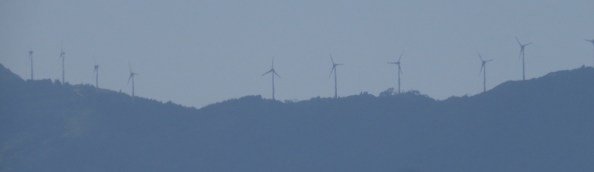
Wind turbines seen across the Central Valley from Xandari Resort, Costa Rica

We’ve been hearing about divestment from fossil fuels for a while now, whether it be from university endowment funds (and full or partial divestment), and also featured a story from the Guardian about Bill Gates, who argued that divestment would have little impact, and rather backing green energy and investing in high-risk technologies makes more of a difference in combatting climate change.

In last week’s Opinion pages of the New York Times, Tina Rosenberg describes New York State’s new Common Retirement Fund, which is the United States’ third-largest pension fund and will put $2 billion into a Goldman Sachs investment fund that selects companies to invest in with smaller carbon footprints but have similar risk and return to typical benchmark index funds. From the sound of it, greener investment opportunities will start becoming more common and easily accessible to those of us without Bill Gates levels of money to invest in the higher-risk technologies:

Goldman created the investment fund only for New York State. But similar funds
introduced in 2014 or 2015 are open to other investors, although they have not yet attracted the capital to match New York State’s investment. And more are likely to come — especially after New York’s vote of confidence in a form of green investing that may become mainstream.

Continue reading

Flying Between Pages

birdsong

“There is no such thing as a stooped or a graceless bird”, writes Krishnan. PHOTO: Scroll


“Chugging out of New Delhi Railway Station on an early morning train, I’ve often amused myself by looking out for the “telefauna,” or birds perched on telegraph wires.” Bird lovers on here, there’s a new word for you right there. Of Birds and Birdsong, penned by Indian writer Krishna, is all at once a journal and a tribute. To him, it’s a record of winged creatures sighted around, while to his reader the names of these beauties bring to heart a familiar nostalgia.

Continue reading

Short Essay On The Commons

160125_r27591-320

ILLUSTRATION BY CHRISTOPH NIEMANN

Several times since 2011 I have referenced my doctoral dissertation, which addressed the “tragedy of the commons,” in these pages. Seth, during his study on the history of environmentalism movements, has also posted on this concept. Now, , excellent writer of one page essays explaining complex economic issues, takes a recent odd news item and helps us understand the role of government in regulating the use of the commons:

Ammon Bundy, the leader of the armed militia that stormed the Malheur National Wildlife Refuge, in Oregon, has a simple solution for fixing the economy of the West: get the federal government out of the way. His group’s chief demand is that the federal government hand over all of Malheur to local control. The ultimate goal, he says, is “to get the logger back to logging, to get the rancher back to ranching, to get the miner back to mining.” Bundy’s tactics make him easy to dismiss as a kook, but his ideology is squarely in the mainstream of Western conservatism, with its hostility to government ownership, skepticism about environmental rules, and conviction that individual enterprise is being strangled by government regulations. Continue reading

Footstep by Footstep

soccer

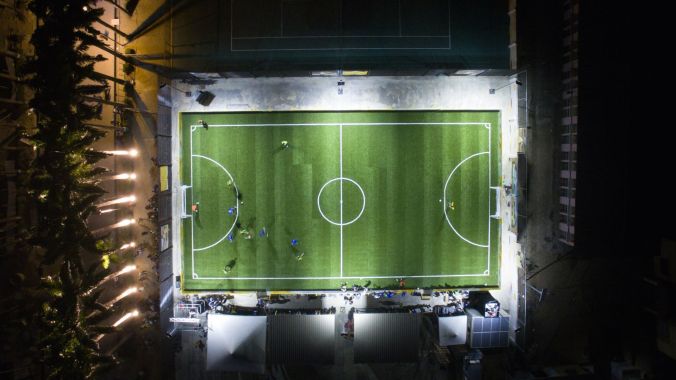
This solar-powered football pitch in Lagos also uses kinetic energy generated by footballers playing. PHOTO: Edelman PR

There’s a host of ingenious solar projects impacting the developing world. Energy’s role in political, social, and economic development is being highlighted more than before and being energy-smart is the blueprint to a sustainable future. Clean energy is the way forward. And Lagos has an example. In the name of soccer.

Continue reading

Sifting Through Food Memories

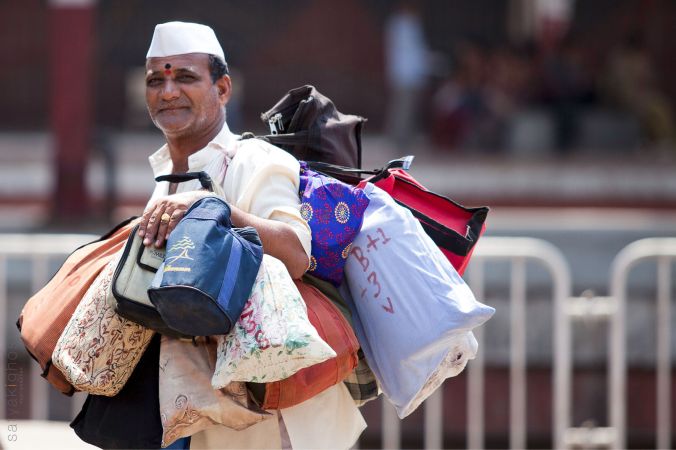
Dabbawala,the lifeline of Mumbai.

The Indian city of Mumbai is home to the ‘dabbawala’ service wherein boxes of hot lunch make their way from homes to customers’ offices.   PHOTO: Satyaki Ghosh

Food memories. Absolutely universal, absolutely distinctive. Across cultures, across borders. United by the emotions they evoke – nostalgia, love, warmth, hope. While travel memories are notched up by the miles, they are bound to feature a food memory or two. Of cultures, smells, people, faces, history.  Jacques Pepin, noted French chef, writes of his in The New York Times:

There is something evanescent, temporary and fragile about food. You make it, it goes, and what remains are memories. But these memories of food are very powerful. My earliest memories of food go back to the time of the Second World War. My mother took me to a farm for the summer school vacation when I was 6 years old with the knowledge that I would be lodged and fed there. I cried after she left and felt sad, but the fermière took me to the barn to milk the cow. That warm, foamy glass of milk is my first true memory of food and shaped the rest of my life.

Continue reading

Costa Rica’s Tourism Revenue Grows 9% in 2015

tortuguero-turismo-ict-ingresos-visitas_lncima20160115_0086_5

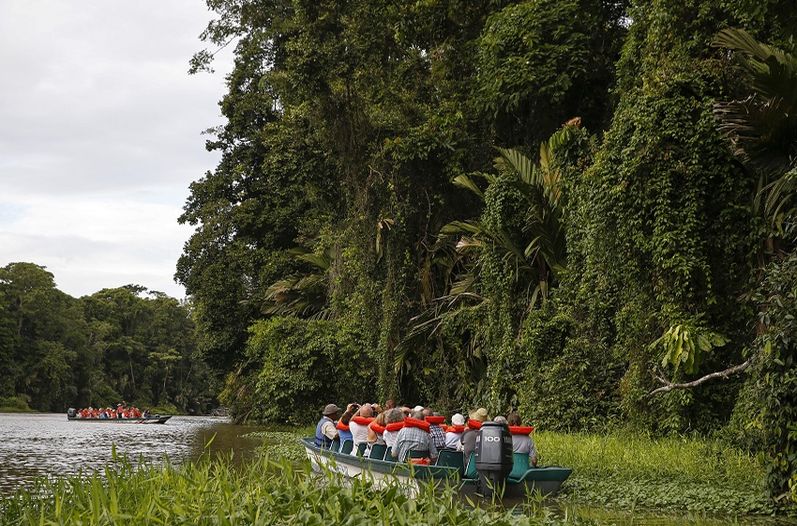
Tourists travel by boat through the canals of Tortuguero, on the Caribbean coast. Photo by Mayela López for La Nación.

Yesterday, the Costa Rican Tourism Institute reported that revenue from the tourism sector increased in 2015 by 9% over 2014, totaling $2.8 billion for the year. This was partly because the number of actual tourists was up from the previous year: 8% more from the United States, 6.1% more from Europe, and a whopping 29.2% more from China. The total increase in tourists to Costa Rica was by 5.5%, with about 2.6 million people–about half of Costa Rica’s population–visiting the country.

Continue reading

India’s First Organic State

sikkim

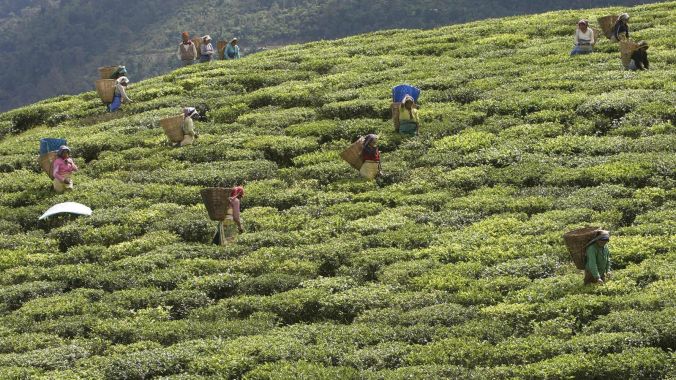
Tea plantations on the hillside. PHOTO: Reuters/ Rupak De Chowdhuri

The buzzword is organic. From grocery store shelves to textile designers to travel. At the center of this phenomenon is respect to the land, cognizance of the immense potential of living organisms, acknowledgement of a way of life that has restorative powers. Today, India hears that message loud and clear in the North-eastern hill state of Sikkim.

Continue reading

Occasional Ideas: Misbehaving With Intent

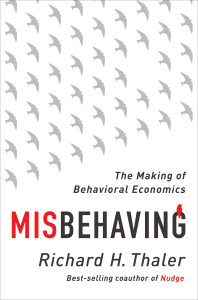
Misbehaving.inddOk, while the tiny habits idea was compelling 48 hours ago, and is already having its impact on me, the notion of a daily series posting ideas I have come across may be too ambitious for all concerned. Hence, occasional.

Richard Thaler was a professor when I arrived as a graduate student at Cornell University in 1988. He was, not surprisingly, awesome. But I had no real clue how much so, since it was all relative to my other professors who were also mostly awesome. In recent years it has become more verifiably clear, the scale of his awesomeness measured well by the popularity of his recent books. Also, awesome enough to make a cameo (in the scene at the casino table alongside Selena Gomez) in the great film The Big Short, which I also recommend. But for now, take advantage of this podcast: Continue reading

Potoos in the Tropics

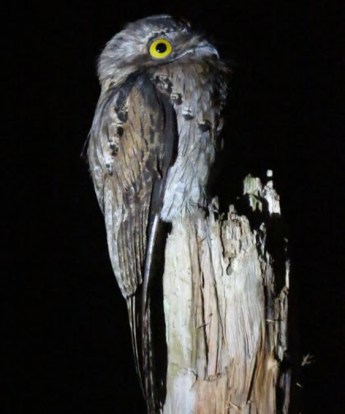
Northern PotooA few days ago, Timothy Boucher, a senior conservation geographer at The Nature Conservancy, shared his choice for his personal “Bird of the Year,” the Rufous Potoo, which he saw in Ecuador and was apparently the 5,000th bird to be checked off on his life list. Potoos, related to the frogmouths of southeast Asia and nightjars elsewhere around the world, are members of a highly cryptic, or camouflaged, family that primarily hunts at crepuscular hours and/or throughout the night.

In his blog post, Boucher describes his trip to Ecuador’s Amazon region, which yielded many exotic bird species, as well as the challenges of travel in the tropics. His excitement at hearing–and the next morning, Continue reading

What The Age Of Humans Looks Like

Screen Shot 2016-01-14 at 6.25.23 PM

Soybeans harvested at a farm in Tangara da Serra, in western Brazil. CreditPaulo Whitaker/Reuters

The Science section this week in the New York Times takes a very big picture look at human impact on the earth, putting in terms of geological time:

Welcome to the “Anthropocene” — a new epoch in our planet’s 4.5 billion year history. Thanks to the colossal changes humans have made since the mid-20th century, Earth has now entered a distinct age from the Holocene epoch, which started 11,700 years ago as the ice age thawed. That’s according to an argument made by a team of scientistsfrom the Anthropocene Working Group. Scientists say an epoch ends following an event – like the asteroid that demolished the dinosaurs and ended the late Cretaceous Epoch 66 million years ago – that altered the underlying rock and sedimentary layers so significantly that its remnants can be observed across the globe. In a paper published Thursday in Science, the researchers presented evidence for why they think mankind’s marks over the past 65 years ushered in a new geological time period. Here are a few examples: Continue reading

Nutmeg – from Table to Design

You must have heard the phrase in a nutshell. Well, this post is not exactly that. It’s going to border on being a story in a nutmeg. Yet another tale to add to Kerala’s legacy of having a heart of spices. The nutmeg, though not as glorious as its cousins pepper or cinnamon, is integral for its medicinal, herbal properties and its place in the kitchen.

For me, it’s the embrace that links spending holidays with a grandmother whose heart had nutmeg all over it and a design sensibility at Xandari Harbour. The wispy haired grand lady is long gone, but the wind rustles up her memories among the nutmeg trees. So does a certain corridor at work.

Continue reading

Architecture With A Purpose

13PRITZKER-articleLarge

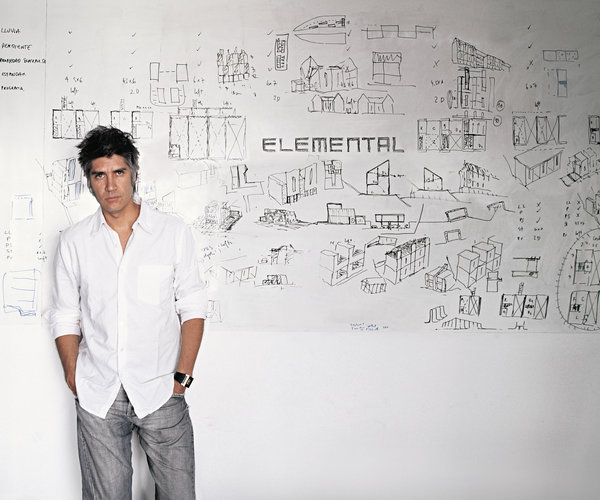
Alejandro Aravena Credit ELEMENTAL

Breaking news on an architect of the people receiving the most coveted prize in his profession:

Pritzker Prize for Architecture Is Awarded to Alejandro Aravena of Chile

A Chilean architect who has focused his career on building low-cost social housing and reconstructing cities after natural disasters has been named the winner of architecture’s highest prize, the Pritzker. Continue reading

Idea Of The Day: Tiny Habits

HBR WordPress

We started the Bird Of The Day series very close to the beginning of this blog in 2011, and it has been our most important ongoing effort here. We get more visitation to those daily posts than to any other series, and in aggregate the series has brought us more new visitors to this site than any other kind of post. We have had a few other series–including “Come to Kerala” which we still write, and Word Of The Day, which we no longer write about–that fit our interests but get little or no traction from our readers.

Today it occurs to me to begin a new stream, largely aimed at our own internal audience of hundreds of people we manage in India, Thailand and Costa Rica.

Ideas. Starting here and now. 17 minutes well spent here with the Harvard Business Review podcast led me to this conclusion. Specifically, about 15 minutes into the podcast of an interview with Matt Mullenweg, founder and CEO of Automattic and co-founder of WordPress, caught my attention as a good idea. Small habits. Listen just for that, but he has plenty of other good ideas as well.