Rain Scents

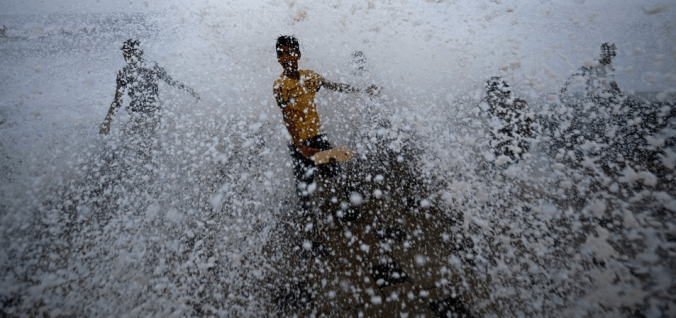
Vivek Prakash/Reuters

Vivek Prakash/Reuters

Smell is one of the most evocative of the five senses, allowing us to relive memories that span our entire lives. Scents from the kitchen make our mouths water. Scents from nature make us long to be outdoors. Considering that on average our bodies consist of 60% water, it isn’t surprising that we’re so attuned to the range of smells associated with H2O.

Many of the RAXA Collective team long for the refreshing monsoon rains in Kerala, never imagining that exhilaration could be captured in a bottle.

Once again we thank The Guardian for this intoxicating story.

Every storm blows in on a scent, or leaves one behind. The metallic zing that can fill the air before a summer thunderstorm is from ozone, a molecule formed from the interaction of electrical discharges—in this case from lightning—with oxygen molecules. Likewise, the familiar, musty odor that rises from streets and storm ponds during a deluge comes from a compound called geosmin. A byproduct of bacteria, geosmin is what gives beets their earthy flavor. Rain also picks up odors from the molecules it meets. So its essence can come off as differently as all the flowers on all the continents—rose-obvious, barely there like a carnation, fleeting as a whiff of orange blossom as your car speeds past the grove. It depends on the type of storm, the part of the world where it falls, and the subjective memory of the nose behind the sniff… Continue reading
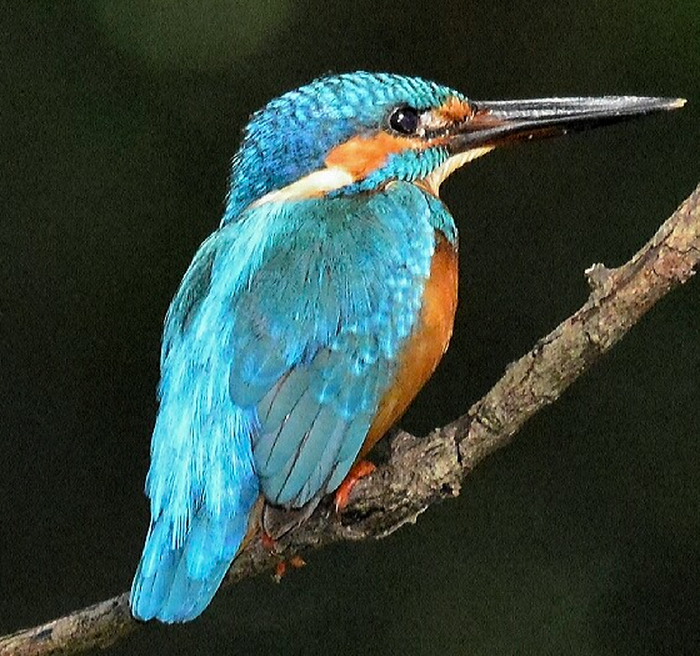
The Sea Inside

What is it about the sea? The fact that it changes, and the light changes, and the ships change. The feel of being entwined with the ocean? That when we go back to it – whether it is to sail or to watch it – we are going back from whence we came.

– Rosanna Abrachan

The teamwork involved in crafting the videos that help define the guest experience at Xandari Harbour was as satisfying as creating the property itself. Thank you Anoodha and the RAXA CollectiveXandari Harbour teams!

Stay tuned for more!

The Unexpected Manta Rays

Manta Ray (Manta birostris) at Hin Muang, Thailand. “Neon Fusilier & Manta Ray” by Jon Hanson, via Wikimedia.

We’re no stranger to the benefits of manta rays, especially with contributor Phil Karp’s writings on the subject. The accidental catch of a giant oceanic manta ray (we’re talking about a fish that can weigh up to two tons!) in the northern coast of Peru resulted in the passing of a new law that will significantly help the preservation of this endangered species. On December 31, 2015 the Peruvian government passed a resolution that bans manta fishing and requires the immediate release of mantas that are accidentally caught as “bycatch.”

It’s not unusual for manta rays to get tangled in nets or fishing lines. But rays are also deliberately targeted for their meat and gills plates, which filter out plankton as they swim. The gill plates are considered a culinary delicacy in China, where they’re also used in traditional medicine to reduce toxins, enhance blood circulation, cure cancer, increase breast milk supply, and treat chickenpox and other ailments. There’s no scientific evidence that manta potions are effective in any of these instances.

Continue reading

Reasons For Rethinking Thoreau

151019_r27147-320

A series of blog posts since we debuted here in 2011 shows that we are Thoreauvians–quite likely referencing that 19th Century American writer more than any other writer. Our conservation ethos would explain that devotion. And yet, always at the ready to reconsider, in the spirit of small-l liberalism, we are open to the possibility that we had it wrong on this front all along. For example, at least one contributor to this blog, at 17 years old, took a can of spray paint and committed a crime in the form of grafitti, with a quotation from Thoreau spread across nearly 30 feet of a wall that had gone up in a place where the 17-year old was sure that wall did not belong. How could that have been right? And if wrong, while Thoreau was certainly not to blame, was it evidence that sometimes Thoreau has been improperly invoked?

The opening six paragraphs of this article– revisionism at its small-l liberal best–will likely hook you to read it to the end, if the paragraph above rings any bells:

On the evening of October 6, 1849, the hundred and twenty people aboard the brig St. John threw a party. The St. John was a so-called famine ship: Boston-bound from Galway, it was filled with passengers fleeing the mass starvation then devastating Ireland. They had been at sea for a month; now, with less than a day’s sail remaining, they celebrated the imminent end of their journey and, they hoped, the beginning of a better life in America. Early the next morning, the ship was caught in a northeaster, driven toward shore, and dashed upon the rocks just outside Cohasset Harbor. Those on deck were swept overboard. Those below deck drowned when the hull smashed open. Within an hour, the ship had broken up entirely. All but nine crew members and roughly a dozen passengers perished. Continue reading

Wisdom Keeper

tiaphoto_1_slide-1e92fdb66f0517235d0ad0f31e1bdda2a4b1033e-s1400-c85.jpg

Tia Tsosie Begay is a fourth-grade teacher at a small public school on the outskirts of Tucson, Arizona. Elissa Nadworny/NPR

Thanks to National Public Radio (USA) for this look into the mission-driven work of Tia, who has caught our attention:

In the Navajo culture, teachers are revered as “wisdom keepers,” entrusted with the young to help them grow and learn. This is how Tia Tsosie Begay approaches her work as a fourth-grade teacher at a small public school on the outskirts of Tucson, Ariz.

For Navajos, says Begay, your identity is not just a name; it ties you to your ancestors, which in turn defines you as a person.

“My maternal clan is ‘water’s edge’; my paternal clan is ‘water flows together,’ ” she explains. “Our healing power is through humor and laughter, and I try to bring that to my classroom.” Continue reading

Diversity’s Rainbow

07ZIMMER_COMBO-master675

The long tail of diversity’s many intrigues, as Mr Zimmer seems uniquely capable of summoning up with such clarity:

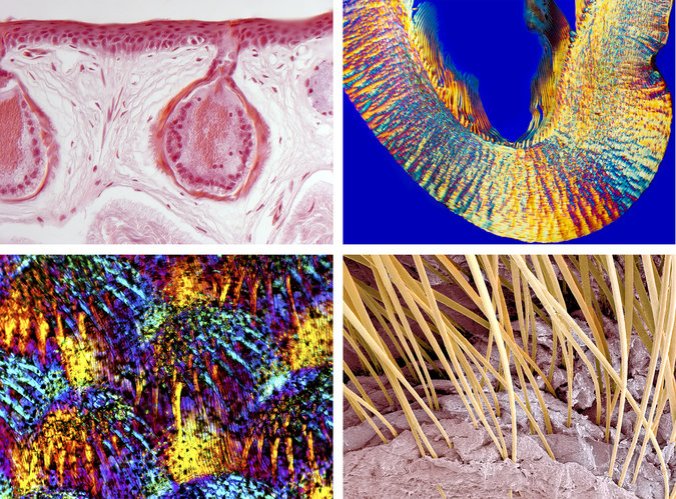
Narwhals and newts, eagles and eagle rays — the diversity of animal forms never ceases to amaze. At the root of this spectacular diversity is the fact that all animals are made up of many cells — in our case, about 37 trillion of them. As an animal develops from a fertilized egg, its cells may diversify into a seemingly limitless range of types and tissues, from tusks to feathers to brains. Continue reading

Get Your Garden Going

Screen Shot 2016-01-12 at 9.56.32 AMEcowatch, every day, provides something we can use in our extended La Paz Group operations, and in our daily lives. This one, for our homes:

…The idea of growing an indoor farm, full of healthy food you can spoil yourself with over summer may sound too good to be true. But with a little love and care, whether you live in a house or a flat, you can grow a variety of fresh vegetables, fruit and even edible flowers ready for your next dinner party—guaranteed to impress… Continue reading

Beautiful LEGO: Wild!

doyle_01

LEGO creation by Mike Doyle, image via ThisIsColossal

We all love LEGO, whether it is being used for beautiful creations or as useful inventions, and were happy to learn last year of the company’s goal to move toward sustainable materials and away from petrochemicals. An artist who works his sculptures only in LEGOs, Mike Doyle, has recently published a third book titled Beautiful LEGO, this time subtitled “Wild!” (the first had no subtitle and the second was subtitled “Dark“). Kate Sierzputowski covers Doyle’s new book showcasing works of natural LEGO marvels (by other artists as well as himself) on ThisIsColossal:

One of Doyle’s own pieces that appears in the book is a new piece titled Appalachian Mountaintop Removal (2015), a work composed of more than 10,000 pieces that directly references the act outlined in its title.

Continue reading

Visual Memories From Borneo

Sea Nomads

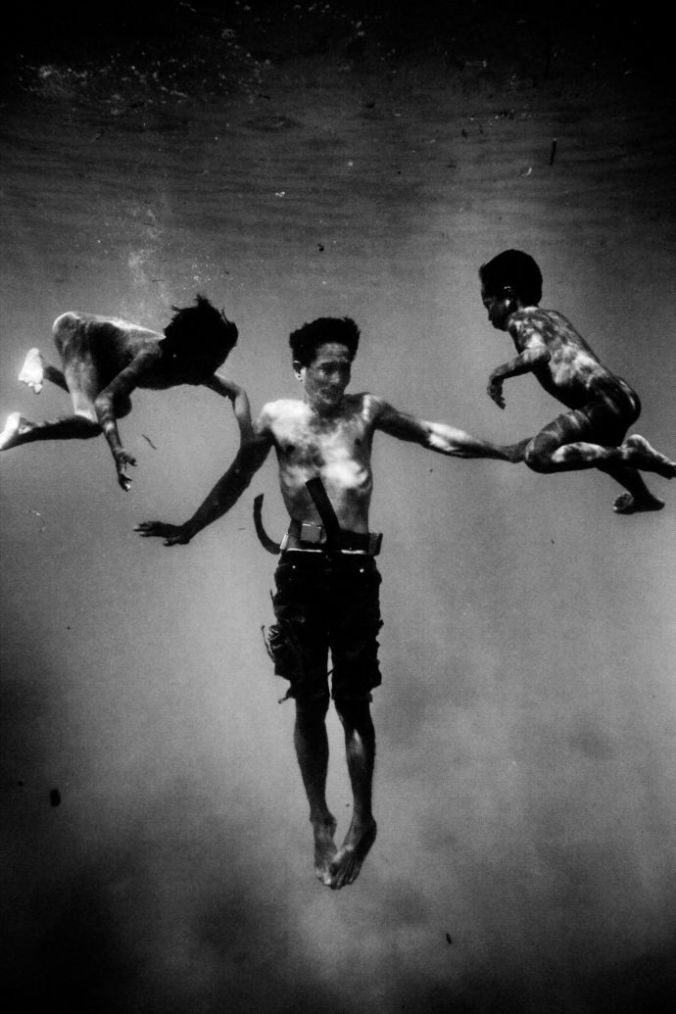
A group of Sea Badjao are photographed in Denawan Island, Borneo. Malaysia.

Raxa Collective was invited in 2014 to scout a location for a new conservation project in Borneo, and the Sea Badjao were among the most important cultural features of the island locations being scouted. The scouting resulted in a “pending” return plan, and for sometimes pending implies years (as in this case) so all we can say at the moment is that this item reminds us:

For hundreds of years, nomadic groups known as Badjao have lived on boats in the waters of Southeast Asia, heading to shore only to trade or to take shelter from threatening weather. They are free-diving fishers by tradition, swimming many metres underwater, without equipment, to harvest seafood and pearls off the ocean floor. It is only in the past few generations, facing rising costs and reduced seafood catch, as well as myriad other threats, from extreme weather to pirates, that Badjao families have settled in fixed communities. Living in homes near the water or perched above it, on stilts set into old coral reefs, they have undertaken a slow and difficult transition to modern life. Continue reading

Forests Giving Deeply Appreciated Gifts

4928

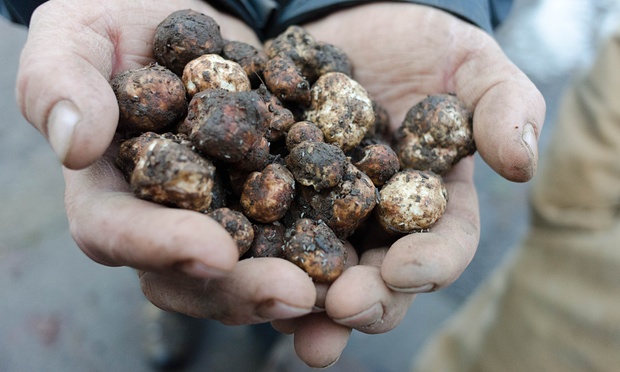
‘You could take an iron rake and rip outwards several feet from the trunk of a fir until you gathered up every truffle in the vicinity.’ Photograph: Jason Wilson for The Guardian

Two Raxa Collective representatives made their way in late autumn (northern hemisphere) to Istria, Croatia. Those same two, and their two sons, had lived in Croatia 2006-2007 but had stayed on their island at the very southern limit of Croatia; never had the chance to make it to Istria during truffle season. So, the two who finally went made the Istria visit a culinary weekend, which will need to be the subject of another post.

The exposure to truffles in their native habitat is an experience that is difficult to describe, because it is at once a deep immersion in a very comforting deciduous forest ecosystem during a time of delicious decay; and it is simultaneously a whetting of the appetite. We are now inclined to seek out more places where we can experience this. For now, the foodies among us, and particularly the mycologically oriented, will appreciate this article in today’s Guardian Environment section, which clues us in on one possible next location for next autumn:

Truffle trackers: how dogs and humans help ecology and gastronomy in Oregon

Hunting for the underground fungus delicacy with dogs ensures ripe truffles and minimum environmental impact – and it’s a great way to bond with a canine

Jason Swindle has already learned the best and hardest lesson that his dog can teach. “It’s about trust. River does the craziest things when we’re out here – she charges up cliffs or hillsides – and I have really just had to learn to trust her.”

This trust is perhaps even sweeter than the prize she helps him find beneath the forest floor: truffles. Continue reading

The Dilution Effect

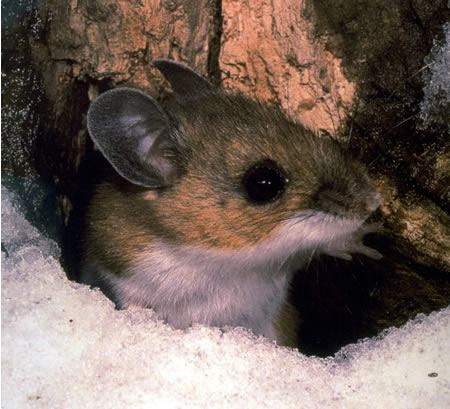
Deer mouse photo by National Park Service, via Wikimedia Commons

We should all be concerned with animal diseases, especially if those pathogens have the potential to become zoonotic, or transmittable to human beings. And if you agree that biodiversity is one of Earth’s great treasures and essential to the health of its ecosystems, then it won’t come as a surprise to hear that there seems to be a link between a habitat’s biodiversity and fewer zoonotic diseases in the respective area.

This situation is known as the dilution effect in epidemiology, and Jason Goldman reports for University of Washington’s Conservation Magazine on the case of a certain hantavirus (which is a zoonotic virus carried by rodents) studied within deer mice in Utah:

Deer mice are the natural hosts for the Sin Nombre hantavirus, or SNV. When contracted by humans, the virus can lead to the sometimes fatal Hantavirus Pulmonary Syndrome.

To test the dilution effect in a deer mouse population, the researchers trapped 155 of the rodents on BLM land in Juab County, Utah, and implanted small microchips inside them. They also took a small blood sample to test for SNV infection. Then they distributed an array of feeding trays in the desert, half in areas of high biodiversity and half in areas of low biodiversity.


Continue reading

A Robot To Police The Oceans’ Ecosystems

rtx1i8gp

National Public Radio (USA) is carrying this story, which we guess will catch the interest of Phil Karp, among others interested in the health of our ocean ecosystems:

Climate change, pollution, and unsustainable fishing practices have threatened the world’s largest coral structure but there’s some hope for Australia’s Great Barrier Reef. An intelligent robot is ready to protect it. Continue reading

New York Public Library, At It Again

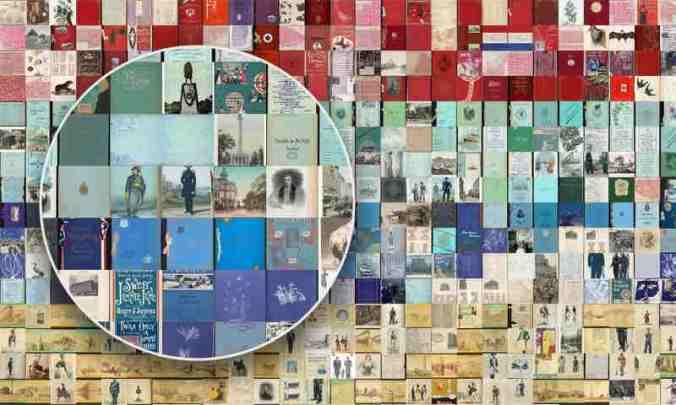
pd_banner_magnified_3We appreciate the efforts of the New York Public Library, which we have posted on numerous times previously for its innovative as well as its occasionally worrisome institutional changes, to make more of its collection more available to more people for more uses. This blog post by Shana Kimball, Manager of Public Programs and Outreach at NYPL Labs, explaining the value to all of us:
Today we are proud to announce that out-of-copyright materials in NYPL Digital Collections are now available as high-resolution downloads. No permission required, no hoops to jump through: just go forth and reuse!

The release of more than 180,000 digitized items represents both a simplification and an enhancement of digital access to a trove of unique and rare materials: a removal of administration fees and processes from public domain content, and also improvements to interfaces — popular and technical — to the digital assets themselves. Online users of the NYPL Digital Collections website will find more prominent download links and filters highlighting restriction-free content; while more technically inclined users will also benefit from updates to the Digital Collections API enabling bulk use and analysis, as well as data exports and utilities posted to NYPL’s GitHub account. These changes are intended to facilitate sharing, research and reuse by scholars, artists, educators, technologists, publishers, and Internet users of all kinds. All subsequently digitized public domain collections will be made available in the same way, joining a growing repository of open materials. Continue reading

Hello Again, Robert Krulwich

D95MNR

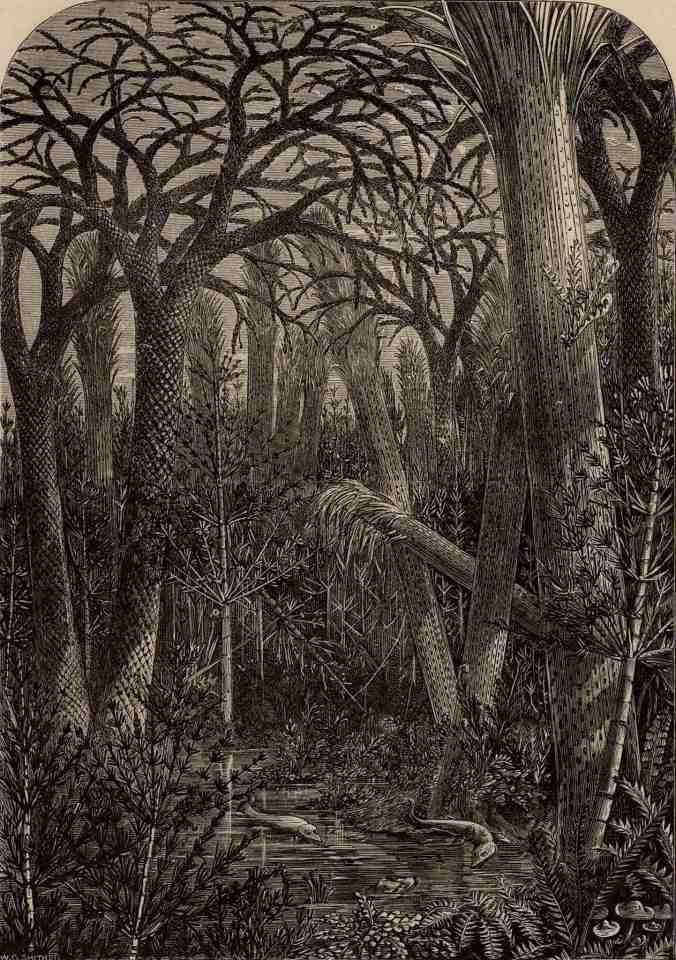
Artist’s reconstruction of a forest during the Carboniferous period. From ‘Science for All’ by Robert Brown (London, c1880). Illustration by World History Archive, Alamy

National Geographic‘s website has enlisted one of our favorite science communicators for its Phenomena section, and we are suddenly aware of how long it has been since we featured one of his ponderings (and excellent illustrations):

… whose trees “would appear fantastic to us in their strangeness,” write Peter Ward and Joseph Kirschvink in their book A New History of Life.

Some of them were giants: 160 feet tall, with delicate fernlike leaves that sat on top of pencil-thin trunks. This was the age when plants were evolving, climbing higher and higher, using cellulose and a tough fiber called lignin to stay upright. Had you been there, you would have felt mouse-sized.

Continue reading

Come to Kerala, Devi

mississippi_river

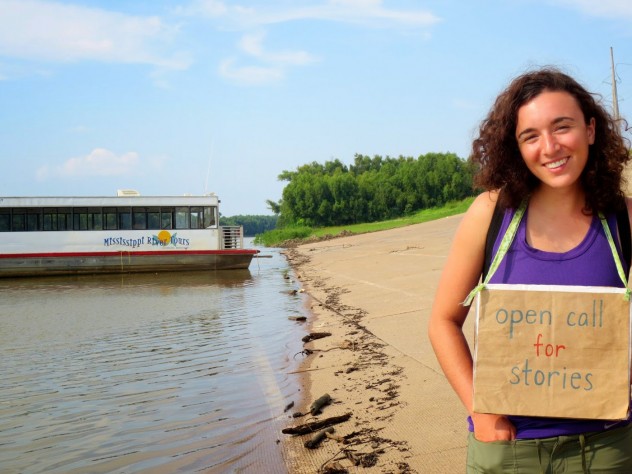
Collecting stories by the river in Vicksburg, Mississippi. August 2013. Photograph by Devi K. Lockwood

You will be in good company, in terms of other “Come to Kerala” invitees mentioned on this blog. We appreciate the Folklore & Mythology, and especially the Art of Storytelling inspirations to your purposeful wandering form of activism. Come say hello.

LEO AND I SIT across the table from each other in the home his family rents in Dunedin, New Zealand. The kitchen smells of roast garlic. Two days ago I cycled up the big hill to his house with all my belongings strapped and clipped to my bicycle: clothes, food, audio recorder, and a tiny guitar. Continue reading