The idea of creating an international movement for protecting heritage emerged after World War I. The 1972 Convention concerning the Protection of the World Cultural and Natural Heritage developed from the merging of two separate movements: the first focusing on the preservation of cultural sites, and the other dealing with the conservation of nature. But what comes with the World Heritage tag?
India and the Malay Literary Tradition

Caritra Rama, in romanised Malay with many Javanese elements, copied at Surabaya in February 1812. PHOTO: British Library, MSS Malay D 7, f. 5r (detail).
The epics of Ramayana and Mahabharata find their meaning and origin on Indian soil but their reach goes beyond the subcontinent. And the British Library’s archives find evidences of these in Malay literary traditions.
The great Indian epics the Ramayana and Mahabharata were known throughout Southeast Asia, but it was the Ramayana that most profoundly influenced Malay literary tradition. One of the oldest Malay manuscripts in a British collection is a copy of the Hikayat Seri Rama in the Bodleian Library, Oxford, which bears the ownership inscription of Archbishop Laud dated 1633. The British Library holds a manuscript of Caritra Rama, “The story of Ram”, in romanised Malay, which was copied in Surabaya in 1812.
Bird of the Day: Black-hooded Oriole
Where Have the Rhinos Gone?

An investigator prepares the carcass of a rhino killed for its horn for postmortem in the Kruger national park. PHOTO: Salym Fayad/EPA
Today is World Rhino Day. It celebrates all five species of rhino: Black, white, greater one-horned, Sumatran and Javan rhinos and was first announced by WWF-South Africa in 2010. South Africa is home to over 70 percent of African rhinos, the endangered species whose number dropped sharply to under 20,000 due to rampant poaching. Poaching has become the leading threat to the rhinos’ survival, with official statistics indicating 1,215 rhinos were killed for their horns in South Africa in 2014.
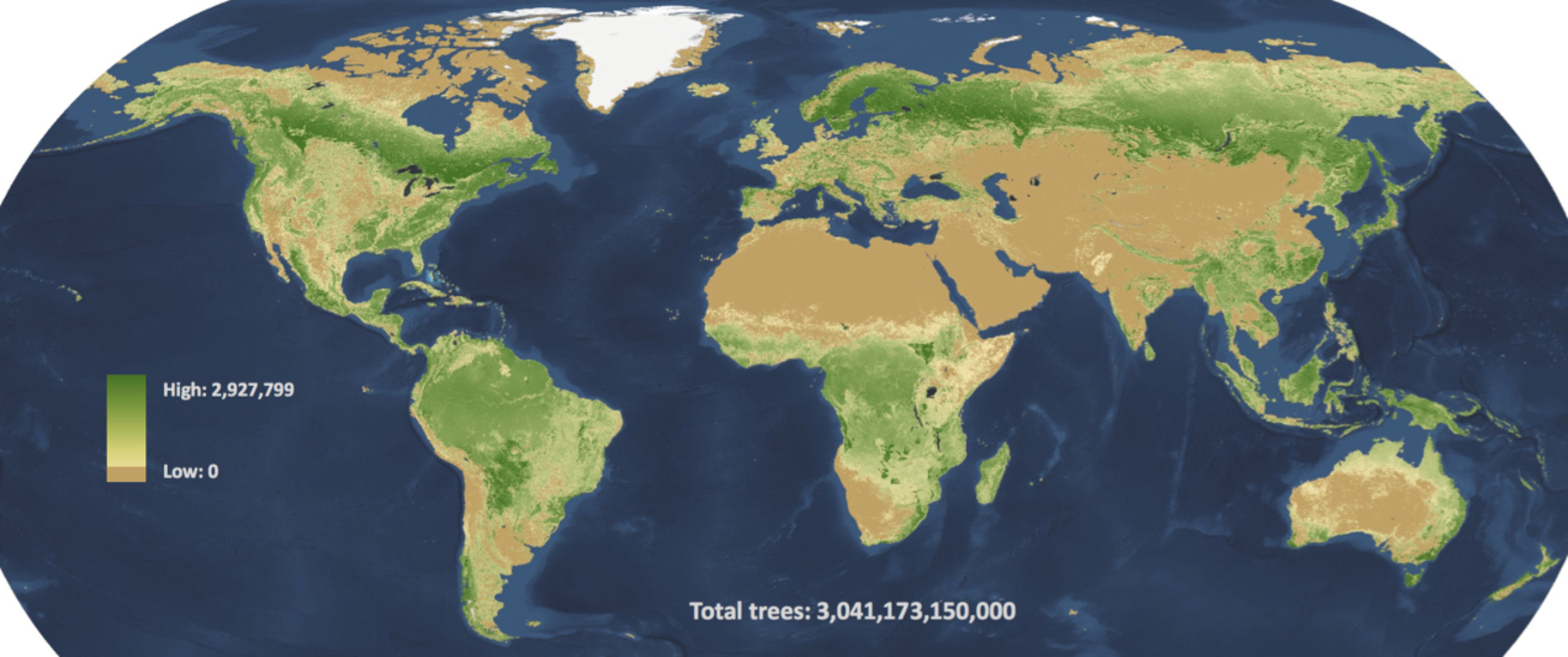
What’s the Tree Population?
Three trillion trees live on Earth, but there would be twice as many without humans. Each year more than 15 billion trees are lost worldwide, according to a major new study. Previous estimates for the total number of trees on Earth have been much lower. The new study is important not only because it gives a higher number, but how it was produced. As well as using remote sensing data such as images taken by satellites that can classify land type, the research also integrated 429,775 ground-based assessments of tree density.
Bird of the Day: Striated Laughingthrush
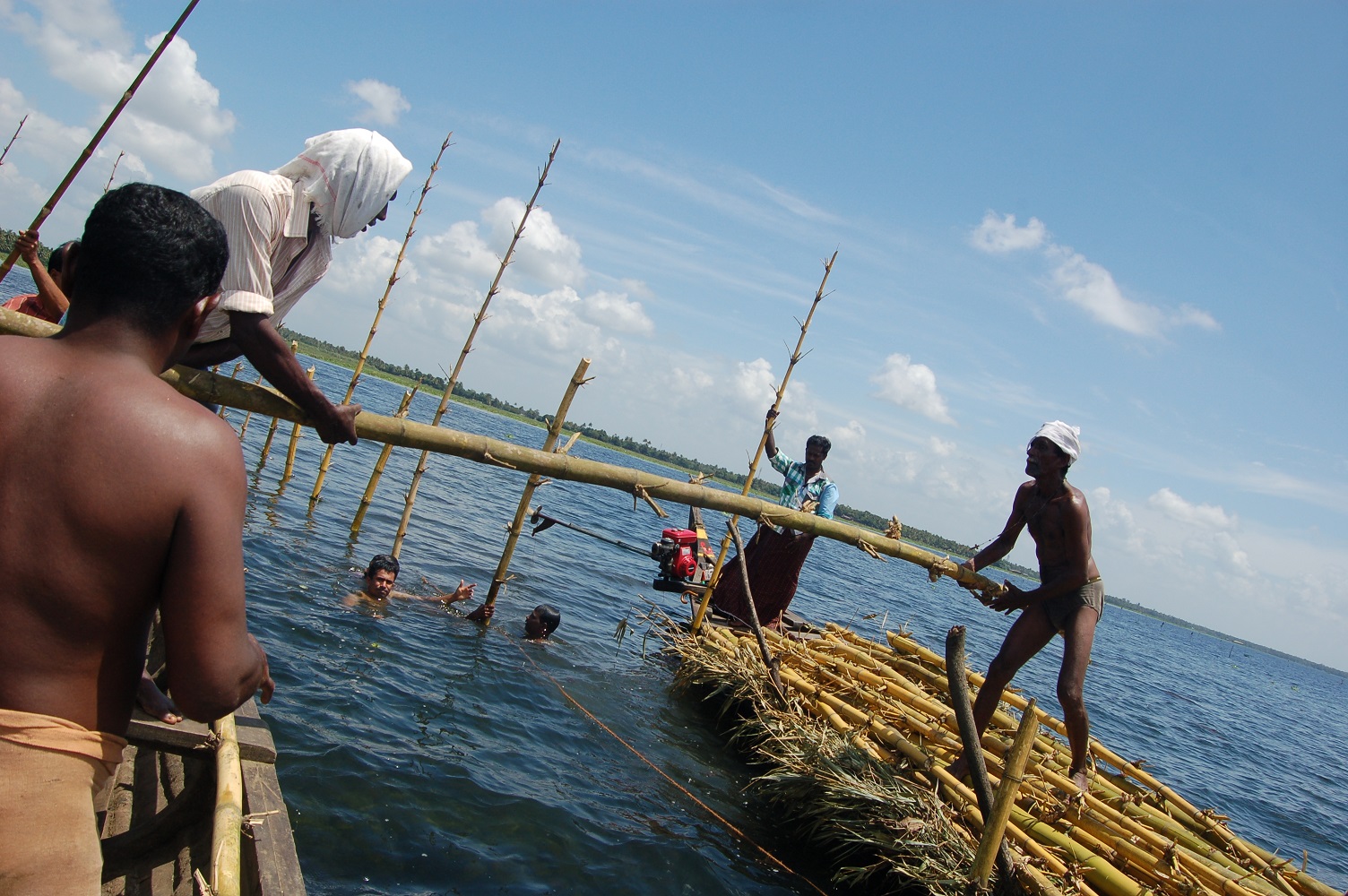
The BIG Backwater Conservation Story
We love the backwaters. Period. Every single time one of our Xandari Riverscapes houseboats puts out into these deep waters, our hearts swell with pride. Responsible showcasing the charm, the timelessness of these waters and its people brings us much joy. And when we come across conservation efforts to maintain the quintessence and soul of this stretch of paradise, we can’t help but let you know.
Spread over 36,000 hectares and three districts in Kerala, this is the kind of landscape that gives conservation ecologists a blinding headache – a resource-rich, highly-productive area that is pulled apart in several directions (waste-dumping, tourism, livelihoods, water security) and depended upon by conflicting communities who have no other alternatives. Lakes have been straddling this intersection all across India – from Chilika in Odisha, to the Bengaluru urban lakes, to Loktak in Manipur, to Vembanad.
Such heavy-use landscapes outside protected areas, however, also might hold answers to the future of conservation. Whether it is a large lake system, or forest fragments that serve as the refuge of a few species or a corridor for wild animals, or a forest fringe, or large agricultural swathes that also host biodiversity, a section of conservationists believes that the future lies in teamwork between nature and mankind.
What Does It Take to Plant a Forest?

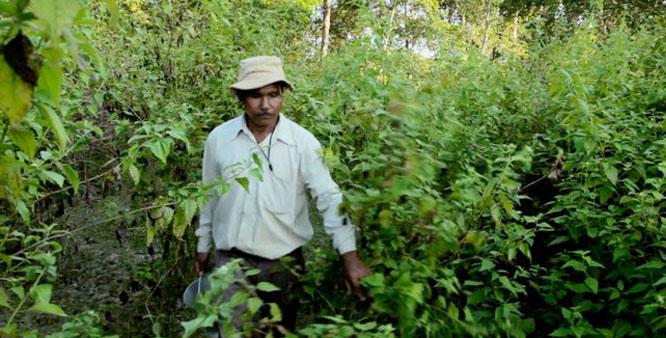
Indian man, Jadav “Molai” Payeng, has single-handedly planted a 1,360 acre forest In Assam. PHOTO: Jagran
For many people the sight of a dead snake would be an unpleasant but not tragic image, but for Indian activist Jadav “Molai” Payeng it was a call to action that inspired him to create an entire forest. When Payeng was just a teenager in 1979 he came across a bed of dead snakes on the sun-baked shores of the Brahmaputra river. The limbless beasts had been stranded on the barren banks and perished in the unmitigated heat due to the lack of shade or tree cover. Payeng wept over the corpses but resolved to turn his sadness into action.
Bird of the Day: Crested Serpent Eagle
The Sound of the Forest

A few years ago the Ministry of Environment included the Sagano Bamboo Forest on its list of “100 Soundscapes of Japan” — a selection of everyday noises intended to encourage locals to stop and enjoy nature’s music. PHOTO: CNN
What does it take for a government to officially recognize a natural soundscape? The bamboo forests of Kyoto. Growing tall on the edges of Kyoto, the Sagano Bamboo Forest is a once tranquil nature spot that is now a series of tourist-packed pathways, but if one can escape the sounds of camera shutters and boorish visitors, they can hear the rustling, creaking, and swaying of one of Japan’s governmentally recognized soundscapes.
Taking Classrooms to Children

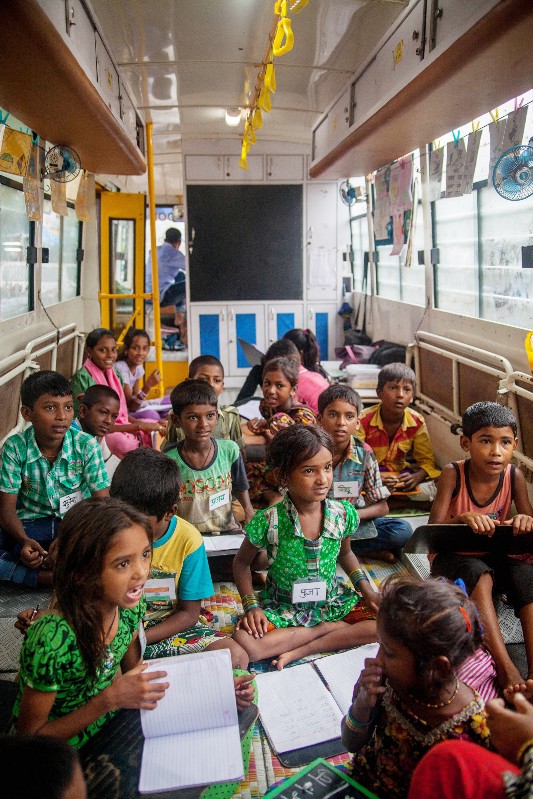
The buses can only hold 20 students, without much space to wiggle around or store books. But they have unique benefits — like their ability to reach many of Mumbai’s poorest migrants who live on illegal plots of land where schools can’t be built. PHOTO: Karen Dias
Mumbai’s education system has fallen gravely short of absorbing its children. Only 400,000 children were enrolled in municipal schools in 2014, according to a report by Praja, a non-partisan research and advocacy organization. That number actually dropped 11 percent since 2009, despite increased government spending on education.That leaves more than half of the children in Mumbai either out of school or learning in private institutions. At least 37,000 kids in Mumbai live on the streets and work with their parents to earn a few cents a day, according to advocacy organization Action Aid.
Medium brings you more on how a collaborative system of volunteers, activists and NGOs is transforming the darkness of ignorance in one of India’s largest cities.
The Post Office and World War
When was the last time you put paper to pen and saw your writing come to life? The last time you held a piece of card so small but held news and feelings from across seven seas? Writing and receiving mail is quite the experience, all the more now in the age of keypads and instant messages. It was important, too. Like in the time of the World War. When the mail was recognized as the biggest tool of maintaining morale.
BBC brings some interesting facets:
The most effective weapon used during World War One wasn’t the shell or the tank, it was morale. The British Army believed that it was crucial to an allied victory, and it looked to the Post Office for help.
The delivery of post was vital for two reasons. Firstly, receiving well wishes and gifts from home was one of the few comforts a soldier had on the Western Front. The majority of them spent more time fighting boredom than they did the enemy, and writing was one of the few hobbies available to them. For some, it was a welcome distraction from the horrors of the trenches.
Secondly, letters served a propaganda purpose as everything that soldiers sent back was subject to censorship. The British Army claimed this was to prevent the enemy finding out secret information, but really it was to prevent bad news from reaching the home front. Letters from serving soldiers had a powerful role, not just in keeping families informed of the well-being of their loved ones; they also helped to sustain popular support for the war across the home front. Nothing could be allowed to jeopardise that.
Who’s Taking Over Coral Reefs?

Between August and November in 2014, Chinese dredgers created a land mass on Fiery Cross that spans 3,000 meters long and 200 to 300 meters wide. PHOTO: Washington Post
Here are some figures for China’s military strength. Here is also the fact that much of the country’s military building is concentrated in the high seas. Especially in waters that once hosted biodiversity hotspots in coral reefs.
As China races to extend its military reach, it is turning pristine habitats into permanent islands. Satellite images of the South China Sea show rapid destruction of some of the most biodiverse coral reefs in the world. The reclamation of land in the contested Spratly archipelago to build runways, military outposts and even small towns is endangering ecosystems that are key to maintaining world fish stocks and biodiversity.
Bird of the Day: Great Frigate Birds in flight

Galapagos Islands, Ecuador
Jerusalem’s 800-year-old Indian Connect

There is a little corner of Jerusalem that is forever India. At least, it has been for more than 800 years and its current custodian has plans for his family to keep the Indian flag flying for generations to come. PHOTO: BBC
For close to a century, many generations of an Indian family have been looking after the Indian Hospice, a symbol of India’s heritage, in the old city of Jerusalem.The Indian Hospice was born in 1924, with Sheikh Nazir Ansari, a police inspector’s son from Saharanpur in Uttar Pradesh, becoming the first Indian to look after the hospice, situated opposite Herod’s Gate in the old city. Since then generations of the Ansari family have kept the Indian flag flying in a situation which is “politically fraught where every inch of territory is claimed or counter-claimed”.
From the roof he flies an Indian flag, its saffron and green visible over a city that remains as volatile as ever. Sheikh Munir, though, is not easily intimidated. “I am not afraid. I am satisfied for the future, that we, the Ansari family, are serving. After me, my elder son, Nazer, should replace me as Sheikh of the zawiyya [lodge].”
I ask if Nazer, who works overseas, is interested in taking over. Sheikh Munir hesitates. From a frame on the wall, his father looks down silently. The old man raises his hands, palms up.
“It’s not a question of interested.”
The Prize for Energy Storage

Jay Whitacre is the latest recipient of the prestigious $500,000 Lemelson-MIT Prize, which honors mid-career inventors who have also demonstrated a commitment to mentorship in science, technology, engineering and mathematics (STEM). PHOTO: LEMELSON-MIT PROGRAM
The Aqueous Hybrid Ion (AHI™) Batteries are based on a simple idea: in order to meet the challenges of the world’s growing energy needs and increase the use of renewable power, we need large-scale energy storage systems that are high performance, safe, sustainable and cost-effective. Jay Whitacre set out to solve this problem and discovered a simple and elegant solution that is a twist on a 200 year-old technology: saltwater batteries. Using abundant, nontoxic materials and modern low cost manufacturing techniques, the AHI batteries are now ready to take on the global energy storage challenge. And have also won Whitacre the prestigious $500,000 Lemelson-MIT Prize.
Did Scrabble Almost Fail to Take Off?

The game also formerly known as It and Criss-Cross Words acquired its lasting moniker in 1948, but its story begins 15 years earlier, when a 32-year-old architect named Alfred Mosher Butts joined the millions who’d already lost their jobs in the Great Depression. PHOTO: Getty
A game played avidly by amateurs and pros alike. In jails and by the British Royal Family, and has fans even at The White House. No other game brings wordsmiths together like Scrabble. And to think it may not have seen the light of living rooms:
Though words are its currency, it’s really a game about anything but. It’s a spatial game, a game of patterns and of memory. No wonder many top players have a mathematical rather than a linguistic background. You certainly don’t need to know what an obscure two-letter filler like ‘ee’ or ‘da’ means in order to play it, only that it appears on the endorsed word lists.
When Food Unites

Vigorón served at El Gordito in Granada, Nicaragua. The combination of soft, starchy yucca; salty, rough pork cracklings; and tangy, cool slaw made with cabbage, onions, tomato, mimbre fruit, chile and vinegar. PHOTO: Julie Schwietert Collazo for NPR
No matter how different our ethnic backgrounds, beliefs, views and values are, we can all sit around a dinner table and unite in sharing a meal that includes different tastes and types of food from all over the globe – the palate knows no boundaries and no limitations. In a divided country like Nicaragua, all differences melt when it comes to vigoron. The national dish that cuts across political ideologies, economic status, and strong preferences.
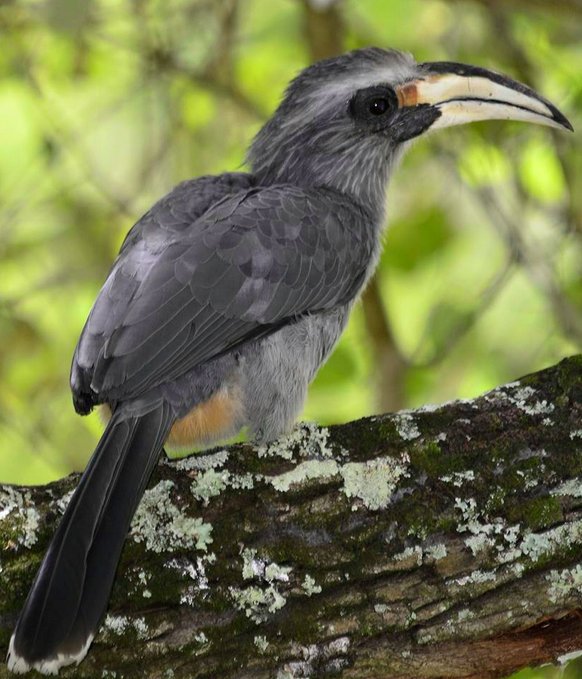
Bird of the Day: Malabar Grey Hornbill
Nature and Her Surprises
photo credit: Ms. Barbara Block
The last time I wrote was about my experience working in Nigeria, where I enjoyed the challenge of balancing the familiar and the new in culture, people, landscape and even weather. I’m now back in India and am happy to explore nature in my own country again.
I am based in the beautiful hill-station Kodaikanal in Tamil Nadu and everytime I look up at the sky and the mountains and the beautiful valley, it takes my breath away! Then I stop to wonder – why do my fellow Indians long to go to Switzerland and other places, when we can experience so many similar things somewhere in our own country? Continue reading