Ferry Around

DSC_2039

The Cochin harbor lights caught on the move from the ferry

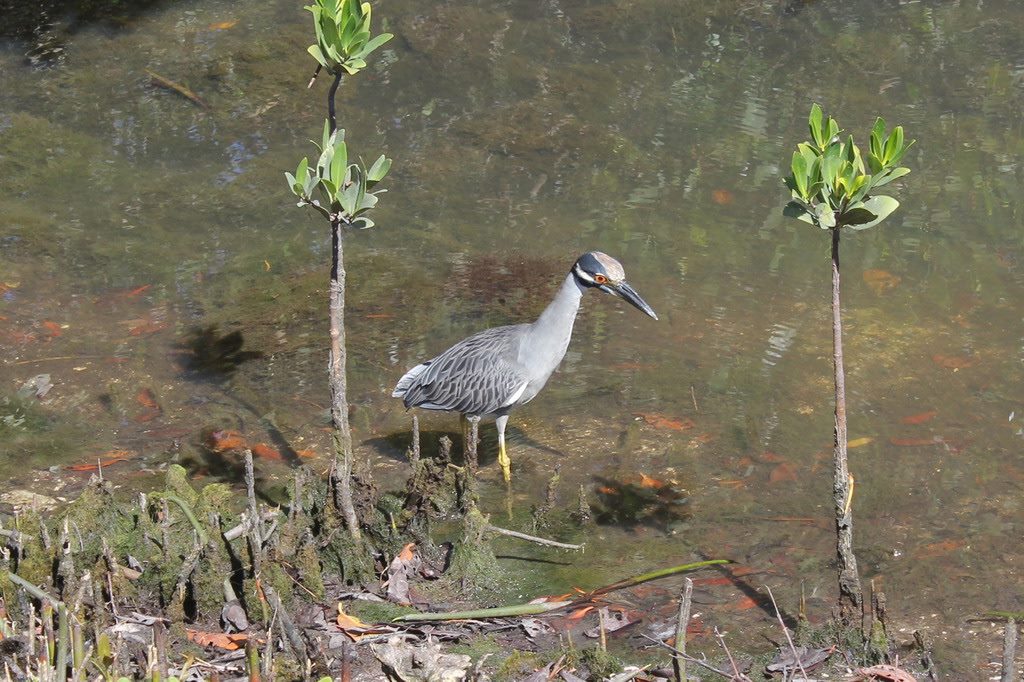
“Airrrrr, waterrrrrr and laaaaaand” – my first grade Geography teacher chanted the three main modes of transport until we pony-tailed girls were sure to never forget them. While travel by land was a plain daily affair, air transport completed family vacations. It was the much-awaited – but timed – visits to the grandparents, their home on an island in the backwaters, that sparked my love for the ferry.

As with love of all kinds and sizes, it began with the unknown. “How much water is there in the river,” “Will we die if the boat breaks”, “How works the ferry” – curiosity trumped grammar in my little world. There were some answers but the fascination stayed because how could wooden planks and boards placed across two large canoes carry people and vehicles! So every time the car reached the water’s edge, out jumped a little girl with 5 rs ($0.08), stood on tiptoes to reach the greasy ticket counter and waited until the father maneuvered the car to climb onto a ladder placed between the ferry platform and the edge of the boat (craving to do justice to this bit but Physics is not my cup of my tea). If I promised to not go close to the railings, I was allowed to stand out in the open, letting the river breeze ruffle my curls and rouse up conversations I’d drown my grandparents in.

Yesterday, the ferry was about a little girl reaching her elders on an island where once there was no bridge. Today, two decades on, the ferry is the bridge that connects the old and the new, brings together kindred and the wayfarers, and tells her stories of the land and its people. Continue reading

Extreme Recycling

Filtering membranes in an Orange County, Calif., water purification facility. The plant opened in 2008 during the state's last drought. Credit Stuart Palley for The New York Times

Filtering membranes in an Orange County, Calif., water purification facility. The plant opened in 2008 during the state’s last drought. Credit Stuart Palley for The New York Times

As the California drought continues public and private sector organizations look to solutions to comply with the State’s mandatory water reduction measures. In addition to desalination plants coming back on line and rainwater harvesting, communities are looking at ways to overcome the “yuck factor” of water recycling.

Less “extreme” versions have been in place for some time, as household wastewater goes through layers of treatment processes that break it down to its prime components of “H, 2 and O”. The results have been used for irrigation for years, but it’s possible to purify the water to sparklingly clear levels.

Used already in craft beer brewing, extreme purified water is one of the array of ideas being implemented to manage California’s ever-growing problems. Dealing with consumers is essentially a marketing problem, more so in this case than the norm.

Water recycling is common for uses like irrigation; purple pipes in many California towns deliver water to golf courses, zoos and farms. The West Basin Municipal Water District, which serves 17 cities in southwestern Los Angeles County, produces five types of “designer” water for such uses as irrigation and in cooling towers and boilers. At a more grass-roots level, activists encourage Californians to save “gray water” from bathroom sinks, showers, tubs and washing machines to water their plants and gardens. Continue reading

Rewilding’s Great Rewards

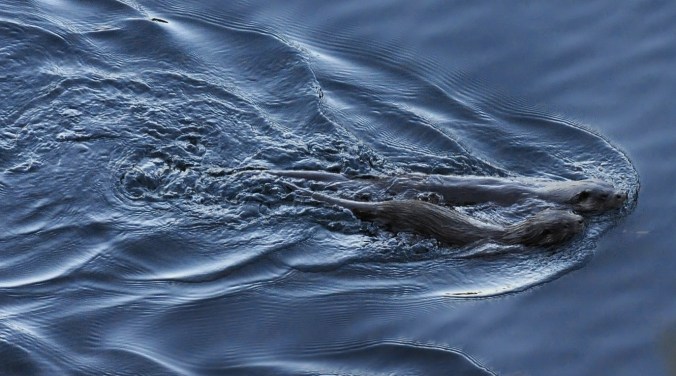
Otters near Shieldaig Island, Loch Shieldaig, Scotland. Photograph: Steve Carter

Otters near Shieldaig Island, Loch Shieldaig, Scotland. Photograph: Steve Carter

Although he may not use the term, George Monbiot believes in biophilia. His devotion to the concept of rewilding is evident in both his actions and his words, and his expressive writing about nature’s resilience and the richness of “ecological interactions” prove the point. His description of a recent trip to the Scottish highlands exemplifies both the draw of nature and his response to it:

As I came over a low ridge, I noticed a disturbance in the water below me, a few metres from the shore. I dropped into the heather and watched. A moment later, two small heads broke from the sea, then the creatures arced over and disappeared again.

After another moment, the larger one – the dog otter – scrambled out of the water with something thrashing in its mouth. He dropped it on to the rocks, gripped it again, then chewed it up. Then the bitch emerged from the sea beside him, also carrying something, that she dispatched just as quickly. They plunged in again, and I watched the trails of bubbles they made as they rummaged round the roots of the kelp that filled the shallow bay. Continue reading

Waste, Quantified Into Profit

With a new chain called Loco’l, the chef Roy Choi is hoping to create competitively priced, sustainable fast food, primarily by minimizing waste. CREDIT PHOTOGRAPH BY MARIO ANZUONI / REUTERS VIA LANDOV

With a new chain called Loco’l, the chef Roy Choi is hoping to create competitively priced, sustainable fast food, primarily by minimizing waste.
CREDIT PHOTOGRAPH BY MARIO ANZUONI / REUTERS VIA LANDOV

Food Trucks are the ultimate “pop up” upstarts, with their expansive ranges between classic and trendy. Roy Choi, who New Yorker writer Lauren Markem calls “the godfather of the foodtruck movement” wants to do more than serve great, locally sourced food at his new venture Loco’l’s. His “fast food” restaurant concept located in San Francisco’s Tenderloin District, will be inspired by the goal of working toward a waste free kitchen. In order to keep the costs down in what is a notoriously wasteful segment of the restaurant market, Choi is going lean using a software that helps create a more sustainable kitchen.

In tapping into waste, Choi and Patterson hope to marry fiscal prudence with environmental idealism. According to a report published in 2012 by the Natural Resources Defense Council, the amount of wasted food in the U.S. has increased by fifty per cent since the nineteen-seventies, to the point where more than forty per cent of all food grown or raised in the United States now goes to waste somewhere along the supply chain. This in turn means that vast amounts of fossil fuels, water, and other resources are being wasted in the production of unused food. Continue reading

Collective Roots

Attention to detail is a highly prized attribute in all aspects of the work we have been doing in India since 2010, and we hope it doesn’t seem pedestrian to extend that concept to something as commercial as shopping. Some people may beg to differ, but there are many cases where the “consumer transaction” is so much more.

We’ve spent many happy hours in exploration to find sustainably produced, cottage industry items. A trip to Gujarat led us to the Kala Raksha Trust. Walks in Cochin led us to the Vimalalayam Convent School, and the NGO A Hundred Hands has introduced us to many of the wonderful craftswomen whose products we highlight, including designer Usha Prajapati from Samoolam.

We’ve been great fans of the results of her work with the women of Bihar from the moment we saw it, and hearing her personal story adds a beautiful dimension to the concept of “self-help”. Thanks to FvF (Freunde von Freunden) for their inspiring online interview.

Samoolam, Usha’s design collective, which is making a name for its beautiful hand-crocheted lifestyle products, is incredible not just because its founder is young, talented and inspiring, but because its process of creation is held together by a network of strong and talented women much like her – women who make things happen, who are changing their worlds, one crochet bead at a time.

Continue reading

Water Play

What a privilege to watch the extremely playful cubs of the Sukhi Patiah Tigress enjoying in the Patiah water body at Bandhavgarh National Park!

We spent around 1 1/2 hrs with these cubs playing in the water. We learn so much about these tigers when we do the sunrise to sunset photo safari in the parks. For example, our understanding has been that tigers are active in the morning and late evenings. But these cats are smart, they become far more active after the regular safari timings. 
Continue reading

Best hands forward

IMG_3038

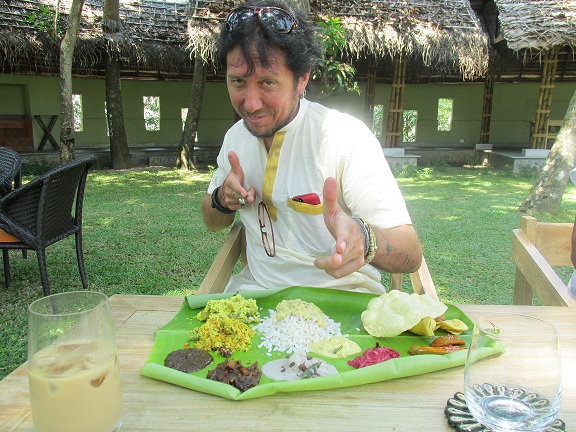
Musician Sami Yaffa hits the right note at the table

IMG_3037[1]

Mina Soliman appears sadya-ready!

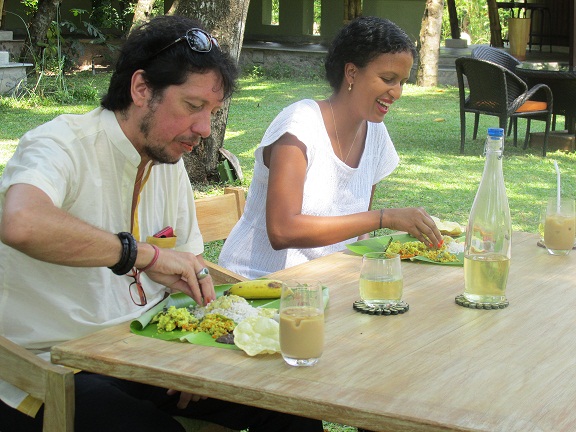
We are people of experiences – the ones we’ve walked, run and barreled into and the ones we create. At RAXA, we take the latter seriously. So when you come down to stay with us by the Kochi harbour or navigate the world-renowned backwaters in our hand-stitched houseboats, you’ll see us work at crafting the finest and personal of them all. Bass guitarist Sami Yaffa and his partner, designer Mina Soliman will agree.

Their stay with us by the Mararikulam beach went beyond the comforts of their villas. There was definitely a stop by the kitchen because don’t we all travel the world plate by plate? Only that the plates and cutlery were on a little holiday of their own this time. A plantain (banana) leaf met the couple at the table and, well, they had to put their best hands forward. It was the call of the Sadya.

Continue reading

A Day in the Blue Mountains

Last week we shared the compilation of A Day in the Cockpit. Here’s the second installment of our expedition video, with about nine minutes of the Blue and John Crow Mountains:

Much of this footage was taken within the national park, or Continue reading

Tricksters, Animals, And Narratives We Are Meant To Learn From

“Reynard” is a defining document of a vast tradition in Western art: the trickster story. CREDIT ART AND PICTURE COLLECTION / THE NEW YORK PUBLIC LIBRARY

“Reynard” is a defining document of a vast tradition in Western art: the trickster story. ART & PICTURE COLLECTION, THE NEW YORK PUBLIC LIBRARY

Thanks to Joan Acocella for illumination of a narrative form we are quite fond of:

…Animal narratives have allowed writers with lessons on their mind to make art rather than just lessons.

Such tales are no doubt as old as animal paintings on cave walls. The earliest evidence we have of them is the beast fable, a form that is said to have come down to us by way of Aesop, a Greek storyteller who was born a slave in the sixth century B.C. Actually, no solid evidence exists that there ever was an Aesop, any more than there was a Homer. As with the Iliad and the Odyssey, we are talking about manuscripts that date from a period much later than the supposed author’s, and were probably assembled from a number of different fragments. In any case, a beast fable is a very short story (the Penguin Classics edition of Aesop renders “The Tortoise and the Hare,” perhaps the most famous of the fables, in five sentences) in which, typically, a couple of animals with the gift of speech learn a lesson from their dealings with one another. This moral is then stated at the end of the fable, and it is usually of a cautionary variety: don’t eat too much, don’t brag, watch out for this or that. As early as the third century B.C., these stories were being gathered together in various editions, usually for children, to teach them Latin (most were in Latin until the late Middle Ages) and some basic rules about life. Continue reading

National Governments, Entrepreneurial Conservation, And Increased Awareness Of Nature’s Value

grandcanyon

A view from the north rim of Grand Canyon National Park via Flickr/NPS

This is our favorite kind of report:

NATIONAL PARK VISITORS INJECT BILLIONS INTO THE US ECONOMY

In 2014, more than the National Park Service hosted more than 292 million visitors. The system, which covers more than 84 million acres divided among 401 sites, includes some of the United States’ most iconic tourist destinations: the Grand Canyon, Mount Rushmore, Yellowstone, Yosemite, the Everglades. And when people visit those sites, they spend money. For the past 25 years, the National Park Service has been measuring and reporting the economic effects of park tourism. (The first data collection effort on visitor attendance itself was conducted in 1904, when six national parks reported 120,690 visitors.)

The latest report, covering the year 2014, has just been released by NPS and US Geological Survey researchers, along with a companion website that includes a variety of data visualizations. Continue reading

Desalination Technological Innovation, Well Timed, Much Needed

freshwater

Drought solution? A invention from MIT and Jain Irrigation Systems can turn salt water into clean drinking water using solar energy. Photo credit: Shutterstock

Thanks to EcoWatch for this good news:

MIT’s Solar-Powered Desalination Machine Could Help Drought-Stricken Communities

Lorraine Chow

A team from the Massachusetts Institute of Technology and Jain Irrigation Systems have come up with a method of turning brackish water into drinking water using renewable energy. With parts of the planet running dangerously low on fresh water, this technology can’t come soon enough.

This solar-powered machine is able to pull salt out of water and further disinfect the water with ultraviolet rays, making it suitable for irrigation and drinking. As the MIT News Office explained, “Electrodialysis works by passing a stream of water between two electrodes with opposite charges. Because the salt dissolved in water consists of positive and negative ions, the electrodes pull the ions out of the water, leaving fresher water at the center of the flow. A series of membranes separate the freshwater stream from increasingly salty ones.”

Continue reading

A Day in the Cockpit

Out of the several hours of video that we took during our first month of the Jamaican Golden Swallow Expedition, Justin has condensed the cream of the crop into a fifteen-minute compilation that flows from sunrise to moonlight, with lots of birds, scenery, and other life in between.

Watching the video above, you can  Continue reading