
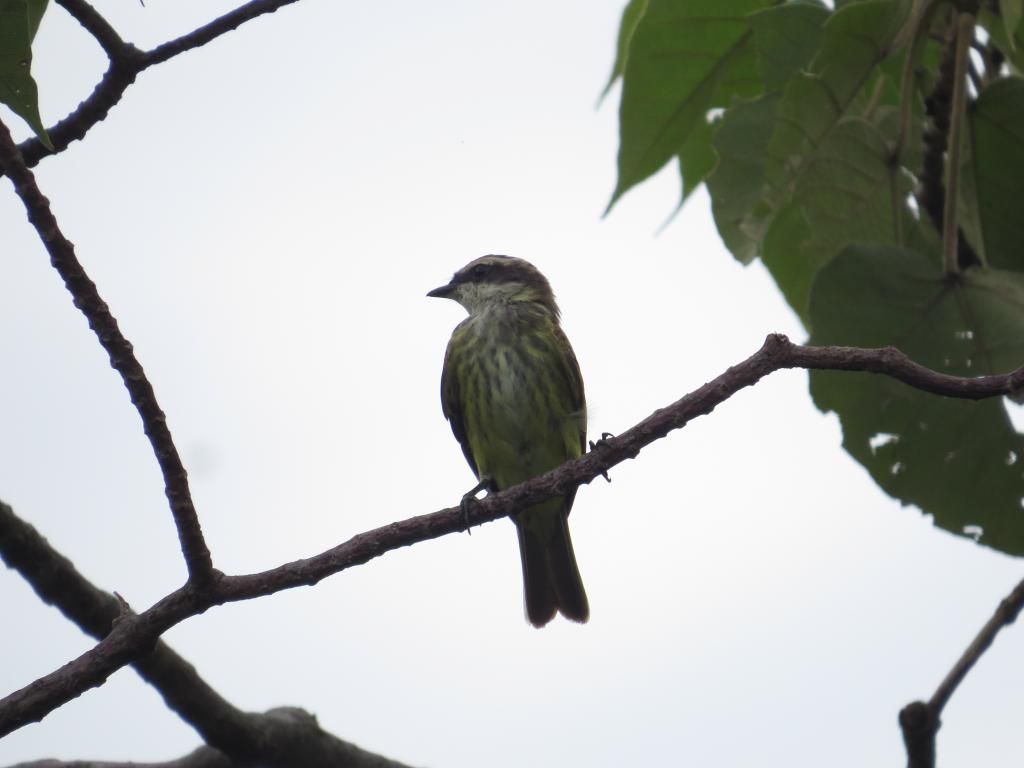
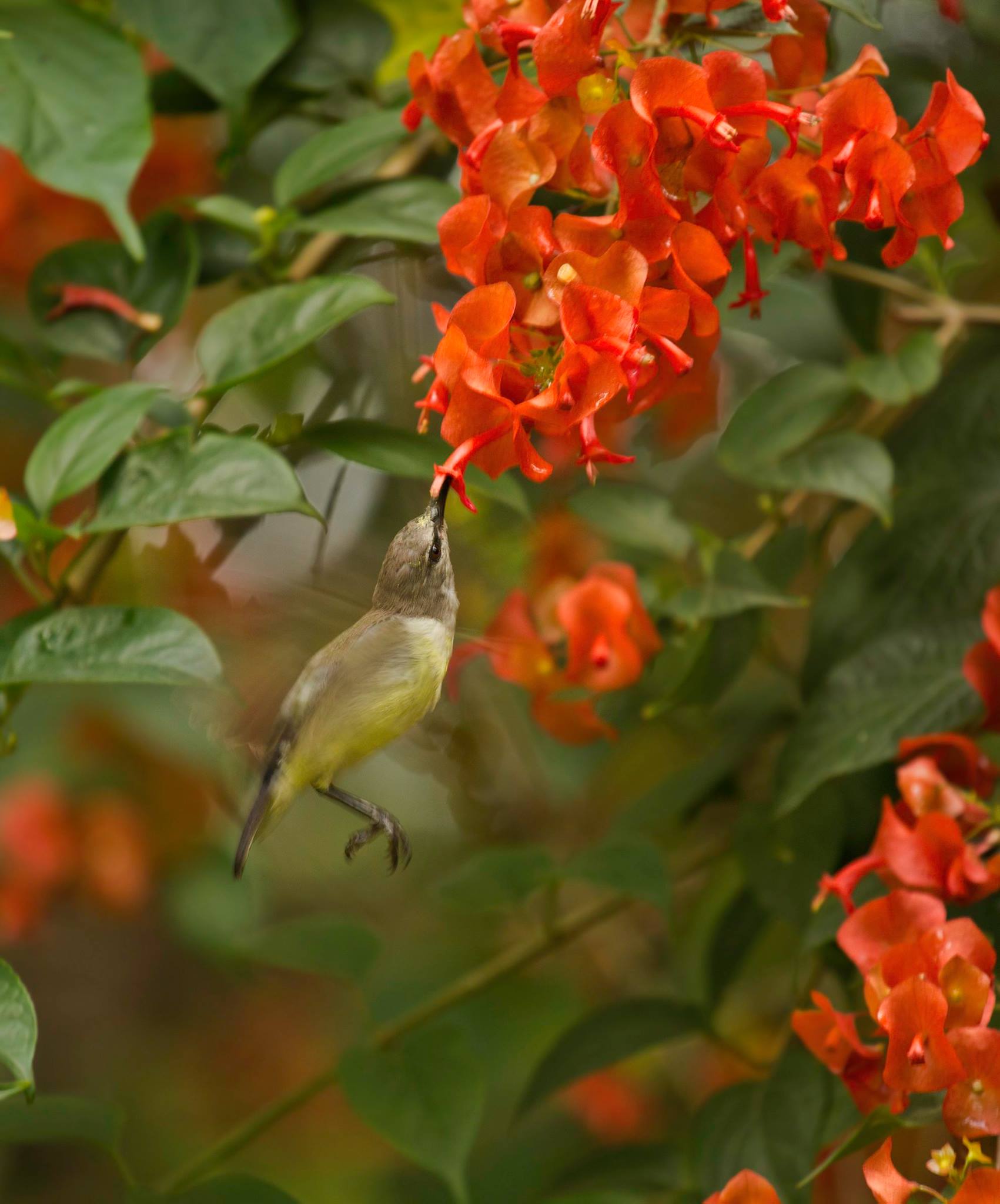
male – Corn Puss Gap, Blue and John Crow Mountains National Park, Jamaica
male – Corn Puss Gap, Blue and John Crow Mountains National Park, Jamaica
If you want to get a different perspective and a unique image, you have to be very attentive and keep your camera / lens / eyes focused on your subject.
This is Sonam, one of the Tigresses of Tadoba who had made a kill near a waterbody and likes to come down to the water to cool herself.
Her typical behaviour was to sit in the water for long time and finally get back to her kill.
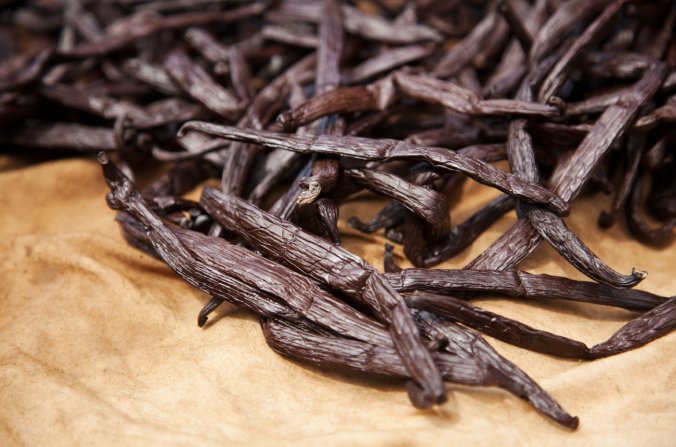
Vanilla is seemingly a prima donna spice because its pods have to be hand-pollinated and then boiled and dried in the direct sun for only one hour. iStockphoto
Spices enrich in more ways than one. Raxa Collective’s home base in Kerala has more stories than we can ever recount to prove this point. Some of the world’s most loved (and enriching) spices originate in Kerala. But for now, we put our attention elsewhere in the spice world. Our friends in Zanzibar are deserving of this attention (thanks to the NPR program, the salt, as always):
Let’s start with a spice quiz. One is a bean discovered in Mexico. One’s a tree native to India. One’s the seed of a fruit discovered in Indonesia.
Today vanilla, cinnamon and nutmeg can all be found in any spice farm in Zanzibar — the East African archipelago that was used as a spice plantation by the 18thcentury Omani Empire. Continue reading

PHOTOGRAPH BY DAN WINTERS
We have said since early on, and plenty of times since, that in these posts we cannot claim to be either committed vegetarians nor committed meat eaters. Rather, we believe–yawn at your own risk–in moderation. This upcoming show sounds like a worthy outing for a novel take on the topic:
Ab Ex meets Zap Comics in the wild imagination of Trenton Doyle Hancock (seen above in his Houston studio). In his boisterous mythologies, villainous vegans do battle with good-guy, meat-eating mutants, and Torpedo Boy—a superhero that Hancock, now forty, first drew in the fourth grade—swoops in to save the day. Continue reading
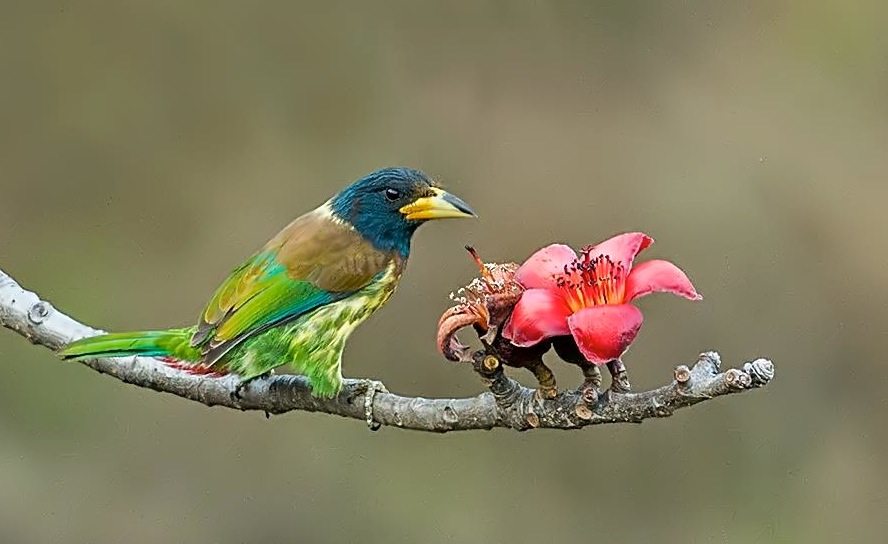
Bhimtal Lake, Uttarakhand
“We’ve all been given a gift, the gift of life. What we do with our lives is our gift back.”
-Edo, Sacred Economics
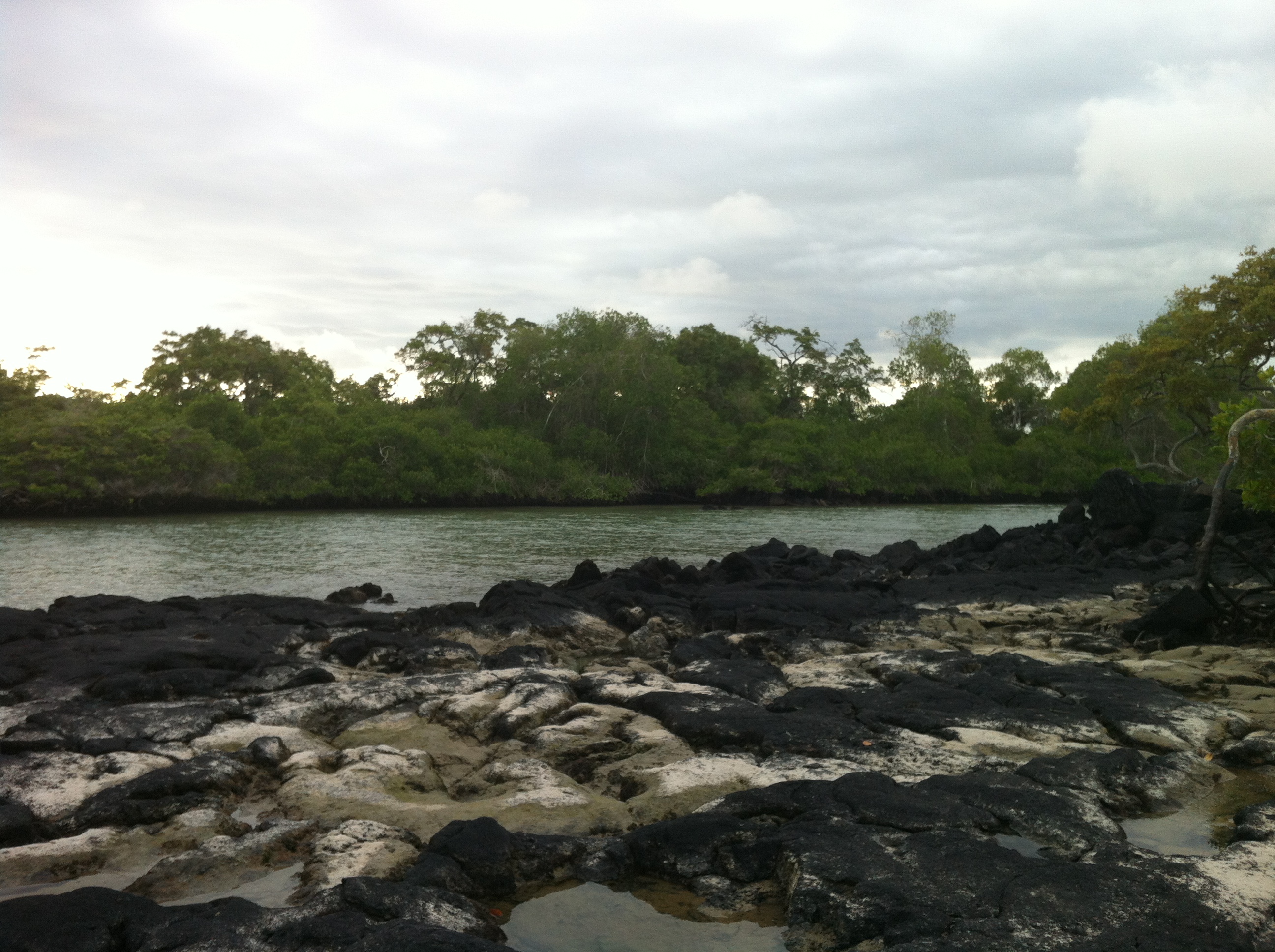
Being in the Galapagos was such a gift.
I remember reading a list in the newspaper when I was 14- something like “Top 10 Places to Visit Around the World”, and the Galapagos was on it with descriptions of black rocks and blue-footed boobies and I remember thinking how can I lead a life that takes me to places like that? The Galapagos Islands are a sacred mecca of biodiversity that most people will never have the privilege to see and I feel uncomfortable that I went without having to make any particular effort: I just chose a college and a study abroad program and voilà! my dreams came true. I feel immense gratitude for this. More importantly I feel a sense of obligation. I have an obligation to respond to this gift wisely and with intention in the way I conduct my life.
The sense of obligation is interesting to me because currently I’ve been reading about gift economies in my Economic Anthropology class. There is a concept called hau from the New Zealand Maori that tries to explain the sense of obligation to reciprocate when given a gift. From Wilk and Cligget’s book Economies and Cultures:
Hau is a term for the force of the identity of the owner of an object, which is attached to the object. Thus, upon giving the object away, part of the owner’s hau goes with it. And this is why receiving the gift always carries an obligation to reciprocate, because the hau wants to return to its original owner, though now it may be attached to another’s object.
In class, we’ve been talking about when things are separated from their origin, their story, the people who made it, there is some kind of erasure of the hau that represents the giver and we don’t feel compelled to respond in kind. Continue reading

It’s not surprising that for the 3rd year running India has been among the top 3 participating countries in the Audobon Society’s Great Backyard Bird Count. According to GBBC statistics, India nearly doubled the number of checklists submitted to more than 6,800 and reported the greatest number of species with 717.
Many of those lists have come from the south Indian states of Karnataka and Kerala, so we’re excited to help promote this additional forum for Celebrating Birds.
Karnataka’s first Bird Festival aims to put focus on birds and bird watching in Karnataka. To provide a platform for well-known naturalists, experts, forest officers, bird photographers to share their insights & thoughts. This festival also focusses on putting bird conservation on the center-stage and raise the attention of nature enthusiasts and general public towards the significance of birds and the important role they play in the ecosystem.

Bhitarkanika National Park, Orissa

Click on the image above to go to the publisher’s website and their preferred purchase options for this book; the publisher’s blurbists have this to say about it:
An award-winning author’s stirring quest to find and understand an elusive and exceptionally rare species in the heart of Southeast Asia’s jungles.
In 1992, in a remote mountain range, a team of scientists discovered the remains of an unusual animal with beautiful long horns. It turned out to be a living species new to western science — a saola, the first large land mammal discovered in 50 years. Continue reading
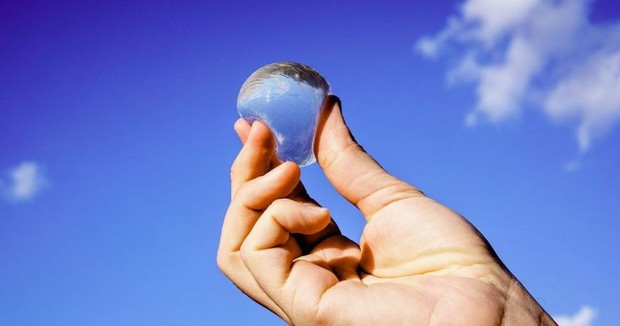
Skipping Rocks Lab
Thanks to one of the many sister websites of the Atlantic, this story about the future of packaged water:
In the future, rehydrating on the go might not mean chugging from a bottle, but inhaling a gelatinous, edible blob that looks like water floating on the space station. Continue reading

The consequences of losing a language may not be understood until it is too late.
At first glance, or quick skim, this will inject a darting depression into your soul, because of the seeming hopelessness. But then the grace of the writing, and the beauty of the story, will wash away the darkness and, very possibly, inspire you. Read it, and if you have thoughts, or actions, to share with us on the entrepreneurial (or other) conservation of intangible patrimony please share a comment below:
It is a singular fate to be the last of one’s kind. That is the fate of the men and women, nearly all of them elderly, who are—like Marie Wilcox, of California; Gyani Maiya Sen, of Nepal; Verdena Parker, of Oregon; and Charlie Mungulda, of Australia—the last known speakers of a language: Wukchumni, Kusunda, Hupa, and Amurdag, respectively. But a few years ago, in Chile, I met Joubert Yanten Gomez, who told me he was “the world’s only speaker of Selk’nam.” He was twenty-one.
Yanten Gomez, who uses the tribal name Keyuk, grew up modestly, in Santiago. Continue reading

One of the many reasons we highlight the Cornell Lab of Ornithology on the pages of this site is the vastness of their offerings to both students and the general community (actual and virtual) sharing current studies in the field of ornithology. Continue reading
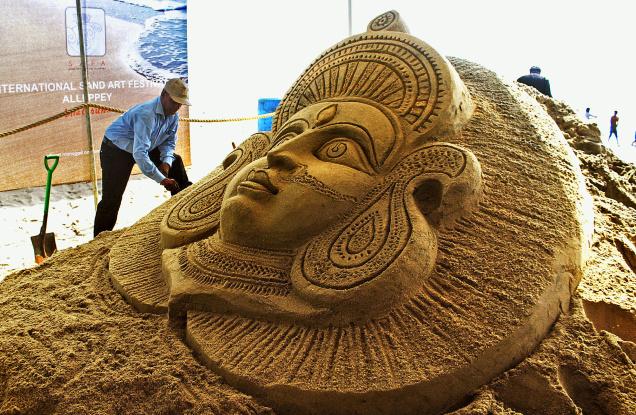
An artist prepares a sand installation at the Alappuzha beach during the trial run of the international sand art festival that will be held in April.– Photo: By Special Arrangement
Thanks to the Hindu for bringing this to our attention:
Come April, sand sculptures and paintings will adorn the picturesque Alappuzha beach. An international sand art competition, titled Sand Art Festival Alleppey (SAFA), is being jointly organised by the Tourism Department and the SAFA Foundation from April 18 to 26.
We love the logo, and the website for SAFA, and will assist any of our guests at Marari Pearl with the opportunity to participate, either as artists or spectators.
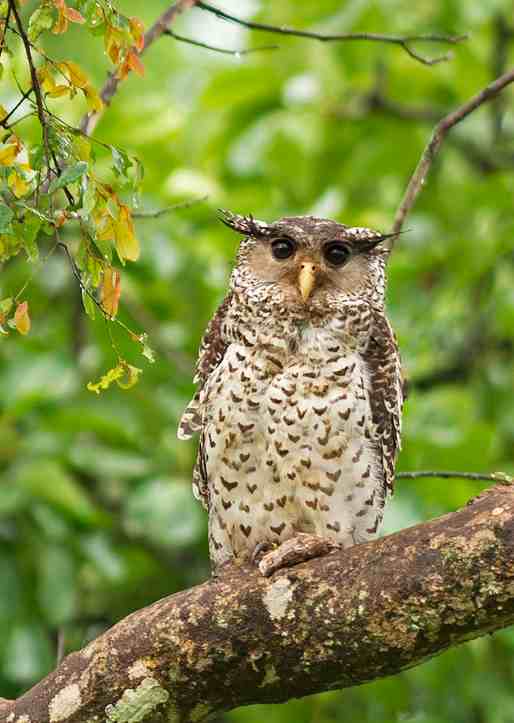
Bandipur Tiger Reserve, Karanataka

Photo credit: Seth Inman
The Ambassabeth Ecolodge can be found tucked into the southeast corner of the Rio Grande Valley, at the meeting place of the southern end of the John Crow Mountains and southeastern end of the Blue Mountains. It’s a beautiful, lush nook filled with towering Tree Ferns (Order Cyatheales), fast-flowing tributaries thundering off the valley sides down into the Rio Grande River, elusive Giant Swallowtail butterflies (Papilio homerus), and a healthy mix of Jamaican avifauna.
A recent bridge collapse about a mile and half from the ecolodge, inhibiting the arrival of guests by vehicle, has further amplified the serenity, isolation, and rustic ambiance surrounding this naturalist’s paradise. For us, Ambassabeth provided a base location from which to hike and survey two distinct foot-trails that meander up out of the valley and continue down the other side towards the southeastern coastline of the island. Continue reading

Bristol’s Bio Bus runs on faeces and household waste. Photograph: Ben Birchall/PA
A little over 2 years ago contributor Megan Madill wrote about one of the “Green Cities” of Europe, not to mention all the wonderful bike sharing (and bike friendly) initiatives worldwide.
But this news from the city of Bristol via the Guardian takes first prize. The innovation itself is a wonderful thing, but our applause actually goes more to the cheeky graphics.
UK’s first ‘poo bus’ hits the road
Britain’s first “poo bus”, which runs on human and household waste, goes into regular service this month. Continue reading
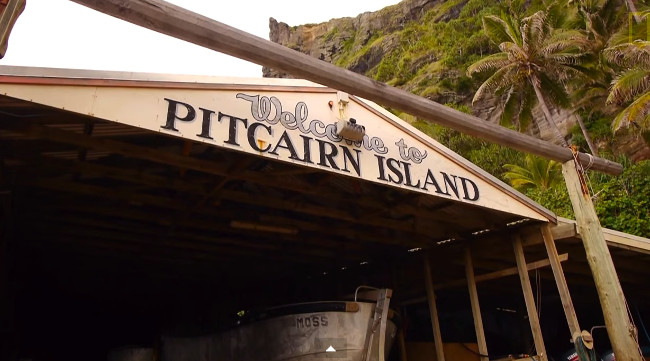
Pitcairn’s residents implored the UK government to protect the area, which is threatened by illegal fishing.
We hope they keep getting formed in larger and larger swaths of territory, and we will celebrate every time the ante gets upped this way:
British Prime Minister David Cameron’s government announced the creation of the world’s largest contiguous ocean reserve on Wednesday, protecting 322,000 square miles around the remote Pitcairn Islands in the South Pacific. To put that in perspective, that’s three and a half times the size of the United Kingdom and bigger than the state of California, according to National Geographic. Continue reading
Bangalore, Karnataka

a view of the valleys and Westphalia in the shadows of Portland Gap and some Blue Mountain peaks above
Since my last post, we’ve been several places and seen lots of things, but none of the areas we’ve visited have been so naturally “post-worthy” as the Cinchona Botanical Gardens above Westphalia, in the mountains of St. Andrew Parish. Somehow we had gathered from several people’s hearsay that we should practically expect ancient ruins, with perhaps some scattered floral gems growing feral among old dilapidated structures and a few exotic trees towering over the grounds. As you can see from the photo below, these vague rumors were partially true.

the old Garden Commissioner’s house/office, in need of some minor remodeling
 Organikos