Eat a Lionfish, Save a Reef – Markets and Menus to the Rescue

photo credit: Reef.org

photo credit: Reef.org

At the risk of back-patting and preaching to the converted, it’s heartening to connect with others in the world community calling attention to and making efforts toward education and action against invasive species.

We thank the contributors of Conserve Fewell for introducing themselves to us!

As many of you who follow this blog know, invasive species can have devastating impacts on local economies and wipe out endemic wildlife populations.  Scott Cameron a frequent blogger here at ConserveFewell has established a new coalition devoted to reducing the risks and economic costs from invasive species, RRISC.

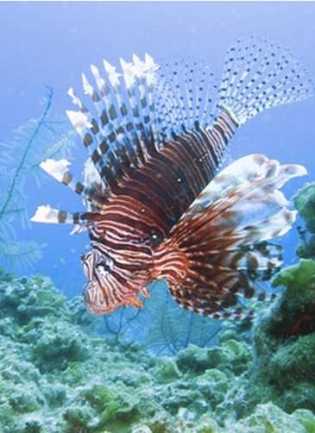
The lionfish is one of those perfectkillers, introduced by aquarium enthusiasts into places it doesn’t belong and wreaking havoc on native fish populations and decimating reefs. Continue reading

Roads and Trails Through Cockpit Country

A Turkey Vulture is king of the power tower

As I mentioned in my previous post, we’ve been traveling around Cockpit Country over the last week and a half by driving around from town to town and finding trails to lead us into the bush. Sometimes these trails are old roads that are clearly still sometimes used by SUVs and donkeys; often they are even older tracks that are for single-file passage and no longer pack-animal-friendly.

Justin on one of the “karstier,” more rugged valley trails

We started out our trip to Jamaica hiking some of these latter types of paths, accurately predicting that they would take us to places few people have birded and naively hoping that they would offer us views of hidden valleys or even the sky. They ended up being difficult to traverse and, as far as we can tell, not the right type of habitat for swallows. Continue reading

Beavers Build Habitats, and Sometimes That’s a Good Thing

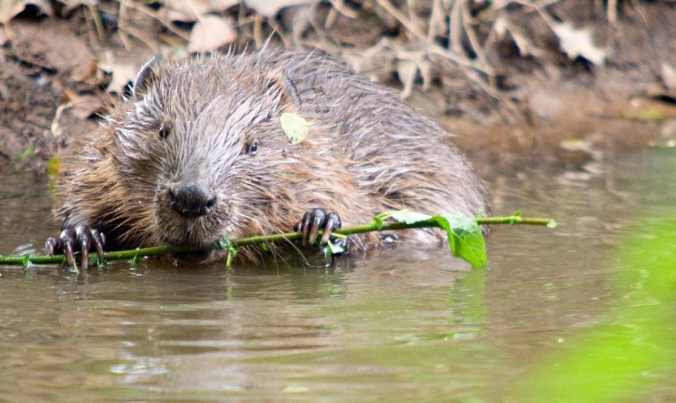
'Beavers create habitats and opportunities for just about everything else.' Photograph: Ben Lee

‘Beavers create habitats and opportunities for just about everything else.’ Photograph: Ben Lee

We’ve written about this industrious animal before on these pages, but in a completely different light. As with many introduced species, there are frequently unintended consequences on a disastrous environmental scale when the species has no natural predators in their new locations. Indeed there are huge areas of new wetlands in Patagonia’s Tierra del Fuego, but at the expense of millions of trees. (It’s actually calculated that in Patagonia beavers cause the 15 tons of biomass per year.)

However the case in Northern England and Scotland is quite different.

Beavers lower the canopy around a water body by felling trees and digging canals – opening it up. Solar energy piles in to places that have been in shade for decades. They stir life into action, kicking up nutrients as they beaver about their daily doings. Nature loves change; it frees up opportunities. Species of every size and shape wade in and snatch their chances. Beavers shift everything, tirelessly, instinctively, creatively. That’s why ecologists call them a “keystone species”. By doing their own thing, they create habitats and opportunities for just about everything else. Continue reading

India Tiger Census Shows Promise For The Future

Screen Shot 2015-02-03 at 2.57.04 AM

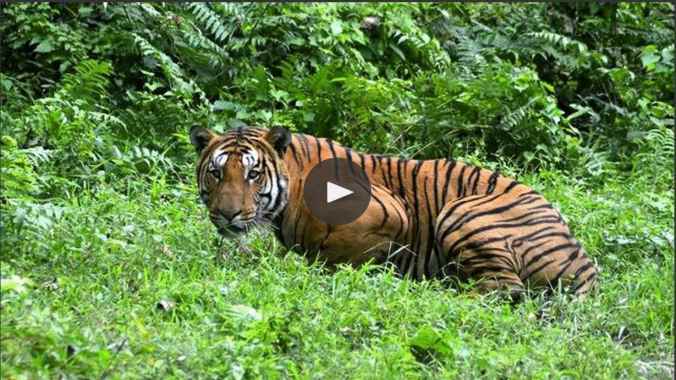
The Guardian‘s video shorts, covering current news that sometimes calls for moving images, shares this recent surprise finding from India:

India’s 2014 tiger census finds the country is now home to 2,226 tigers, making up 70% of the world’s population. The figure increased by 30% in three years despite threats of poaching and habitat loss. The World Wildlife Foundation say the world has lost 97% of its tiger population in just over a century Continue reading
Cockpit Country Circumnavigated

a view from the fringe of Cockpit Country out over the plains by Seth

After a week and a half of trekking and camping out of our crappy little rental car with about four inches of clearance, John, Justin and I have completed our preliminary clockwise perimeter of Cockpit Country.

the locals in Accompong show us the start of a trail

a strangler fig lifts a karst boulder off the ground

Parking at the head of every trail into the interior that we found on our 1959 map of the area–some of which are incredibly listed as secondary highways on our 2012 road map of the country–we’ve set up a routine of hiking down trails and back all day, camping for the night, and driving out the next morning.

Continue reading

If It Looks Like 51, And Tastes Like 51, It Must Be On The 51 Menu

Screen Shot 2015-01-31 at 10.44.20 AM

We had an excellent review of 51 this week, which keeps our mind on what makes the place tick. And constant keeping on the lookout for ideas that our culinary team can play with, master, test on we chosen few tasters (someone has to do it) and for those that make the cut, take it live on the menu.

Here is a case in point.

Click the image to the right to watch the video about this unusual twist on the lemon bar, or here for a related article. Coming soon, we hope, on a menu near you (should you happen to be at Spice Harbour in Kerala, India) will be our own twist on this lovely idea:

Lemon Bars With Olive Oil

Resin Painting, Explained By A Master

Screen Shot 2015-01-31 at 3.55.00 PM

There is no explanation for how this post relates to other posts on this blog–not much to say about community, collaboration or conservation here. But it fits in with our general appreciation and sharing of stories in which creativity, craft and the broader art world feature. Thanks to the Atlantic, by way of Vimeo, for this five minute wonder:

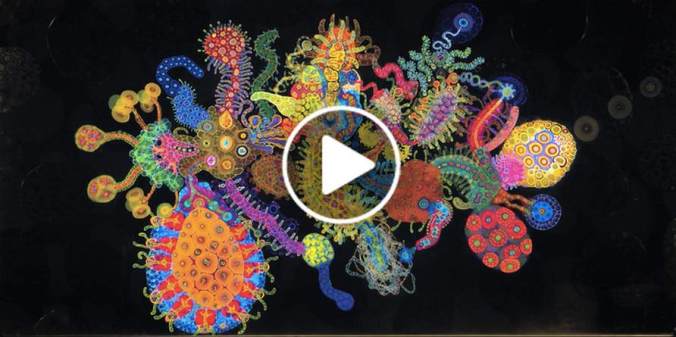
In this short documentary, filmmakers Jason Stanfield and Jordan Olshansky visit the studio of artist Bruce Riley, who paints abstract wonders with poured resin. His art blooms as he works; each layer of dripped paint reacts with the others, creating deep patterns that bear an uncanny resemblance to what a biologist might see under a high-powered microscope. “It’s obvious when it works,” Riley says. “It’s obvious when it fails.”

Riley publishes photos of his artwork on Flickr. Stanfield and Olshansky frequently collaborate with brands to tell their stories through documentaries. To learn more, visit truestoriessf.com and stanfieldwork.com.

When the land heats up and air rises

DSC_8934

Three sisters

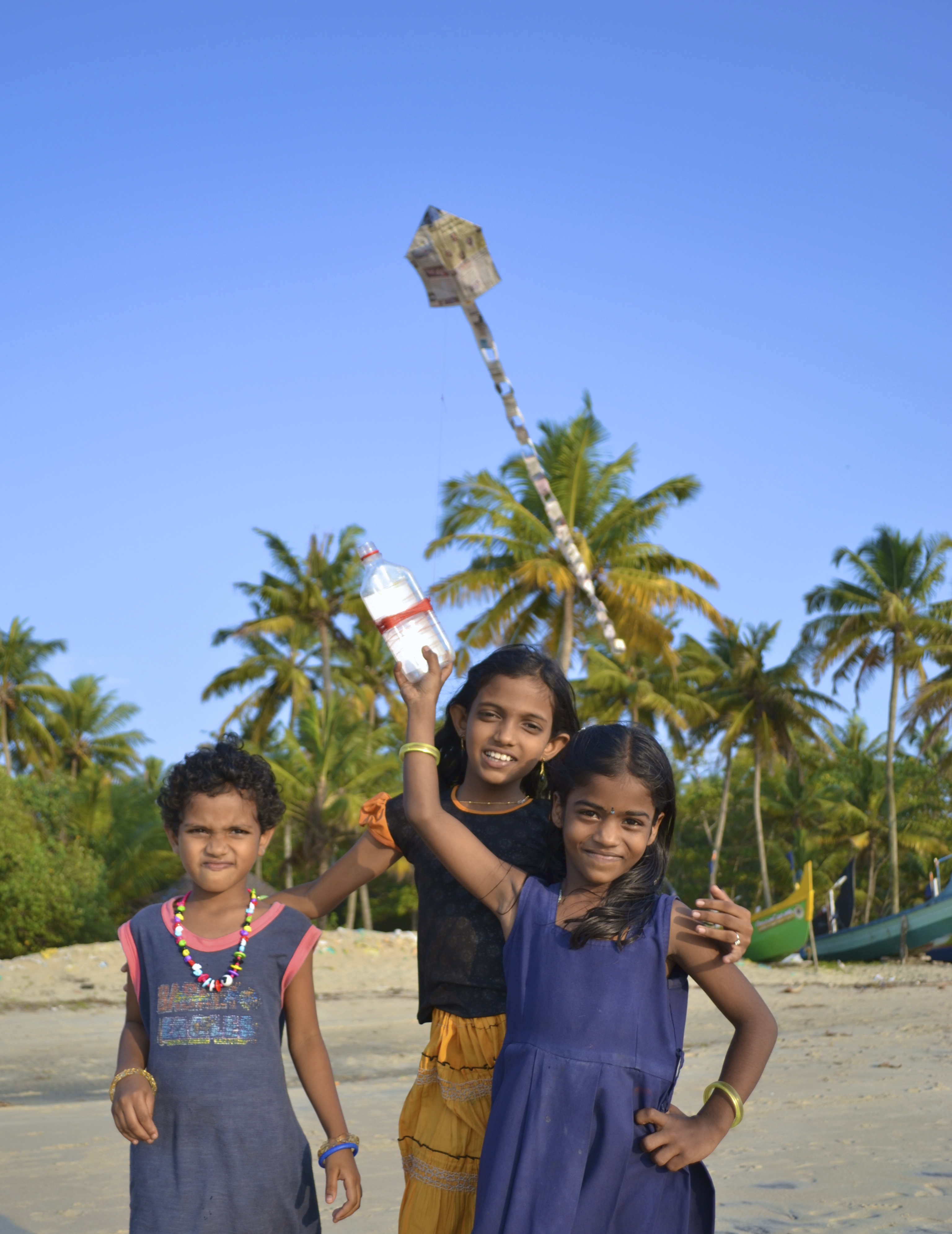
When land heats up and air rises, it gives way to fresh on-shore wind from the Arabian sea. A walk along Marari beach during sunset will most likely give the sight of homemade kites being flown mostly by children, but also adults of all ages. These kites are made of bamboo, newspaper and glue. Old fishing line is then attached and wound up on a bottle.

The children are very proud of their creations and will insist that theirs is the “best” of all and that you try it out. Choose carefully and watch the kite soar!

51 Keeps Winning Hearts, Minds, Eyes And Most Importantly Taste Tests

Photo Ratheesh Sundaram, Indian Express

Photo by Ratheesh Sundaram, Indian Express

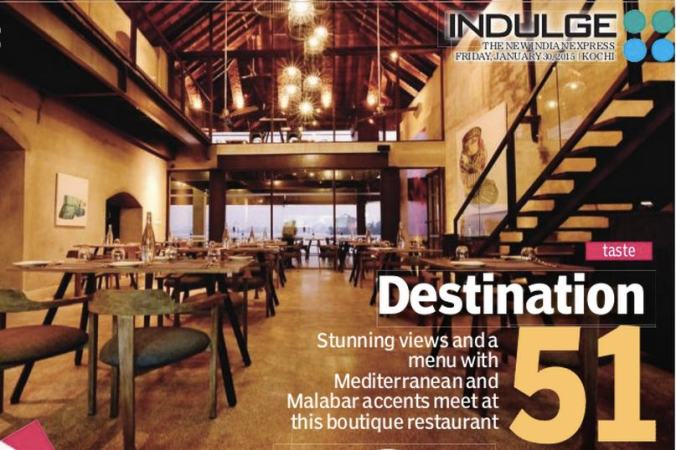
We cannot help it–we love the press that 51 and Spice Harbour have generated together, including in Architectural Digest and Conde Nast Traveler‘s 40th Anniversary Edition of India’s Most Stunning Boutique Hotels Handbook among other prestigious media outlets. Not in some vanity-driven ugly manner, but as a matter of fact we love that the Indulge team at Indian Express, and specifically Rosanna Abrachan has captured in elegant prose exactly what we would want anyone to know about 51. Thanks, Rosanna! And Ratheesh, superb photography! Some text to sample:

While the menu is not expansive, it is rich and colourful as we first saw in the Xandari salad. With its origins at a property managed by RAXA Collective in Costa Rica, the starter is perfect for evangelists of eating healthy. Continue reading

Ghana, One Of Our “It” Places For 2015 Discovery

01GHANA-copy-sfSpan-v7

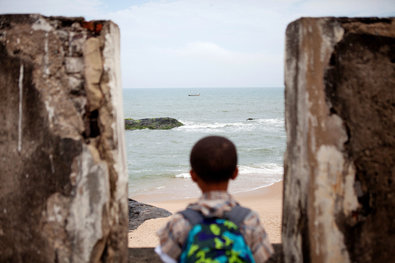
Jane Hahn for The New York Times. Jasir Robert Ryan-Lee, a descendant of Venture Smith, on the roof of the fort in Anomabo, Ghana, where his ancestor was held as a slave.

As Amie promised we will have much more to say as the countdown to the opening of Zaina Lodge continues apace since our first mention on this blog a couple years back. In fact, we are behind on stories from Ghana. Doug, where are you?

As we post this article from the current Travel section of the New York Times, a Raxa Collective team is preparing for an extended camping expedition in the Mole National Park, in the interest of discovering guest experiences that will be on offer when the Lodge opens. So, if Mr. Ryan-Lee and his mom choos to return to Ghana mid-2015 or later, and makes a visit to the wild interiors of the country, he will have another kind of life experience in store; meanwhile we appreciate his story and hope it will encourage others to follow in his footsteps to discover this hidden gem of a country:

On Slavery’s Doorstep in Ghana

Descendants of Venture Smith, a famous slave who won freedom and success in America, return to the roots of his captivity.

Aerial Insectivores

Cockpit Country

Cockpit Country

As we head west along the southern portion of Cockpit Country from Barbecue Bottom Road and Albert Town, we’re noticing a big difference in the amount of aerial insectivores we’re able to see while out hiking every day.

Justin and John on the trail from Windsor to Troy

During our initial excursions into the bush, we were taking densely wooded trails that required constant vigilance of the path in front of us due to shifting stones, twisting roots, and strong ground vines. In some of the worse areas we needed machetes to clear vegetation and big fallen trees, and even when we had time to look up at the skies they were often covered by thick canopy.

Continue reading

Panthers In Man’s Habitat

shutterstock_225706531-680x405

And in other “nature sometimes solves man-made problems” news to complement today’s editorial from the Guardian, we thank Conservation for their daily summaries of important environmental science news:

MOUNTAIN LIONS SURVIVE NEAR CITIES, BUT AT WHAT COST?

The samango monkeys living near South Africa’s Lajuma Research Centre have learned that they can rely on humans as lookouts while they forage for food. The monkeys have learned that if humans are around, then they’re probably safe from leopards. When left alone, the monkeys spend less time foraging for food and more time scanning their surroundings to avoid becoming someone else’s dinner. The mountain lions of California have a different tale to tell. Continue reading

Let Nature Do More Work For Us (Coconuts-R-Us)

Screen Shot 2015-01-30 at 11.45.00 AM

Kerala, the state in southwest India where many of Raxa Collective’s initiatives are located, is the “land of coconuts” if you translate the state’s name literally from Malayalam (the language of Kerala) to English.  This article in today’s Hindu highlights the introduction of a new bi-product of coconuts at the annual trade fair (click the image above to go to the trade fair’s brochure):

Coir-based organic acoustic panelling system developed

SARATH BABU GEORGE, January 30, 2015

In what could be a major boost to the coir industry, the National Coir Research and Management Institute (NCRMI) has developed a coir-based organic acoustic panelling system.

Christened ‘ACCOIR’, the acoustic panels have been designed in collaboration with the Institute of Indian Interior Designers (IIID) and the National Institute for Interdisciplinary Science and Technology (NIIST), a constituent laboratory of the Council of Scientific and Industrial Research (CSIR). Continue reading

Let Nature Do Its Own Work

The Pine Marten, once common in the UK, is a natural predator of the grey squirrel and has successfully reduced their numbers in Ireland. Photograph: Alamy

The Pine Marten, once common in the UK, is a natural predator of the grey squirrel and has successfully reduced their numbers in Ireland. Photograph: Alamy

Not every problem in the natural world has a solution, let alone a simple one; and there is always that law of unintended consequences, but we like the way this proposal sounds as an alternative to other forms of eradication:

Is there anything more stupid than the government’s plan to kill grey squirrels?

I ask not because I believe – as Animal Aid does – that grey squirrels are harmless. Far from it: they have eliminated red squirrels from most of Britain since their introduction by Victorian landowners, and are now doing the same thing in parts of the continent. By destroying young trees, they also make the establishment of new woodland almost impossible in many places. As someone who believes there should be many more trees in this country, I see that as a problem. A big one.

No, I oppose the cull for two reasons. The first is that it’s a total waste of time and money. Here’s what scientists who have studied such programmes have to say: Continue reading