
One of our camps
Justin, John and I have been in Jamaica almost two weeks, and the “Sharpied” names on our Rite in the Rain notebook covers have already faded off, our shirts smell soberingly of rotting onion, and our feet are eager to be released from their boots at any opportunity. At one point John had over a hundred tick nymphs on his body––the actual count was 163––but we won’t talk any more about that.

Barn Owl startled out of an abandoned house
We’ve seen over sixty species of bird in our twelve days here, and only one of them has been a swallow: the Cave Swallow. In general, aerial insectivores like swifts and swallows have been quite scarce, which is really surprising since we’re going through huge swaths of great habitat.
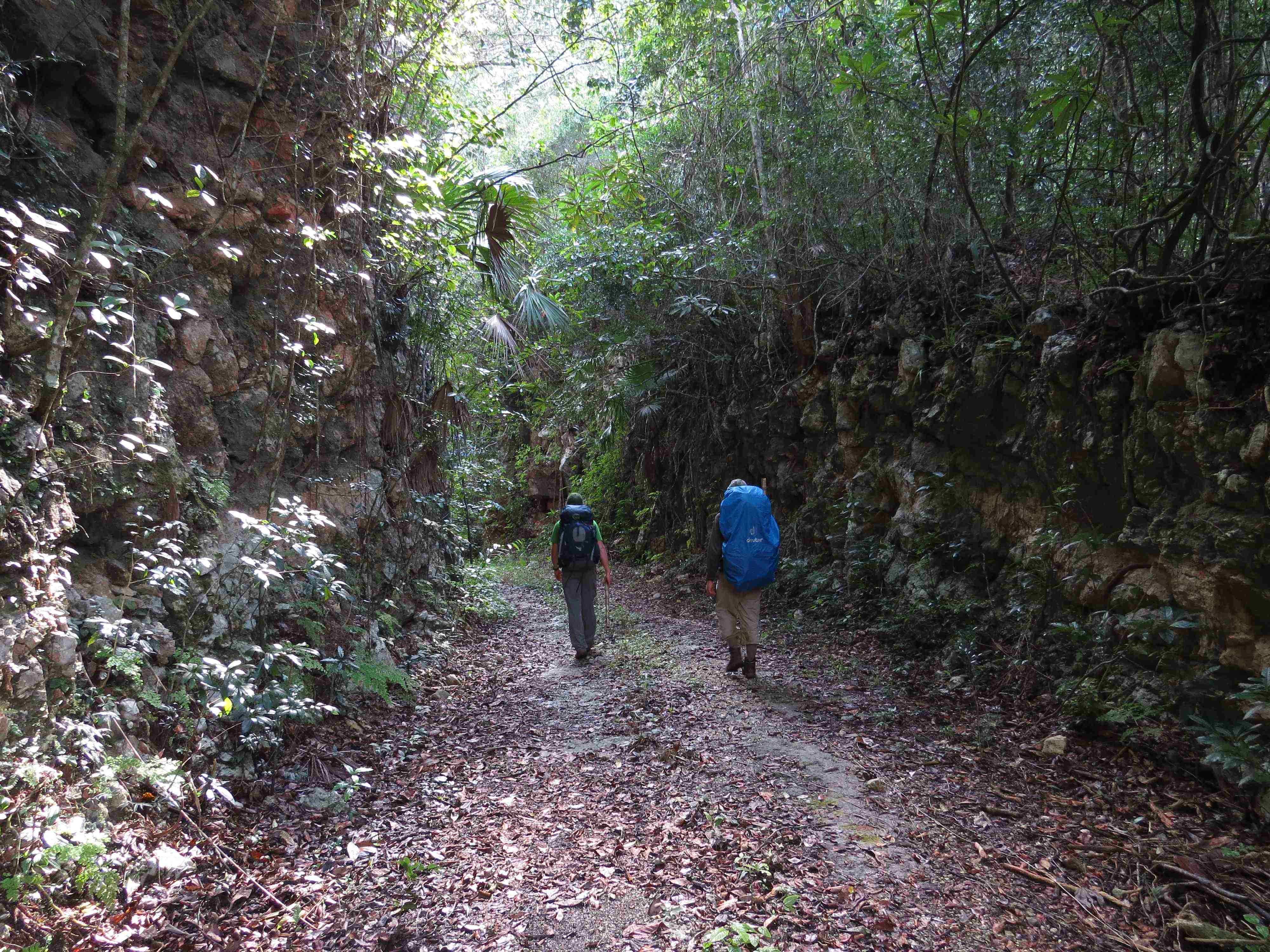
Barbecue Bottom Road with John and Justin

Although not technically an environmental manifesto, this superbly crafted short film ushers us into a 2-dimensional world built on the depth and power of atomic theory: recycling as a form of immortality.
Congratulations to the director and team for their selection at the Sundance Film Festival, among other achievements.
Click here to view the film via the newyorker website and here for the official featurette.

Local Habit, in San Diego, offers a variety of California craft beers. Beer has become as much a part of the San Diego identity as surf and sun.
CREDIT PHOTOGRAPH BY EROS HOAGLAND/THE NEW YORK TIMES/REDUX
As admirers of well-crafted beer, and of small-scale businesses, we appreciate this post by Tim Wu:
Consider a few surprising and optimistic facts for the new year: nationwide, independent bookstores have grown by about twenty per cent since 2009; meanwhile, American craft breweries collectively now sell more than 16.1 million barrels of beer annually, outpacing, for the first time, Budweiser. This isn’t the only evidence that small-scale businesses are making a comeback. Over the last ten years, the long-running decline of small farms has levelled out, and more than three billion dollars was spent last year on more than four thousand independent feature films. Over all, since 1990, small businesses (with, generally, fewer than five hundred employees or less than $7.5 million in annual receipts) have added millions of employees, while big businesses have shed millions.
None of these developments has individually transformed the American economy, but taken together they represent something. Continue reading
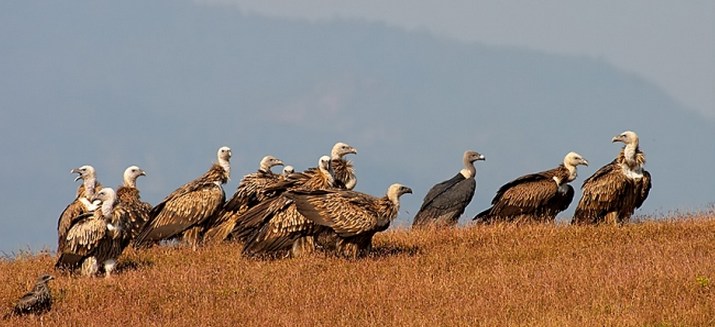
Near Bagdogra, West Bengal

This urban homestead produces 6,000 pounds of food a year.
When Kayleigh completed her internship, she left in place a great banana genome initiative as part of the edible gardens landscape at Marari Pearl; ditto for the farm-to-table initiative at Kayal Villa, supplying organic produce and dairy to 51, the restaurant at Spice Harbour. Reading the article below, as always with such stories, we are glad to be part of this particular corner of the green revolution with goals akin to those of a family in Pasadena, California, USA:
Think you can’t grow much food in an urban area? Think again. One family’s 4,000 square foot farm in Pasadena, California “not only feeds a family but revolutionizes the idea of what can be done in a very unlikely place—the middle of a city.” KCET reporter Val Zavala gives us a glimpse into the Dervaes family’s Path to Freedom Urban Homestead. “I brought the country to the city rather than having to go out to the country,” said Jules Dervaes, who created the farm with his three adult children, Justin, Anais and Jordanne.

Shutterstock, Oxygen64
Thanks to Dan Levitan for his ever-punchy summaries of important environmental science stories in Conservation:
IS THERE AN OPTIMAL URBANIZATION STRATEGY?
Cities are going to get bigger. With more than half the world now living in urban areas, and that percentage growing steadily, that means the concrete and steel will have to stretch out into areas that are currently forest and farm and grass. But just letting that process happen without a plan is likely to be a very bad idea.
A study published in the journal Landscape and Urban Planning simulated the urbanization process in the Piedmont region of North Carolina out to 2032. The question the authors posed was, essentially, what land will suffer in favor of the ever-growing city? Continue reading
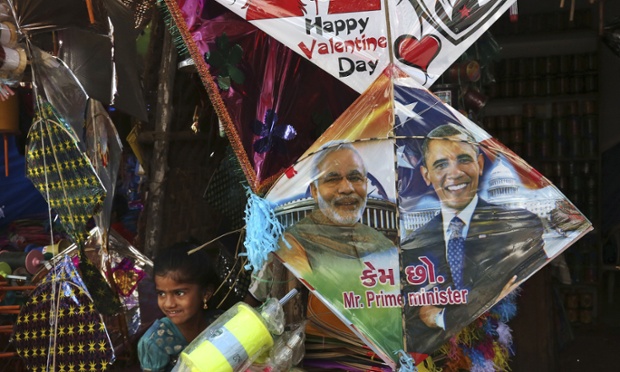
An Indian girl stands near a kite with portraits of India’s Prime Minister Narendra Modi and US President Barack Obama, displayed for sale at a shop ahead of the Hindu festival of Makar Sankranti, also knowns as kite festival, in Hyderabad, India, 12 January 2015. Photograph: Mahesh Kumar A./AP
Down here in Kerala the air is perfectly clean, and the biodiversity hotspot of the Western Ghats may spoil us into thinking all is well with the environment; but it is not. And the meeting of these two heads of state could do something substantive about it. We hope they do (the needful, as they say in India):
…“The co-operation on clean energy and climate change is critically important,” Ben Rhodes, the deputy national security adviser, told a conference call with reporters.
America is hoping to persuade India, one of the world’s biggest emitters, to commit to an ambitious post-2020 plan for reining in its greenhouse gas emissions ahead of the international climate change meeting in Paris this December. Continue reading

Kabini Backwaters, Karnataka
 I’ve posted previously about the lionfish invasion that is threatening coral reef and other marine ecosystems throughout the Caribbean, Gulf of Mexico, and Southern Atlantic Seaboard of the United States. Availability and dissemination of information about the invasion was recently given a big boost through launch of the Invasive Lionfish Web Portal The portal is a collaborative effort of a number of partners, led by the Gulf and Caribbean Fisheries Institute. It is a great resource, providing links to a range of information about the invasion, including journal articles, videos, photos, recipes, a Twitter feed, etc..
Another recent development has been the release of a draft United States National Invasive Lionfish Prevention and Management Plan. Developed by the U.S. Government’s Aquatic Nuisance Species Task Force, the plan is intended to help coordinate the actions of the various government agencies and other stakeholders involved in dealing with the invasion. While such a plan is long overdue, and in that sense is welcome, I’m quite disappointed that the plan largely ignores, and indeed implicitly discourages, an important element of an effective strategy for addressing the invasion – namely the use of market-based approaches.
As I’ve indicated in my previous posts, the Atlantic lionfish invasion is a unique problem that requires innovative solutions. Continue reading

Sam Kaplan for The New York Times. Food stylist: Suzanne Lenzer. Prop stylist: Maeve Sheridan.
51 completed its first round of food trials many months ago, and all is well, and getting better all the time. As we welcome a new executive chef to our team on February 7, lots of ideas await him from our team for the next iteration of Malabar Soul Food.
Though food trials are an ongoing affair, we all do our best to eat a balanced diet, away from work, as much as possible.
So, thank you Mark Bittman for recognizing that there do not seem to be enough minutes in the day:
Simple Stocks for Soup on the Fly
By MARK BITTMAN
9 ways to transform water into a flavorful dish in a matter of minutes.
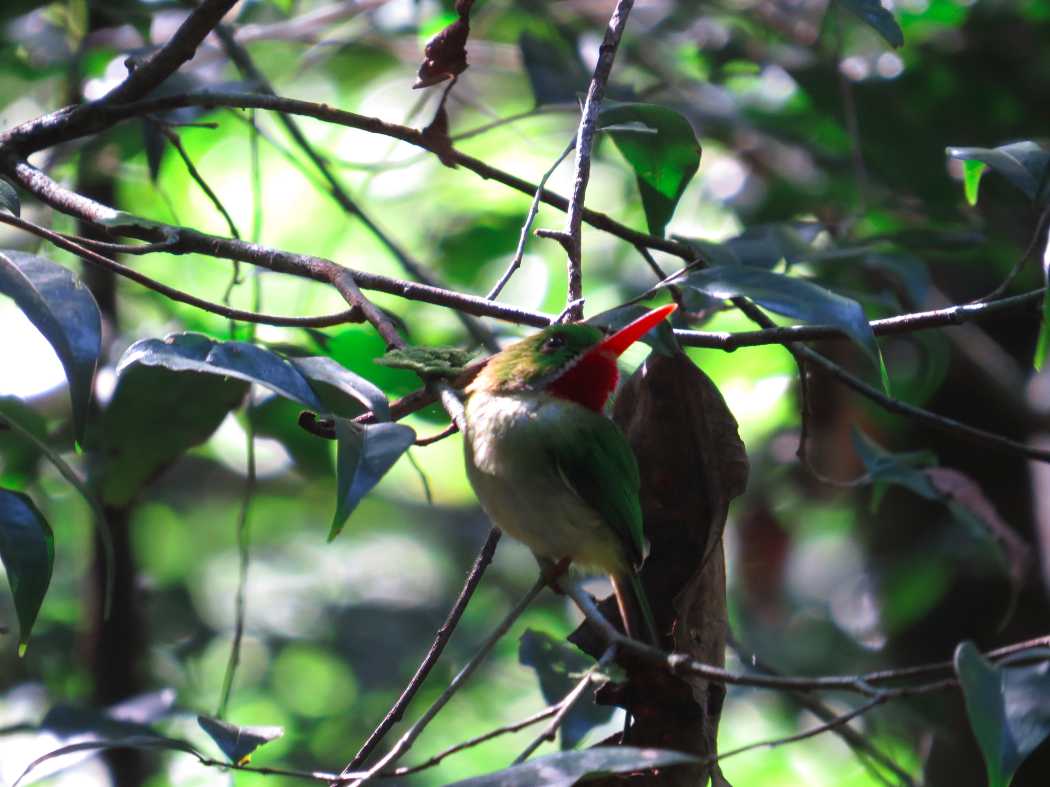
Cockpit Country, Jamaica

Local Habit, in San Diego, offers a variety of California craft beers. Beer has become as much a part of the San Diego identity as surf and sun.
CREDIT PHOTOGRAPH BY EROS HOAGLAND/THE NEW YORK TIMES/REDUX
It was already so good at what it did in print, it was easy to wonder what would come next. How to respond to the digital era? The New Yorker‘s transformation has been welcome, and Tim Wu is clearly an awesome part of it, as you may already know:
Consider a few surprising and optimistic facts for the new year: nationwide, independent bookstores have grown by about twenty per cent since 2009; meanwhile, American craft breweries collectively now sell more than 16.1 million barrels of beer annually, outpacing, for the first time, Budweiser. This isn’t the only evidence that small-scale businesses are making a comeback. Over the last ten years, the long-running decline of small farms has levelled out, and more than three billion dollars was spent last year on more than four thousand independent feature films. Over all, since 1990, small businesses (with, generally, fewer than five hundred employees or less than $7.5 million in annual receipts) have added millions of employees, while big businesses have shed millions. Continue reading
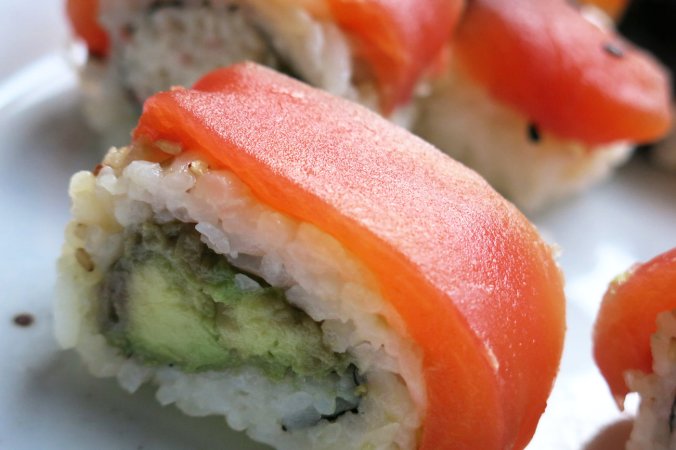
Chef James Corwell’s nigiri sushi rolls made with Tomato Sushi, a plant-based tuna alternative, in San Francisco.
Alastair Bland for NPR
I am realizing more each day how complex the notion of authenticity is. It is often, I see with increasing frequency, a cliche thrown casually into descriptions and promotions of this or that. Are there times when something other than authenticity is appropriate, even for an organization such as ours that promotes offering travelers authentic experiences of various cultures around the world, including local cuisine?
This story has me thinking (thanks to National Public Radio, USA and its program called “the salt”) that if foodies can make the leap from literal authenticity to a more complex notion of authenticity, for the sake of the environment as well as for broadened pleasures of the palate, it may serve as a model for how to approach seemingly intractable challenges facing the planet (in the case of this story, fisheries collapse but also the broader challenges of collapse), including the ever-changing cultures that make our planet worth traveling:
It’s a dead ringer for Ahi tuna sashimi. It cuts into glistening slivers that are firm and juicy. And it’s got a savory bite.
But this flesh-like food is not fish. It’s made of tomato, and it’s what San Francisco chef James Corwell hopes could be one small step toward saving imperiled species of fish, like bluefin tuna.
“What I want is to create a great sushi experience without the tuna,” Corwell tells The Salt.
To make this Tomato Sushi, he skins and removes the seeds from fresh Roma tomatoes. Then he vacuum seals them in sturdy plastic bags and cooks them in hot water for about an hour — a technique called sous-vide. Continue reading


Expedition Group – From L to R: Seth, Justin, Bobo, no name donkey, John. Photo credit: Dango, a friendly local
We’re back from a three day and two night excursion into Cockpit Country along the Troy-Windsor trail. We went out with Bobo and his donkey with no name, and made it what we think added up to about twelve miles down the old, overgrown trail. Several times we had to chop through fallen trees that the donkey couldn’t go around or over, and this took up quite a bit of our time.

Photo of rotten tree we cleared by John
Eventually we hit a patch that would have taken a full day to clear so we left the donkey behind with the idea of setting out for a few hours and then coming back. Continue reading
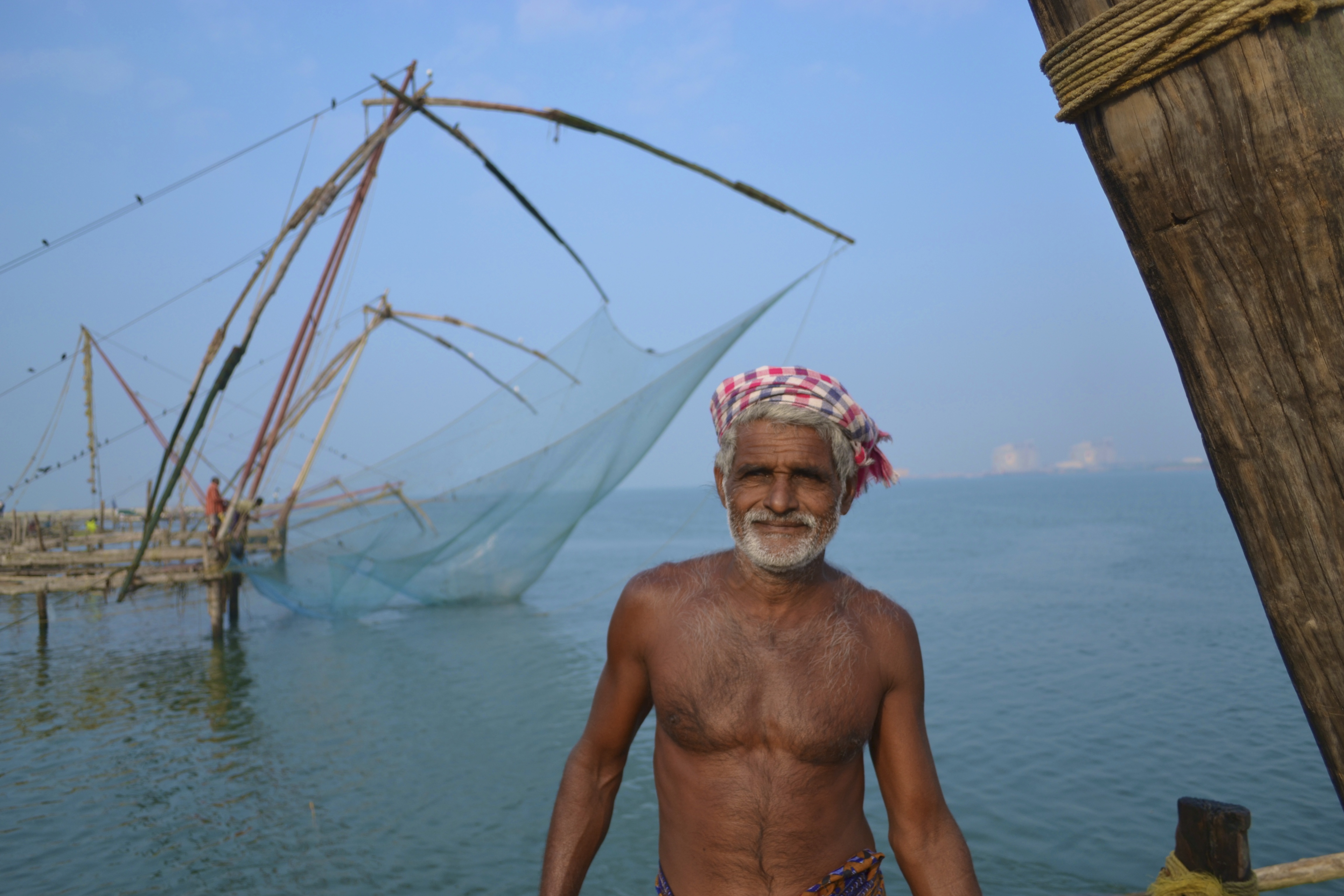
Marconi
Marconi is an original decedent of the Mongolian people (a Chinese state at the time) who were the creators of the “Chinese Fishing Nets” in Kerala, India. These structures are at least 30 ft high and the nets stretch out more than 50 ft across the water! It takes half a dozen people to even attempt to heave the nets which work on a pulley system with GIANT boulders hanging from the opposite side to counteract the weight. Continue reading

male
Bheemeshwari, Karnataka
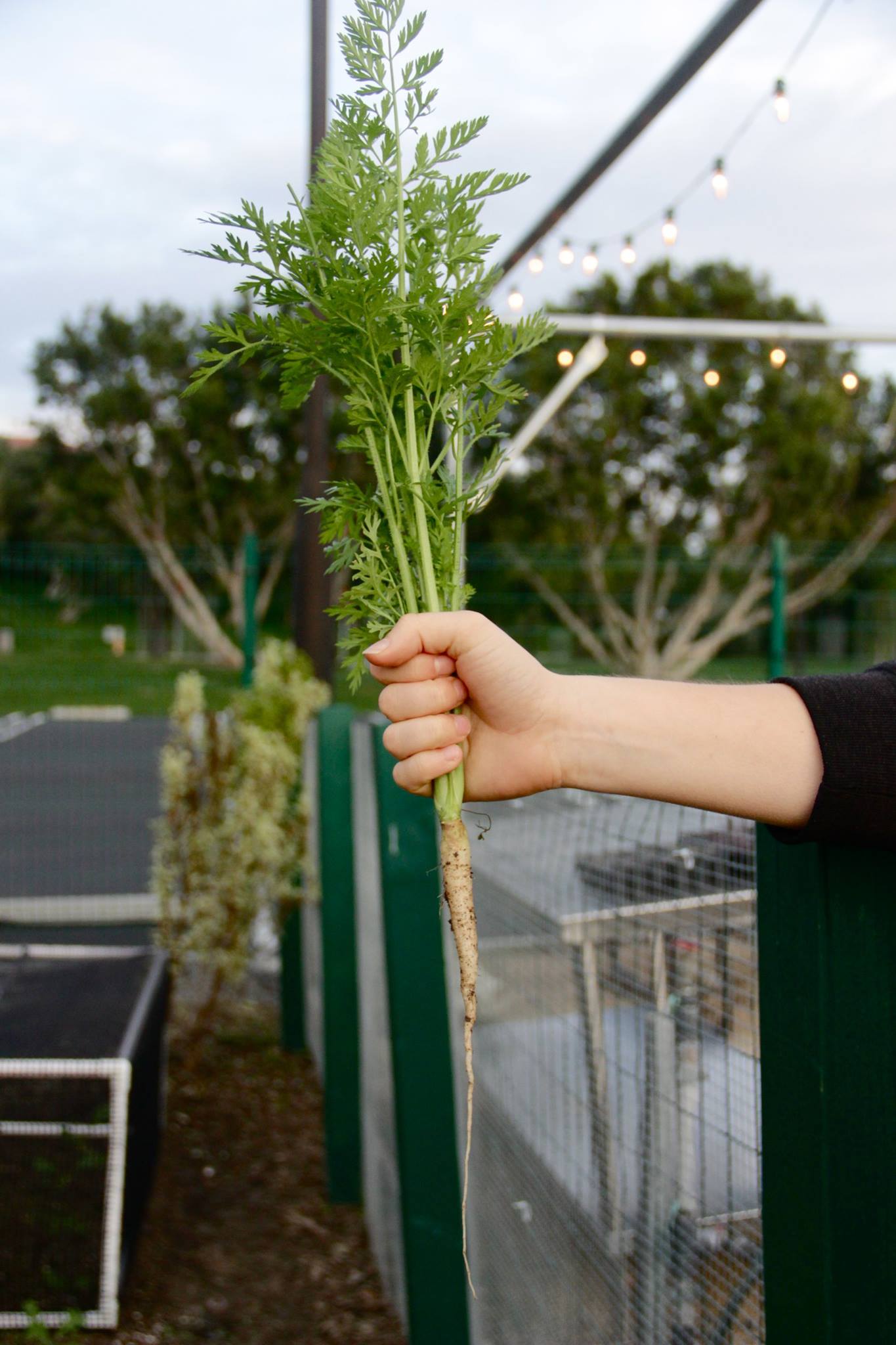
Soka Instructional Garden, photo courtesy of Nina Boutin
It has been a little over 4 months since I finished my internship, which has given me a lot of time to integrate and reflect on what I learned at Raxa Collective. I spent my first month in Thekkady at Cardamom County and my second month in Cochin at Spice Harbour. I am deeply grateful for this experience because it has informed my personal growth and career path in ways that are hard to articulate, but- I will try.
The month before coming to India, I walked part of the Camino de Santiago, a pilgrimage in Spain. If that wasn’t exhausting enough, I promptly went to India, and when I got to Raxa Collective, I hit the ground running, trying to figure out how I could best be of service and learn as much as possible. I expected for it to be difficult, but I didn’t know how it would be (though I was forewarned about the monkeys).
I’m working towards an environmental studies liberal arts degree at Soka University. A liberal arts degree is interdisciplinary, therefore I’m always looking for the intersection between things people think are separate. Profit and conservation are definitely things people usually think are separate.
I got to look deeply into the way those can intersect when I interviewed Crist about the path they have taken up until now. That interview has been so valuable for me in planning a business model that incorporates environmental and cultural conservation. Now, I think I want to start a restaurant that incorporates my passion for local food, biodiversity, sustainability, agriculture, and community. Continue reading
 Organikos