
photo credit: Sophie Orzechowski
Tawau Hills Park, Borneo
photo credit: Sophie Orzechowski
Tawau Hills Park, Borneo
We have many connections with Costa Rica at Raxa Collective, but especially after the inclusion of Xandari in our network. So we were happy to hear that, facilitated by Costa Rica’s Tourism Institute (ICT), the country’s animals have gotten together to try to save overworked Americans by offering them natural habitat and a stress-free paradise to escape to. Or at least that’s what the Save the Americans website declares after you watch the video embedded above. Spinning off statistics like “Americans leave 500,000,000 vacation days unused,” “1 in 4 Americans get no paid vacation,” and “59% of Americans feel vacation deprived,” the initiative’s true purpose is to advertise and inform American travelers about the opportunities for different vacation experiences in Costa Rica.

Photo via National Geographic
We’ve seen eel art before, but actually don’t know much about these fish or their biology. Electric eels are even more fascinating for obvious reasons, but of course are also that much more mysterious to us. National Geographic science writer Ed Yong fills us in with the help of Vanderbilt University biologist Ken Catania below:
A fish swims in the Amazon, amid murky water and overgrown vegetation. It is concealed, but it’s not safe. Suddenly, two rapid bursts of electricity course through the water, activating the neurons that control the fish’s muscles. It twitches, giving away its position, and dooming itself. Now, it gets zapped by a continuous volley of electric pulses. All its muscles contract and its body stiffens. It can’t escape; it can’t even move. Its attacker—an electric eel—moves in for the kill.

Playa Esterillos, Costa Rica

© Provided/Genggeng Qi – A scanning electron microscopy image of a pristine silica support, before the amine is added.
We’ve had posts on this blog about carbon output by consumer technology, motor vehicles, and food. We’ve also posted, including quite recently, on carbon storage, often in forests. Less numerous are our posts on carbon output by power plants, probably because good news on technological advances in the field is infrequent (at least relative to the bad news). But scientists at Cornell have recently developed a nanoscale scaffold of silica that comes in the form of powder and could replace the current method of carbon capture called amine scrubbing. Anne Ju reports for the Cornell Chronicle below:
In the fight against global warming, carbon capture – chemically trapping carbon dioxide before it releases into the atmosphere – is gaining momentum, but standard methods are plagued by toxicity, corrosiveness and inefficiency. Using a bag of chemistry tricks, Cornell materials scientists have invented low-toxicity, highly effective carbon-trapping “sponges” that could lead to increased use of the technology.

Books we love, war not so much. The story told in this book is about books, about librarians, publishers and common folk who believe in books. And who believe that books are important for fortifying people who need heroic capacities.
In an interview with the author, we see publishers and their town square counterparts, librarians, in a light we had not been aware of, showing their contribution to community at a critical moment in history:
…Over the next few years, millions of Americans would leave home to fight in Europe and the Pacific. They had few comforts and little in the way of escape or entertainment — at least not until American publishers got involved.
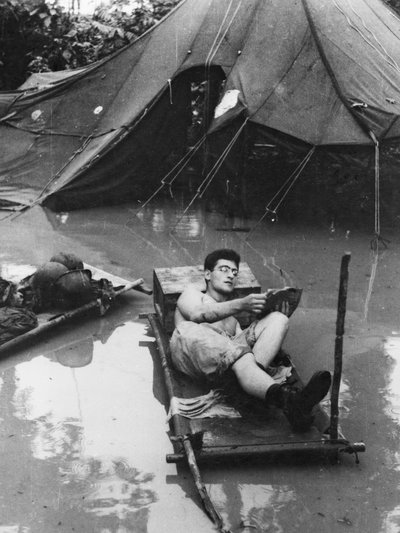
A soldier reads an Armed Services Edition in monsoon conditions during World War II. Australian War Memorial/Courtesy of Houghton Mifflin Harcourt
“During World War II, American publishers wanted to support the troops,” author Molly Guptill Manning tells NPR’s Renee Montagne. “And so they decided that the best they could do was print miniature paperback books that were small enough that they could fit in a pocket so the men could carry these books with them anywhere.”
Guptill Manning’s new book, When Books Went to War, is a history of these paperbacks, known as Armed Services Editions. They included all sorts of literature — from Charles Dickens and William Shakespeare to mysteries and Westerns — and were the culmination of earlier efforts on the part of American librarians to get usedbooks to servicemen with help from book drives. Well-intentioned though they were, the results of these book drives were mixed, turning up titles like How to Knit and Theology in 1870. So the focus switched to designing and printing books that soldiers actually wanted to read — no easy task since these Armed Services Editions had to be battlefield ready.
 Everyone has done it before, probably by accident or perhaps by malaprop. You’re singing along to a song you like, in the company of a friend, when suddenly they stop you and say, “Wait, what did you just say? You know that’s not the actual lyrics, right?” And you stare at them in disbelief and retort, “No, I think you’re wrong. Bob Marley clearly sings ‘three little birds sitting on my toaster.'”
“Not ‘toaster,'” your friend replies exasperatedly, “why would Bob be talking about a toaster? He says ‘doorstep.‘” And you think about it for a second and then sheepishly come to the realization that your friend must be correct. If you had been talking about Bob Dylan, there might be no guessing what the actual lyrics are without an authoritative reference, but Bob Marley is a lot more straightforward. It turns out that the misinterpretation of lyrics due to a failure to hear the words in a song correctly has a name, coined in the 1950s. One of our go-to contributors for the New Yorker, Maria Konnikova, writes this week about the phenomenon, and you can read some excerpts of her piece below. But before you do so, you might want to listen to pop/country singer/celebrity Taylor Swift, who has a song in her new album 1989 that has elicited many a case of mondegreen during one line in the chorus. It is called “Blank Space,” (you may have heard it on the radio a dozen times already) and to find the mondegreen, you simply have to be primed to hear the word “Starbucks.” Actually, the mondegreen potential is so severe that articles have been written online about it, indicating that you don’t really need to be primed at all.
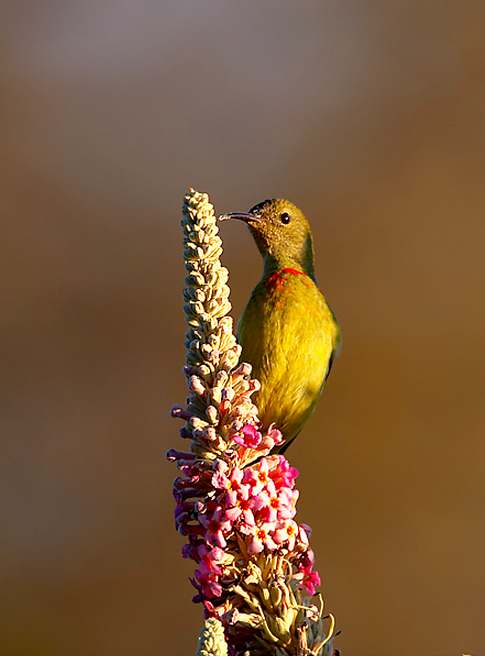
Blue Mountain National Park, Mizoram

The second edition of the Kochi-Muziris Biennale opened with typical Indian energy, with drums and enthusiasm. Fort Kochi and Mattanchery streets were alive with painters, working solo or in teams, adding finishing touches to murals and other installations.
Riyas Komus’ words resonate well with the RAXA Collective ethos of Community, Collaboration and Conservation.
The story of Kochi-Muziris Biennale, an artist initiative which derived its confidence from artists, art lovers, cultural organisations and the people of Kochi, is the story of taking on challenges to create an alternate space, of sacrifices and solidarity to build an art ecosystem for the new emerging India. Conducting the biennale in Kerala — a state that had the world’s second democratically elected communist government — complimented by the history of the land in the context of art was an organic achievement of its legacy. Our mission is to draw energy from the rich tradition of public action and political engagement in Kerala and build a new aesthetic that integrates both the past and the present…. Continue reading
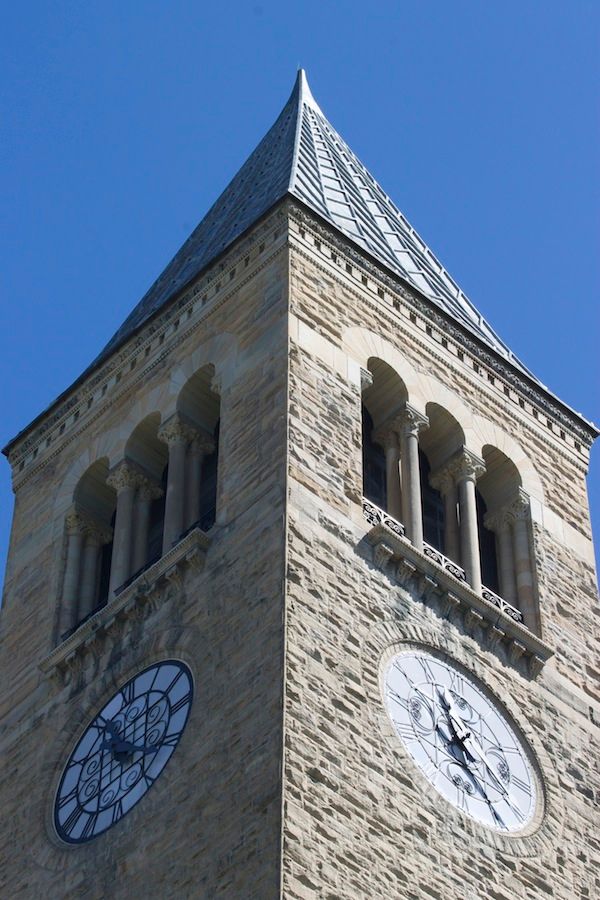
Cornell’s McGraw Tower. Photo by S. Inman
Over the last several years, dozens of our interns have been Cornellians, and some have even been born-and-bred Ithacans. It is often said that Ithaca is “ten square miles surrounded by reality,” for reasons that we won’t go into here and might be gleaned from the text below. But if Ithaca is sometimes seen as a bubble, then it can be expected that students at Cornell University or, to a lesser degree, Ithaca College live in an even more insulated shell that separates them from the city of Ithaca.
So it’s somewhat refreshing to see a descriptive post by an Ithaca resident–but McGill University graduate–in National Geographic’s Intelligent Travel section. Under the “Beyond the Guidebook” category, Alizé Carrère wrote a quick but information-packed list of things that she loves about her city, which you can read below or here:
Summer is the best time to visit my city because that’s when Ithaca really comes to life. Many of the college students leave for summer break, so the city opens up and all of the best outdoor attractions are in their prime. You can enjoy waterfall hikes, summer concerts in the park, patio happy hours, fresh produce in local restaurants, and twilights that stretch into the nine o’clock hour.
You can see my city best from the top floor of Cornell University’s Johnson Art Museum, which reveals a near 360-degree view of Ithaca, including Cornell’s beautiful campus and the south end of Cayuga Lake. The museum itself, which looks like a giant sewing machine, was designed by renowned architect I.M. Pei, the creative mind behind the striking (and once controversial) glass pyramid in front of the Louvre.

BBC: In Amazonia’s most carbon-dense ecosystems, an estimate 90% is stored underground as peat
A couple of weeks ago, we featured a story from another British news source about the peat success story in Indonesia, where the new president has pledged to tackle his country’s deforestation rate, the highest in the world. President Joko Widodo announced that both rainforest and peatland would be protected under his governance, even if that meant cracking down on the powerful plantation companies.
This week, scientists at institutions in the UK, Finland, and Peru published a paper in Environmental Research Letters calculating that peatlands, rather than rainforest, are the most dense store of carbon in Amazonia. Mark Kinver reports for BBC News:
Writing in the paper, the scientists observed: “This investigation provides the most accurate estimates to date of the carbon stock of an area that is the largest peatland complex in the Neotropics.”
They said it also confirmed “the status of the [Pastaza-Marañón foreland basin in north-west Peru] as the most carbon-dense landscape in Amanozia”.
“We expected to find these peatlands but what was more of surprise was how extensive they were, and how much this relatively small area contributed to Peru’s carbon stock,” explained co-author Freddie Draper from the University of Leeds.
The 120,000 sq km basin accounts for just about 3% of the Peruvian Amazon, yet it stores almost 50% of its carbon stock, which equates to about three billion tonnes.
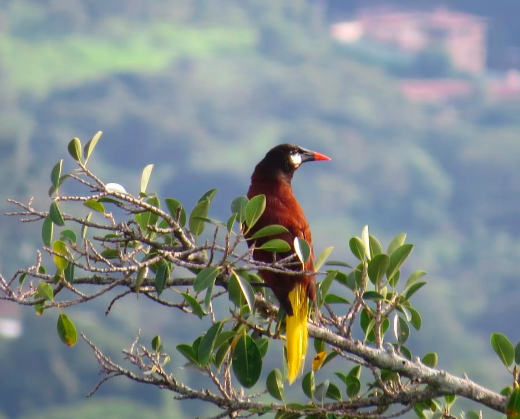
Tacacori, Costa Rica

Photo credit: BU Dining Services
About this time two years ago, I came across the YouTube video featured in the #throwback Thursday post below. Hope you enjoy it, especially in light of this week’s post on peatlands!
Original Post Date: December 28, 2012
Earlier this week I wrote about an entirely different sort of swamp. This brief post is about a topic much more in tune with the holiday season: cranberries. Grown in bogs with layers of peat, sand, gravel, and clay, cranberries are native to North American wetlands (our readers across the pond will probably know the European variety of the fruit as lingonberries). In the United States they are primarily grown in Massachusetts, New Jersey, Oregon, Washington, and Wisconsin (ordered alphabetically, not by output). Something not many people may know is that these cranberry bogs are cyclically flooded with vast amounts of water every season; some might worry over the constant waste of this precious liquid in areas of major cranberry production, or the contamination of water tables with pesticides and fertilizers common to agricultural use.
But I am about to tell you about some of the advantages cranberry-growers have over other industrial agriculturalists in terms of their water utilization. Why will I share this with you? Well, cranberry sauce features prevalently in the traditions of recent holidays, namely Thanksgiving and Christmas (and was thus probably consumed in an overwhelming majority of American households at least once in the past 60 days), plus my grandparents swear by cranberry juice, but I also recently found out that cranberries–and the water they are flooded with for harvesting–make for excellent art, or sport. What I never would have guessed is that Red Bull would be the one to show me this; just watch the video below:

© Getty Images / BBC
Synsepalum dulcificum, also known as miracle fruit (Thinkstock)
The miracle fruit is one of the many trees that we have incorporated into the edible landscape at Marari Pearl. So we thank Veronique for writing about it in her BBC feature article How to Hack Your Tastebuds. In Kerala we have an abundance of the Indian gooseberry, or amla, which is described as sour, astringent, pungent, and bitter, but also sweet. A weird combination, to say the least. After reading Veronique’s explanation, it is easier to understand that the transition from sour to sweet in one or two bites can be explained through some chemistry that takes place on the tongue:
Tasting orange juice after brushing your teeth can be unpleasant, but why? (Thinkstock)
Your tongue is not a blank slate. What you’ve just eaten can change the flavour of what you eat next – for better or for worse. It’s all because your taste buds respond differently when the environment around them shifts – an effect you can use to go on a little mouth-hacking tour.
Let’s start with an artichoke. Eat one and then drink a glass of water and you might notice that the liquid tastes strangely sweet. Then there’s orange juice. Drink a glass after brushing your teeth with toothpaste, and the normally sweet drink tastes foul instead. And for mind-bending parlour tricks, nothing beats miracle fruit. These little red West African berries make anything sour taste sweet – and it’s a remarkably clean, pure sweetness. Continue reading
© BBC
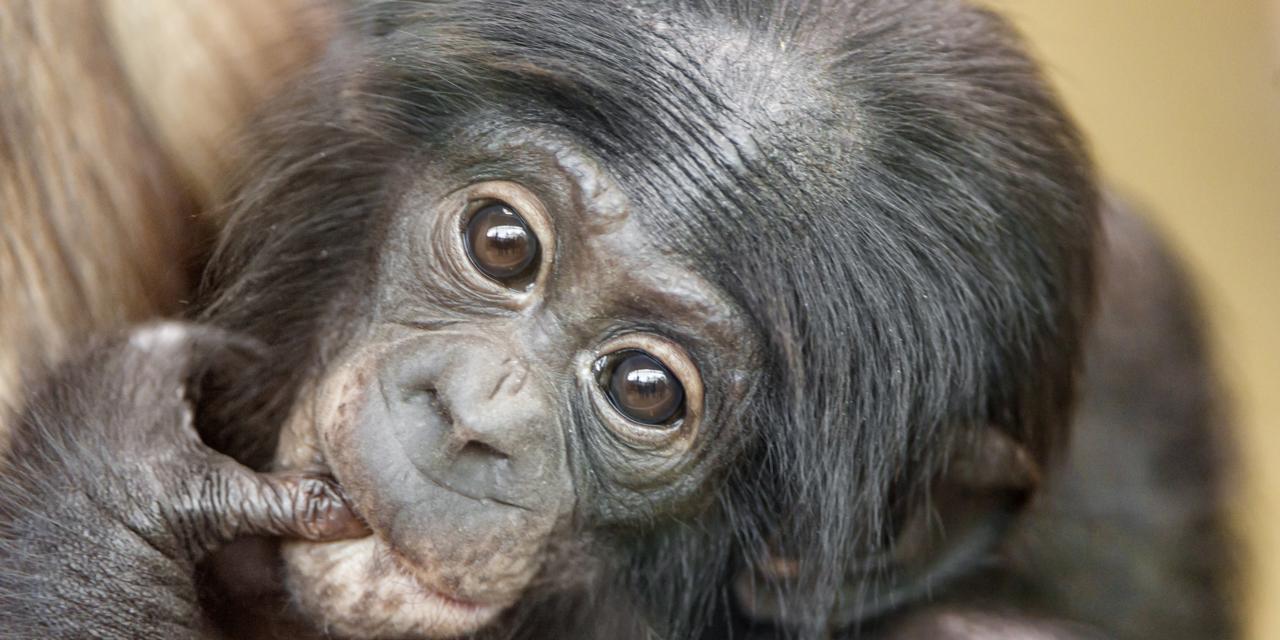
Bonobos are the smaller and less researched species of chimpanzee, and just a few days ago the first birth witnessed in the wild by a human took place in the Democratic Republic of the Congo. The three main discoveries that primatologist Pamela Heidi Douglas made while observing the birth were: the mother bonobo gave birth in a tree, rather than on the ground; the mother had two other females present at the birth, who may have served as midwives or at least supporters; and the mother and her female friends all ate the placenta after the birth. Matt Walker reports for the BBC:
For almost two years, Douglas has followed and studied the bonobos at Luikotale, as part of her research towards her PhD.
“One component of my Ph.D. research is the study of reproductive endocrinology in female bonobos,” she told BBC Earth.
To do this, Douglas regularly collected urine samples from Luna and other females in the community on a regular basis.
These were tested with human pregnancy kits, which can detect pregnancy in bonobos as well as other non-human primates.

male – Nandi Hills, Karnataka
© BBC
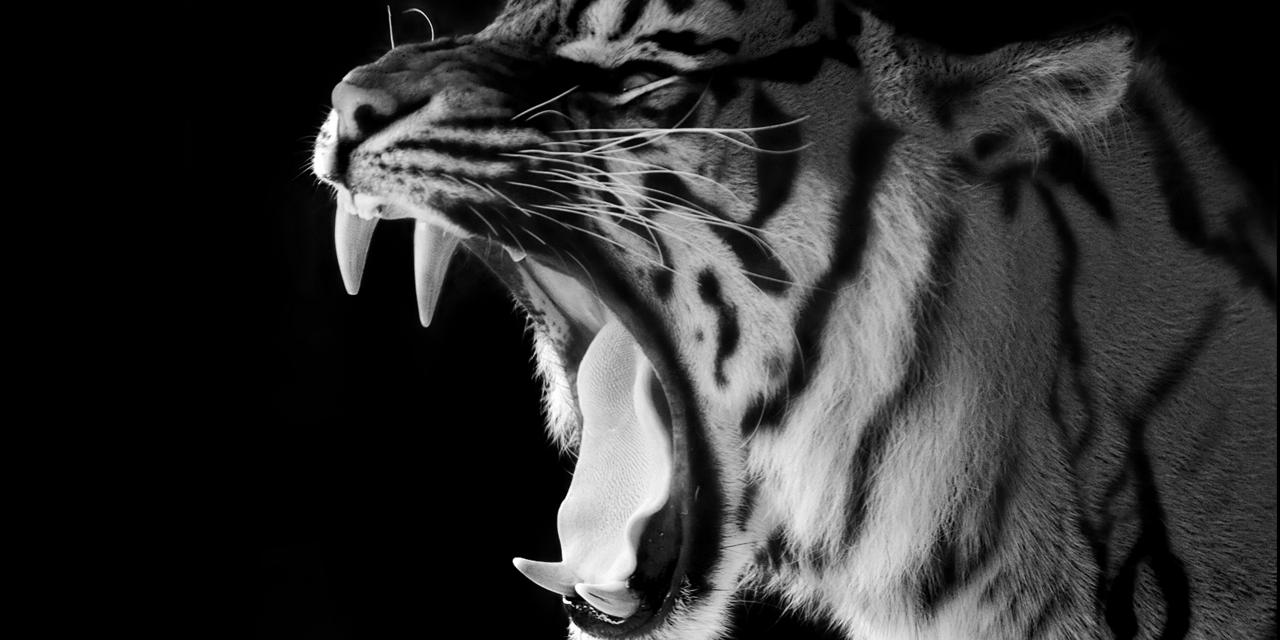
Writing for the BBC Earth section, Colin Barras explores “how the ‘art of killing’ changed the world.” Did multicellular organisms arise because single-celled ones were too easily attacked? Did skeletons evolve primarily as protection against predators? And, maybe the hardest question to answer with certainty: did animals move from water to land because it would be easier to avoid getting eaten? Read the excerpted introduction below and follow the link to learn about these theories and others from Barras.
If you’ve ever seen a lion or a polar bear on the hunt, you know how powerful predators can be. Life may well have been troubled by these killer species since its very beginning, over 3.5 billion years ago, and they have wrought untold death and destruction. As a result they get a bad press: even the word “predator” stems from the Latin term to rob or plunder. Small wonder that, when people imagine paradise, it normally doesn’t have any predators in it.
Hyphae are filaments of cells that join together to make the structures in fungi. When you look at the fuzzy patch of mold growing on any of the fruit in your kitchen, you’re looking at lots of hyphae growing into the strands of mold (chances are the mold is a strain of Botrytis cinerea). There’s hundreds of reasons to be studying fungi today — the parasitic wonders they can achieve, the materials they can provide through science in the future, and the foods and medicines that can be cultivated or collected from them.

photo credit: Stephen Crafts

Greg Long at the the 2004-2005 Mavericks Big Wave Surf Contest; Half Moon Bay, March 2, 2005.
CREDIT PHOTOGRAPH BY BY ROBERT B. STANTON/WIREIMAGE VIA GETTY
We are looking forward to the arrival in a few weeks of our colleague Derek, coming to us from Costa Rica, where he grew up at Bosque del Cabo. Which means that, among other things, he is a surfer dude like his dad. Which means, while he knows the thrill of a wave he also knows that safety is essential.
Derek will be leading the Aquatic Ecstasy initiatives at our newly opened Marari Pearl and this blog post below reminds us of one of his key imperatives if there is to be any lasting effect of aquatic ecstasy. Safety. We excerpt the blog post below beginning the quotation after some gruesome description of what waves can do, and some language (the type of salty language that surfer dudes use in the most harrowing situations) that our younger readers do not need to see, but you can read the whole post here):
…With more influential surfers wearing the vests, inflatable technology caught on quickly. Dorian’s Billabong wetsuit, too, found a market among professionals. (Neither the V1 suit nor Patagonia’s vest are available commercially yet.)
“No one’s doing anything in giant surf without flotation devices unless they’re trying to act macho or something,” Hamilton said. Continue reading

 Organikos