Ecological Hero That Happens To Be Charismatic

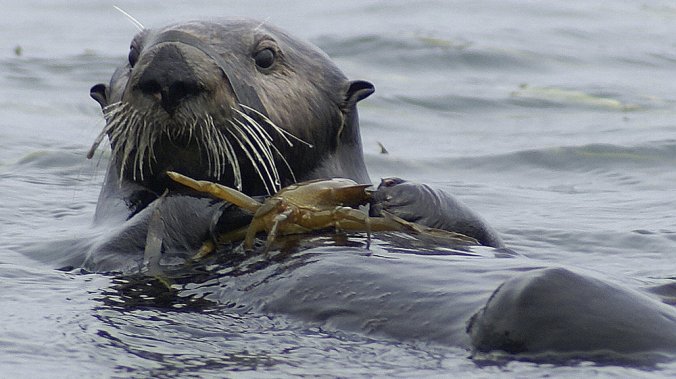
This sea otter, about to eat a crab in the Elkhorn Slough National Estuarine Research Reserve, is cute, sure. But more importantly, it's indirectly combating some harmful effects of agricultural runoff and protecting the underwater ecosystem. Rob Eby/AP

This sea otter, about to eat a crab in the Elkhorn Slough National Estuarine Research Reserve, is cute, sure. But more importantly, it’s indirectly combating some harmful effects of agricultural runoff and protecting the underwater ecosystem. Rob Eby/AP

Listen to this four minute explanation of how important sea otters are, not just for entertainment purposes but for the ecological services they provide:

On the roof of the Monterey Bay Aquarium in Monterey, Calif., in a large plastic tank, a sea otter mother named Abby floats with her adopted pup, known as 671.

For up to nine months, Abby will raise her little adoptee, and when 671 is ready, she will be released into a protected inland salt marsh called Elkhorn Slough, just off Monterey Bay.

That’s where 671 will set to work to preserve the estuary, says Tim Tinker, who tracks otters for the U.S. Geological Survey. Continue reading

The Importance of Whale Poo

Whales often feed at depth but return to surface waters to defecate. Their faecal plumes fertilises the surface waters and help plankton thrive. Caption: The Guardian. Photograph: Reinhard Dirscherl/Getty Images

We’ve posted about ambergris before, but this article by The Guardian‘s George Monbiot covers a completely different type of significance when it comes to cetaceans’ excrement. Here’s more from Monbiot:

I can hear you muttering already: he’s completely lost it this time. He’s written a 2,000-word article on whale poo. I admit that at first it might be hard to see the relevance to your life. But I hope that by the time you have finished this article you will have become as obsessed with marine faecal plumes as I am. What greater incentive could there be to read on?

In truth it’s not just about whale poo, though that’s an important component. It’s about the remarkable connectivity, on this small and spherical planet, of living processes. Nothing human beings do, and nothing that takes place in the natural world, occurs in isolation.

Continue reading

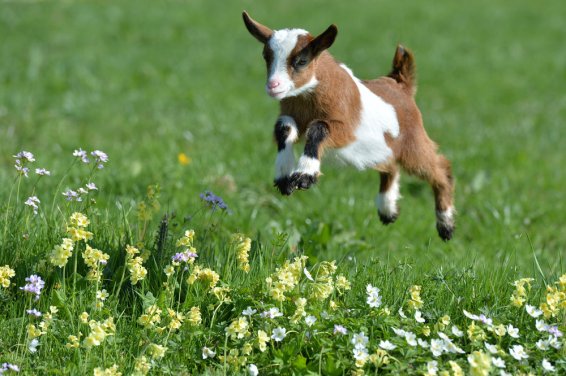
Understanding Gleeful Goats

Farmers raise millions of goats, but little has been known about whether their ruminants are happy. Now we know better. Kerstin Joensson/AP

Farmers raise millions of goats, but little has been known about whether their ruminants are happy. Now we know better. Kerstin Joensson/AP

Thanks to National Public Radio (USA) for this story on their blog with a funny name, which covers a subject much on our mind as our farm-to-table program at Kayal Villa prepares to supply 51 with dairy from our happy herd:

Goats are having a moment, and we’re not just saying that because our blog is called Goats and Soda.

There are nearly 900 million goats in the world today, up from 600 million in 1990. The reason for this goat spurt is the growing popularity of goat cheese, goat milk and goat meat.

For goat farmers to do a good job, they need to understand their goats. And that’s where Alan McElligott comes in. He’s a senior lecturer in animal behavior at the Queen Mary University of London. And he says that goats are “underrepresented” in animal welfare studies. Continue reading

Order of the Falcon

Jason Koski/Cornell University Photography

A few weeks ago, while visiting Cornell University for two days, President Ólafur Ragnar Grímsson, in addition to giving the talk I briefly posted about, also bestowed the Icelandic Order of the Falcon upon a librarian I know. Patrick Stevens, curator of the Fiske Icelandic Collection in the Rare and Manuscript Collection of Kroch Library at Cornell, helped me find resources while I conducted research for my honors thesis in history.

Always friendly and offering helpful advice when I came in every day in the summer of 2013 to look at old texts in the RMC reading room, Patrick also read a couple drafts of my work toward the end of my writing process. Continue reading

Not Cool, Greenpeace

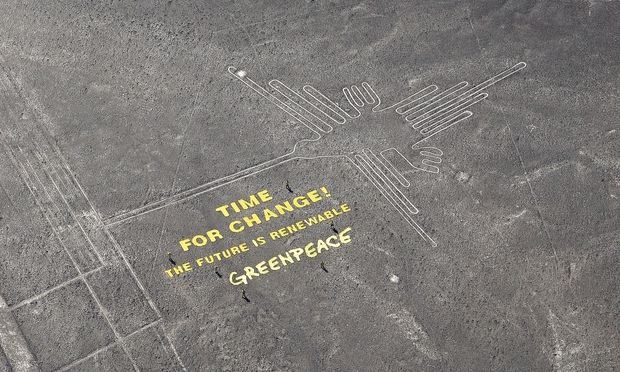
Greenpeace’s ‘time for change’ message next to the hummingbird geoglyph in Nazca. Photograph: Thomas Reinecke/TV News

Greenpeace’s ‘time for change’ message next to the hummingbird geoglyph in Nazca. Photograph: Thomas Reinecke/TV News

Hard to believe, but sometimes otherwise smart people do really dumb things, and sometimes apologies cannot correct the damage:

Greenpeace has apologised to the people of Peru after the government accused the environmentalists of damaging ancient earth markings in the country’s coastal desert by leaving footprints in the ground during a publicity stunt meant to send a message to the UN climate talks delegates in Lima. Continue reading

Reducing The Carbon Footprint Of A Sport

Niels Ackermann for The New York Times

Niels Ackermann for The New York Times

It is not a story told from a conservation perspective, but this New York Times article makes us wonder how many sports might reduce their natural resource consumption as radically as this one does:

PURSUITS

Skiing as It Was Before Chairlifts

Ski mountaineering, Alpine touring or skinning — propelling yourself up the mountain before swooshing back down — is a throwback to the sport’s early days, before chairlifts.

Are You Listening?

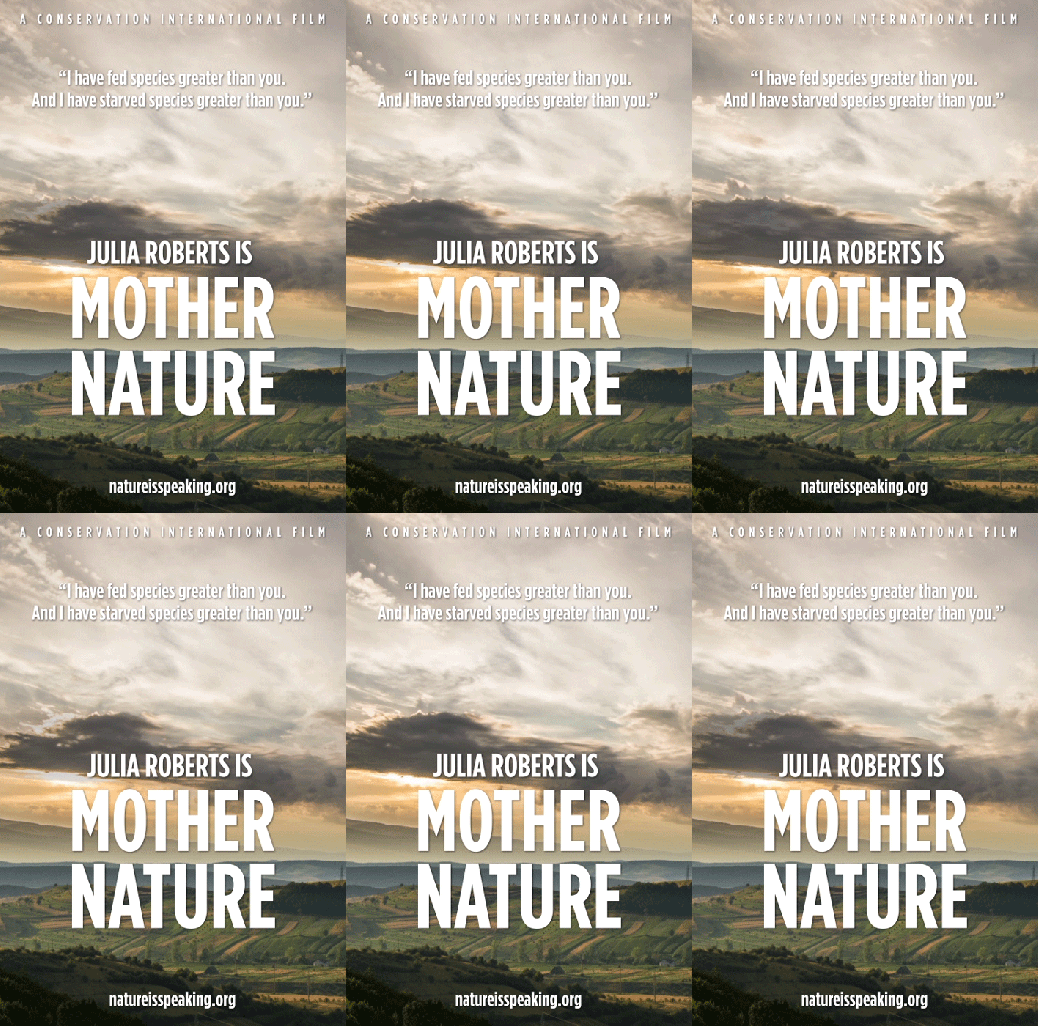
MOTHERNATUREConservation International’s new campaign, Nature Is Speaking, has released various short films from the perspective of different elements of nature voiced by an actor or actress: Harrison Ford is the Ocean, Lupita Nyong’o is a Flower, Edward Norton is the Soil. The organization’s “humanifesto” reads,

Nature doesn’t need people. People need nature.

Human beings are part of nature.

Nature is not dependent on human beings to exist.

Human beings, on the other hand, are totally

dependent on nature to exist.

The growing number of people on the planet

and how we live here is going to determine the future of nature.

And the future of us.

Nature will go on, no matter what.

It will evolve

The question is, will it be with us or without us?

Continue reading

Cool Green Science Celebrates The Celebrate Urban Birds Initiative

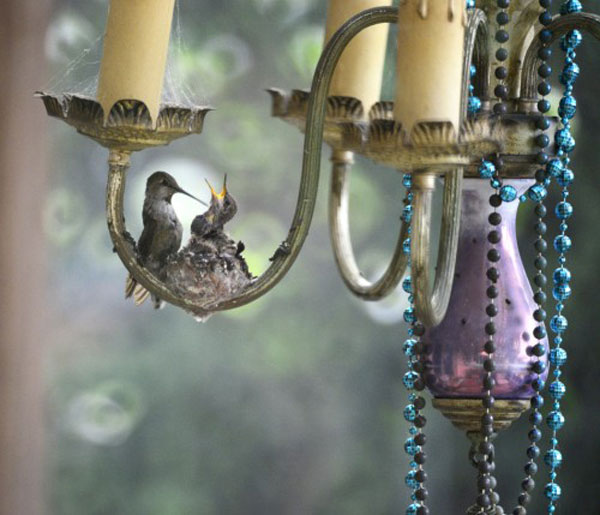
Hummingbirds nesting in a patio chandelier. Photo by Lydia D’moch for the CUBs Funky Nests in Funky Places 2014 competition.

Hummingbirds nesting in a patio chandelier. Photo by Lydia D’moch for the CUBs Funky Nests in Funky Places 2014 competition.

The Nature Conservancy is currently promoting their blog called Cool Green Science, which we expect to be a new source for us to regularly share links to on topics we particularly care about.  We like the blog’s stated purpose:

noun 1. Blog where Nature Conservancy scientists, science writers and external experts discuss and debate how conservation can meet the challenges of a 9 billion + planet.

2. Blog with astonishing photos, videos and dispatches of Nature Conservancy science in the field.

3. Home of Weird Nature, The Cooler, Quick Study, Traveling Naturalist and other amazing features.

Cool Green Science is managed by Matt Miller, the Conservancy’s deputy director for science communications, and edited by Bob Lalasz, its director of science communications.

Of course we would like you to consider visiting Xandari for this purpose, but we appreciate Lisa Feldkamp’s point. She is the senior coordinator for new science audiences at The Nature Conservancy and earlier this week she posted on a topic that is near and dear to us:

What is Celebrate Urban Birds?

You don’t need to book a trip to Costa Rica or the Amazon to enjoy great birding. Continue reading

Healthy Hybrids In Vivid Living Color

Kalettes, BrusselKale, Lollipop Kale and Flower Sprout: This little vegetable, a cross of kale and Brussels sprouts, goes by a lot of names. Rain Rabbit/Flickr

Kalettes, BrusselKale, Lollipop Kale and Flower Sprout: This little vegetable, a cross of kale and Brussels sprouts, goes by a lot of names. Rain Rabbit/Flickr

Our farm to table program in support of 51‘s Malabar Soul Food menu, in which Kayal Villa‘s acreage is serving double duty as beautiful and bountiful, is in full swing, so National Public Radio (USA)’s story here catches our attention:

Does a cross between Brussels sprouts and kale sounds like your vegetable dream come true? Maybe so, if you’re someone who’s crazy for cruciferous vegetables and all the fiber and nutrients they pack in.

Meet Kalettes, a hybrid of the two that looks like a small head of purple kale. It arrived in U.S. supermarkets like Trader Joe’s and Whole Foods this fall, and is being marketed as “a fresh fusion of sweet and nutty.” Continue reading

Birds, Feathers, And Birds Of A Feather

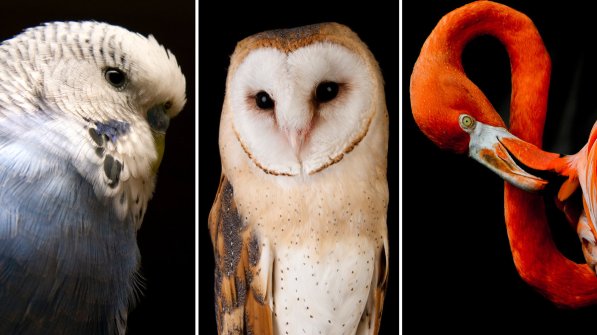
Recent research sequenced 48 bird species, including (from left) the budgerigar, the barn owl and the American flamingo. (Left and center)iStock; (Right) Chris Minerva/Ocean/Corbis

Recent research sequenced 48 bird species, including (from left) the budgerigar, the barn owl and the American flamingo. (Left and center)iStock; (Right) Chris Minerva/Ocean/Corbis

Thanks to National Public Radio (USA) for this podcast of a story we know our ornithologically-inclined readers will appreciate:

What do a pigeon and a flamingo have in common? Quite a bit, according to a reordering of the evolutionary tree of birds.

One of a series of studies published Thursday in Science is the latest step toward understanding the origins of the roughly 10,000 bird species that populate our planet. Continue reading

Xandari’s Latest Dozen+ Pysanky

As my on-site time with Xandari wound down for the year early this week, I worked to make as many pysanky for the gift shop as possible, since an ornithological expedition in Jamaica will be taking up the first couple months of the new year. In the photo on the right, you can see that I finally got to one of the patterns I’d brainstormed when first starting this project, as well as a repetition of the Alajuelan soccer team insignia egg. Since the little tree for hanging the eggs in the gift shop is pretty full at sixteen eggs already, most of these eggs will stay in the office until an egg is sold or eggs are rotated.

Two adaptations of earlier patterns I developed and another soccer-themed egg, this time for Heredia’s team.

I’m hoping all these eggs, some of which directly reference Xandari and others Continue reading

Lima, Climate Change, Key Takeaways

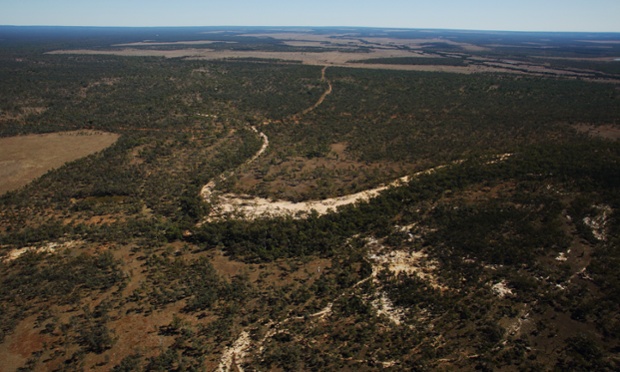
The Galilee basin in central Queensland: ‘it would produce 6% of the carbon necessary to take the planet past a 2C temperature rise, the red line set by the world’s governments’. Photograph: Andrew Quilty/PR

The Galilee basin in central Queensland: ‘it would produce 6% of the carbon necessary to take the planet past a 2C temperature rise, the red line set by the world’s governments’. Photograph: Andrew Quilty/PR

We new that his leaving 350 would not mean any retreat from activism. Proof positive here. Thanks to Bill McKibben and the Guardian for their attention to this week’s meetings in Lima:

The world’s nations are meeting in Lima, near the equator, to pledge and promise about global warming. But the actual worth of those promises can be more accurately gauged in the far north and the far south of the planet, where real decisions in the next months will show whether the climate concern is rhetorical or real.

By now most people know about the northern example: the tar sands of Alberta. Some time in the coming months the new Republican-controlled Congress will demand that Obama approve the construction of the Keystone XL Pipeline. If he vetoes that call and sticks to his principles, it will help keep expansion of the tar sands complex in check. That won’t make up for America’s vast expansion of oil and gas drilling in recent years, but it will send some kind of signal: there is a limit somewhere to how much fossil fuel we plan to extract. Continue reading

Bugs Illustrating Important Things

bug-art-starry-night

Thanks to Conservation for this story, more inspiring than the other one we just posted:

Steven Kutcher is an artist, an entomologist, a teacher—and a Hollywood bug wrangler. Kutcher got his start in bug art in the 1980s when he was asked to figure out how to make a fly walk through ink and leave footprints for a Steven Spielberg–directed TV project. From there he went on to work with carpenter ants in Copycat, giant mosquitoes in Jurassic Park, and stampeding spiders in Arachnophobia—of course. Continue reading

A Human’s Best Illustration Of Important Stuff

179571de-e7d8-4a39-82bf-ad6bef672f58-620x372

Plastic pieces in the ocean damage wildlife and enter the food chain when ingested by fish. Photograph: Bryce Groark/Alamy

Thanks to the Guardian for ongoing coverage of the world’s great environmental challenges:

Full scale of plastic in the world’s oceans revealed for first time

Over five trillion pieces of plastic are floating in our oceans says most comprehensive study to date on plastic pollution around the world

More than five trillion pieces of plastic, collectively weighing nearly 269,000 tonnes, are floating in the world’s oceans, causing damage throughout the food chain, new research has found.

Data collected by scientists from the US, France, Chile, Australia and New Zealand suggests a minimum of 5.25tn plastic particles in the oceans, most of them “micro plastics” measuring less than 5mm.

Continue reading

Museum As Pollinator

07SUBGUGGENHEIM-thumbStandard-v2A New Art Capital, Finding Its Own Voice

As plans for the Guggenheim Abu Dhabi go forth, those involved are hoping to speak to the art history of many nations.

Cosmopolitanism expands its reach. A good thing, we believe. Thanks to the New York Times Arts section for that story.