The Sophie’s Choices Of Conservation

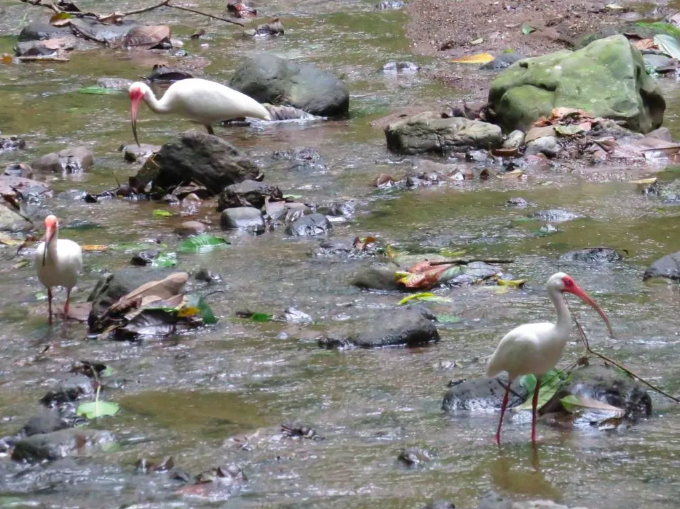
Screen Shot 2014-11-21 at 5.53.37 PM

Life is not fair.  Sometimes it is really unfair, especially when it comes to entire lifeforms disappearing, or not disappearing, subject to choices we humans make, with all our inherent biases. Thanks to Nautilus for bringing this research to our attention:

Which Endangered Species Would You Save?

Conservation is in the eye of the beholder.

BY CARRIE ARNOLD

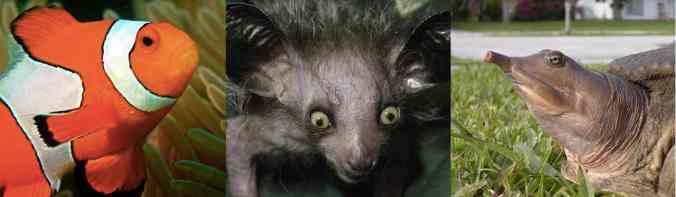
You have just been appointed Conservation Czar. But there is a catch. You can only save three animals. Look at the 12 animals below and click on the three that you would save. After you make your choices, you will learn about the endangered status of each animal.

Continue reading

Resistance, Change, Art, Words–Liberating

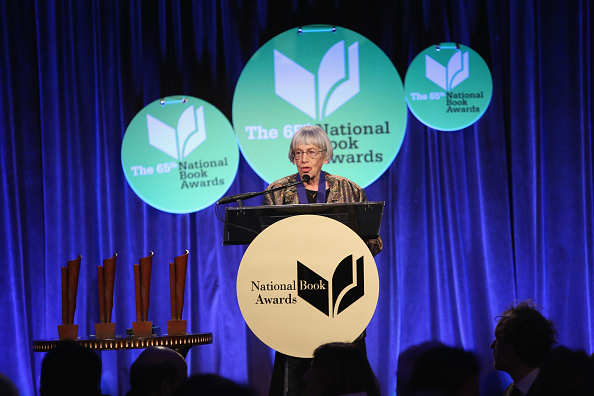
NEW YORK, NY - NOVEMBER 19:  Ursula K. Le Guin attends 2014 National Book Awards on November 19, 2014 in New York City.  (Photo by Robin Marchant/Getty Images)

NEW YORK, NY – NOVEMBER 19: Ursula K. Le Guin attends 2014 National Book Awards on November 19, 2014 in New York City. (Photo by Robin Marchant/Getty Images)

We do not normally pay attention to awards ceremonies, but this one catches our attention. We have said on occasion why we think books matter, why libraries matter, why the fate of publishing matters. On a good day, in our line of work, we approach the same ideal of books: to create experiences different from those encountered in normal, every day lives and by virtue of such experiences, to liberate. Comfort. Beauty. Taste. Wonderment, awe, perspective, yes yes yes.

But going somewhere. And that somewhere is freedom from the confines of norms, from the confines of places devoid of nature. The freedom of the road, a cliche that nonetheless has meaning.  Thanks to the New Yorker‘s Rachel Arons for pointing us to the short, powerful comment from an author who influenced many of us early in life to do what we do for a purpose:

…But it was Ursula K. Le Guin, accepting the Medal for Distinguished Contribution to American Letters early in the evening, who gave the definitive remarks of the ceremony, gliding through the genre debate and the Amazon-Hachette debacle on her way to explaining the crucial role that literature must play in our society.

Continue reading

15 Years, And Counting

monopoly-man-with-green-wings

Click the image above or the title below to go to the summary, thanks as always to Conservation:

THE LOW-CARBON DEAL THAT’S ALMOST TOO GOOD TO BE TRUE

The economics of slashing carbon emissions look significantly better than they did only a few years ago. Continue reading

Introduced Species in the Galápagos

Feral goats on Isabela Island. Photo by Galápagos National Park Service.

Yesterday I wrote about the case of the North American beaver being purposefully introduced to Argentinian Patagonia for a business venture and having severe unintended consequences on the environment in both Chile and Argentina. Most of us think of Patagonia as a pretty faraway and isolated place, and its location so far down the southern hemisphere merits that. The Galápagos Islands are another place geographically apart from most of us–that distance accounts for the specialized evolution that took place in the archipelago over millennia.

The isolation of the Galápagos from the rest of the world for so long, and the relatively small size of the islands, means that it is especially vulnerable to opportunistic species that can become invasive. In the same way that the Canadian beavers had no natural predators in Patagonia, common domesticated goats, when introduced to different islands in the Galápagos by sailors centuries ago, were able to roam and multiply, which was the travelers’ goal Continue reading

Foodpreneurship

Revolution Foods makes healthy kids meals for both schools and stores. Co-founder Kristin Richmond says mentoring and support have been key to the success of her business. Shelly Puri/Courtesy of Revolution Foods

Revolution Foods makes healthy kids meals for both schools and stores. Co-founder Kristin Richmond says mentoring and support have been key to the success of her business. Shelly Puri/Courtesy of Revolution Foods

In the past year, with conceptualization and then food trials that led to the opening of 51, this story catches our attention and interest. Thanks to the salt, over at National Public Radio (USA) for the new vocabulary:

Culinary Institute’s School For ‘Foodpreneurs’ To Cook Up Innovation

The Culinary Institute of America may be best known for churning out chefs. And some of its graduates — from Grant Achatz to Roy Choi to Anthony Bourdain — have succeeded in entertaining and inspiring a new generation of foodies.

But not all CIA graduates don chef toques. Continue reading

Origins Of Chocolate In Costa Rica

We had not heard of this series until now, but considering the geographic and foodstuff focus of this current episode, we want to know more, especially considering what we learn in the show’s About section:

Iron Way Films, the creators of Original Fare, has spent the last seven years traversing the globe in search of authentic stories and incredible locations. We’ve explored tropical oceans with musicians & pro-surfers. Road horses through big sky back country with ranch riders. Tasted backyard wine deep in the tiny towns of Provence. We’ve glamped, we’ve camped, we’ve lived on boats and spent far too much time in rental cars.

But we always sought to uncover what makes a place special- and what makes it unique.

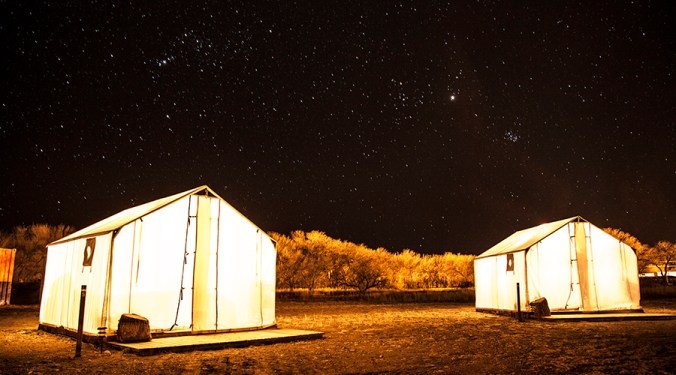
EL-COSMICO-NIGHT-TENT900x5001

Continue reading

Introduced Species in Patagonia

Yesterday, I wrote a bit about a book I once read and how it related to the case of the introduction of the small Indian mongoose to Jamaica to try and control a rat problem. The situation of accidentally transporting a species onto an island (or a separate continent, which often amounts the same thing), realizing the mistake when the species causes problems with the local flora or fauna, and introducing a second species to try to control the first, only to have the second species cause its own more serious issues, is a fairly common one around the planet, although Australia seems to be particularly vulnerable (look up rabbits and toads).

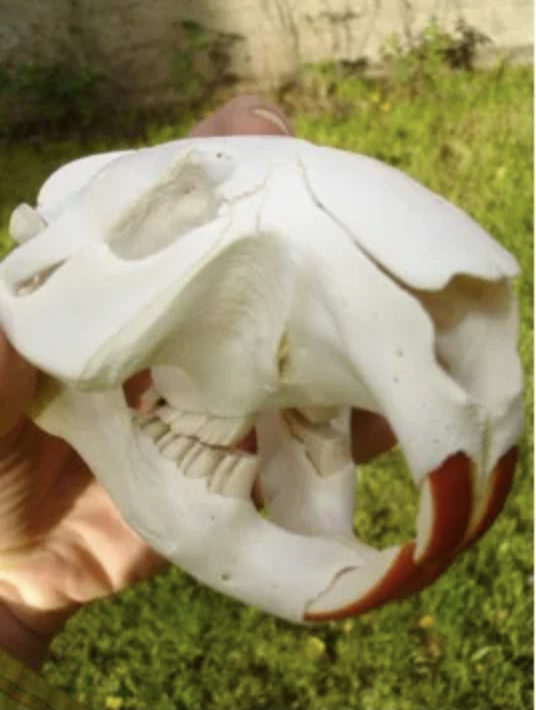
The case I wanted to write about today is an example of purposeful introduction of a species for human gain, but which was not properly researched beforehand and caused severe ecological damage that is still incompletely mitigated today.

Today I’ll cover the beavers in southern Chile and Argentina. The story I had originally heard, several years ago when I was Continue reading

Starry Night Bike Path

Artist Dan Roosegaarde pays tribute to Vincent Van Gogh's painting Starry Night by creating this bike path in Van Gogh's hometown of Eindhoven. Courtesy of Studio Roosegaarde

Artist Dan Roosegaarde pays tribute to Vincent Van Gogh’s painting Starry Night by creating this bike path in Van Gogh’s hometown of Eindhoven. Courtesy of Studio Roosegaarde

Thanks to National Public Radio (USA) for this follow up to another recent story from Holland about bike path innovations:

In the Dutch town of Eindhoven, artist Daan Roosegaarde has paid homage to its most famous resident, Vincent Van Gogh, by creating a glowing bike path that relies on solar-powered LED lights and interprets his classic painting Starry Night.

Roosegaarde says he wants his work, illuminated by thousands of twinkling blue and green lights, to speak to everyone. Continue reading

Neighborhood Electric Vehicles

Ecocruise Cruser Sport (Ecocruise Vehicles)

Ecocruise Cruser Sport (Ecocruise Vehicles)

Thanks to the BBC for this new entrant into our vocabulary:

Ecocruise Cruser Sport is the golf cart, accelerated

…Depending on the region in which they are registered, NEVs are limited by law (and usually, by engine output) to speeds below 25mph or 35mph. The best resemble earnest attempts at space capsules, the worst evoke street-legal golf carts (and often because they are, quite simply, street-legal golf carts).
Continue reading

Around The World Of Coffee In One Hour

Screen Shot 2014-11-18 at 11.47.40 AM

Click the image above, or title below, to go to the video:

Coffee: From Gene to Bean to Global Scene

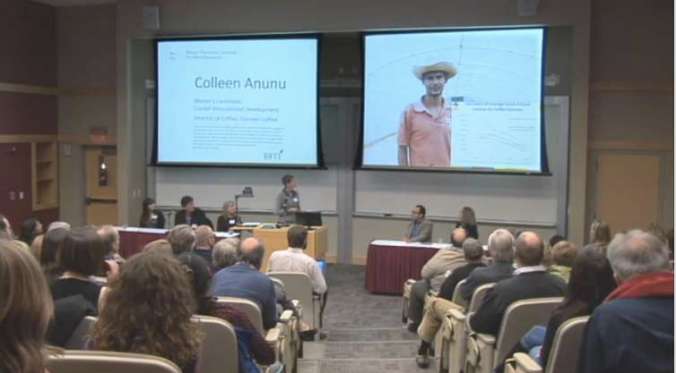
Six researchers from the Boyce Thompson Institute for Plant Research, Cornell University’s Lab of Ornithology, Dyson School of Applied Economics and Management, School of Hotel Administration, and College of Agriculture and Life Sciences investigate the culture of coffee, including: consumer tastes and choices, the social impact of development and production, the ecological impacts of coffee farms, and how the plant’s genome sequence can provide insight into this popular beverage.

“Tuf Voyaging” and Biological Controls

Book cover by David Willson for Baen Books.

Six or seven years ago, I read a relatively little known science fiction novel called Tuf Voyaging, written by an author extremely well known for his fantasy writing: George R.R. Martin. The book is actually a collection of short stories that had originally been published over the course of several years, and most of the stories follow the adventures of Haviland Tuf. That’s about as much as I can say without spoiling anything, except for the purposes of this post I do need to mention that quite a few of the stories in the novel are about ecological engineering and the introduction of biological controls to help solve different planets’ problems.

Even if you don’t like the more recently popular fiction by Martin (A Song of Ice and Fire), I would recommend Tuf Voyaging just for its humor and commentary on environmentalism. The stories focused on human (or at least humanoid) interaction with–and often mismanagement of–nature are thought-provoking and reminiscent of certain aspects of Frank Herbert’s Dune. And if you do enjoy Martin’s writing, then this will be a cool opportunity to Continue reading

A Book To Gift The Bird-Lovers In Your Life

raffin_birdsofpandemonium_hc_jkt_rgb_hr-updated

We first heard about it here. This book may be the perfect solution to your next gift-giving occasion for the bird lover(s) in your life. We are still on alert and concerned about Amazon, so if you do not have find this in your local bookstore, please place your order somewhere that supports independent booksellers, or perhaps National Public Radio (USA) for this book. The publisher has this to say about the book:

“A remarkable book. Reading about the birds of Pandemonium will make you laugh and cry; it will make you see more clearly the need to take care of our planet; and it will confirm that one person with a passion can make a difference.” —Jeff Corwin, nature conservationist Continue reading

Farming, Food & Climate Change

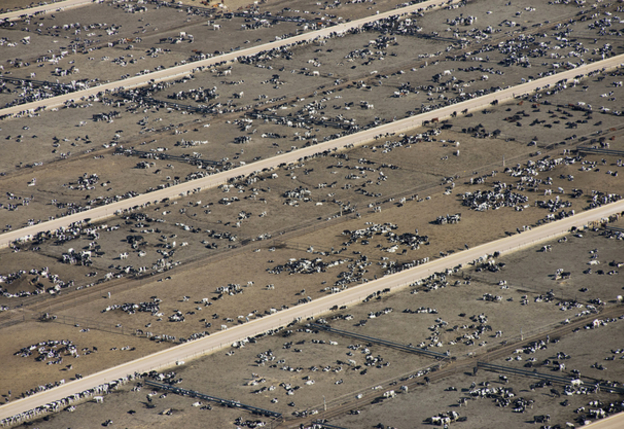
Cattle feedlot, southeastern Colorado. April 2013. 84760. Credit: John Wark

Cattle feedlot, southeastern Colorado. April 2013. 84760. Credit: John Wark

Thanks to Audubon magazine for the interview in their current issue with one of the go-to explainers we most frequently seek out on food sustainability issues:

Food Fight: Reforming the Farm

Celebrated author Michael Pollan talks climate change, and how farming can help stop it.

BY RENE EBERSOLE  Published: November-December 2014

Q: Should we be looking more closely at how the food we eat affects the climate?

A: I think there’s a growing recognition that you can’t really address climate without looking at the food system. Yet exactly how you do that, what that means from a policy point of view, is a lot more complicated than regulating coal-fired power plants.

Agriculture is a large source of global warming emissions. Yet you propose that it can help reverse climate change?

Continue reading

Pachyderm Prowess

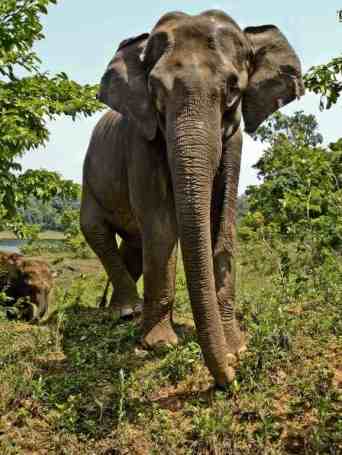
Mother and baby Asian Elephant, Periyar Tiger Reserve. Photo credit: Milo Inman

Mother and baby Asian Elephant, Periyar Tiger Reserve.
Photo credit: Milo Inman

Quite a few La Paz Group contributors are life-long elephant lovers, and we never tire of learning about these amazing members of the animal kingdom. Thanks to TED Ed for giving us more to remember…

It’s a common saying that elephants never forget. But the more we learn about elephants, the more it appears that their impressive memory is only one aspect of an incredible intelligence that makes them some of the most social, creative, and benevolent creatures on Earth… Continue reading

Sidestepping To Success

16innovations_ss-slide-GB8J-sfSpan

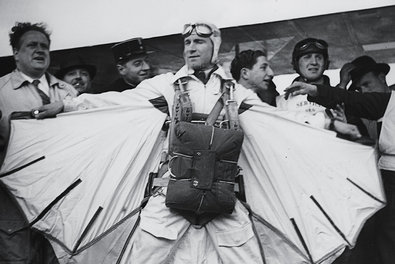
The Estate of André Steiner via Archive of Modern Conflict

This week’s Sunday Magazine in the New York Times has a focus on the role of failure on the path to successful innovation. It is not lost on us, having recently designed, built and opened two properties– one at the beach and the other in a historic cultural urban zone–in the state of Kerala, India that sometimes it seems you take two steps sideways Continue reading