Sneak Peek at Xandari’s Upcoming Holiday Tree

The Raxa Collective Holiday tree at Cardamom County, 2012.

Two years ago, the Raxa Collective team designed a new kind of conical decoration to replace the traditional pine tree at Cardamom County, one of Raxa Collective’s properties in Kerala, India. Pictured left, this tree received many compliments from employees and guests alike, was considered a success all around, and came out again last year with some new ornaments at Cardamom County. For the last several years, Xandari has relied on a small palm tree from the gardens here as the holiday ornament, but the resort has been looking for alternatives. When I showed the team what might now be considered the “Raxa Collective tree,” they were immediately excited and started planning to build one straight away.

And so it was that Edwin (José Luis‘s brother) and I found ourselves in two of the several bamboo groves on Xandari property with a saw and a machete on Tuesday. We started out with a simple sketch design of our planned tree based on the images we’d seen of the Indian version, then set out to cut a couple bamboo poles for the construction phase. We knew we’d need three 2.1 meter poles for the pyramid sides, so we got them from one type of medium-thickness bamboo. Then we needed twenty-one rods of seven different lengths (see design photo above), so we went to a grove of thinner type of bambooContinue reading

Joint Ventures In Thanksgiving Cooking

Renee Comet Photography/Restaurant Associates and Smithsonian Institution

Renee Comet Photography/Restaurant Associates and Smithsonian Institution

We had not seen this book when it was first published two years ago, but now will seek it out to authenticate our commemorations for our table mates in distant lands:

The Native American Side Of The Thanksgiving Menu

Everyone knows the schoolhouse version of the first Thanksgiving story: New England pilgrims came together with Native Americans to share a meal after the harvest. The original menu was something of a joint venture, but over the years, a lot of the traditional dishes have lost their native flavor.

For those who want to create a feast that celebrates the flavors that Native Americans brought to the table, Chef Richard Hetzler put together an entire menu of options from his award-winning cookbook,The Mitsitam Cafe Cookbook. The recipes are drawn from the Mitsitam Native Foods Cafe at the Smithsonian National Museum of the American Indian, where Hetzler was lead chef until summer 2014. Since opening the cafe, he told NPR’s Celeste Headlee he observed a growing interest in native cooking.

Continue reading

Thanksgiving, 2014

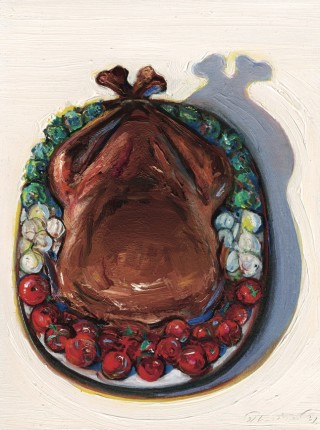
The problem with cooking Thanksgiving dinner abroad is never just the shopping. It’s the local culinary aesthetic. CREDIT WAYNE THIEBAUD

The problem with cooking Thanksgiving dinner abroad is never just the shopping. It’s the local culinary aesthetic. CREDIT WAYNE THIEBAUD

For those whose heritage includes someone who has proclaimed thanks in a land distant from where s/he was born, and/or broke bread with the locals, this day has a particular ring to it. For anyone who has commemorated the specific holiday in lands distant to their own original homes, there is an odd symmetry to the original Thanksgiving event. This New Yorker classic-in-the-making will bring special pleasure to all who have commemorated the Thanksgiving holiday in far off lands:

NOVEMBER 23, 2009 ISSUE

Pilgrim’s Progress

Thanksgiving without borders.

BY

…I am what you might call an amateur of Thanksgiving. My family prefers the phrase “regrettably hospitable,” but I would add strategically hospitable, because Thanksgiving dinner has turned out to be the stealth weapon of my reporting life. Everybody knows something about Thanksgiving, though not necessarily what we eat or why we eat it. Continue reading

Thanksgiving: Art History on a Plate

This slideshow requires JavaScript.

As we continue to work on plating and food trials for 51 at Spice Harbour, the concept of deconstructing a typical Kerala dish often makes it into the conversation. During these conversations with Indian colleagues the subject of “typical American food” frequently comes up. Like India, there’s no one “American cuisine” (don’t get me started on the horrors of our fast food exports), but a Thanksgiving meal comes close.

In the collaborative spirit of preparing and plating a meal that’s meant to be shared, multi-media artist Hannah Rothstein deconstructed the classic Thanksgiving meal of turkey, gravy, cranberry sauce and “sides” with a nod to 10 artists with the most distinctive of painting styles, with the acception of Cindy Sherman, a photographer best known for her conceptual portraits. Continue reading

Good Writing, According To Steven Pinker

Thanks to Intelligence Squared for the last dozen years of excellent debate, Oxford style, and in particular for this recent conversation that picks up where this last post, and the one before that, left off in terms of making us want to hear more from Steven Pinker:

STEVEN PINKER ON GOOD WRITING

with Ian McEwan

Steven Pinker is one of the world’s leading authorities on language, mind and human nature. A professor of psychology at Harvard, he is the bestselling author of eight books and regularly appears in lists of the world’s top 100 thinkers.

On September 25th he returned to the Intelligence Squared stage to discuss his latest publication The Sense of Style, a short and entertaining writing guide for the 21st century. Pinker argued that bad writing can’t be blamed on the internet, or on “the kids today”. Continue reading

Illegal Wildlife Trade, Quantified

9f71b8b7-4c32-4afe-86e7-2d27c9f6b728-620x372

Photograph: James Morgan/WWF/AFP/Getty Images

The Guardian’s coverage of one of our least favorite but critically important topics is appreciated, as always:

Continue reading

Geckos, A 10th Latitude Lovely

science-take-gecko-sfSpan-v3

Geckos are in most of our favorite places–Kerala, Costa Rica, Ghana–which share some 10th Latitude commonalities in different continents.  They are one tiny example of the commonalities, but one that most of us love, for reasons we cannot begin to explain. So for us this story is a welcome puzzle solver for mysteries we did not know needed explaining, yet enjoy the answers:

SCIENCETAKE

Climbing a Glass Building? Try a Gecko’s Sticky Pads

By JAMES GORMAN

The lizard and, well, Spider-Man, have ideal tools for scaling slippery surfaces. Engineers have copied the gecko’s clingy foot pads.

Ethio-jazz And A Goal For 2015

16ETHIOPIA1-articleInline-v2

Nichole Sobecki for The New York Times. Mulatu Astatke, seen as the father of Ethio-jazz, performs at African Jazz Village, which opened in late 2013.

As we prepare for a scouting trip to Ethiopia for a possible Raxa Collective collaboration with our Ghana colleagues in 2015, we were happy to see this item in the Sunday Travel section of the New York Times last week and just now remember to post this link:

CULTURED TRAVELER

In Ethiopia’s Capital, a Resurgent Jazz Scene

Solar To Take Prime Position On Cost Basis Soon

iHF9w5iJW38M

Thanks to Bloomberg for the surprising news:

While You Were Getting Worked Up Over Oil Prices, This Just Happened to Solar

By Tom Randall

Continue reading

Migrating Wildlife Needs More Than Merely Parks

According to an in-depth atlas project being undertaken by the Wyoming Migration Initiative, many species of wild ungulates (hoofed mammals) require more land than what is currently encompassed in wilderness reserves. Certain areas that are under private ownership or designated as mixed use government lands are also key to the survival of species like the bighorn sheep (whose migration routes are to the left), mule deer, elk, and others.

Continue reading

Sea Snakes, Rhinos, And The Close Observation Of Two Tragic Commons

rhino-snake-680x450

Thanks as always to Conservation, and in this case to Jason G. Goldman for the excellent summaries of scientific findings each week. There is not much happy news in this story, but nonetheless it is critical reading because of the detailed observation of the scientists:

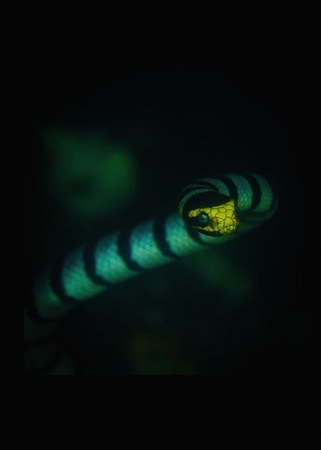
Each month, hundreds of squid fishing vessels return to port in Vietnam loaded not just with squid, but also with sea snakes harvested from the Gulf of Thailand. Each month, the seven major snake processing facilities move an average of 6,500 kilograms of sea snakes, which are sold for between $10 and $40 per kilogram, depending on species. By comparison, squid sell for between $7 and $20 per pound, making sea snakes the more lucrative catch.

In the most recent issue of the journal Conservation Biology, Vietnam Academy of Science and Technology researcher Nguyen Van Cao and colleagues argue that the harvest of sea snakes from the Gulf of Thailand is perhaps the world’s largest systematic exploitation of marine reptiles in the world, but it’s one that is woefully ignored or, at best, underscrutinized. Continue reading

Entrepreneurship In The New India

Recasting India How Entrepreneurship Is Revolutionizing the World's Largest Democracy by Hindol Sengupta Hardcover, 249 pages

I argue that in India you cannot be against the state. That would be madness … But the state should not be running five-star hotels, which it is still doing. – Hindol Sengupta

Thanks to NPR z(USA) for this review of a book that helps those of us working in India get a better grip of what we see around us. It is likewise an invaluable guide for those observing from afar the vibrant new economics of this ancient mix of cultures, all wrapped up in the largest democracy on earth:

It takes almost a month to get permission to start a business in India — a feature of the country’s four-decade experiment with centralized, state-controlled economic planning.

India began moving away from its old policies and opening up to outside investment in the early ’90s — but that movement towards a free market economy has happened in fits and starts, and is far from complete.

Hindol Sengupta is an editor-at-large with Fortune India, the magazine’s India arm, and he’s written a new book about the policy shift: Recasting India. 

When I sat down with him in New Delhi, he told me that India’s greatest economic battles “are being recast, the debate is being reframed” away from the longstanding idea that India’s protracted problems can only be solved by its government.

Continue reading

An Impromptu Tacacorí CUBs Art Contest

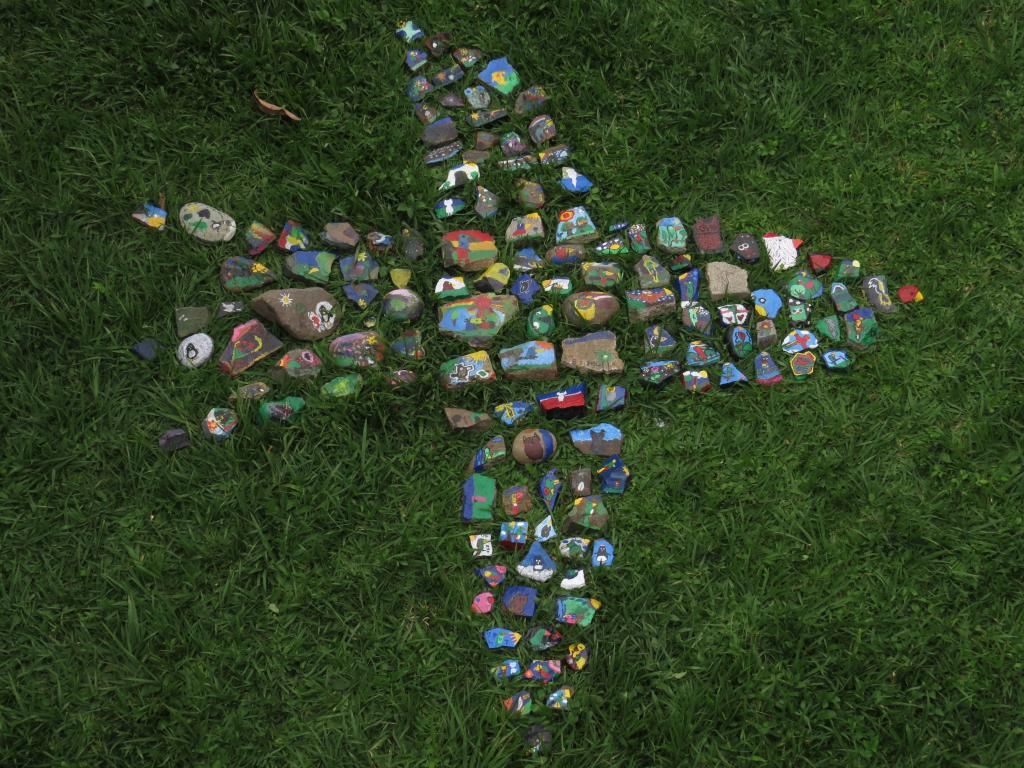
A crudely-formed bird (airplane?) mosaic, photographed from the school roof

Last week, after many delays, I was able to get down to the school in Tacacorí and take photos of all the CUBs rocks that the students had painted. I used my camera (rather than my phone) and a borrowed tripod so that the pictures would be better quality and also more standardized. The result was 146 photos of rocks. I don’t know the exact number of students at the school, but I know that fifth-graders in particular were impatient to take their rocks home before I photographed them, because there were only a handful of specimens left last week.

Unfortunately for those students who didn’t wait until I told them they could  Continue reading

President of Iceland to Speak at Cornell in T-minus Two Hours

10421239_10152851517090132_6600294053230348364_nIn less than two hours, Ólafur Ragnar Grímsson, the fifth president of Iceland, will deliver a talk at Cornell’s Einaudi Center, as part of the Foreign Policy Distinguished Speaker Series.

Since I have a very personal academic connection to Iceland, I will be viewing the live stream of the speech at CornellCast’s webpage, and I invite you to do the same! The site helpfully provides a countdown of the talk for those of us in diverse time zones.  Continue reading