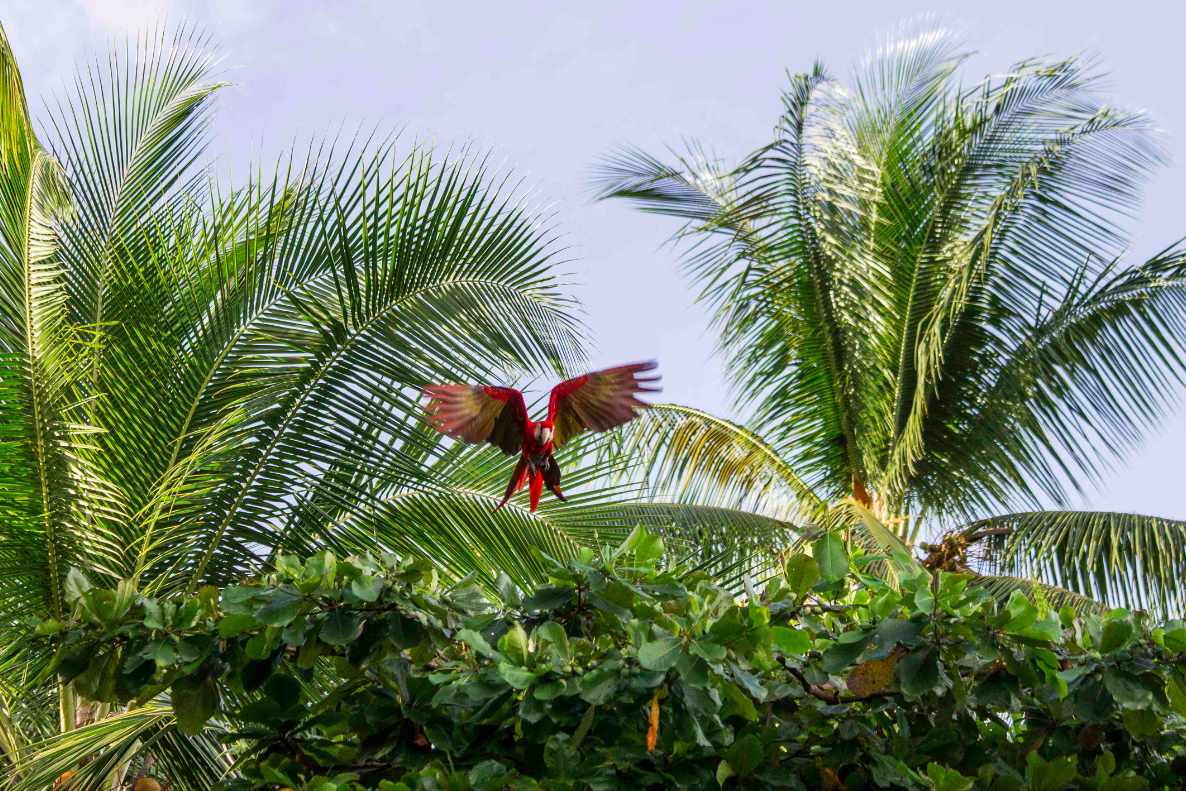
Osa Peninsula, Costa Rica
New Mammal Spotted at Xandari
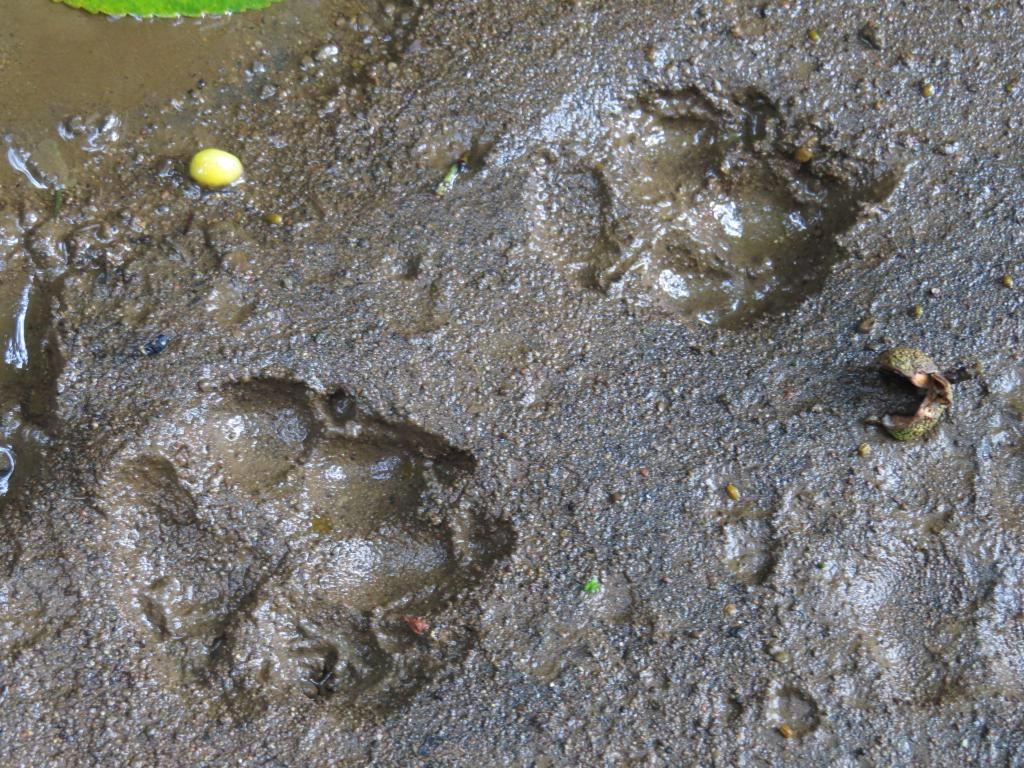 About a week ago, while walking the forest trails at Xandari, several resort employees and I had a great wildlife spotting. The trail we were taking leads to a seven-foot waterfall that flows into a large pool and continues as a small river with several other waterfalls in it, one of which is about a seventy-foot drop. As we were rounding a bend in the path, a member of the group looked across the river to the opposite bank and noticed an animal down by the water.
It had either been drinking or perhaps hunting for some aquatic prey, but when it heard our voices (we were a group of about six or seven) it scampered up the hill and in among the trees, where we lost sight of it. My first impression was that it was a black house cat, but it quickly became clear that it was in fact almost double the size and its tail was quite large – not bushy, but as if the bone and flesh themselves were a good deal thicker than a normal cat’s.
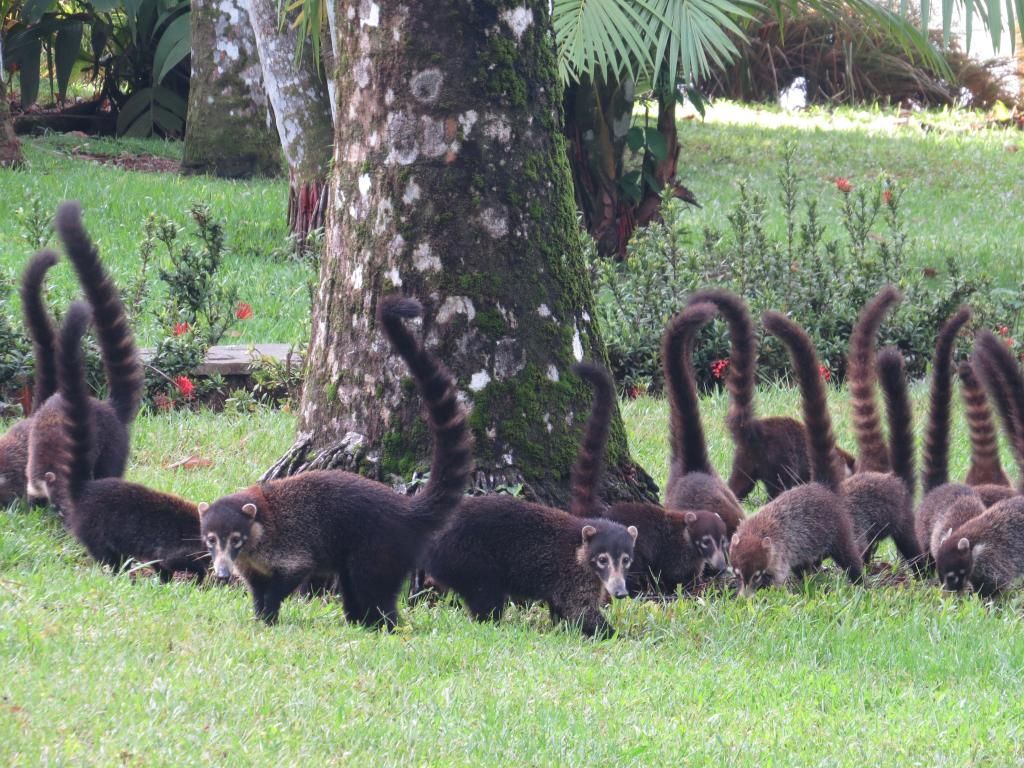
White-nosed Coatis foraging warily on the grounds of Bosque del Cabo, a nature lodge on the Osa Peninsula of Costa Rica.
The staff member who first spotted the animal voiced the hypothesis that it was a pizote, or White-nosed Coati, a member of the raccoon family that many visitors to Costa Rica have probably seen in their travels here. But as the black-furred animal briefly turned its head back to check that we were not pursuing it, I could see despite the shadows cast by the forest that its face was not pointed into a long nose but rather a normal cat’s face, and there was no hint of white there either. Continue reading
Starling Murmuration, 2014

Autumn, near Gretna Green. Dark clouds begin to form in the sky above fields, woodlands and reed beds. But these are no ordinary clouds. They are one of the UK’s most incredible wildlife spectacles.
Thanks to the Guardian for keeping up the tradition of sharing these seasonal photos (click the image above to go to a collection of this year’s contributions from readers).
Bird of the Day: Great White Pelicans

Little Rann of Kutch, Gujarat
The Other Amazon; Is This Progress?
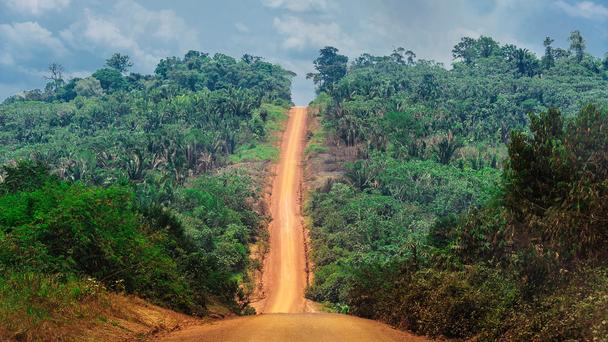
Difficult to say definitively whether it represents progress or not, but new roads usually give that sensation. The one exception may be when the road opens up otherwise inaccessible wilderness (thanks to the BBC for this story):
Into the Amazon
Coursing 2,000km through the heart of the Amazon rainforest, the Trans-Amazonian Highway was one of the region’s first roads, constructed in the 1970s as a crude track hacked through dense foliage – “highway” was a generous description. It was built to connect the Amazon to Brazil’s growing farming and cattle breeding economy, and over the years, virgin forests have given way to cattle ranches, logging stations and gold mines. (Coen Wubbels)
Amazon, Thinking Of Our Future
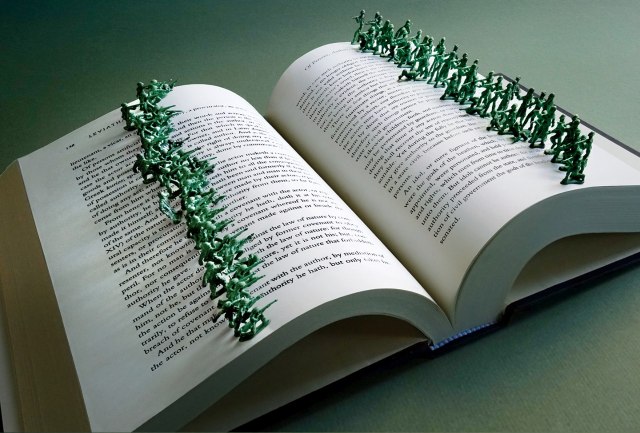
LINES ARE DRAWN A battle over pricing may have been the Sarajevo moment. But the war is really about the future of publishing—and maybe of culture.
I never tire of “think pieces” on Amazon because it is about our cultural future:
The War of the Words
Amazon’s war with publishing giant Hachette over e-book pricing has earned it a black eye in the media, with the likes of Philip Roth, James Patterson, and Stephen Colbert demanding that the online mega-store stand down. How did Amazon—which was once seen as the book industry’s savior—end up as Literary Enemy Number One? And how much of this fight is even about money? Keith Gessen reports.
By Keith Gessen Photo Illustrations by Stephen Doyle Continue reading
Chocolate, New Sense

Le Laboratoire Cambridge features a restaurant, the Cafe ArtScience. The restaurant’s bar features a glass-globed drink vaporizer called Le Whaf. Andrea Shea/WBUR
Thanks to National Public Radio’s program, the salt, for this idea on how we can expect to enjoy chocolate in new ways in the future:
David Edwards has been called a real-life Willy Wonka. The biomedical engineer has developed, among other things, inhalable chocolate, ice cream spheres in edible wrappers, and a device called the “oPhone,” which can transmit and receive odors.
Edwards is based at Harvard, but much of his work has been done in Paris, at a facility he calls Le Laboratoire. Now he’s opened a similar “culture lab” closer to home: Le Laboratoire Cambridge in Cambridge, Mass. Continue reading

Bird of the Day: Grey-Bellied Cuckoo (Nandi Hill, Karnataka)
The Worst News Of The Week
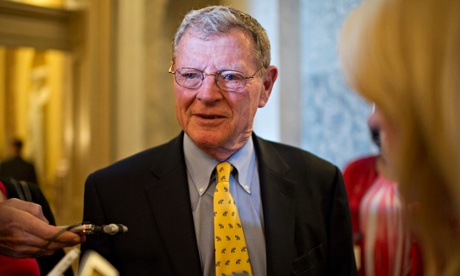
Republican Senator Jim Inhofe is expected to get the Senate top environmental job. Photograph: Tom Williams/Getty Images
Read it and weep (thanks to the Guardian):
Climate change denier Jim Inhofe in line for Senate’s top environmental job
Obama faces a fight to protect his climate change agenda after midterm results suggest Senate’s top environmental post will fall to Republican stalwart of climate denial
The Senate’s top environmental job is set to fall to Jim Inhofe, one of the biggest names in US climate denial, but campaigners say Barack Obama will fight to protect his global warming agenda.
Education, Innovation, Puzzling Future
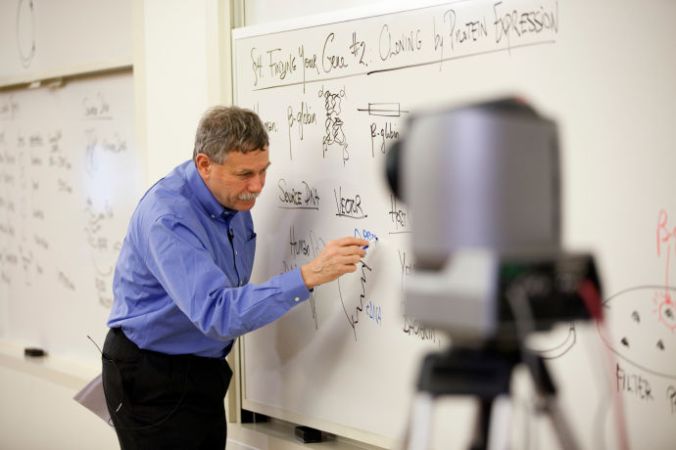
Online education is a technology with potentially revolutionary implications—but without a precise plan for realizing that potential. CREDIT PHOTOGRAPH BY MELANIE STETSON FREEMAN / THE CHRISTIAN SCIENCE MONITOR VIA GETTY
If the first post of today was rather too depressing, here is an interesting puzzle to take your mind off that subject. In honor of all of this year’s interns, many of whom are probably thinking about MOOCs for various reasons, we thank the New Yorker’s Elements writer Maria Konnikova for this intriguing distraction:
On July 23rd, 1969, Geoffrey Crowther addressed the inaugural meeting of the Open University, a British institution that had just been created to provide an alternative to traditional higher education. Courses would be conducted by mail and live radio. The basic mission, Crowther declared, was a simple one: to be open to people from all walks of life. “The first, and most urgent task before us is to cater for the many thousands of people, fully capable of a higher education, who, for one reason or another, do not get it, or do not get as much of it as they can turn to advantage, or as they discover, sometimes too late, that they need,” he told his audience. “Men and women drop out through failures in the system,” he continued, “through disadvantages of their environment, through mistakes of their own judgment, through sheer bad luck. These are our primary material.” He then invoked the message emblazoned on the Statue of Liberty: Open University wanted the tired, the poor, the huddled masses. To them, most of all, it opened its doors. Continue reading
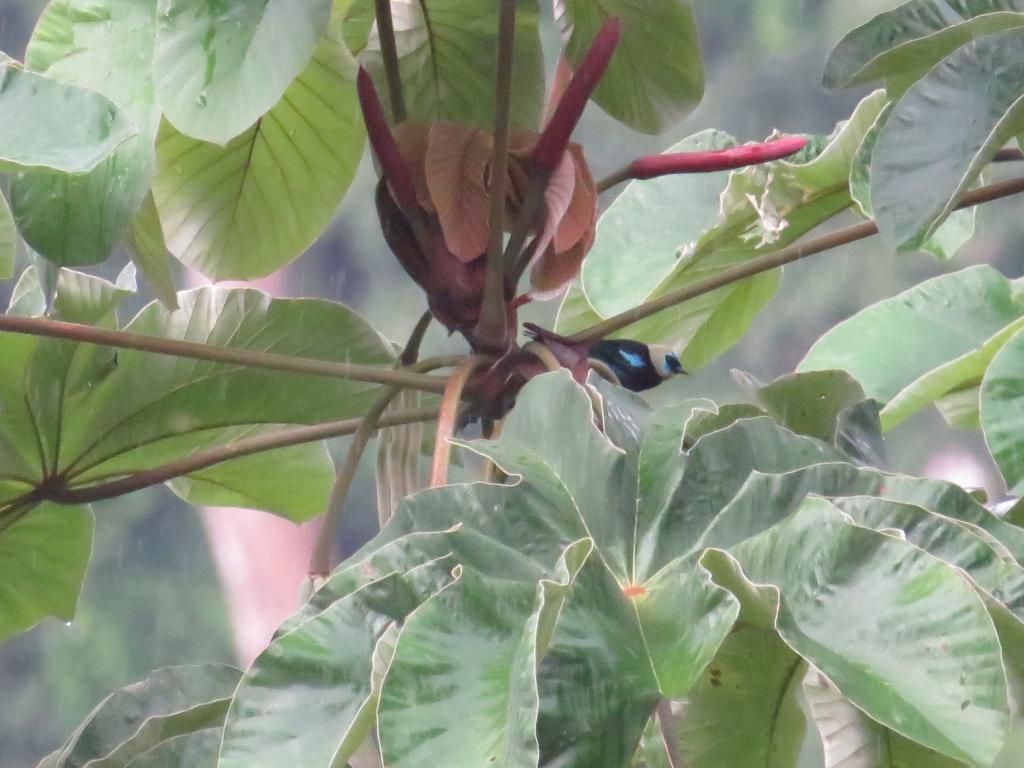
Bird of the Day: Golden-hooded Tanager (Osa Peninsula, Costa Rica)
Strength in Diversity
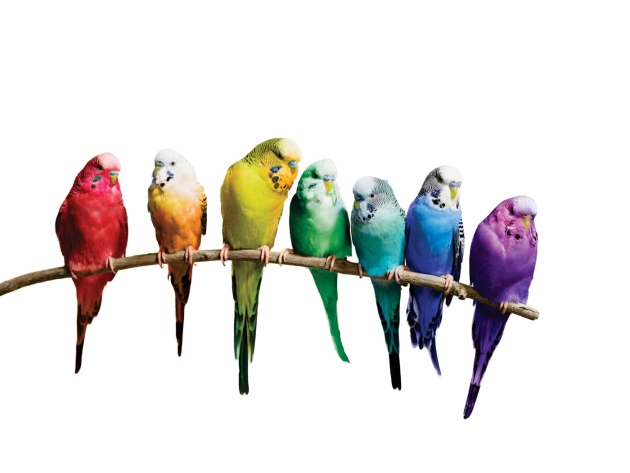
Strength in diversity, as illustrated in this scientific study described in Nature:
Sticking with co-authors with similar surnames to yours might dent the impact of your work. The reason is unclear, but bibliometrics suggest that teams with greater ethnic diversity generate papers that make more of a splash in the scientific literature.
Be Careful What You Wish For
 You can’t always get what you want. Sometimes you can, but the law of unintended consequences never ceases to surprise us. Thanks to this week’s Science section of the New York Times for a marine/culinary example:
A New Bounty of Oysters in Maryland, but There Is a Snag
Recent changes to state policy and a growing national affection for the shellfish have led to an oyster farming boom that is hampering the traditional fishing ways of the watermen.
Bird of the Day: Jungle Owlet

Bandipur National Park, Karnataka
The Solar Cycling Double Whammy
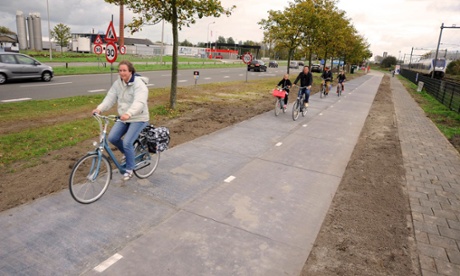
SolaRoad in Krommenie, the Netherlands, will be the world’s first cycle path with embedded solar panels. Photograph: SolaRoad
Two wrongs never make a right, but sometimes two green initiatives work together to create more than the sum of their parts, as this story reported in the Guardian demonstrates:
World’s first solar cycle lane opening in the Netherlands
Solar panels embedded in the cycle path near Amsterdam could generate enough electricity to power three houses, with potential to extend scheme to roads
The bike path that connects the Amsterdam suburbs of Krommenie and Wormerveer is popular with both school children and commuters: around 2,000 cyclists ride its two lanes on an average day.
But next week Krommenie’s cycle path promises to become even more useful: on 12 November a 70-metre stretch will become the world’s first public road with embedded solar panels.
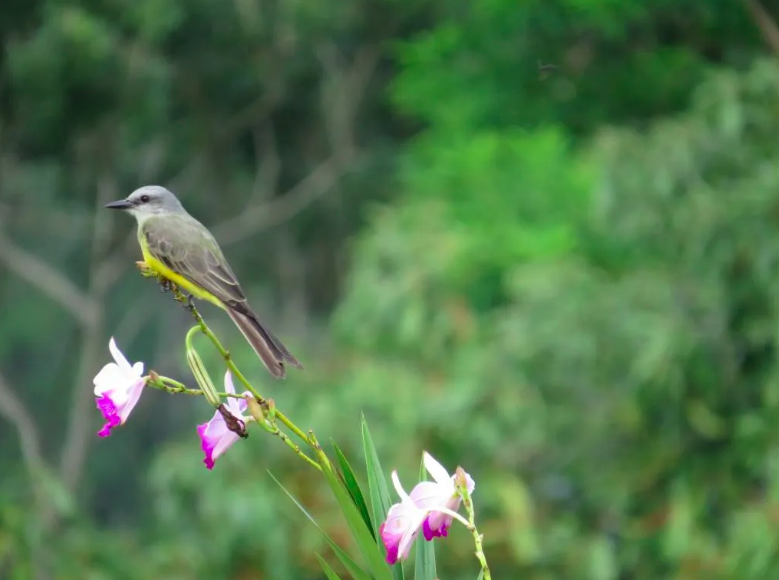
Bird of the Day: Tropical Kingbird (Xandari Resort, Costa Rica)
If You Happen to Be in Washington, DC
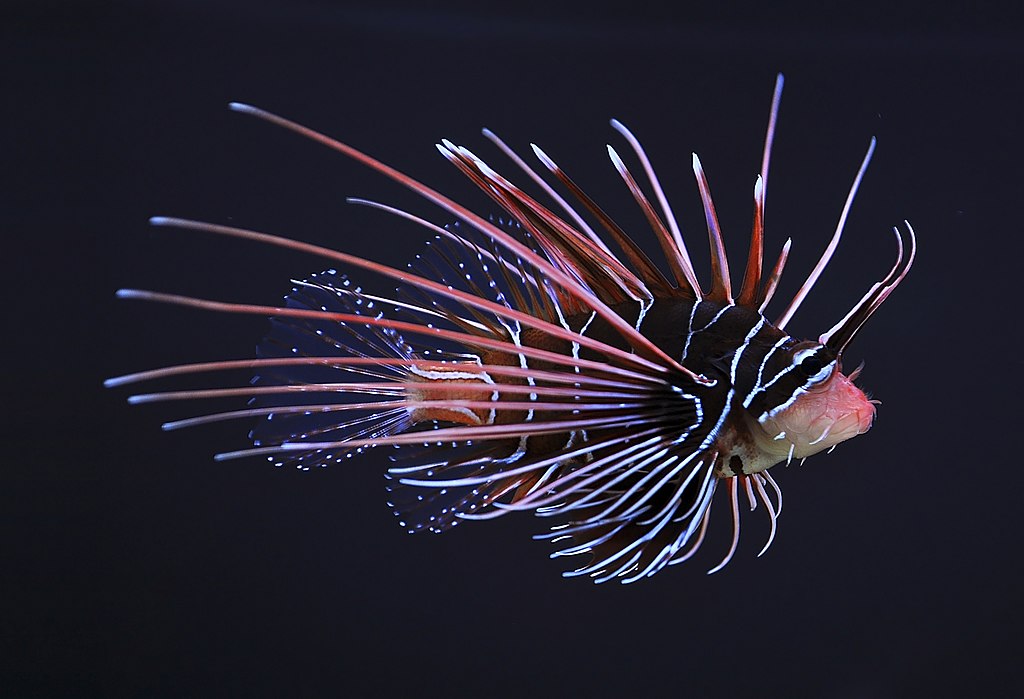
Photo by Wikipedia User “The High Fin Sperm Whale”
For over a year, we have been happy and fortunate to host Phil’s writings on the lionfish invasion and what entrepreneurial means might be taken to mitigate it. Next Tuesday, if you happen to be in the DC area and are looking for an educational way to spend your evening, consider going out for a happy hour lecture at Rosemary’s Thyme Bistro. Continue reading
Manta Matching
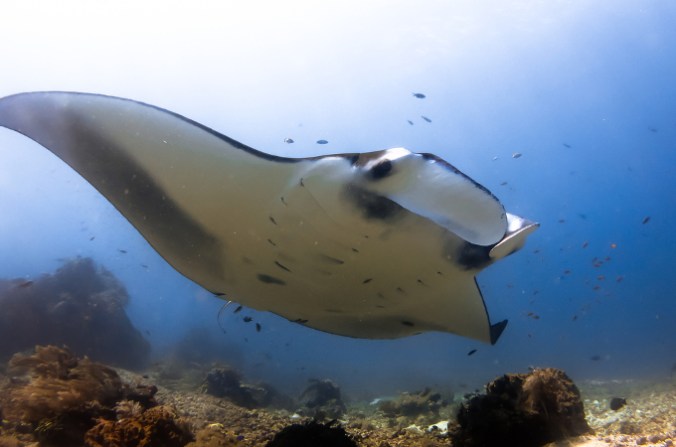
Click the image above or the title below to go to the article:
WANDERING MANTA RAYS HIGHLIGHT GAPS IN MARINE CONSERVATION
Earlier this year we showcased a study showing how reef fish don’t exactly pay much attention to where humans draw conservation lines. Just because a Marine Protected Area, or MPA, exists, doesn’t mean a species we might be keen on saving will stay inside its borders. Manta rays, a charismatic and threatened group of animals, are now showing us how understanding and targeting certain species may help improve ocean conservation.
Bird of the Day: Pied Avocets
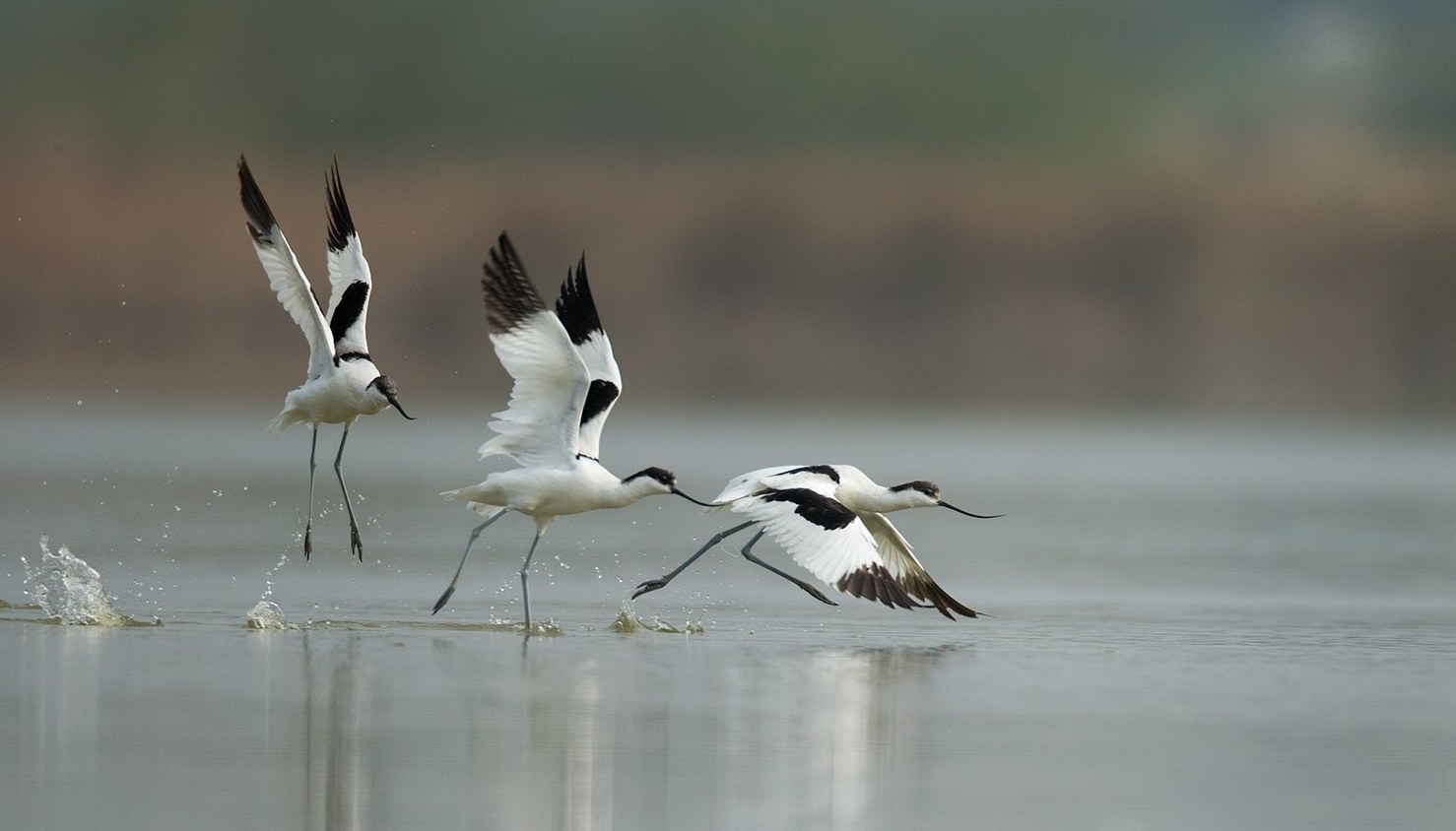
Little Rann of Kutch, Gujarat
Bravo To Our Friends At EARTH, Thanks To Our Friends At Whole Foods

Bananas from EARTH University are available at over 400 Whole Foods locations in Canada and the U.S. (Courtesy of EARTH University)
The Tico Times, in Costa Rica, reports on the the growth of sustainably grown banana cultivation, and their distribution in North America:
The supermarket chain’s new “Responsibly Grown” produce rating system was launched earlier in October and divides fruits, flowers and vegetables into three categories: Good, Better and Best, based on suppliers’ farming practices.
 Organikos