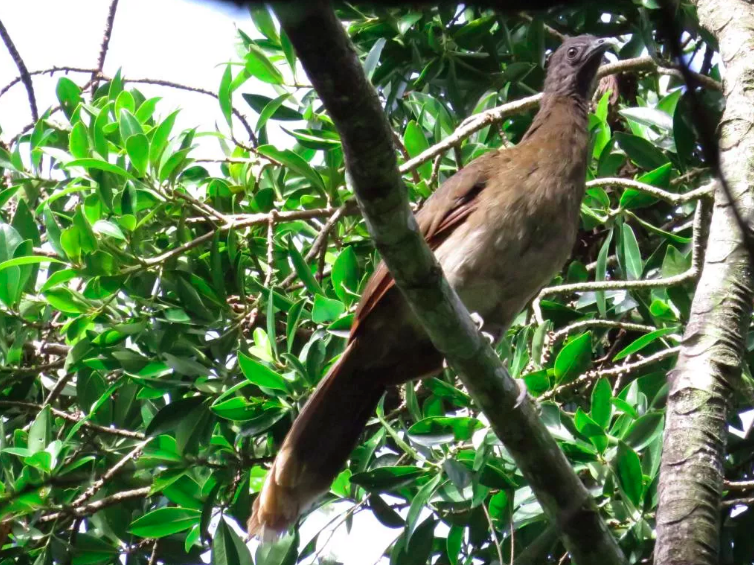
Tacacori, Costa Rica
Tacacori, Costa Rica
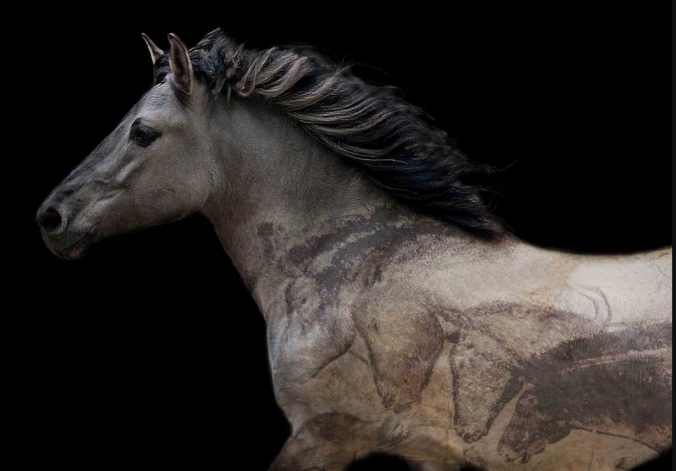
The poster for “TARPAN: Repainting An Ancient Picture” . Horsefly Films
Related to a recent post, on an interesting “what if” question that has no answers, here is a kind of answer. Thanks to Rewilding Europe for this press release:
It is the worthy result of over a year of work by Jen Miller and Sophie Dia Pegrum, two American filmmakers at Horsefly Films. It is also the second in their ongoing series of informative and beautiful films documenting and celebrating rare horse breeds and the unique, and often vanishing, cultures that surround them. Continue reading
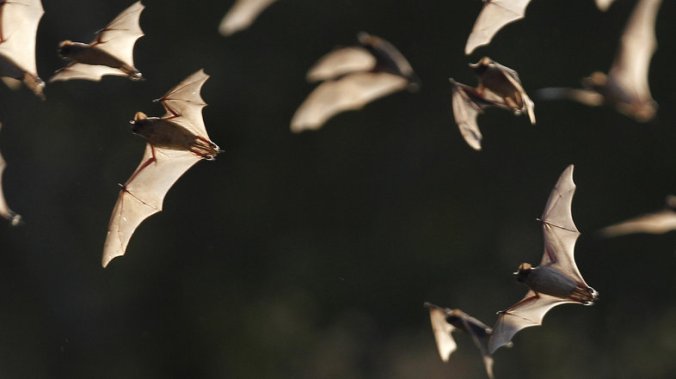
The Bracken Bat Cave outside San Antonio, Texas, is home to millions of bats. Here, a few of them emerge from the colony in 2011. Eric Gay/AP
Thanks to National Public Radio (USA) for this story on bat habitat conservation:
Down a narrow gravel drive and a short walk past cactus and scrub cedars outside of San Antonio, Texas, is a gaping, dark cave mouth, 60 feet wide, nestled at the bottom of a steep hill.
This is the Bracken Bat Cave. Each night at 7:30, millions of bats spiral out of the deep cave and streak off toward the darkening southern sky.
Thanks to a $20 million deal signed Friday by San Antonio, conservation groups and a local developer, the night sky around the cave will stay dark, and the mother and baby bats inside will have a buffer between them and the hazards of city sprawl. Continue reading


Thinking of Seth’s recent work at Xandari’s neighboring school, and earlier work in Galapagos, this article strikes a cord:
Laura Carlin’s artistic exercises for young minds
The Phaidon author demonstrates how creativity comes from an active mind not an overly tutored hand
At Phaidon, we understand that a good art education should start early. Yet some books for younger readers aren’t always especially kid friendly. This is why we’ve buddied up with the London illustrator and educator Laura Carlin. Her fantastic new book, A World of Your Own, treats drawing not so much as a skill be to mastered, but as a fantastic toy, to engage a child’s imagination. Continue reading

Click the book cover to go to the Powell’s website for a description of the book we formerly only knew as being authored by, and generally referred to simply as, Strunk and White. We love Maira Kalman and never knew she had illustrated this classic. That is interesting enough, but if you are ever accused of being a member of the “grammar police” as some of us are, or are a fan of Steven Pinker, or both, check this out (thanks to the Chronicle of Higher Education):
The voice on BBC radio was that of Professor Steven Pinker, fluent and engaging as ever. But my blood froze as I listened to what he said.
On the panel show A Good Read (Radio 4, October 17, 2014), each guest recommends a book, which the other guests also read and discuss. And Pinker’s recommendation for a good read was … The Elements of Style !
It was like hearing Warren Buffett endorsing junk bonds. It was like learning that Stanley Kubrick called Plan 9 From Outer Space high-quality cinematography. It was like seeing Chet Atkins (Never mind. I am too dispirited to go on with this potentially entertaining game of analogy-making.) Continue reading
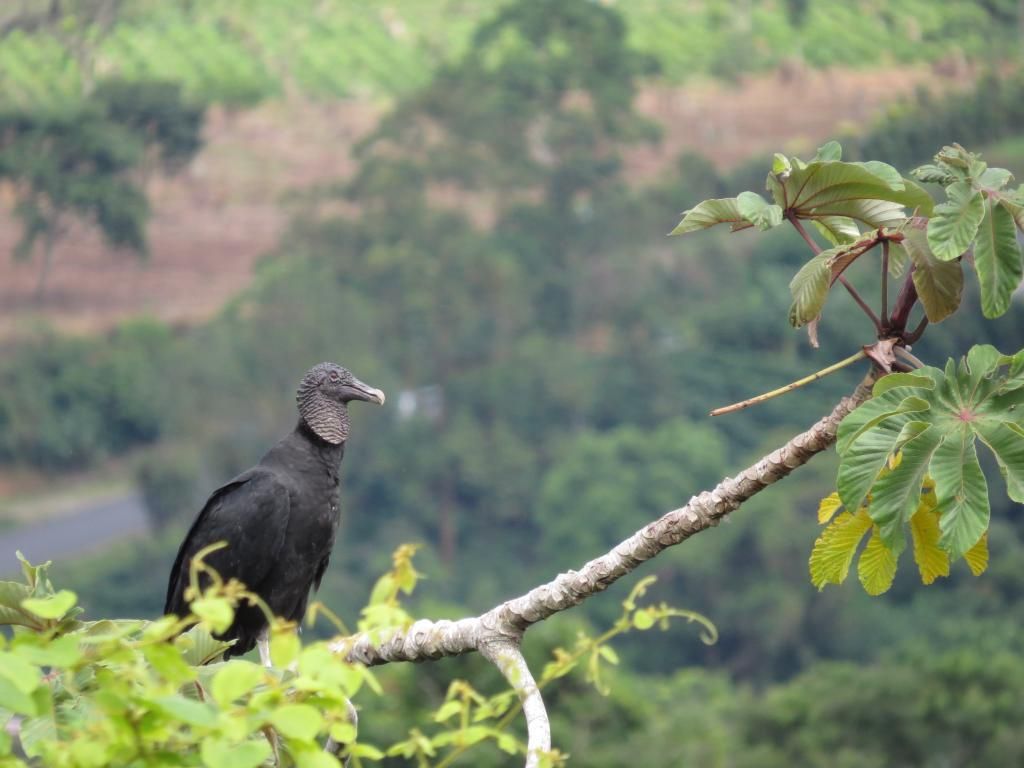
Tacacori, Costa Rica


We have pointed out photography competitions many times over the last several yearsIf you are so inclined, so equipped, and capable, we applaud you already:
The Nikon International Small World Competition first began in 1975 as a means to recognize and applaud the efforts of those involved with photography through the light microscope.
Since then, Small World has become a leading showcase for photo-micrographers from the widest array of scientific disciplines.
A photomicrograph is a technical document that can be of great significance to science or industry. But a good photomicrograph is also an image whose structure, color, composition, and content is an object of beauty, open to several levels of comprehension and appreciation.
The Nikon Small World Competition is open to anyone with an interest in photography through the microscope. Truly international in scope, entries have been received from the United States, Canada, Europe, Australia, Latin America, Asia, and Africa. Winners have included both professionals and hobbyists. Continue reading

Thanks to the New York Times‘ weekly Science section for a reminder of all the reasons why wild animals should not be traded as pets across regions of the world:
Infection That Devastates Amphibians, Already in Europe, Could Spread to U.S.
By JAMES GORMAN
Fire-bellied newts imported from Asia through the pet trade may be spreading a fungal disease that is killing off fire salamanders in Europe, according to researchers.

Appledore Island, Maine

Thanks to Conservation for this counterintuitive explanation of the sustainable city of the future, with the water-related effects of climate change taken into account:
THE FUTURE WILL NOT BE DRY
In a world of melting ice caps, storm surges, and tropical cyclones, the most resilient cities aren’t the ones that fight the water back—but the ones that absorb it.
By Fred Pearce
The ramshackle river port of Khulna in southwest Bangladesh is one of the most flood-prone urban areas on Earth. The third-largest city in one of the world’s poorest and most populous nations is at constant risk of inundation. It lies 125 kilometers inland from the shores of the Indian Ocean. And yet a tenth of this city of 2 million people is flooded at least ten times a year on average.
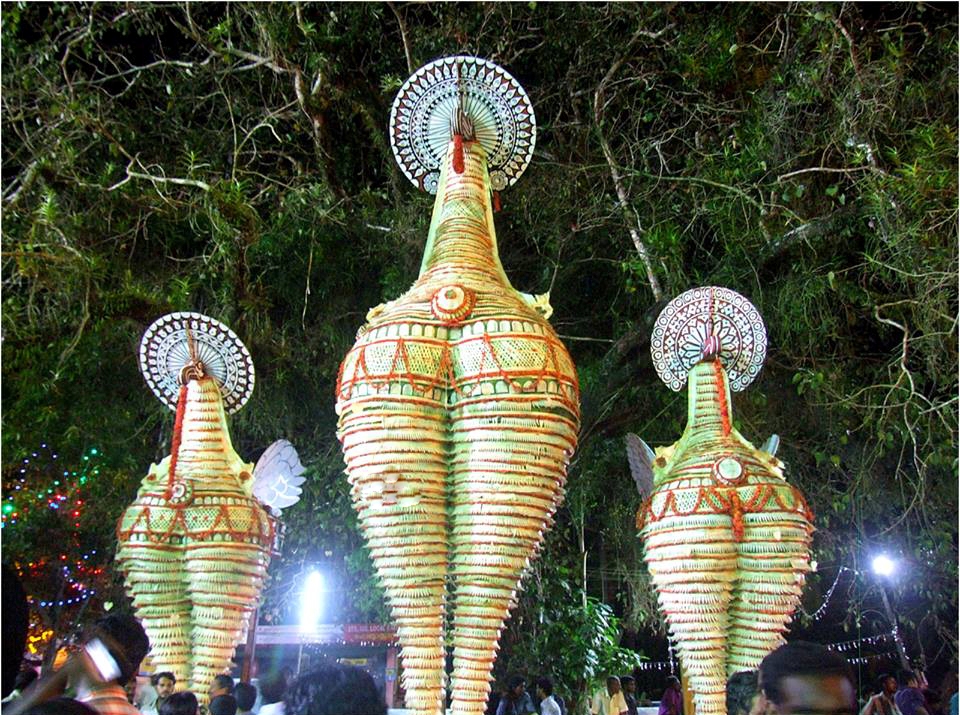
Photo credits: Ramesh Kidangoor
Neelamperoor Pooram Padayani is an old Dravidian ritual offering to the Kali Mother Goddess. This great cultural and religious event of central Kerala is celebrated during September-October at Neelamperoor, a village near to Kottayam. This Padayani is celebrated in the Palli Bhagavathi Temple, which has a history of more than 1000 years. Continue reading

Bangalore, Karnataka
In the video above, about four hours of working on two different eggs are condensed into six minutes of edited footage that has been sped up by 2000%. Continue reading
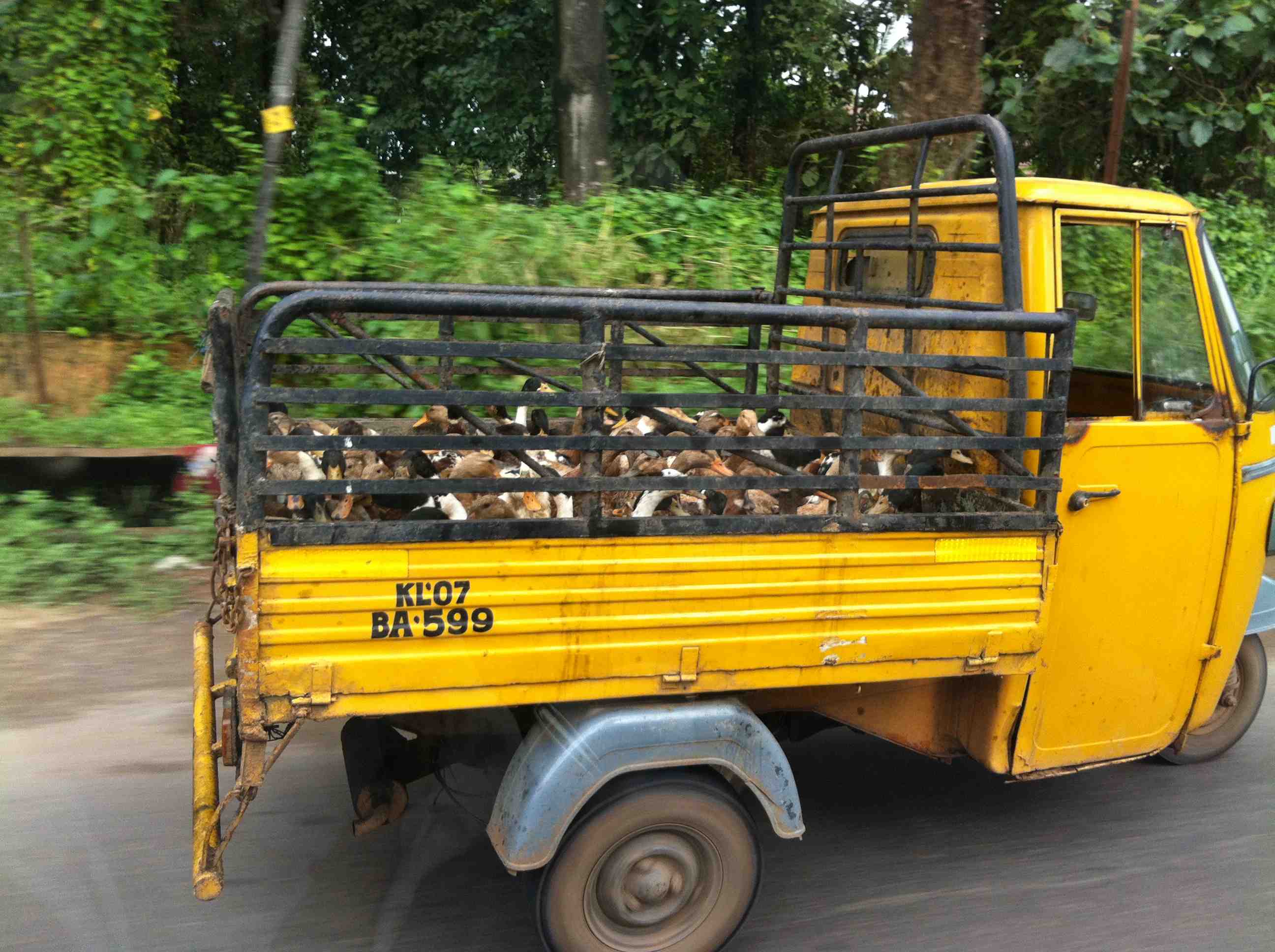
Edapally
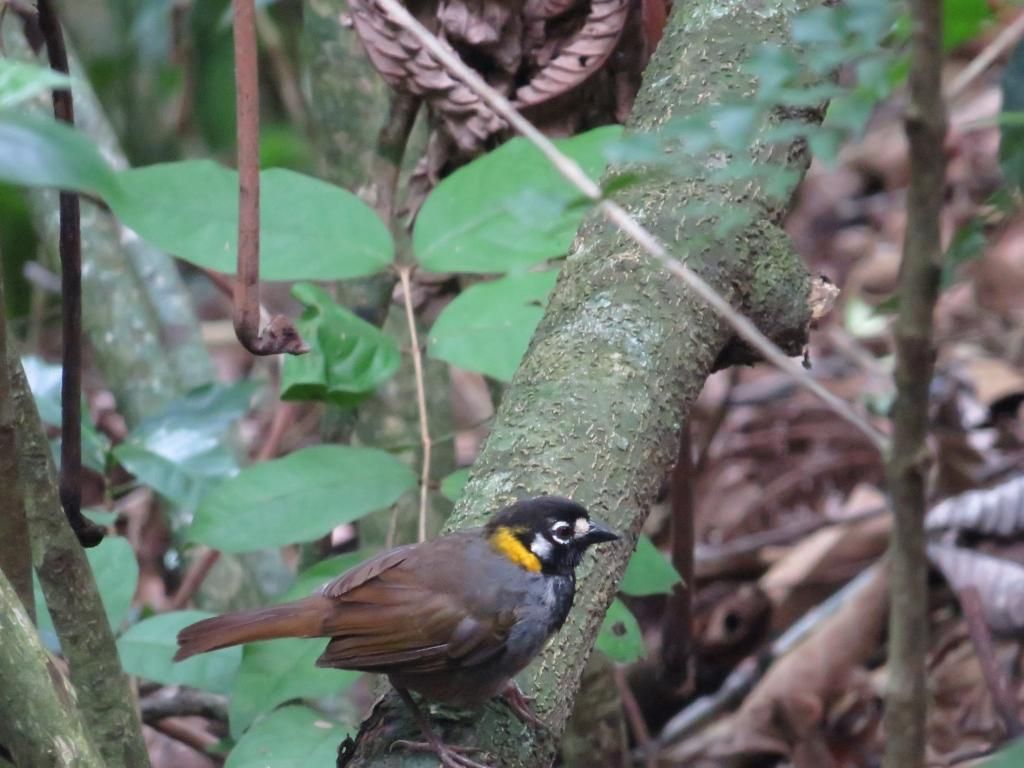
Tacacori, Costa Rica

Staying informed about best practices to reduce your carbon and other footprints is one of our objectives on this blog. When we see something we had not known, and which seems worthy of consideration, we pass it along here. Thanks to Professor Tyler, and Conservation, for this one:
And when can packaging actually be good for the environment?
If you’re like me, you probably get a bit annoyed when you discover that an item you bought in the grocery store uses too much packaging. It seems like such a waste of plastic and cardboard. From an environmental perspective, wouldn’t it be better to conserve resources and use less packaging material?
Not necessarily—it depends on the type of food.
Cornell University’s social media outreach often includes topics we cover regularly on this site, this video being a standard example, so we share six minutes on a topic of relevance to several of Raxa Collective’s properties where immersion in learning about nature is our parallel universe equivalent of Professor Agrawal’s approach:
Nature as the Classroom: Goldenrod, Treehoppers and Ants
Classes in field biology are often very defined; go here, do that, measure this and come to this conclusion. Students in Anurag Agrawal’s field ecology course observe treehoppers in a field of goldenrod and devise their own study, then collect data to answer the questions. The approach comes much closer to how real field biology is actually done.
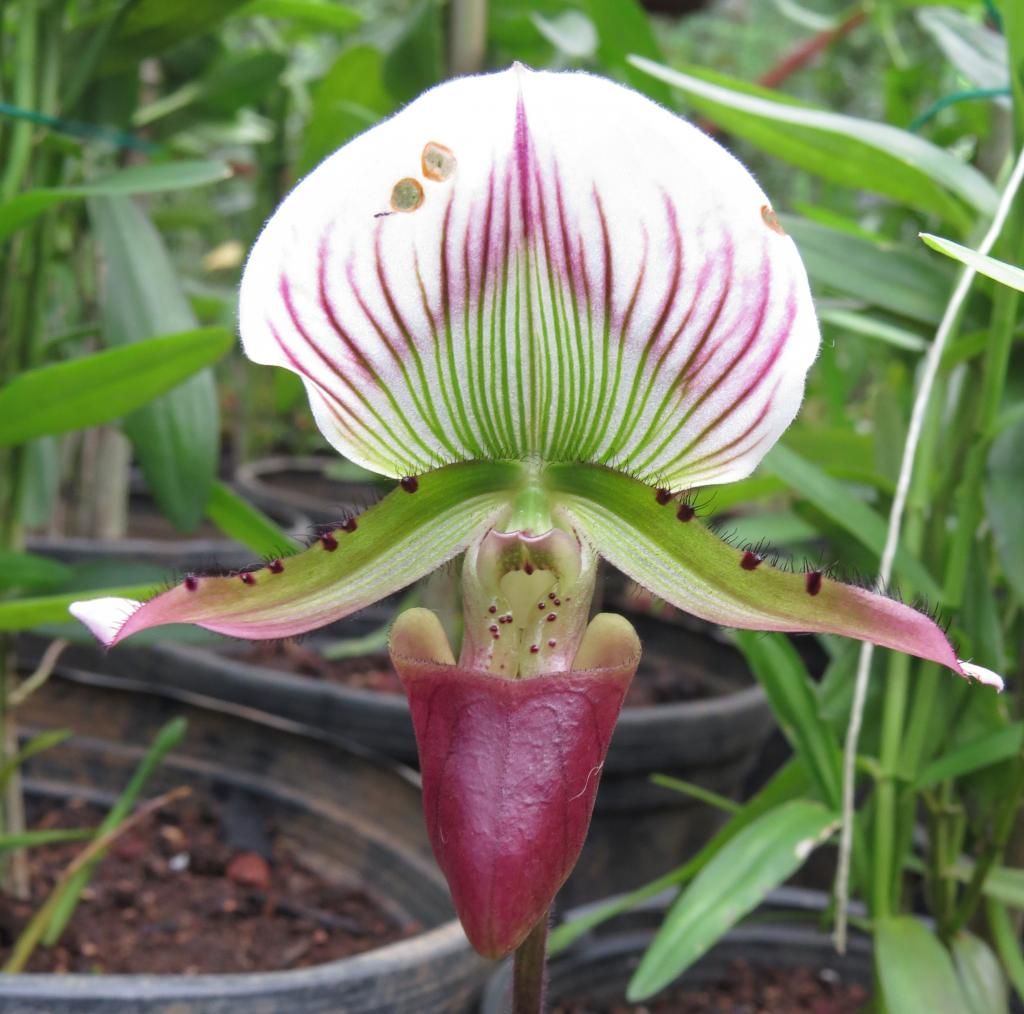
One of José Luis’s orchids at Xandari.
From Friday the 24rd of October to Sunday the 26th, Alajuela had their annual orchid exposition, which includes displays and awards as well as a few lectures on growing orchids and a section for sale or auction. As James and I have written before, Xandari has a wonderful collection of this family of flowers in addition to the general gardens thanks to the industrious efforts of our head gardener, José Luis Ballestero. He has a little greenhouse near Xandari’s restaurant with about a hundred plants that are often in varying stages of development, depending on how much time he has to prune them.


The three photos above are examples of some of the orchids on display in Xandari’s common area, like the reception, lobby, and restaurant room. At the expo this weekend, there were dozens of species and hundreds of individual plants, including hybrids, miniature flowers, and some fantastically strange Continue reading

Thattekkad Bird Sanctuary, Kerala
 Organikos