Shiny, Pretty Things

2014RAPLighters_copy

We have not eliminated plastic entirely at our properties, but we have been thinking about it for the last few years and taking action every chance we get. How to make the best of an otherwise horror show of plastic, according to this post on Surfrider Foundation’s blog:

The reality of plastic pollution is that it is happening in every home, office, school and community. It’s plaguing our country. Plastic creates toxic pollution at just about every stage of its existence, from manufacture, to use, to disposal. Considering the facts, it’s no surprise that it’s the most prevalent type of marine litter worldwide.

The extent of plastic use is mind-boggling.

Take plastic bags for instance. Americans go through about 100 billion plastic bags a year. That’s 360 bags for every man, woman and child in the United States. And, less than five percent of these bags are recycled. Continue reading

Kerala’s Tigers, And Protectors

DSCN2857_JPG_2171199f

Tribal conservationist Babu: School dropout launches a website with info on tiger conservation in Parambikulam reserve.

The Hindu carries a story, close to our hearts and activities, about a heroic member of a local indigenous community devoted to conservation for the tiger and all it depends on:

He may be the answer to the debate on tiger versus tribal, where tiger conservation and livelihood of forest-dwelling tribespeople fail to find a common ground. A school dropout from the Sunkam tribal colony inside the Parambikulam tiger reserve, he has designed a website to bring to the outside world the biodiversity of the reserve and highlight its tiger conservation efforts. Continue reading

Aerial Photography, Old School Edition

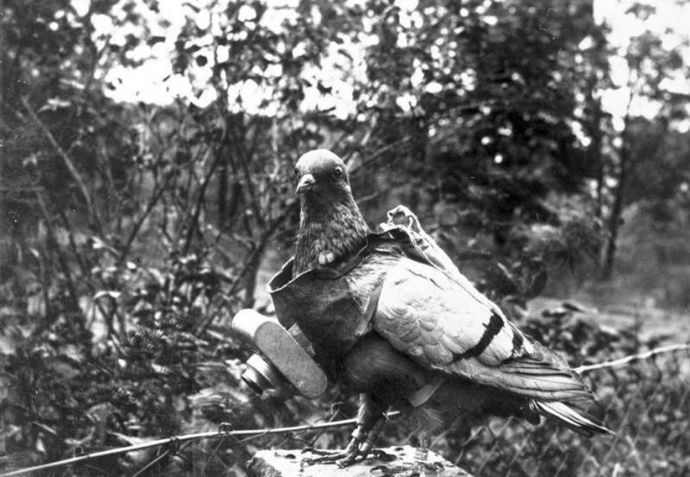
A pigeon with a small camera attached. Neubronner used the trained birds to capture aerial images before and during the war. PHOTOGRAPH COURTESY DEUTSCHES BUNDESARCHIV

A pigeon with a small camera attached. Neubronner used the trained birds to capture aerial images before and during the war. PHOTOGRAPH COURTESY DEUTSCHES BUNDESARCHIV

A post on the New Yorker‘s website adds one more drop in the ocean of appreciation we have for birds:

The Origins of Aerial Photography

BY

…In 1908, Julius Neubronner, who had used carrier pigeons in his work as an apothecary, filed a patent for a miniature camera that could be worn by a pigeon and would be activated by a timing mechanism. Continue reading

Traditional Soaking, London Edition

gin_wide-e8531d735abd157859bb21c062514336fc542f51-s5-c85

A quick review suggests we rarely post on topics related to liquid spirits, though wine and beer get the occasional honorable mention when craft or conservation is the main point of interest. Currently Kerala is debating new policies related to the sale of alcohol, so the subject is on our collective minds in that neck of the woods, and this piece from one of our go-to National Public Radio (USA) shows, the salt, seems germaine:

Tracing A Gin-Soaked Trail In London

Around the world, new gin distilleries are popping up like mushrooms after a rain. The boom has historic roots in London, which once had 250 distilleries within the city limits alone.

Feral, Reviewed

washington-square

Thanks to Conservation for this review of a book I first started hearing about last year, and now have even more motivation to read:

ADD A FEW SPECIES. PULL DOWN THE FENCES. STEP BACK.

Brandom Keim reviews George Monbiot’s Feral

The early twenty-first century is a soul-searching moment for conservation. With each new report of vanishing species and dwindling biodiversity, the last century’s great successes grow distant. Fundamental ideals and assumptions, in particular our cherished notions of wilderness, often feel ill-fitted to a crowded planet of more than 7 billion people. Continue reading

Profits, Privileges, Environmental Destruction

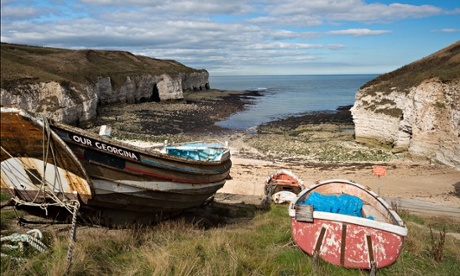
Mombiot blog on sea protection : Fishing boats near the beach at Flamborough head Yorkshire

Fishing boats near the beach at North Landing, Flamborough Head, on the Yorkshire coast. Falmborough Head is home to one of the UK’s three ‘no take’ zones – that in total cover just 5 sq km. Photograph: Paul Richardson/Alamy

The excellent Guardian editorialist, whom we have linked to more than once, strikes again:

Ripping up the sea floor on behalf of royal profits

George Monbiot: Even the pathetic laws protecting marine life in this country are instantly swept aside in response to lobbying by Prince Charles’s tenants

A few days ago, I visited the Flamborough Head “no take zone”, one of the UK’s three areas in which commercial fishing is prohibited.

Here marine life is allowed to proliferate, without being menaced by trawlers, scallop dredgers, drift nets, pots and all the other devices for rounding it up, some of which also rip the seabed to shreds. A reef of soft corals, mussels, razorfish and other species has begun to form, in which plaice and cod, crabs and lobsters can shelter, unmolested by exploitation. Fantastic, isn’t it?

Well curb your enthusiasm. Continue reading

Occasional Vegetarian Mentions

Screen Shot 2014-10-25 at 5.53.03 AM

Thanks to the New York Times, among other sources, for our ongoing foraging for new, interesting recipes for 51 and other restaurants where we bring vegetarian cuisine to a new level (click the image above to go to the brief, beautiful instructional video):

DINING

Aioli With Roasted Vegetables

Melissa Clark makes aioli with lemon juice and serves it with roasted broccoli, cauliflower, beets and other seasonal vegetables.

Jaguar, Conservation, Book Time

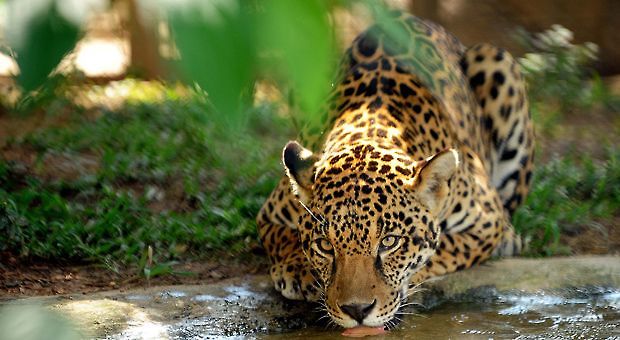
A captive jaguar drinks water in an enclosure at Petro Velho Farm, a refuge of the non-governmental organization NEX in Corumba de Goias, about 80 km from Brasilia, on January 11, 2013. EVARISTO SA/AFP/Getty Images

A captive jaguar drinks water in an enclosure at Petro Velho Farm, a refuge of the non-governmental organization NEX in Corumba de Goias, about 80 km from Brasilia, on January 11, 2013. EVARISTO SA/AFP/Getty Images

Listening to this interview it is just enough to clue you in to how Alan Rabinowitz has touched the lives of so many with the work he has done on behalf of jaguars and particularly conservation of their habitat:

Jaguars are the world’s third-largest wild cat – after tigers and lions. They have distinctive black rosettes on their fur and can weigh up to 250 pounds. Jaguars have been eradicated from 40 percent of their historic range. Today they live along a corridor from Argentina to Mexico. Their future is threatened by illegal hunting, deforestation and a loss of prey. One of the world’s leading big cat experts is responsible for creating a jaguar preserve in Central America, the first of its kind. In a new book, he shares why he’s committed to giving a voice to jaguars and how they helped him find his own voice.

Continue reading

Throwback Thursday: October Olives Redux

One aspect of the reconnaisance for projects in Greece included embracing and honoring past experiences. The place of foodways and cuisine in the narrative of lives can never be underestimated. The taste and aroma of a specific food brings back floods of memories, crossing the bounderies of time and space.

Visiting Laconia, the region in the Greek Peloponnesus that year after year receives accolades for both it’s olives and extra virgin olive oil (EVOO) was in many ways like coming home. Coming home to family heritage, coming home to living in other olive producing countries and how we embraced those cyclical events that humans have engaged in from time immemorial.

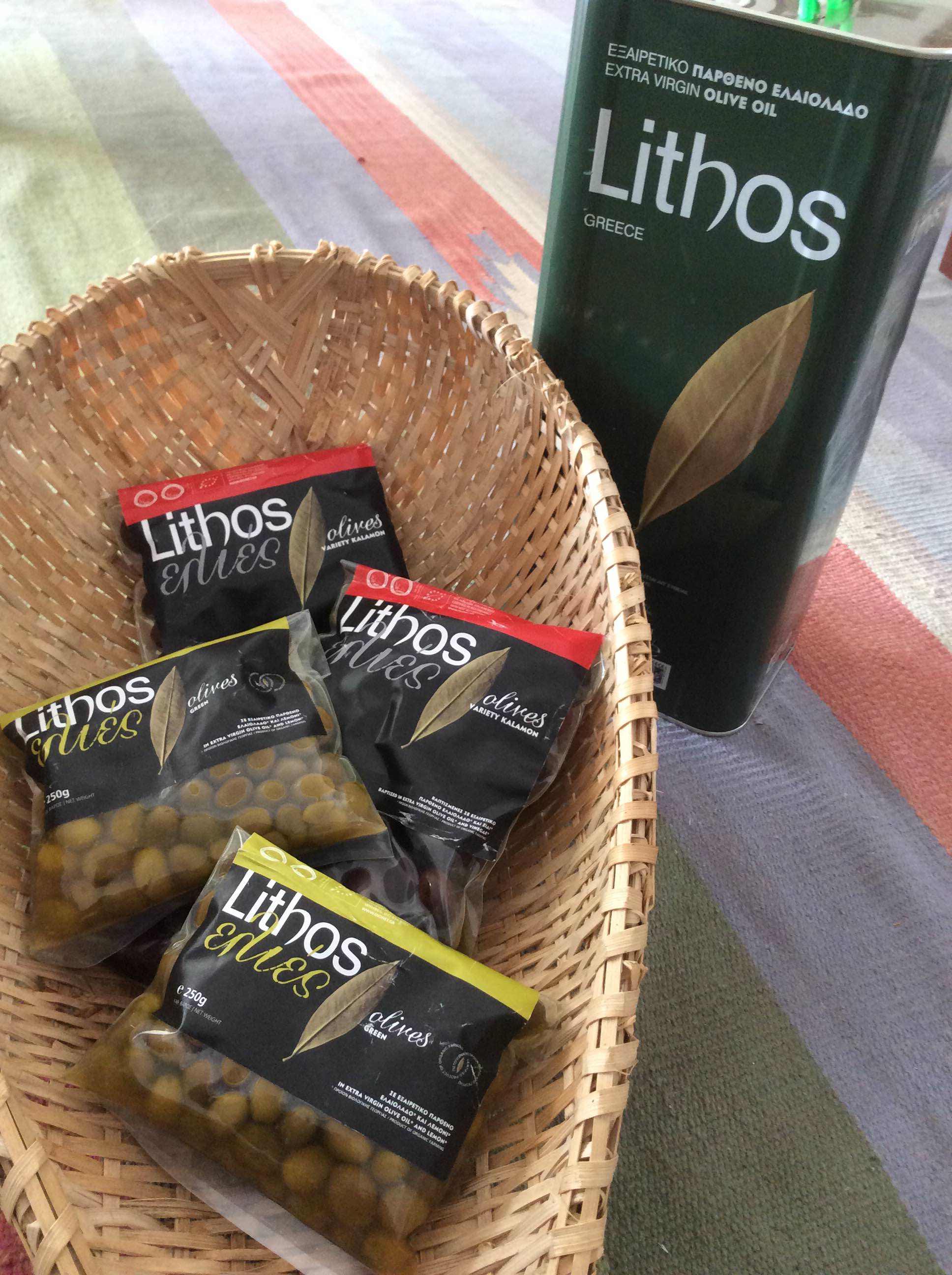
In the village of Soustiani in Laconia we met Nikos Papadakos and his wife, after a 6 year hiatus, to again talk about their company, Lithos. In this region of olive excellence they form a cooperative of organic farmers, collecting the harvest into one source and both pressing the fruit into EVOO and packaging the olives in both jars and vacuum packed sachets for easy transport. Continue reading

Phaidon Tribute To Chef, Author

169-1000-year-old-quail-egg

110 Year old quail eggs, as served at Benu

On the occasion of his third star, and with no controversy related to birds as per his colleagues in France, congratulations are in order:

The Michelin Guide only began reviewing US restaurants in 2005, yet it has established a reputation for favouring places that, while conforming to certain old-world standards, capture the finest in American dining today.

So, we were delighted to learn that Benu, Corey Lee’s Benu restaurant, which opened in San Francisco’s SOMA district in 2010, was awarded its third Michelin star, the guide’s highest accolade, when the new ratings for the city were announced yesterday. Continue reading

Wine In India, Historically Intriguing

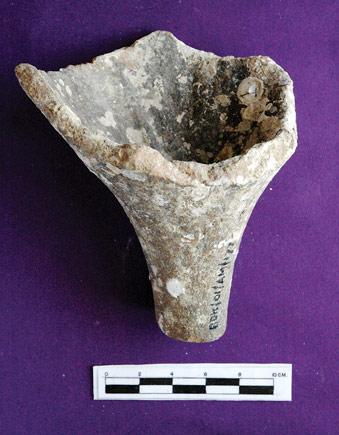
Amphora shards have been found all along India’s western coast. Courtesy National Institute Of Oceanography

Amphora shards have been found all along India’s western coast. Courtesy National Institute Of Oceanography

As Spice Harbour’s restaurant, 51, looks forward to the day when it might serve a glass of wine with an evening meal, we look back in time for a bit of inspiration, thanks to our friends at Caravan:

…In August, I spoke on the phone to A S Gaur, a marine archaeologist at India’s National Institute for Oceanography and co-author of  a paper on ancient wine imports. Speaking from Goa, Gaur said he had recently discovered amphora shards at what appears to be an ancient shipwreck near Bet Dwarka, an island off the coast of Gujarat. Amphorae were widely used in ancient times for transporting liquid goods, especially olive oil and wine. According to Gaur, the amphorae near Bet Dwarka most likely date from between the second and the fourth centuries CE. It is difficult to analyse the residues found on the shards for a conclusive answer, he said, but trying his “level best” Gaur surmised the amphorae once held wine. “Roman wine,” he said, “was very famous in India during that time.” Wrecks and shards from the same period have been found at many other sites too. All over South India, Gaur told me, “many museums have amphora shards.”

Continue reading

For All Our Blacksmith Friends, A Tribute

video-featured

Click the image above to watch an amazing short film. For the short time I spent time apprenticing as a blacksmith, before realizing how amazingly challenging this craft is, I thought I might become someone like this. I did not have it in me. But I learned respect for those who do. So I am happy to share this film for all those with the talent it takes, and those who may not have been quite aware of what it takes:

The Blacksmith: A Short Film About Art Forged From Metal

“I’m exploiting the maximum of what you can ask a piece of metal to do.”

Migration Celebration

When I graduated from Cornell not too long ago, I drew a bird on my graduation hat. It was a stylized yellow-bellied sapsucker, a symbol I encountered almost every day in my four years as an undergraduate as I studied, worked and conducted research at the Cornell Lab of Ornithology. The Lab shaped my undergraduate experience and inspired my love of science and multimedia. This past weekend I had the gratifying opportunity to give back a little and pass on the inspiration.

As the Autumn chill set in – which in Ithaca means grey skies and a constant drizzle of rain – the Lab opened its doors to the community for a day of Migration Celebration. It was a day to celebrate birds: their fascinating behaviors, plumages, songs, migrations, habitats and ability to bring together people from all walks of life. The event was mainly geared towards children, with innovative educational activities organized by all Lab departments:

“What’s your favorite bird? A sandpiper? Can you draw it? Cool! Now let’s put it on a map and look up where it spends the winter.” Continue reading

Birds, Gastronomy, Cultural Heritage–Is It Entrepreneurial Conservation?

ORTOLAN-articleLarge

Michel Guérard, left, the chef of Les Prés d’Eugénie, and Jean Coussau, the chef of Relais de la Poste, are among a handful of chefs trying to bring the ortolan back to the restaurant menu in France. Credit Ulrich Lebeuf/M.Y.O.P for The New York Times

We do not link often to the countless stories of rhino populations being decimated due to poaching, not because they are depressing, which they are; but because there have been no breakthrough entrepreneurial conservation stories related to that tragedy. Ditto for elephants and other charismatic megafauna–overwhelmingly depressing and no solution in sight, with the rare glimmer of hope.

So, when I see an article like the one below, even though it focuses on charismatic minifauna rather than megafauna, I take note. We pay a disproportionate amount of attention to birds on this platform for reasons that should be clear to regular readers of these pages, so for now a question to all ornithologically advantaged readers: is the reference to the unpublished Canadian study at the end of the article real or bogus? If the latter, please share your knowledge through our comment section and we will provide the publisher a crowd-sourced, fact-checked update to the article.

This is one of the exceptional articles for which we provide full text because of its urgent environmental value, with the expectation that you will click through to the source to give proper credit, with thanks to the New York Times:

“The bird is absolutely delicious,” said Mr. Guérard, who recalled preparing ortolans for Mitterrand and his successor, Jacques Chirac, back when it was legal. (Mitterrand was said to linger over two ortolans in his last supper before his death in 1996, also consuming three dozen oysters, foie gras and capon.)

“It is enveloped in fat that tastes subtly like hazelnut,” Mr. Guérard said, “and to eat the flesh, the fat and its little bones hot, all together, is like being taken to another dimension.”

But the campaign has provoked environmentalists, who accuse the chefs of engaging in a publicity stunt to promote what they say is an archaic custom that will further endanger the bird, and that treats the ortolan inhumanely before it is killed. Continue reading