Occasional Vegetarian Mentions

Screen Shot 2014-10-25 at 5.53.03 AM

Thanks to the New York Times, among other sources, for our ongoing foraging for new, interesting recipes for 51 and other restaurants where we bring vegetarian cuisine to a new level (click the image above to go to the brief, beautiful instructional video):

DINING

Aioli With Roasted Vegetables

Melissa Clark makes aioli with lemon juice and serves it with roasted broccoli, cauliflower, beets and other seasonal vegetables.

Jaguar, Conservation, Book Time

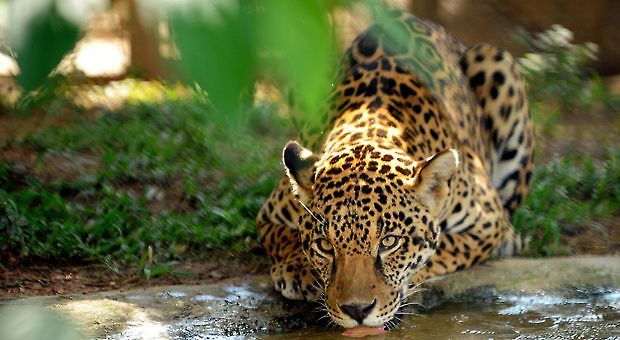
A captive jaguar drinks water in an enclosure at Petro Velho Farm, a refuge of the non-governmental organization NEX in Corumba de Goias, about 80 km from Brasilia, on January 11, 2013. EVARISTO SA/AFP/Getty Images

A captive jaguar drinks water in an enclosure at Petro Velho Farm, a refuge of the non-governmental organization NEX in Corumba de Goias, about 80 km from Brasilia, on January 11, 2013. EVARISTO SA/AFP/Getty Images

Listening to this interview it is just enough to clue you in to how Alan Rabinowitz has touched the lives of so many with the work he has done on behalf of jaguars and particularly conservation of their habitat:

Jaguars are the world’s third-largest wild cat – after tigers and lions. They have distinctive black rosettes on their fur and can weigh up to 250 pounds. Jaguars have been eradicated from 40 percent of their historic range. Today they live along a corridor from Argentina to Mexico. Their future is threatened by illegal hunting, deforestation and a loss of prey. One of the world’s leading big cat experts is responsible for creating a jaguar preserve in Central America, the first of its kind. In a new book, he shares why he’s committed to giving a voice to jaguars and how they helped him find his own voice.

Continue reading →

Throwback Thursday: October Olives Redux

One aspect of the reconnaisance for projects in Greece included embracing and honoring past experiences. The place of foodways and cuisine in the narrative of lives can never be underestimated. The taste and aroma of a specific food brings back floods of memories, crossing the bounderies of time and space.

Visiting Laconia, the region in the Greek Peloponnesus that year after year receives accolades for both it’s olives and extra virgin olive oil (EVOO) was in many ways like coming home. Coming home to family heritage, coming home to living in other olive producing countries and how we embraced those cyclical events that humans have engaged in from time immemorial.

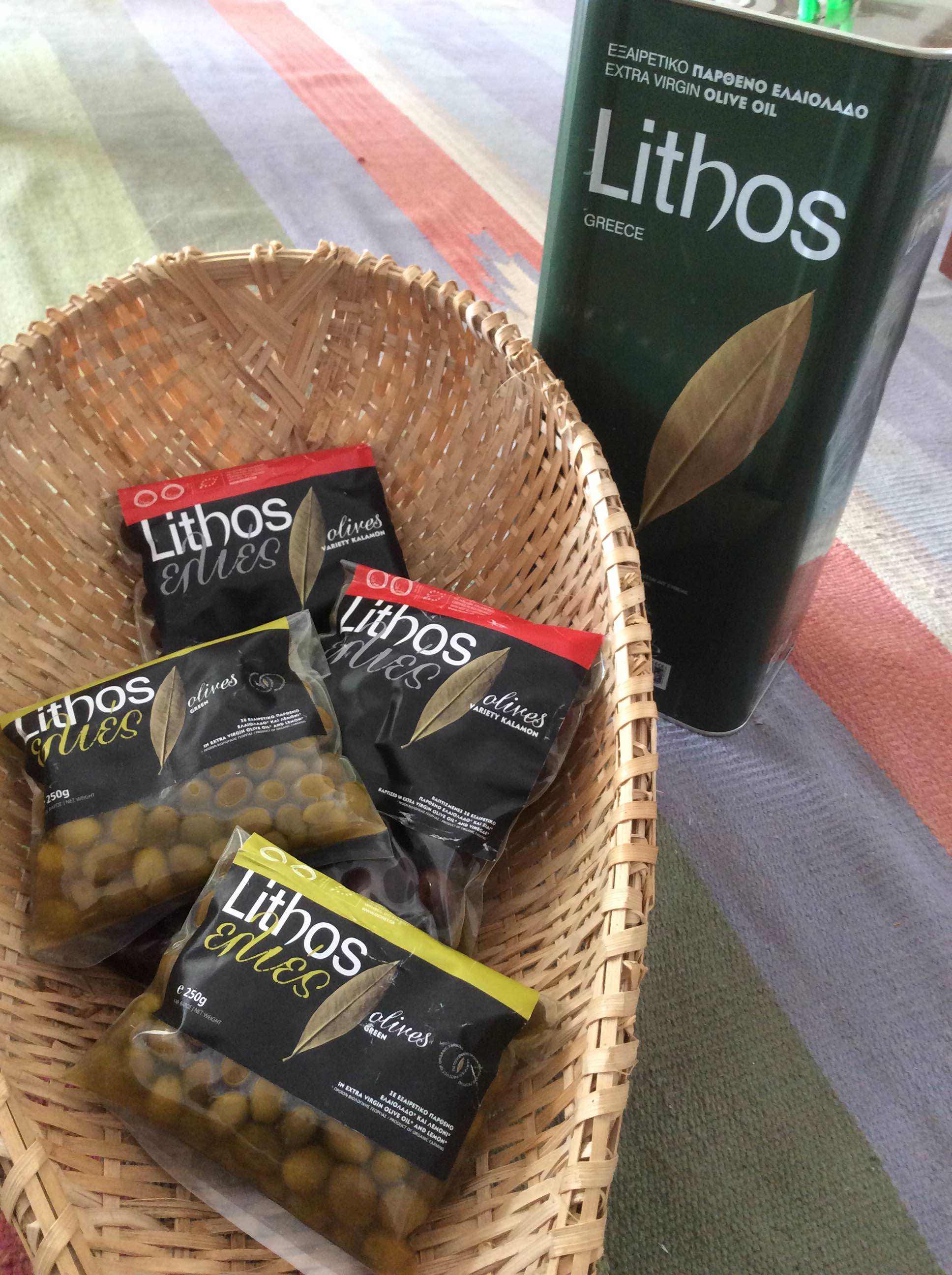
In the village of Soustiani in Laconia we met Nikos Papadakos and his wife, after a 6 year hiatus, to again talk about their company, Lithos. In this region of olive excellence they form a cooperative of organic farmers, collecting the harvest into one source and both pressing the fruit into EVOO and packaging the olives in both jars and vacuum packed sachets for easy transport. Continue reading →

Phaidon Tribute To Chef, Author

169-1000-year-old-quail-egg

110 Year old quail eggs, as served at Benu

On the occasion of his third star, and with no controversy related to birds as per his colleagues in France, congratulations are in order:

The Michelin Guide only began reviewing US restaurants in 2005, yet it has established a reputation for favouring places that, while conforming to certain old-world standards, capture the finest in American dining today.

So, we were delighted to learn that Benu, Corey Lee’s Benu restaurant, which opened in San Francisco’s SOMA district in 2010, was awarded its third Michelin star, the guide’s highest accolade, when the new ratings for the city were announced yesterday. Continue reading →

Wine In India, Historically Intriguing

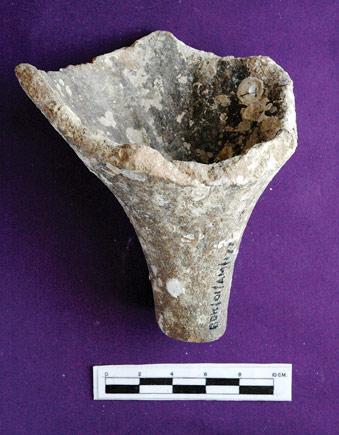
Amphora shards have been found all along India’s western coast. Courtesy National Institute Of Oceanography

Amphora shards have been found all along India’s western coast. Courtesy National Institute Of Oceanography

As Spice Harbour’s restaurant, 51, looks forward to the day when it might serve a glass of wine with an evening meal, we look back in time for a bit of inspiration, thanks to our friends at Caravan:

…In August, I spoke on the phone to A S Gaur, a marine archaeologist at India’s National Institute for Oceanography and co-author of  a paper on ancient wine imports. Speaking from Goa, Gaur said he had recently discovered amphora shards at what appears to be an ancient shipwreck near Bet Dwarka, an island off the coast of Gujarat. Amphorae were widely used in ancient times for transporting liquid goods, especially olive oil and wine. According to Gaur, the amphorae near Bet Dwarka most likely date from between the second and the fourth centuries CE. It is difficult to analyse the residues found on the shards for a conclusive answer, he said, but trying his “level best” Gaur surmised the amphorae once held wine. “Roman wine,” he said, “was very famous in India during that time.” Wrecks and shards from the same period have been found at many other sites too. All over South India, Gaur told me, “many museums have amphora shards.”

Continue reading →

For All Our Blacksmith Friends, A Tribute

video-featured

Click the image above to watch an amazing short film. For the short time I spent time apprenticing as a blacksmith, before realizing how amazingly challenging this craft is, I thought I might become someone like this. I did not have it in me. But I learned respect for those who do. So I am happy to share this film for all those with the talent it takes, and those who may not have been quite aware of what it takes:

The Blacksmith: A Short Film About Art Forged From Metal

“I’m exploiting the maximum of what you can ask a piece of metal to do.”

Migration Celebration

When I graduated from Cornell not too long ago, I drew a bird on my graduation hat. It was a stylized yellow-bellied sapsucker, a symbol I encountered almost every day in my four years as an undergraduate as I studied, worked and conducted research at the Cornell Lab of Ornithology. The Lab shaped my undergraduate experience and inspired my love of science and multimedia. This past weekend I had the gratifying opportunity to give back a little and pass on the inspiration.

As the Autumn chill set in – which in Ithaca means grey skies and a constant drizzle of rain – the Lab opened its doors to the community for a day of Migration Celebration. It was a day to celebrate birds: their fascinating behaviors, plumages, songs, migrations, habitats and ability to bring together people from all walks of life. The event was mainly geared towards children, with innovative educational activities organized by all Lab departments:

“What’s your favorite bird? A sandpiper? Can you draw it? Cool! Now let’s put it on a map and look up where it spends the winter.” Continue reading →

Birds, Gastronomy, Cultural Heritage–Is It Entrepreneurial Conservation?

ORTOLAN-articleLarge

Michel Guérard, left, the chef of Les Prés d’Eugénie, and Jean Coussau, the chef of Relais de la Poste, are among a handful of chefs trying to bring the ortolan back to the restaurant menu in France. Credit Ulrich Lebeuf/M.Y.O.P for The New York Times

We do not link often to the countless stories of rhino populations being decimated due to poaching, not because they are depressing, which they are; but because there have been no breakthrough entrepreneurial conservation stories related to that tragedy. Ditto for elephants and other charismatic megafauna–overwhelmingly depressing and no solution in sight, with the rare glimmer of hope.

So, when I see an article like the one below, even though it focuses on charismatic minifauna rather than megafauna, I take note. We pay a disproportionate amount of attention to birds on this platform for reasons that should be clear to regular readers of these pages, so for now a question to all ornithologically advantaged readers: is the reference to the unpublished Canadian study at the end of the article real or bogus? If the latter, please share your knowledge through our comment section and we will provide the publisher a crowd-sourced, fact-checked update to the article.

This is one of the exceptional articles for which we provide full text because of its urgent environmental value, with the expectation that you will click through to the source to give proper credit, with thanks to the New York Times:

“The bird is absolutely delicious,” said Mr. Guérard, who recalled preparing ortolans for Mitterrand and his successor, Jacques Chirac, back when it was legal. (Mitterrand was said to linger over two ortolans in his last supper before his death in 1996, also consuming three dozen oysters, foie gras and capon.)

“It is enveloped in fat that tastes subtly like hazelnut,” Mr. Guérard said, “and to eat the flesh, the fat and its little bones hot, all together, is like being taken to another dimension.”

But the campaign has provoked environmentalists, who accuse the chefs of engaging in a publicity stunt to promote what they say is an archaic custom that will further endanger the bird, and that treats the ortolan inhumanely before it is killed. Continue reading →

Learning Laboratories, Museums, And Art’s Future Venues

Jon Chase/Harvard Staff Photographer. Harvard Art Museums Director Tom Lentz (from left) moderated a discussion with MoMA Director Glenn Lowry, A.M. '78, Ph.D. '82, Elizabeth Cary Agassiz Professor of the Humanities Jennifer Roberts, and Paul Ha, director, List Visual Arts Center at MIT.

Jon Chase/Harvard Staff Photographer. Harvard Art Museums Director Tom Lentz (from left) moderated a discussion with MoMA Director Glenn Lowry, A.M. ’78, Ph.D. ’82, Elizabeth Cary Agassiz Professor of the Humanities Jennifer Roberts, and Paul Ha, director, List Visual Arts Center at MIT.

Thanks to the Harvard Gazette for this story about museums functioning as inclusive, modern learning laboratories:

In the 1970s, the Italian architect Renzo Piano was a young upstart with immense talent and brazen daring. It was then, still fairly early in his career, that Piano and his partner, the architect Richard Rogers, redefined the architectural landscape with their groundbreaking Pompidou Center in Paris. Continue reading →

If You Happen To Be In Paris

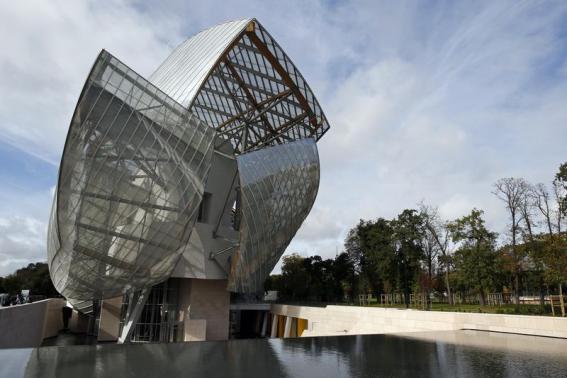
A general view shows the Fondation Louis Vuitton designed by architect Frank Gehry in the Bois de Boulogne, western Paris, October 17, 2014.  REUTERS/Benoit Tessier

A general view shows the Fondation Louis Vuitton designed by architect Frank Gehry in the Bois de Boulogne, western Paris, October 17, 2014. REUTERS/Benoit Tessier

We are in solidarity with the neighborhoods concerned about the loss of green space in Paris, as reported by Reuters on more than one occasion, and this project has been controversial since first announced, but for now, we can only say wow:

(Reuters) – Billowing sails of glass join the Eiffel Tower and the Sacre Coeur as permanent fixtures of the Paris skyline this month, when the new Fondation Louis Vuitton contemporary art museum designed by Frank Gehry opens to the public.

Thirteen years in the making, the museum is the brainchild of Bernard Arnault, the chief executive and founder of LVMH. France’s richest man envisioned a bold new piece of architecture in the capital that would tie the world’s largest luxury group with the cutting edge of art and design.

The private museum that opens to the public on Oct. 27 will be donated to the city of Paris in 50 years. Continue reading →

Plastic Bags Going, Going, Gone

Marks and Spencer carrier bag

Marks and Spencer is one of the retailers that has agreed to donate the extra money from carrier bag sales to good causes in Scotland. Photograph: Stefan Rousseau/PA

Small local moves here and there add up, on occasion, to major change. We are amazed to learn of the scale of the success in the Celtic region with the program to ensure consumers and vendors share in the cost of the environmental mess that plastic bags create. Thanks to the Guardian for this coverage:

Scottish shops start charging for bags

Charge of at least 5p a carrier bag introduced in bid to emulate 70% fall in usage in Wales and Northern Ireland

Scotland is joining Wales and Northern Ireland in charging shoppers for carrier bags , in an attempt to encourage sustainable behaviour among shoppers. Last year, shoppers at Scotland’s main supermarket chains alone used 800m single-use bags, most of which end up as litter, landfill or polluting the country’s marine and natural environments.

Continue reading →

On the Road to 100 Species at Xandari

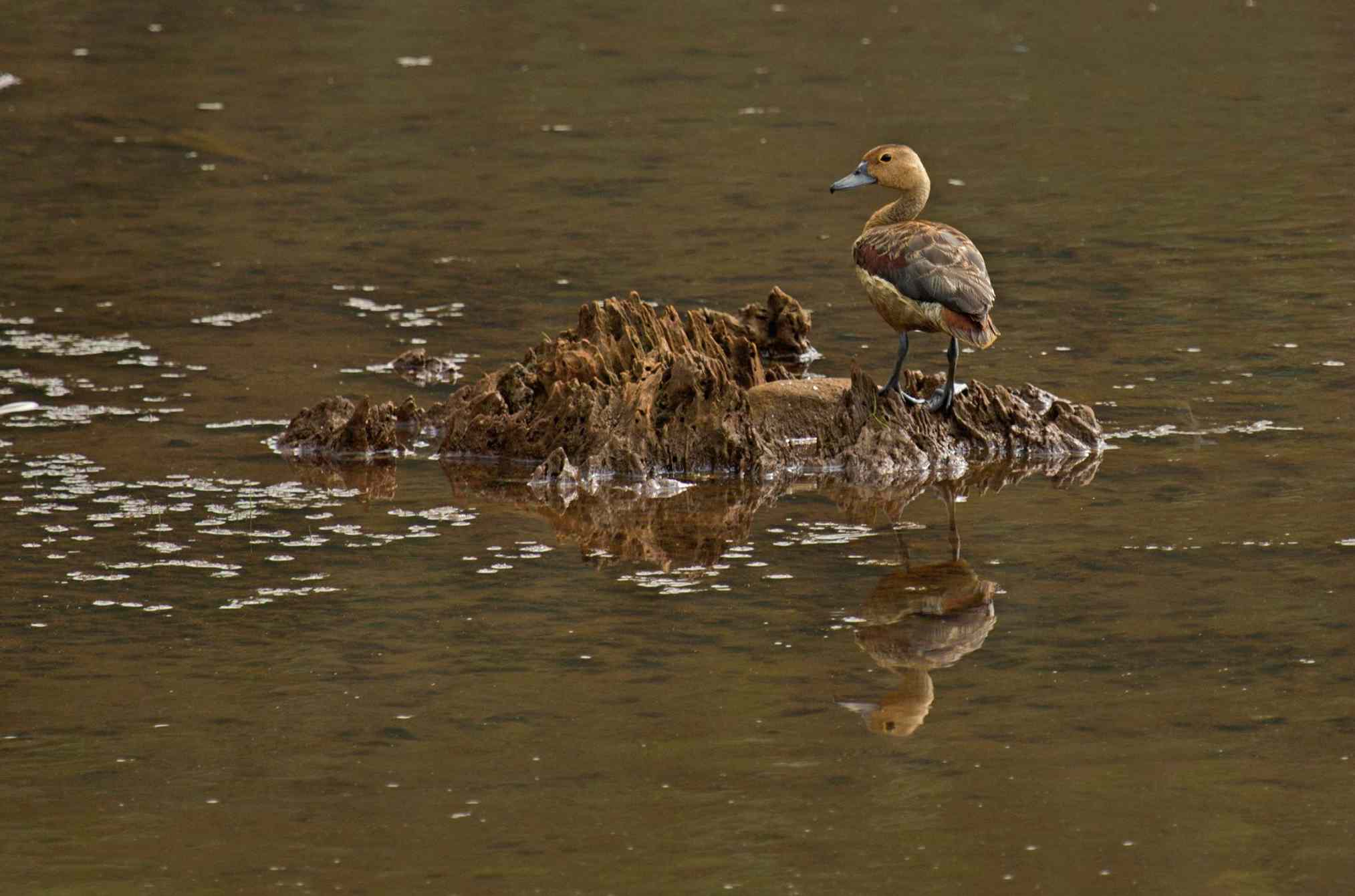
Silhouette of the Blue-crowned Motmot, one of Xandari’s most colorful and exciting resident species due to its racquet-tipped tail and partly iridescent plumage.

Over the last four months or so that I’ve been birding around Xandari, in the beginning with the help and company of James, Xandari’s species list on its eBird hotspot has been growing, if not daily, then at least weekly. James and I had charged ourselves with documenting every resident species before the migrants came down starting in September and October. When James left to go back to school in early August, we had seen or heard 80 species on or from property.

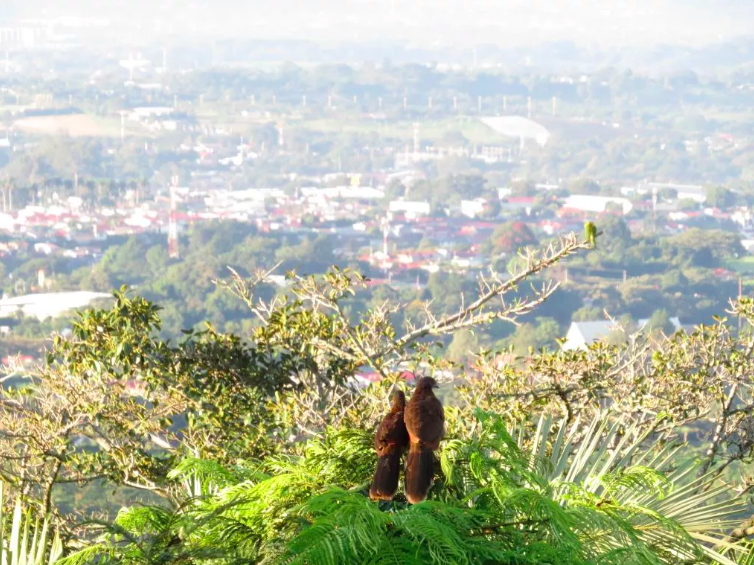
A pair of Gray-headed Chachalacas enjoying the view of Alajuela. Seen from Xandari’s balcony restaurant.

Since then, I’ve seen Continue reading →

Bookstores As Cultural Icons

Eckstein_books_07_Shakespeare

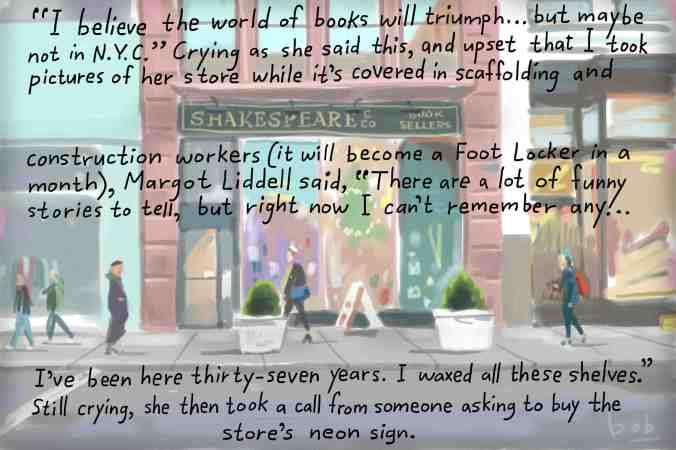
Many hope that these are not merely icons of an earlier time, but an essential asset of any culture. Click the image above to go to this exhibition on the New Yorker’s website:

The Endangered Bookstores of New York

BY

Recently, I was browsing for books at Powerhouse Arena, in Dumbo, and noticed a sign asking people not to snap photos of the books on display. What a thing to have to ask!  Continue reading →

Library Futures

The New Central Library, Calgary, Canada - Snøhetta

The New Central Library, Calgary, Canada – Snøhetta

Thanks to Phaidon for these images and accompanying story that leads us to believe that libraries are less endangered than we might otherwise have thought, a story about a beautiful new library:

Snøhetta unveils ‘floating’ library design in Canada

Calgary design will feature arches inspired by cloud formations and will house over half-a-million books

As the Frankfurt Book Fair opens this week work has already begun in Calgary, Alberta, to construct a home for 600,000 books directly above a transport hub. The New Central Library by Norwegian starchitects Snøhetta will sit at the intersection of Downtown Calgary and the cultural hotspot that is East Village.

Trains on the light rail track will chug along tracks that appear out of the base of the slim, curved structure, with the library ‘lifted’ above the public transport below. A covered plaza has been created by cutting away the ground levels of the building, as if slicing through the corner of a pat of butter. Continue reading →