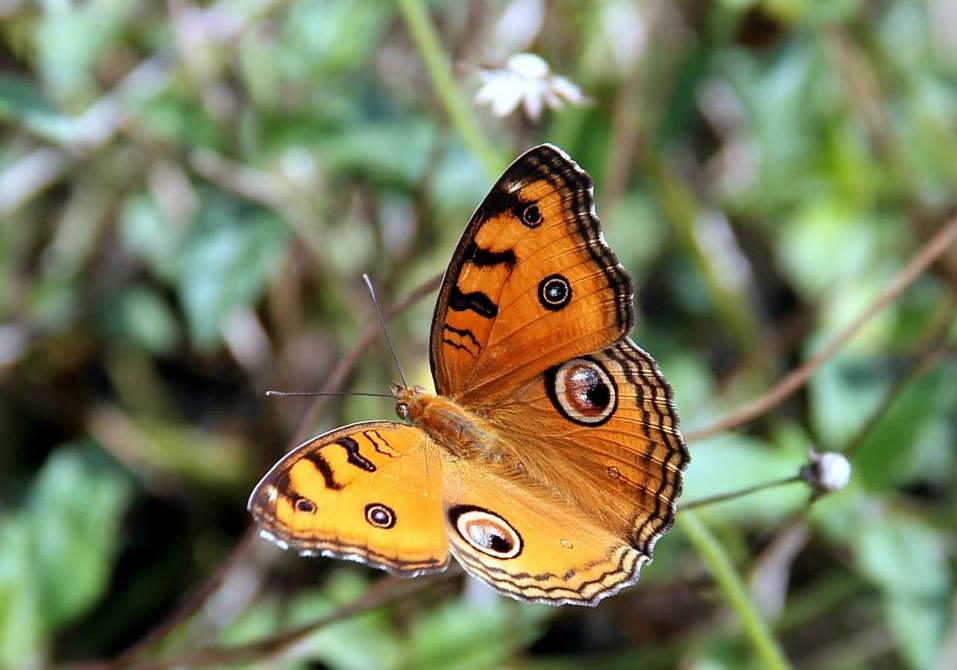
Peacock Pansy Butterfly

Photo credits : Jose K

Photo credits : Jose K

Peacock Pansy Butterflies are found across India up to 2000 meters throughout the year, prefering forest edges, waterside vegetation and gardens. These orangish butterfly with prominent peacock eye spots, to smaller eye spots on the upper forewing and larger on the hindwing are very common in the Periyar Tiger Reserve. Continue reading

Aloe Vera from A to Z, or, How to Harvest your Aloe Plant

Aloe vera in Xandari’s garden — Read the post to watch how it’s harvested!

Aloe vera, meaning “true aloe” in Latin, is a versatile and rather mysterious plant. Although it is perhaps best known for its healing properties on (sun-)burned skin, it shows up as an ingredient in many skin and hair products for various therapeutic or cosmetic purposes. The plant’s frequent appearance in traditional medicine all over the world reinforces the belief that it may really possess some restorative power–but just how miraculous is aloe vera after all? Many users of aloe swear by its ability to fight everything from arthritis, stomach ulcers, and diabetes to tooth and gum decay, but despite these glowing reports, the plant has not gained widespread traction as the “miracle drug” some of its proponents claim it to be. Nevertheless, the really astonishing claims in some of these anecdotes, and aloe’s established healing powers in other spheres of health (skin, hair, etc.), could suggest that further scientific research into the plant’s healing properties would not be fruitless.

Continue reading

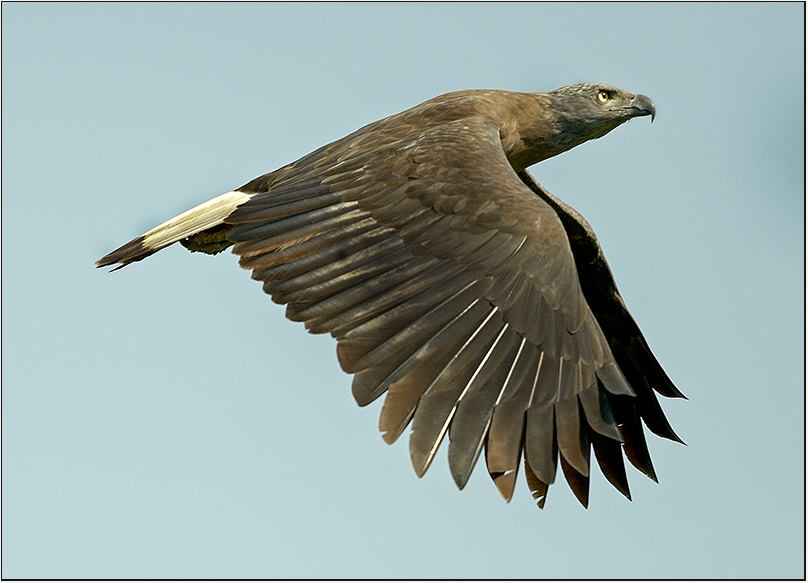
Wayanad Natives


Photo credits : Jithin vijay

Photo credits: Jithin vijay

“Tribals,” the term used to refer to native peoples in Kerala/India, have been an integral part of Wayanad for ages. As dense forests and wooded hillsides made way for commercial farming and plantations, Wayanad lost a great part of its quintessential character. Today, around 200,000 tribals belonging to different tribes subsist in isolated pockets, making a living from small land holdings to big plantations. Continue reading

Trekking through Periyar Tiger Reserve

Today I was fortunate enough to get to walk through one of the most biodiverse areas in the world second to the Amazon: Periyar Tiger Reserve.

I understand why people travel from all of the world to experience this place. In the United States, we are very proud of our national parks for their diversity and beauty. However, this park feels more untouched than the ones I have been to in the states. It kind of absorbs you. The paths in the forest seem less traveled. Honestly, it feels less touristy and more wild. We only trekked on the periphery of the jungle really. The center of the jungle truly is preserved and only certain people are able to go deep inside.

Continue reading

Coffee Seedlings

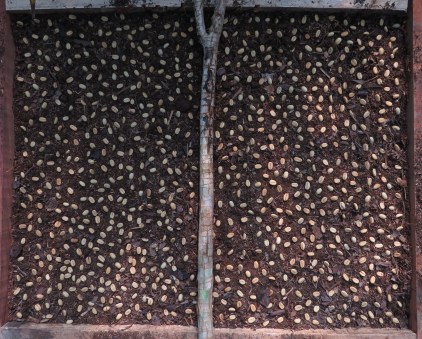
Last week, using Borbón coffee seeds graciously given to us by the Doka estate, we started growing new seedlings to eventually plant in the ground at Xandari. José Luis showed James and me how to prepare a substrate of earth mixed with decomposing leaf litter he had put through a sort of wood-chipper to make a soil that closely mimics the forest floor where coffee often grows wild here.

In a wooden box with a corrugated tin floor (so water can drain easily), we made a bed of about an inch of soil. Then we put the two varieties of Borbón on either side of the box. Once the box was full, and we had removed all the rounded seeds that wouldn’t be as healthy as the seeds with a flat face, we added another layer of soil on top and watered the box.

After we had gone, José Luis remembered to add a layer of dead leaves on top of the soil to help keep in the moisture and recreate natural conditions of the forest floor. Later, we went to visit his friend who had sold us the Borbón we planted earlier last month, so that James and I could see what our seedlings would eventually look like as they were transplanted into the black plastic bags we knew so well.
Continue reading

Boiled Banana

Photo credits : Shymon

Photo credits: Shymon

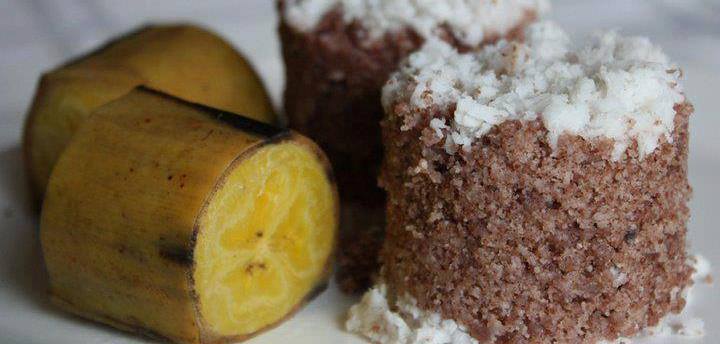
When bananas are so ubiquitous here in the tropics, it’s good to have a variety of ways for eating the fruit. For Western readers, boiling bananas might seem strange, but it is quite common in India. Boiled banana is considered an excellent food for infants and children in Ayurveda. In Kerala, cuisines like puttu and rava uppuma (a savory south Indian breakfast dish) are perfectly matched with boiled bananas.  Continue reading

Notes from the garden: The naming of things


Today in the Cardamom County organic garden, I have been learning the names of things.

Once someone has introduced me to a plant, I take note of its shapes and impress it upon my mind with the name. Later there is some joy, when there is a spark of familiarity among what before was a just mass of green flora.

Here, I have often been asked for my “good name”–the local way of saying what at home we’d call our “given” or “proper” name. I think there is something beautiful about being able to call a person or plant by its good name.

Continue reading

Straw Bale Construction: Part 3/3

Guest Author: Virginia Carabelli

For Part 2, click here, or if you’re new to the post this is Part 1.

You might wonder at this point, what about permits? All materials used for building in the US have to be tested in a federally approved lab. Straw bales not only passed the required standards, but exceeded them in many tests. Federal building codes supersede state building codes, meaning that no state can legally forbid its use. Most people, including many building departments, are unaware of this fact. Each state, has slightly different requirements. For example, if you live in a seismologically active area, your building code will reflect that (by the way, straw bales perform exceedingly well in earthquakes).

So if you want to build a post and beam structure with straw bale insulation (which is the basic building technique), you should have no problem. However, if you want to build a load-bearing structure (no post and beam to support your roof), you will have to restrict yourself to a small building, following a given formula depending on the size of your straw bales. You might run into some resistance in certain states, although load-bearing was one of the required tests passed by this material. Here in New York, several lovely load-bearing straw bale structures have been legally built. Continue reading

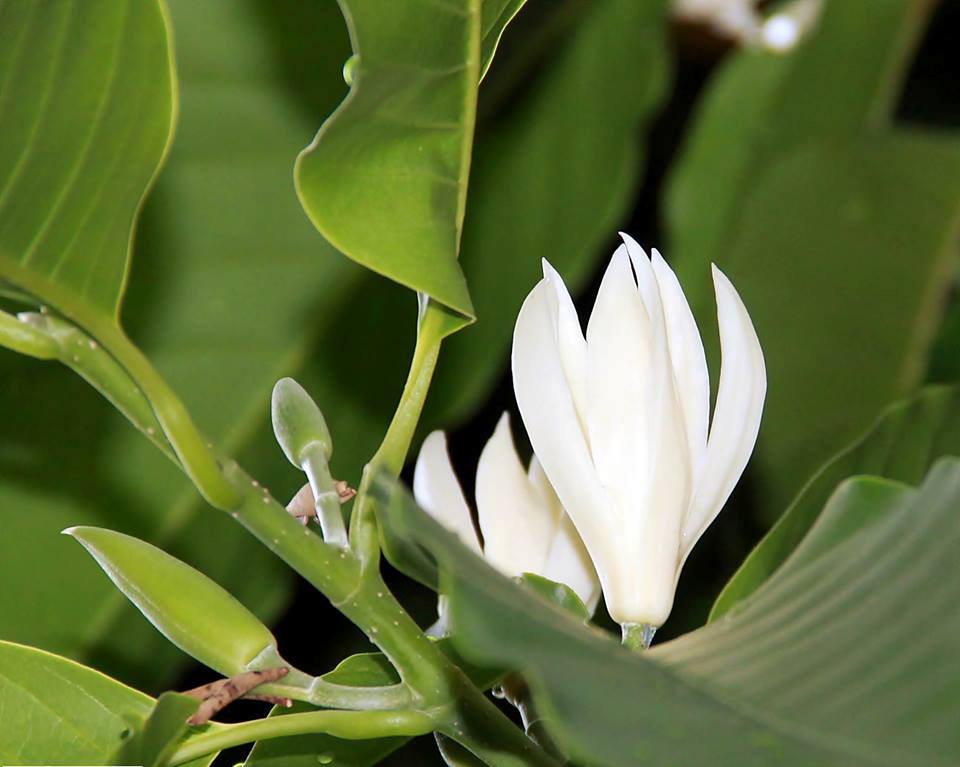
Michelia champaca – The Perfume Magnolia

Photo credits: Shymon

Photo credits: Shymon

Michelia champaca is native to India, and is best known for its strong fragrance. A relative to the magnolia tree, this species grows in the wild throughout India’s Western Ghats. It is a sacred flower for Hindu temple grounds and around homes. Continue reading

If You Happen To Be In London

bell03_3613_04

We have been meaning for nearly a year to recommend this article on the relationship between one man and several artists who were otherwise completely unrecognized by the art establishment over many decades. With this man as a champion, after a long effort the artists have finally come into the recognition previously denied to them.

This new show in London reminds us not only to share that article, but to share this review. What explains our interest in this sort of exhibit is the outsider status of the artists. Not “bad boy” outsiders clamoring for attention, but innovators. Thanks to London Review of Books for this review of a current show at the Tate:

‘Proud’ is an epithet that extends from the parade to the workbench. The swagger of troops marching down the street is transferred by the carpenter to the nail that juts out, no less cocky, no less full of itself. There’s much in Tate Britain’s new exhibition, British Folk Art (until 31 August), that straddles both forms of pride. It opens with a fanfare of stout, galumphing tradesmen’s signs: the outsize models of boots, keys, teapots, top hats and so on that dangled over high streets two centuries ago. Continue reading

Kolukkumalai – Munnar

Photo credits : Unni Pillai

Photo credits: Unni Pillai

Located in the upper reaches of Kerala at the border with Tamil Nadu, at an elevation of 7,900 feet above sea level, Kolukkumalai offers a fantastic view of the neighboring state of Tamil Nadu. Kolukkumalai is famous for one of the highest tea estates in the country, and is among the most popular tourist spots in Munnar. Continue reading

Monkeying around in Cardamom County

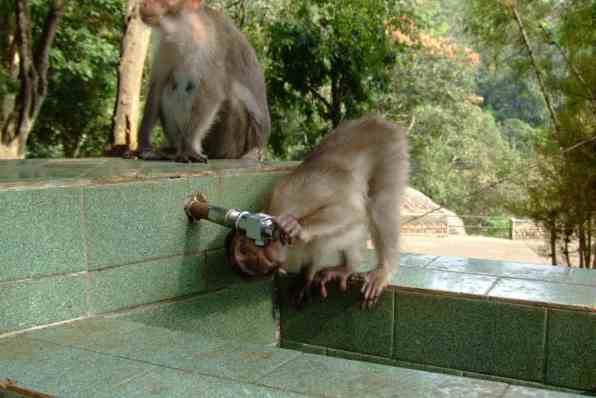
Monkey mischief at the Periyar Tiger Reserve, neighbor of Cardamom County

I have never had to take monkeys into consideration when gardening before.

I am at this jungle-like Raxa Collective property in Thekkady, India. I am here to work as an intern to help with creating a more farm-to-table relationship in the restaurant at Cardamom County. There is an organic garden here that is already providing the restaurant with a decent percentage of their staple foods. However, we face a little problem with some main ingredients such as tomatoes, eggplants, and actually anything sweet that we might like to grow such as grapes or pomegranates.

Monkeys. Continue reading

Where would we be without bees?

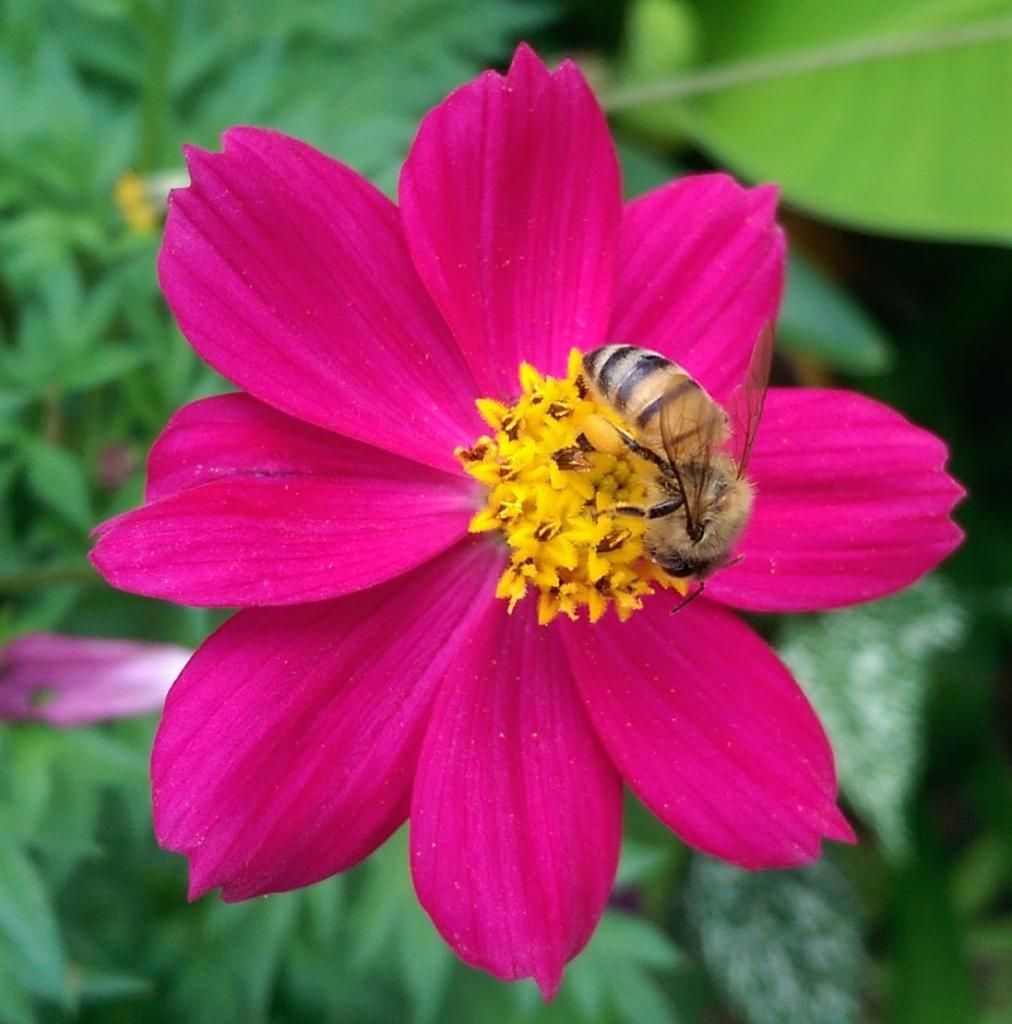
Bee on a flower

Recent posts on flowers at Xandari (here and here) have gotten me thinking about all of the work that goes into making such beauty possible. Mostly I had in mind Xandari’s head gardener, José Luis, and his excellent team. Snapping the above photo, however, I was reminded of nature’s great contribution in the process. Continue reading

Jackfruit

Photo credits : Shymon

Photo credits: Shymon

Jackfruit is known as chakka in Malayalam, and is mostly consumed as ripened fruit. That might seem like stating the obvious, but since jackfruit is so abundant in Kerala, most households make different varieties of traditional dishes from both ripened and unripened fruit. Some examples include chakka puzukku (unripe jackfruit curry), chakka yappam (steamed jackfruit rice cakes), chakka payazam (jackfruit pudding) and chakka chips. Jackfruit trees are cultivated in the Western Ghats of India. Continue reading