Travel, Stimulation, Writing

Prochnik-2a In a post on the New Yorker website just now we discovered that last August we had neglected to read what we surely would have passed along here, an article that fits our blog’s themes well. George Prochnik had us with the first sentence:

Travel is my favorite stimulant, and while I was writing “ The Impossible Exile,” a portrait of the Viennese author Stefan Zweig, hunting-and-gathering expeditions to Zweig’s far-flung haunts felt imperative. Zweig was born in Vienna in 1881, but he became one of the most representative Viennese writers largely in absentia—idealizing the city’s cosmopolitanism while doing his best to embody it by making himself at home all across Europe. After the First World War, he set up his primary residence in Salzburg, but for large parts of the following years he was on the move—writing, in hotels, the short stories, essays, and biographies for which he became famous  Continue reading
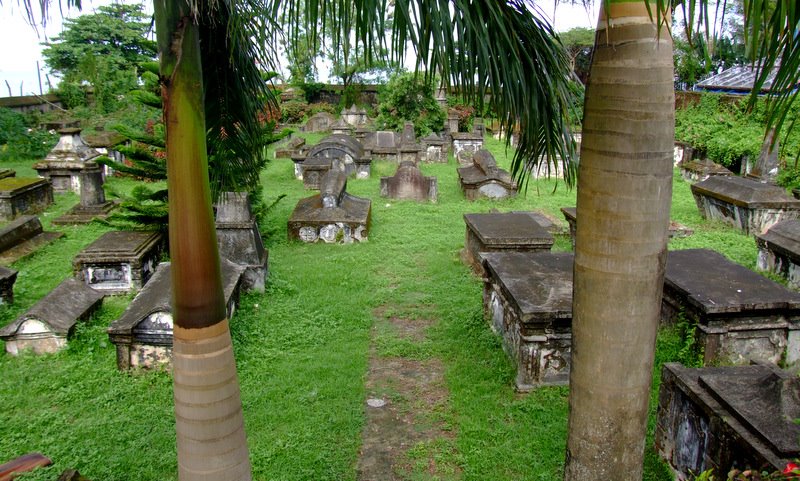
Dutch Cemetery – Cochin

Photo credit : Ramesh Kidangoor

Photo credit: Ramesh Kidangoor

The Dutch cemetery in Fort Kochi, which is about 290 years old, is an authentic record of hundreds of Europeans — despite its name both Dutch and English — who arrived in India to expand their colonial empire. It is considered the oldest European cemetery in India. Constructed in 1724, the cemetery has over a hundred tombs.

Jack Fruit, Again

Jackfruits grow on the branches and trunks of tall trees. You don't wait to harvest until they drop of their own accord — by that time, they'd be overripe. iStockphoto

Jackfruits grow on the branches and trunks of tall trees. You don’t wait to harvest until they drop of their own accord — by that time, they’d be overripe. iStockphoto

We recently started noticing interest in our hometown fruit, and here is some more courtesy of the Salt program on National Public Radio (USA):

It’s not every fruit that gets its own international symposium.

Then again, the jackfruit is not your typical fruit. It’s got a distinctive, musky smell, and a flavor that some describe as like Juicy Fruit gum.

It is the largest tree fruit in the world, capable of reaching 100 pounds. And it grows on the branches — and the trunks — of trees that can reach 30, 40, 50 feet. (Trunk-growing is a good thing because it reduces the odds of a jackfruit bopping you on the head.) Continue reading

Building An Invasivore Economy

wild-city-pigeon Since Phil first started posting his series on possible solutions to invasive species last year, in conjunction with the theme of citizen science that Seth has been writing about for the last couple years, we have been on the look out for citizen solutions to environmental challenges–stories that match our interest in entrepreneurial conservation. Phil’s series suggests that citizen science may be the best path to building what might be called an invasivore economy. As it happens, just after his first couple posts there was an article in Conservation that dealt with this very issue:

SEND IN THE INVASIVORES

Recipes for Ecosystem Recovery By Sarah DeWeerdt

“We’re trying to be unsustainable,” says University of Vermont conservation biologist Joe Roman. And he says it with glee. Roman runs www.eattheinvaders.org, a compendium of invasive species recipes. He is one of a growing number of people who advocate controlling invasives by eating them. Instead of relying on toxic pesticides, expensive eradication campaigns, or risky introductions of biological control agents, “why not use our own appetites to good advantage?” he suggests.

Continue reading

Flavours Of Kerala – Ela Ada

Photo credits : Jithin

Photo credits: Jithin

Ela ada is an authentic recipe of Kerala cuisine. A mixture of grated coconut, sugar and cardamom is layered inside a rice flour batter and wrapped in banana leaf and steamed. It is served as evening snack. Continue reading

Bedeviling Bovine Biproducts

cow-butt

Roberta Kwok, over at Conservation, shares a new view on the humble cow:

COWS VS. COAL

To reduce emissions, the usual thinking goes, we should promote alternative energy and declare war on coal. But researchers argue that policymakers are ignoring a crucial climate threat: cows. Continue reading

Watersports In The Sand

7bbaea46aa80e06b975831377339502b2d3e2953_620x311

Something about the sand, and the artists, down under…we give thanks to the New Zealand Herald for this story which, among other possible interpretations, demonstrates that much a great time can be had with much lower carbon footprint while engaging in sport at the beach, and on better yet it is a collaborative effort among several artists:

A group of imaginative artists has shown magic can be made from a few simple lines in the sand. Continue reading

Lalbagh Botanical Gardens – Bangalore, Karnataka

Photo Credits : Dileep Kumar

Photo Credits: Dileep Kumar

Lalbagh Botanical Gardens is situated in the heart of Bangalore, the capital city of Karnataka State. Hyder Ali, the sultan of the Kingdom of Mysore commissioned the gardens 1760, but his famous son, Tipu Sulthan, saw to its completion, importing rare and exotic trees and plants from places as far flung as Afghanistan and France. Continue reading

Coconut Palm Leaf Roofing

Photo credits : Shymon

Photo credits: Shymon

In rural communities around the world it’s a common sight to see structures made from 100% natural and sustainable materials, and Kerala is no exception, especially in the Alappuzha district. In thatched homes the roof and walls are made out of coconut leaves. Continue reading

Innovation In Humanities, Essential To Our Future

Image by Corbis Images.  Thomas Rowlandson’s view of the library of the Royal Institution in London, circa 1810

Image by Corbis Images.
Thomas Rowlandson’s view of the library of the Royal Institution in London, circa 1810

We have been monitoring Harvard Magazine and some of its kindred publications since the early days of this blog, as constant sources of interesting articles relevant to our interests; and now this:

Toward Cultural Citizenship

New gateways into the humanities for students “still fully molten as human beings” by Jonathan Shaw  May-June 2014

Continue reading

Sakleshapur – Karnataka

Photo credits :Dileep Kumar

Photo credits: Dileep Kumar

Sakleshapur is a hill station town in the Hassan district of Karnataka state nestled 3600 feet above sea level in the foot hills of Western Ghats. The area is known for its tall mountains, vast tracts of greenary enveloped in mist, endless expanses of coffee estates and picturesque sheep and cattle enjoying the grass in the warm sunlight. Continue reading

Another Reason To Visit The High Line

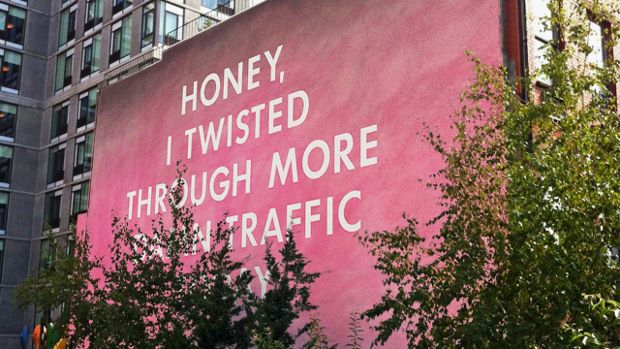
Rendering of Ed Ruscha's forthcoming High Line commission

Rendering of Ed Ruscha’s forthcoming High Line commission

Friends of the High Line, we try to remain steadfastly.  So, we count the following as good news. Thanks, as always, for the excellent arts coverage by Phaidon:

Ed Ruscha’s first public commission in NYC

His 1977 word painting will appear as a large hand-painted mural beside The High Line next month

Unveiled a few weeks after the city’s new mayor announced his commitment to lowering New York’s road deathsEd Ruscha’s High Line commission could be read like a vernacular traffic report.

Continue reading

PhotoSingularities: Eclipse

This year, the earliest hours of April 15 provided a somberly luminescent spectacle in the sky for viewers in North America. To the naked eye, a round dark shadow grew imperceivably across the face of the moon, within hours consuming the lunar glow entirely. Just as slowly, the shadow passed, the bright crest of the familiar full moon growing back into the dawn. The phenomenon witnessed was a lunar eclipse – one of four such that our satellite will experience in this year.

15/4/14

While not as rare or shockingly magnificent as the total solar eclipse, total lunar eclipses offer a very special view of our place in the solar system. The strange red shadow that creeps across the bright white moon is that of our own planet – the earth briefly passes between the sun’s line of sight of the moon, cutting off the solar light that is usually reflected so strongly by our closest companion. While lunar eclipses are frequent occurences, total lunar eclipses are less common, as the entire moon falls into the earth’s shadow, rather than any portion. Continue reading

Elephant Pageantry – Gajamela

Photo credits : Ramesh Kidangoor

Photo credits: Ramesh Kidangoor

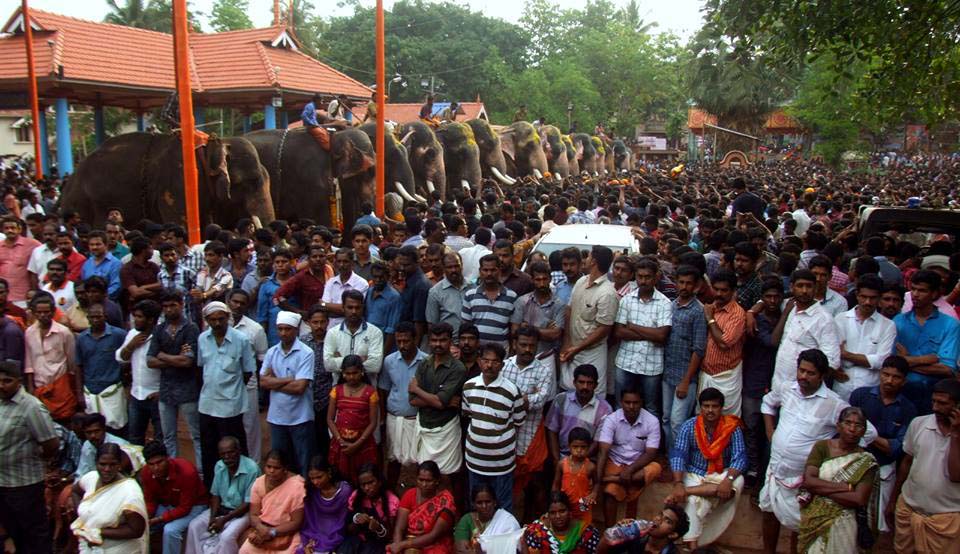
A Gajamela is a procession of caparisoned elephants–a feast for the eyes of Indian elephant lovers. In Kerala this means a spectacular show of the beautifully adorned creatures. They are so well-loved that the Gajamelas have became the most popular and most eye-catching events of Kerala. The elephant Pambadi Rajan won the 2014 elephant awards (Ittithanam Gajarajapattam)Pambadi Rajan is the one of the tallest elephant in Kerala.

Continue reading