Innovation In Humanities, Essential To Our Future

Image by Corbis Images.  Thomas Rowlandson’s view of the library of the Royal Institution in London, circa 1810

Image by Corbis Images.
Thomas Rowlandson’s view of the library of the Royal Institution in London, circa 1810

We have been monitoring Harvard Magazine and some of its kindred publications since the early days of this blog, as constant sources of interesting articles relevant to our interests; and now this:

Toward Cultural Citizenship

New gateways into the humanities for students “still fully molten as human beings” by Jonathan Shaw  May-June 2014

Continue reading

Sakleshapur – Karnataka

Photo credits :Dileep Kumar

Photo credits: Dileep Kumar

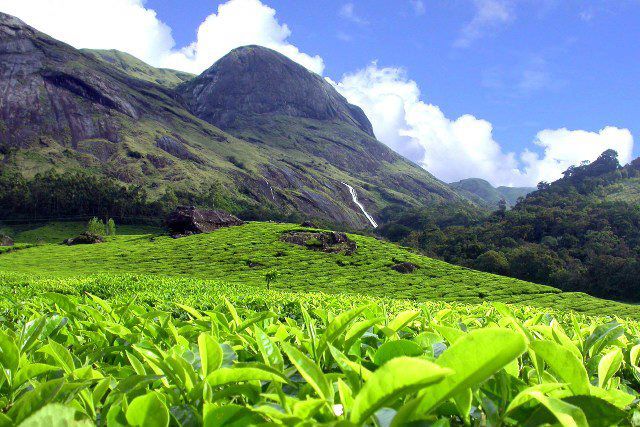
Sakleshapur is a hill station town in the Hassan district of Karnataka state nestled 3600 feet above sea level in the foot hills of Western Ghats. The area is known for its tall mountains, vast tracts of greenary enveloped in mist, endless expanses of coffee estates and picturesque sheep and cattle enjoying the grass in the warm sunlight. Continue reading

Another Reason To Visit The High Line

Rendering of Ed Ruscha's forthcoming High Line commission

Rendering of Ed Ruscha’s forthcoming High Line commission

Friends of the High Line, we try to remain steadfastly.  So, we count the following as good news. Thanks, as always, for the excellent arts coverage by Phaidon:

Ed Ruscha’s first public commission in NYC

His 1977 word painting will appear as a large hand-painted mural beside The High Line next month

Unveiled a few weeks after the city’s new mayor announced his commitment to lowering New York’s road deathsEd Ruscha’s High Line commission could be read like a vernacular traffic report.

Continue reading

PhotoSingularities: Eclipse

This year, the earliest hours of April 15 provided a somberly luminescent spectacle in the sky for viewers in North America. To the naked eye, a round dark shadow grew imperceivably across the face of the moon, within hours consuming the lunar glow entirely. Just as slowly, the shadow passed, the bright crest of the familiar full moon growing back into the dawn. The phenomenon witnessed was a lunar eclipse – one of four such that our satellite will experience in this year.

15/4/14

While not as rare or shockingly magnificent as the total solar eclipse, total lunar eclipses offer a very special view of our place in the solar system. The strange red shadow that creeps across the bright white moon is that of our own planet – the earth briefly passes between the sun’s line of sight of the moon, cutting off the solar light that is usually reflected so strongly by our closest companion. While lunar eclipses are frequent occurences, total lunar eclipses are less common, as the entire moon falls into the earth’s shadow, rather than any portion. Continue reading

Elephant Pageantry – Gajamela

Photo credits : Ramesh Kidangoor

Photo credits: Ramesh Kidangoor

A Gajamela is a procession of caparisoned elephants–a feast for the eyes of Indian elephant lovers. In Kerala this means a spectacular show of the beautifully adorned creatures. They are so well-loved that the Gajamelas have became the most popular and most eye-catching events of Kerala. The elephant Pambadi Rajan won the 2014 elephant awards (Ittithanam Gajarajapattam)Pambadi Rajan is the one of the tallest elephant in Kerala.

Continue reading

If You Happen To Be In New York City

Screen Shot 2014-04-26 at 9.36.32 AMClick the image at left to learn more about two performances which, if you happen to be in New York City or close by this weekend, you might enjoy if you are a danceophile, Indophile, or both. Thanks to New York University for hosting a sample of our home country culture:

Following unforgettable performances by Shantala Shivalingappa and Rama Vaidyanathan in 2011, and Nrityagram Surupa Sen & Bijayini Satpathy in 2013, Dancing the Gods weekend festival highlighting classical Indian dance returns in 2014 with more striking artists.

“…both briskly exciting and exacting, [Dandekar’s turns are] a wonder…” THE NEW YORK TIMES

Continue reading

Small Ukrainian Museum’s Outsized Support Keeps Tradition Alive And Well

pysanky-easter


This qualifies as an unexpected form of entrepreneurial conservation, except among a few with insider knowledge. Several Raxa Collective contributors are amateur pysankyists, some bordering on master level, so this post is a tribute not only to a great museum which these contributors know well, but to the many non-Ukrainians who are inspired by this tradition enough to keep a Ukrainian art form alive and well:

Vegans, avert your eyes while the rest of us consider the egg. We’ve finally reached its season, at least as far as symbolism goes: spring, birth, something that the Theosophical Society calls “the origin and secret of being”—and that’s just the beginner-level stuff. What the grain of sand was to William Blake, the egg has been to just about everyone else. Brahma emerged from an egg, and so did the Tahitian god Ta’aroa and Pangu, the Chinese creator. The ancient Greeks practiced oomancy, divination by boiled egg white. Continue reading

Backwaters Of Kerala

Photo credits : Shymon

Photo credits: Shymon

The backwaters of Kerala offer a perfect blend of scenic attractions and tranquility. Houseboat tourism is the most popular activity in Alapuzha’s extensive  network of canals and lagoons. The area is famous for its unique practice of paddy farming below sea level. Continue reading

Welcome Back, Dot Earth

An illustration from a children’s book published in 1888.

An illustration from a children’s book published in 1888.

Out of nowhere, a few days back, Andrew Revkin and Dot Earth came back from who knows where. In our first year or two they were among our most consistent sources of excellent reportage on environmental issues. Then, nothing. Now, something, sneaking into view within the Opinion pages of the New York Times (really, we need their old excellent reporting more than we need opinion, but…):

dotearth_postENVIRONMENTAL POLICY

No Time to Waste: Students Pursue Environmental Progress Instead of Exam Grades

By ANDREW C. REVKIN APRIL 22, 2014, 12:13 PM

Continue reading

Old Fashioned Cinema

Cinema Machine in the days

Old-fashioned Film Projector

Not many youngsters will recognize this machine but in the olden days it was the only source of entertainment for people other than the dramatic theatrical dances of Kerala. This huge, elaborate machine is the predecessor of the portable devices we now can plug into a laptop to entertain ourselves at our convenience. Years ago this beast of a machine was installed in movie theaters also called a cinema. Continue reading

Brown University Keeps Giving

Ackerman-290We have a tradition of honoring Brown University from time to time because of the many gifts to the world that come from that place. The letter to the Editor (the New Yorker‘s) below is one of those. Why? Mainly, just because. It is about the quality of writing, in this case. If you read it and do not feel it is worthy, no problem. Tempting to think one must have read the original piece to appreciate the letter in full, but not really. Professor Ackerman has simply written the perfect pithy paragraph:

Re “All the Letters That Are Fit to Print,” April 10th online: Of course, I am delighted with Andrew Marantz’s piece about me. But I have three small bones to pick. First, he quotes me as saying, “I then decided that I would probably live longer if I was less fat.” He also says I speak “hypergrammatically.” So I certainly hope I said, “if I were less fat.” Continue reading

A Minor Detraction From Aging’s Major Detractors

old-tree

Thanks to Roberta Kwok for her ever-concise summaries of remarkable scientific findings on Conservation‘s website, this one following the theme of a companion post with regard to aging organisms:

SCORE ONE FOR THE REALLY OLD GUYS

Aging is generally associated with slowing down. But scientists have found that trees actually grow faster as they get older, making them star players in a forest’s carbon storage. In fact, one old tree can fix as much carbon in a year as the total amount of carbon in a “middle-aged” tree. Continue reading

Collaboration On Oldest Living Things

Thanks to Jonathan Minard for the short film above presenting Rachel Sussman Carl Zimmer and Hans Ulrich Obrist, and the book that they collaborated on:

Since 2004 artist Rachel Sussman has been researching, working with biologists, and traveling all over the world to photograph continuously living organisms 2,000 years old and older. The work spans disciplines, continents, and millennia: it’s part art and part science, has an innate environmentalism, and is driven by existential inquiry. She begins at ‘year zero,’ and looks back from there, photographing the past in the present. Together, her portraits capture the living history of our planet – and what we stand to lose in the future.

Continue reading

Taste Of Xandari At 51

10155003_752610181446587_5118148078119598173_nRecently we passed a quarter million views on this site. We have no clue whether that is wow-alot or woeful-low; what metrics indicate how well we address the interests of both contributors and readers other than by comparing the performance of individual posts versus other posts? Carbon Emissions Series: Vacationers’ Diets, approaching 10,000 views and our most popular post, tells us alot about what our readers care about.

In short, they seem to love reading about good food that is also good for the environment and is healthy. This tells us why readers have also responded well to our posts about Xandari. To get a sense of the love, you can read a bit; to feel it, there is no choice. You must visit the resort. In case that is not in the cards in the near future, how about a taste?

Screen Shot 2014-04-23 at 4.07.00 PMIn Kerala, visit the Mattanchery neighborhood of Fort Cochin and stop in at 51 to sample one of the best-loved salads at Xandari. Since both Kerala and Costa Rica are situated within the tenth parallel north, chefs in both locations have many of the same farm-fresh ingredients to work with.

Flavours Of Kerala – Mambazha Pulissery

Photo credits : Jithin

Photo credits: Jithin

Mambazha Pulissery is a classic Kerala sweet and sour ripe mango curry. Traditionally it’s made using ripe, small mangos cooked in their own juice. The main ingredients are small mango fruit, turmeric powder, red chili, grated coconut, green chili, cumin seeds, coconut oil and curd. Continue reading