‘Empty Room’ Artist Maya Lin On Changing The Course Of The World

Screen Shot 2014-04-21 at 6.28.17 PM

Aren’t we all? (Trying to change the course of the world, in our own chosen way.) Some by manual labor, some by intellectual labor, some by more typically defined fine art, among others. We appreciate any venue chosen by those who want to make a difference. Click the image above, or click here, to go to the video of artist Maya Lin, with excerpts of her recent lecture at Cornell University discussing:

her work, including her recent sculptures and the installation Empty Room, from her What is Missing? memorial, on view as part of beyond earth art • contemporary artists and the environment at the Milstein Hall Auditorium. 

Controlling Invasive Lionfish – Update on Market Solutions: Part 2/2 — Lionfish Art

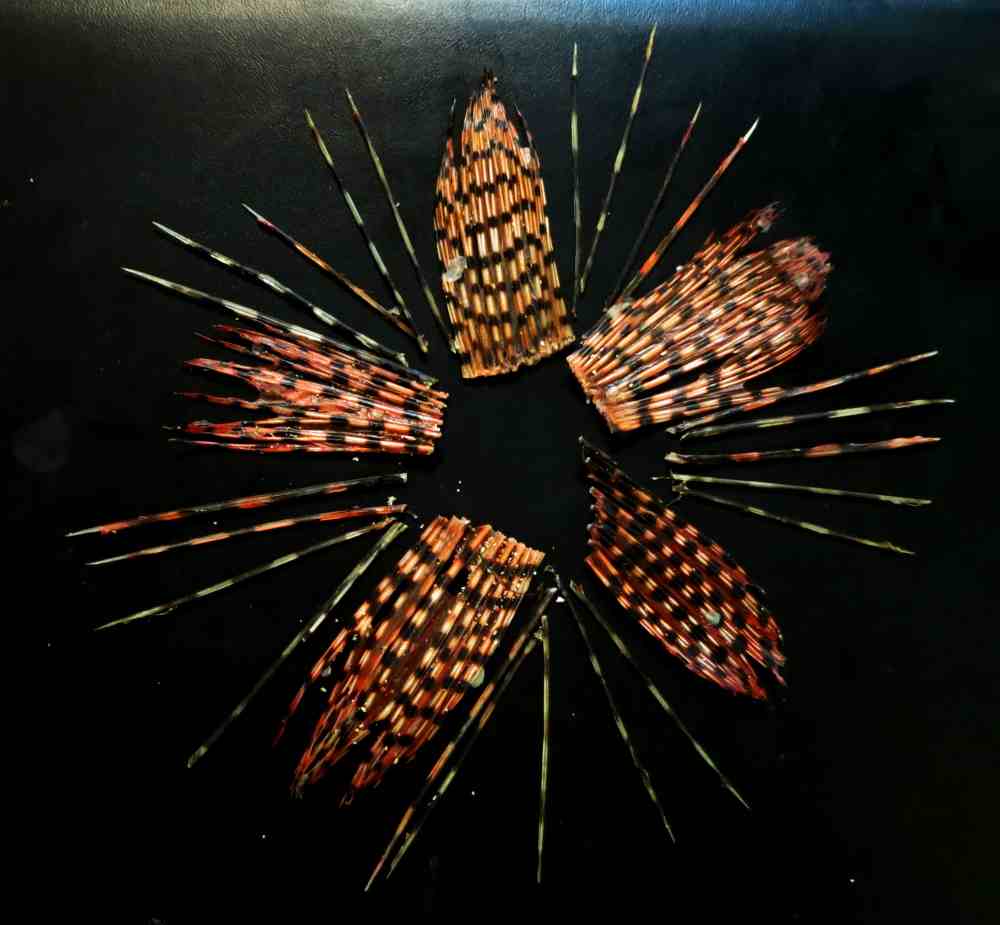
spines and tails-photo3

Array of dried lionfish spines and tails -ready for jewelry use Credit: ReefCI

In Part 1 of this post regarding market-based solutions to fighting the lionfish invasion that is threatening coral reef and other marine ecosystems throughout the Caribbean, Gulf of Mexico, and Southern Atlantic Seaboard of the United States, I wrote about the challenge of developing commercially sustainable strategies for undertaking the systematic removals that are needed to keep lionfish populations under control. I discussed the need to develop a series of vertical markets, pointing to promotion of lionfish as a seafood choice as the most obvious of these. Capture of juvenile lionfish for the aquarium trade as another.  A third market, and one in which I’m personally involved, is use of lionfish spines and tails for jewelry and other decorative items.  Continue reading

Green Economy Realism

There’s no way toward a sustainable future without tackling environmentalism’s old stumbling blocks: consumption and jobs. And the way to do that is through a universal basic income.

Illustration by Edward Carvalho-Monaghan

Illustration by Edward Carvalho-Monaghan

There is nothing wrong, per se, with wishful thinking. It is when those wishful thoughts are left in dream state that they can become tedious, even dangerous. Action matters. It is where dreams meet reality. Reality matters at least as much as dreams in getting to a desired outcome. This is true with regard to environmental issues as with any other. We appreciate reminders whenever, wherever we find them:

For as long as the environment has existed, it’s been in crisis. Nature has always been a focus of human thought and action, of course, but it wasn’t until pesticides and pollution started clouding the horizon that something called “the environment” emerged as a matter of public concern.

In 1960s and 1970s America, dystopian images provoked anxiety about the costs of unprecedented prosperity: smog thick enough to hide skylines from view, waste seeping into suburban backyards, rivers so polluted they burst into flames, cars lined up at gas stations amid shortages, chemical weapons that could defoliate entire forests. Economists and ecologists alike forecasted doom, warning that humanity was running up against natural limits to growth, extinction crises, and population explosions.

But the apocalypse didn’t happen. The threat that the environment seemingly posed to economic growth and human well-being faded from view; relieved to have vanquished the environmental foe, many rushed to declare themselves its friends instead. Continue reading

Sea-Level Summer, Citrus, And Chilling At 51

From Plate 205: Limon Caietanus by Giovanni Battista Ferrari (1584-1665)

From Plate 205: Limon Caietanus by Giovanni Battista Ferrari (1584-1665)

Helena Attlee
THE LAND WHERE LEMONS GROW
The story of Italy and its citrus fruit
272pp. Particular Books. £20.
978 1 84614 430 2

The views, not to mention recent temperatures, lead most guests to sit outdoors with the breeze on the deck, on either the ground level or mezzanine, watching the fishermen haul in their catches, or the tug boats, or the ferries. 51 is alive with citrus in these sea level summer days and evenings, starting with a tall glass of iced minted-lime cooler, continuing with a chilled avgolemono soup;  and so on. Clarissa Hyman, a freelance food and travel writer, catches our attention with this book review in the Times Literary Supplement:

A paradox pervades the Sicilian citrus groves and gardens. The scent is intoxicating but too often the fruit lies rotten on the ground, unwanted and worthless. In this maddening, singular island, where they say the sun drives you crazy and the moon makes you sad, the irony is your breakfast orange juice will most likely be diluted, long-life concentrate from oranges grown in Brazil. Continue reading

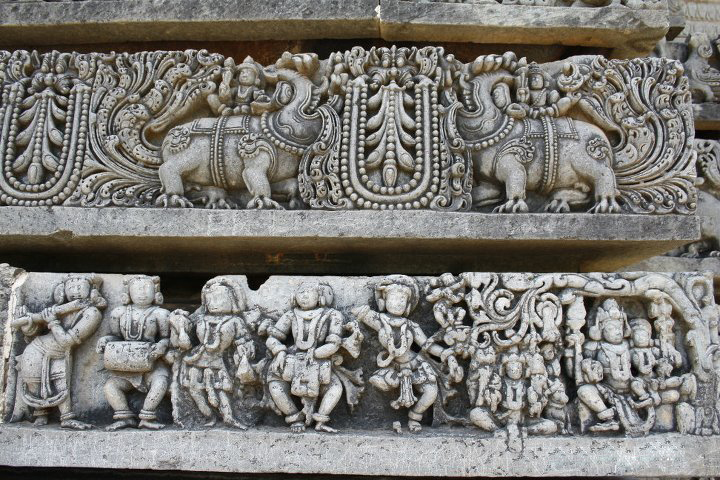
Halebidu – Hassan, Karnataka

Photo credits : Dileep Kumar

Photo credits: Dileep Kumar

Located in the Hassan district of Karnataka, Halebidu (which literally means “old city”) is an important Hoysala architectural site being proposed for UNESCO World Heritage status. Once the capital of the Hoysala Empire, the Halebidu temples are excellent examples of South Indian architecture. Continue reading

Field Trips-R-Us

Science teachers huddle over bacteria colonies at Chicago's Museum of Science and Industry. The museum plans to train 1,000 area educators to be better science teachers in the next five years. Linda Lutton/WBEZ

Science teachers huddle over bacteria colonies at Chicago’s Museum of Science and Industry. The museum plans to train 1,000 area educators to be better science teachers in the next five years. Linda Lutton/WBEZ

We are partial to field trips. Bravo to these educators for recognizing their value and putting their own two feet forward first (thanks to NPR, USA, for the podcast and published story):

In a classroom across from the coal mine exhibit at the Chicago’s Museum of Science and Industry, students are huddled around tables, studying petri dishes of bacteria.

But these aren’t school-age kids — these students are all teachers, responsible for imparting science to upper-elementary or middle-school students.

That’s a job that many here — and many teachers in grammar schools around the country — feel unprepared for. Continue reading

Ricardo Solis, Come To Kerala!

This slideshow requires JavaScript.

We have a soft spot for anyone who, young or old, finds a way to link art and nature. Ricardo Solis has a particular view, one which makes us smile, so here is a bit about him:

Ricardo Solis was born in Guadalajara, Jalisco, Mexico.  He graduated from the School of Visual Arts and acquired expertise in workshops taught by outstanding teachers. He has participated in several exhibitions nationally and internationally and his work is in major collections.

From a young age Ricardo was attracted to art and nature.  Continue reading

Aguada Fort – Sinquerim Beach, Goa

Photo credits : Dileep

Photo credits: Dileep

Named for the Portuguese word meaning “watering place”, Aguada Fort is one of the largest and best preserved forts in the state of Goa. Portuguese rulers built the fort between 1609 and 1612 for providing a fresh water supply to their passing ships. Continue reading

Useful Or Not, Therein Lies The Rub

Horace Dediu

Horace Dediu

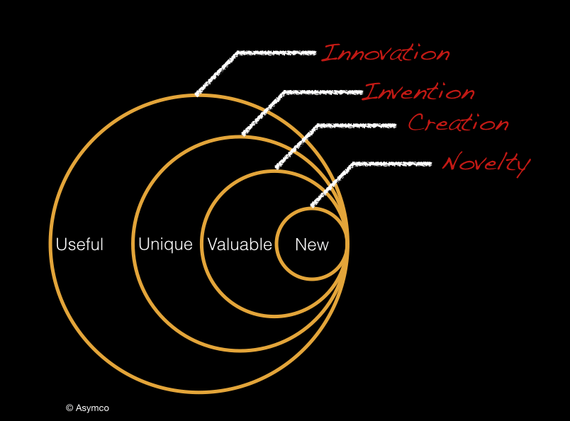
We frequently link to stories about innovation related to protecting natural and cultural heritage, particularly our own favored practice of entrepreneurial conservation. We do so with the hope, and sometimes blind faith, that what we are focused on is not only effective (as in, accomplishing what we set out to accomplish), but also useful (as in, of lasting, rather than just short term value). So, Horace Dediu has our attention. Not the clever new terminology, which is not what we find innovative, but the basic point behind it seems to be:

Innoveracy: Misunderstanding Innovation

Illiteracy is the inability to read and write. Though the percent of sufferers has halved in the last 35 years, currently 15% of the world has this affliction. Innumeracy is the inability to apply simple numerical concepts. The rate of innumeracy is unknown but chances are that it affects over 50% of us. This tragedy impedes our ability to have a discourse on matters related to quantitative judgement while policy decisions increasingly depend on this judgement.

But there is another form of ignorance which seems to be universal: the inability to understand the concept and role of innovation.

Continue reading

Deep Caving

This slideshow requires JavaScript.

This video short, captured in a few screen shots above, accompanies an earlier post linked to in which:

Burkhard Bilger writes about the ongoing effort to explore what may be the deepest cave in the world, located in Mexico. It’s “a kind of Everest expedition turned upside down,” he observes. Above, watch the cavers scale slippery walls, swim through frigid water, and make camp in a cloud forest, as Bilger narrates.

Continue reading

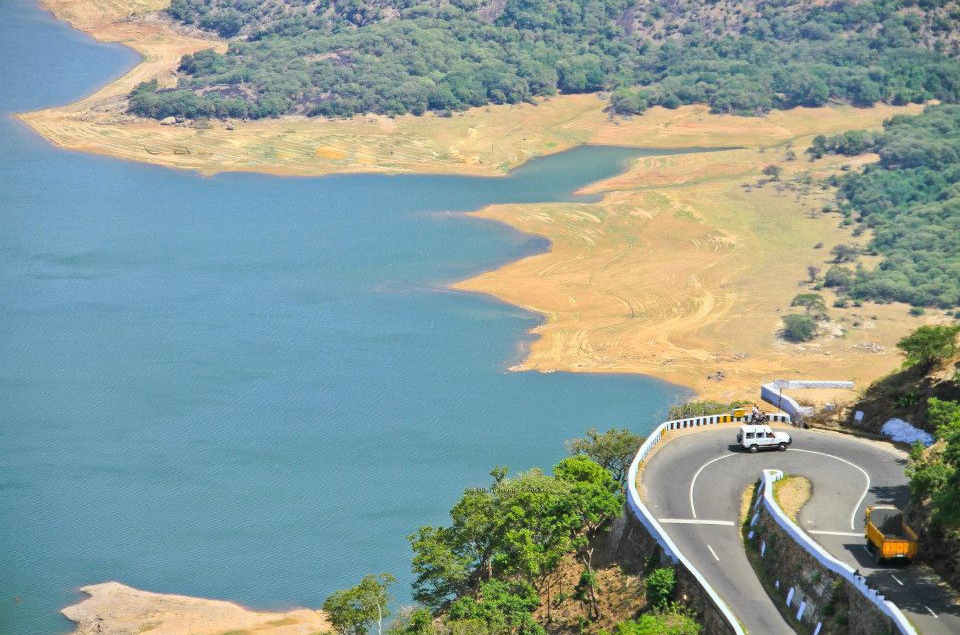
Aliyar Dam – Tamil Nadu

Photo credits : Dileep

Photo credits: Dileep

Aliyar dam is situated in the Coimbatore district of Tamil Nadu. Constructed over a ten year period between 1959-1969, Aliyar dam is the source for canal irrigation for large tracts of agricultural lands in the bordering regions of both Kerala and Tamil Nadu. Continue reading

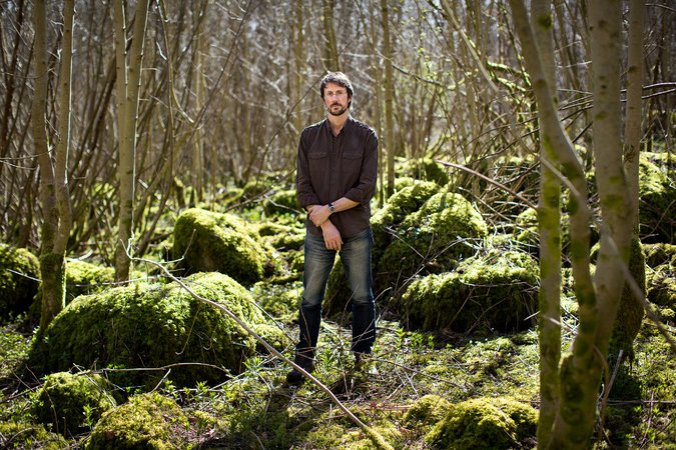
Collapsitarians Rising

Paul Kingsnorth. Photo by Kenneth O Halloran

Paul Kingsnorth. Photo by Kenneth O Halloran

Collapsitarian sounds decidedly like the opposite of our approach on this platform, but in this profile I recognize observations and motivations, and even actions if not conclusions, out there among the practitioners. Read the story in this week’s New York Times Magazine:

By DANIEL SMITH

After decades of fervent environmental activism, Paul Kingsnorth decided it’s too late — collapse is inevitable. So now what?

If that seems intriguing, and especially if you want to smile and even laugh a bit, visit Paul Kingsnorth’s website:

OAQs

(Occasionally Asked Questions)

Could you puff yourself up in a few paragraphs of third person prose please?

Certainly. Paul was born in 1972. He studied modern history at Oxford University, where, as well as studying, he edited the student newspaper and was politically radicalised by his involvement in the road protest movements of the 1990s. Continue reading

Thinking In Unexpected Places

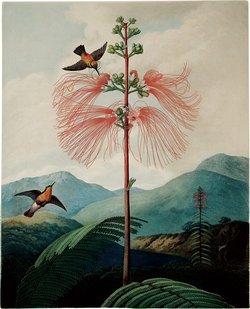
The Large Flowering Sensitive Plant, whose ‘plant electricity,’ Oliver Sacks writes, ‘moves slowly…as one can see by watching the leaflets…closing one by one along a leaf that is touched.’ Illustration from Robert John Thornton’s The Temple of Flora (1799–1807), published in a new edition by Taschen.

The Large Flowering Sensitive Plant, whose ‘plant electricity,’ Oliver Sacks writes, ‘moves slowly…as one can see by watching the leaflets…closing one by one along a leaf that is touched.’ Illustration from Robert John Thornton’s The Temple of Flora (1799–1807), published in a new edition by Taschen.

Thanks to the New York Review of Books for engaging one of the great thinker-researcher-writers of our time for this story The Mental Life of Plants and Worms, Among Others:

Charles Darwin’s last book, published in 1881, was a study of the humble earthworm. His main theme—expressed in the title, The Formation of Vegetable Mould through the Action of Worms—was the immense power of worms, in vast numbers and over millions of years, to till the soil and change the face of the earth. But his opening chapters are devoted more simply to the “habits” of worms.

Worms can distinguish between light and dark, and they generally stay underground, safe from predators, during daylight hours. They have no ears, but if they are deaf to aerial vibration, they are exceedingly sensitive to vibrations conducted through the earth, as might be generated by the footsteps of approaching animals. All of these sensations, Darwin noted, are transmitted to collections of nerve cells (he called them “the cerebral ganglia”) in the worm’s head.

Continue reading

World Heritage Day At Raxa Collective Properties

University_Salamanca18 April 2013

Prepare the International Day on Monuments and Sites!

India does not appear on the Events list, but no matter. We take matters into our own hands. Cardamom County‘s relationship with its neighbor, Periyar Tiger Reserve, is stronger than ever; River Escapes has been a pioneer of ecological good practices in Kerala’s backwaters; and now Spice Harbour is contributing to the renaissance of Mattanchery. We encourage our readers, if close to any of the events, to join in:

At the heart of the work of ICOMOS lies the understanding, the protection and the conservation of those structures, sites and ensembles whose interest is linked to history and memory. The value of these elements of our cultural heritage is associated with the history of societies and peoples, as well as the arts and sciences they developed.

Continue reading

Periyar Sightings

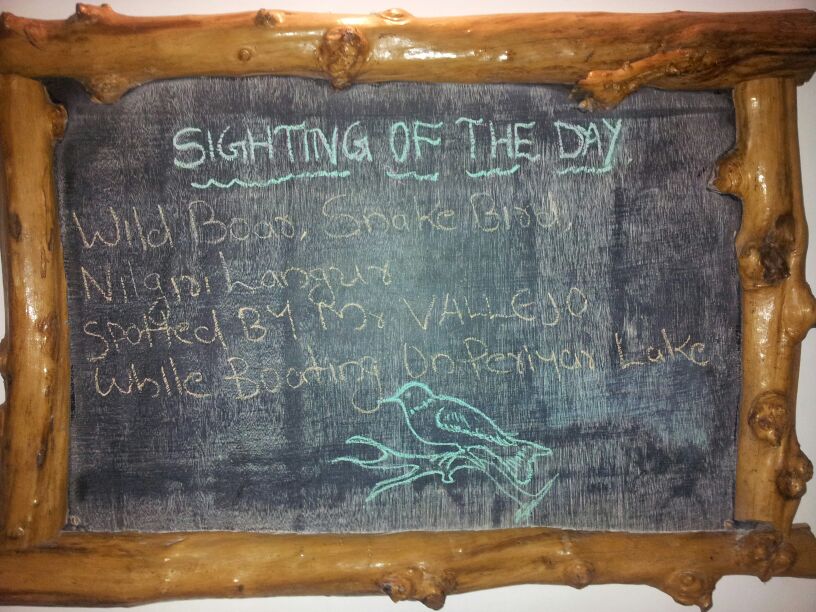
Sighting of the day

Sighting of the day

It has been a while since we have shared our guest sightings at the Periyar Tiger Reserve. Some guests carry cameras to capture every moment and some just like enjoying the moment. Our reception chalk board gives people the opportunity to share those experiences with others–in this case not in photos but their memories.


Caveat Emptor For Intangibles

In case you do not already know about him and his writing on topics related to modern technology as it intersects with the law, the post excerpted below by Tim Wu is a good place to start. It seems possible to simultaneously agree with the specific point of this post, and also be confused with the general implication. Agreement could stem from reading enough of Tim Wu to implicitly trust his expertise. Confusion could stem from the itinerary planning screen-captured and shown above, which reminds that not everything we buy is re-sellable. Still, we click “Hold” to ponder this just a bit more to hopefully clear the fog:

…we tend to overlook the milder forms of truth-stretching that have come to shape online living, and it’s hard not to. They’re often perpetuated by big and reputable companies, like Apple, Seamless, and Amazon.

Take search. General search sites, like Google and Bing, are pretty straightforward: you type in a query and get results ranked by some measure of relevance; you also see clearly marked advertisements. This experience tends to shape our expectation that searches deliver relevant results. But the same search on sites like Amazon or Seamless turns up not only relevant results but disguised advertisements, as well. Continue reading